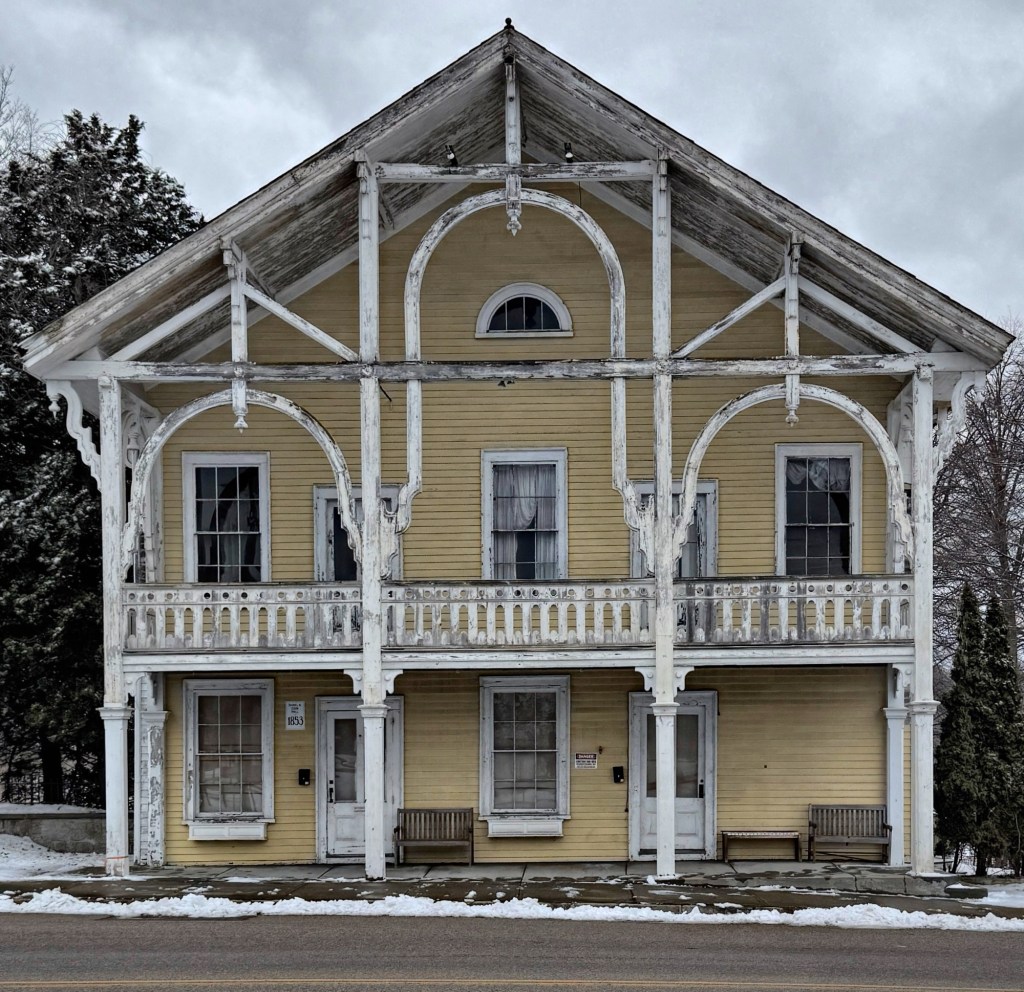
Arguably the most recognizable and beloved building in Wrentham, Massachusetts, is this eclectic mid-19th century commercial building, known as the Wrentham Village Hall. The structure was originally constructed for Daniel A. Cook where he operated a store in the ground floor retail space and rented a meeting hall to local organizations above. The building was constructed around 1853 as a more vernacular building, but given its current appearance decades later when the ornate Stick style porches were added to the facade. While the building has served many uses over its history, the structure is suffering from some deterioration, which hopefully will not impact the rare surviving exposed porch framing and trusses, which give the building so much character.
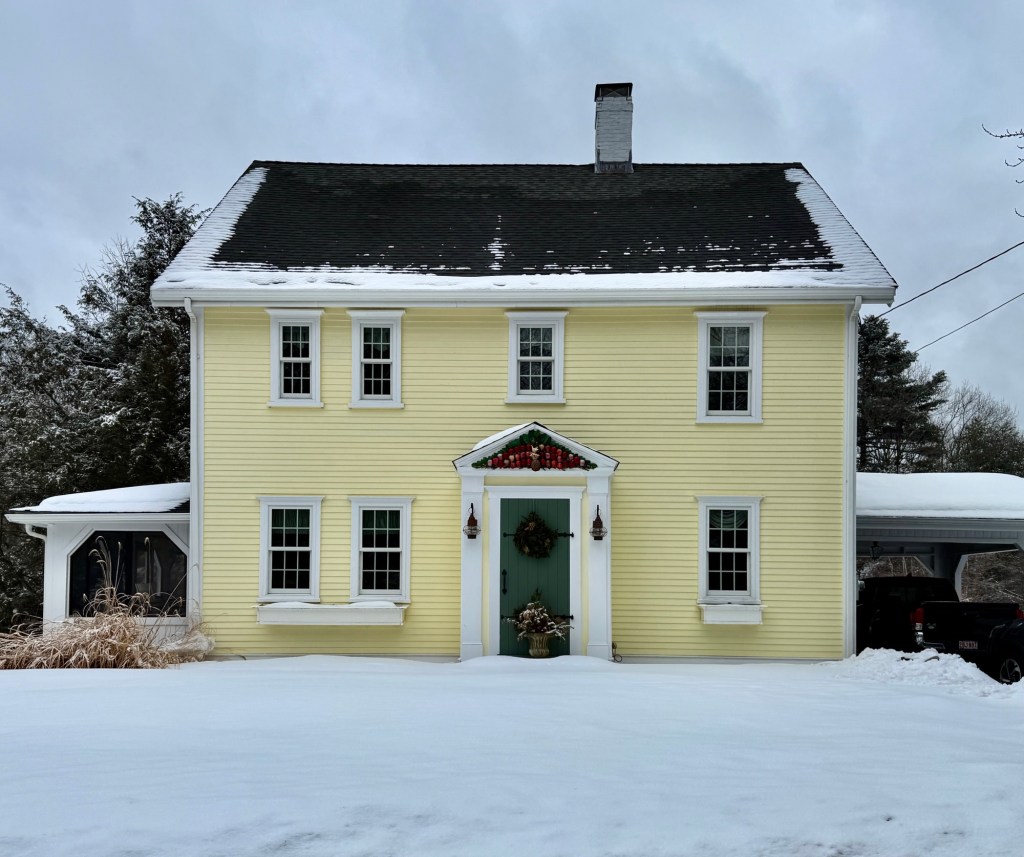
One of the earliest extant homes in western Wrentham, Massachusetts, the old Hawes Homestead on Williams Street stands as an important Georgian style farmhouse in what was once a more pastoral part of the community. The house likely dates to the mid-18th century (or earlier) and was possibly built by Daniel Hawes, who farmed the land here. Due to the varied sizes of the upper windows, the residence was most probably a three-bay house with central chimney, and the right-most bay and modern chimney were added later. The residence was later inherited by his son, and later by other heirs before the property sold out of the Hawes family in the mid-19th century.
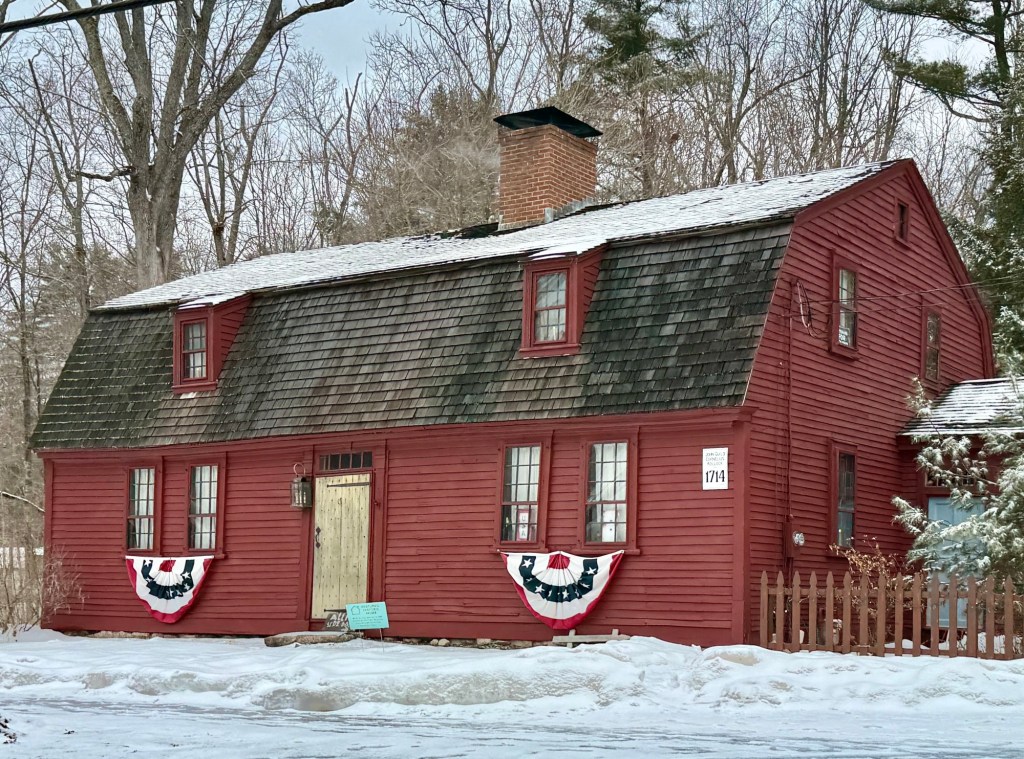
The Guild-Kollock house on East Street in Wrentham, Massachusetts, is one of the oldest and best-preserved historic homes in the suburban community. In 1674, John Guild of Dedham, was granted this lot by the proprietors and later willed the property to his son, Deacon John Guild Jr. (1649-1723). John Guild Jr. had the home built between 1682 and 1714, the first recorded document that acknowledges the existence of this dwelling, giving the home a definitive “built by” date. The Colonial farmhouse remained in the Guild family until 1804, when it was purchased by Cornelius Kollock, a Revolutionary War veteran, surveyor, Justice of the Peace, Town Clerk, Town Treasurer, and Representative to the General Court. The significant early Guild-Kollock House was documented inside and out as part of the Historic American Buildings Survey (HABS) in 1962 and has been lovingly preserved for over 300 years since its construction.
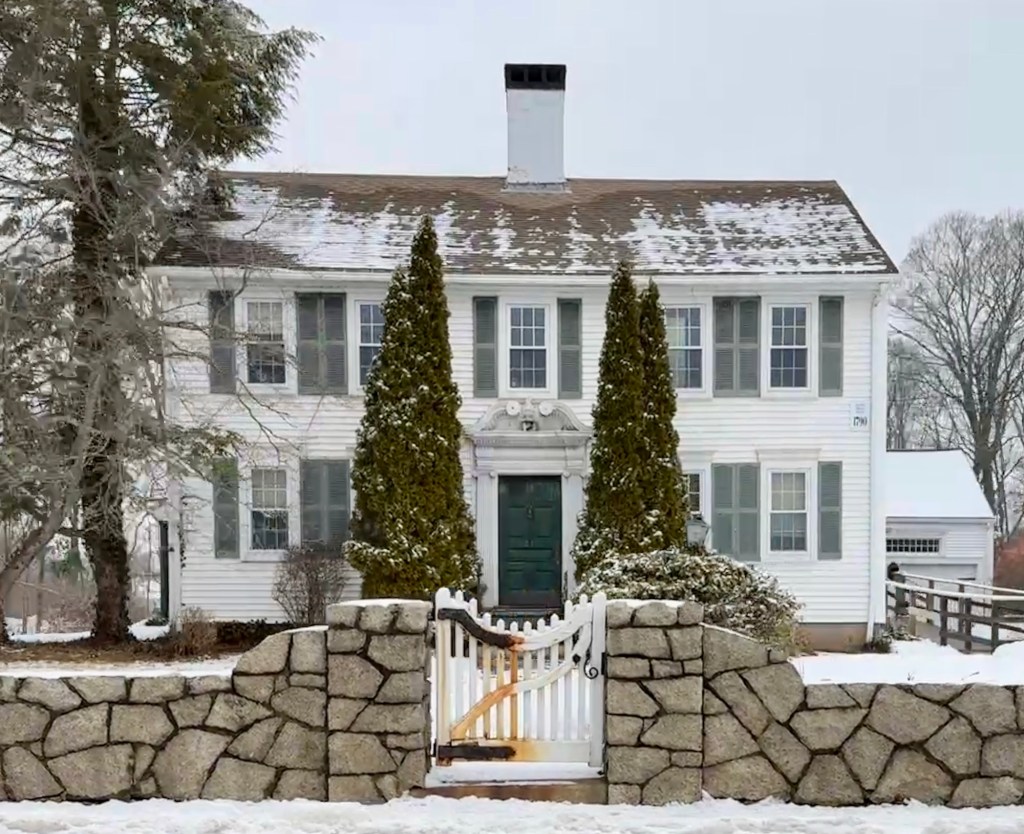
In 1787, Oliver Druce (1760-1797) married Sarah “Sally” Kollock (1764-1789) and had this large residence built overlooking the Town Common in Wrentham, Massachusetts. The young couple raised one daughter here until Sarah died in 1789 at 25 years old, followed years later by Oliver, who died in 1797 at 37 years old. By the turn of the 19th century, the late-Georgian residence was owned by John Francoeur, a French Huguenot. The Druce-Francoeur House is one of the finest Georgian style residences in Wrentham, which retains its magnificent doorway framed by fluted Ionic pilasters with broken scrolled pediment above.
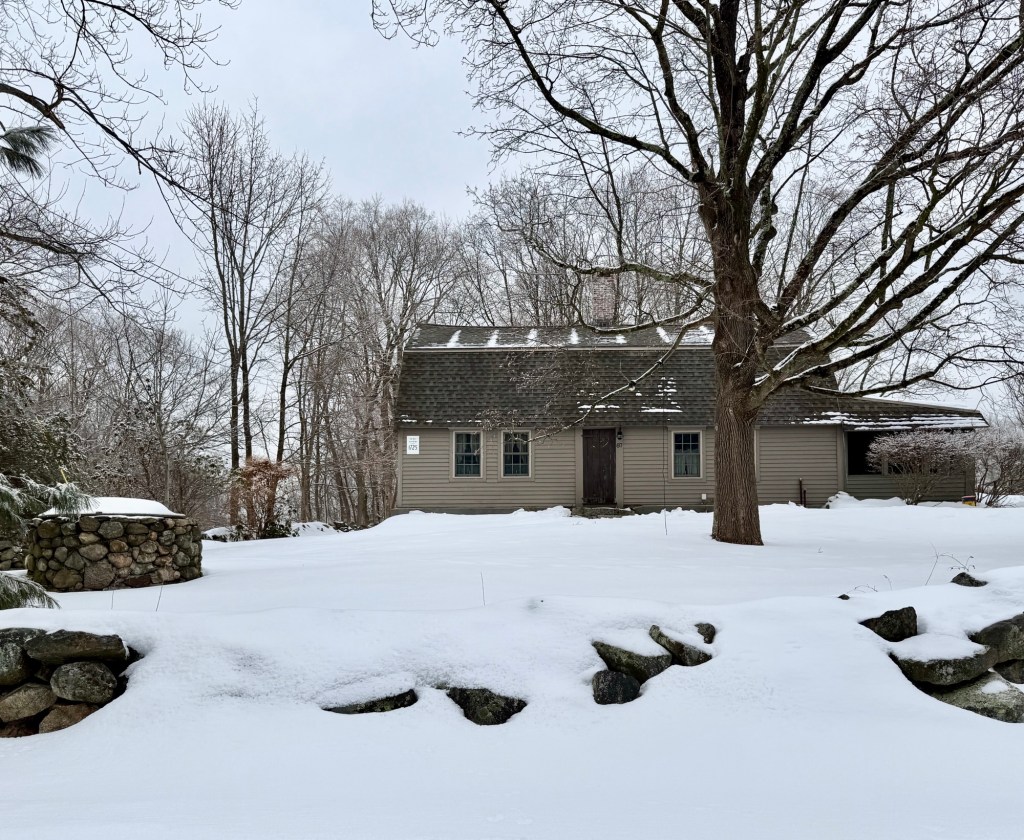
Wrentham, Massachusetts, was originally known as Wollomonopoag, roughly translating to “place of shells” a name given by the native tribes living here, referencing to area lakes as a food source for the people living here for over 8,000 years before European settlement. The area was settled by colonists in 1635 and became part of Dedham, when it was established in 1636. In 1673, the General Court allowed for the separation of what is now Wrentham, to incorporate as its own town. The community adopted the name Wrentham after the town in Suffolk County, England, a small village of just under 1,000 residents. About 50 years after incorporating, this historic Georgian farmhouse off Cumberland Road, not far from the Rhode Island state line, was built. The Boyden-Clark House is among the few pre-Revolutionary era homes remaining in the suburban community and retains its rural character. The house is said to have been built for Thomas Boyden (1681-1771) and wife, Mary (Clark) Boyden around 1725. The Boyden’s enslaved laborers who worked the farm here for decades. The property was later owned by Stephen Clark who farmed the land and likely added the stone well in the front yard. The house retains its gambrel roof and central chimney, hallmarks of the Colonial era.
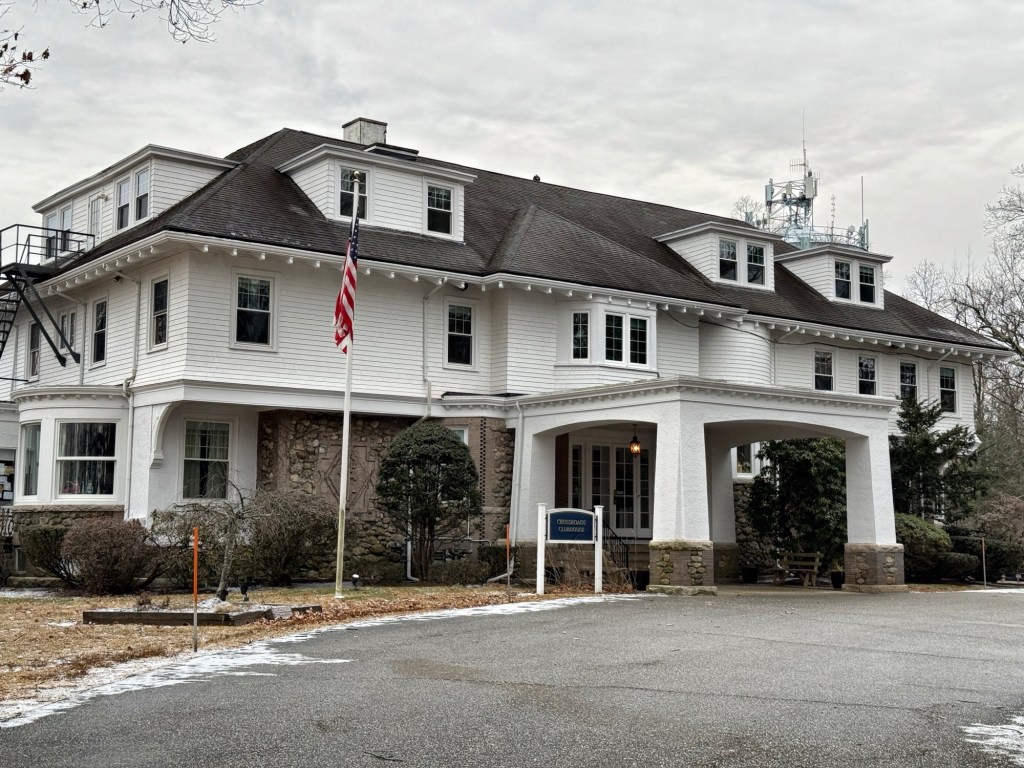
George Otis Draper (1867-1923) was born in Hopedale and attended MIT to prepare to help run the extremely successful family business, the Draper Corporation in town, which was experiencing a period of rapid growth and expansion of factories. With his position at the company, his wealth afforded him the ability to build a massive country estate known as The Larches. The shingled Colonial Revival style home featured a massive crenelated tower and appeared like a castle in the countryside. George O. Draper sold this home to his aunt Hannah Thwing Draper Osgood in 1909, and within a month, the home burned to the ground. She began construction on the “new Larches“, a shingled mansion with a stunning blending of Colonial Revival and Craftsman styles. The home was likely designed by Robert Allen Cook, who was based out of nearby Milford, MA. The property today is run by Crossroads Clubhouse, an employment and recovery center that offers people with mental health conditions opportunities to achieve their full potential.
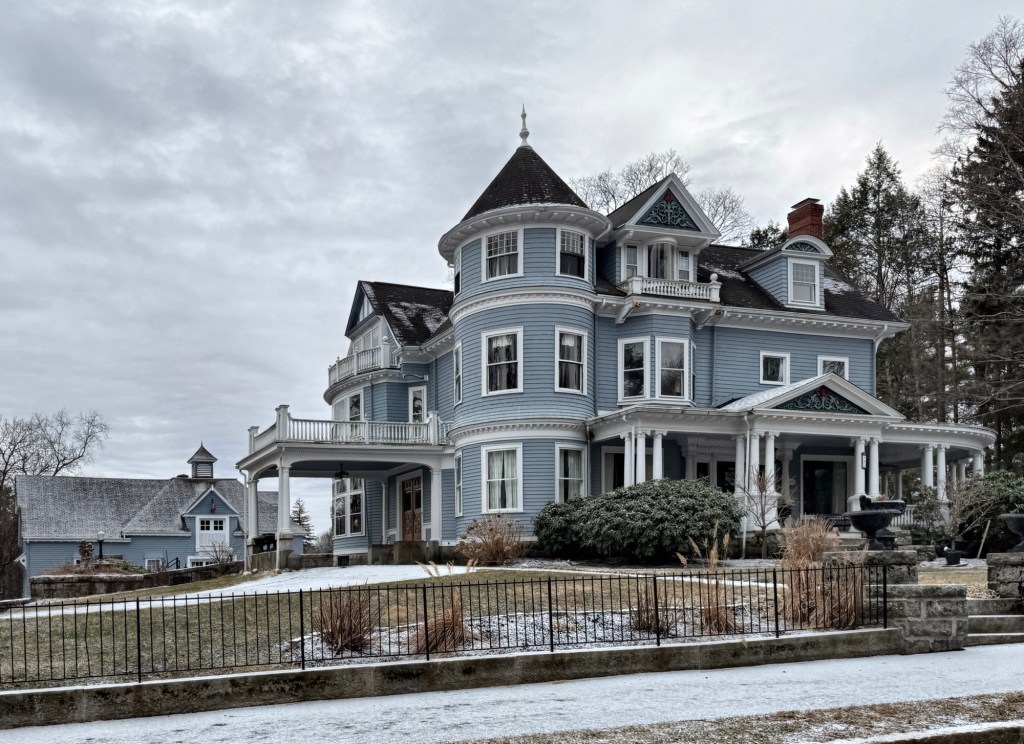
Located on Adin Street, a street of homes formerly owned by factory owners and managers in Hopedale, Massachusetts, you will find “Urncrest”, a stunning Queen Anne Victorian mansion. This home was originally built around 1875 for William Lapworth (1844-1937) an English-born weaving expert, who worked at Hopedale Elastics Co. and patented certain weaving processes for suspenders, boot webbing, and garters. Hopedale Elastics was absorbed by the Draper Corporation in 1890, and Lapworth “modernized” his home with profits from this sale. His formerly modest home was updated with a corner tower, large additions, wrap-around porch with porte cochere, and applied ornament. The detached carriage house was also expanded, where he added a coachman’s apartment.
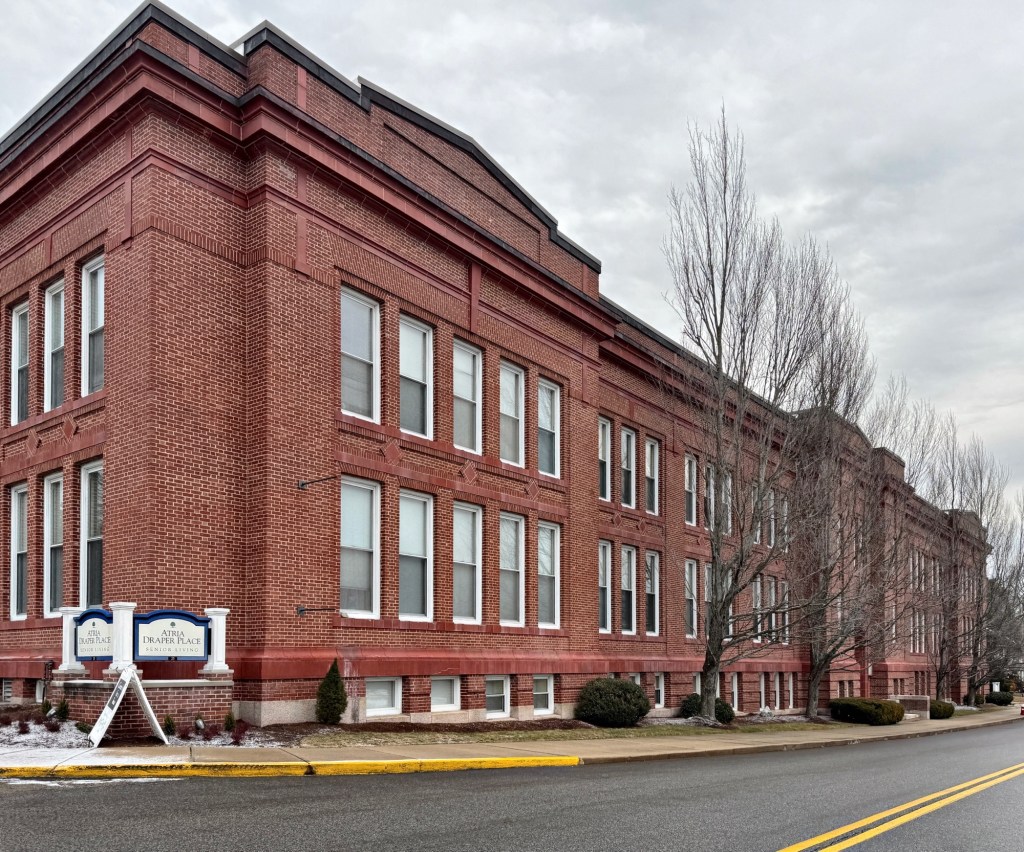
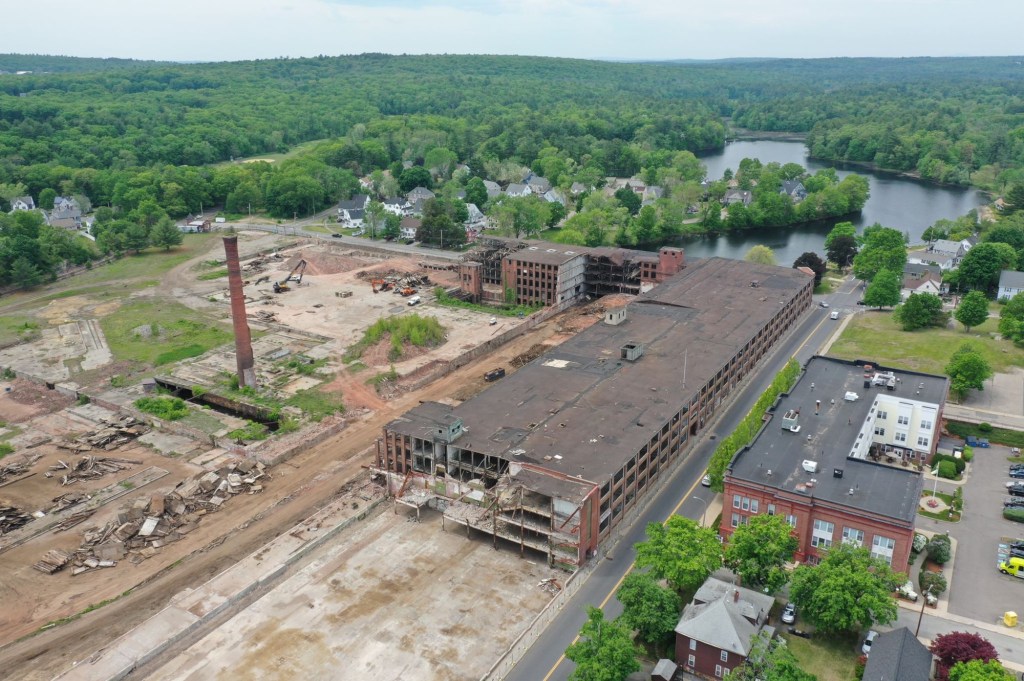
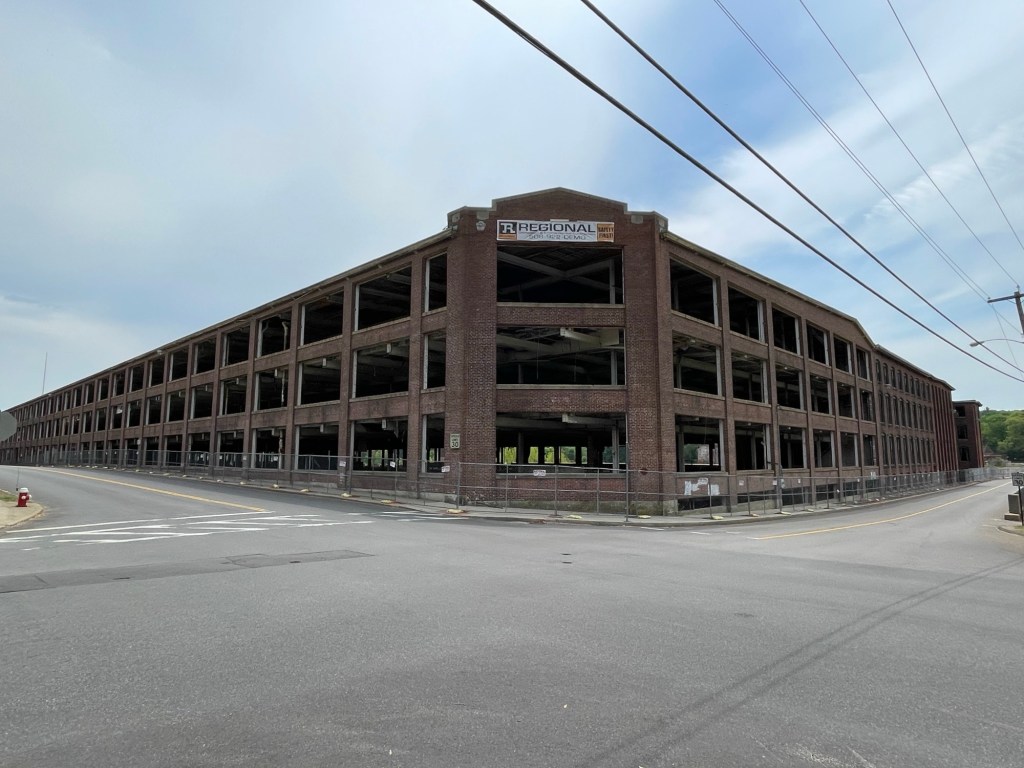
Hopedale, Massachusetts separated from Milford and incorporated in 1886. The “downtown” of the community encompasses industrial, institutional, and residential buildings in Hopedale Village, also known as Draper Village after the long-driver of the local economy, Draper Corporation. Hopedale was largely developed as a planned company town, and its architectural significance and ultimate preservation was largely due to the success of the Draper Corporation as majority owner until the 1950s. The Draper Corporation was originally a small operation in Hopedale in 1841 managed by George Draper (1817-1887), but grew exponentially thanks to his son, George Albert Draper (1855-1926), who had a passion for finding innovative technology to make the production of cloth more efficient. He led the company’s charge to become the nation’s leading producer of machines for the cloth-making industry. In the ensuing decades the factory village of Hopedale became a “model” company town under his leadership, with the business controlling every aspect of the town and worker life in a paternalistic program that extended beyond social structure to include architecture and urban planning of the village. The company developed hundreds of homes for workers, a town hall, library, churches, schools, a fire station, and recreational facilities, along with its factory complex at the center. In1892, with the advent of the Northrop Loom, Draper became the largest producer of textile machinery in the country. Due to their success at the end of the 19th century, much of the complex was built and rebuilt in fire-proof brick factory buildings with large windows to allow light and air into the facilities. Draper’s dominant position within the textile machine manufacturing industry began to erode shortly after World War II, and the company began to sell its company houses to their occupants as private homes in 1956. During the 1960s American textile machinery makers such as Draper lost their technological leadership to foreign manufacturers due to cheap labor, and the general American textile industry collapsed. The plant eventually closed in 1980, and sat vacant until it was decided by the local officials to raze the once great complex, as adaptive reuse was not feasible in the market for such large structures. The mill was demolished in the summer of 2021 and the lot at the center of town remains a brownfield site.
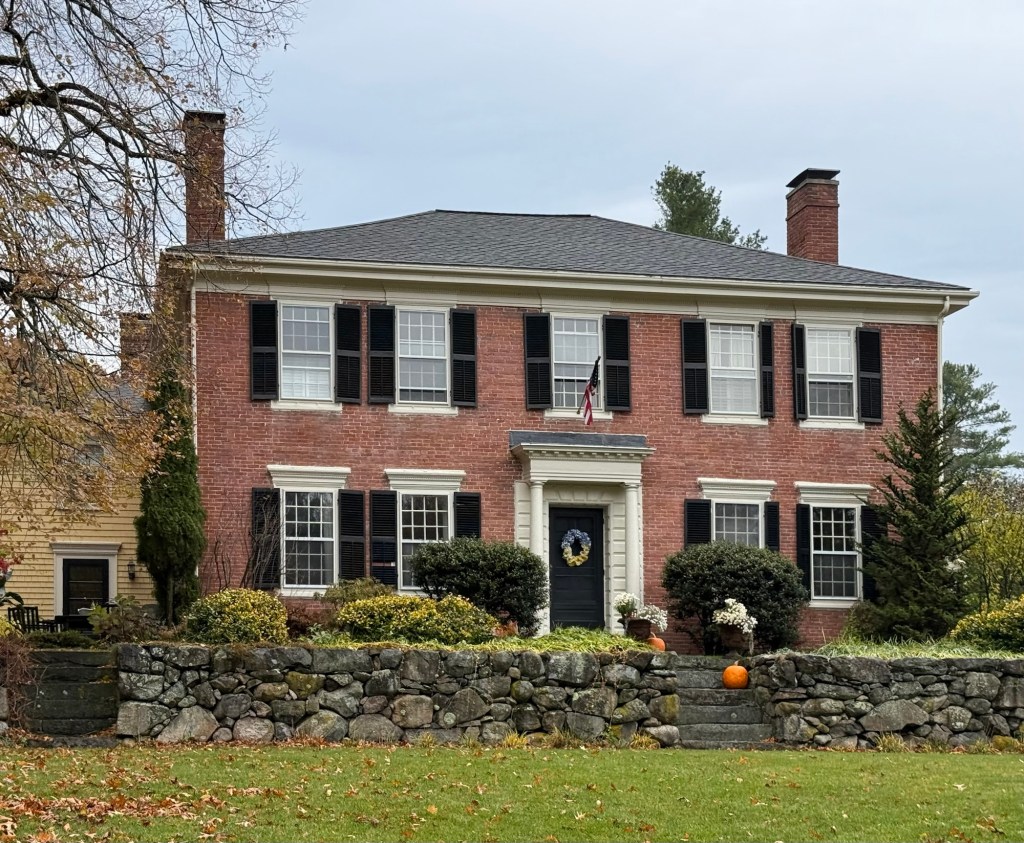
Another stately old home on Glezen Lane in Wayland is this brick, Federal style country mansion located across from the town Training Field. This residence is said to have been built by a Nathaniel Gleason (Glezen) and later inherited by a family member, Abel Glezen (1803-1890) who farmed the 55 acres of land and was a local politician. In 1900, as Wayland shifted from rural community to a desirable Boston suburb for summer residences, the Gleason House was purchased by Henry W. Patterson, who was in his late 20s when he bought this country house. Henry inherited his father’s estate and married Jane Harrington Adams from Massachusetts. The couple spent only a couple years here until Henry died in 1907 at just 35 years old. Jane, his widow, remained here until her death in 1950. The estate was subsequently subdivided and remains one of the finest homes in the community.
 Buildings of New England
