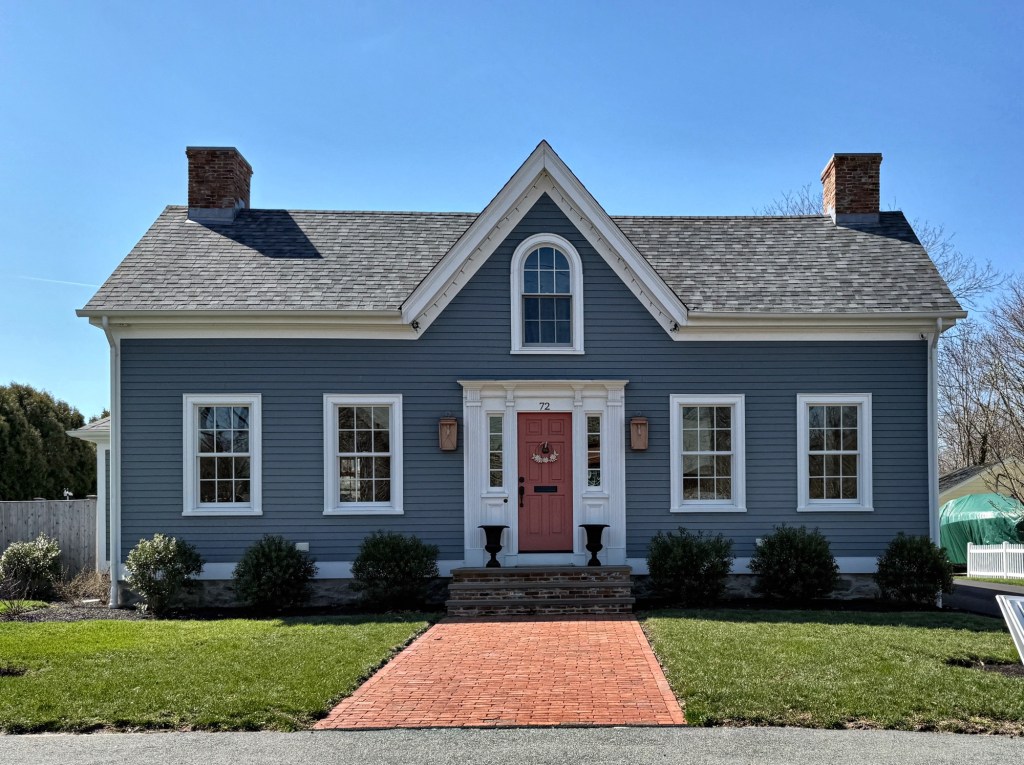
The Wellington House at 72 Main Street in Swansea, Massachusetts, is an early 19th century Federal period residence that was “modernized” in the mid-19th century into its current form. It is unclear who the original owner of the residence was, but the property was acquired by Julia and James Birch in the 1850s as they built their Italianate style mansion next-door. They modified this cottage in the Italianate style to match their home and likely rented the property to Dr. James Lloyd Wellington (1818-1916), a Harvard-educated doctor who split his time between Swansea and Cambridge. The house was later donated to the Town and rented for years with profits going to the Public Library, until it sold and was restored by area residents, with the proceeds for the sale funding the library as well.
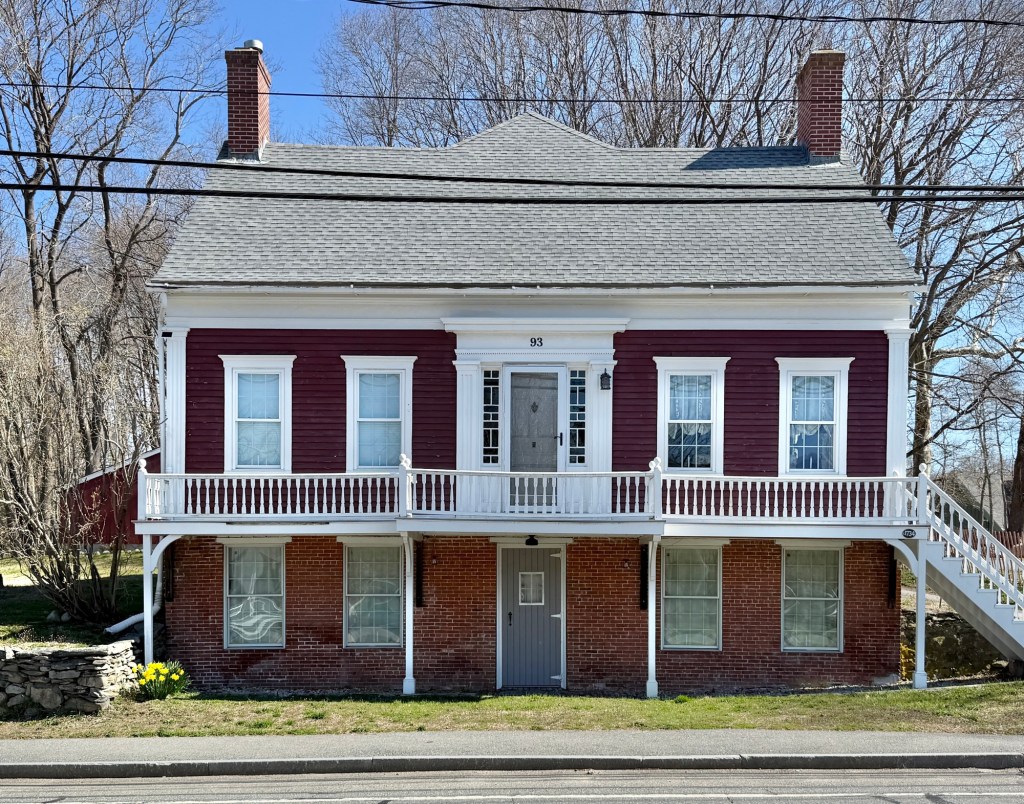
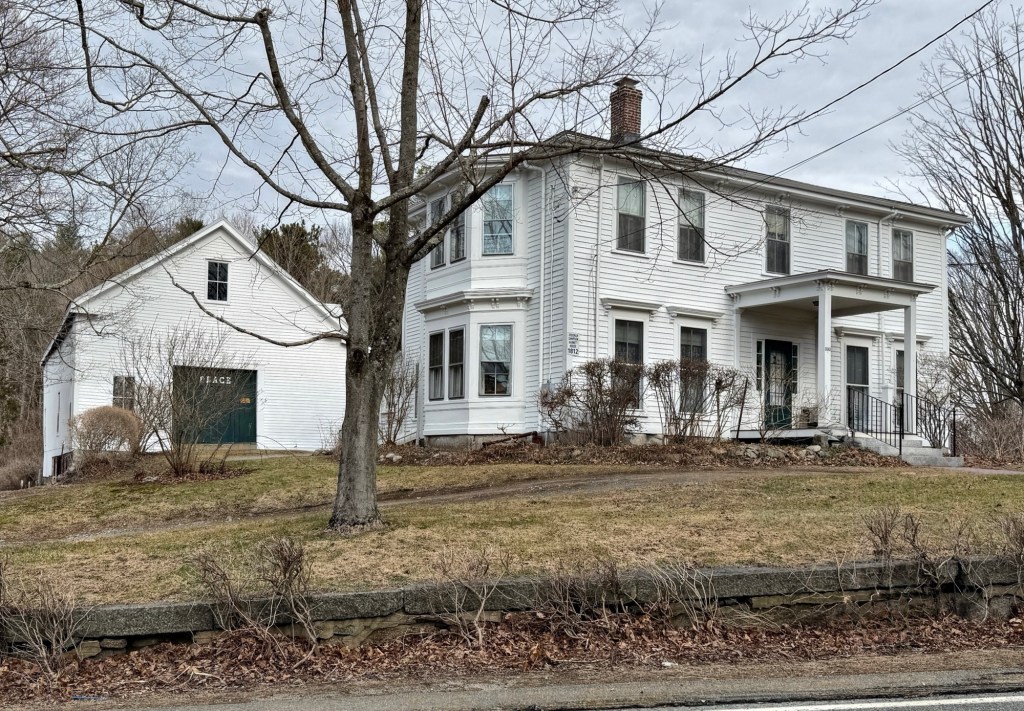
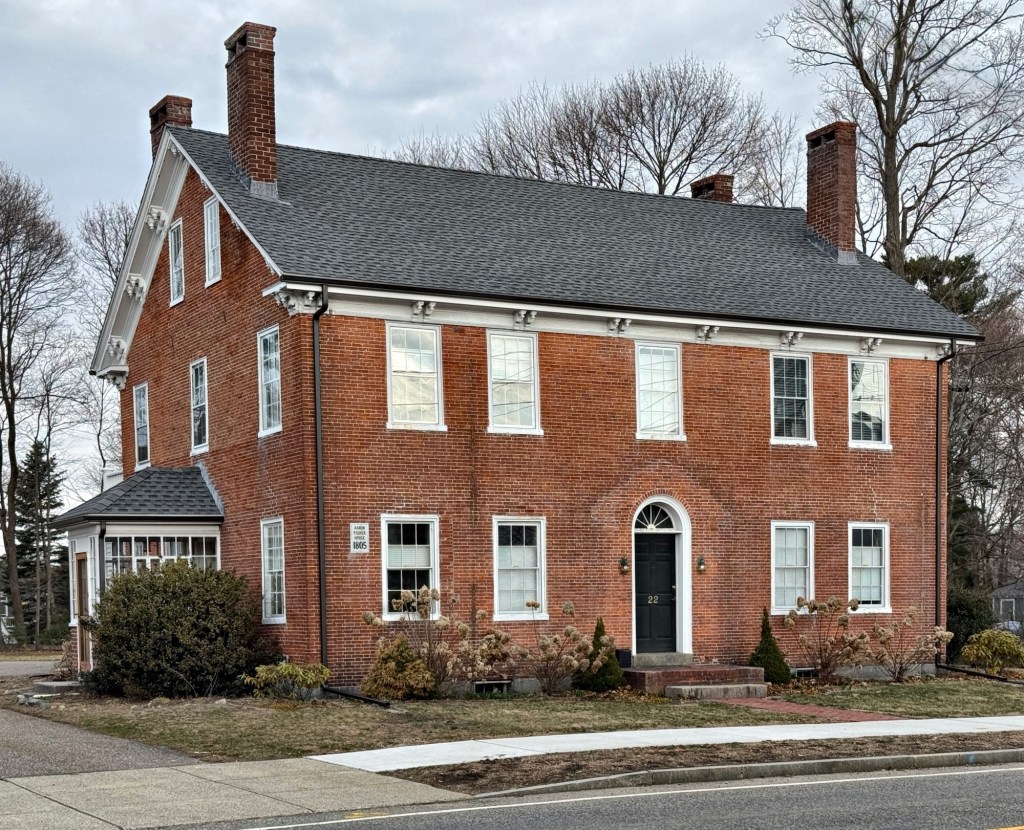
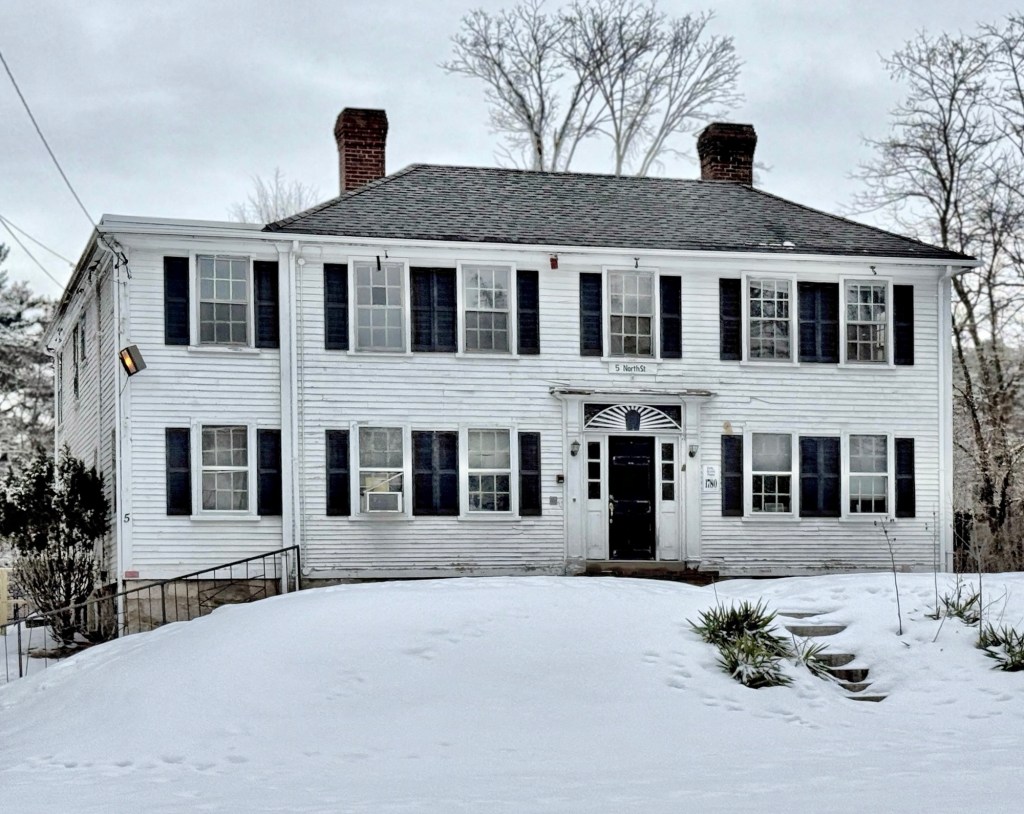
This unique two-story house on Main Street in Swansea, Massachusetts, is said to date to about 1734 but for the most part, its appearance dates to 100 years later. It is possible this was once a one-story, brick house, but by 1836, the property was owned by Samuel Sherman Hull (1788-1862) and Sarah Waite Hull (1799-1863) who married in 1835. It was during their ownership, that the house was expanded and “modernized” in the Greek Revival style in the 1830s or 1840s, when the wooden upper floor was added with elaborate central entrance with sidelights and pilasters at the corners and entry. The property was farmed by Mr. Hull and by the end of the 19th century, was owned by Mrs. Caroline A. Chace. It is possible that the brick floor operated as a store with a residence above but now is a single-family home.
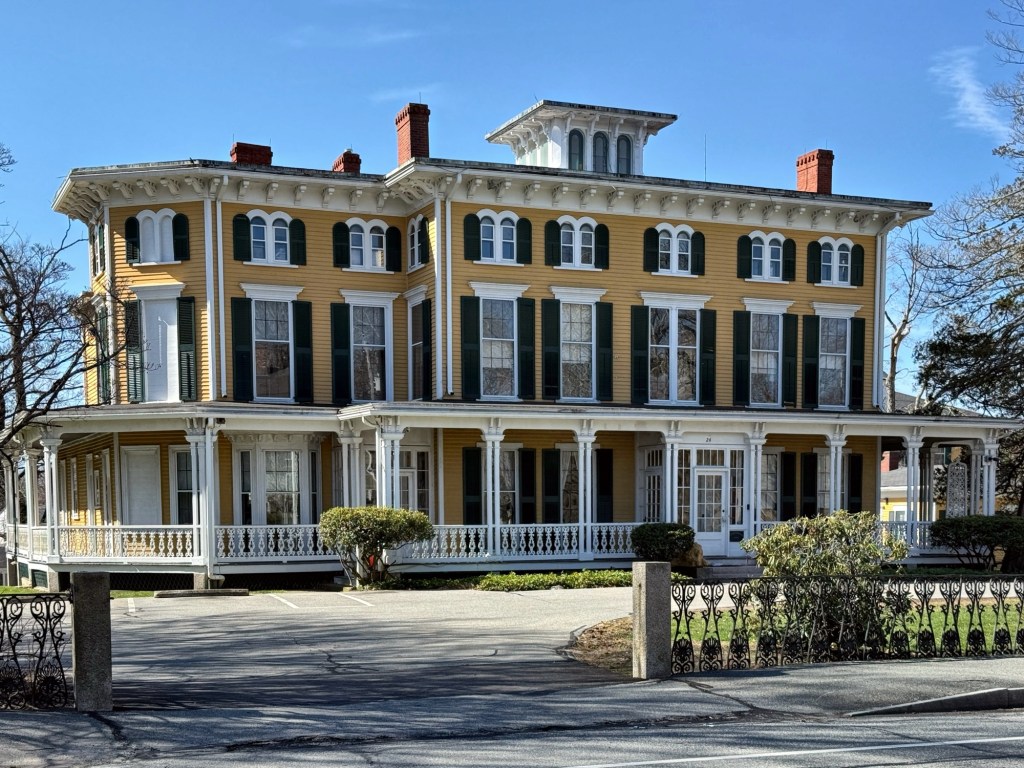
Built in 1855, the Birch-Stevens Mansion of Swansea, Massachusetts, is a grand Italianate style residence distinguished by its low hipped roof with belvedere, broad overhanging eaves with brackets, paired arched windows, and expansive wrap-around porch, all of a scale not commonly found in such a small community. The residence was built for James Birch and overseen by his new bride, Julia Chace. Before construction on the home, James Birch (1828-1857), not a wealthy man, worked as a stagecoach driver in Providence. His bride-to-be desired a large mansion in her native Swansea, equipped with servants and all the finer things of life. Since this dream was not attainable in his present circumstances, Birch, an enterprising 21 year old, decided to join the Gold Rush in California to make his fortune. In California, James became a stagecoach line entrepreneur and founder of the California Stage Company, the largest stage line in California in the 1850s. James made a fortune and returned to his wife in Swansea bringing money for her to begin constructing their grand mansion. James left again, this time establishing the San Antonio -San Diego Mail Line, the first transcontinental mail route in the United States. In 1857, while heading home, James sailed from San Francisco to Panama, took a train across the Isthmus, and sailed for New York on the steamer SS Central America. During the voyage, his ship was struck by a hurricane and later sunk. Many survivors clung to pieces of the ship’s wreckage for days with many dying to exposure or were swept away to their deaths, like James. He was just 28 years old. Back in Swansea, Julia was heartbroken but remarried her late-husband’s business partner, Frank Shaw Stevens, an equally successful businessman. Julia died in 1871, and Frank married a younger Elizabeth Case. The couple resided in this mansion for decades and donated substantially to their community, including funding the Town Hall, Public Library, Episcopal Church, and local public schools. In her will, Elizabeth Case Stevens bequeathed the large mansion in 1837 to the Frank S. Stevens Home for Boys which began as a boy’s orphanage. The organization remains to this day with an expanded mission, and maintain the sprawling estate and its various outbuildings, including the historic stable and farm structures.
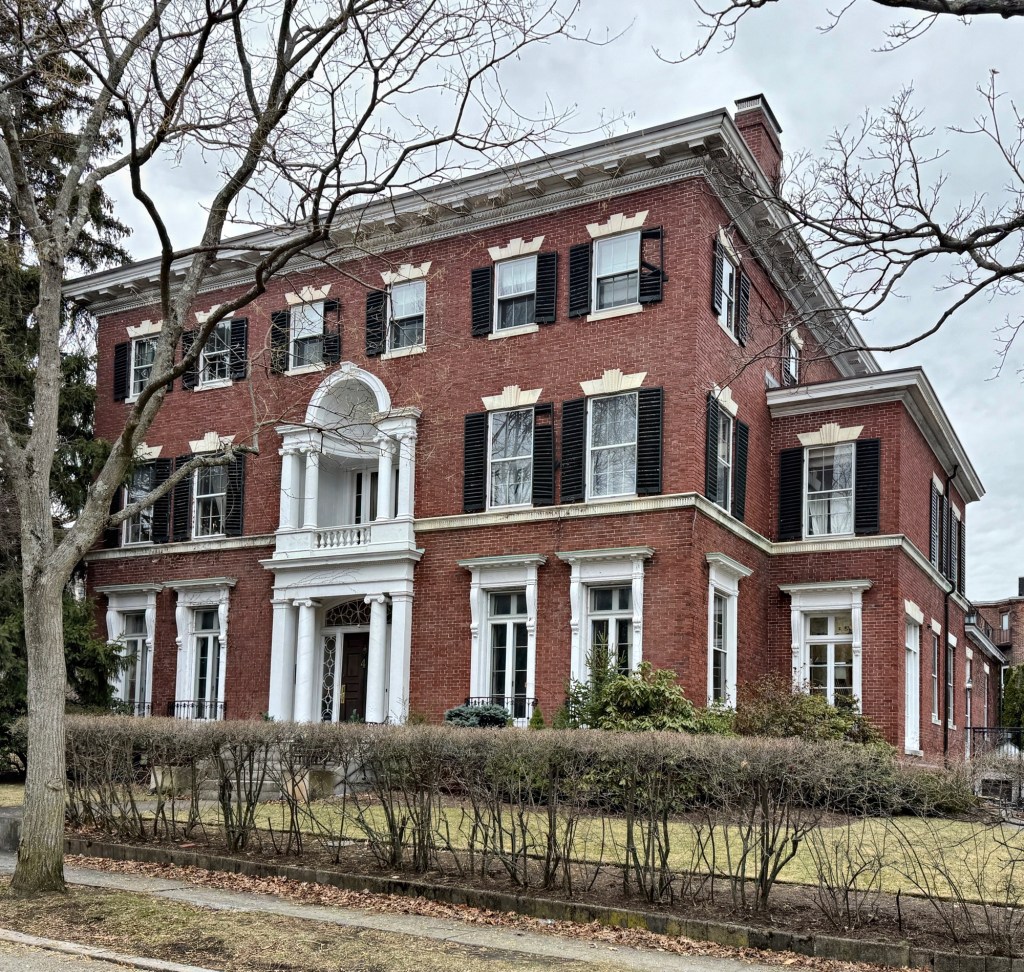
Among the area’s best examples of a high-style Colonial Revival residence of the early 20th century, the Eisemann Mansion on Monmouth Street in Brookline’s Longwood neighborhood stands out not only for its scale and massing, but unique architectural details. The dwelling was built in 1905 for Selly and Albert Eisemann, both German-born Jews who immigrated to the United States and originally lived in New Mexico before moving to Brookline in their retirement. Albert was a retired wool merchant, and clearly made a name for himself out west, hiring local architect, James Templeton Kelley, to furnish plans for his large mansion in Longwood. With a boxy form and five bay facade (with six smaller windows at the third floor), the center-hall mansion is notable for its elaborate first-floor windows with individual cornices, recessed entry set between Ionic columns, and recessed niche balcony over the entry as a unique interpretation of a Palladian motif.
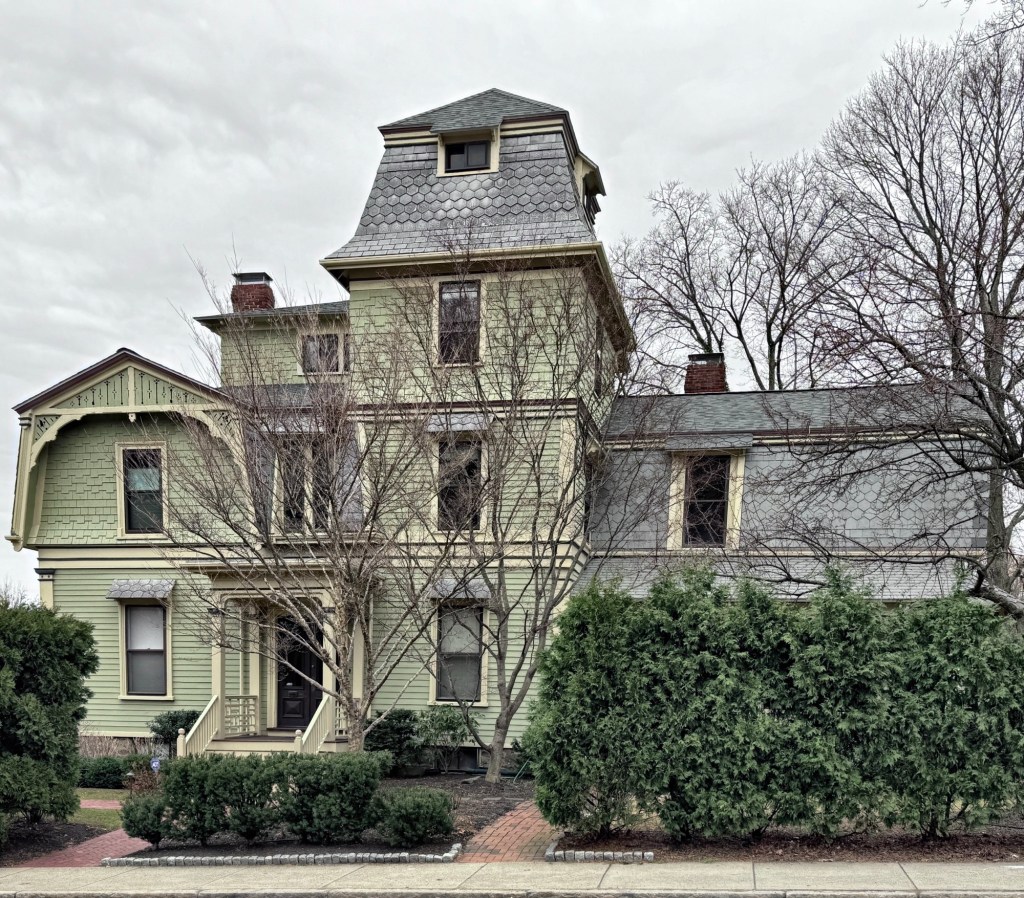
In 1868, James Wilkinson Clapp (1847-1931) married Eliza Tuckerman and they soon after moved into this large Victorian-era house on St. Paul Street in Brookline. James was the second son of Otis Clapp, a politician, publisher, and promoter of homeopathy. Otis Clapp operated a large homeopathic pharmacy, Otis Clapp & Son, which continued as a business after his death, evolving to encompass different areas of medical technology. It was one of the oldest-operating pharmaceutical manufacturers in the United States by the time it was acquired by Medique in 2008. James Clapp was also a medical doctor and at the young age of 22, acquired a house lot here on St. Paul Street and had this large Second Empire style residence built for his family. Dr. James W. Clapp worked as a pharmacist and taught courses at the Boston University School of Medicine. He spent summers at his gentleman’s farm in Bolton, Massachusetts, until his death in 1931. The Clapp House was later used as a doctor’s residence and office and a nursing home, suffering from neglect, but was ultimately restored in the early 21st century.
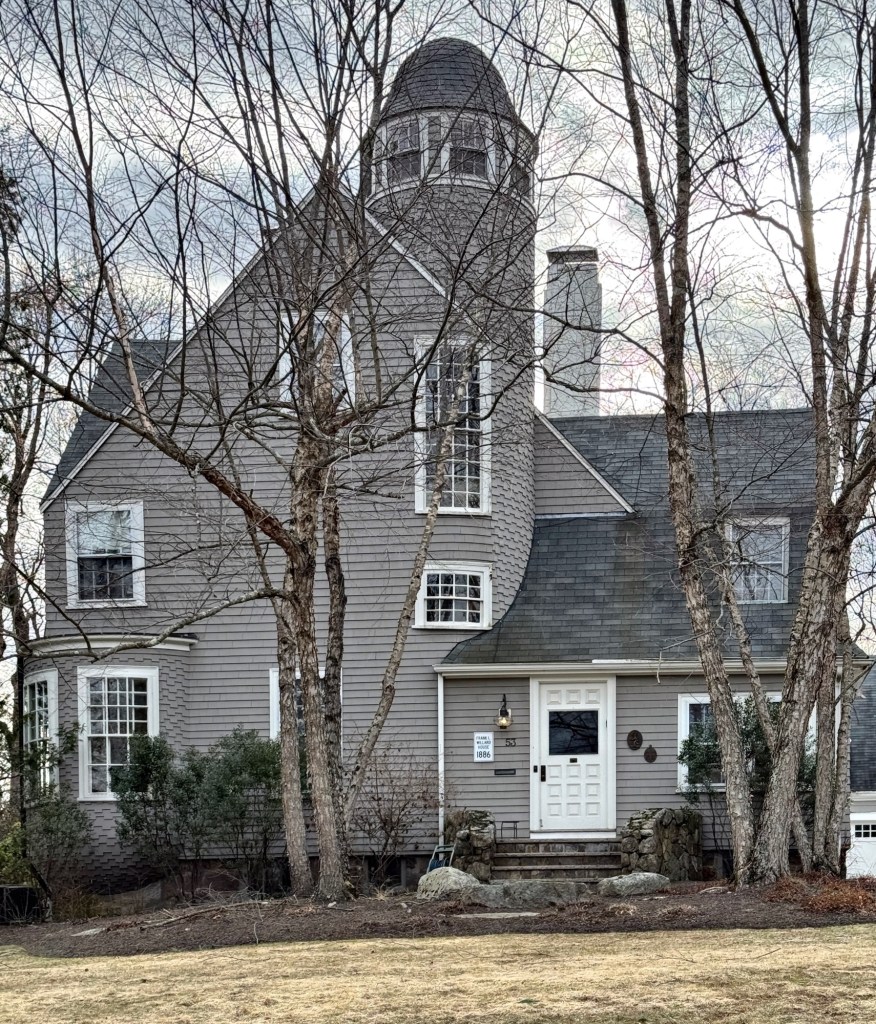
Built in 1886 as a summer house, this handsome Shingle style residence on Pleasant Street in Sharon, Massachusetts, is one of the finest examples of the Shingle style in the area. The house was built as a summer residence for Francis Lyman Willard (1845-1913), who was President and Treasurer of the Riverside Boiler Works in Cambridge, and maintained a primary residence in Jamaica Plain. He and his wife, Mary Smith Willard, had this home built as their country retreat, spending summers here to escape the hustle-and-bustle of city life. The architect could not be discovered at this time, but it appears to have been a Boston-area architect that specialized in the Shingle style due to its unique and high-quality detailing. The feature that stands out is the four-story wood shingled tower on the facade capped by a bell roof that includes a large 20-over-20 double-hung curved wood sash stair window.
Deborah Sampson (1760-1827) was born in Plympton, Massachusetts, and after a troubled childhood, she worked as an indentured servant until the age of 18. She subsequently worked as a teacher during the summer, though she had little in the way of formal education. In the early 1780s, Deborah tried to disguise herself in men’s clothing and enlist in the military to fight against the British forces. She was rebuffed but tried again under the name Robert Shirtliff (sometimes spelled Shurtleff) and this time was successful. Deborah was described as being exceptionally tall, plain looking, and masculine in appearance and mannerisms. She spent at least 17 months as a combat soldier and participated in several skirmishes and sustained multiple injuries. She was reportedly hit by musket fire in the summer of 1782 but refused medical treatment for a leg injury due to fears that her true identity would be discovered. Sampson is said to have extracted one piece of shrapnel from her leg by herself; another remained in her body for the rest of her life. Sampson’s time as a Revolutionary fighter came to a halt a few months before the end of the war, after she fell ill in Philadelphia and a doctor realized that Shurtleff was, in fact, a woman. Sampson received an honorable discharge and went back to Massachusetts. She married Benjamin Gannett (1757–1837), a farmer, on April 7, 1785, and the couple moved to this farmhouse in Sharon, Massachusetts, where she lived the remainder of her life as a farmer’s wife. After Deborah Sampson died at the age of 66, her husband petitioned Congress to receive a pension as the widower of a Revolutionary veteran. A committee ultimately decided to award him the money, concluding that the war had “furnished no other similar example of female heroism, fidelity and courage.” She was the only woman to earn a full military pension for participation in the Revolutionary army. The Deborah Sampson Gannett Farmhouse is a private residence.
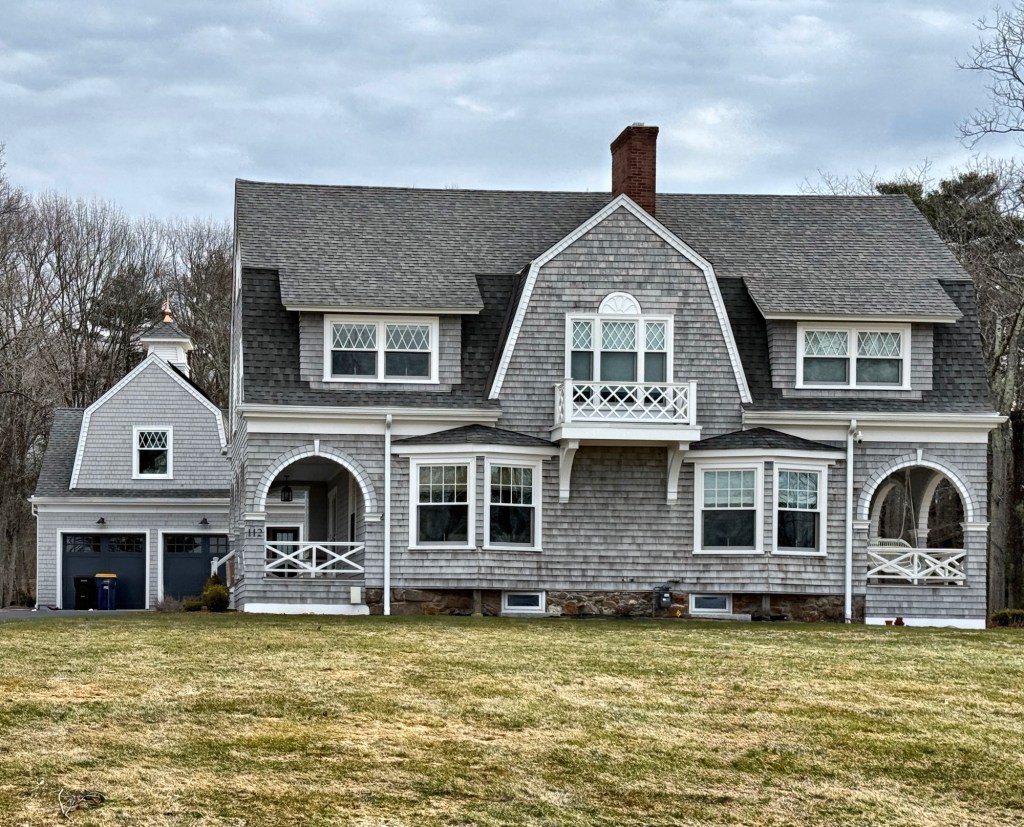
On the eastern shore of Lake Massapoag in Sharon, Massachusetts, the George P. Lawrence Summer House is an excellent and rare preserved example of a late 19th century Victorian summer house in the suburban town. The residence was built in 1897 for George Pelton Lawrence (1859-1917) and his wife, Belle, as a summer retreat from their primary residence in North Adams in Western Massachusetts. George P. Lawrence was an attorney who was appointed as a district court judge before entering the political arena where he became a state senator. The couple spent summers at this beautiful Shingle/Colonial Revival style residence until Congressman Lawrence’s death in 1917. On November 21, 1917, Lawrence jumped out of his eighth-floor New York City window at the Hotel Belmont , committing suicide. In his room, he left a note saying that he “could not stand the pressure anymore”. The Sharon property remained in the family until the 1940s and has been modernized, while maintaining its character.
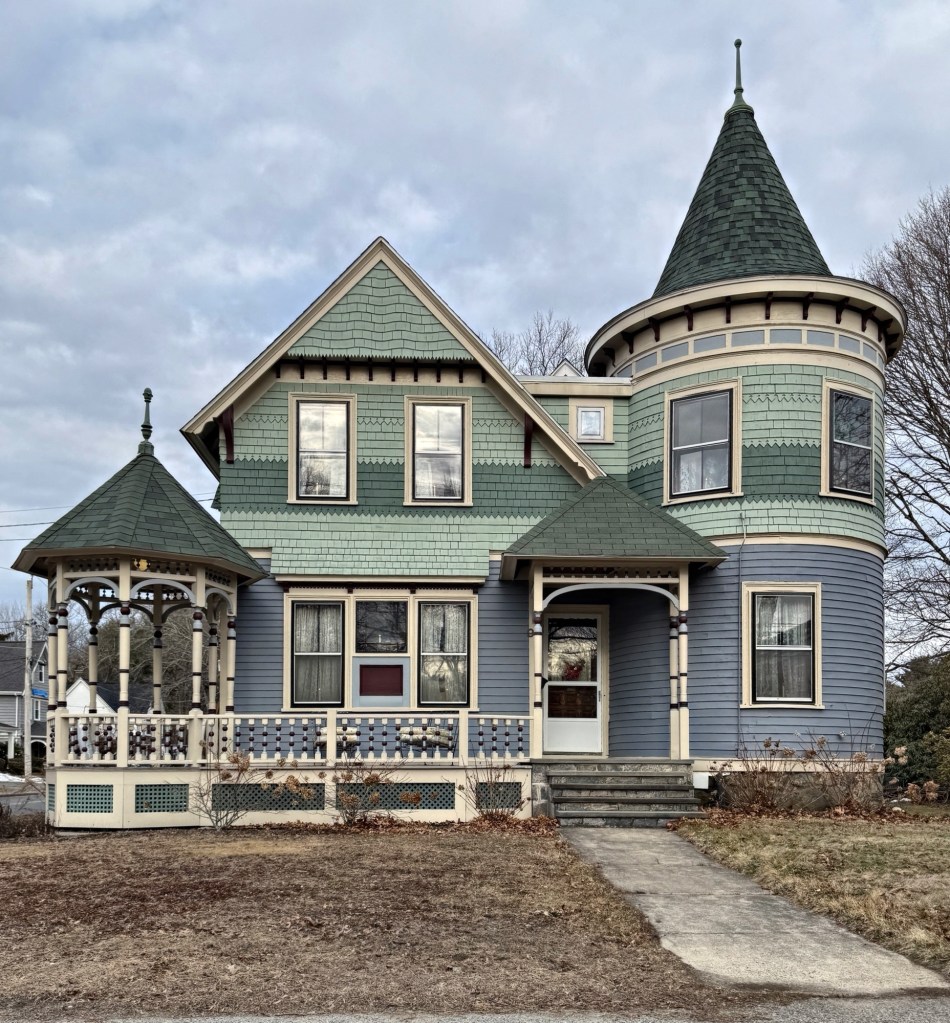
The Timothy Quinn House on South Main Street in Sharon, Massachusetts, is an extravagant example of the Queen Anne style that maintains its flourish and ornate details. The residence was built in 1892 for Timothy Francis Quinn (1863-1934), a first-generation Irish resident who owned and managed a shipping business with his brother, John. Timothy Quinn was active in local affairs and with the local Catholic church and historical society. After his death in 1934, the property was inherited by his wife, Elizabeth, and later by their daughter, Esther. Architecturally, the Quinn House has an irregular plan and features varied siding, brackets, a tower capped by a conical roof, and elaborate porch, all painted to highlight the many unique details.
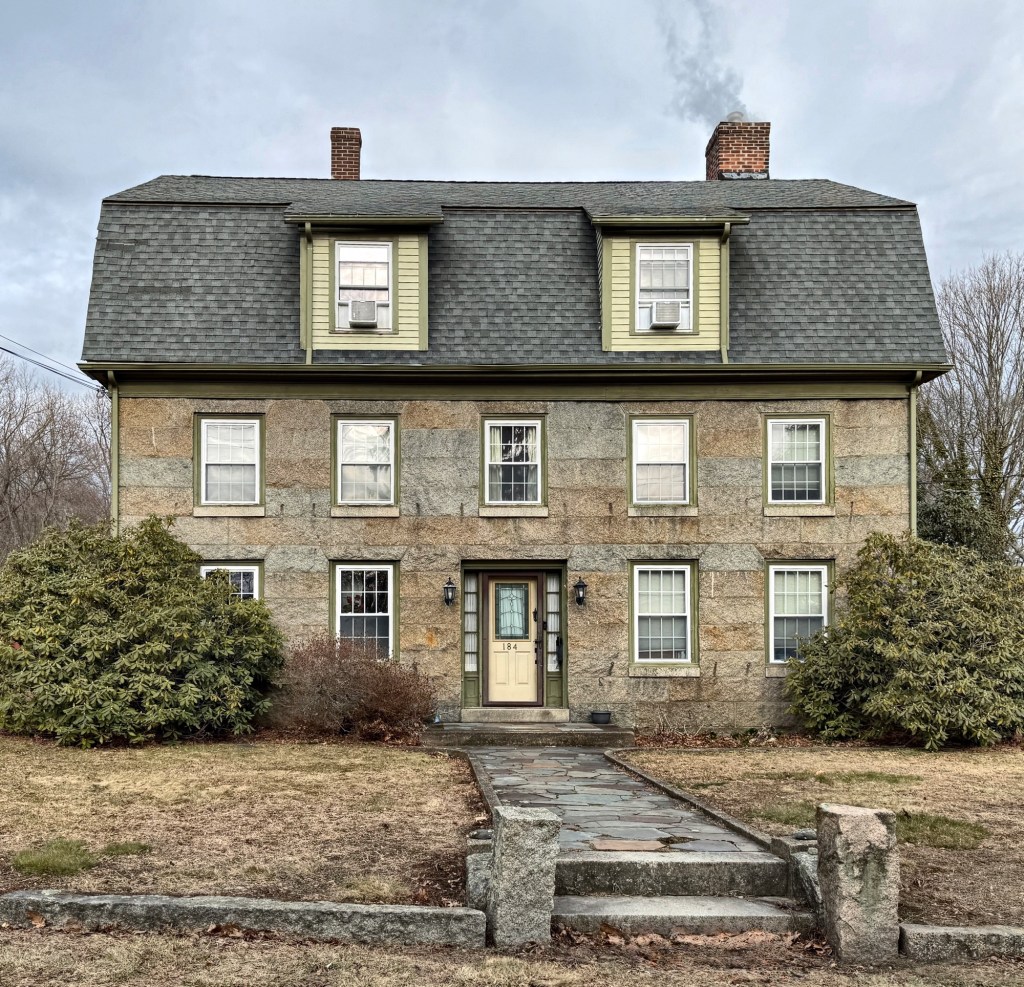
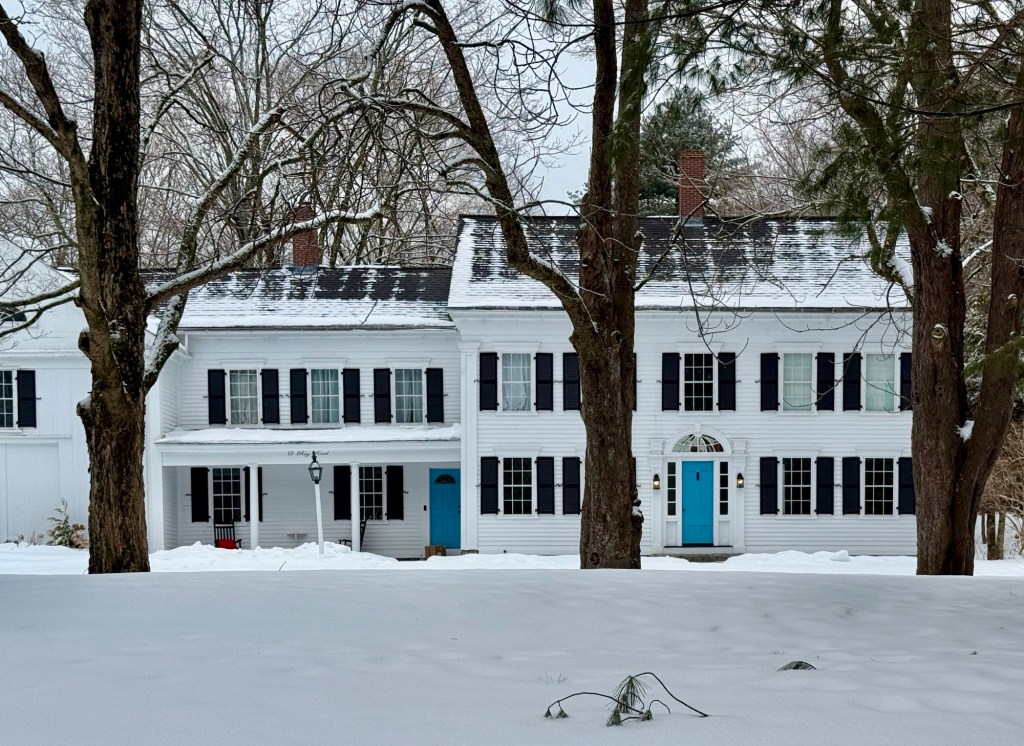
This Federal period house in Wrentham, Massachusetts, has had quite the history from the residence of a Revolutionary War veteran to the superintendent’s house for a school for the insane. This five-bay Federal style house was built for Oliver Pond (1737-1822) in about 1790. General Pond commanded one of the five militias in Wrentham that marched on Boston in 1775 to fight in the Revolution. Pond fought in at least two battles in Princeton and Trenton New Jersey under Washington. After the War, Oliver Pond got involved with politics and became General of the local militia granting him this important title. His heirs remained in the house into the second half of the 19th century. In the early 1900s, the property was purchased by the Commonwealth of Massachusetts as part of the new Wrentham State School, a facility to treat and educate children with disabilities. The Pond House was occupied by the superintendent of the school and is still owned by the State.
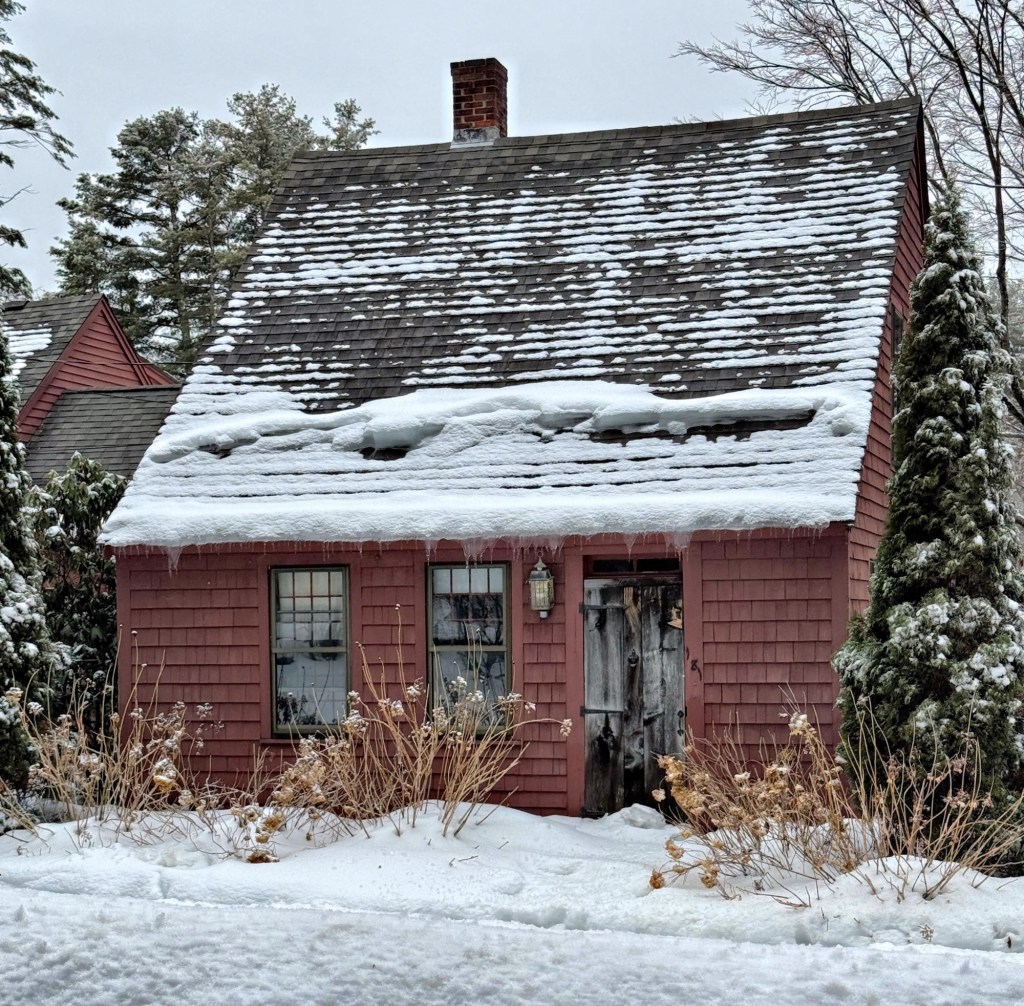
A rare surviving half-cape dwelling, the Follett House on Chestnut Street in Wrentham, Massachusetts, has been lovingly preserved by generations of stewards as a private home. Given its form and vernacular style, the house could date to the mid-18th century, but available early records show it was owned by members of the Follett family in the 19th century. The home was owned by Amorous Follett (1792-1863) and his wife, Huldah Mason Follett who operated a farm on the property and raised their children in the small residence. The property was later inherited by the couple’s son, Alonzo Follett and his wife, Tryphena. The half cape is just three bays wide with a steeply pitched side gable roof, shingled siding, and later wings, expanding the original house.
Built in 1847 as a residence for local Postmaster and storeowner, Philander P. Cook, this historic house off West Street in West Wrentham, Massachusetts, showcases the evolution so many New England farmhouses have experienced, from working farm, to country retreat, to suburban residence. Philander Perry Cook (1816-1880) purchased this land in 1845 from prominent Massachusetts State Senator and local government official, Alan Tillinghast, and shortly after purchase, he began construction of this Greek Revival style, two-story residence with attached stable. At the turn of the century, wealthy Wellesley College graduate, teacher and published author named Lucy Freeman, purchased the property from Cook’s heirs (as well as a residence nearby where she took up residence) and she rented the Philander P. Cook House to friends during the course of her ownership. In 1910, she modernized the house, likely adding the fanlight transom in the Colonial Revival mode, and had the grounds landscaped as a country retreat. Throughout the 20th century, a number of owners have preserved and modernized the home, while retaining its unique charm and character, and it now is a large, single-family home.
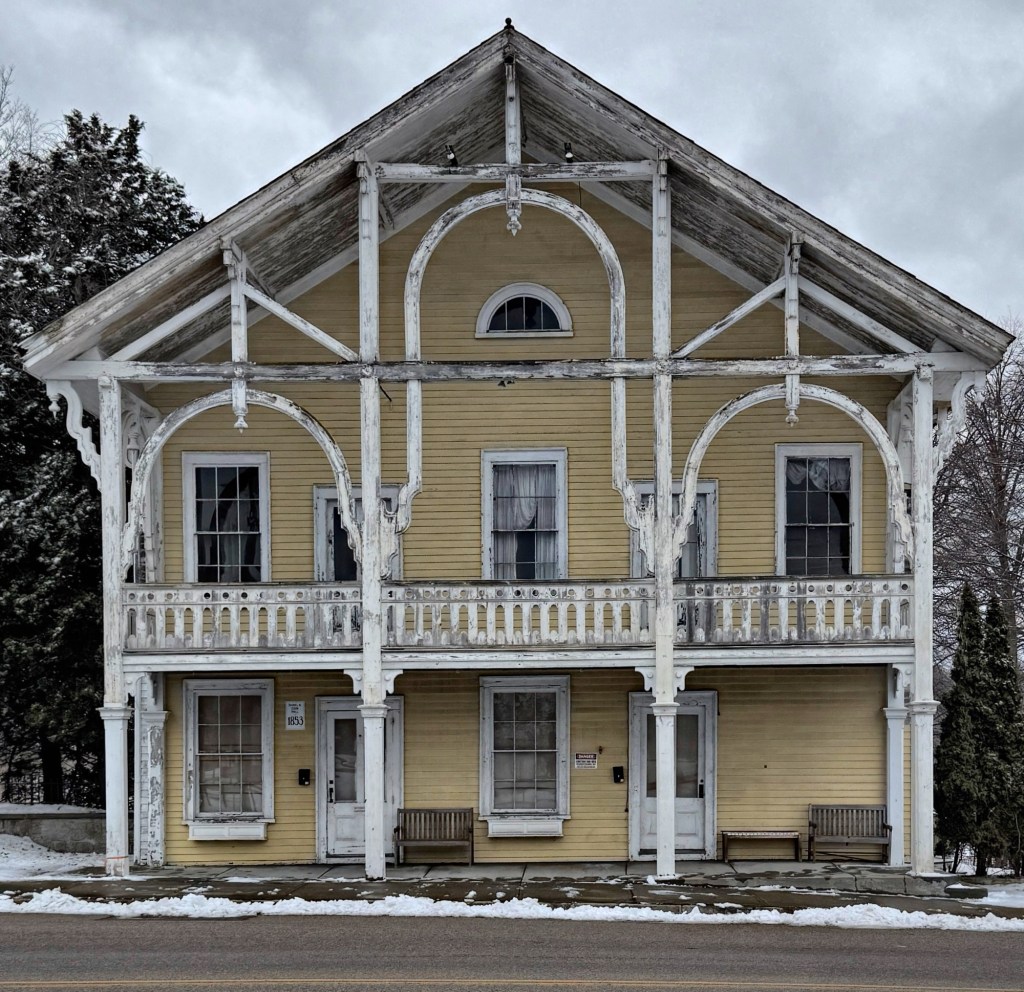
Arguably the most recognizable and beloved building in Wrentham, Massachusetts, is this eclectic mid-19th century commercial building, known as the Wrentham Village Hall. The structure was originally constructed for Daniel A. Cook where he operated a store in the ground floor retail space and rented a meeting hall to local organizations above. The building was constructed around 1853 as a more vernacular building, but given its current appearance decades later when the ornate Stick style porches were added to the facade. While the building has served many uses over its history, the structure is suffering from some deterioration, which hopefully will not impact the rare surviving exposed porch framing and trusses, which give the building so much character.