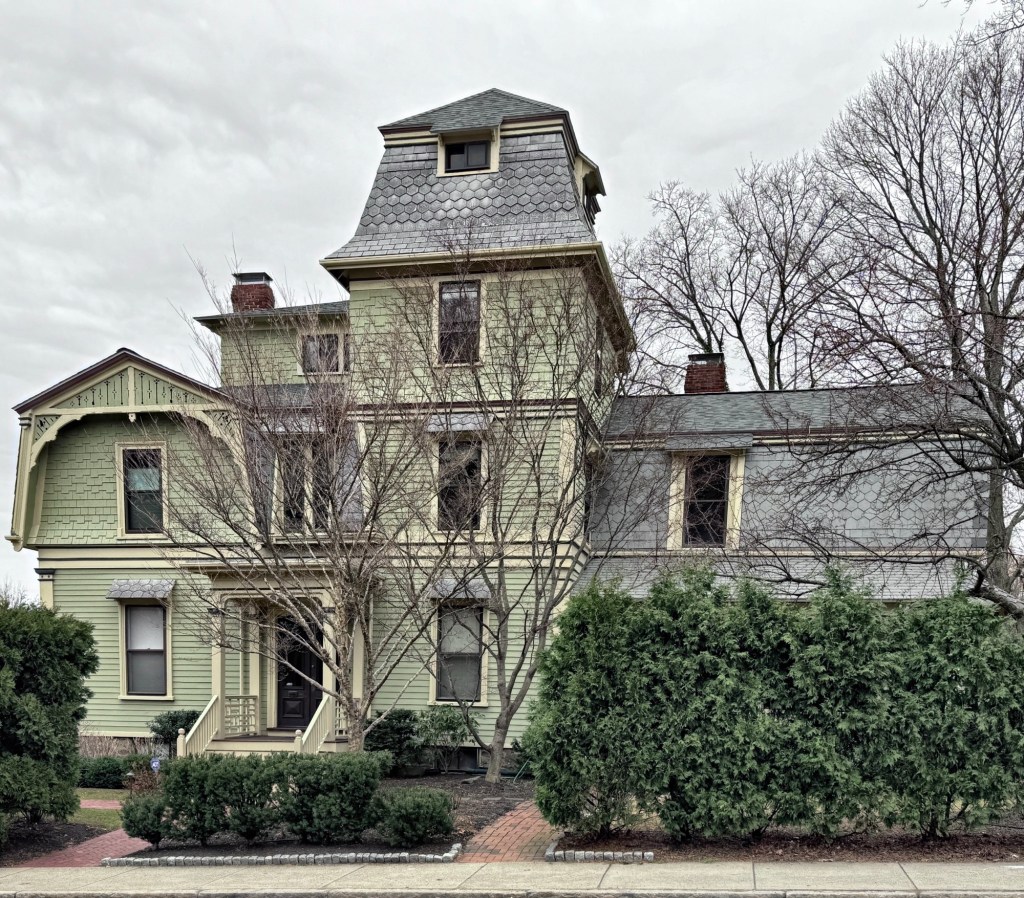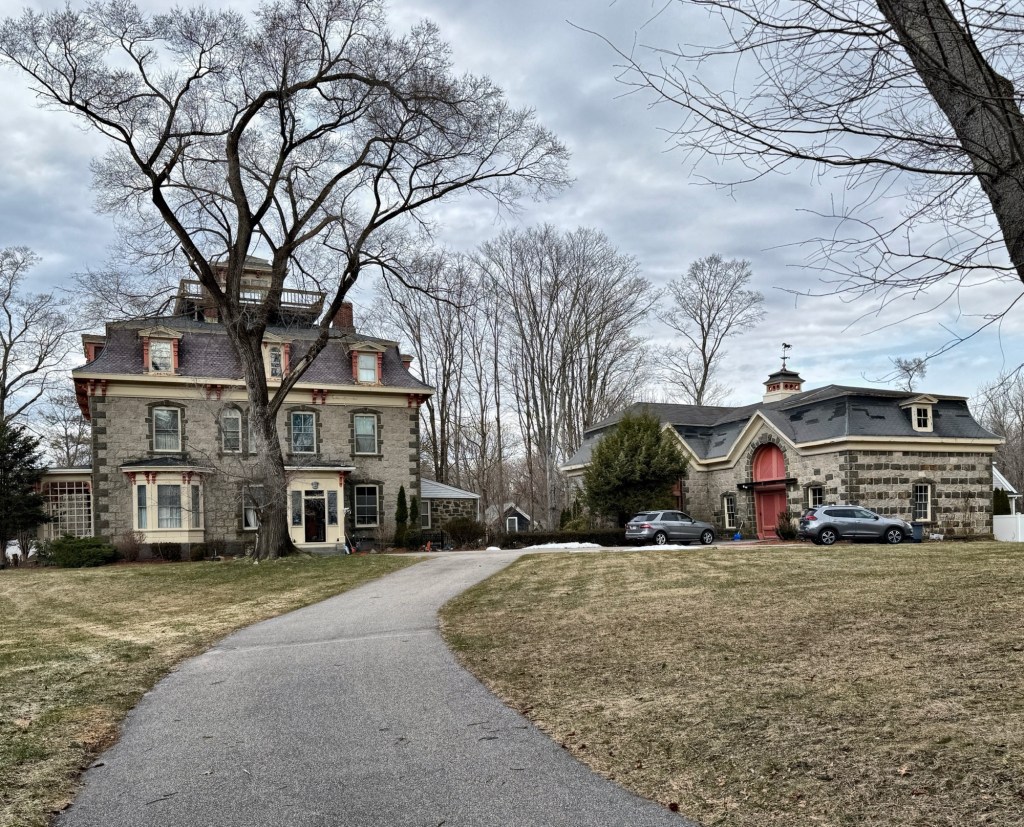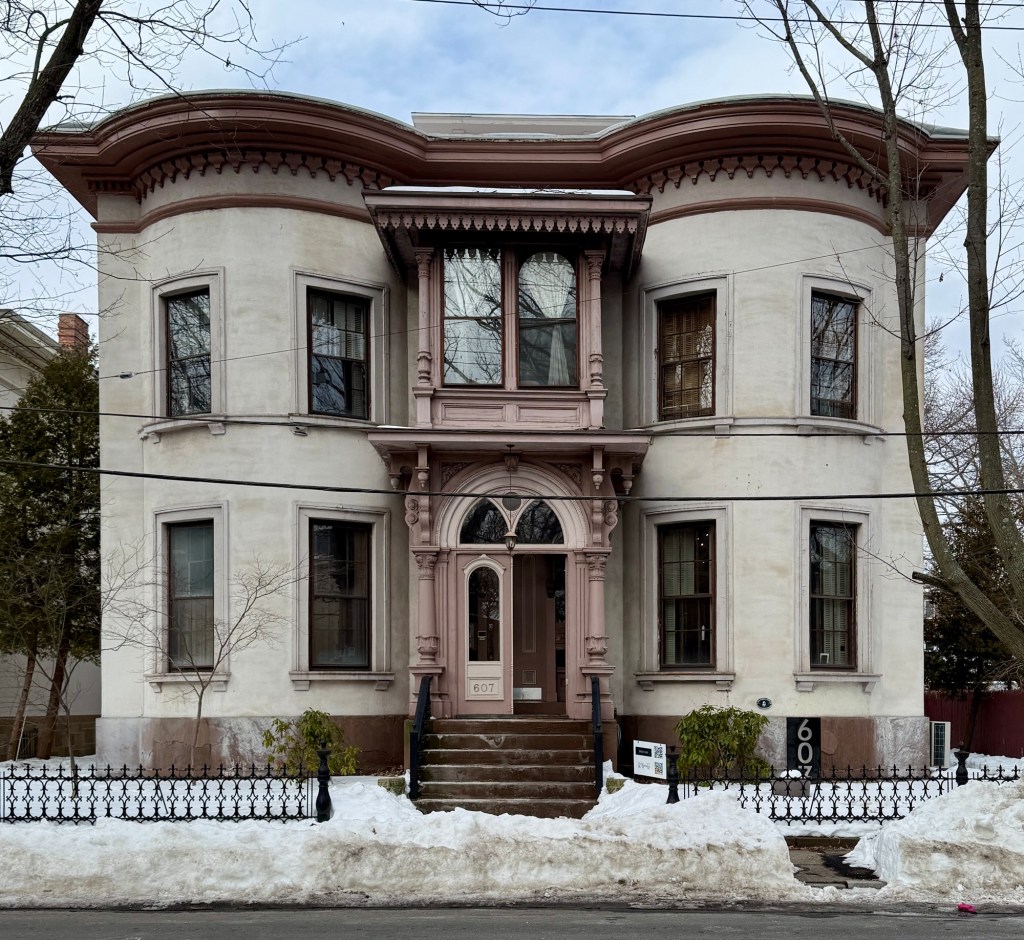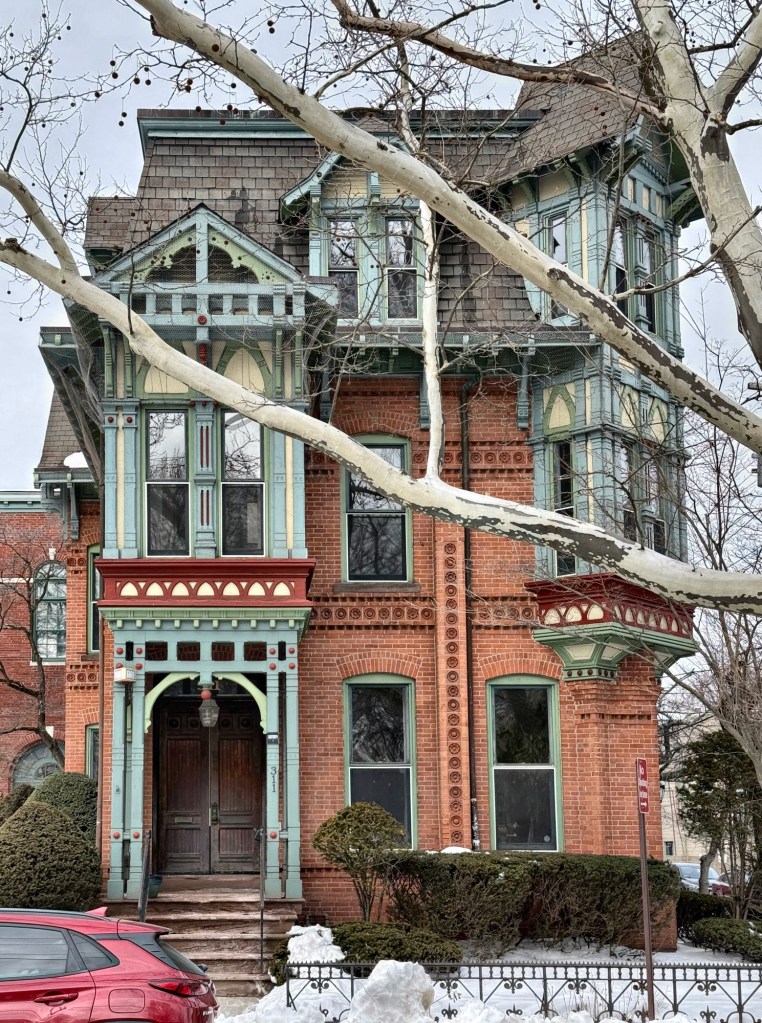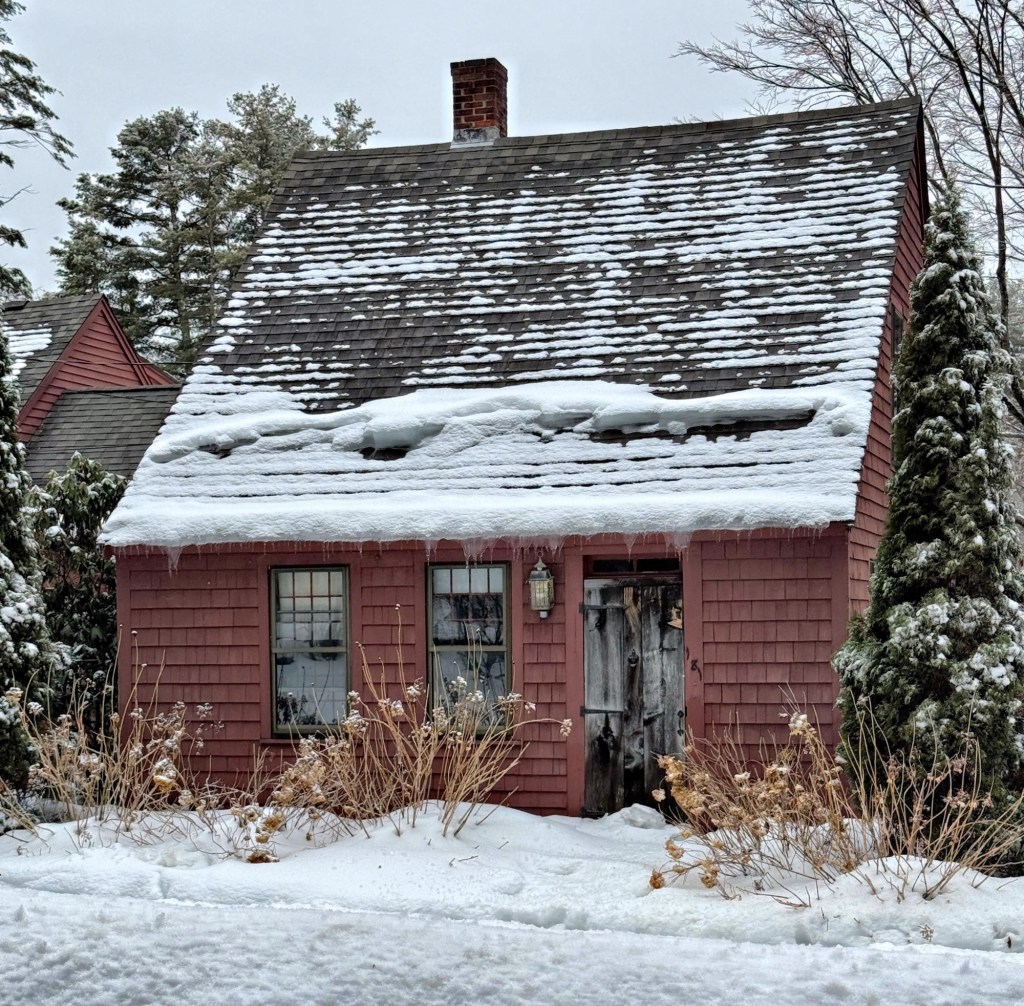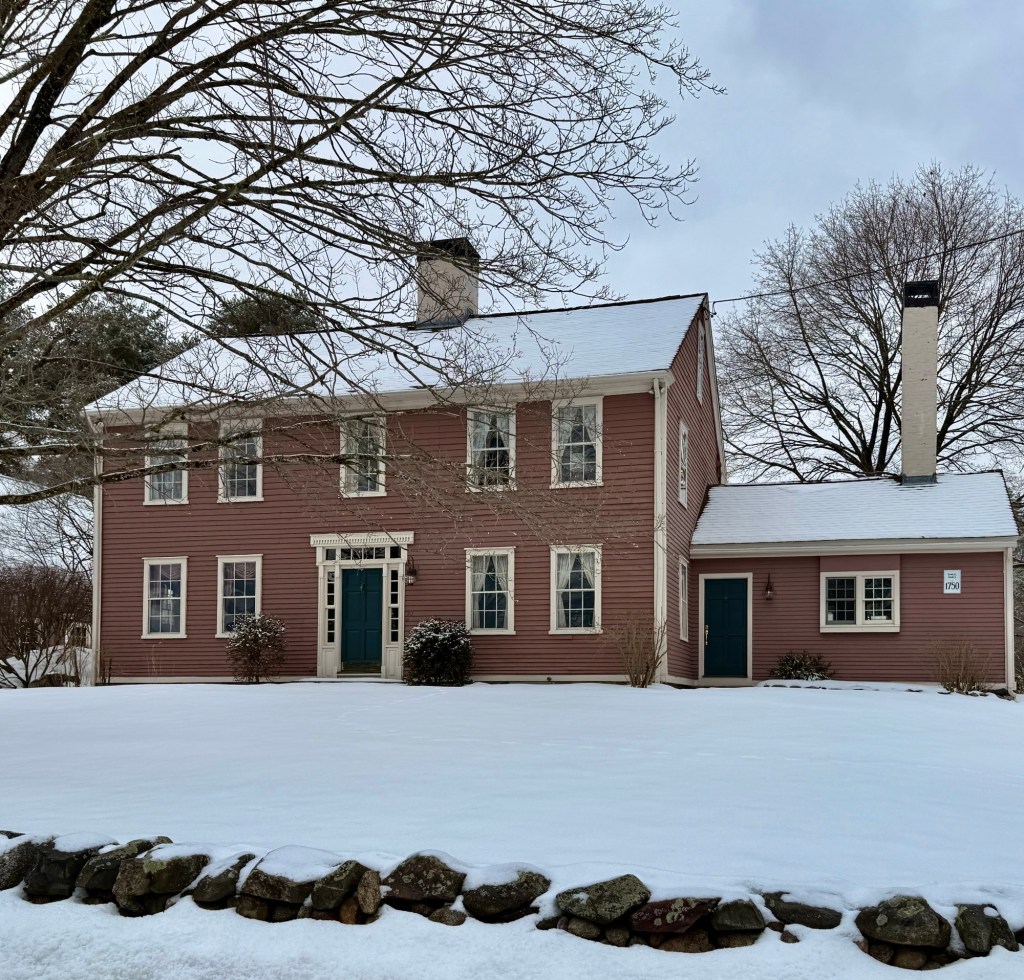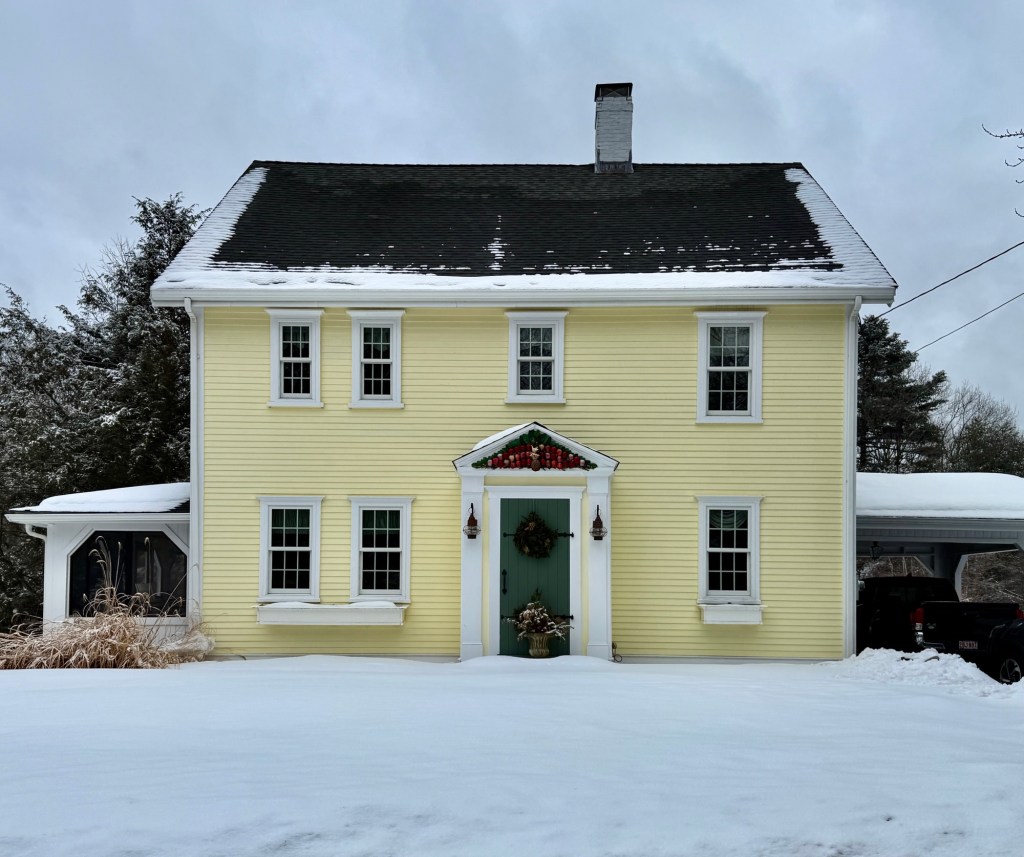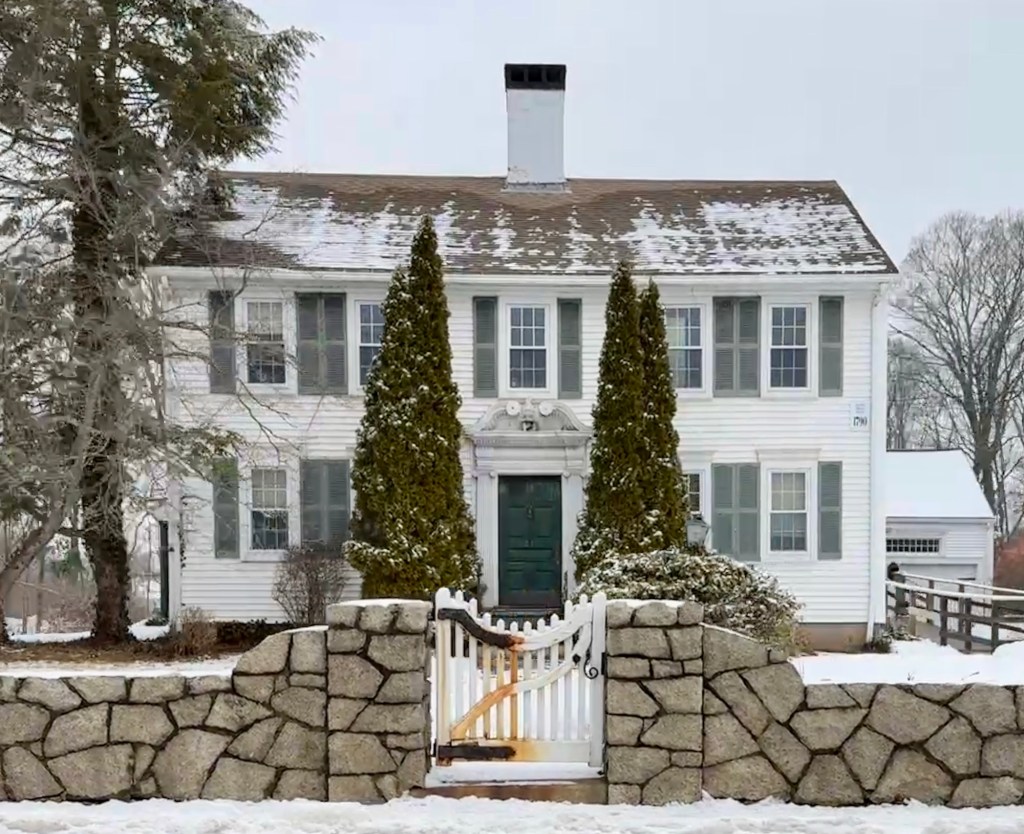
Dunk Homestead // c.1672

The oldest building in Chester, Connecticut, is believed to be this First Period residence on North Main Street, which was originally built sometime after 1672, when land here was deeded to Thomas Dunk (1648-1683). The property was inherited by various members of the Dunk family, including Deacon Jonathan Dunk (1711-1781), who added onto what was originally a one-room, gambrel-roofed house as their families and wealth grew. The old Dunk Homestead is one of the many great landmarks in Chester and has been lovingly preserved for over 350 years!

Charles Daniels House // c.1826

The Charles Daniels House in Chester, Connecticut, is a sophisticated and excellently proportioned and designed example of a single-family residence in the Greek Revival style. Features like the Doric portico, flushboarding and frieze windows are components of a skillful design that has been credited to architect Ithiel Town, but this is unsubstantiated. The home was built around 1826 for Charles Daniels (1799-1838), a gimlet manufacturer, who had his factory nearby. Charles died in 1838, and the property was inherited by his second wife, Abby Gilbert, who also remarried and lived here with her new husband, Clark N. Smith, and they resided here until the early 1900s. Later, the residence was owned by the adjacent mill company, and used temporarily as a storage facility. The location adjacent to the deteriorating factory threatened the significant Daniels House, so in 1978, architect Thomas A. Norton had the house moved a short distance away onto the present site. The house was listed in the National Register of Historic Places and has been preserved, inside and out, by later owners.

Buck-L’Hommedieu House // c.1755

This beautiful Federal style side-hall house is located on Maple Street in Chester, Connecticut, and (at least a part of it) was built by 1755 by Isaac Buck, who deeded half of the property to his son, Justus, during his lifetime. In the early 1800s, the property was purchased by Joshua L’Hommedieu (1787-1880), a manufacturer, who had the property redeveloped or redesigned in the Federal style giving it the appearance we see today. The house has its gable end oriented to the street with an elliptical fan and dentil block detailing.

Richard P. Spencer House – Deep River Public Library // 1881

The finest extant Queen Anne Victorian-era house in the town of Deep River, Connecticut, is located on Main Street and since the 1930s, has been home to the town’s public library! How’s that for adaptive reuse?! This residence was built in 1881 for Richard Pratt Spencer (1820-1910), a local prominent businessman who lived to be 90 years old. Spencer lived here with his second wife, Juliana Selden, who was 32 years his junior, and three children until his death in 1910. When Spencer’s widow died in 1932, the heirs sold the property to the Saybrook Library Association (before the town renamed Deep River in 1947), which then, in turn, sold the building to the town for a small price in order to convert it into a library. Opened to the public in 1931, the Deep River Public Library has been preserved inside and out with historic fireplaces, woodwork, and features. The only notable change occured in 1995 when a children’s room addition was built to resemble an old porch. The library even retains the original pebbledash finish in the gables, a rare detail not commonly found in typical old houses of the period.


Southworth House – Deep River Historical Society // 1842

The Southworth House, also known as the Old Stone House, in Deep River, Connecticut, is a significant example of a stone, Greek Revival style house built for an important local family. The Southworth House was constructed in 1842 for Deacon Ezra Southworth (1803-1859) from stone harvested from one of the Southworth family’s quarries. Ezra was the son of local shipbuilder, Job Southworth who began building ships at the Deep River landing in the 1790s. Ezra Southworth branched off into manufacturing, becoming a partner and patent holder producing ink wells. His son, Ezra Job Birney Southworth (1844-1919), went into business with his father-in-law in shipping and served as a member of the State Legislature twice. In 1882, Ezra Jr. added the wooden ell onto the rear of the Stone House along with the wrap-around veranda and likely the rear barn as well. Ada Gilbert Southworth Munson was Ezra J. B. Southworth’s only child to live to adulthood and inherited the family home. She was a founding member of the Deep River Historical Society and bequeathed her family home to the Society in 1946, who have maintained the significant home here ever since. 

John Gladding House // c.1825

This vernacular, Federal period house on Union Street in Deep River, Connecticut, was built around 1825 for (and likely by) John Gladding. John worked in town as a joiner, a historic carpenter/woodworker, who either built houses or ships in the nearby Connecticut River. The Gladding House was likely originally built as a half cape, with a side hall entry and the two window bays to its left. As the family grew, the house was probably added onto to the right of the entry with the irregularly spaced bays. Houses like these that modestly grow and adapt to modernizations over time are what makes many New England villages great.

Bryant-Finlay House // c.1713

This large First Period house in Wayland dates to the early 18th century and was originally located in Kingston, Massachusetts, and moved to its present location in the 40s. The historic home was built by 1713 for Jonathan Bryant (1677-1731). After 250 years in Kingston, the house was threatened with demolition, and was ultimately saved by Wayland resident, Allan Finlay. Allan was a member of the town’s Planning and School boards, and was active in overseeing the Modern expansion of Wayland’s schools in the 1950s and 60s. In 1941, Finlay had this house disassembled and rebuilt on land on Old Sudbury Road for his family. The house, with its expansive setback, overlooks preserved wetlands.

Benjamin Adams Farmhouse // 1775

Benjamin Adams (1750-1843) was born in Milton, but relocated to East Sudbury (later renamed Wayland) and purchased property here from a Bezaleel Moore, a tanner and farmer. Soon after moving to town, in 1775, he mustered with the minutemen under the command of Capt. Nathaniel Cudworth. After the conclusion of the war, Benjamin married Elizabeth “Betsy” Adams and they expanded the old farmhouse (today at 34 Lincoln Road) and raised their children here. The property remained in the family until 1873 when it was purchased and operated as a dairy farm. In the 1920s, the farmhouse was expanded with Colonial Revival additions and a renovation for use as a summer residence and gentleman’s farm. It is believed that some of the interior wood paneling inside the house was added at this time and was salvaged from the Pequod Inn, which was razed around that time.

Ames-Mellen House // c.1823

This house in Wayland Center was built for Dr. Ebenezer Ames (1788-1861) who had a medical practice treating patients in East Sudbury (later named Wayland) and other surrounding communities. Dr. Ames is believed to have built this house in about 1823, which is a five-bay, two-story Federal style house under a hipped roof. Dr. Ames moved to another home in the village by 1830 and this old residence was purchased by Judge Edward Mellen (1802-1875) who lived in the house from 1831 until his death in 1875. Judge Mellen was appointed Chief Justice of the Massachusetts Court of Common Pleas in 1855, and practiced law in Wayland from a small office that still stands in the center of the village. Mellen’s widow Sophia Mellen remained here after her husband’s death in 1875 until her death in 1893. The front porch was likely added in the early 20th century, but does not at all detract from the architectural significance of the 200 year old residence.

Coolidge-Burnham House // 1822

This charming old home on Burnham Road in Bolton, Massachusetts, was built in 1822, but as a one-story three-quarter cape house with the additional story added later in the 19th century. The residence was built for William Coolidge, a Revolutionary War veteran. After successive ownership, the property was sold in 1855 to Reuben Burnham, a carpenter, who soon after added the second floor onto his new home, keeping the original cornice which now serves as a visual reminder of the home’s changes. Sadly, around 100 years later, the highway cut through the town, bisecting this property, which now abuts the busy road, but owners have maintained and preserved this stunning property which is evocative of the early days of Bolton.