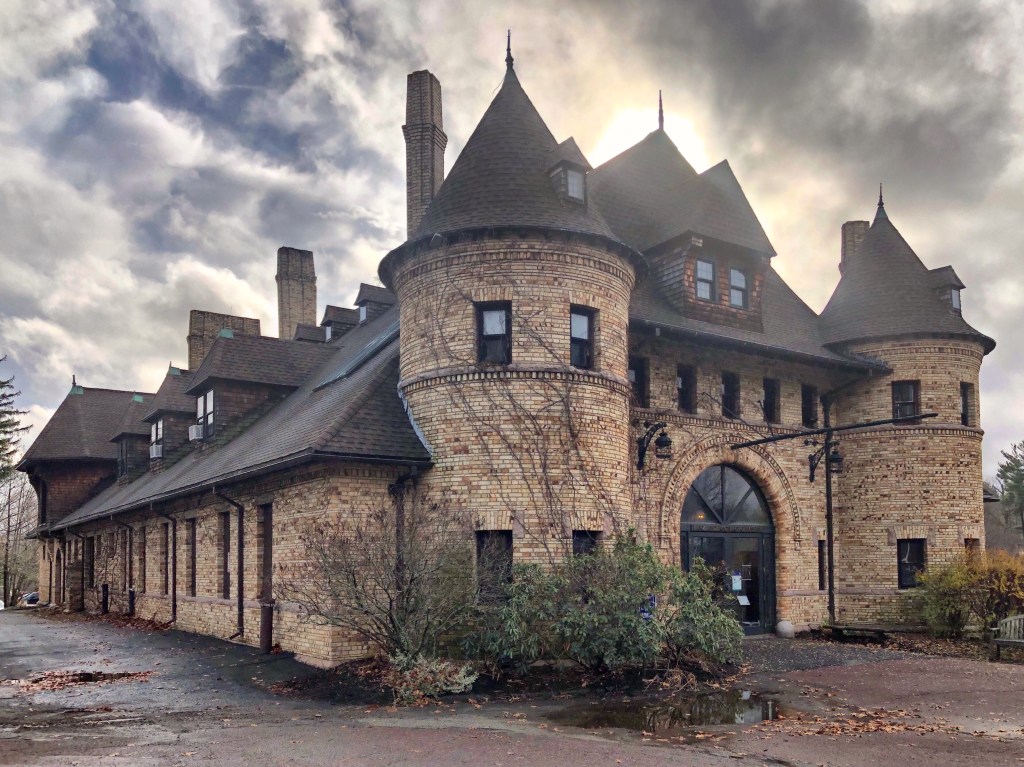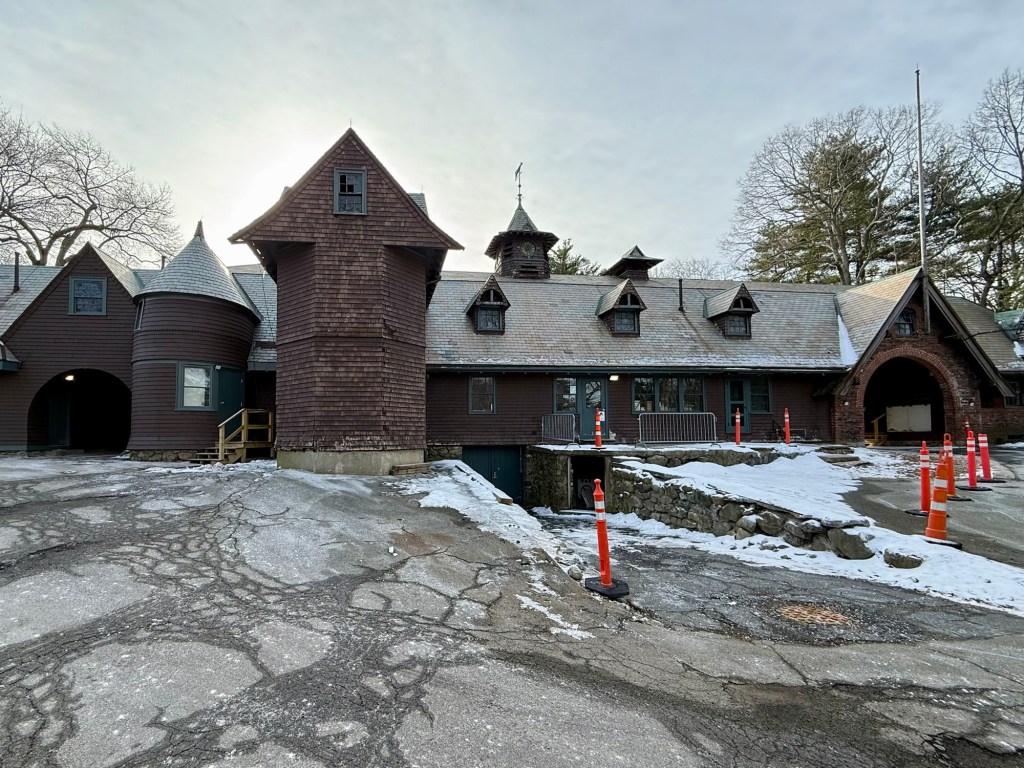
Roughwood Estate Cow Barn // 1892

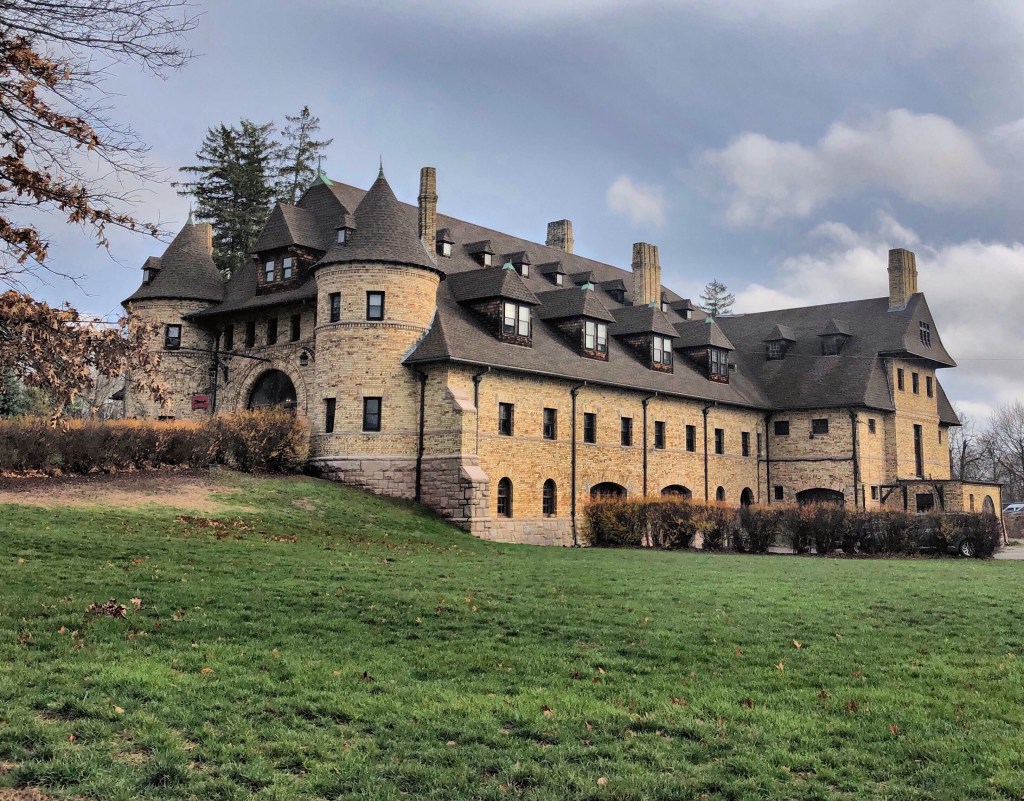
Like the Roughwood Mansion and carriage house, this building was designed and built in Brookline, Massachusetts, in the early 1890s as part of the “Roughwood” estate. Despite its high-style and ornate detailing, the building was actually constructed as a cow barn. Built in two phases for its two owners, William Cox and Ernest Dane, the large barn structure blends Victorian design into a use more reserved for vernacular detailing. The building was designed by Andrews, Jacques and Rantoul, and like the mansion and carriage house, blends Queen Anne and Shingle styles under one roof. Ever-since the estate became a college in the 1960s, the building has been used as a maintenance building. It appears that since it has been owned by Boston College as part of it’s Messina Campus, it is undergoing a thoughtful restoration!
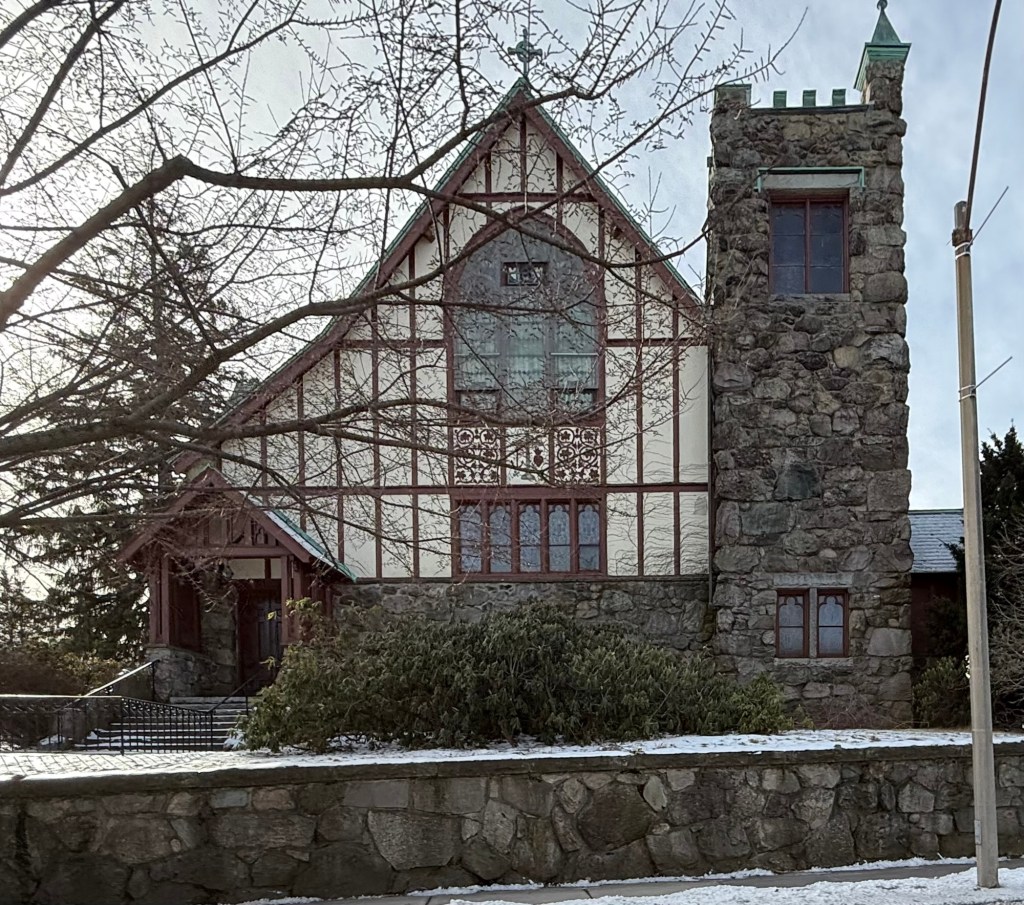
Saint Lawrence Catholic Church // 1896

The parish known today as Infant Jesus-St. Lawrence Church was established in 1898, two years after its original chapel building – shown here – was erected to serve as a mission church of St. Mary of the Assumption in Brookline Village. The St. Lawrence Church was built in 1896 on Boylston Street in the Chestnut Hill/South Brookline area of the town, built to serve a more local, well-off population in the area. The church (and the adjacent rectory) was designed by Franz Joseph Untersee, a Swiss-American architect, and Brookline resident, who designed many Roman Catholic churches throughout the eastern part of United States. The Neo-Gothic church building is built of wood and stone with stucco and applied half timbering. Besides the large stained glass window and applied ornament, the church is notable for its square, irregularly-laid granite tower with crenelation. The church remains active in the community and very-well preserved inside and out.

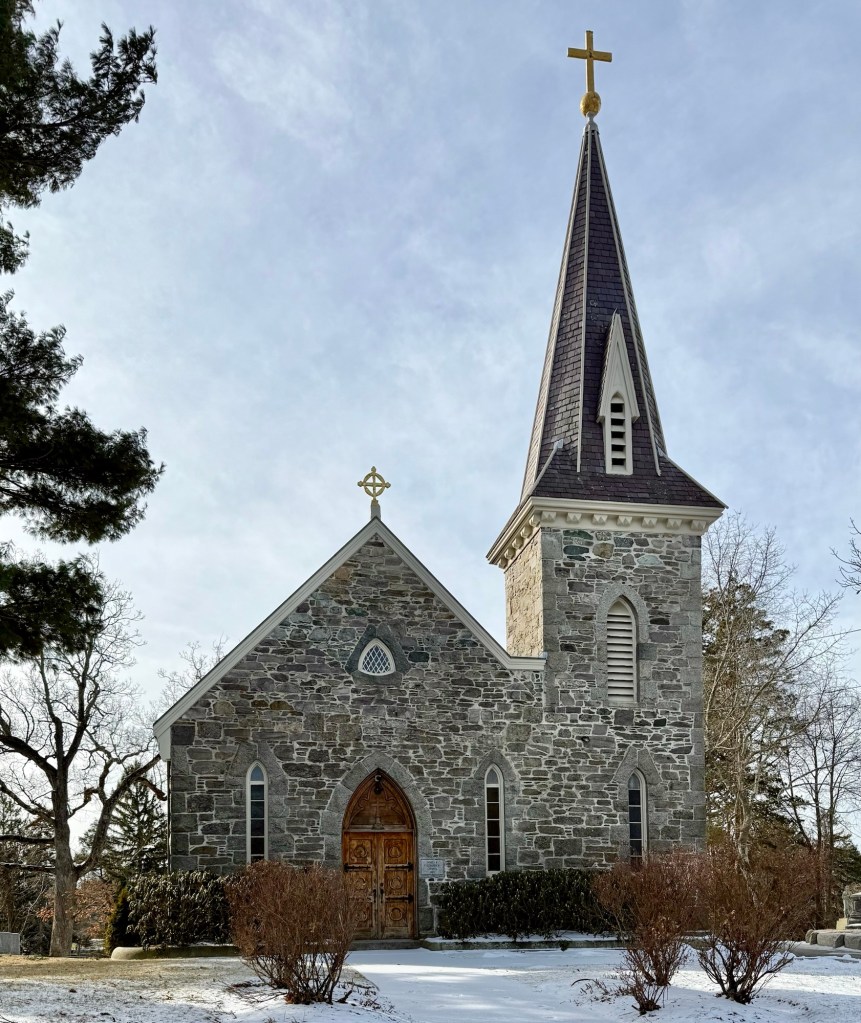
Holyhood Cemetery Chapel // 1857

Holyhood Cemetery in Brookline, Massachusetts, was laid out in 1857 under the direction of Father Joseph M. Finotti, pastor of Assumption Parish , which included Brookline and Brighton. The cemetery reflects the mid-19th century influence of the Rural Cemetery movement and the romantic landscape cemetery planning begun at Cambridge’s Mount Auburn Cemetery in the 1830’s. A plan of the cemetery was drawn up by Shedd & Edson and published in August 1857. It shows curvilinear avenues and paths named after former bishops of Boston and Biblical figures. All were welcome to be buried except those who “died in a state of Drunkenness, Duel, or by self-destruction, unbaptized, non-Catholic, or otherwise opposed to the Catholic Church.” In the 1857 Shedd & Edson plan for Holyhood Catholic Cemetery, a chapel was located at the center on the hill shown in a small drawing on the edge of the plan. Known as St. Joseph’s Chapel, the stone building was designed by Patrick Keely, the successful and influential New York architect of many mid-19th century Catholic churches. The chapel would be dedicated in 1862. Decades later, a cemetery office was planned and built across Heath Street from the cemetery gates, but was demolished sometime in the 20th century. The cemetery grew and it along with the mid-19th century chapel, has been lovingly maintained to this day.  

Wright Estate Gatehouse // 1907

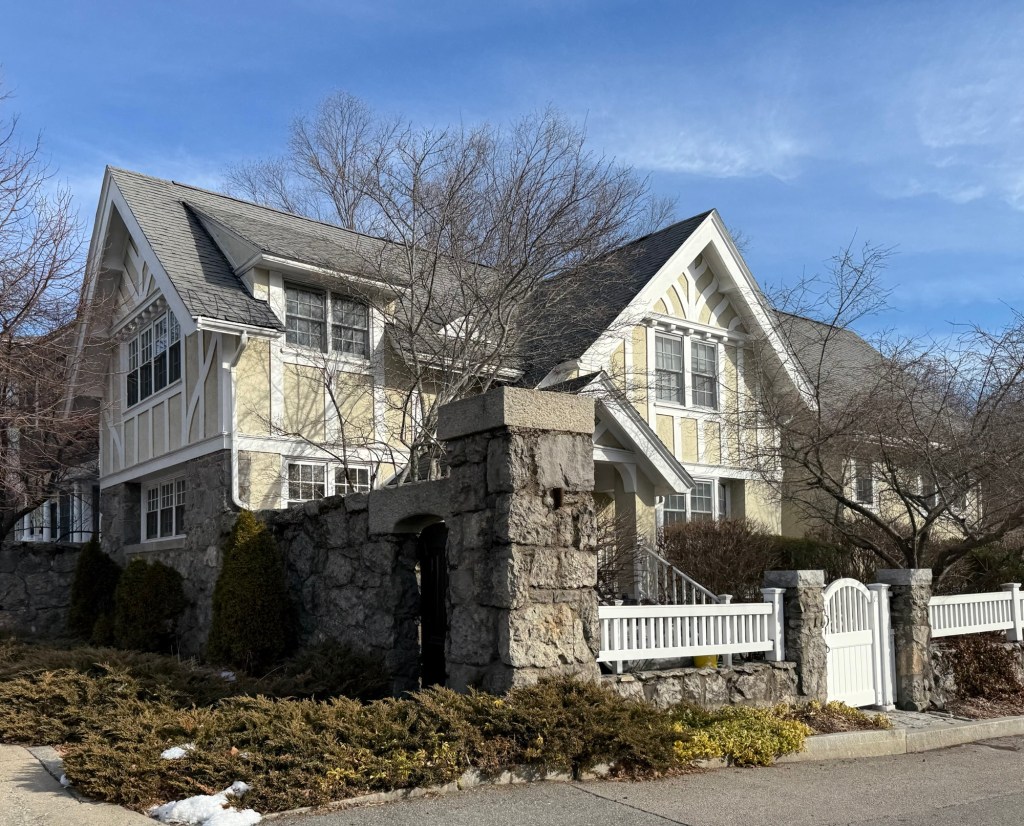
Besides the former Wright Carriage House (now the Soule Recreation Center), the only other extant building that was built on the grounds of the former John G. Wright Estate in Brookline, Massachusetts, is this structure, the historic gatehouse to the property. Built in 1907 at the same time as the manor house, the gatehouse was also designed by architects Chapman & Frazer and served as the entry to the expansive grounds with a room for the gatekeeper to sleep in overnight. The Tudor Revival style building is less ornate than the stone mansion, the half timbering and stucco work well to compliment the other buildings. While the formerly dark half timbering has since been painted a white, the building still maintains its character. While the remainder of the Wright Estate was subdivided and sold off by the heirs of next owner, wool merchant, Andrew Adie, the gatehouse remained and survived the destruction that befell the main manor. The old gatehouse was converted to a full-time residence and remains to this day.

Barnard Gordon House // c.1928

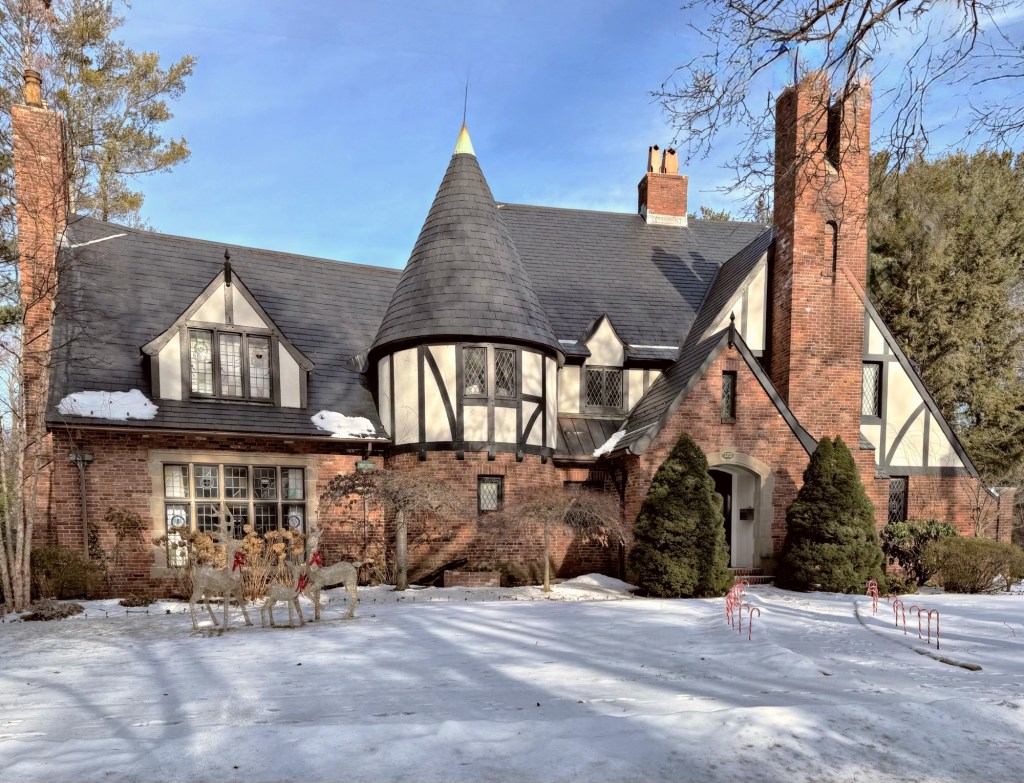
Found on Woodland Road in Southern Brookline, Massachusetts, this brick dwelling is one of a dozen-or-so whimsical Tudor cottages built there in the1920s and 1930s. The Barnard Gordon House, built around 1928, utilizes brick and stucco cladding with ornamental half-timbering, diamond pane leaded glass casement windows on the second story, and decorative half-timbering. The main attraction is the round tower with conical roof also serving as the entrance, resembling more of Rapunzel’s tower than a normal suburban home. We need more unique houses today like they built 100 years ago. Everything today feels so sterile and unwelcoming, maximizing interior layout at the loss to street presence.

Arthur B. Bernard House // 1928

A playful interpretation of a medieval English cottage, with its stucco cladding, half-timbering, weatherboards in the gable ends and ornamental well enclosure in the front yard, can be found on Woodland Road in Brookline. The whimsical cottage was built in 1928 for Arthur B. Bernard, the son of the president of the New England Leather Company in Boston’s Leather District. Arthur would follow his father’s footsteps and join the business himself. Architect and builder, Fred S. Wells of Newton designed and constructed the house (and others in the area in the same style). What’s your favorite part of this house?

“Puddingstone” // 1927

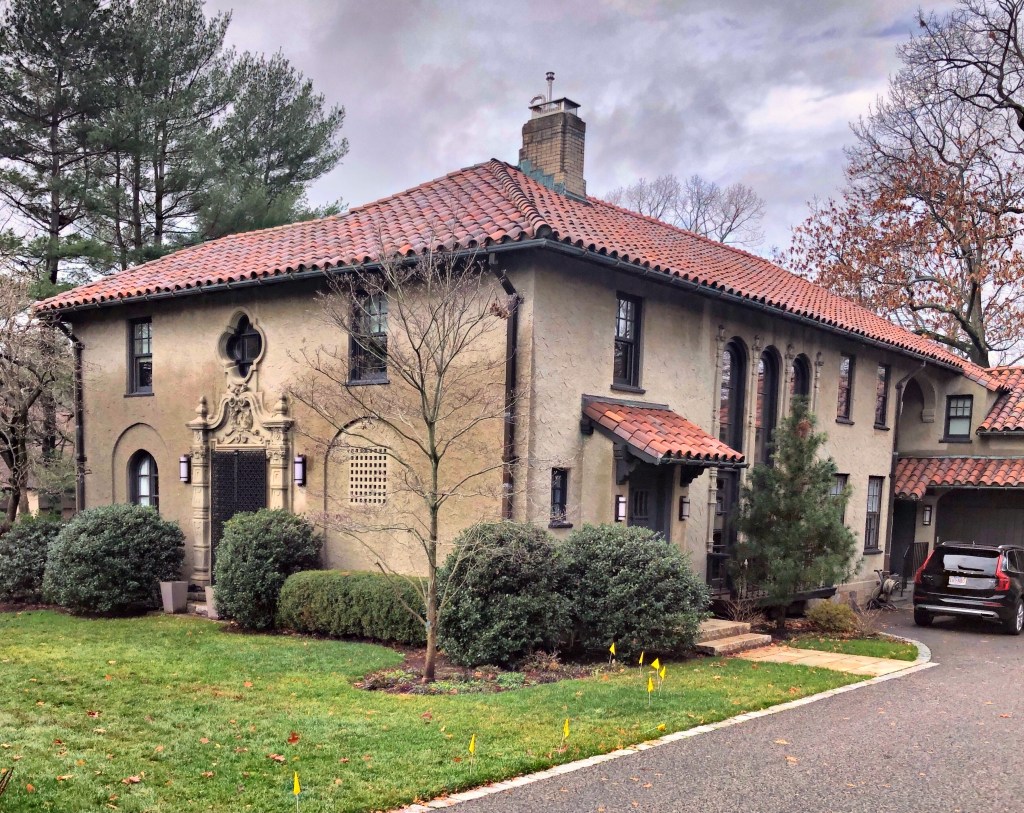
Located across the street from Larz Anderson Park and the former Larz Anderson Estate, this stunning Spanish Revival home, built in 1927, was constructed as a guest house for visitors of Larz and Isabel Anderson. Between 1925-29 the Andersons constructed three guest houses outside the estate on Goddard Avenue. The designs were intended to call to mind places the Anderson’s had visited. “Puddingstone”, was named for a nearby outcropping of puddingstone on the Anderson estate, and was modeled after a house the couple had seen in Santa Monica, California. The Andersons used the buildings occasionally as guesthouses for relatives or friends who came for long stays at Weld, especially when Larz and Isabel were not in residence there. But for the most part, the houses remained empty and it was only after Larz’s death in 1937 that Isabel disposed of them. She donated them to Boston University for use as the Brookline Campus, who in turn, sold them off as private residences years later. Built in a Spanish Colonial style, it features a red terra cotta tile roof, adobe-colored stucco walls, and a center entrance framed by an elaborate cast stone surround in a Spanish Baroque style. To the right of the front door, a clathri (grid/lattice in architecture) over a window can be found in a blind arch.

.

Larz Anderson Carriage House // 1889

This large and imposing brick and stone structure, located in Larz Anderson Park in Brookline, was once the carriage house of “Weld”, the estate owned by Larz and Isabel Weld Anderson. Constructed in 1888, it was inspired by the Chateau de Chaumont-Sur-Loire in France and designed by Edmund M. Wheelwright, the city architect of Boston. First constructed to house a working stable, it later served to house and maintain the Andersons’ growing automobile collection. After Isabel Anderson’s passing in 1948, the collection was entrusted, at Isabel’s bequest, to the Veteran Motor Car Club of America. The VMCCA then established the nonprofit organization that is now known as the Larz Anderson Auto Museum. The former mansion suffered from vandalism in the 1950s and caught fire, later demolished by the Town, who could not afford to rebuild the home.

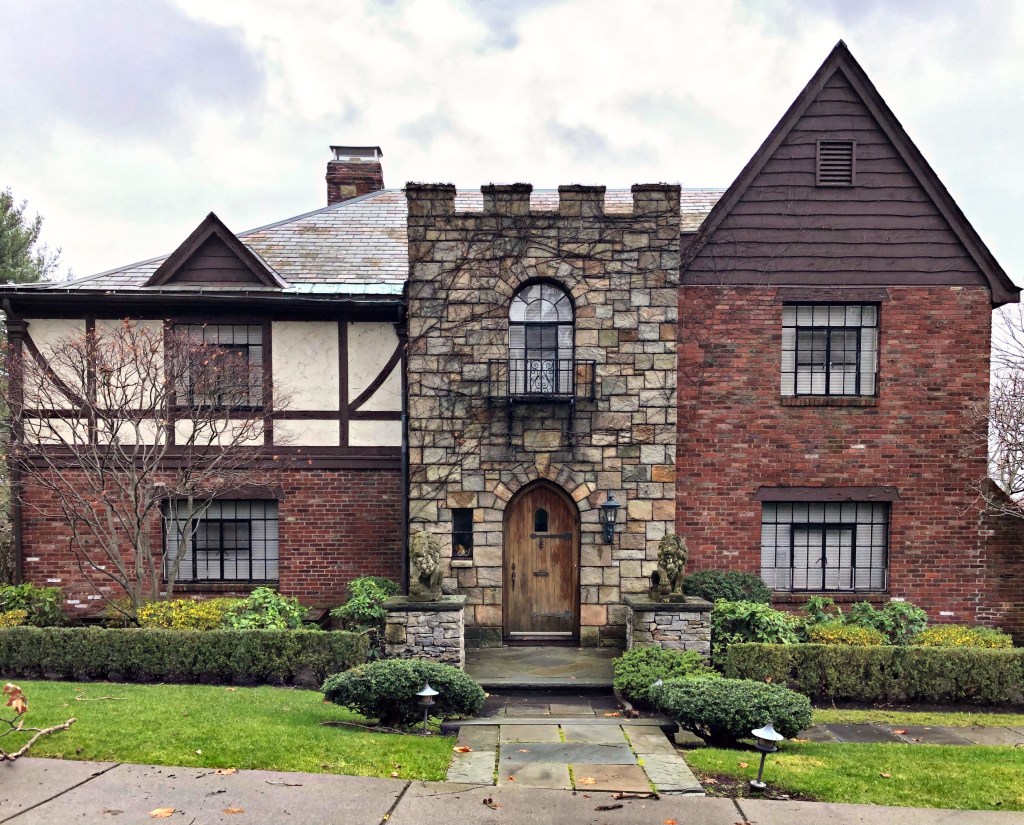
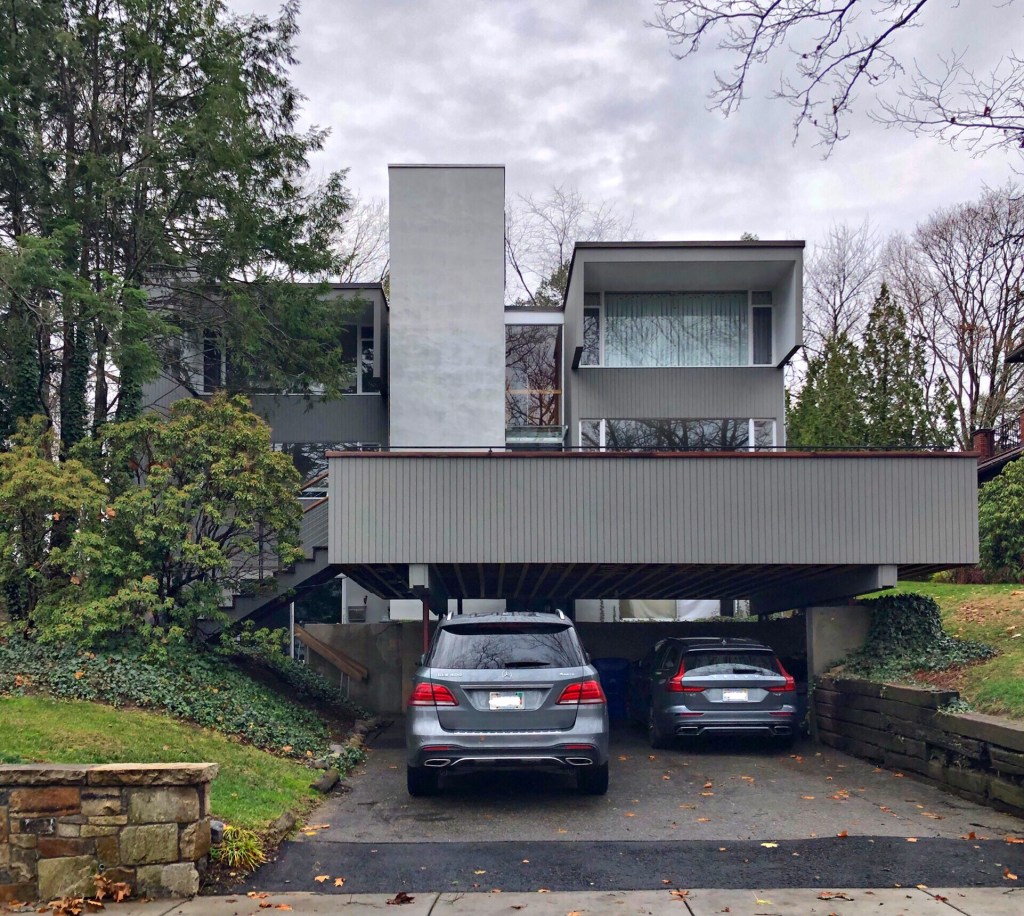
Pastan Houses // 1936 & 1963

Located across the street from each other in Brookline, the Pastan Houses are an excellent example of how architectural tastes can change from one generation to another. The William Pastan House was constructed in 1936, and is Tudor Revival in style. The home has a projecting square entry tower with castellated roofline and interesting mixture of materials and textures. The first owner, William Pastan raised his family in the home, attending the synagogue a couple blocks away. By 1963, Pastan’s son, Harvey became a successful engineer and built a home near his parents for his own family, though in a very different aesthetic. The Modern home features boxy forms, prominent covered parking spaces, and expanses of glass.

Which house would you prefer, William’s (1936) or Harvey’s (1963)?

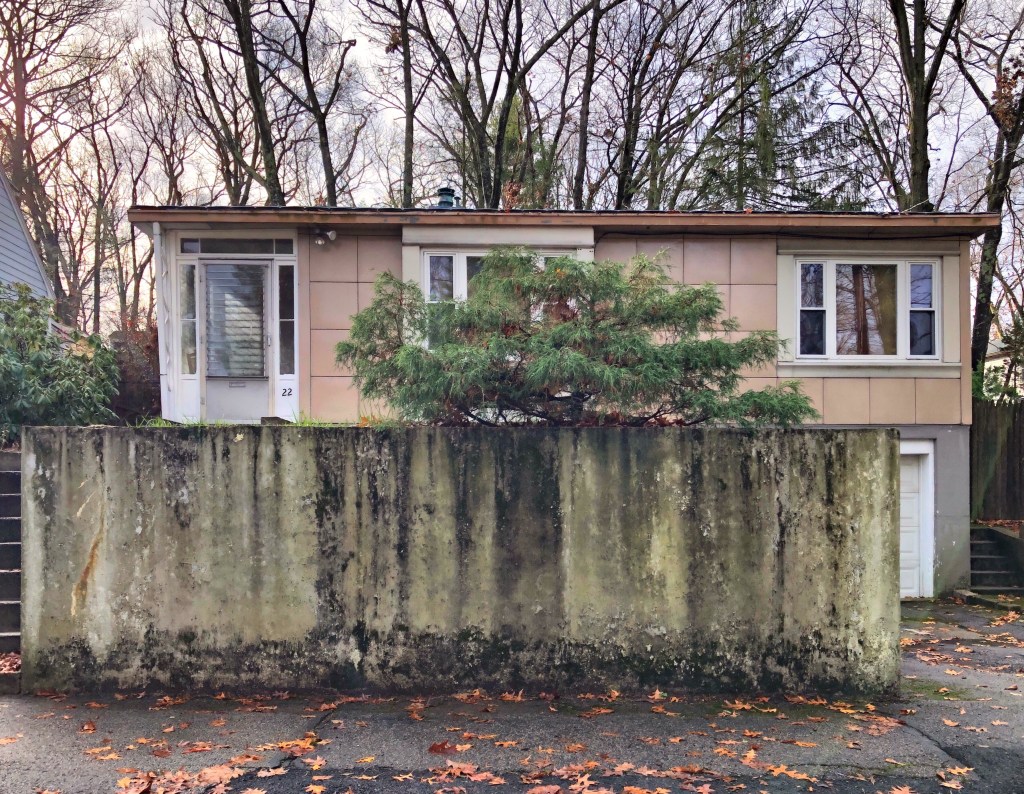
Jennings House // 1949

Tucked away on an un-assuming side street in South Brookline, you will find this oddly fascinating home. Without architectural history knowledge, you may think it is just a normal 1940s house, but it’s actually a Lustron House! Between 1948 and 1950, the Lustron Corp. built prefabricated metal homes across the U.S. as part of an effort to combat the housing shortage for returning soldiers post–World War II. Despite these futuristic homes being considered low-maintenance and highly durable, only about 2,500 were constructed, as the structures were seen as too costly and complex to manufacture and assemble. The homes came in just three models and came in four available colors: “Surf Blue,” “Dove Gray,” “Maize Yellow,” and “Desert Tan”. The home is covered in porcelain enamel metal panels set into a steel frame which can be replaced when damaged. At the interior, the homes had metal-paneled interior walls with mostly pocket-doors for space saving. This home in Brookline was built for Edmond and Helen Jennings, in the Westchester model in the Desert Tan color. The only major alteration is the enclosure of the porch, but it retains a high degree of integrity from when it was assembled in 1949.

What do you think of this iconic 1940s home and style?