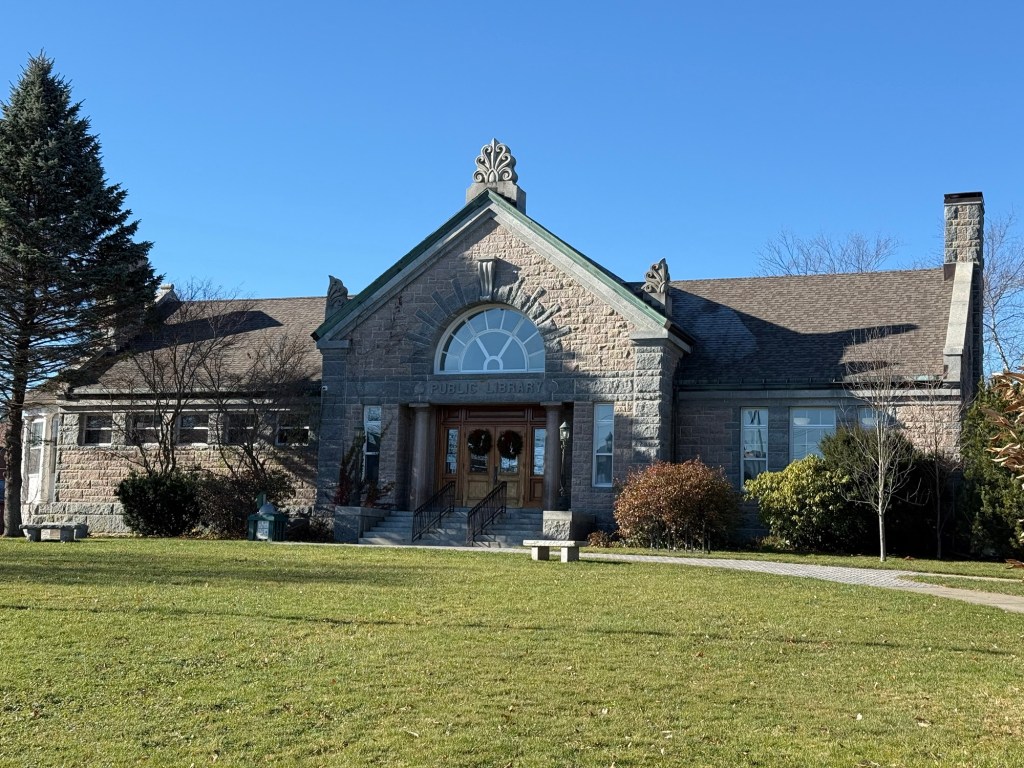
Rockland Public Library // 1903

The Rockland Public Library in Rockland, Maine, is an architecturally significant civic building that showcases the coastal town’s prosperity at the turn of the 20th century. The library was built in 1903–04, and was funded in part by a $20,000 grant from Andrew Carnegie. It is the city’s only major example of Beaux Arts architecture, a style that is also uncommon in the state. The library was designed by Maine native George Clough, who used granite quarried from nearby Vinalhaven in its construction. The building was later expanded by an addition at the rear, but from the street, the handsome Beaux Arts library looks near-identical as to when it was built over 120 years ago!

Rockland Custom House & Post Office // 1873-1969

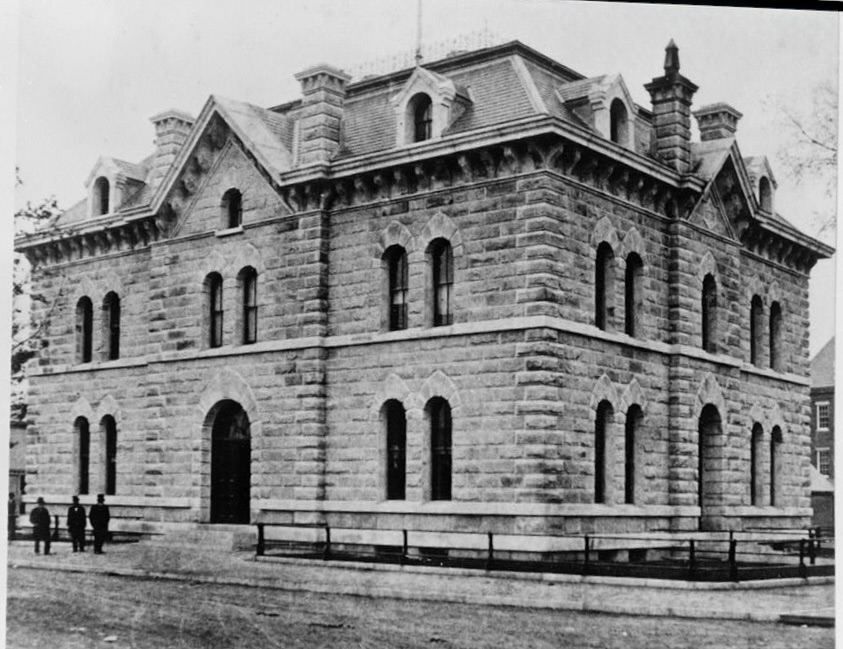
Photo included in HABS documentation

It saddens me to see photos and learn about some of the amazing buildings demolished in the name of “progress”; it is even more disappointing when said building is replaced by a surface parking lot (over 50 years later)! This great stone building was built in Rockland, Maine, in 1876 as the town’s post office and custom house by the Federal government. Relatively unknown architect Alfred B. Mullett is credited with the design as he served from 1866 to 1874 as Supervising Architect of the United States Treasury Department. The building can be classified as Italianate-Second Empire in style and is constructed of massive, rough-faced granite block walls with a shallow mansard roof above. The building was offered for sale by the U.S. Government in 1967, likely due to the upkeep costs and a shrinking local population with the dependency on maritime trade diminished. The building was ultimately razed in late 1969, with a new, uninspiring, post office built next door to this site.

Porphyry Hall // 1880

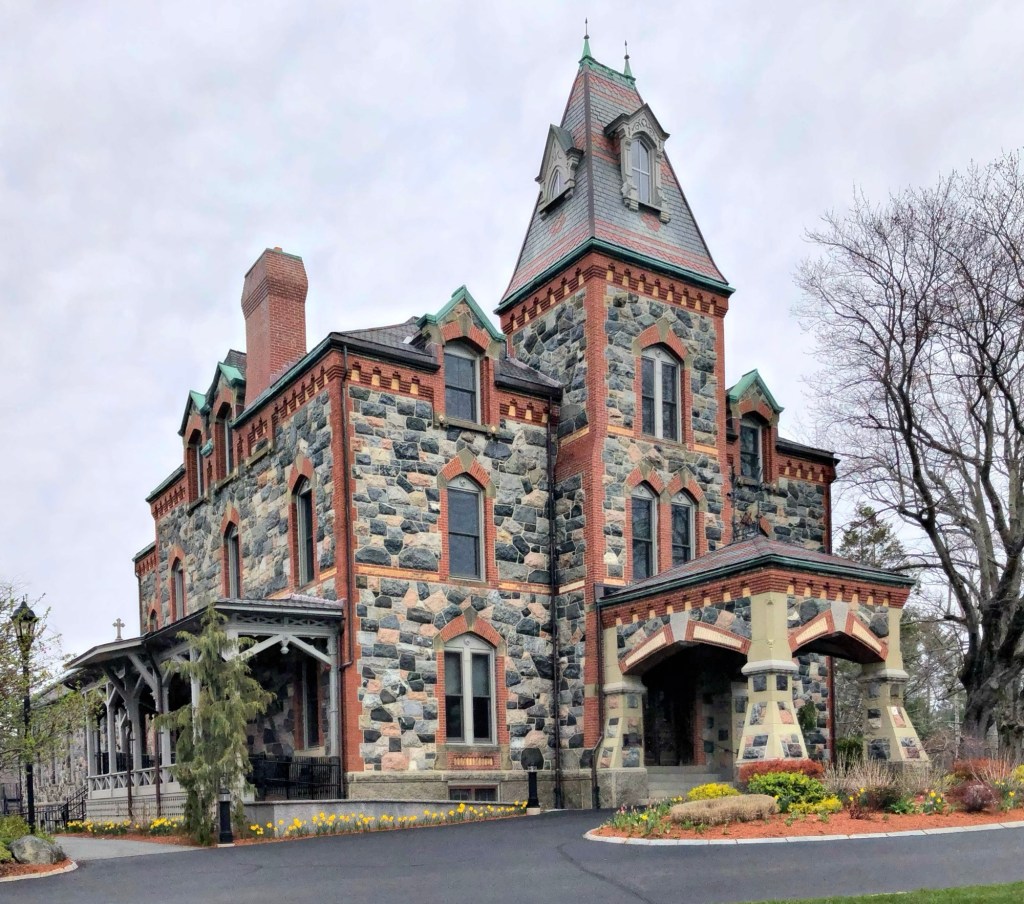
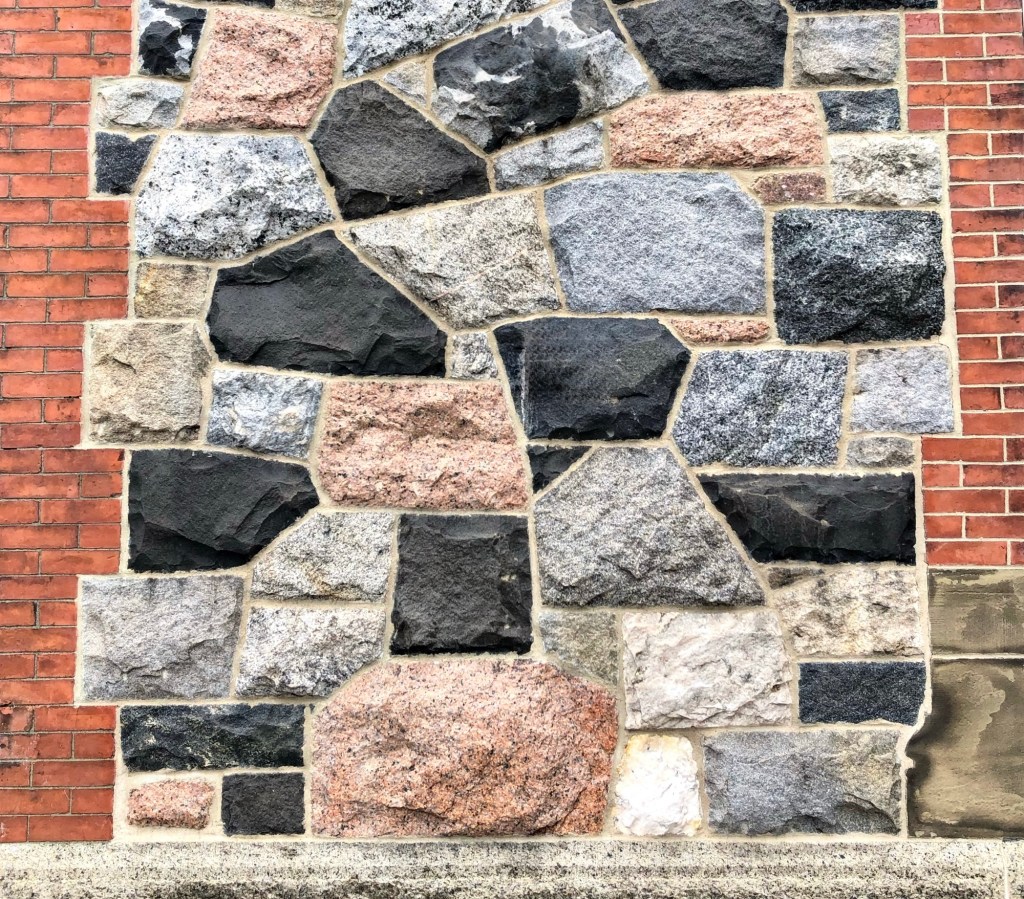
The Jacob E. Spring Mansion, also known as Porphyry Hall, is a high-style estate house located in Danvers, Massachusetts, that is one of the finest and most unique in the state! The house was built in 1880 for Jacob Evans Spring (1825-1905), who was born in Brownfield, Maine, and at the age of twenty, he went to Argentina and amassed a fortune in the wool business in Buenos Aires between 1845 and 1865, when he returned to the United States. Jacob and his wife, Sara Duffy, would purchase a large farm in Danvers and began planning for their family country home. Their residence was built on a high hill over two years and constructed of over 40 types of stones of irregular size and color with door and window sills of Nova Scotia freestone with arches of the doors and windows and corners of brick. The mansion was designed by architect George M. Harding of Boston, and built by several skilled masons over many months. Mr. Spring named his estate, “Porphyry Hall” with Porphyry meaning an igneous rock with large crystals in a fine-grained matrix; suitable for the walls of their mansion. The Spring’s lived lavishly at this home and spent nearly all of their fortune, selling the property after just ten years to the Xaverian Brothers, who opened it as Saint John’s Normal College. In 1907, the compound was re-organized as a Catholic boys prep school. In 1915, a chapel was added to the rear of the building, constructed from gray fieldstone to blend with the main house. Have you ever seen a building like this?

Colby Hall – Andover Newton Theological School // 1866

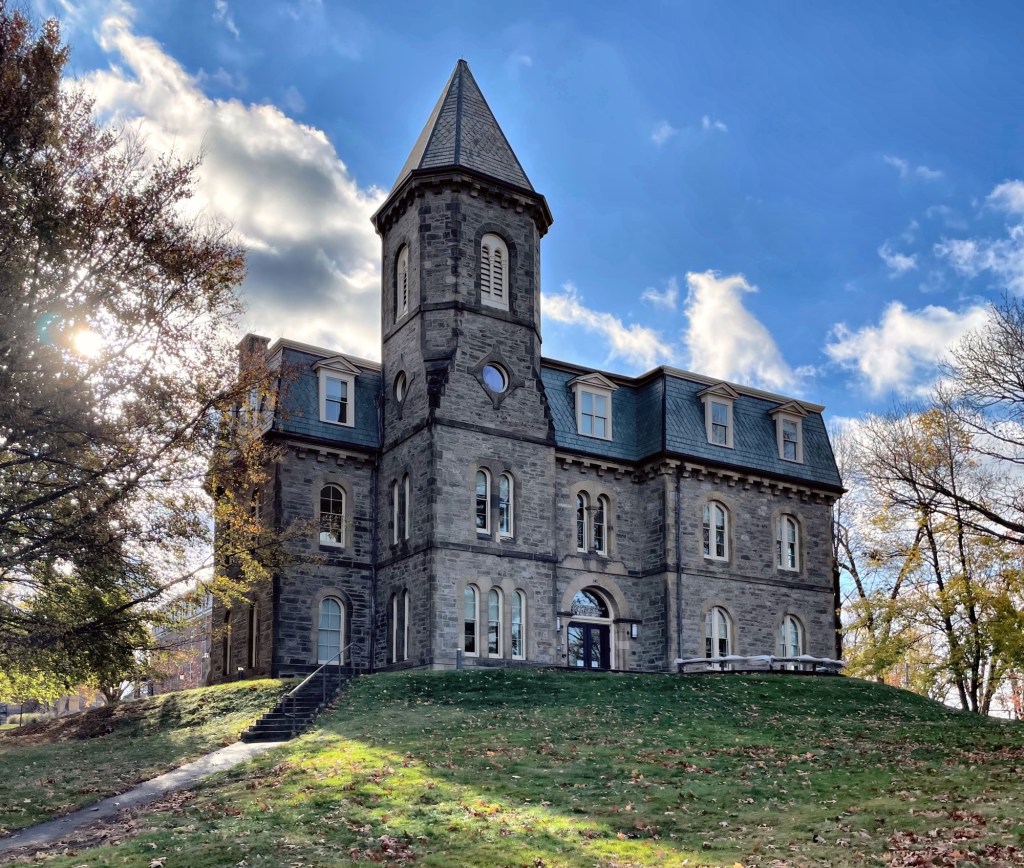
Colby Hall sits perched atop a hill overlooking Newton Centre, Newton, and is located in the Andover Newton Theological School campus. The building was constructed in 1886 for the Newton Theological Institution, which was founded on this site in 1825, and used for the a Baptist seminary, educating young students in theology. By the 1860s, the school had outgrown its space and following a donation from benefactor,  Gardner Colby (1810–1879), who was treasurer of the school (and was also the benefactor and namesake of Colby College in Maine) plans were drawn up for the new lecture spaces and chapel building. The unique building was designed by Alexander Rice Esty, a prominent architect at the time, and it blends Second Empire and Romanesque Revival styles under one roof. The three-story structure is of a light buff, rough cut stone with sandstone trim and features an imposing four-story tower at the eastern end. In November 2015, the school announced that it would sell its campus and become part of Yale Divinity School in New Haven, Connecticut. The Newton campus was purchased by the Windsor Park School with Colby Hall now occupied by the Boston Psychoanalytic Society & Institute.

All Soul’s Chapel, Poland Springs // 1912

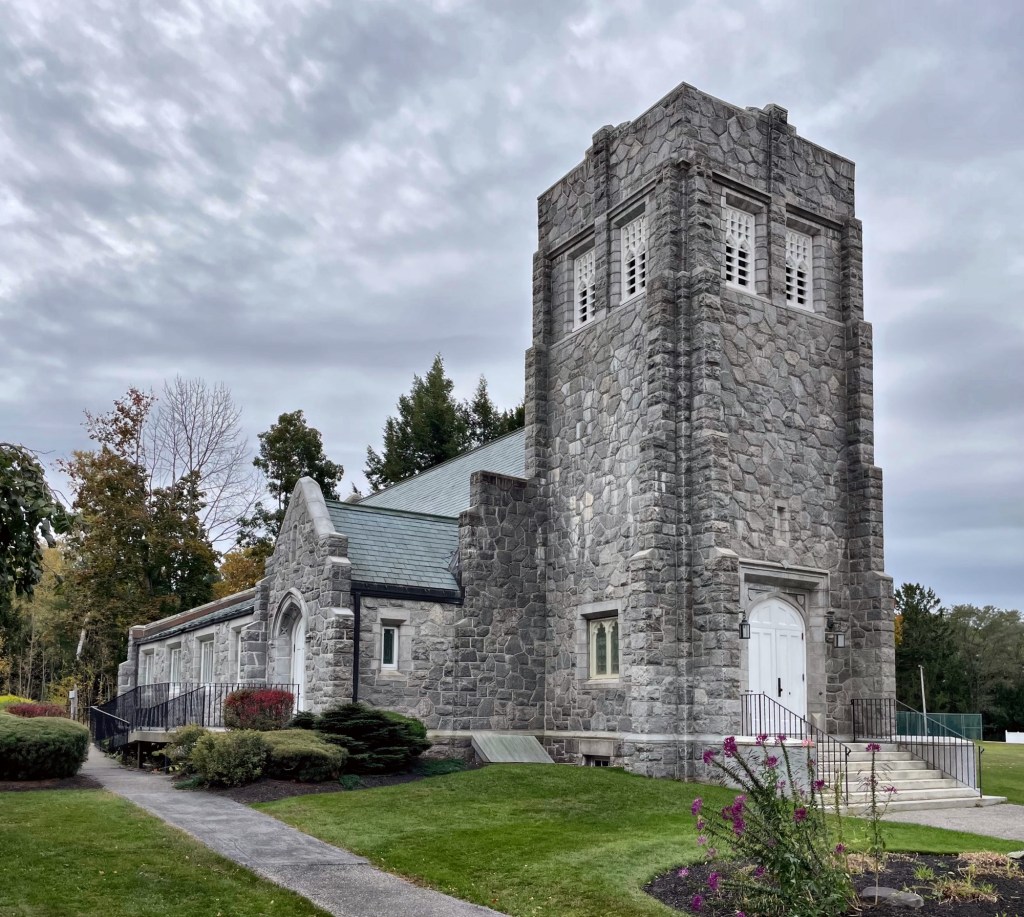
As part of the ever-growing Poland Springs Resort in Poland, Maine, the operators of the Poland Springs Hotel sought to erect a house of worship for guests and local community members. In 1909, fundraising had risen to total of $15,000 and that, along with a matching contribution by the Ricker Family, who owned the Poland Springs Resort, allowed for the hiring of an architect and the project to commence. Boston-area architect George Henri Desmond furnished the plans for the chapel, and were also hired by the Ricker family to complete plans for alterations to the Mt. Kineo House on Moosehead Lake during the same time period. All Souls Chapel is a Neo-Gothic Revival building constructed of irregular granite blocks with a gable roof covered with slate. It has a central tower with a flat parapet roof and a belfry with ornate louvered openings. The tower is square in plan and contains the principal entrance to the chapel. When the chapel was opened in 1912, it was opened as an interdenominational place of worship for use by Catholics and Protestants. Guests contributed much of the interior furnishings and all of the memorial hand-painted windows placed in the chapel were sponsored by guests or relatives of longtime guests. Today, the chapel hosts weddings, baptisms, and other similar events.

St. Paul’s Church Rectory // 1886

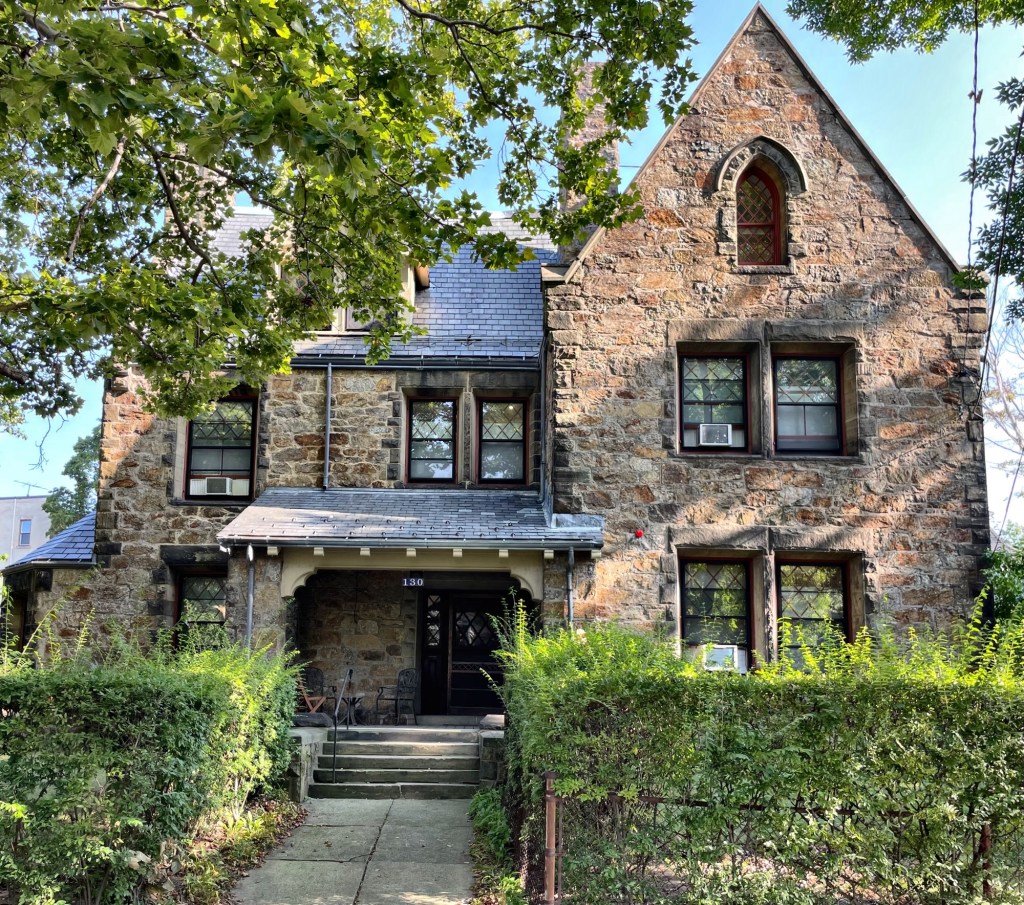
Located next door to the St. Paul’s Episcopal Church in Brookline, Massachusetts, the church’s rectory is equally stunning and compliments the 1850s Gothic church. The Rectory was built in 1886 from plans by Boston architects, Peabody & Stearns, in harmony with the architecture of the Church, with masonry walls of Brighton puddingstone with Nova Scotia freestone trimmings. The Rectory’s architectural style, is somewhat Jacobethan/Tudor due to the pitch of the roof, elbows on the parapet wall, diamond panes in the sashes of the windows, and projecting bay window on the second floor.

United Church of Norwood // 1886

Located across from the church-like Norwood Town Hall, the United Church of Norwood is a landmark example of the Victorian Gothic architecture style and an important historical landmark for the town. The cornerstone of this present church was laid in 1885 and was completed and consecrated by December of 1886. Boston architect J. Williams Beal, got his start at the firm of McKim, Mead & White, designed the church here for the local Universalists, who lost their previous church to fire in 1884. In 1934, the town’s Universalist and Methodist congregations merged and they joined together in this, as a Union Church. Built of Milford granite and pressed brick, the United Church of Norwood features a side chapel and clock in its steeple which are unique and add charm to the historic church.

Cornelius Person House // c.1770

The Cornelius Person House is a pre-Revolution stone dwelling built in the Katsbaan village of Saugerties, New York. The residence was constructed around 1770 by Cornelius Person (1744-1827) a merchant who held a store just south of this home. The store was apparently used as a meeting place for Patriots during the Revolutionary War and Cornelius fought in the local militia at the time. After the war, John Jacob Astor was said to have traded with local fur trappers at the store. The Person Stone House was originally a smaller dwelling and was expanded multiple times to give it the center hall appearance and later saltbox rear. Later alterations include the porches, but the house retains so much of its original charm.

Katsbaan Reformed Church // 1732

The first church on this site in Katsbaan, Saugerties, New York, was a 1732 simple stone church built by Dutch and German settlers. Church services were first held in the German language,  and gradually came to be also held in Dutch and English, as the village and surrounding area developed. The original church was rebuilt in 1816 using the same stone base, but the entrance was shifted away from the street. Larger windows and the steeple were added at this time. In 1867, the steeple was heightened and the windows were enlarged with Gothic points, giving the building its present appearance. The Katsbaan Reformed Church remains an architectural and historical landmark noting the early history of Ulster County and its growth.

“Beech Nut” // 1913

“Beech Nut” is a stone cottage built at the top of Beech Hill in Rockport in one of the best hiking areas of Mid-Coast Maine. The hut was built in 1913 for owner John Gribbel (1858-1936), a Philadelphia-based industrialist, who had a summer estate, “Weatherend” in Rockport. He hired a Norwegian immigrant named Hans Heisted, an employee of the Olmsted Brothers, to improve the grounds at Weatherend, which included meandering paths, stone walls, and stone structures. Meanwhile, the Gribbels had started acquiring land on Beech Hill in 1909, and eventually accumulated holdings of more than 300 acres. To keep the masons and landscapers busy during the winter, Gribbel and Heisted thought to build a small hut a few miles away on Beech Hill, which would serve as the family picnic and tea shelter. The stone building features a unique sod roof which was typical of Scandinavian houses up until the late 1800s. Once complete, family and friends would visit Beech Nut to enjoy the fresh air and views of the Atlantic from atop the hill for the day. After successive owners, the property began to deteriorate until the 1980s, when developers began to swarm the open space for redevelopment. In 1986, the land around Beech Nut was put under conservation easement and was acquired in 2003 by the Maine Coast Heritage Trust, which then transferred it in 2006 to the Coastal Mountains Land Trust. In 2007, the hut was completely restored and serves as a respite after the uphill climb for visitors.