Architects William Robert Ware and Henry Van Brunt designed this parsonage in Easton, Massachusetts for the Unity Church in town (featured previously). The Victorian Gothic house is constructed of polychromatic stone, wood trim, slate and copper roof surfaces, and terracotta finials. The architecture is very well-developed and stands toe-to-toe with the other architectural landmarks in town, just a short walk away.
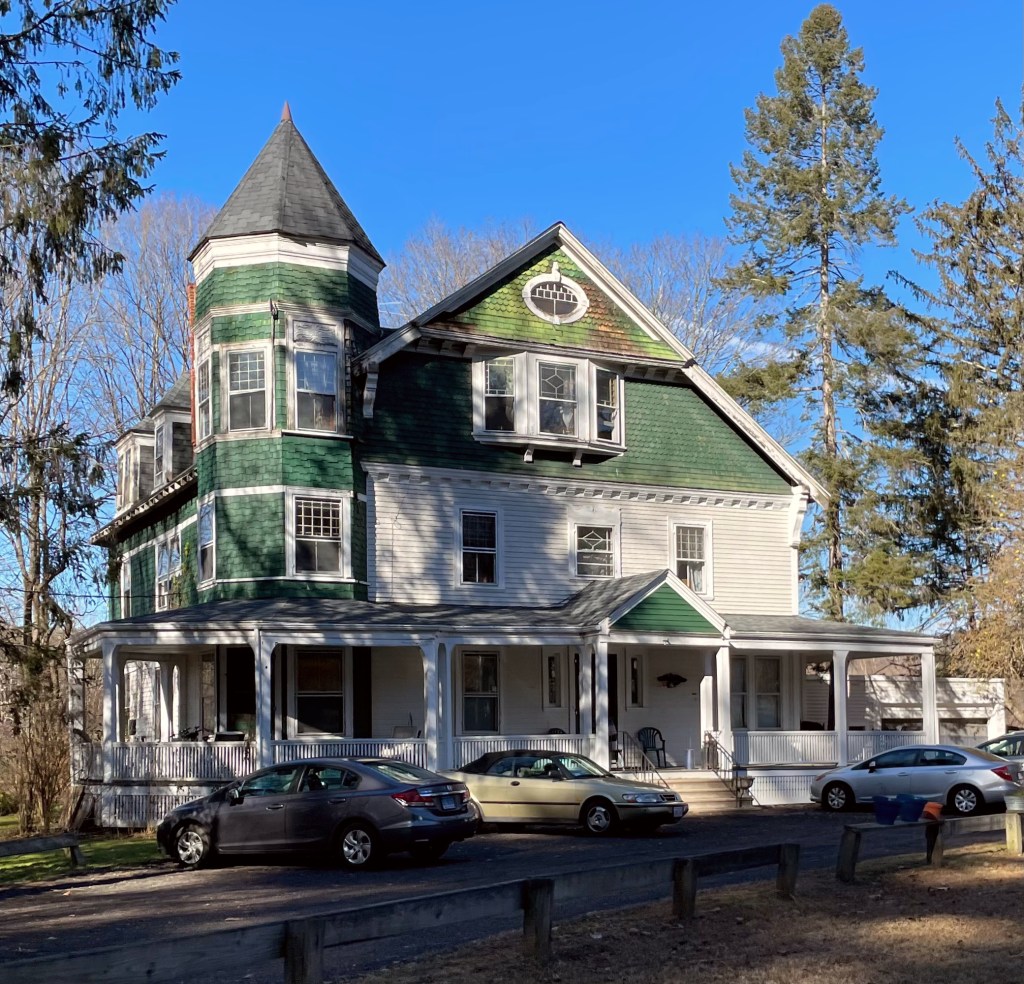
This large Queen Anne Victorian house in Canton Center was built for Benjamin Franklin Case (1861-1931), a banker and businessman who incorporated the town creamery. He made his fortune harnessing the rural character of the village, creating the Canton Creamery, where farmers could package and sell their dairy products to the rapidly growing communities nearby. Case was credited as bringing the telephone to town, with his office in his home serving as a switchboard room. He is also known as the first person in town to own an automobile. After his death, the property was used by his daughter Ruby as a vacation house. After WWII, she realized it was too much house for her to upkeep, and she converted the single family home into apartments.
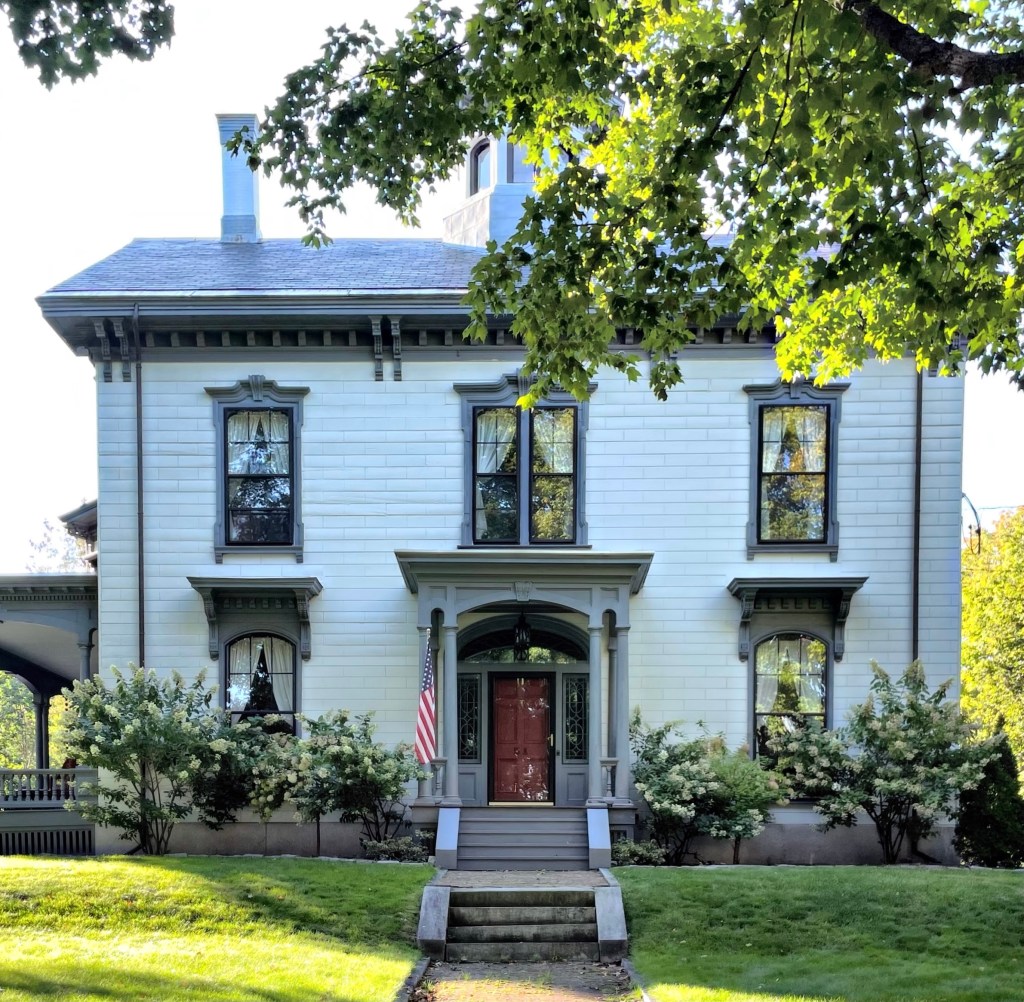
The neighbor to the iconic Thomas Hill Standpipe (last post), this pre-Civil War Italianate mansion predates the water tower and has long been one of the most grand homes in Bangor, Maine. The house was constructed in 1857 for Joseph W. Low, a businessman and trustee of the Bangor Savings Bank. The house he had built is one of eastern Maine’s outstanding Italianate residences, designed by Boston architect Harvey Graves, who was born in Maine. Soon after the Civil War, Graves moved west to California, likely seeking additional wealth from the spurned from the success of the Gold Rush. He appears to have lived out the remainder of his life out west, giving his family in Maine this home. The house exhibits flushboard siding with scored wood to resemble ashlar masonry, gorgeous window hoods and mouldings, and a large belvedere at the roof, which would have provided sweeping views of the Maine frontier when built, atop one of the highest hills in Bangor.
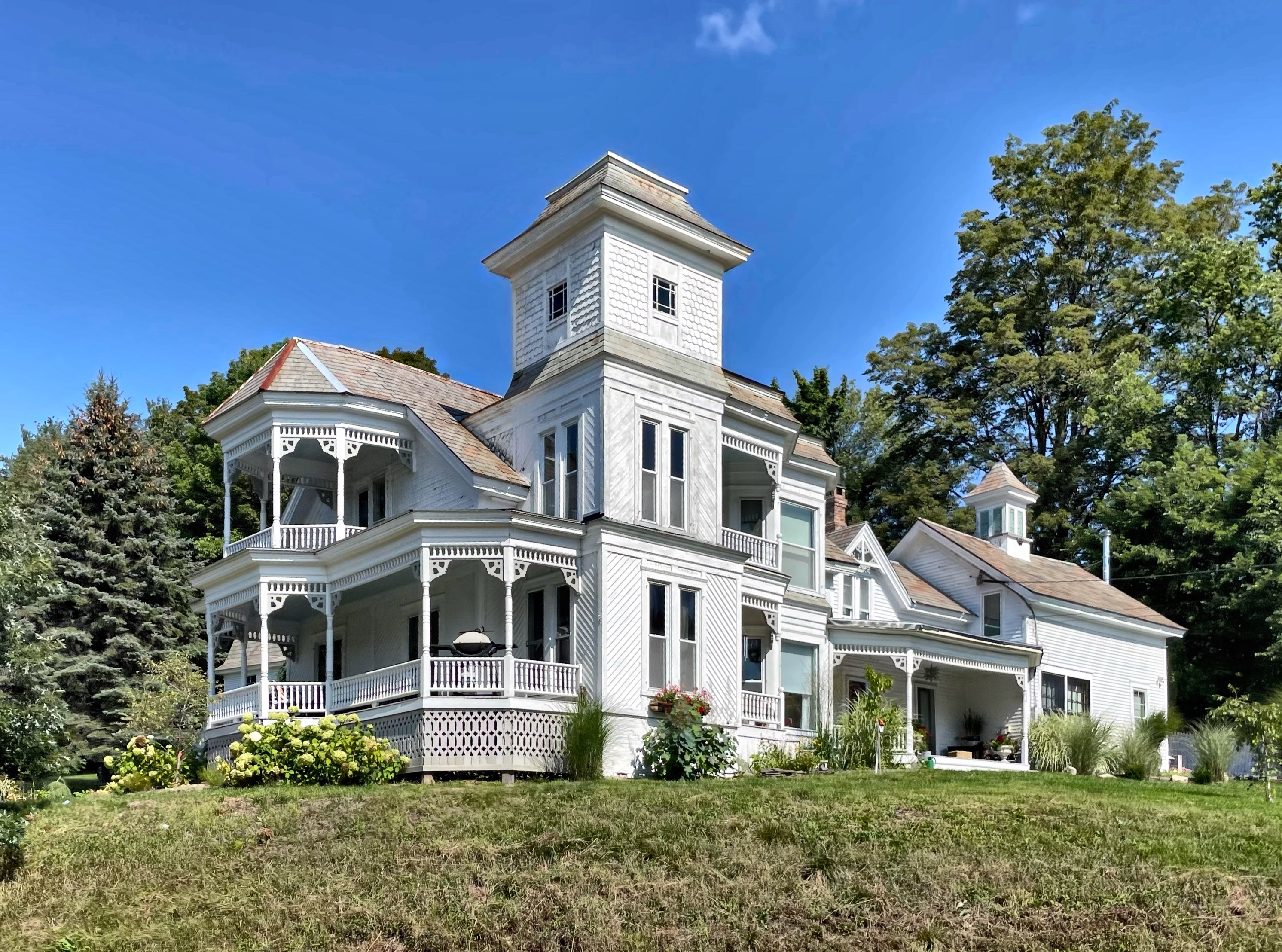
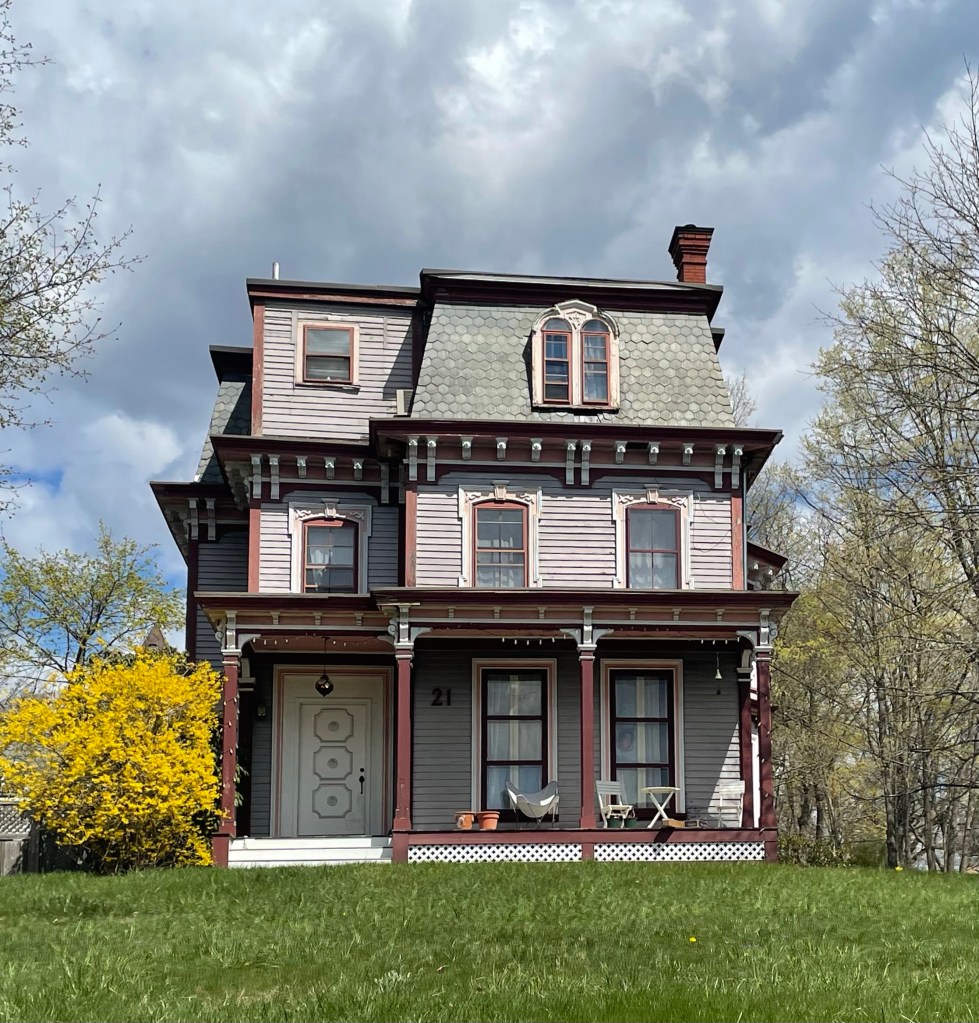
One of the most visually striking homes in little Chester, Vermont, is the Durand House. Sited prominently on a hill, the 1861 home resembles a wedding dress in bright white with intricate spindles that look like lace. The house was seemingly built for Urban Durand, one of the proprietors of the successful Durand Brothers Market in Chester village. The home has an elaborately trimmed full-front porch with a second-story polygonal balcony, and a three-story corner tower with a shallow mansard roof, all possibly later additions. The house stands out in the village, which is largely dominated by classical Federal and Greek Revival houses.
The First Reformed Church of Schenectady is the oldest congregation in the city. Founded by Dutch settlers, Schenectady’s first colonists, the first church lasted over a decade until it burned in the Schenectady Massacre in 1690, when a party of more than 200 French and allied Mohawk warriors attacked the unguarded community of Schenectady, destroying most of the homes, and killing or capturing most of its inhabitants. Sixty residents were killed, including 11 enslaved Africans. An expanding congregation after, outgrew its second and third buildings, replacing them with larger structures. The fourth was lost in Schenectady’s Great Fire of 1861, causing yet another building campaign. The present church building, an architectural landmark in Gothic design, was completed by the highly regarded Victorian-gothic architect Edward Tuckerman Potter in 1863. Potter is also known for his designs of the Nott Memorial Building (previously featured), in Schenectady, and Mark Twain’s home in Hartford, CT. A fire in the church gutted it in 1948, but the community at large banded together to fund the restoration efforts of the amazing architectural landmark.
The 16-sided Nott Memorial Hall is one of America’s most dramatic High Victorian buildings, is the centerpiece of the Union College campus (and a major reason for my stop in Schenectady when driving through New York). Union was the first non-denominational institution of higher education in the United States, and the second college established in the State of New York. Eliphalet Nott became college president in 1804, and envisioned an expanding campus to accommodate a growing school. In 1806 a large tract of land was acquired to the east of the Downtown Schenectady, on a gentle slope up from the Mohawk River. In 1812 French architect Joseph-Jacques Ramée, equally skilled in landscapes and structures, was then hired to draw up a comprehensive plan for the new campus. Ramée worked on drawings for about a year, and construction of two of the college buildings proceeded quickly enough to permit occupation in 1814. The Union College campus thus became the first comprehensively planned college campus in the United States! As part of Remee’s plan for the campus, a round, Neo-Classic “pantheon” building was proposed at the center of campus (a prescendent for Thomas Jefferson’s plans for the University of Virginia just four years later). The building never materialized in Unions early days. Construction finally began on the building in 1858, based on designs by Edward Tuckerman Potter, grandson of President Nott, but apparently took nearly 20 years to complete due to the Civil War and funding issues. The Nott Memorial as completed, is 89 feet in diameter and capped with a ribbed dome. The dome is sprinkled with 709 small colored glass windows, making it one of the finest buildings on a college campus in the United States!
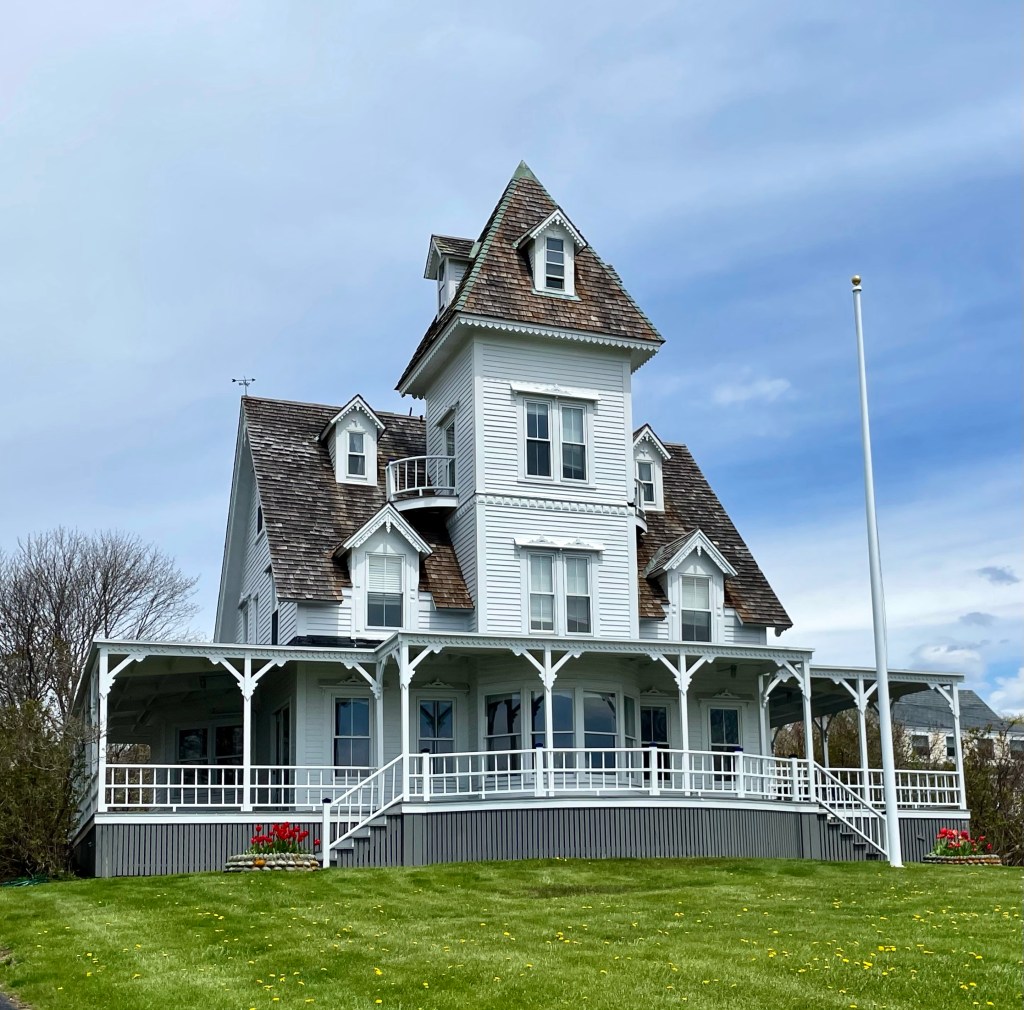
Located in the Foss Beach section of Rye, NH, this Victorian summer cottage stands out among the later new construction of lesser detailed and quality late 20th century homes seen here lately. The home, known as “Tower Cottage” was built at the end of the 19th century and exhibits Victorian Gothic elements with a massive center tower. The steep wood shingle roof is punctuated by two rows of delicate dormers which add detail and views to the ocean. The massive wrap-around porch is also a must for such a prime location fronting the Atlantic Ocean!
This house was built and first occupied by George G. Lougee, owner and proprietor of the Sea View House Hotel (demolished) across the street. Before building his own hotel, Lougee was a clerk at the Atlantic House, another summer resort. Lougee eventually worked his way up and ended up managing that hotel. Lougee’s success managing the Atlantic and later, the Farragut, enabled him to pursue his own enterprise and build his Sea View Hotel. When Lougee sold the Sea View hotel, he also sold this house with it. His former Stick style home was then converted to additional rooms at the hotel until it closed in the 20th century.
In 1873 Elnathan Jones, Jr.(1829-1904) purchased house plans from a friend in Groton, adapted the plans, and built these two houses, in Acton. One home for himself, and one for his business partner Jonathan Wetherbee (1832 1926). Also near these two houses is the Tuttle House (featured last), in a different style. All three of these men were family by marriage, and ran businesses in the village of South Acton. The Jones and Wetherbee houses were built as sister houses, identical; but over the years, the Jones House has seen some unsympathetic alterations which diminish its architectural significance. The Wetherbee House (yellow) retains its original detailing and corner, towered mansard roof.
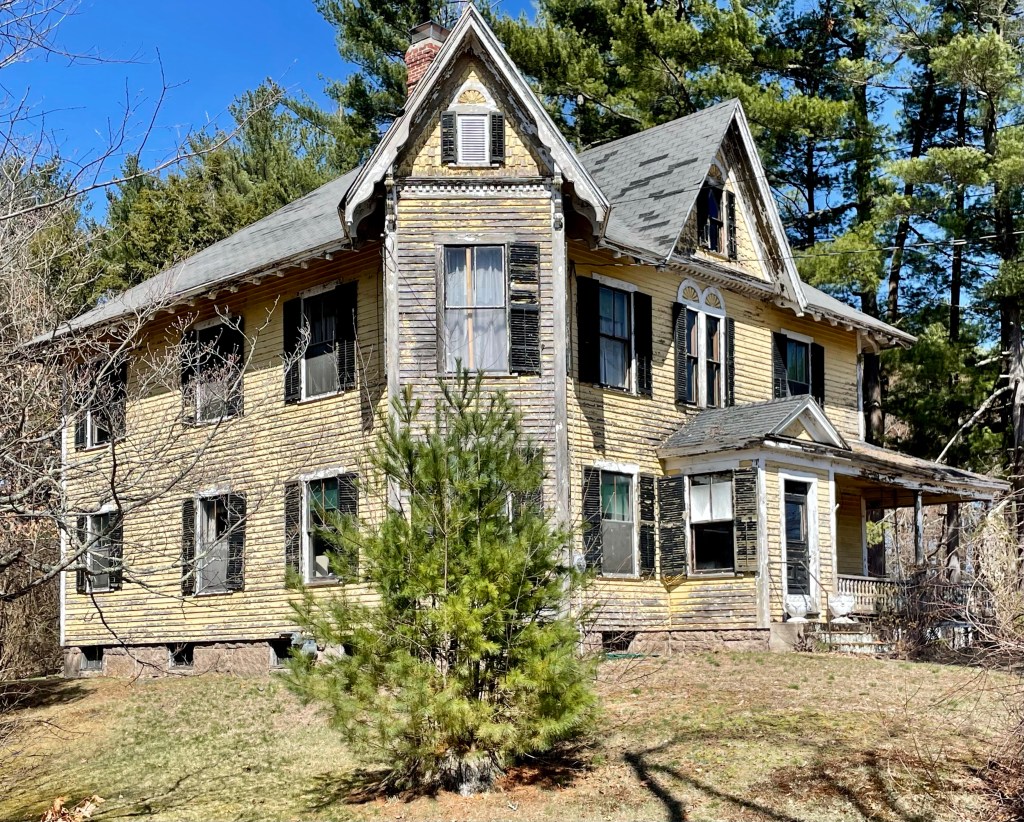
In 1894, Hiram P. Dinsmore, a clerk at the nearby Tewksbury Almshouse, purchased land not too far from his work to build a home for his family. The well-designed late-Victorian home features a wrap-around porch, a corner tower, twin sunburst or flower motifs, and the use of shingle and clapboard siding, all hallmarks of the Queen Anne style. After Hiram’s death, his wife and children lived in the home, and it was later willed to his daughter Beatrice and her husband, both of whom worked at the Tewksbury Almshouse (since renamed Tewksbury Hospital). The home has seen some deterioration with large sections of siding completely open to the elements unobscured by paint and a sagging porch roof. Hope to see this beauty restored.
When strolling around Bristol, Rhode Island, you are overloaded with gorgeous early 19th century house styles, primarily in the Federal and Greek Revival styles. Among these, one house (or should I say mansion) stands out as a flamboyant Victorian Gothic showpiece at the southern end of the downtown area. Built in 1873 for Augustus O. Bourn (1834-1925), the founder of the National Rubber Company (and from 1883 to 1885 governor of Rhode Island), “Seven Oaks” could go toe-to-toe with any house in the state. Bourn’s architect was James Renwick of New York, one of the most celebrated architects of his time. Before designing Seven Oaks, Renwick’s resume included: Smithsonian Institution Building, Washington, D.C.; St. Patrick’s Cathedral, New York City; and the Renwick Gallery, Washington, D.C.. Seven Oaks is a large, hip-and-cross-gable-roof Victorian Gothic mansion constructed of stone, with multiple towers and a slate roof capped with iron cresting.
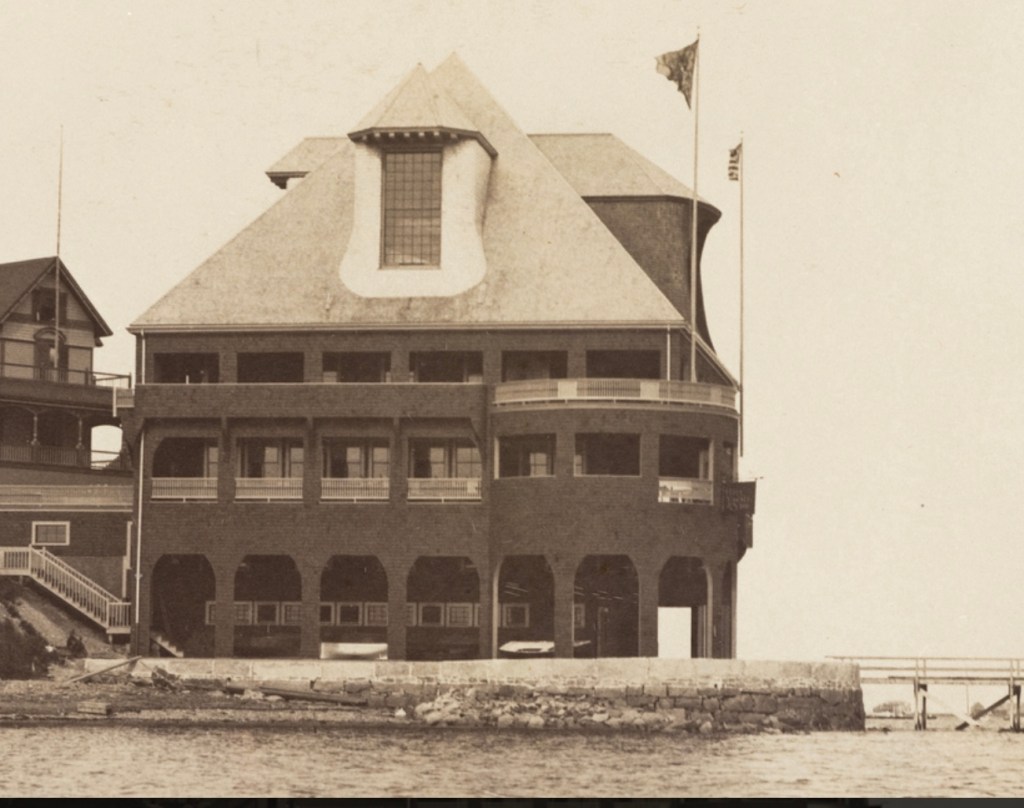
c.1891 image of second Hull Yacht Clubhouse, Stebbins Collection, HNE
In the Spring of 1880, thirteen Hull, Massachusetts, summer residents, who owned and raced small sailboats, met and decided to form a yacht club. The Hull Yacht Club was founded that same year. During the first two seasons there was no club house, sailing events were run from a private pier and dock and meetings were held at members homes. Even though they started with no club house, being close to Boston with plenty of deep, protected water, drew many new members. The first clubhouse here was constructed in 1882 and the club saw membership soar to over 500. The clubhouse was quickly deemed inadequate for the Boston-area elite and their massive sloops. The second Hull Yacht Club was completed in May 1891. The New York Times and Outing Magazine described the new club as one of the grandest yacht clubs in America, and at the time, it had the second highest membership in the country! The main club house was designed by architect S. Edwin Tobey, and stood four stories, with a 12 foot wide piazza on three sides covered by endless expanses of shingles. The third floor had billiard rooms and public and private dinning, committee room, reading room, wine room, The second floor housed three bowling alleys, and the first floor had lockers, showers, laundry, spar storage. The club merged a couple times over the subsequent decades, but suffered heavily due to the Great Depression, when the Gilded Age monies stopped flowing as freely. The club sold the massive shingled building to developers who sought to convert the building into a resort, but it was deemed a fire hazard and razed in the 1930s. The club erected a new, modest clubhouse near Point Allerton later.
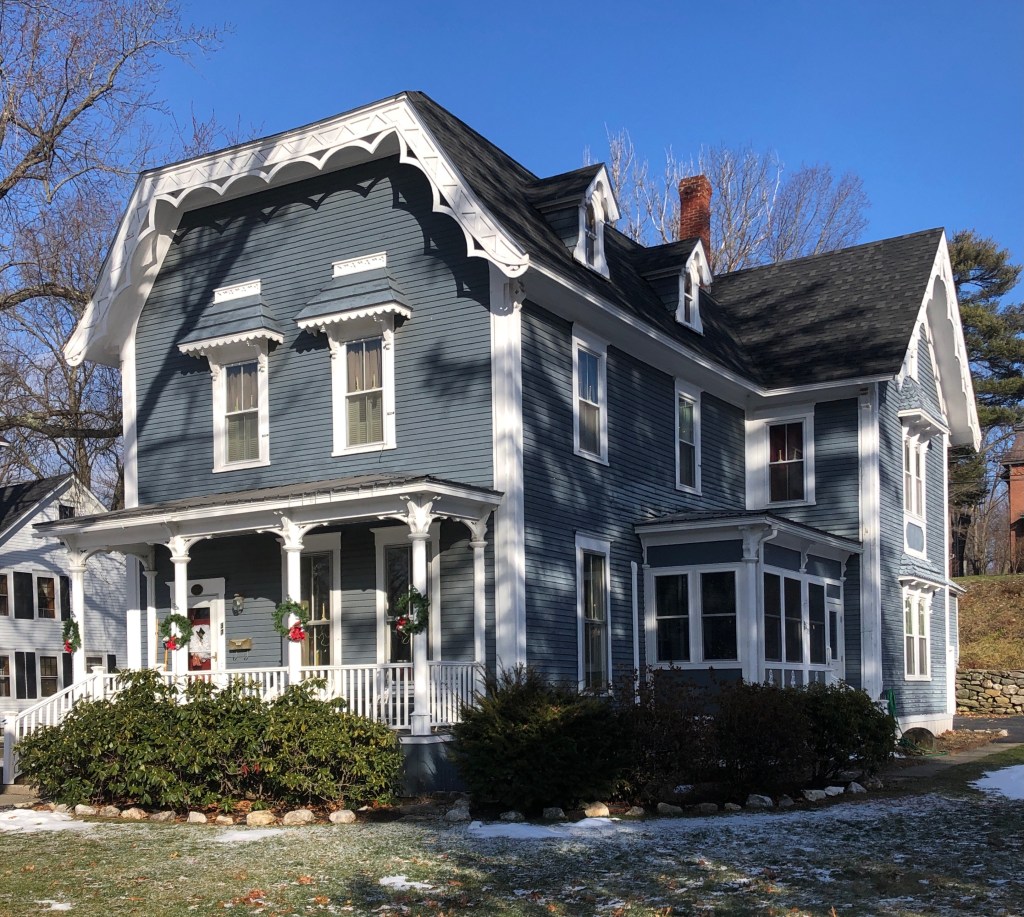
Located on the east side of the Town Common in Newport, NH, the Parmelee house stands out as a unique vernacular Stick style home. The home was built for Joseph Warren Parmelee (1818-1892), the grandson of original settlers of town, Captain Ezra Parmelee and Sybil Hill. He began his adult life as a merchant in Newport, before moving south to Charlestown, South Carolina in 1847. Joseph was forced back north at the beginning of the Civil War, and he lived in New York City until he finally relocated back to his hometown in 1879, which is likely when he built this home for his family. Upon returning, he became active in town affairs, and also pursued interests in history and poetry, creating a book of poems from his home. The Parmelee house retains much of its original detailing from the decorative bargeboards at the gable ends, large eyebrow window hoods at the second floor, and the interesting trapezoidal roof, possibly a vernacular nod to a mansard roof.
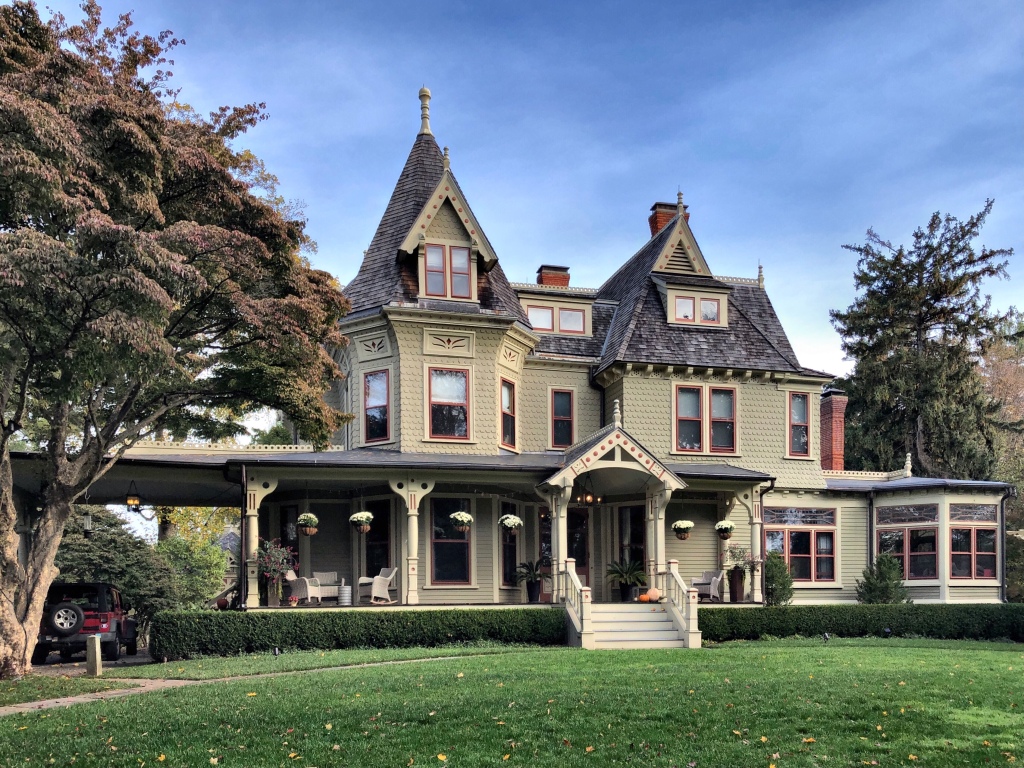
John Hoyt Perry was born in Southport in 1848, and graduated at Yale in 1870. He received his professional education at Columbia Law School and was admitted to the bar in Bridgeport, CT in 1872. He had an active law career in Connecticut, later working as a judge. He served Southport in the House of Representatives throughout much of the end of the 19th century. In 1913 he was elected to the Connecticut Senate and served as the minority leader. He served as counsel for the United States in arbitration proceedings with Chile in 1902, and as counsel for the town of Fairfield. This home in Southport was constructed for him, likely around 1875 after he accepted his position as a head attorney at a major firm nearby. The home can be classified as a blending of Stick style and Queen Anne Victorian design with the asymmetrical form, tower, large porch with projecting porte-cochere, shingle siding, and bargeboards.
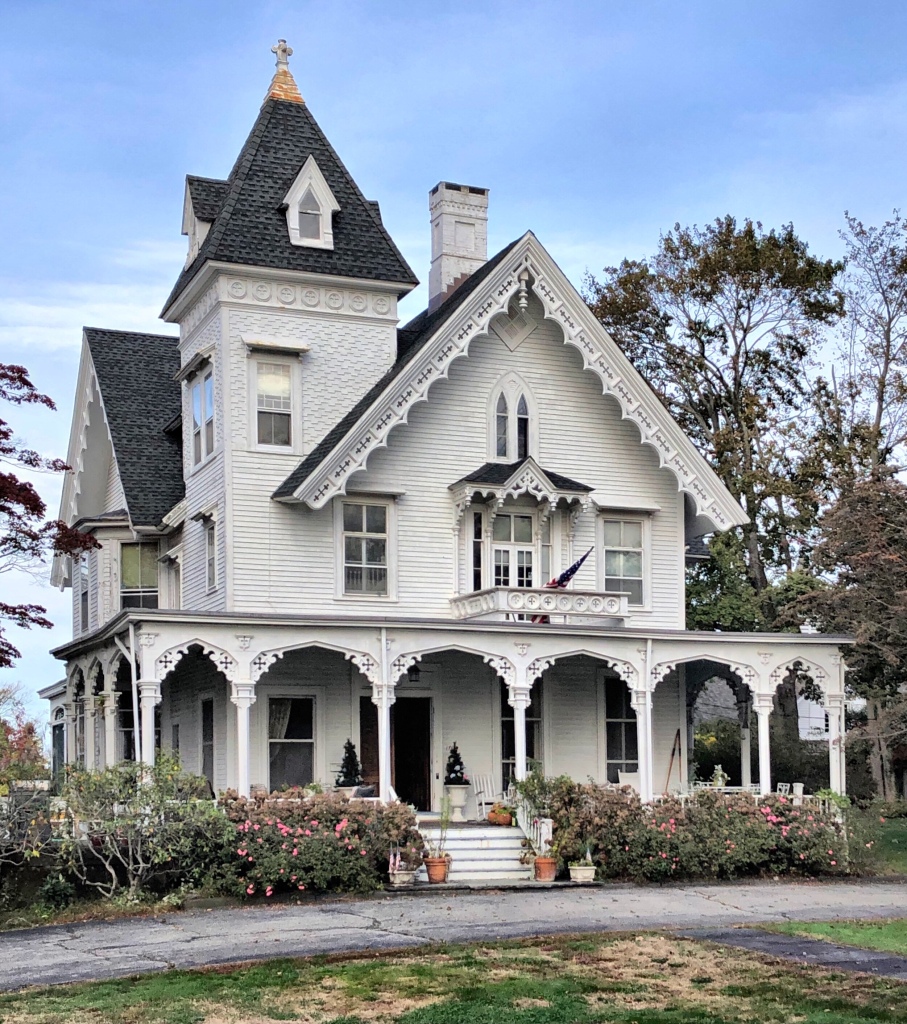
Constructed in 1861, this Victorian Gothic mansion in Southport, Connecticut, stands out amongst the many Classically inspired homes nearby. Designed by Bridgeport architects Lambert & Bunnell for Moses Bulkley (1796-1868), the house is designed on a cruciform plan, synonymous with the Gothic style. Expansive pointed gables trimmed with a gingerbread bargeboards, pointed arched windows, ogee arches trimmed with jigsaw tracery on the verandah, and a tall square tower topped with a steeply-pitched pyramidal roof are all seen in this beauty. If only it had a historically appropriate paint scheme to really make those details pop!