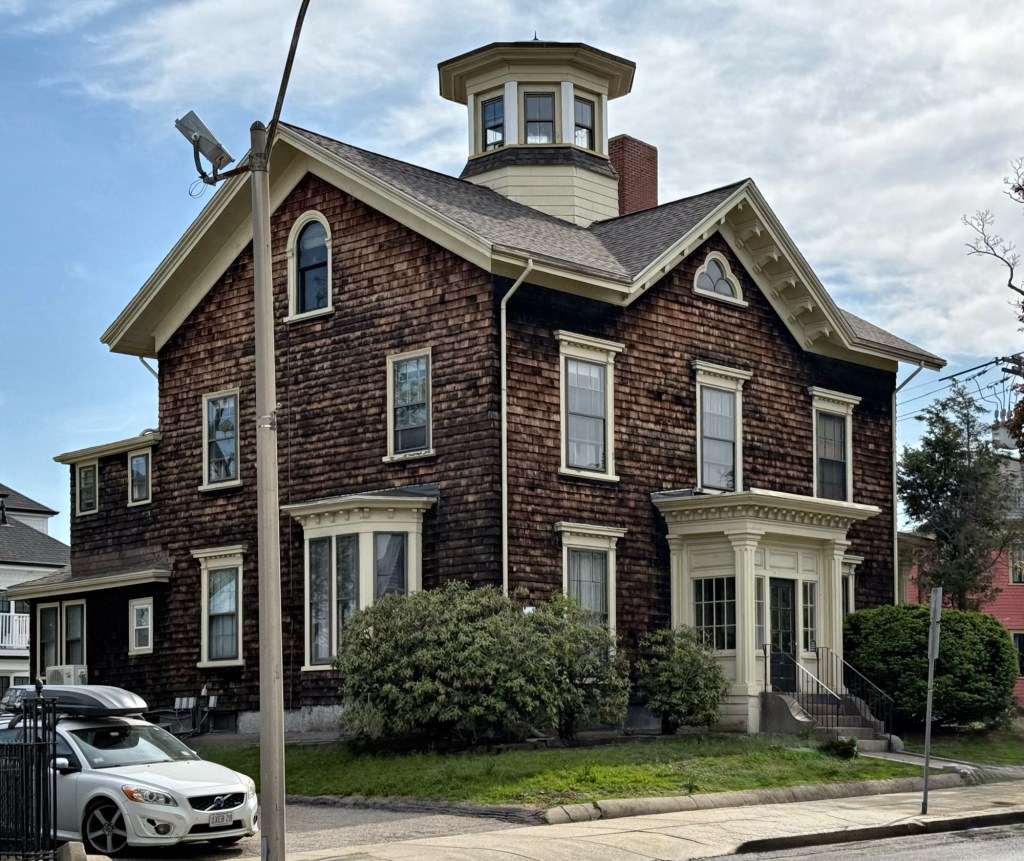
George Risley House // c.1870

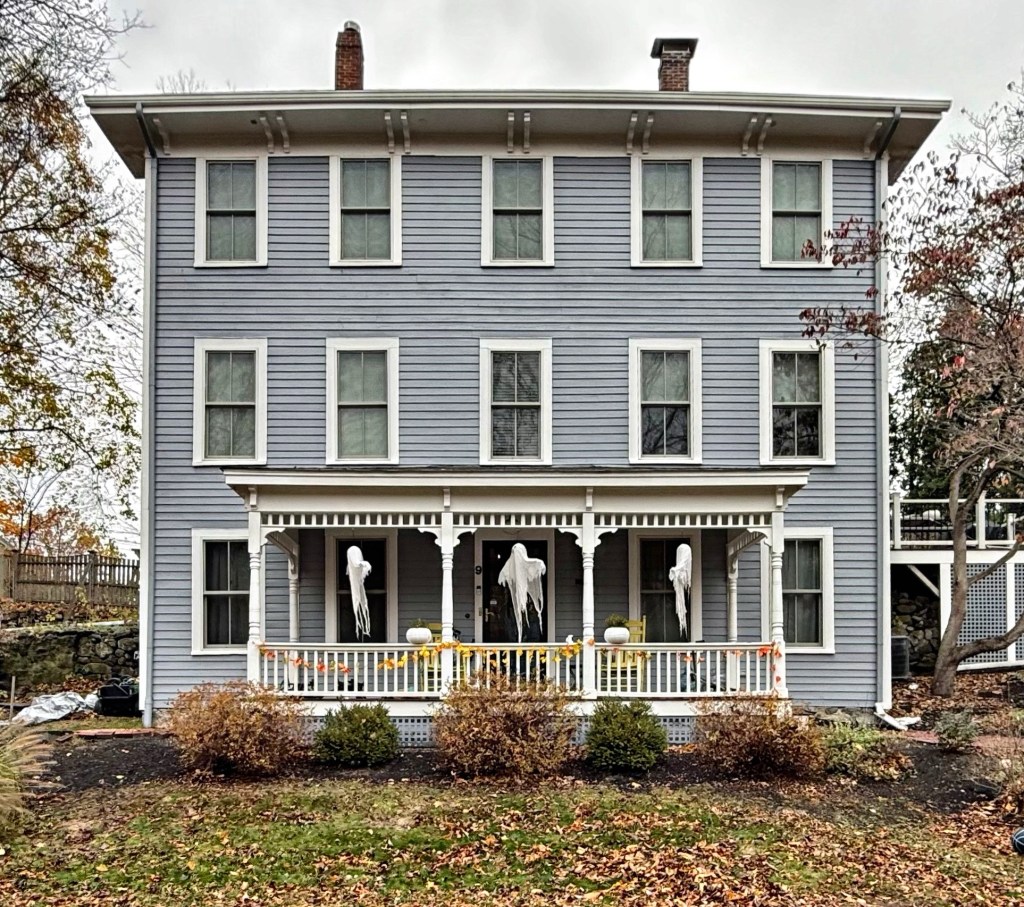
This unique residence in Wayland, Massachusetts, is tucked away on Corman’s Lane, a dead-end street near Snake Brook, a small stream leading into Lake Cochituate. The house was built around 1870 for George William Risley (1836-1913), a shoe manufacturer and Civil War veteran who settled in Cochituate Village and ran a factory there. Risley was active in town affairs and served as Selectman in 1872, the year in which the annual meeting authorized the selectmen to petition the General Court for Cochituate to separate from Wayland. The petition was ultimately never was filed and Cochituate remains a part of Wayland. The Risley House has five bays and a shallow side gable roof with broad, overhanging eaves supported by brackets. A central porch runs along part of the facade and has intricate turned posts and spindlework. The home remains in great shape and is evocative of mid-late 19th century industrial housing built for factory managers.

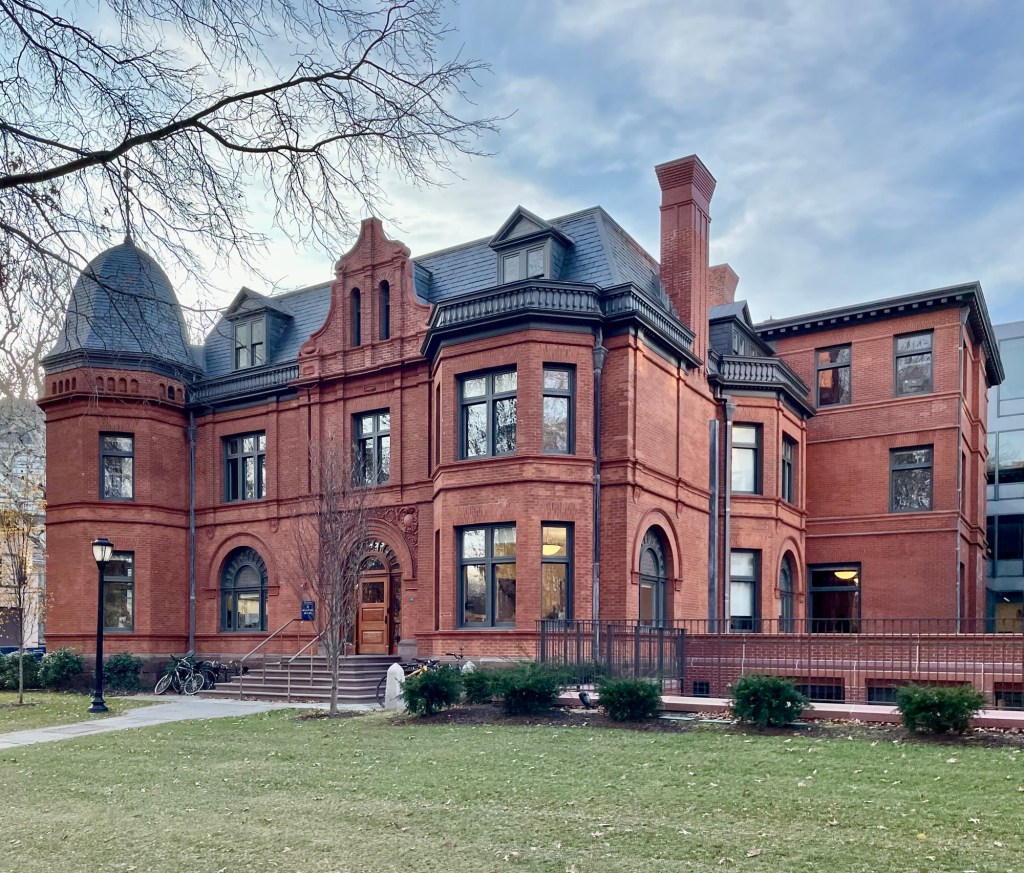
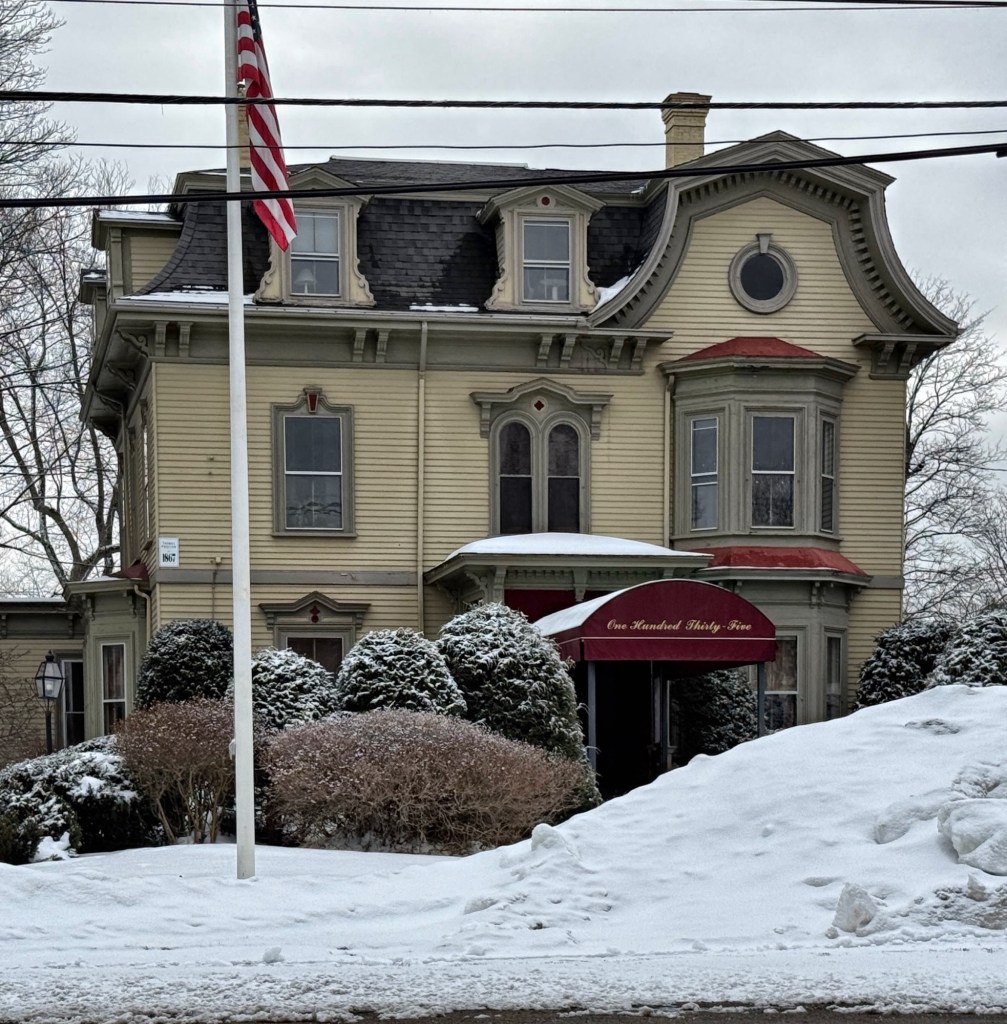
Damon-Griffin House // 1869

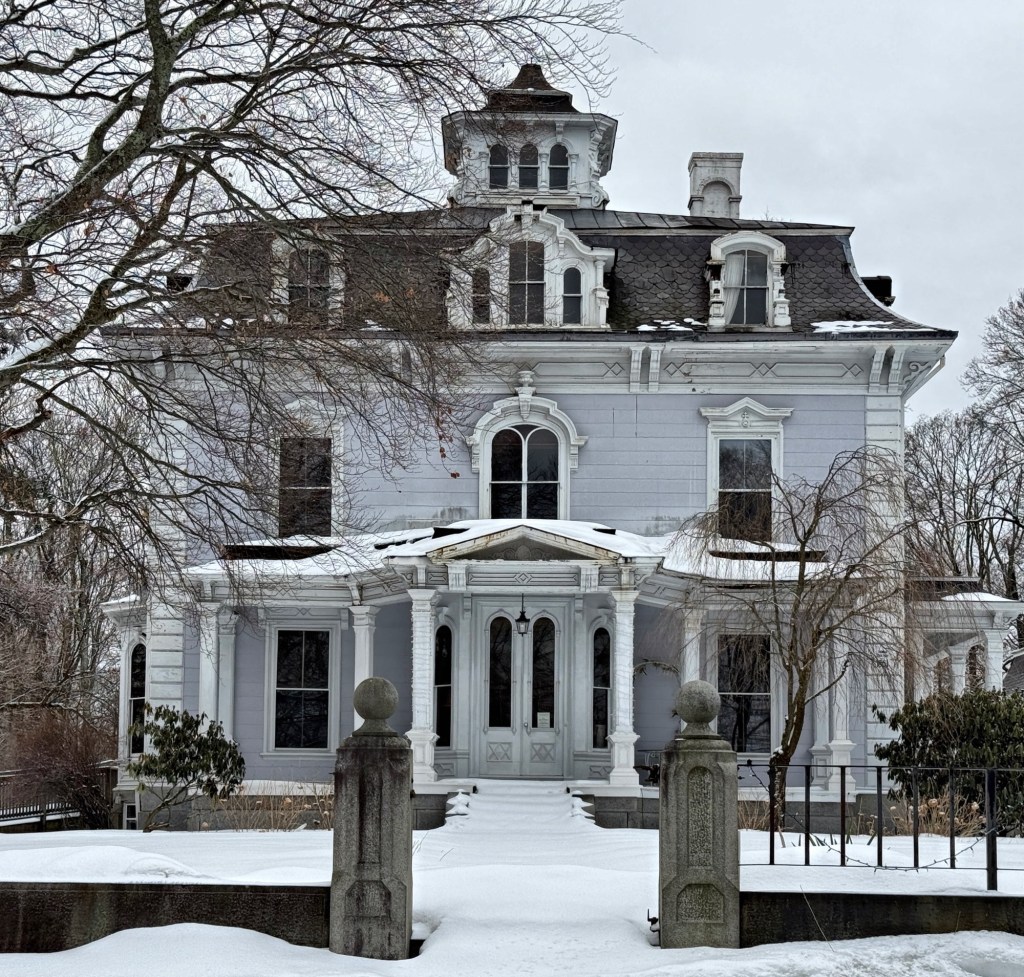
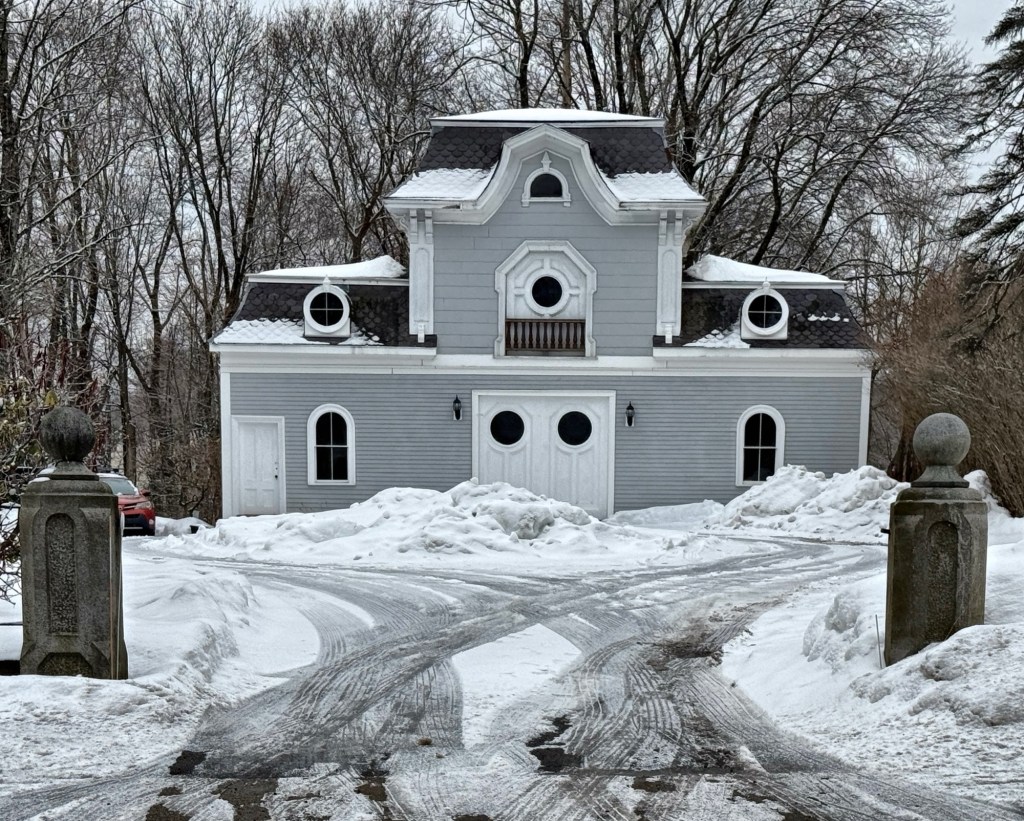
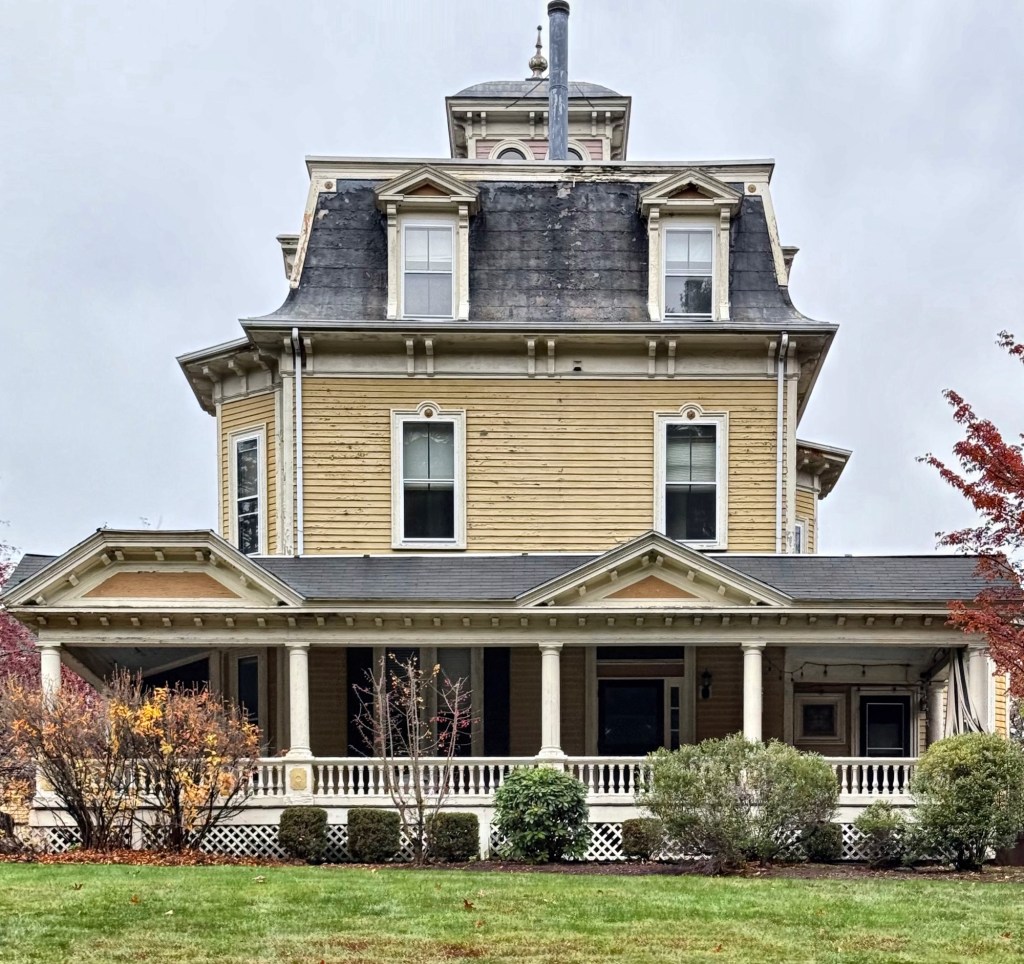
The Damon-Griffin House at 92 Commonwealth Road in Wayland, Massachusetts, is one of the exemplary buildings constructed in the Cochituate village in town, which prospered in the 19th century and centered around industry. This stately Second Empire style mansion is sited on a rise in the land overlooking Lake Cochituate and was completed in 1869 for George A. Damon (1826-1885), a wealthy businessman. George Damon died in 1885, and the house was sold to Wallace Griffin, one of the Griffin brothers who worked for the Bent Company, a prominent local shoe manufacturer. In 1890, Noble Griffin bought the house from his brother and, as his business prospered, proceeded to fix up the house as the showplace of a successful shoe manufacturer. In the mid-20th century, the Damon-Griffin House became a funeral home, and later was purchased by a developer who subdivided the land to build a suburban-style development of detached homes behind the house, and constructed an addition to the rear with more condominium units.

John E. Thayer Mansion // 1883

Photo from real estate listing.

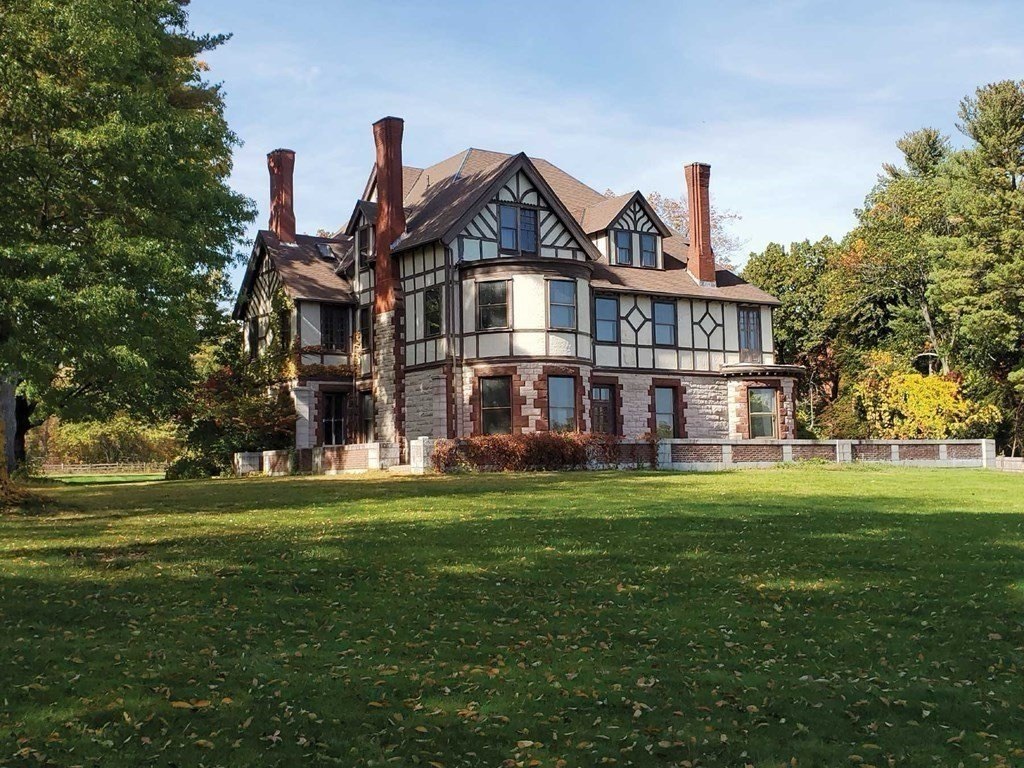
A lesser-known residence built for a member of the wealthy Thayer Family is this stately Queen Anne mansion tucked away in South Lancaster, Massachusetts. The John E. Thayer Mansion was built in the 1880s for its namesake, John Eliot Thayer (1862-1933), who graduated from Harvard College in 1885 and engaged in business before becoming one of the world’s most prominent ornithologists. John began collecting and housed his collections in several wooden buildings close to his home in Lancaster, but when these became unsafe and crowded he built a beautiful brick building in 1903 nearby, opening it to the public as a museum a year later. John Thayer hired esteemed Boston architect, John Hubbard Sturgis, who was then working with his nephew, Richard Clipston Sturgis, to design the English Queen Anne style country mansion. The residence features a stone first floor with wood-frame above that is given half-timbering treatment, suggesting the English design. John Thayer’s country mansion was a short walk away from his twin brother, Bayard Thayer’s mansion, and his other brother, Eugene’s country house, both in Lancaster. The house remained in the Thayer family until the 1960s, and was recently sold to new owners. The interiors are some of the best preserved for a country estate I have seen and worthy of the Thayer name. 

Fairlawn Mansion // 1883

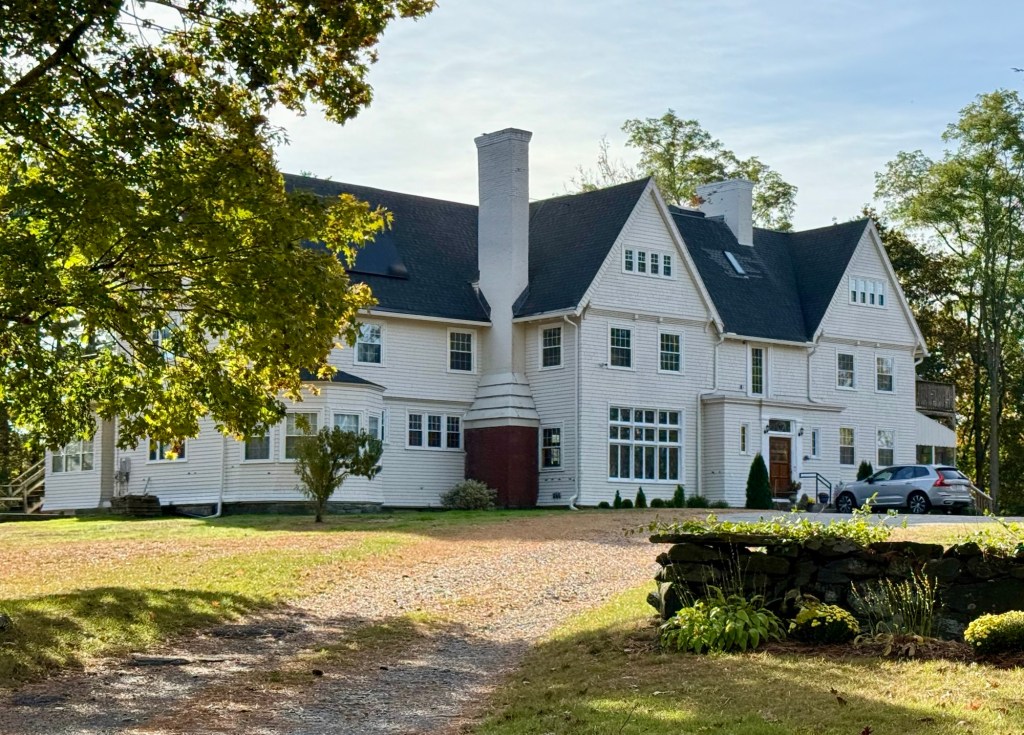
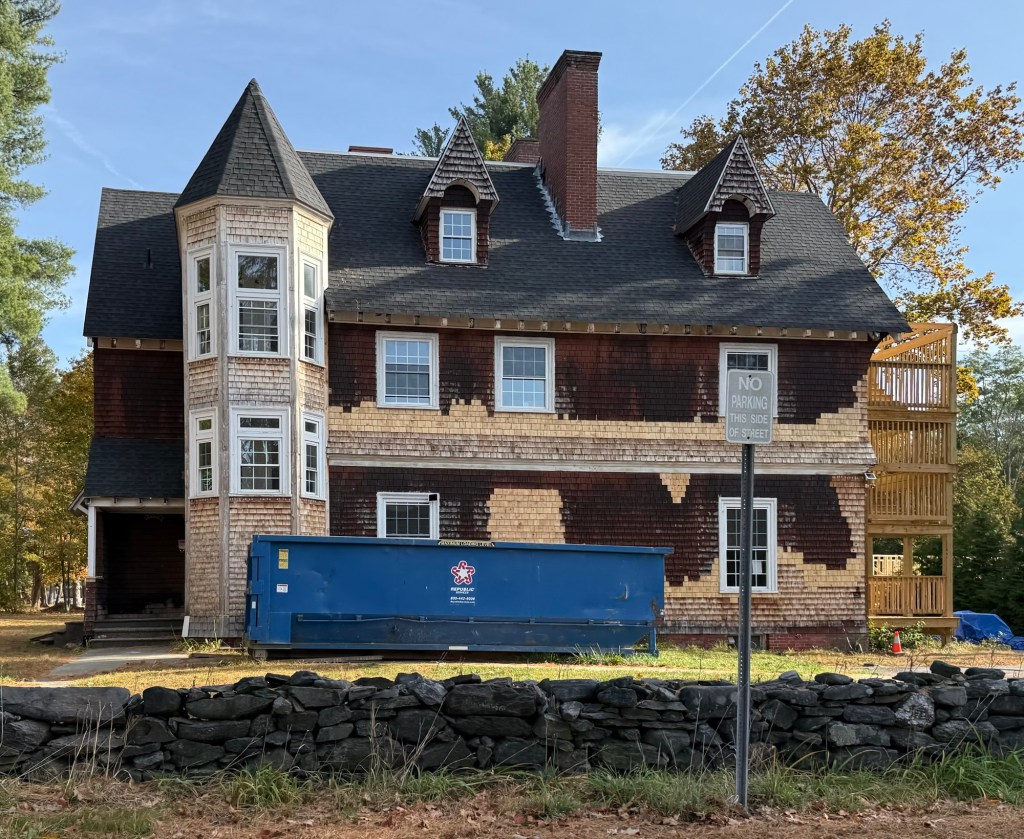
One of the great mansions built for the wealthy Thayer Family, “Fairlawn” stands as one of the finest Gilded Age homes in Lancaster, Massachusetts. This home was built for Eugene Van Renssalear Thayer (1855-1907), a financier and businessman, and his wife, Susan Spring Thayer. The gracious Richardsonianeque Shingle style house was designed by the Boston architectural firm of Andrews & Jacques as one of their first commissions after leaving the office of H. H. Richardson to establish their own practice. After the deaths of Eugene and Susan, the property was inherited by Susan Thayer Bigelow, the youngest daughter of the couple, and her husband, architect, Henry Forbes Bigelow. Under the ownership of Henry and Susan Bigelow, a massive renovation occurred, where Henry F. Bigelow oversaw in 1923, the removal of the south wing of the house, which was relocated to the south and became a detached residence, painted the brown-stained shingles white, and removed the Richardsonian arches to create a 20th century country house more in the Tudor Revival mode. From 1965, the property was owned by the former Atlantic Union College, and was colloquially known as the White House, but has since been sold to private owners. The former south wing, now a detached house, is under separate ownership. 

Detached portion of original house.

Ambrose Burnside House // 1866

What do this unique Victorian house and sideburns have in common? Well, you are about to find out!

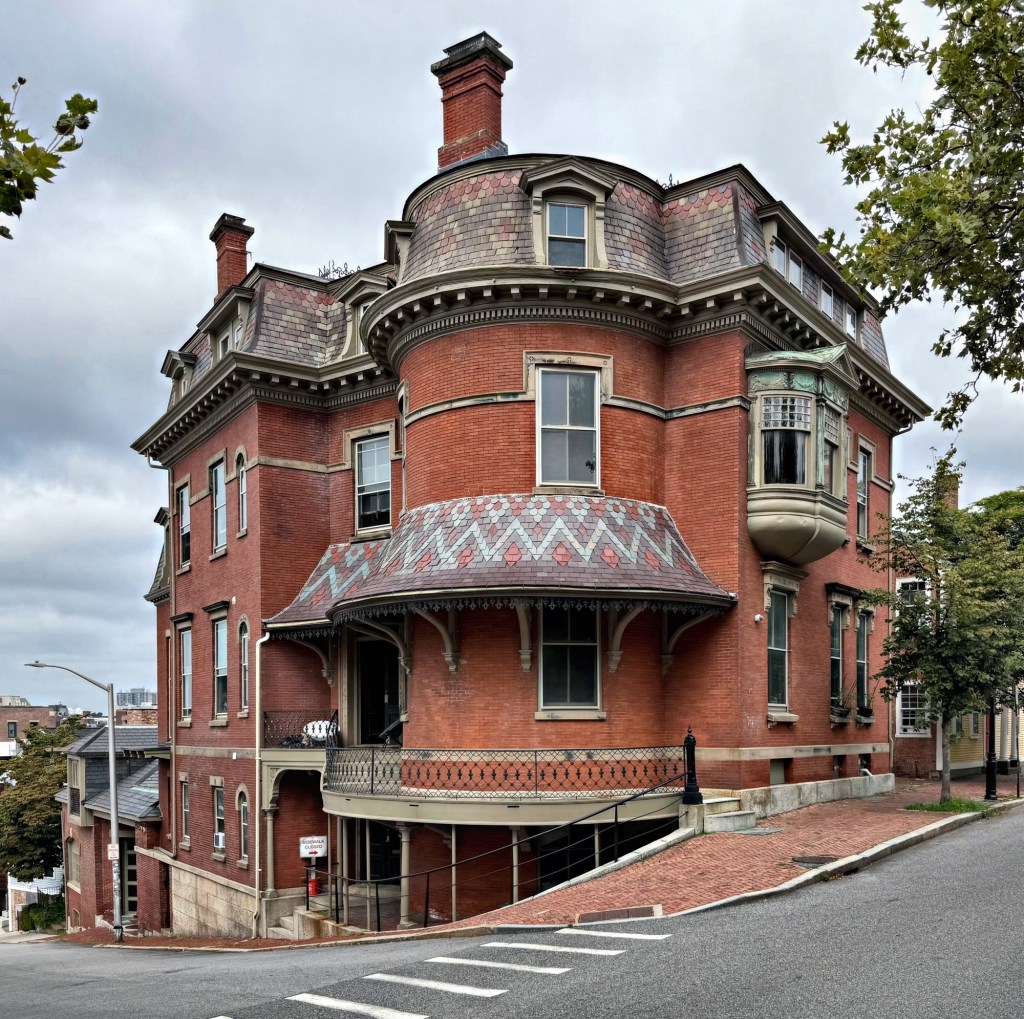
The Ambrose Burnside House is sited on an oddly shaped, and sloping corner lot on Benefit Street in Providence’s East Side neighborhood, and is one of the most unique Second Empire style residences in New England. The house was built in 1866 for General Ambrose Burnside (1824-1881), a Union general in the American Civil War, who returned to Providence and was about to begin a term as governor, followed by two terms in the United States Senate. Ambrose Burnside hired local architect, Alfred Stone, to design his new city mansion, which upon completion, was deemed one of the most “modern residences” in Providence. Built of brick with Nova Scotia stone with a concave slate mansard roof and one-of-a-kind rounded corner bay, the Ambrose Burnside House does not disappoint! Ambrose Burnside died in 1881 and the property was occupied by his sister-in-law until the property was sold in 1884 and housed the Providence Children’s Friend Society House for Aged Women and the Providence Association for the Benefit of Colored Children, providing shelter and food for elderly women and children of color without parents or guardians. After WWII, the Burnside House was converted to apartments.

Now, to the sideburns… Ambrose Burnside was noted for his unusual beard, joining strips of hair in front of his ears to his mustache but with the chin clean-shaven; the word burnsides was coined to describe this style. The syllables were later reversed to give sideburns.

Samuel & Susan Gaut House // c.1855

Built in the 1850s, the Samuel and Susan Gaut House on Highland Avenue in Somerville, Massachusetts, is one of the finest examples of a symmetrical, three-bay, Italianate style house in the city. Samuel Norton Gaut (1816-1891) worked as a baker with shops in downtown Boston, and married Susan Dutton (1824-1892), the daughter of a wealthy shipbuilder in Newburyport. The Gaut House was listed on the National Register of Historic Places for its architectural significance as an intact example of a gabled Italianate style home. Special details include the brackets in the gable, trefoil window in the peak, and the octagonal cupola at the roof. Early 20th century alterations include the shingle siding, replacement windows, and enclosed portico, but neither truly detract from the beautiful home.

Charles H. Farnam Mansion // 1884

Charles Henry Farnam (1846-1909) was a lawyer, genealogist, and the son of Henry Farnam, a wealthy railroad industrialist in New Haven, Connecticut. Following his father’s death in 1883, Charles, who may have inherited a small fortune in the will, purchased a house lot on the finest residential street in New Haven, Hillhouse Avenue. The existing house on the lot, the Benjamin Silliman House, was relocated to front Trumbull Street (and recently relocated again to 85 Trumbull Street), clearing the site for his new mansion. He hired esteemed architect J. Cleaveland Cady, who designed a large, Queen Anne/Romanesque masonry home unlike anything else on the Avenue. The house features an asymmetrical plan, corner tower, a Flemish style gable, fancy brickwork and terracotta detailing, and a slate mansard roof. Charles H. Farnam would sell the property to Henry S. Parmelee, a noted businessman and piano manufacturer, who also is credited with inventing the first automated sprinkler head and as a result, owning the first building in the United States to be equipped with a fire suppression system, his piano factory. Parmelee hired local architect Leoni Robinson, to design a rear addition for the house. Parmelee died in 1902, and the property was maintained by his widow and daughter, until it was acquired by Yale University in 1920. Today, the Farnam Mansion is occupied by the Economics Department.

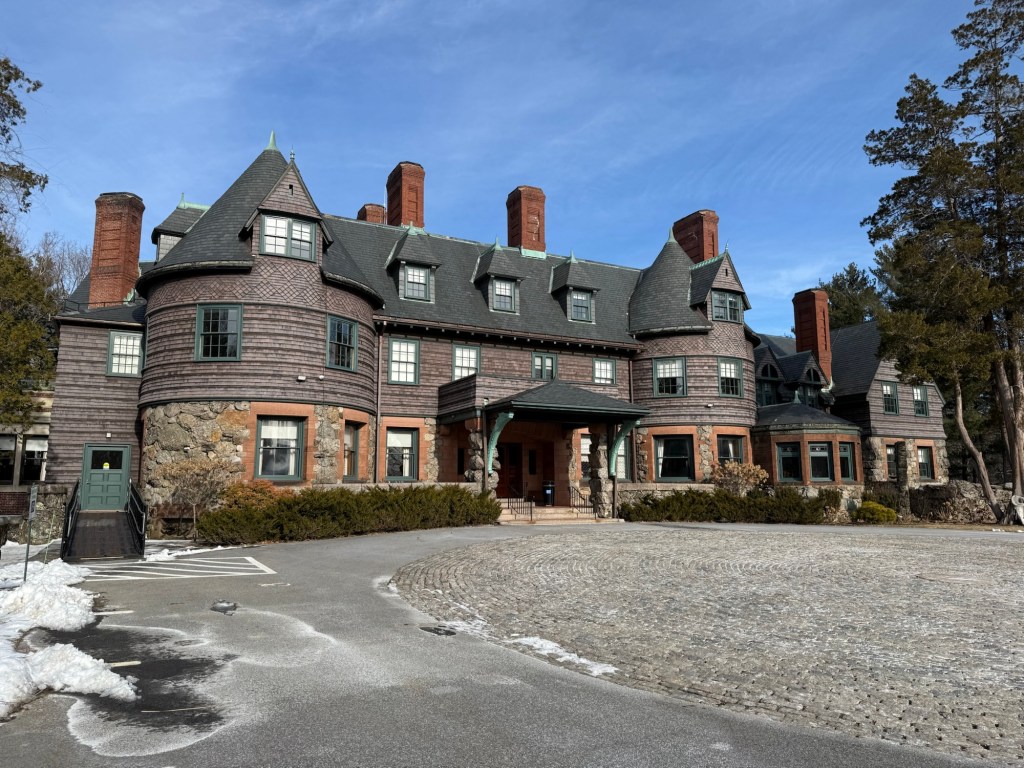
Roughwood // 1891

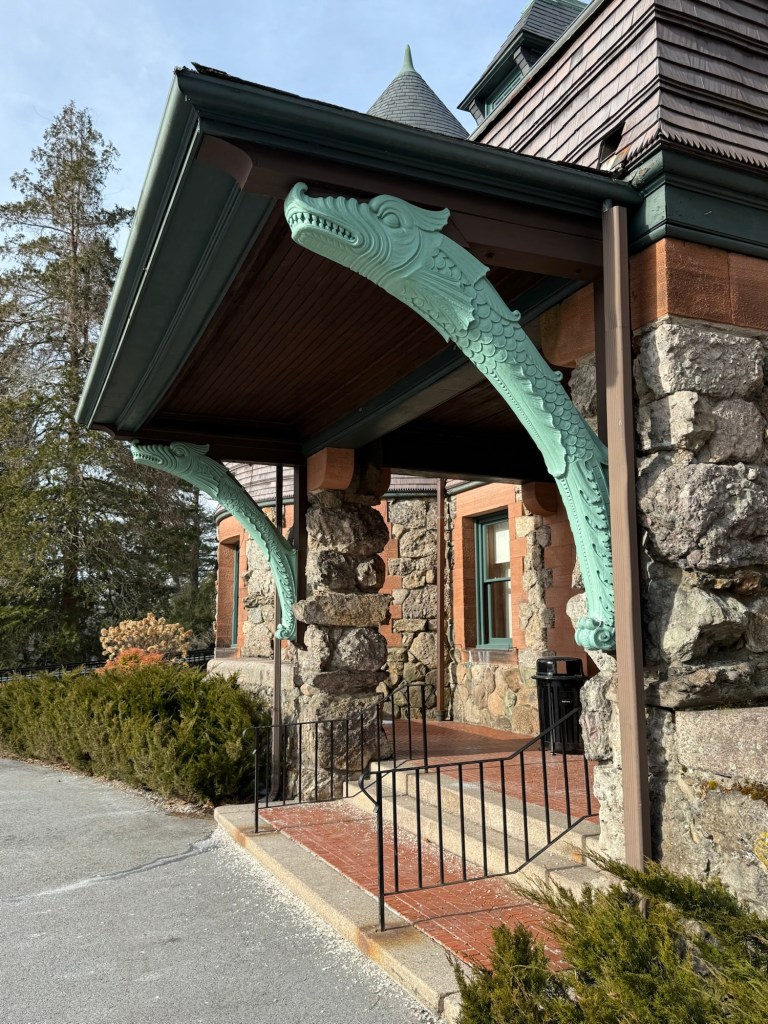
Roughwood is a historic estate house on Heath Street in Brookline, Massachusetts. The main residence and the various outbuildings on the grounds were designed by the Boston architectural firm of Andrews, Jaques and Rantoul, and built in 1891 as the summer estate of William Cox, a wholesale dealer in the footwear industry. Mr. Cox died in 1902 and the property was sold to Ernest Dane, the year before he married Helen Pratt, the daughter of Charles Pratt, a wealthy New York businessman and philanthropist. Mr. Dane was a banker who served as President of the Brookline Trust Company. The Dane’s owned the property for decades until the property was eventually purchased by Pine Manor Junior College in 1961. The estate house remained a centerpiece of the campus. In the early 21st century, Pine Manor College saw financial distress, and was saved by Boston College, who acquired the campus and its existing students as Messina College, which opened in July 2024 for over 100 first-generation college students. Architecturally, Roughwood is a high-style example of the Queen Anne/Shingle style of architecture. The mansion is built with a puddingstone and brownstone first floor and a second floor of varied patterns of wood shingles, all capped by a slate roof. The facade is dominated by towers and dormers and the great rustic entrance portico with dragon’s head brackets. To its side, a 1909 Tudor Revival addition served as a music room for the Dane’s family and while stylistically unique, is designed with impeccable proportions.

Emerson Gaylord Mansion // c.1871

Emerson Gaylord (1817-1899) was a businessman and politician from Chicopee, Massachusetts, who operated the Gaylord Manufacturing Company and later, the Ames Sword Company, furnishing military swords and other goods for the Union during the Civil War. His business did extremely well and he became one of the wealthiest men in the industrial city. In 1856, Gaylord purchased the property at the corner of Springfield Street and Fairview Avenue and resided in a home here until years following the war, when he demolished the original structures on the site in 1870 to build a new home currently known as the Gaylord Mansion, worthy of his stature and notoriety in Chicopee. In 1962, Elms College purchased the Gaylord Mansion for $50,000. In 1997, an Elms College Cornerstone Campaign raised $100,000 to refurbish the exterior of this historical treasure. In February 2020, the Gaylord mansion underwent another renovation by the college to transform the interior into a classroom-meeting space with dorm residences on the top floors dubbing it “Living-Learning, Community and Cultural Center”.

Porphyry Hall // 1880

The Jacob E. Spring Mansion, also known as Porphyry Hall, is a high-style estate house located in Danvers, Massachusetts, that is one of the finest and most unique in the state! The house was built in 1880 for Jacob Evans Spring (1825-1905), who was born in Brownfield, Maine, and at the age of twenty, he went to Argentina and amassed a fortune in the wool business in Buenos Aires between 1845 and 1865, when he returned to the United States. Jacob and his wife, Sara Duffy, would purchase a large farm in Danvers and began planning for their family country home. Their residence was built on a high hill over two years and constructed of over 40 types of stones of irregular size and color with door and window sills of Nova Scotia freestone with arches of the doors and windows and corners of brick. The mansion was designed by architect George M. Harding of Boston, and built by several skilled masons over many months. Mr. Spring named his estate, “Porphyry Hall” with Porphyry meaning an igneous rock with large crystals in a fine-grained matrix; suitable for the walls of their mansion. The Spring’s lived lavishly at this home and spent nearly all of their fortune, selling the property after just ten years to the Xaverian Brothers, who opened it as Saint John’s Normal College. In 1907, the compound was re-organized as a Catholic boys prep school. In 1915, a chapel was added to the rear of the building, constructed from gray fieldstone to blend with the main house. Have you ever seen a building like this?