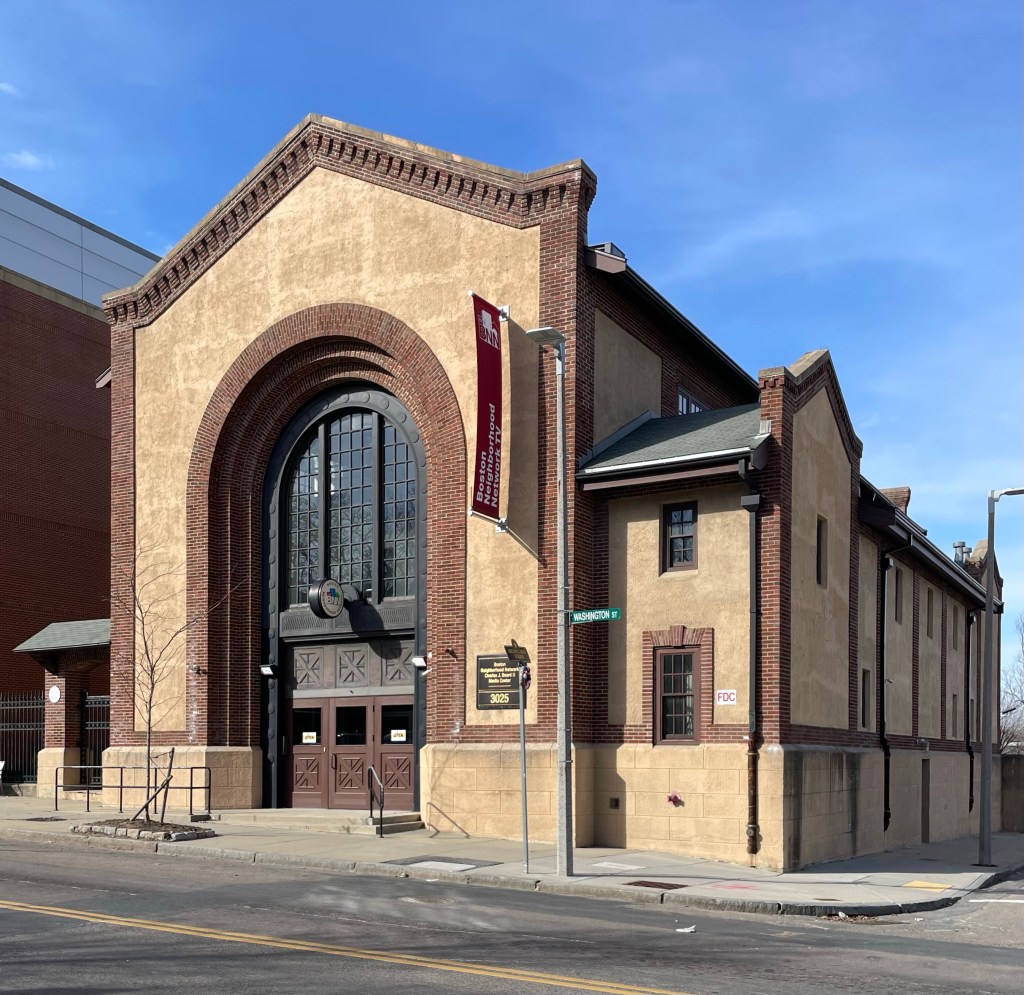
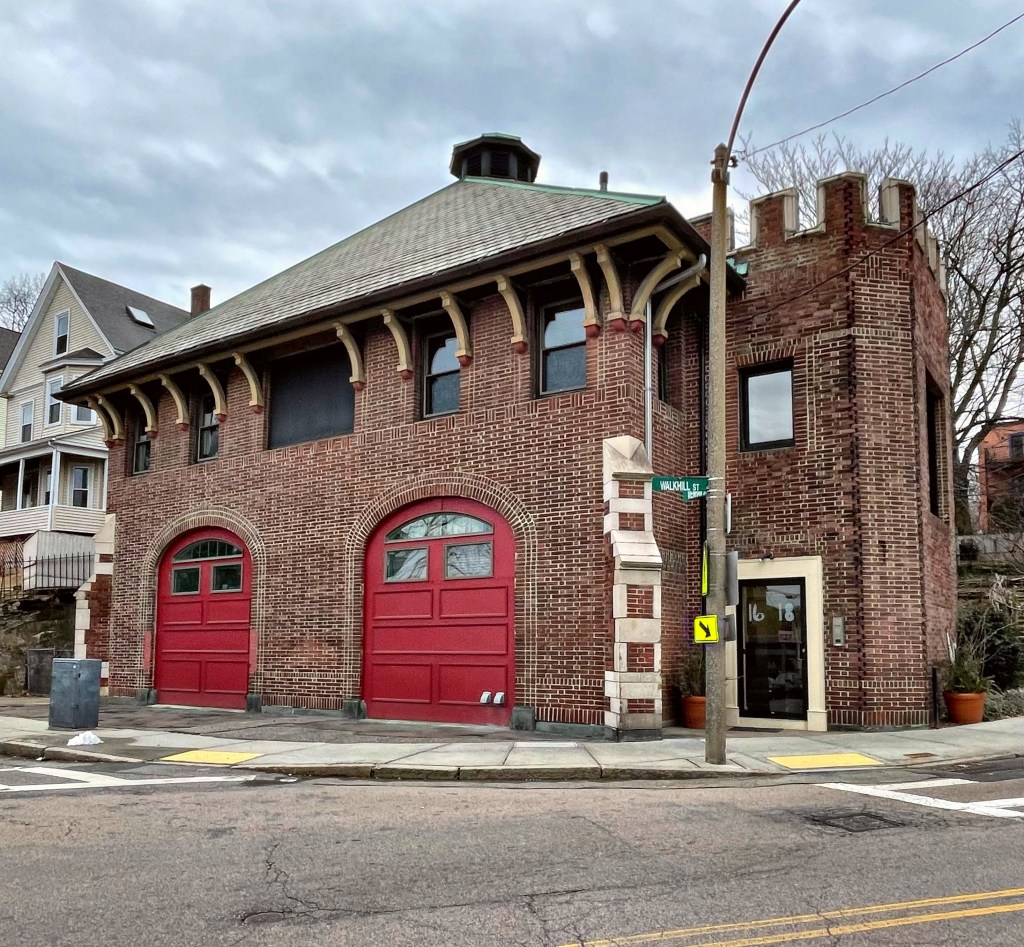
Chemical Engine #13 Firehouse // 1909

Just a block from the Bethel AME Church (last post) in Jamaica Plain, Boston, you will find this absolutely charming old fire station. The station was built in 1909 about the same time as the new Forest Hills Train Station was completed, signaling a huge population and development boom in the area. To provide emergency and fire service to the newly developing neighborhoods surrounding the train station, the City of Boston hired the architectural firm of Moller and Smith to design a new station that would allow for horses and related apparatus as well as a new fire automobile to enter the building. The Arts and Crafts style building is constructed of brick supported by structural steel finished with Carolina pine at the interior. The building retains its pyramidal hipped roof in slate and a unique corner tower capped with a castellated parapet.

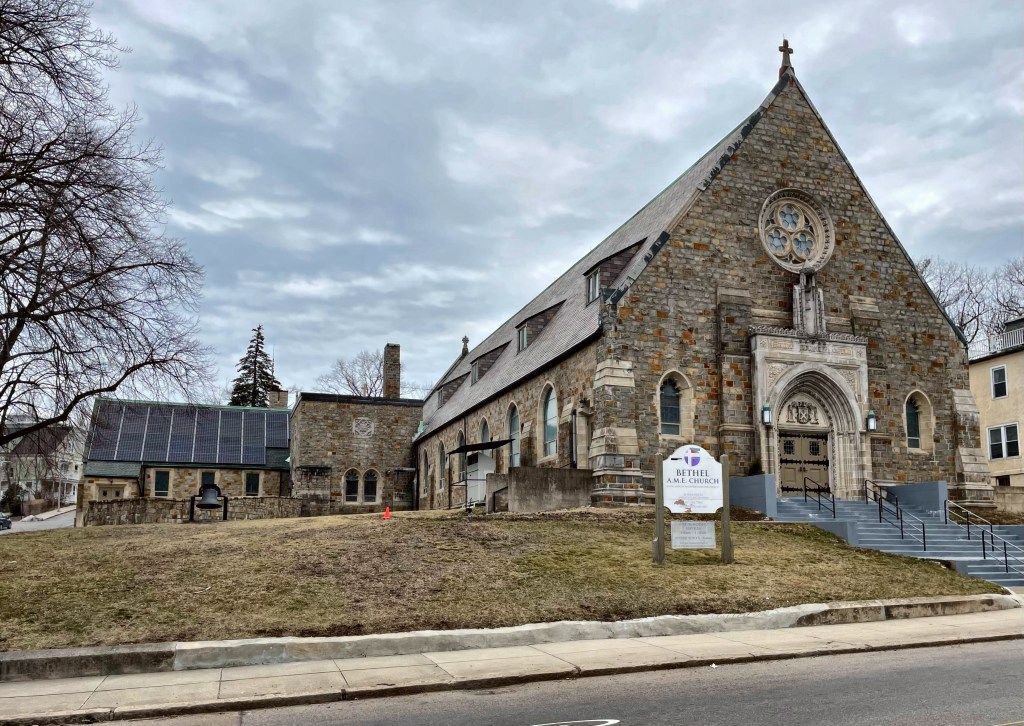
St. Andrew R.C. Church – Bethel AME Church // 1921

During the rich Arts and Crafts movement of Boston, dozens of churches and their associated buildings were constructed using principles of the movement, which sought to incorporate English design with hand-crafted detailing, moving away from the mass-produced features and architecture seen in the Victorian-era/Industrial Revolution. After WWI, the Forest Hills neighborhood of Boston saw a massive influx of residents and housing construction, leading to the desire for a new neighborhood church. The Roman Catholic Archdiocese commissioned Boston architects Timothy O’Connell and Richard Shaw, who specialized in ecclesiastical design to build the new church. Opened in 1921, the building is constructed of random ashlar walls with buttresses, lancet windows, and a large rose window, all nods to Gothic architectural precedent. Demographic changes and declining church attendance led the parish, for the first time in 1995, to accept aid from the archdiocese to meet expenses. Unable to justify keeping the church open, the Archdiocese sold the church to Reverend Ray Hammond and the Reverend Gloria White-Hammond, a husband-and-wife pastoral team, who started a local African Methodist Church (Bethel AME Church) in the neighborhood.

Forest Hills Station // 1987

Photo courtesy of Cambridge Seven

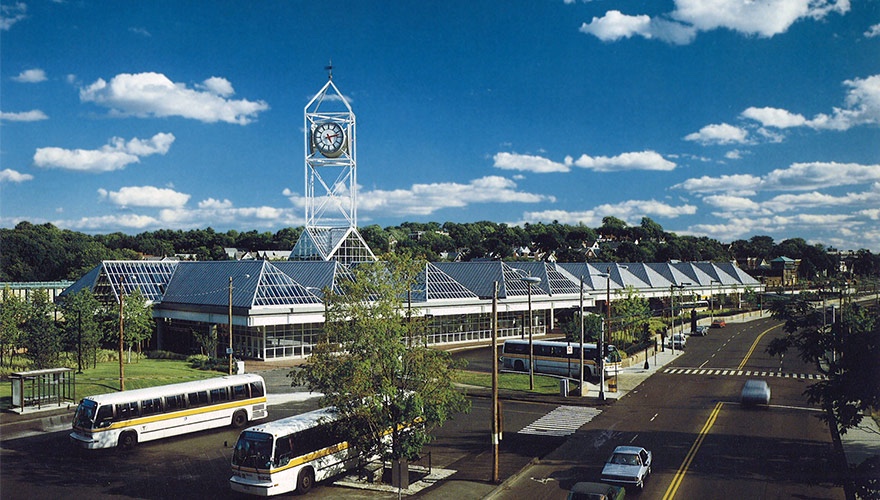
While the demolition of the 1909 Forest Hills Station in Jamaica Plain (last post) was a huge architectural and historic loss for the city of Boston, the present building is a landmark in its own right. The present building was built in 1987 as a pivotal project in the MBTA’s Southwest Corridor Improvement Program, which was largely unfinished (thanks to neighborhood pushback and protests against the proposed highway to cut through the neighborhoods). The existing station, designed by local firm Cambridge Seven, is situated between two important points in Boston’s “Emerald Necklace” park system, and thus was given the appearance of a greenhouse by the architects. The distinctive clock tower, rising 120 feet above the station, signals the station location and is a nod to the days when stations once had prominent clocks to help passengers keep tabs on the time, before the days of cellphones!

Old Forest Hills Station // 1909-1987

Photo courtesy of Boston City Archives

When elevated train service from Boston extended to Forest Hills in Jamaica Plain in 1909, the residents of the surrounding neighborhoods and points south were ecstatic to realize the chance to enjoy quicker transit to the city. The station, which opened in 1909, was an architectural landmark and engineering feat, as the new terminal was the largest structure of its kind and the most costly in the country at the time. The large station was made of steel and reinforced concrete, finished in copper at the elevated section, and took nearly two years of construction. City architect Edmund M. Wheelwright designed the station, and upon its opening, it was called “the chef-d’œuvre of rapid transit development in Boston”. Like with many cities all over the country, shifting transportation planning and priorities and shrinking investment necessitated the once grand station to suffer the fate of the wreckingball. As part of the Southwest Corridor project, this station was to be demolished, with a modern station constructed to service the MBTA trains on the Orange Line. Also, plans were developed for a 12-lane highway along the railroad right-of-way between Boston through Cambridge. The residents of the affected areas, including Jamaica Plain, Roxbury, South End, Back Bay, and Cambridge, protested against the destruction of their neighborhoods by the planned highway, and won! The old Forest Hills Station was a casualty of the proposal, but a lasting reminder for neighborhood planning and advocacy, preserving character and people over cars.

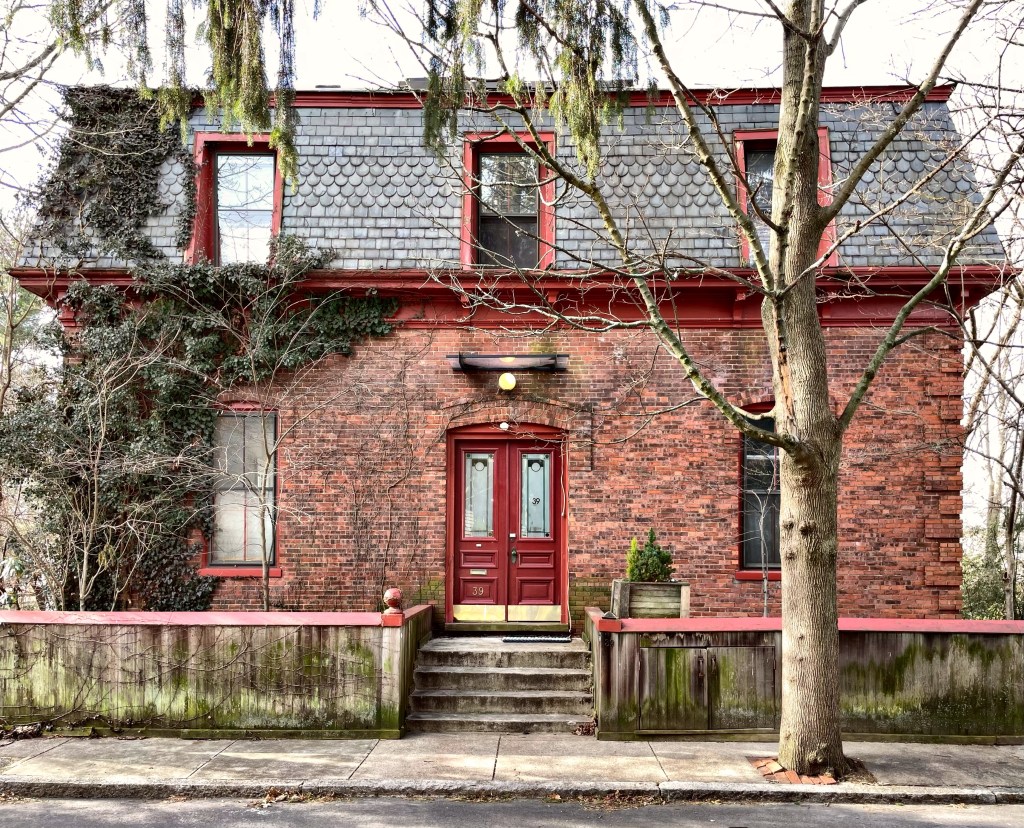
Edward Moulton House // c.1870

This stunning Italianate style home in the Forest Hills area of Jamaica Plain, Boston, sits directly adjacent to Forest Hills Cemetery, one of the finest examples of a rural cemetery in America. This house dates to the mid-19th century and maps show it was built on land owned by Isaac Cary, who built homes on this hill. By the 1880s, the property seems to have been acquired by the cemetery, or they gave financial assistance to Edward Everett Moulton, who worked as an Assistant Clerk at the cemetery. Edward lived in this house seemingly until his death in 1927. Since then, the home stands as one of the best-preserved in the area and is a testament to stewards of these significant old homes.

Jacob Weld Seaver House // c.1850

In 1849, Jacob Weld Seaver (1820-1914) married Sarah Abby Weld and built this Greek Revival home, perched on a hill near the burgeoning Forest Hills Cemetery. The property originally extended all of the area of Orchardhill Road and the dead end streets that extend off of it, and included a stable, caretakers cottage, and at least two rental properties (this house may have been one of them). Jacob Seaver grew up in the neighborhood and attended Harvard, graduating in 1838. He became involved with the drygoods business and must have met his future wife from her father George F. Weld, who was a commission merchant in Boston. He went on to become the director of the Second National Bank of Boston, commuting into the city from the Forest Hills station. In the early 20th century, Seaver sold this property to a Thomas Minton, who subdivided some of the lot and built houses on the estate.

St. Andrew Ukrainian Orthodox Church // 1958

I typically do not connect my posts to current events, but I really wanted to take time to highlight the strength and fortitude of the Ukrainian people fighting to preserve their home and democracy around the globe. Closer to home, a growing Ukrainian community in Boston in 1956, decided to erect a new church in the Forest Hills section of Jamaica Plain. Land was acquired and a blessing ceremony was attended by members of the church, the architect, and Reverend John Theodorovich; the head of the Ukrainian Orthodox Church of America, who was born in Ukraine, and served at chaplain with the Army of the Ukraine National Republic in the war against Russia in 1919-20, before eventually moving to North America. The architect, John Kodak, was a Toronto-based architect of Ukrainian descent who ended up in Canada after fleeing from his home to escape communist rule from the USSR. This church is a Modernist interpretation of the iconic St. Andrew’s Church in Kiev, Ukraine, with its onion domes surmounted by crosses. The church, like many others, is holding prayers for Ukraine and is coordinating donations and aid to the Ukrainian people and related charities.

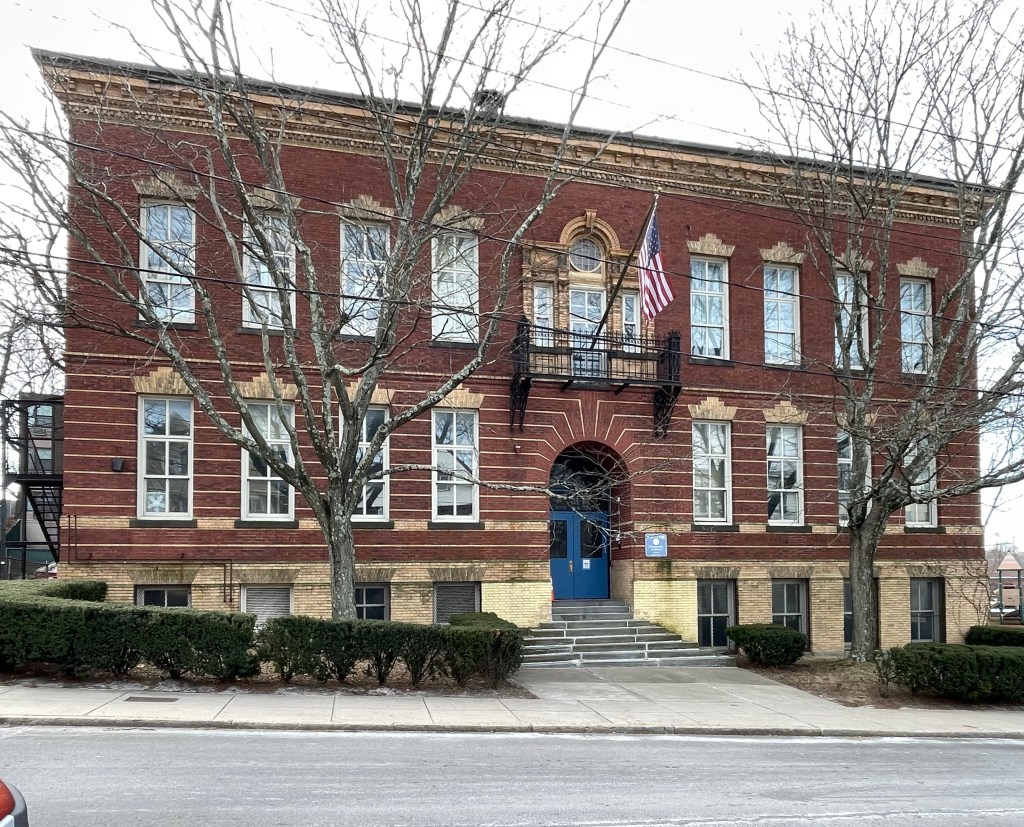
Susanna Cary Rental Property // c.1884

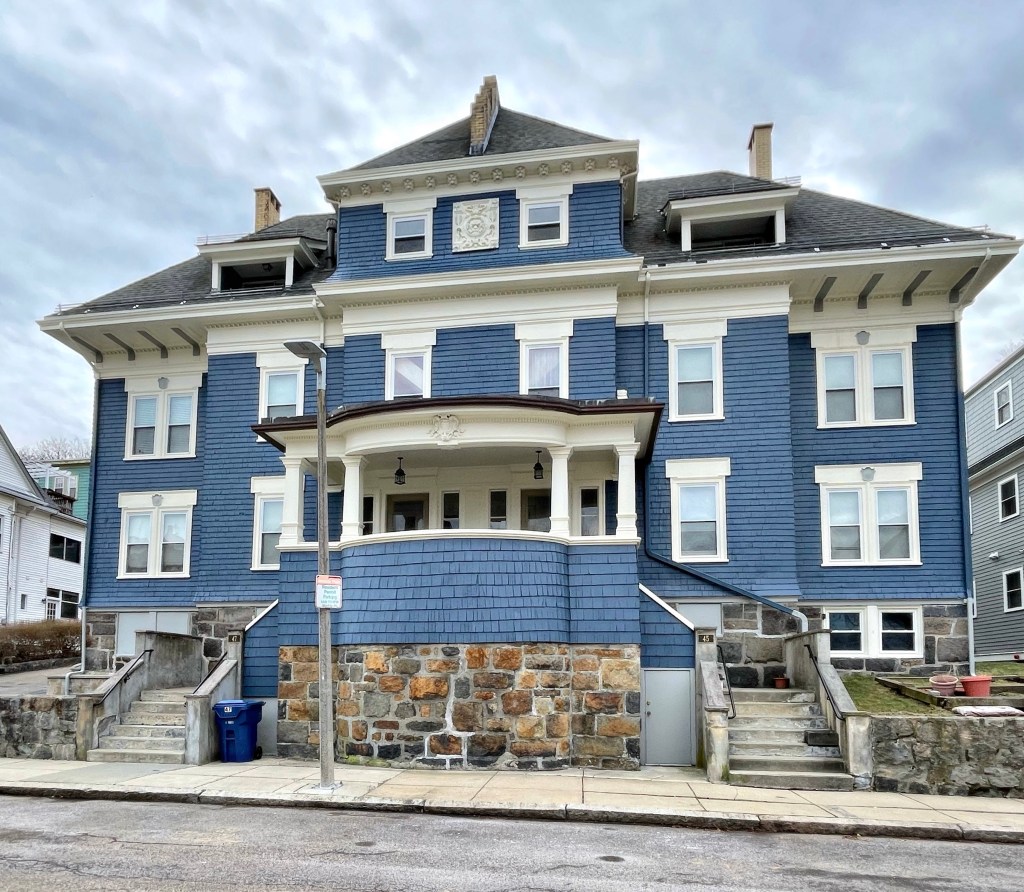
Isaac Harris Cary’s land holdings adjacent to Forest Hills Cemetery in Jamaica Plain, Boston, saw a surge in value when the cemetery and Forest Hills Station were constructed, opening up the area for development. After Isaac’s death in 1881, his unmarried daughter Susanna, built this large Second Empire style building contributes to the varied 19th century architecture of the street. This double-house was constructed around 1884, seemingly as a rental property which provided Susanna income while residing nearby. The two units suffer from some deferred maintenance, but are excellent examples of the Second Empire style in a double-house form.

Isaac Cary House // c.1870

Isaac Harris Cary (1803-1881) was born in Charlestown, MA to an established, old New England family. He eventually settled in West Roxbury, an area that is now known as Jamaica Plain, where he operated a tannery along a branch of Stony Brook, a tributary of the Charles River. Isaac built this home and a couple income-producing rental properties on a hill adjacent to the newly established Forest Hills Cemetery. The Second Empire style home today features bright colors and a modern recessed window set into the mansard roof, likely providing views to Boston’s skyline.

The Angel of Death and the Young Sculptor // 1893

While not a building, I must feature one of the most stunning pieces of art I have seen, at a cemetery! Titled “The Angel of Death and the Young Sculptor“, this massive monument was is a sculpture in bronze, and one of the most important and influential works of art created by sculptor Daniel Chester French and is located at Forest Hills Cemetery in Boston. Also known as the Milmore Monument, it was commissioned after the death of brothers, Joseph, James, and Martin Milmore (1844–1883). The Milmore brothers immigrated to the United States from Ireland in 1851, Joseph becoming a stone carver and Martin a sculptor. The will of Martin Milmore’s older brother, Joseph, called for creation of the monument, which was to commemorate the life of his older brother, Martin. As Martin Milmore had been a sculptor himself, French decided to depict the artist at work, with the Angel of Death interrupting his work, with death grabbing the chisel from Martin’s hand as he works. Martin Milmore was 39 years old when he died.

Forest Hills Administration Building & Chapel // 1884

Located adjacent to the Entrance Gate at Forest Hills Cemetery in Boston, the Administration Building and Chapel perfectly compliments the Gothic Revival collection of structures welcoming all visitors to the cemetery. Designed by the firm of Van Brunt & Howe, the building was completed in 1884, when the cemetery’s popularity with visitors (alive and deceased) was at a high. The building is in the Gothic Revival style and is constructed of
Roxbury puddingstone, with sandstone trim on the original parts of the building and yellow freestone trim on the 1921 addition. The building remains as a perfect partner to the entrance gate, serving as a physical portal between metaphorical life and death.

Forest Hills Cemetery Bell Tower // 1876

The bell tower at Forest Hills Cemetery is an octagonal Gothic revival structure located on Snowflake Hill just past the entrance gate and administration building and was completed in 1876. The 100-foot tower is constructed of Roxbury puddingstone and trimmed with granite. The roof is clad with granite tiles and topped with an ornate copper weathervane. Originally its swinging bell tolled, but it has since been replaced with an electronic carillon. The bell tower rises dramatically from massive
outcrop of Roxbury puddingstone known as Snowflake Hill which is offset by smooth lawns and Victorian planting beds. While the large trees surrounding partly obscure the tower, it truly is a stunning building.

Forest Hills Cemetery, Entrance Gate // 1865

Forest Hills Cemetery was founded in 1848 by Henry A. S. Dearborn, then mayor of Roxbury. He designed this magnificent cemetery to offer the citizens of his community a place to bury and remember friends and family in a tranquil and lovely setting. Forest Hills embodies the ideals of the rural cemetery movement, which begun at nearby Mount Auburn Cemetery, in Cambridge in 1831, which was co-founded by Dearborn. Many rural cemeteries have elaborate entrance gates, possibly serving as a dramatic transition from the secular world to the spiritual realm of the cemetery, and perhaps as a metaphor for the journey from life to death. This entrance gate was built in 1865, replacing an earlier Egyptian Revival gate constructed in 1848. Designed by Charles Panter, the gate is constructed of local Roxbury puddingstone, with three arched openings with ornate iron gates surmounted by decorative scrolled ironwork. The central gateway is
framed by two conical spires and a central stone pediment, all topped with stone crosses.

Forest Hills Cemetery, “Boy in a Boat” // 1886

While this funerary sculpture is not a building, I couldn’t help but share one of the most captivating graves in New England for Halloween, “The Boy in a Boat”. Louis Ernest Mieusset (1881-1886), just four years old, died of Nephritis, a kidney inflammation and Scarlet Fever. His mother, Madame Louise Mieusset, took every penny she had saved for the boy’s education and put it towards a commission of a funerary sculpture, depicting her late son’s playful spirit. Madame Mieusset worked as a hat-maker in Boston, barely scraping by until her death in the 1930s. She died penniless, and wished to be buried near her beloved son, but she did not have enough money set aside to be interred in the cemetery and was set to be buried in a pauper’s lot, until (legend says) Boston Mayor James Curley paid her burial expenses, allowing for her eternal rest with her late son Louis. The sculpture is carved of white marble and depicts Louis playing in a boat with a tennis racket in one hand and a shell in another. The funerary sculpture is enclosed in a bronze and glass vitrine to protect it as the marble was believed to be too soft to stand up to weathering, the artist is unknown.