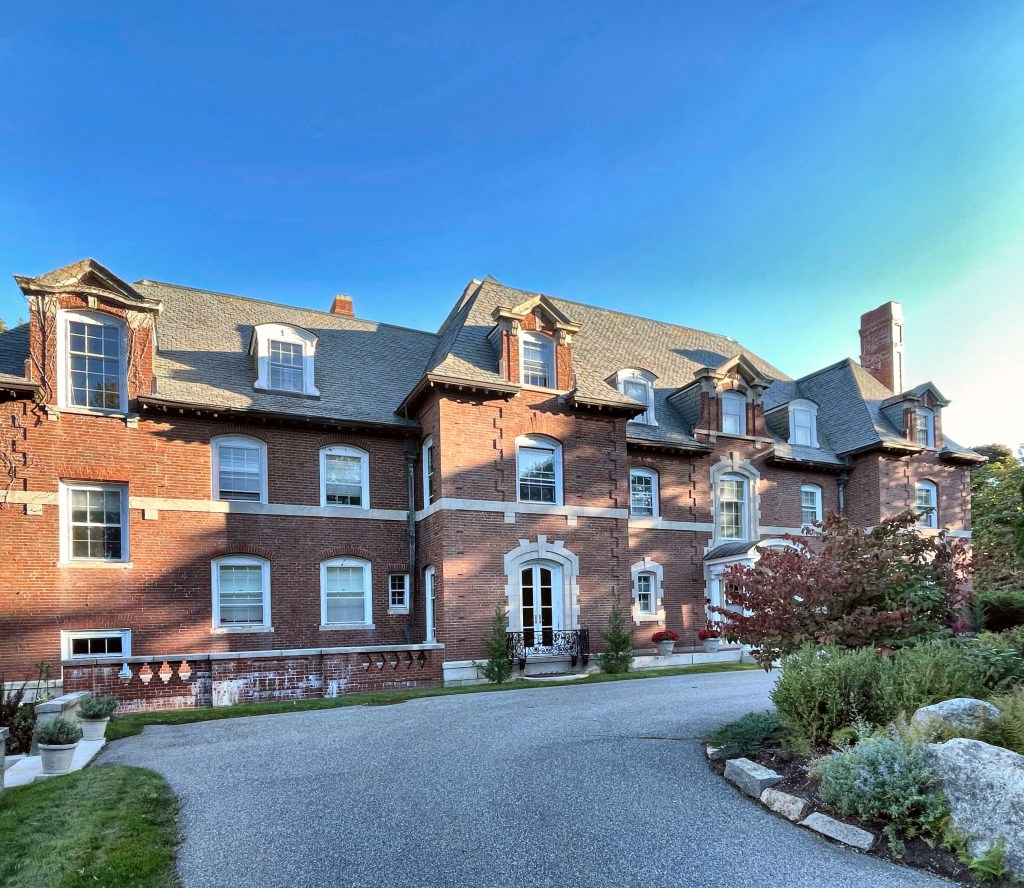
Fairlawn Mansion // 1883

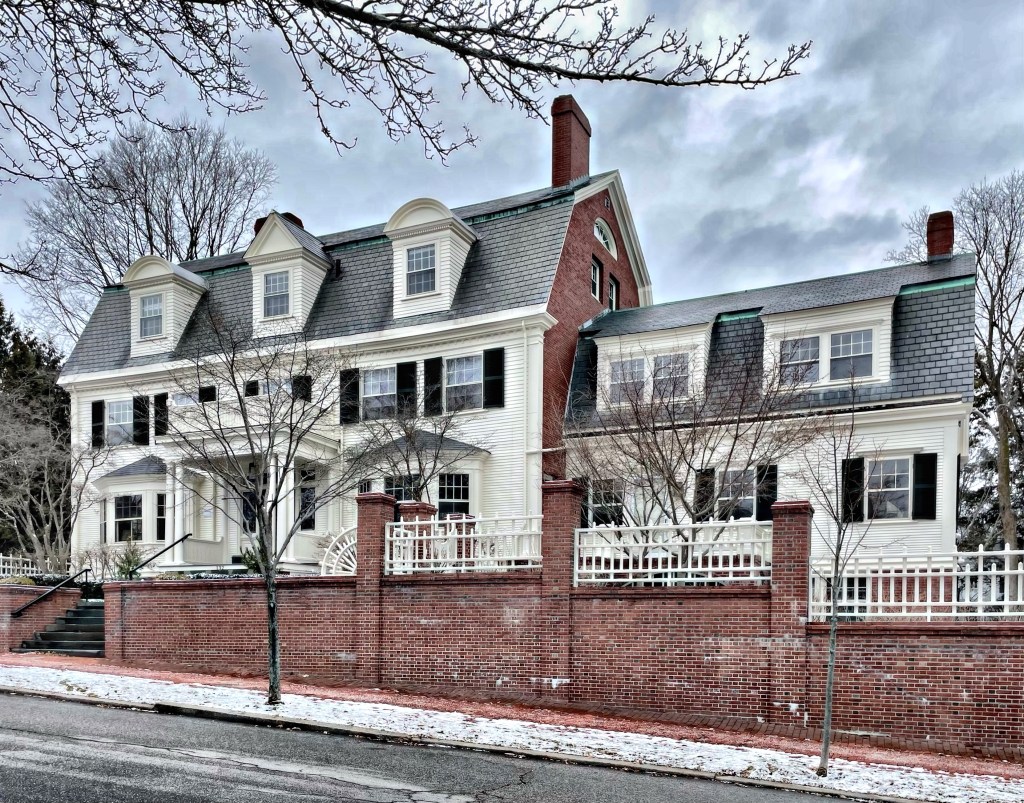
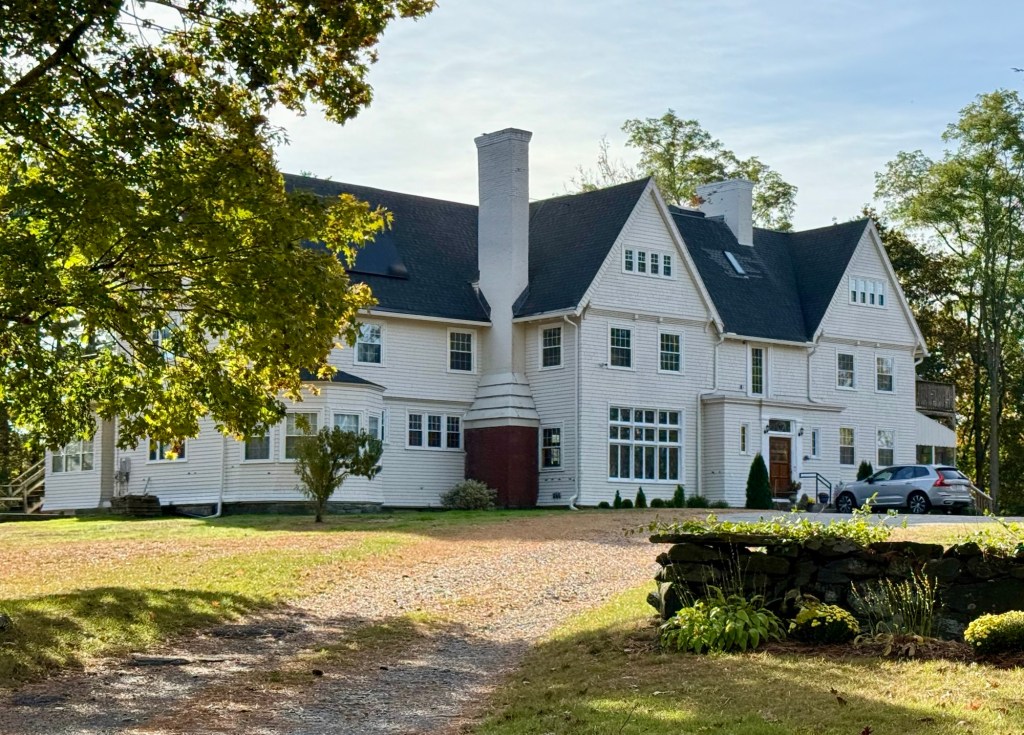
One of the great mansions built for the wealthy Thayer Family, “Fairlawn” stands as one of the finest Gilded Age homes in Lancaster, Massachusetts. This home was built for Eugene Van Renssalear Thayer (1855-1907), a financier and businessman, and his wife, Susan Spring Thayer. The gracious Richardsonianeque Shingle style house was designed by the Boston architectural firm of Andrews & Jacques as one of their first commissions after leaving the office of H. H. Richardson to establish their own practice. After the deaths of Eugene and Susan, the property was inherited by Susan Thayer Bigelow, the youngest daughter of the couple, and her husband, architect, Henry Forbes Bigelow. Under the ownership of Henry and Susan Bigelow, a massive renovation occurred, where Henry F. Bigelow oversaw in 1923, the removal of the south wing of the house, which was relocated to the south and became a detached residence, painted the brown-stained shingles white, and removed the Richardsonian arches to create a 20th century country house more in the Tudor Revival mode. From 1965, the property was owned by the former Atlantic Union College, and was colloquially known as the White House, but has since been sold to private owners. The former south wing, now a detached house, is under separate ownership. 
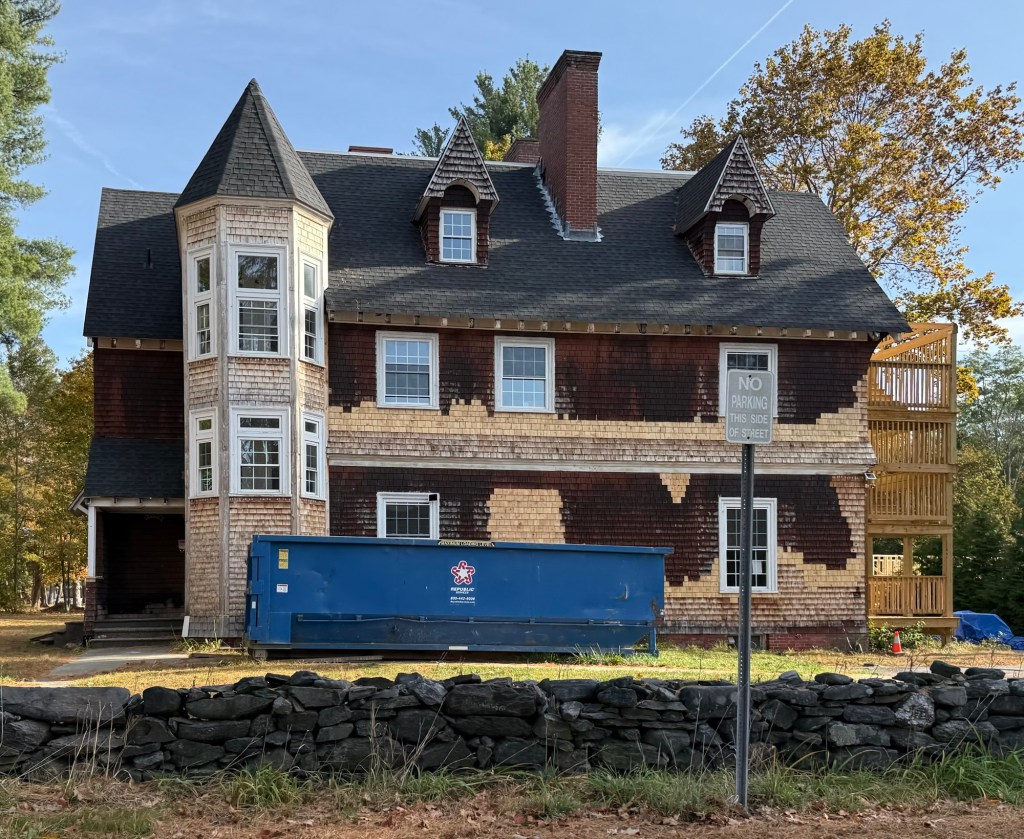
Detached portion of original house.

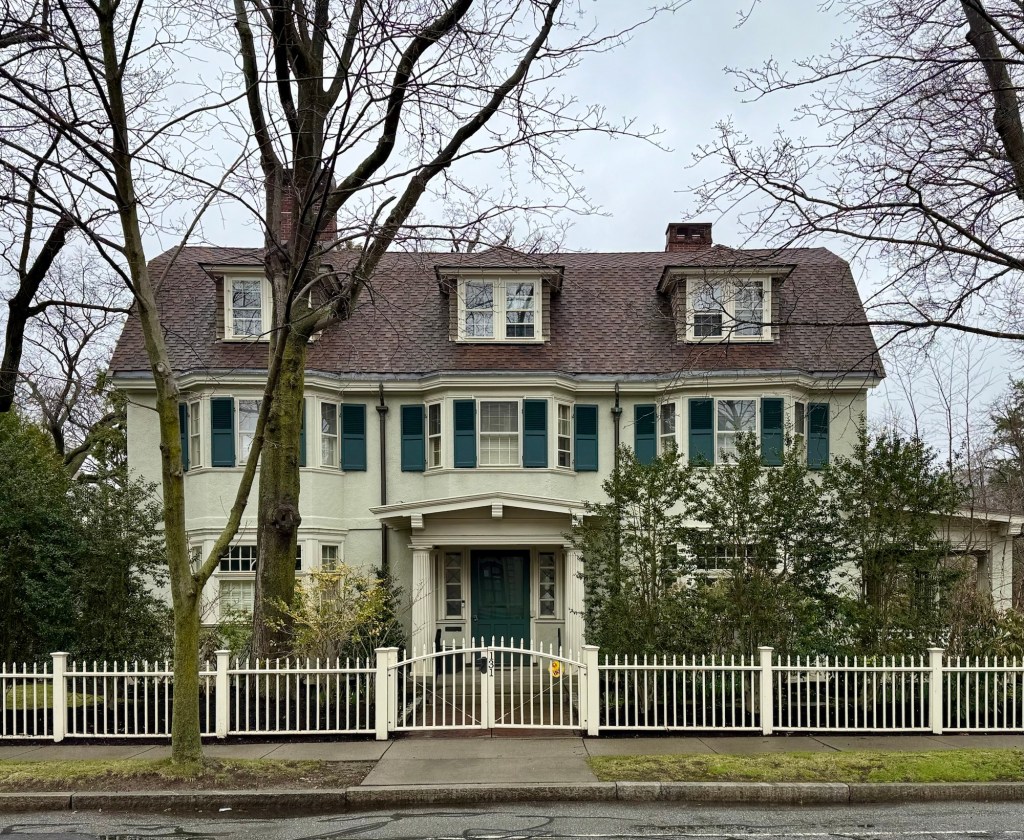
Francis B. Dana House // 1902

In 1902, Francis Bryden Dana (1865-1917) began construction on his home here in the Cottage Farm neighborhood of Brookline, Massachusetts. Francis was a member of the wealthy Dana Family and as a young man, attended the Boston Latin School and Harvard College. He became the president of the Dana Hardware Company of Boston. For his Brookline residence, Dana hired the exclusive architect, William Gibbons Rantoul to design the house which blends Arts and Crafts and Colonial Revival styles. The use of stucco siding, shed dormers, and portico with low sloped roof revealing exposed rafters falls squarely within the Arts and Crafts style; while the symmetrical facade, gambrel roof, and projecting octagonal bays are reminiscent of the more traditional New England Colonial Revival style.

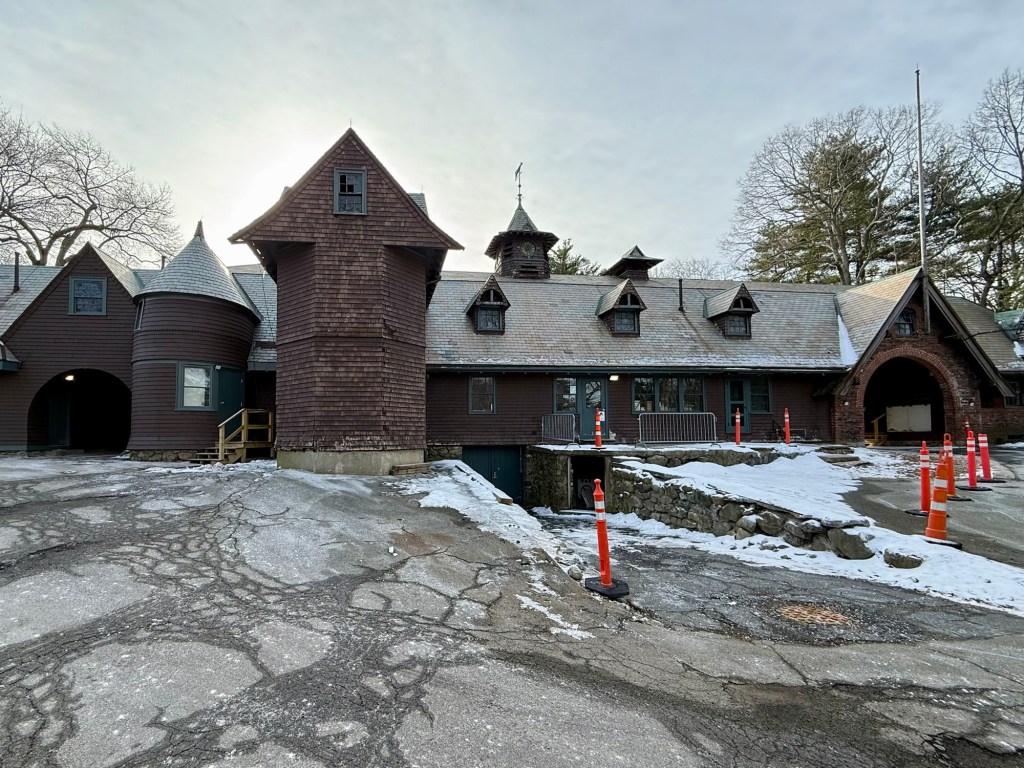
Roughwood Estate Cow Barn // 1892

Like the Roughwood Mansion and carriage house, this building was designed and built in Brookline, Massachusetts, in the early 1890s as part of the “Roughwood” estate. Despite its high-style and ornate detailing, the building was actually constructed as a cow barn. Built in two phases for its two owners, William Cox and Ernest Dane, the large barn structure blends Victorian design into a use more reserved for vernacular detailing. The building was designed by Andrews, Jacques and Rantoul, and like the mansion and carriage house, blends Queen Anne and Shingle styles under one roof. Ever-since the estate became a college in the 1960s, the building has been used as a maintenance building. It appears that since it has been owned by Boston College as part of it’s Messina Campus, it is undergoing a thoughtful restoration!

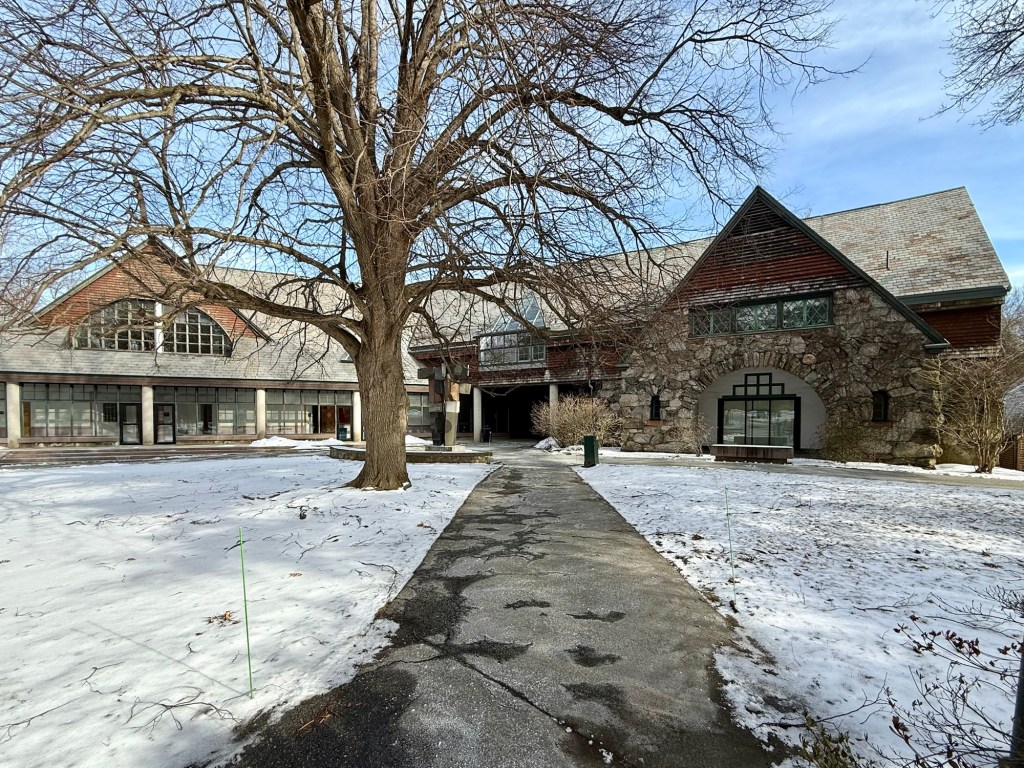
Roughwood Estate Carriage House // 1891

Built on the expansive grounds of “Roughwood”, a country estate in Brookline, Massachusetts, this former carriage house has seen many iterations in its lifetime. Like the mansion house, the carriage house is a blending of Queen Anne/Shingle styles with fieldstone and shingle construction, designed by the architectural firm of Andrews, Jacques & Rantoul. When the Roughwood Estate was purchased and converted to Pine Manor College, the carriage house was adaptively reused and added onto as the Annenberg Library with a large imaginatively designed wing by Shepley, Bulfinch, Richardson and Abbott completed in 1986. The building remains as a library as part of the newly established Messina College, a campus of Boston College, which opened in July 2024 for over 100 first-generation college students. Gotta love adaptive reuse!

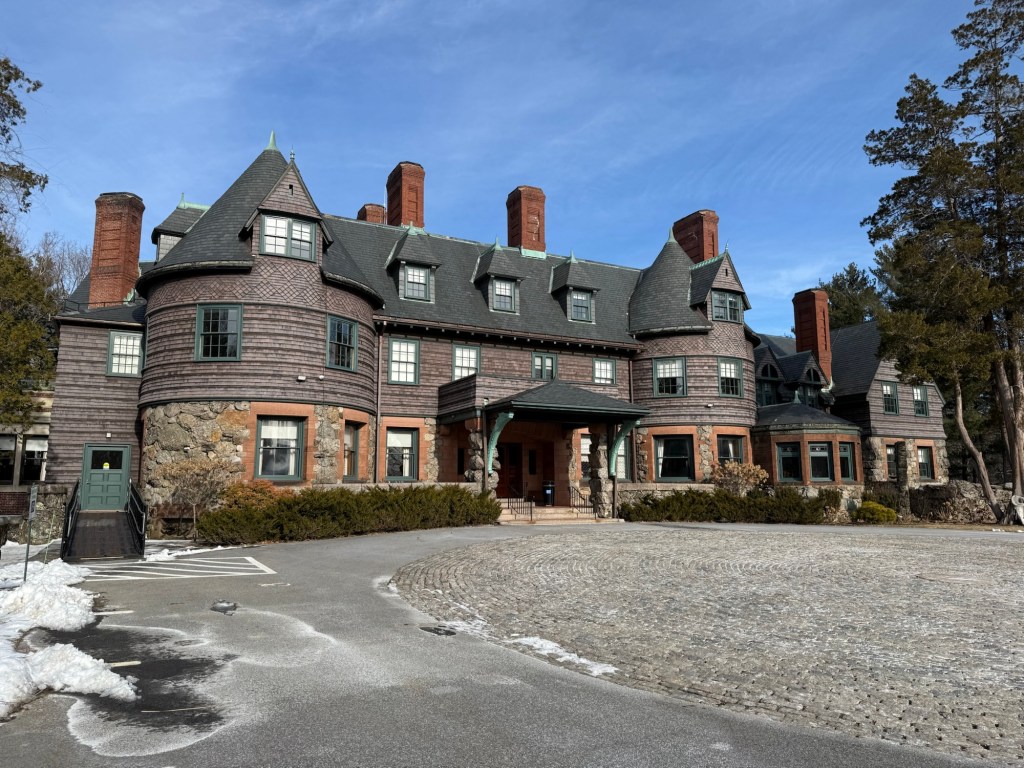
Roughwood // 1891

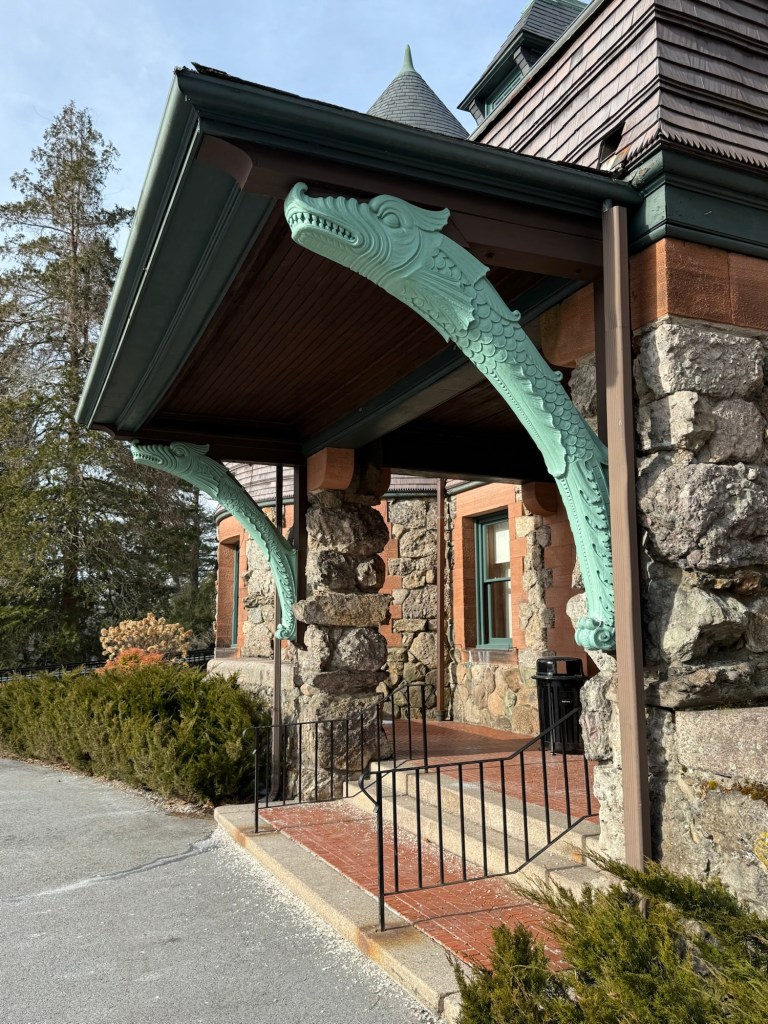
Roughwood is a historic estate house on Heath Street in Brookline, Massachusetts. The main residence and the various outbuildings on the grounds were designed by the Boston architectural firm of Andrews, Jaques and Rantoul, and built in 1891 as the summer estate of William Cox, a wholesale dealer in the footwear industry. Mr. Cox died in 1902 and the property was sold to Ernest Dane, the year before he married Helen Pratt, the daughter of Charles Pratt, a wealthy New York businessman and philanthropist. Mr. Dane was a banker who served as President of the Brookline Trust Company. The Dane’s owned the property for decades until the property was eventually purchased by Pine Manor Junior College in 1961. The estate house remained a centerpiece of the campus. In the early 21st century, Pine Manor College saw financial distress, and was saved by Boston College, who acquired the campus and its existing students as Messina College, which opened in July 2024 for over 100 first-generation college students. Architecturally, Roughwood is a high-style example of the Queen Anne/Shingle style of architecture. The mansion is built with a puddingstone and brownstone first floor and a second floor of varied patterns of wood shingles, all capped by a slate roof. The facade is dominated by towers and dormers and the great rustic entrance portico with dragon’s head brackets. To its side, a 1909 Tudor Revival addition served as a music room for the Dane’s family and while stylistically unique, is designed with impeccable proportions.

Former Newton Centre Methodist Episcopal Church // 1899

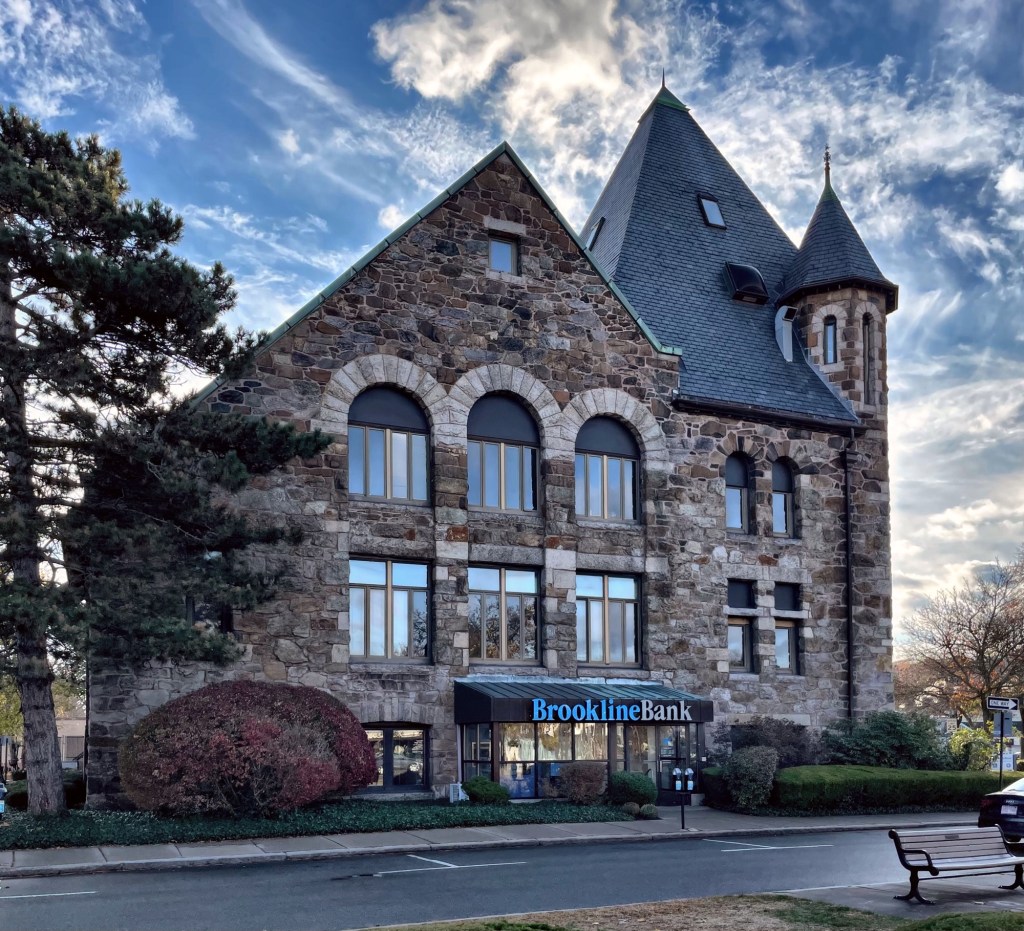
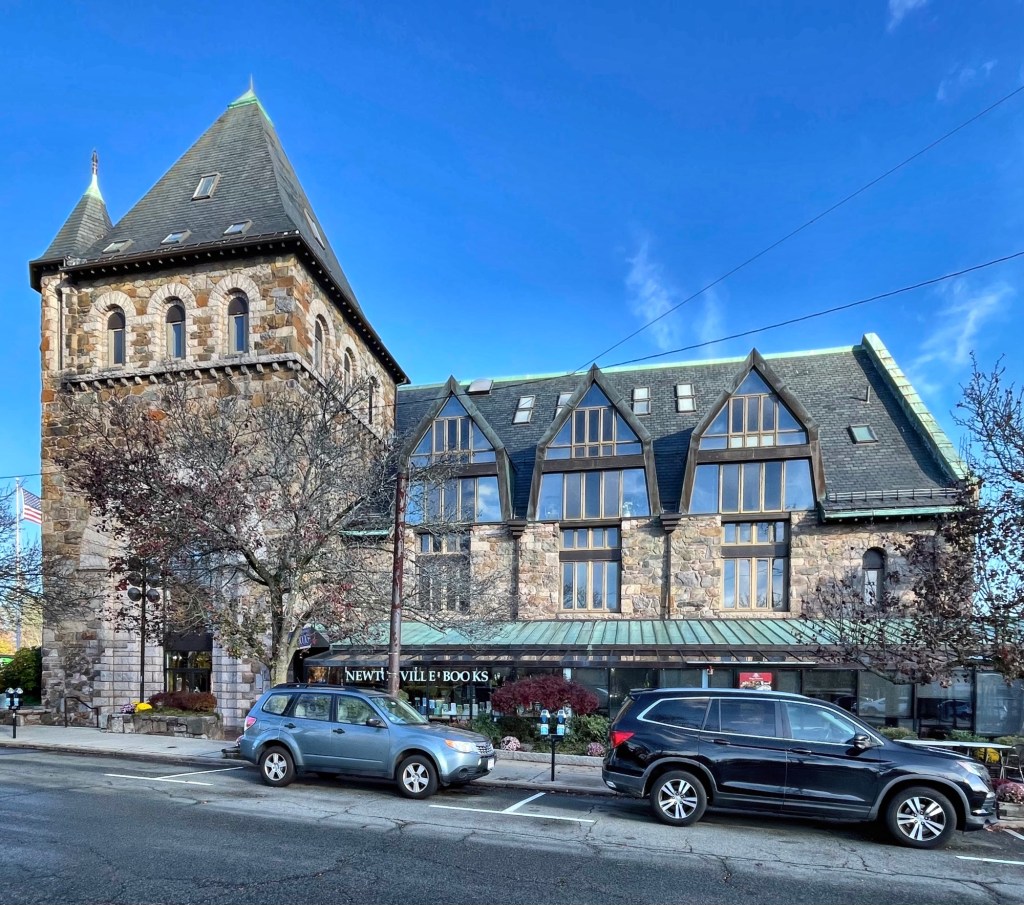
This building, the former Newton Centre Methodist Episcopal Church, is Romanesque in style, and is one of the more notable adaptive reuse projects in Newton. The church was designed by the esteemed architectural firm of Andrews, Jacques & Rantoul and completed in 1899 for the local Methodist Episcopal congregation. The edifice is built of locally quarried rubblestone, often called Roxbury Puddingstone, and trimmed with rough cut Milford granite. The granite is used at the windows, forming the arches and heads, and most strikingly in the large arched entrance. The church eventually closed and was renovated with modern windows, additions, and more, and currently houses a restaurant, bank, book store, and professional offices.

Hooper Mansion // 1889

One of the finest Richardsonian Romanesque style mansions in America is this stunner at the corner of Beacon and Hereford streets in Boston’s Back Bay neighborhood. Built in 1889, the mansion was commissioned as a private residence for Robert Chamblet Hooper (1849-1908) and his wife, Helen Angier Ames Hooper. Helen’s father, Frederick Lothrop Ames one of the wealthiest men in Massachusetts and major benefactor to in the town of Easton, funded and oversaw construction of the Ames Free Library and the Easton Town Hall both by H. H. Richardson in his namesake Romanesque style. It was likely her family’s prevalence for the style that led to her own home in Boston’s Back Bay to follow suit. The firm of Andrews and Jacques are credited with designing the stately mansion which in 1889, cost over $100,000 to build. Robert Chamblet Hooper was treasurer and later president of the Constitution Wharf Company. A noted dog fancier, he was owner of “Judge” (also known as “Hooper’s Judge”), credited as the ancestor of the Boston Terrier breed. So we have the Hooper’s to thank for Boston’s iconic mascot! In 1913, the building transferred from the Hoopers to Mabel Slater, daughter of painter William Morris Hunt (and niece of architect Richard Morris Hunt) an eccentric widow and inventor. Mrs. Slater is credited with developing an ice-cooled refrigerator, a sleeping bag that doubled as a garment used by soldiers in World War I, and a doll head with movable eyes. Mabel routinely left open a rear door of the mansion in order to encourage the poor to find their way into the kitchen for shelter and food. She had a one-story ballroom built at the rear of the mansion in 1914. The house was converted into 6 condominium units in 2016 and restored at the exterior thanks to the architecture and design studio, Hacin.

Stephen O. Metcalf House // 1892

I am on a Colonial Revival style kick lately, so bear with me on this recent span of posts on houses in the style! This estate house is an earlier example in Providence, built in 1892 for Stephen Olney Metcalf (1857-1950) a multi-millionaire who was in business in woolen textiles and insurance before diversifying his portfolio further serving as President of the Providence Journal and Evening Bulletin. To make an architectural statement, Mr. Metcalf called the renowned Boston firm of Andrews, Jacques and Rantoul to design his new residence. The oversized Colonial Revival house is an excellent example of how Revival architecture tend to be a more free interpretation of their prototypes, being larger and having exaggerated features and proportions. In his will, Stephen O. Metcalf bequeathed this residence to the Rhode Island School of Design (RISD), an institution his mother helped found, and his daughter served as President. The mansion remains the RISD President’s House to this day.

“La Rochelle” // 1903

“La Rochelle”, one of the many beautiful summer “cottages” in Bar Harbor, Maine, sits on West Street, a well-preserved stretch of mansions that showcase Gilded Age wealth in the town. The cottage dates back to the 1902-3, when George Sullivan Bowdoin, great-grandson of Alexander Hamilton, and partner at J.P. Morgan, and his wife, Julia Irving Grinnell Bowdoin, a great niece of Washington Irving) commissioned the Boston architectural firm of Andrews, Jacques & Rantoul to design a cottage for them. They hoped to spend their summers away from New York, where they could rub elbows with other wealthy and well-connected summer residents in Bar Harbor. The French Renaissance style cottage, known as La Rochelle, became one of the first Bar Harbor mansions constructed of brick. The forty-one room, 13,000 square foot cottage was built with twelve bedrooms and nine full-bathrooms on two acres of land, which backs up to the Mount Desert Narrows and harbor. The name La Rochelle comes from La Rochelle, a seaport in Nouvelle, Aquitaine, France, where George’s ancestors lived before settling in present-day Maine (later moving to Boston). In the 1940s, Tristram C. Colket of Philadelphia and his wife (the former Ethel Dorrance, daughter of John T. Dorrance, the Campbell’s Soup king) acquired La Rochelle. In 1972, La Rochelle’s owners, the Colket family, donated it to The Maine Seacoast Mission, who then sold it in 2019 to the Bar Harbor Historical Society.

Adolph and Marion Ehrlich House // 1906

Echoing some design motifs from the nearby Gahm House (last post), this home showcases the Tudor Revival style, but mixed with Arts and Crafts and Colonial Revival details. Adapted from a house built in the 1850s, the home was enlarged in 1906, from plans by Andrews, Jaques and Rantoul an architectural firm of wide acclaim. Adolph Ehrlich (1868-1952) and Marion Ratchesky Ehrlich (1877-1966) had the home built as a refuge from the hustle-and-bustle of busy Boston. Adolph was born in Boston and at the age of 11, began work in the textile business. He climbed the ranks and became a partner in a clothing company before becoming director of the Jordan Marsh Department Store Company from 1925 until his death in 1952. His wife Marion was heavily involved in social causes until her death, including the Louisa May Alcott Club, a settlement house in Boston for young, predominantly immigrant girls.