Lewis Block // 1886

Following the granting of the royal charter in 1761, Newport, NH was incorporated and named after Henry Newport, a distinguished English soldier and statesman. With excellent soil for farming, and abundant water power from the Sugar River to run mills, Newport grew prosperous. The main street developed, leading to a proliferation of hotels and taverns that were soon situated along the length of Main Street to service the many travelers who stopped along the route, many such structures were wood frame construction. A fire devastated much of Main Street in Newport in 1885, leading to a massive rebuilding campaign by the town’s richest citizens. One of the earliest buildings constructed after the fire was the Lewis Block, developed by Frederick Lewis, who lived a block away, and his son Samuel DeWolf Lewis, who designed the block. The two-story building is broken up by brick pilasters with recessed corbelled detailing which give rise to buttresses capped by gablets (yes its a word), punctuating the flat roof profile.
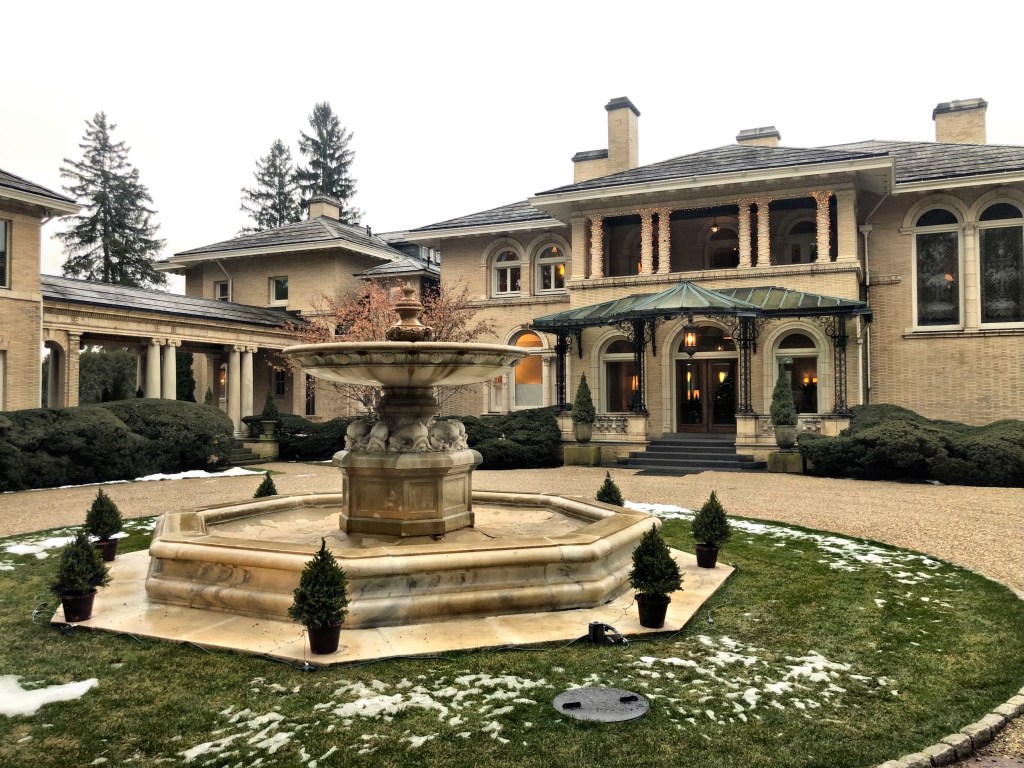
Wheatleigh // 1893

Designed in 1893 by the Boston architectural firm of Peabody and Stearns, Wheatleigh is an early example of Renaissance Revival architecture which became popular for country estates in the early 20th century. The estate was constructed for Henry Harvey Cook, who purchased over 250-acres of forest and lawns overlooking Lake Maheenac for his summer “cottage”. Cook was a New York-based businessman who made his fortune in the railroad and banking businesses, and he wanted a summer house to escape to every year. He named his home “Wheatleigh” as an homage to his family’s ancestral home, Wheatley, Oxfordshire. The mansion is approached by a circular drive that terminates in a formal entrance court partially enclosed by a buff brick wall and evergreen trees, centered on an octagonal marble fountain decorated with a shell and leaf motif. Upon Cook’s death in 1905 Wheatleigh passed to his daughter, Georgie, the Countess de Heredia. Under her ownership the formal garden was opened for evening worshipping services and musical events. Following de Heredia’s death in 1946 the property was divided and changed hands numerous times. In 1976 the mansion and 22 acres were opened as a resort hotel, known as the estates historic name. The Wheatleigh remains one of the most esteemed luxury hotels in the country.

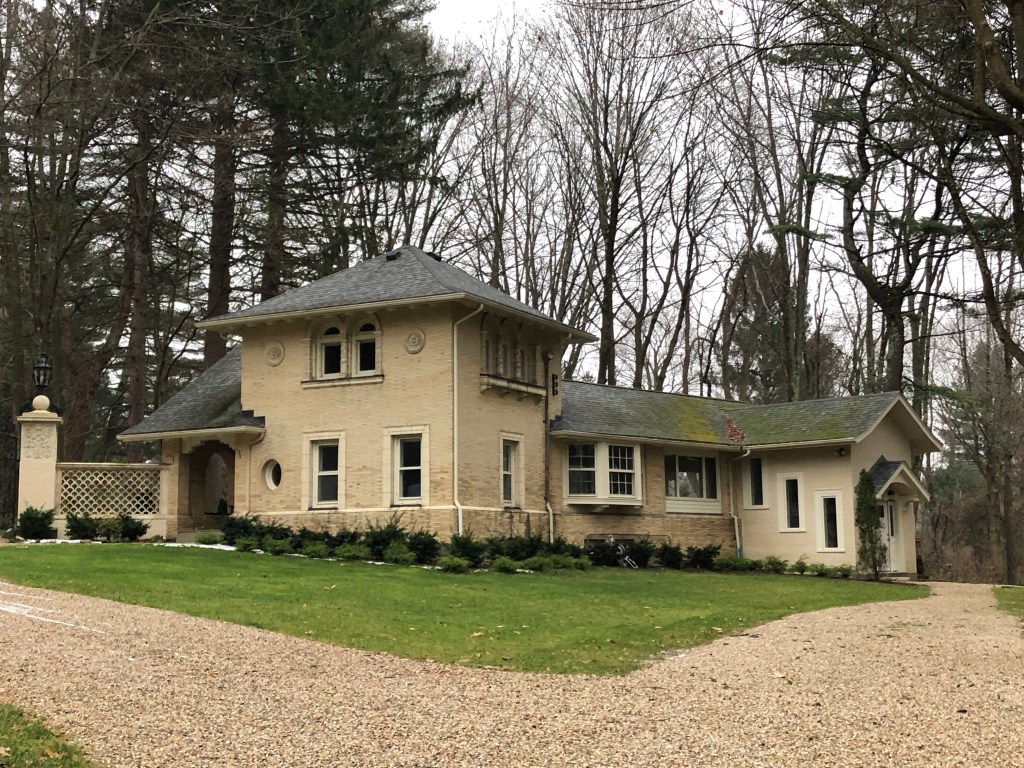
Wheatleigh Caretaker’s house (1893)

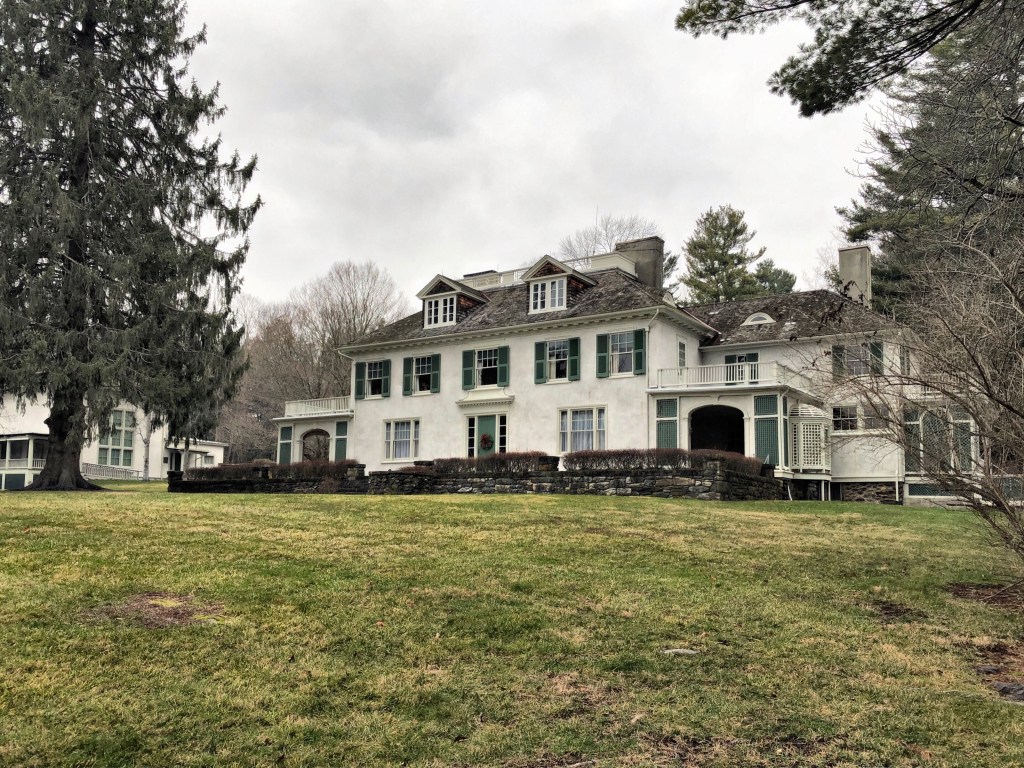
Chesterwood // 1901

Chesterwood is the former summer home, studio and gardens of American sculptor Daniel Chester French (1850–1931), who is best known for creating two of our nation’s most powerful symbols: the Minute Man (1871–75) at the Old North Bridge in Concord, Massachusetts, John Harvard in Harvard Yard, and Abraham Lincoln (1911–22) for the Lincoln Memorial in Washington, D.C. Daniel Chester French was one of the most successful artists of the late 19th and early 20th centuries, producing more than 100 works of public sculpture. In the fall of 1895, he and his wife drove by horse and buggy and discovered the resort town of Stockbridge. They returned the next summer and purchased the Marshall Warner farm from the family who had purchased the land from Mohican Native Americans. The French family and two maids moved into the white clapboard farmhouse the next summer. To ensure that his summer would be productive as well as restful, he improvised a studio in the barn. He asked his friend and colleague, architect Henry Bacon, to design a studio for him (Bacon would later work with French on the Lincoln Memorial). Soon, in spite of renovation, the original farmhouse was deemed inadequate and French commissioned Bacon to design a residence, completed in 1901. The family owned the home for decades, even after Daniel Chester French’s death. Much of the credit for Chesterwood’s preservation and metamorphosis from summer retreat to public site belongs to Margaret French Cresson (1889–1973), the sculptor’s daughter. After her parents’ death, she maintained the property and began to use it year-round, assembled the work of her father, and established the estate as a historic site of the National Trust for Historic Preservation.

Red Lion Inn // 1897

The largest building on Main Street in Stockbridge has to be the Red Lion Inn, a regional institution and one of the best places to rest your head in New England. The inn got its start just before the Revolutionary War. According to tradition, Silas Pepoon established a small tavern on the corner of Main Street in 1773, under the sign of a red lion. A year later, angry citizens gathered at the tavern to boycott English goods and to pass resolutions protesting the oppressive Acts of Intolerance levied against the colonies. Since its earliest days, the inn was a vital gathering place for locals and has continued to play an important role in the life of the community ever since. In 1862, the inn was owned by Mr. and Mrs. Charles Plumb, avid collectors of rare and fine items, who became renowned for their impressive compilation of colonial antiques. A fire in 1896 destroyed the building but its remarkable array of collectibles was saved and the inn was rebuilt within a year by designs from Harry E. Weeks, a Pittsfield-based architect.

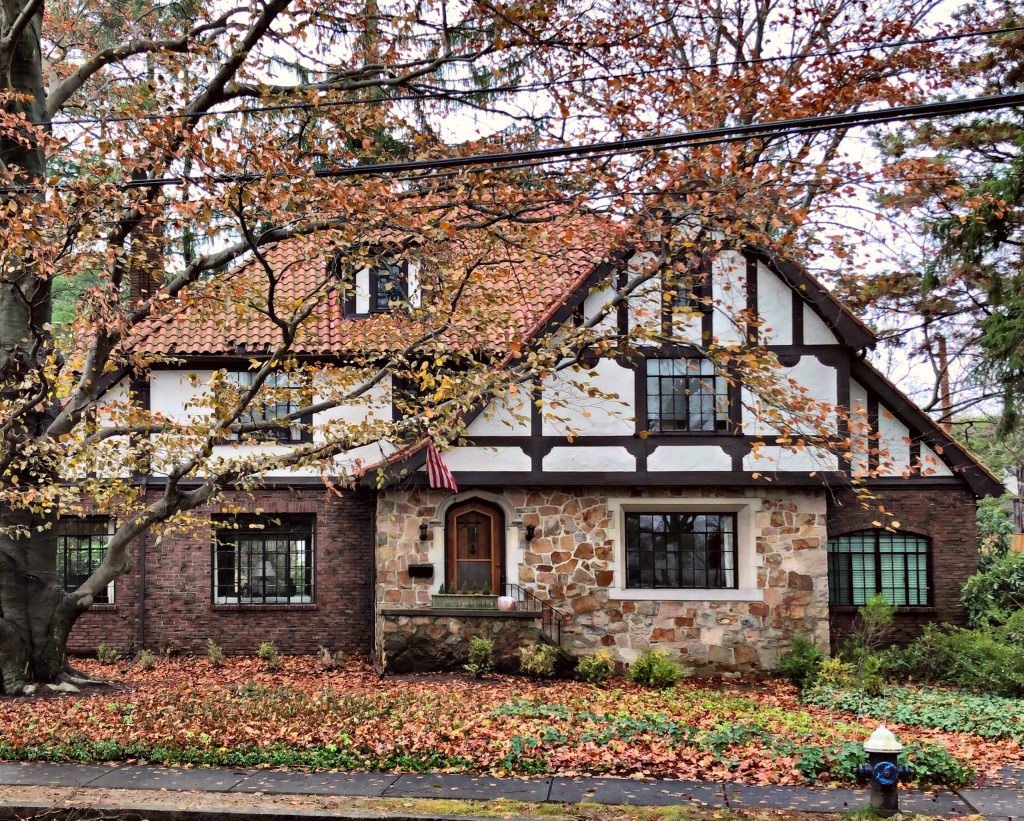
Glacy House // 1930

Residential architecture of the early decades of the 20th century is among my favorites as the Tudor Revival movement took off and was sometimes mixed with other revival styles at the time, creating really unique homes. The Glacy House in South Brookline, MA was built in 1930 as one of the earlier homes in the Walnut Hill development. It was likely designed and built by Walter L. Fernandez, a contractor who appears to have design-built a handful of spec homes to help get the neighborhood’s development going in the early stages. This home was originally occupied by George and Mary Glacy. George later worked as Vice President of the Boston & Maine Railroad, though he later got into legal trouble for hiring companies for railroad projects where he had financial interests, becoming indicted in an antitrust case by a Federal grand jury. The home features a first floor constructed of stone and brick with half-timbering on the floor above. The building is topped by a terracotta red tile roof, which is fairly uncommon for the region.

Edith C. Baker School // 1937

At a time when many public school buildings around Boston were designed in the Art Deco or early Modern styles, the Edith C. Baker School in South Brookline went back to basics and represents a nod back to Colonial era design. The whitewashed red brick building was designed and built in phases as the neighborhood surged in population, tied in with the re-emergence of the economy after the Great Depression. The opening of the West Roxbury Parkway in 1919 and the Hammond Pond Parkway in 1932, both precipitated subdivision of the farms in South Brookline for residential development. The first section was completed in 1937 (what is shown in the photo) by plans from the local architecture firm of Kilham, Hopkins and Greeley, who also designed an addition just a year later for the un-forecasted growth in the neighborhood. More additions were added in the decades following WWII, thankfully just as additions and not a scraping of the site which seems to be all the rage now. The school was named as a tribute to Edith C. Baker, a longtime member of the Brookline School Committee from 1900 to her death in 1942.

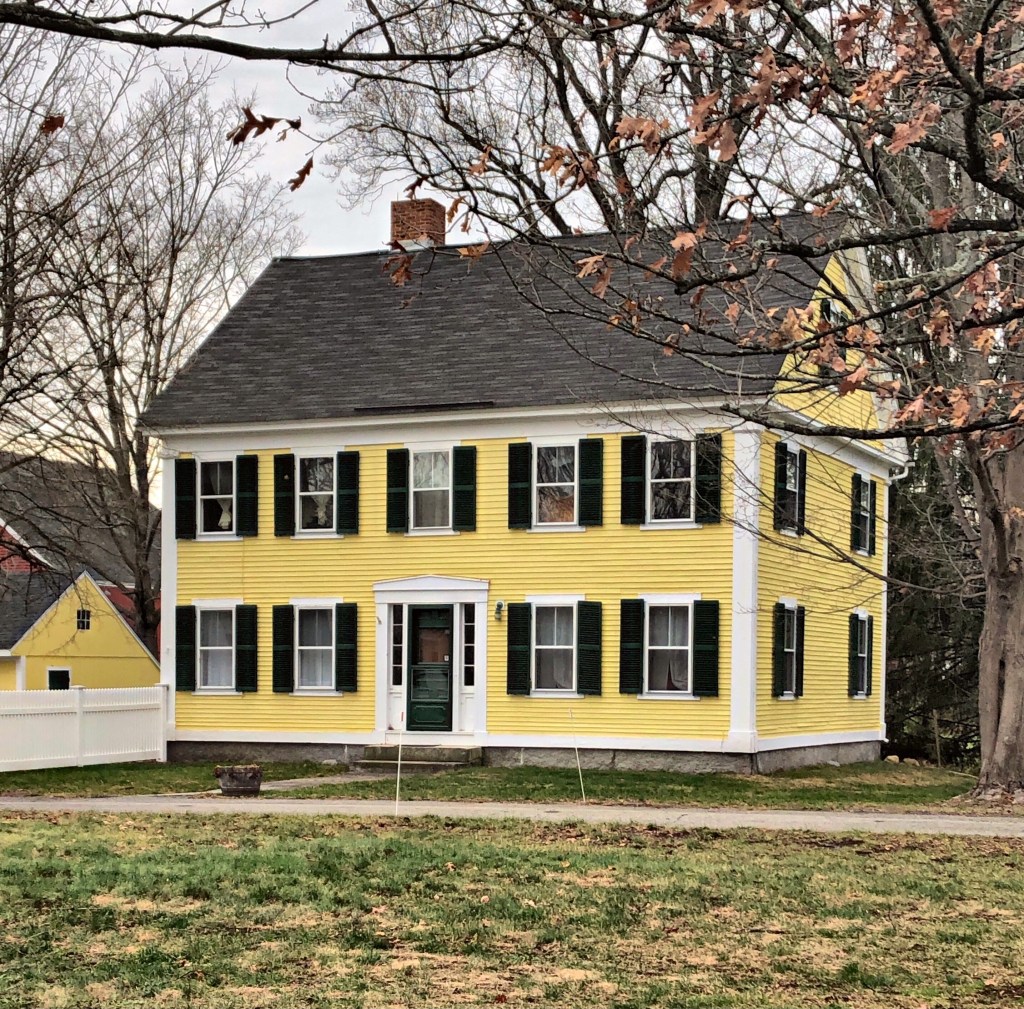
Smith House // c.1847

This home on Hollis’ town green was built around 1840, seemingly for a member of the Smith Family. The family was well-known in town as the patriarch, Rev. Eli Smith, took over as minister of the Congregational Church in town after the death of Reverend Emerson (last post). It appears that after Elias Smith’s death, the home was constructed by a member of the family who then used the land for agricultural purposes, adjacent to the former family home. The home does not face the Green or the street, but faces eastward, and features a symmetrical, five-bay facade with a modest Classically inspired door surround. The home retains its agricultural use today since the property was purchased by Robert and Martha Valicenti. The property is now known best as the Valicenti Pasta Farm, who make some of the best home-made pastas, stuffed ravioli and sauces. I even bought some for Christmas gifts. Shop Local!

Emerson House // 1744

The oldest extant building in the village center of Hollis, New Hampshire is the Emerson House, which overlooks the town green. The home was constructed in 1744 for Reverend Daniel Emerson, the first settled minister in Hollis. The home stands on land that was part of the 40-acre ministerial parcel set aside when the town was planned that year. Over the next 21 years, Reverend Emerson and his wife had 13 children (seven sons and six daughters) which caused them to expand the home numerous times until his death in 1801. The home remained in the Emerson family for some years until it was sold at some point in the 20th century when the home was modified with the storefront windows. It now houses apartment units.

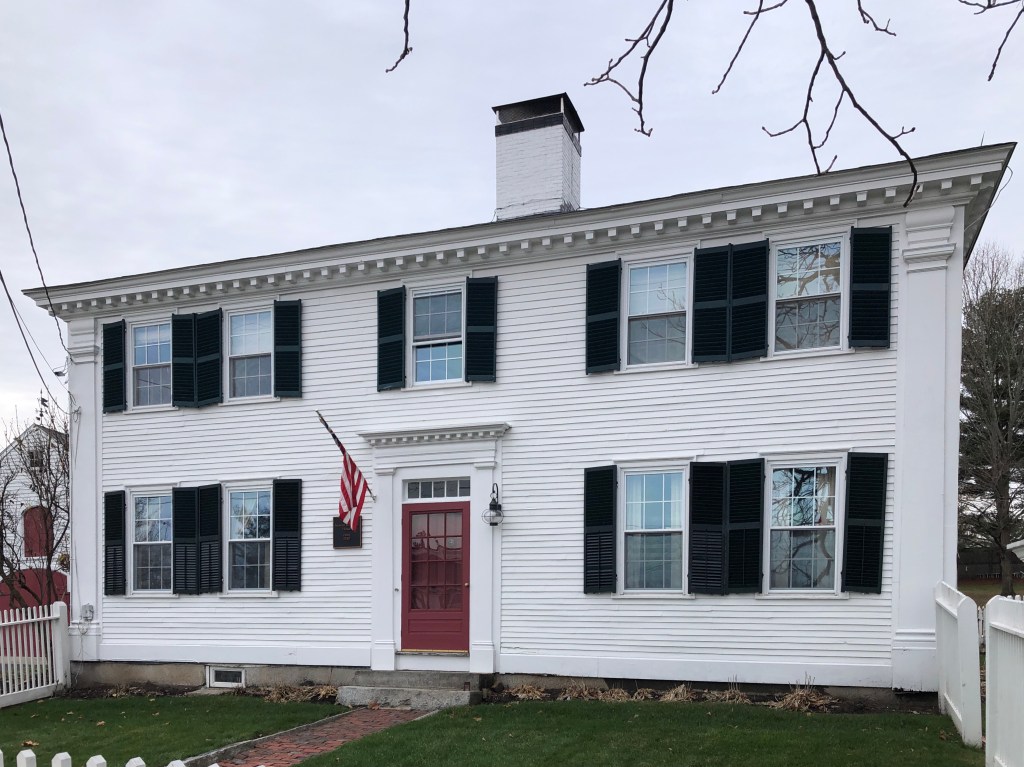
Cummings-Abbott House // c.1735

Samuel Cummings (1709-1772) married Prudence Lawrence (1715-1796) and moved to Hollis, NH from Groton, MA. The couple had a home built in town and raised at least four children, Samuel Jr., Mary, Sibbel, and Prudence. The original house built by Cummings was a single-story, four room, center chimney type. After his death in 1772, the property passed to Cummings’ son, Samuel Cummings, Jr., an acknowledged Tory. Interestingly, Samuel’s sister Prudence was an ardent patriot, who moved to Pepperell, MA and married a militia man, David Wright. While the Revolutionary War was raging, Prudence visited her brother in the old family home, when she overheard her brother Samuel talk to his friend, a British army officer about passing information to the British. Prudence returned to Pepperell and gathered the women of the town. Then a 35-year-old mother of five, she organized 30 or 40 of them into a militia called ‘Mrs. David Wright’s Guard.’ The women dressed in their husbands’ clothes and carried whatever they could for weapons. As the men had probably taken muskets with them, the women probably used farm implements such as pitchforks. The women patrolled the roads leading into town. The group eventually captured two British soldiers on horseback and let them go only once they agreed to never come back to the colony. Due to this event, Prudence never spoke to her loyalist brother again.

In the 1850s, the house was owned by Superintendent of Schools, Levi Abbott and his wife, Matilda. It was the Abbotts who reportedly added a second story to the house with a hip roof, cornice and corner pilasters, giving it the appearance we see today.

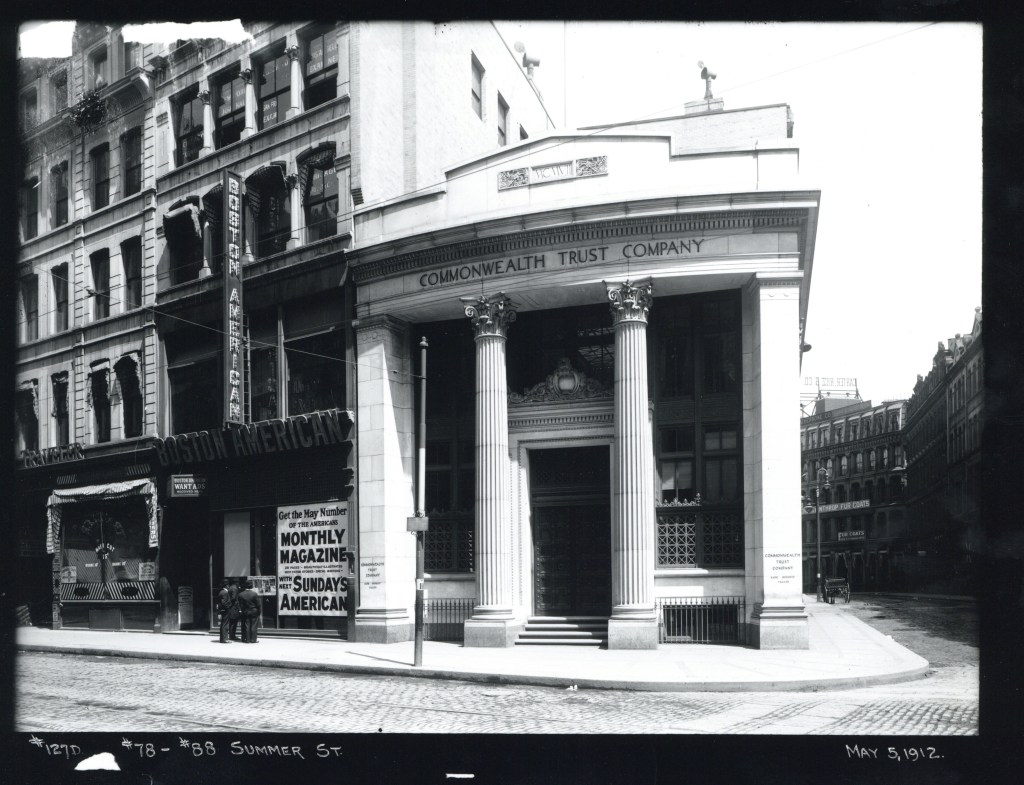
Commonwealth Trust Company // 1908-c.1974

Ca. 1910 image courtesy of Boston Public Archives.

Located at the corner of Summer and Devonshire Streets in Downtown Boston, the Commonwealth Trust Company’s two-story marble banking house commanded the corner, despite its short stature. The building, completed in 1908, was constructed with Lee marble and decorated with ornate wrought and cast-iron grilles over windows. The building was designed by the architectural firm of Parker, Thomas & Rice in the Classical mode with large, fluted Corinthian columns and boxed corner pilasters framing the recessed center entrance, Corinthian pilasters ran along the side facade. At the inside, the building was coated with Cararra and Blanco marble with paneled oak offices. At the ground floor, offices and banking stations framed the outer walls, with the safety deposit boxes located on the second floor. The building was demolished by the 1970s and replaced with a one-story minimalist Modern building (I could not figure out why the former building was razed). The new building was demolished after a few decades with a larger building, better fitting the commercial district.