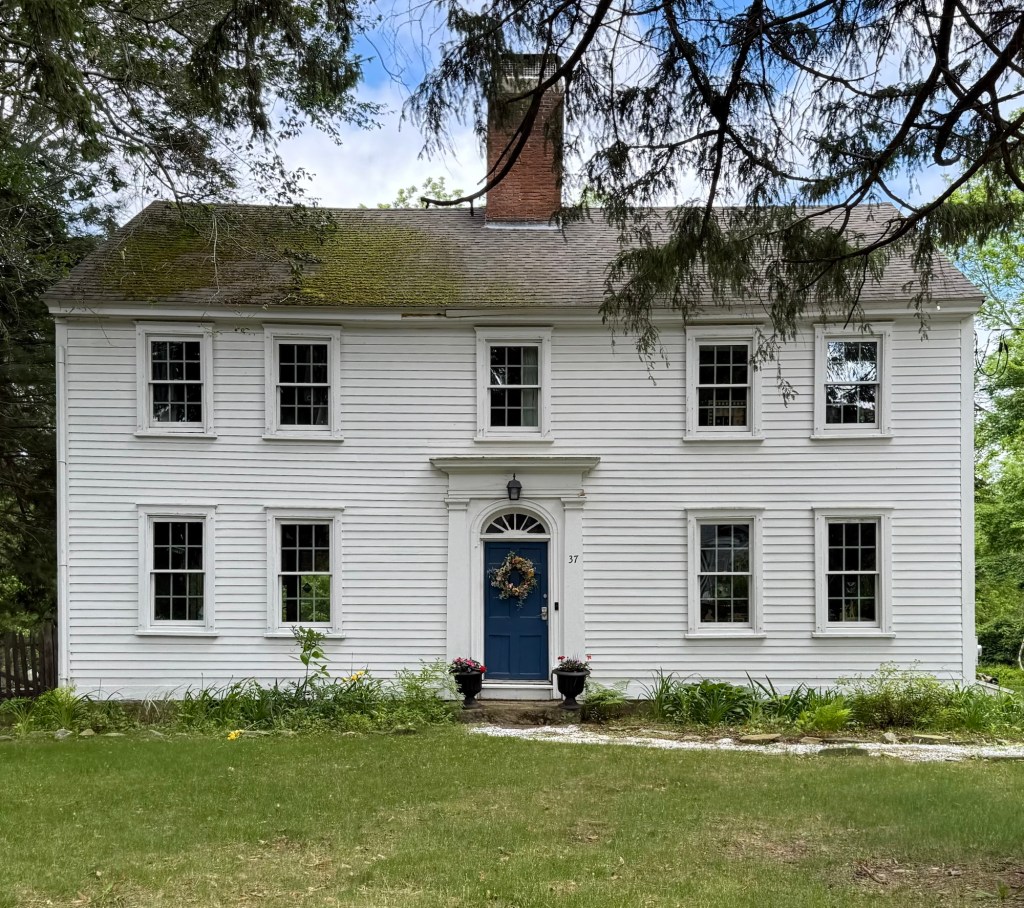
This charming Federal style house sits on Maynard Street in Westborough, Massachusetts, and according to local records, dates to the early-mid 1700s. The property was originally owned by Eliezer Rice (1703-1767), a farmer and town constable, and likely built around the time of his marriage to Persis Newton, who died in 1746 during childbirth. After Eliezer’s death, the property was owned by an E. Harrington, who likely rotated the earlier structure 90 degrees and built the Federal style residence facing the street, utilizing the 100-year old house as a rear kitchen ell, or completely modernized the old residence, retaining the central chimney. The Federal house features a symmetrical facade, pilastered entry with fanlight transom window, and a large central chimney.
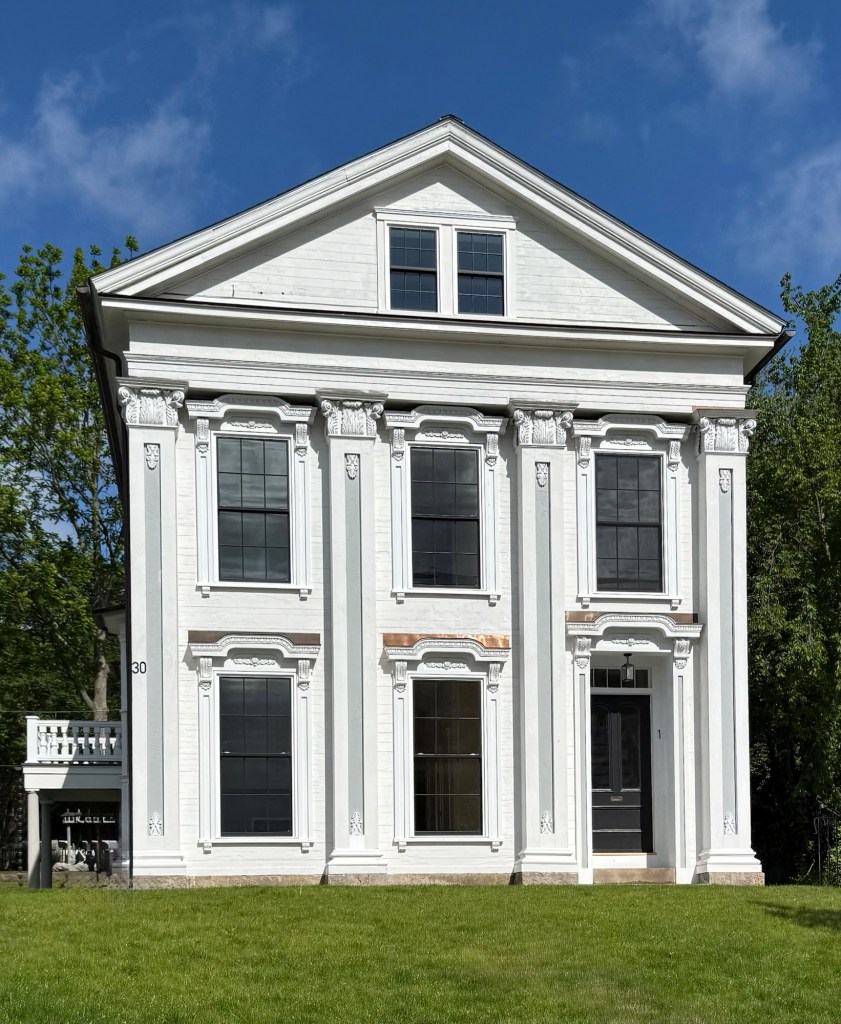
As the town of Westborough emerged from rural agricultural community to commercial center, connections to Worcester and Boston via rail service opened the town to prosperity. As businessmen accumulated wealth, these merchants built stately homes to showcase their position in the community. Before the Civil War, the Greek Revival style was ever-popular in Westborough, even though the style was already waning in popularity in larger cities. This is the Gilman Morse House, built around 1850 for Mr. Gilman Wood Morse (1810-1899) on East Main Street. Morse was a merchant in town and clearly did well for himself, building this stately house for his family. The residence is Greek Revival in style with its facade bays broken up by pilasters capped with Corinthian capitals adorned by acanthus leaves. The house also features ornate window and door hoods, showcasing the emerging Italianate style influence.
As the town of Westborough emerged from rural agricultural community to commercial center, connections to Worcester and Boston via rail service opened the town to prosperity. As businessmen accumulated wealth, these merchants built stately homes to showcase their position in the community. Before the Civil War, the Greek Revival style was ever-popular in Westborough, even though the style was already waning in popularity in larger cities. The Gilmore-Mason House on Church Street, is an excellent example of the Greek Revival style in a temple form. The form is seen in this house at the facade, with a portico of four two-story Corinthian columns supporting the pediment above. The house was built for George A. Gilmore and later sold to Alonzo W. Porter, an inventor, who would later move to New York. By the early 20th century, the residence was the home to Joseph S. Mason, a manufacturer who operated a weaving mill in Westborough.
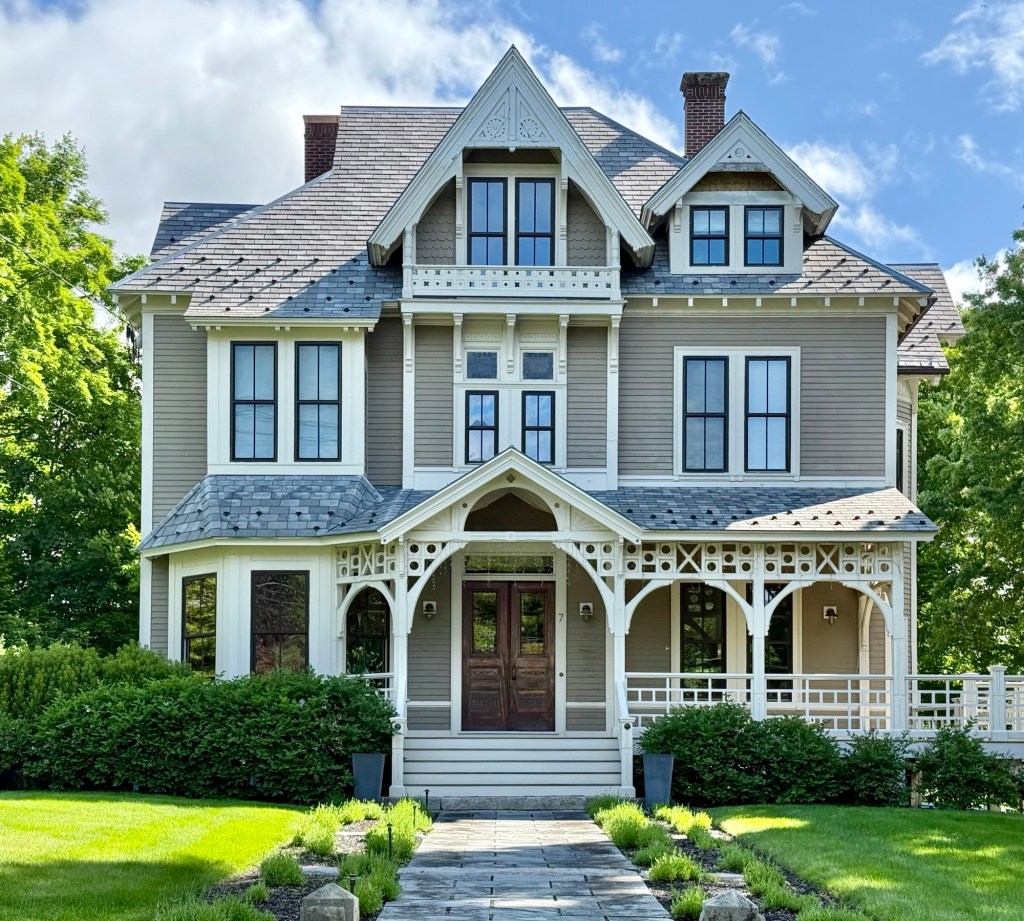
This stately and well-preserved Stick style residence is located on High Street in Westborough, Massachusetts. The house was built around 1875 for Mr. William Henry Forbush and his wife, Alice. William was a sleigh manufacturer in town and served in the Civil War, mustering out years after injuring his left hand during the Second Battle of Bull Run. Forbush died in 1881 at the age of 37, and Alice married to Dexter Brigham, a carpenter who also fought in the Civil War. It was possibly Mr. Brigham who added the intricate woodwork on the home.
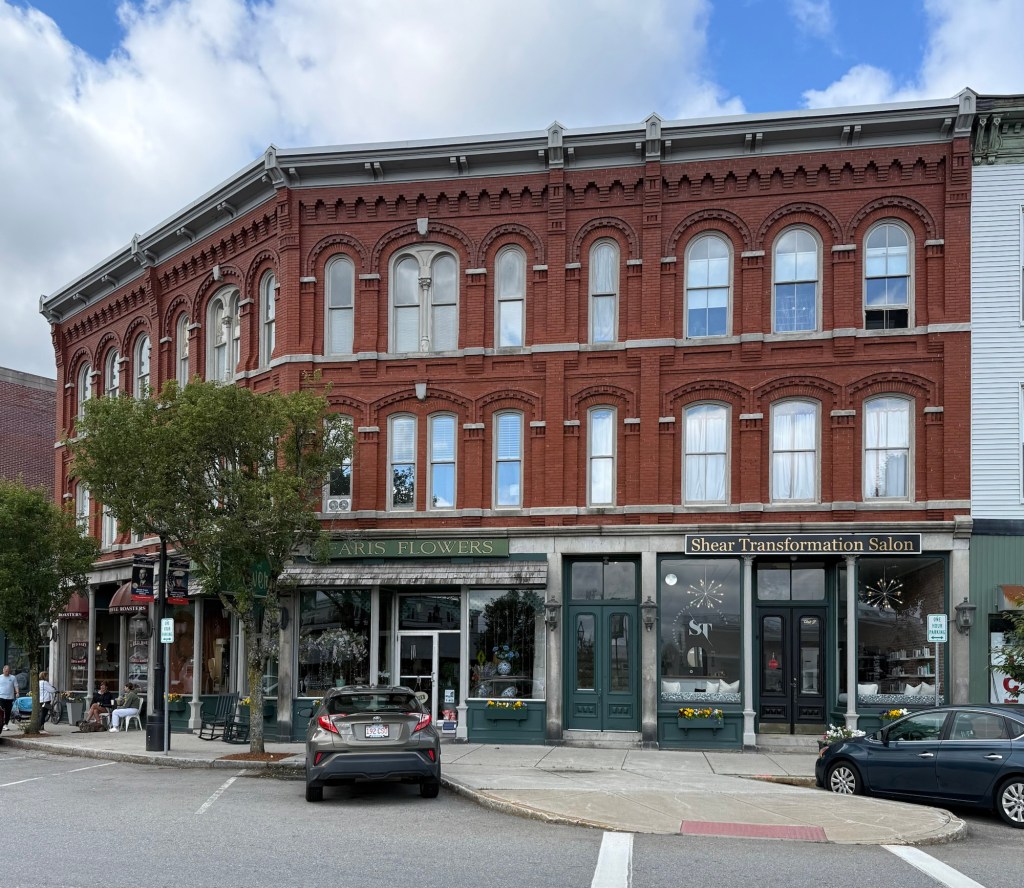
Mid-late 19th century commercial blocks provide human-scaled density, high quality design, and often contain intimate storefronts providing reasonable rent to local businesses. The Henry Block in Westborough, Massachusetts, is one great example of a historic commercial building that checks all of these boxes. The brick building was constructed in 1873 by its namesake, Samuel Gates Henry (1813-1877), a pharmacist and dentist who rented space in an earlier building on the site. When a fire destroyed the old structure, Samuel Henry had this block erected on the site and leased out spaces in the building to other businesses and tenants in the floors above. The block is Italianate/Italian Renaissance Revival in style with the typical round arched windows and bracketed cornice. The granite storefronts even retain some of the original cast-iron supports.
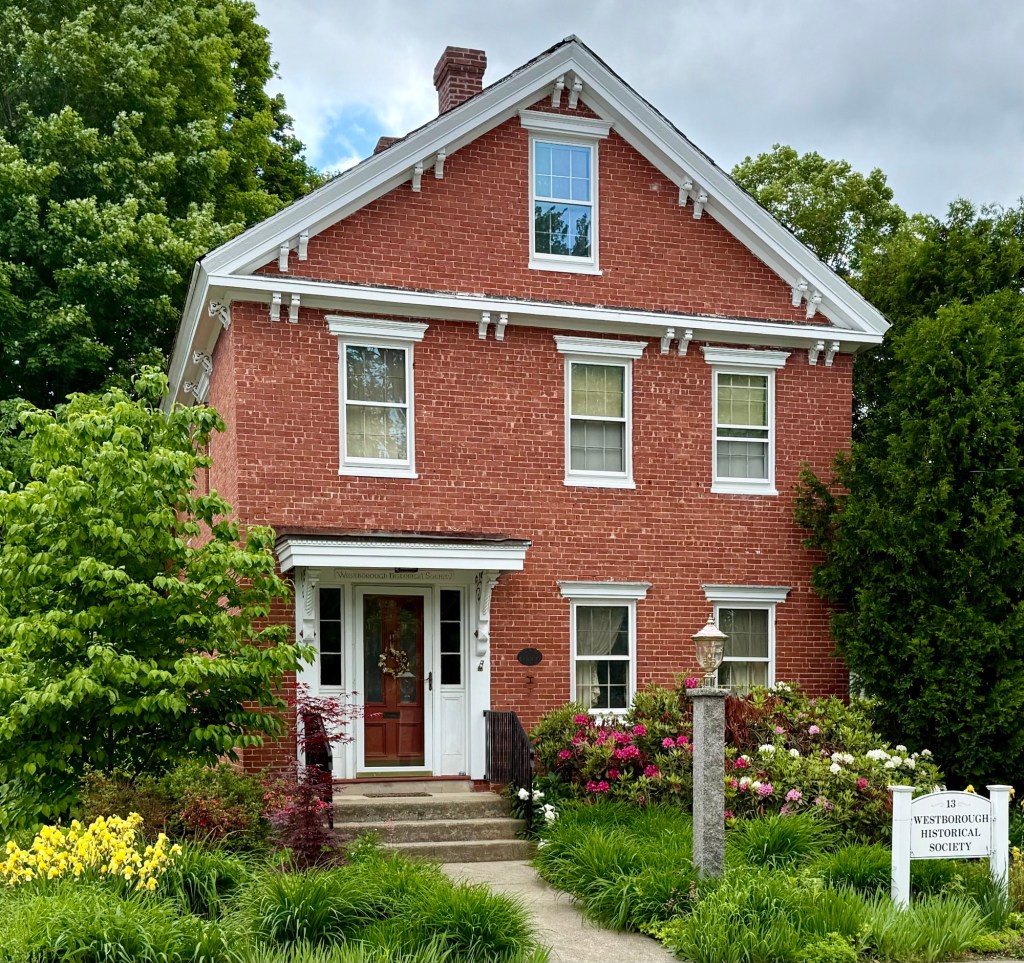
The Sibley House is a historic house museum as well as the headquarters of the Westborough Historical Society. Located on Parkman Street in the center of Westborough, Massachusetts, the transitional Greek Revival/Italianate style house was built in 1844, by William Sibley, who was a blacksmith and wheelwright. Soon after the house was built, William married Jane Caroline Gibson, and the couple raised five children here. William joined Westborough’s Company K, 13th Massachusetts Regiment during the Civil War and was wounded at Antietam. After the war, William returned home and he and his brother Frank began to manufacture sleighs. At one point, they produced as many as 300 a year! The Sibley House was purchased by the Westborough Historical Society in 1990, nearly 100 years after the society was established in 1889. The house is open to visitors and provides a glimpse into daily life for Westborough citizens at the time.
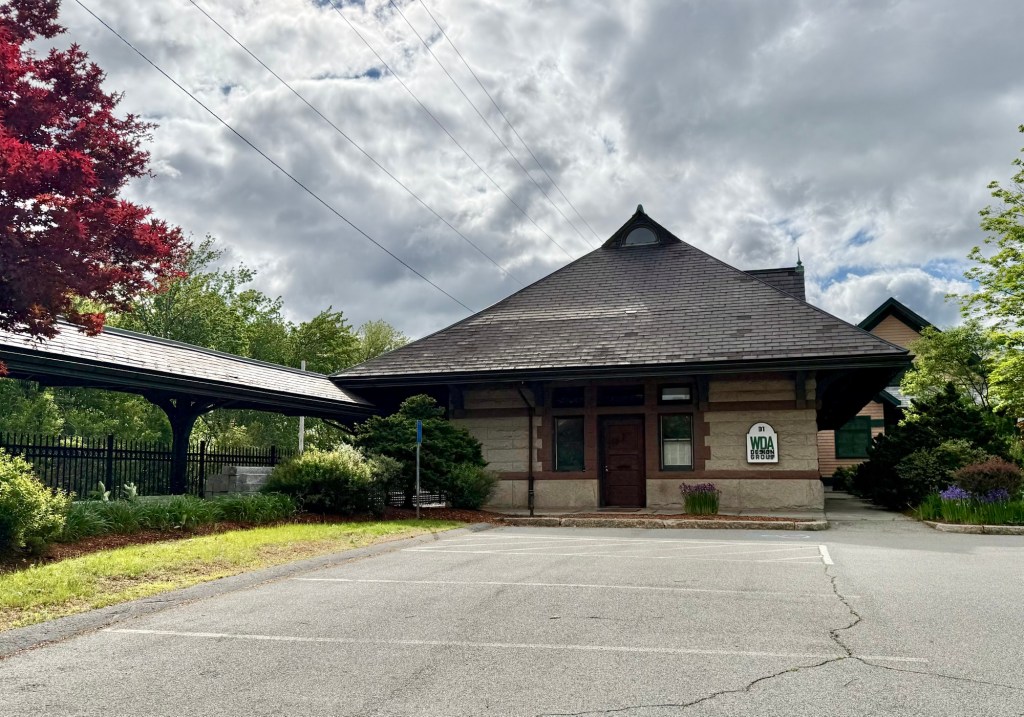
The Boston-Worcester Railroad roared into Westborough Square in 1834 and opened the once rural community to commerce and trade from its larger neighbors. The depot was in the center of the village and facilitated a development boom of commercial buildings. By the later 19th century, the Boston and Albany Railroad controlled the railway service and had built up an extensive passenger and freight service. The company sought to straighten out the track, thus increasing its speed and efficiency, so the B&A relocated the track in 1899 from the center of Westborough to its present elevated site on East Main Street, outside the commercial core of the town. The new station was built in 1899 and is a late example of the region’s many Richardsonian Romanesque stations, constructed of rusticated pale granite with contrasting brownstone trim; copper ornament; and a simple rectangular-plan structure topped by a low, overhanging hipped roof. Decades before this station was built, the Boston & Albany Railroad in 1881, hired renowned architect Henry Hobson Richardson to design a series of passenger stations. Over the next five years, Richardson was responsible for nine B&A stations, primarily closer to Boston and the nearer suburbs. After Richardson’s death in 1886, the B&A commissioned his successors, Shepley Rutan & Coolidge, to design 23 additional stations between 1886 and 1894. The unofficial style of B&A stations remained after 1894 and was employed in Westborough to a lesser ornate scale. Train service to town ceased here, but the tracks remain active. The former station was converted to office use.
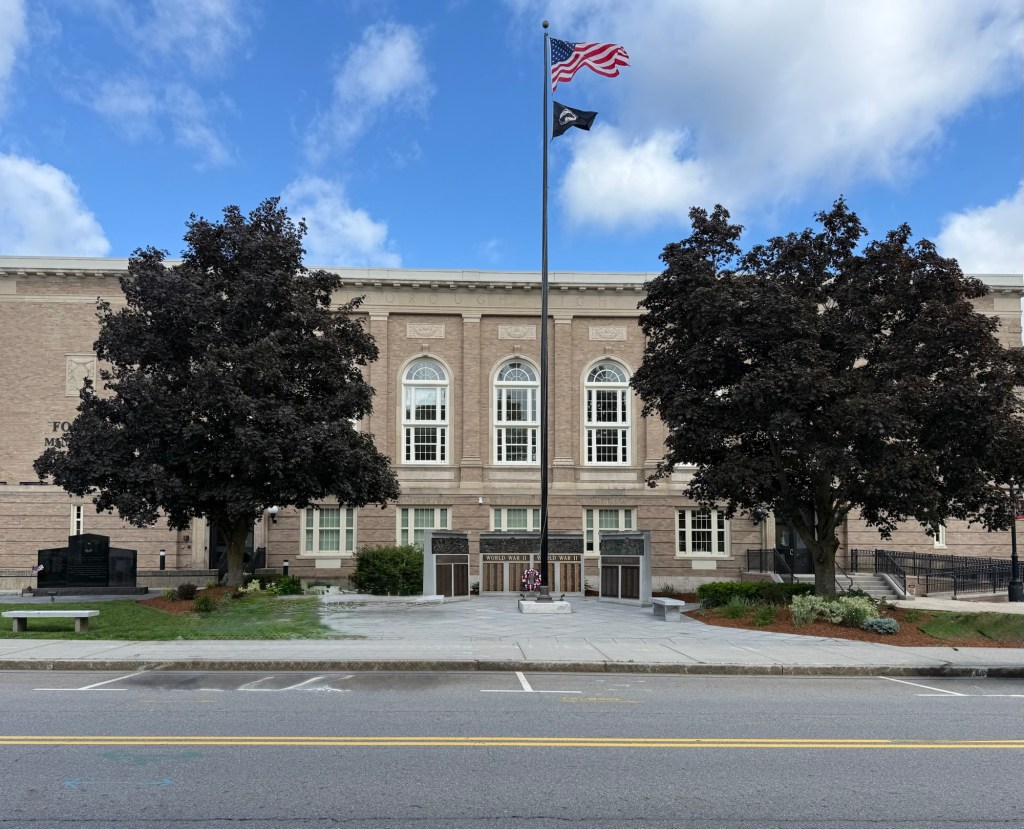
The former Forbes Public High School in Westborough, Massachusetts, is an excellent example of a civic building in the Classical Revival style. Built in 1924 for a growing suburban community, the building was constructed as the town’s high school with the grounds and substantial funding donated by Francis and Fannie Forbes, life-long residents of town with Francis having roots going back to the earliest settlers here. The building was permitted in late 1924 and plans were drawn by the firm of Ritchie, Parsons & Taylor. who designed the large school with stone and brick construction, large arched windows, and pilasters breaking up the bays. Inside, the new building had 14 classrooms, a gymnasium, a shop room, and cooking rooms, all with fine carved woodwork. After WWII, Westborough further consolidated its schools, and built a new High School nearby. This building was repurposed as the Forbes Municipal Building, containing city offices and the Police Department headquarters.
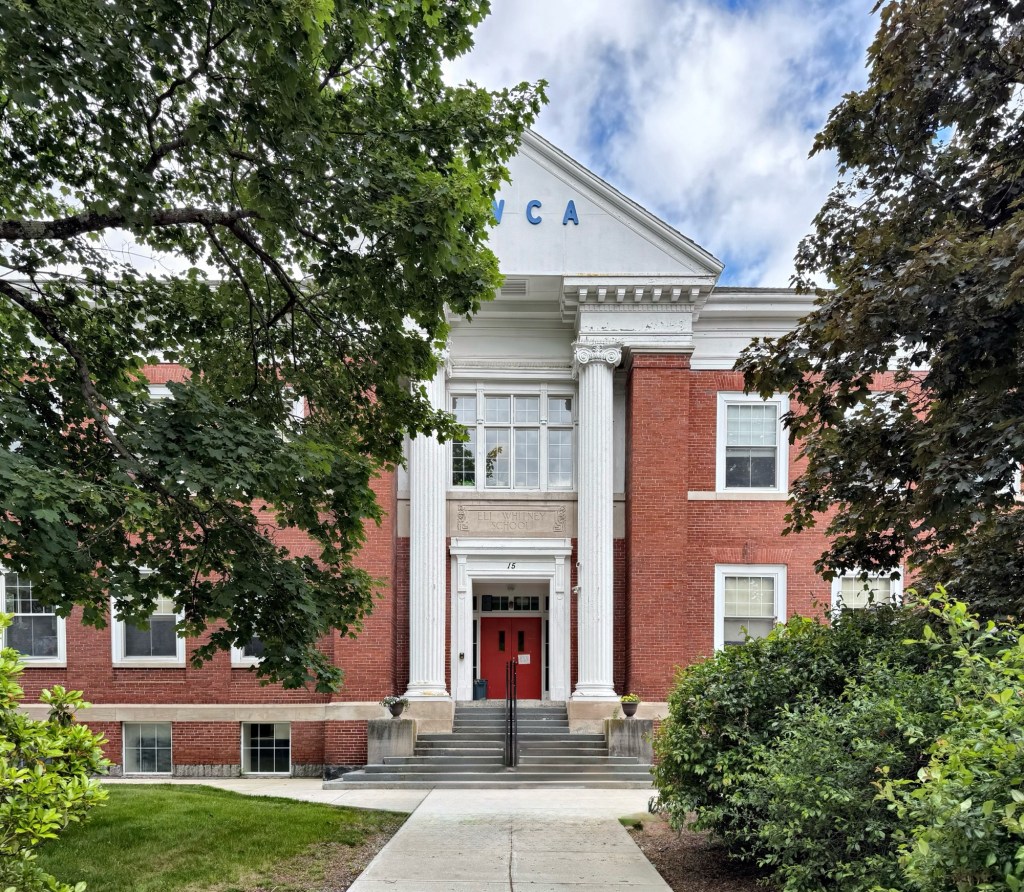
Built a few decades after and located behind the Harvey School in Westborough, Massachusetts, the former Eli Whitney School is a landmark example of an educational building designed in the Neo-Classical style. Built between 1906-7, the school building replaced an earlier school on the site that was outgrown and outdated. Designed by architects Cooper & Bailey, the building stands two-stories tall with a central pedimented pavillion containing the entry that is framed by monumental fluted columns. The school was named after Eli Whitney, the famous American inventor, born in Westborough, who is widely known for inventing the cotton gin in 1793, one of the key inventions of the Industrial Revolution, and later moving to New Haven and manufacturing weapons. When Westborough schools consolidated into modern facilities in the second half of the 20th century, this building was then occupied by the YWCA, and have rented the facilities from the town until it was purchased in 2000.
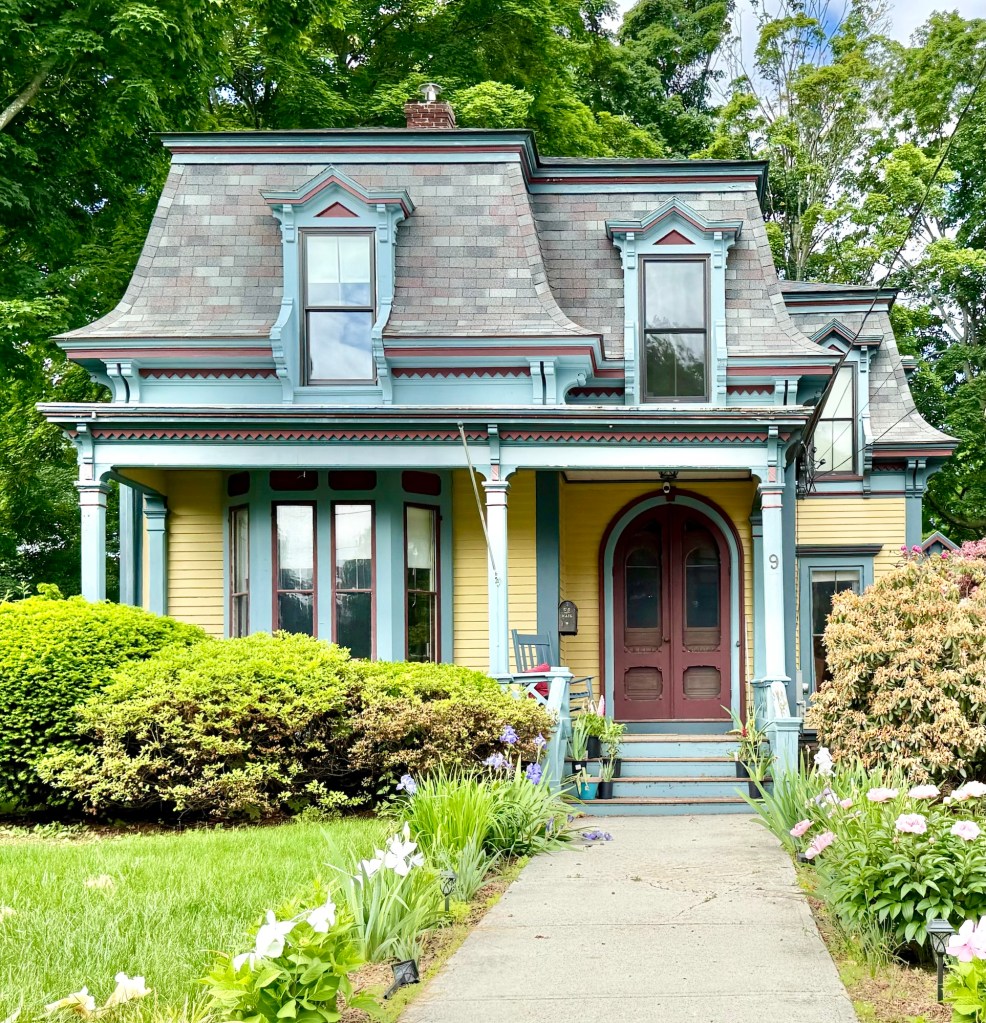
One of the most charming houses in Westborough, Massachusetts, can be found on Central Street, in the commercial village of town. The house was built around 1875 as a Mansard cottage, a style that was beginning to wane out of style by this point. The cottage was built for John Addison Turner (1833-1900) and his wife, Mary Ann Fiske. John worked as a superintendent at the National Straw Works factory, a local manufacturer of straw hats and other goods. The Turner House remains one of the best-preserved Victorian-era homes in Westborough and is even painted to highlight the many intricate details.

 Buildings of New England

