Delano Warehouse and Wharf // 1803

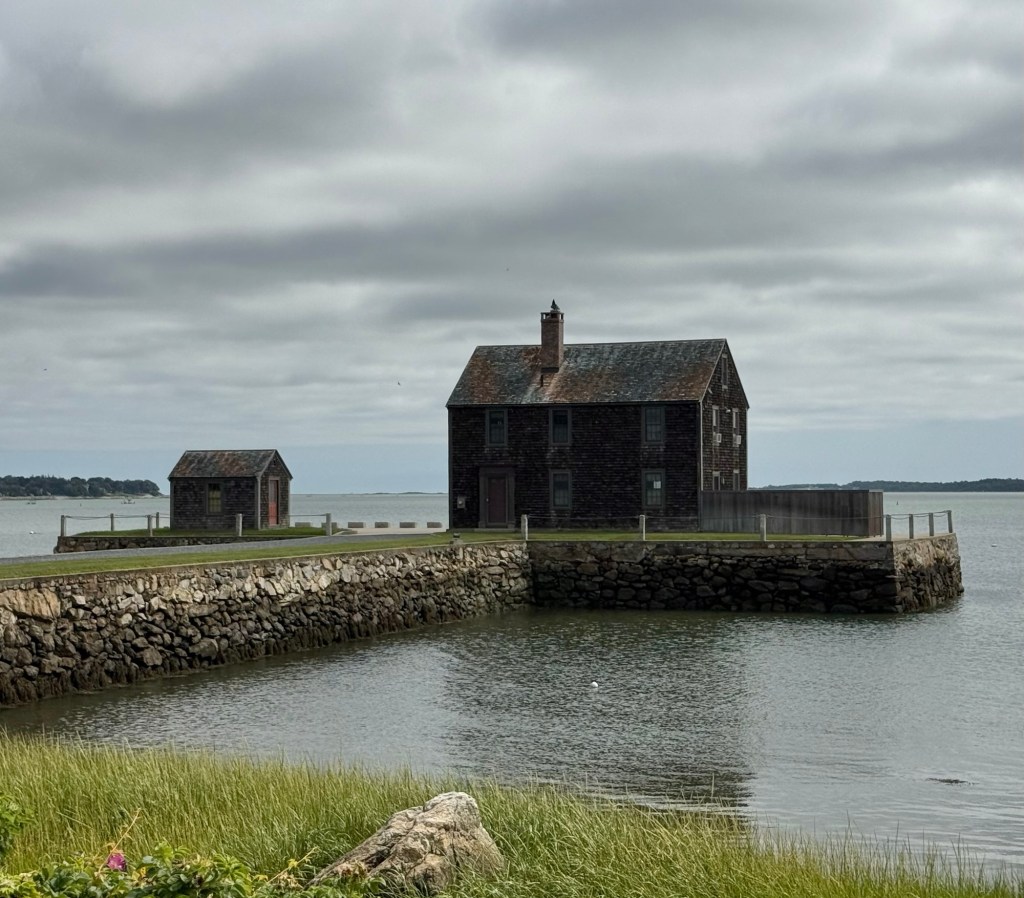
In 1802, Kingston-based merchants and landowners Benjamin Delano and brother-in-law Peter Winsor built this stone wharf and warehouse at Rocky Nook, a small peninsula at the end of the Jones River where it meets Plymouth Bay. The Rocky Nook had several warehouses in the early 1800’s which were used to hold cargo for the busy Kingston vessels that carried passengers and goods all down the eastern seaboard for transit, with larger vessels sent to the West Indies for trade. Benjamin Delano and his son Joshua either owned or partly owned 37 vessels between 1803 and 1882 and were a wealthy family that built their fortune on shipbuilding and trade. The warehouse, built at the end of the wharf was used to store goods and also served as a ship chandlery, a store selling goods needed for newly outfitted ships that were berthed up the Jones River.  A combination of the coming of the railroad and the need for faster and bigger vessels caused the decline of the shipping business in Kingston in the late 19th century with the shipbuilding industry largely evaporating by the 20th century. The Delano warehouse at the end of the wharf has since been converted to a private residence yet retains its unique character and siting with arguably the best view in town. 
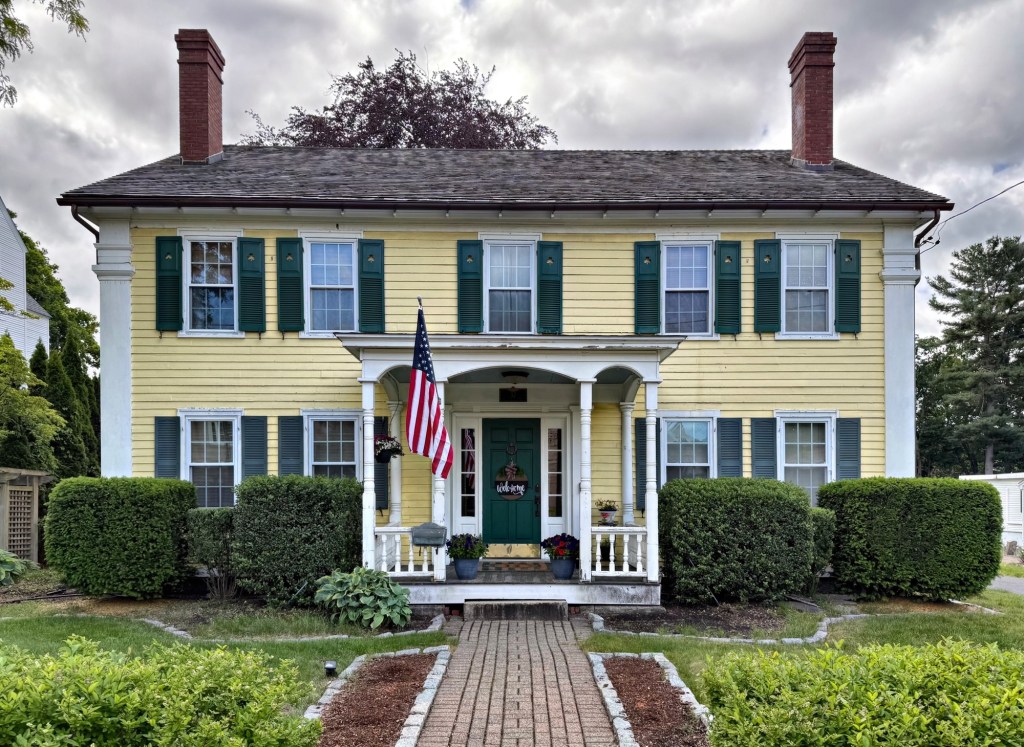
Dr. Edwin B. Harvey House // c.1830

Edwin Bayard Harvey (1834-1913) was born in Deerfield, New Hampshire, and attended Wesleyan University in Connecticut, pursuing his career as a teacher. He would teach for a few years until he shifted gears and enrolled at Harvard Medical School, graduating in 1866. With the intention of settling in the West, he went to Waukegan, Illinois, but was not satisfied, so he returned to New England, and made his home in Westborough, Massachusetts. Edwin operated a medical office from this house on West Main Street and resided here with his family until his death in 1913. He often made house calls around town travelling by horseback. During his time in Westborough, Dr. Harvey served as President of the Massachusetts Medical Society from 1898-1900, and served on local school and library boards in Westborough. Never giving up on his push for education, as a State Senator in the legislature in 1884, Dr. Harvey introduced and was instrumental to the passage of a bill to provide free textbooks to the children of the state. The Dr. Edwin Harvey House remains in a great state of preservation.

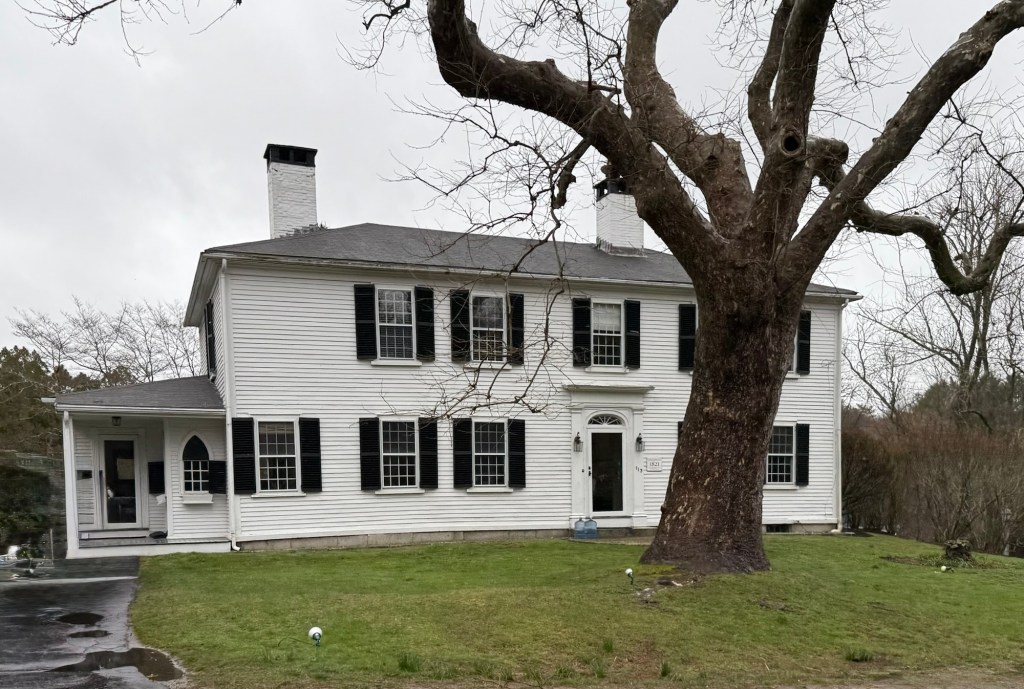
Highfields Estate // 1821

Constructed in 1821 for Joshua King (1783-1849), this Federal style mansion is one of the last country estates in Abington, Massachusetts. Joshua King was a Deacon of a local church and a well-to-do citizen in town, living nearby until a hurricane blew the roof off of his former house. Seeking to rebuilt a new, more substantial family home, it is said that Joshua required that this house would be built to last centuries, with some residents stating that the roof structure itself had enough timber to build a second home. The Federal style mansion has three chimneys with 12 fireplaces inside, and is set amongst rolling fields bounded by old stone walls, likely giving the property its name, “Highfields”. The property was later converted to a duplex, but retains much of its original design at the exterior. 

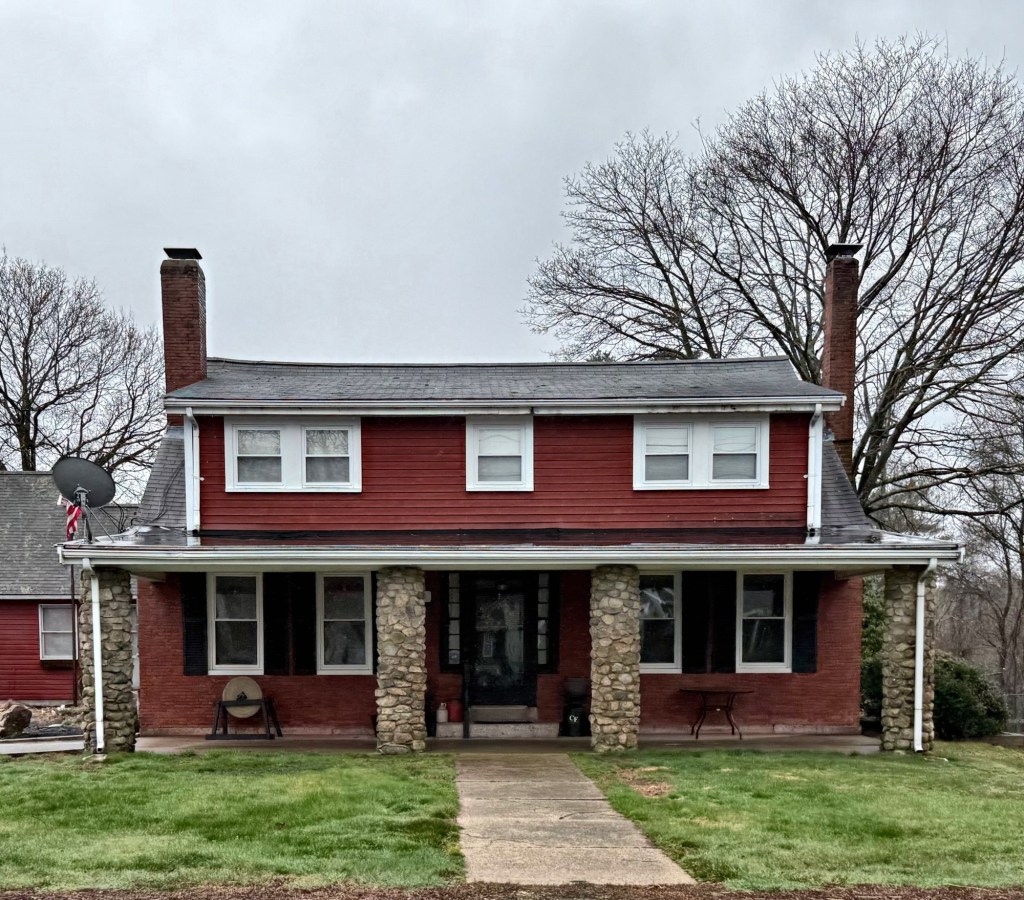
John L. Sullivan House // c.1812

This modified Federal style cottage in Abington, Massachusetts, is known locally as the last home of World Heavyweight Champion bare knuckle boxer, John L. Sullivan. John Sullivan (1858-1918) died in this house on February 2, 1918, of heart disease, but left behind a legacy that will last forever. The house was originally constructed around 1812 for Jacob Cobb, a Deacon of a local church and after successive ownership, the house was purchased by boxer John Sullivan, to celebrate his retirement. As a professional fighter Sullivan was nicknamed The Boston Strongboy, and was one of the first great American boxers and was the last world champion bare-knuckle boxer. He had a record of 47 wins, 1 loss and 2 draws, with 38 wins by knockout in his career. Sullivan’s blustering personality and fabled strength gained him a great following, and he would be inducted into the International Boxing Hall of Fame as part of its original class. As champion he earned more than $1 million but squandered it. A hard drinker during his ring career, he later became an advocate of prohibition and delivered many lectures on the subject. His brick Federal house in Abington was modernized by him, adding the dormer and full-length front porch supported by rubblestone columns.

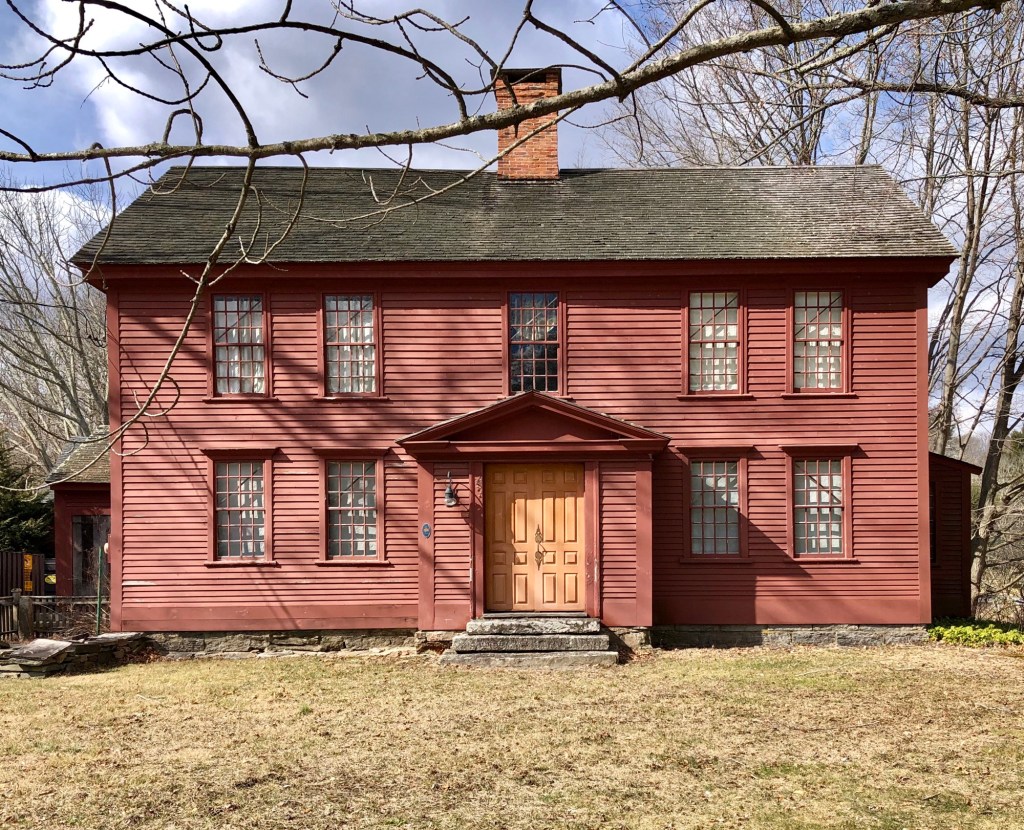
John Carter House // c.1765

One of the many stunning and well-preserved Colonial homes in Canterbury, Connecticut is this residence, the John Carter House on S. Canterbury Road. Records show that the house was built around 1765 for John Carter and his wife, Mary Smith. This house is a good example of the domestic architecture of 18th-century Connecticut and while there have been some changes over time, it continues to exhibit all the major hallmarks of the colonial type, such as a center-chimney plan, clapboard exterior, and five-bay facade. The house originally had a saltbox roof sloping to the rear, but was removed sometime in the 19th or 20th centuries, likely when the projecting Colonial Revival-era porch was added at the entrance. What a spectacular home!

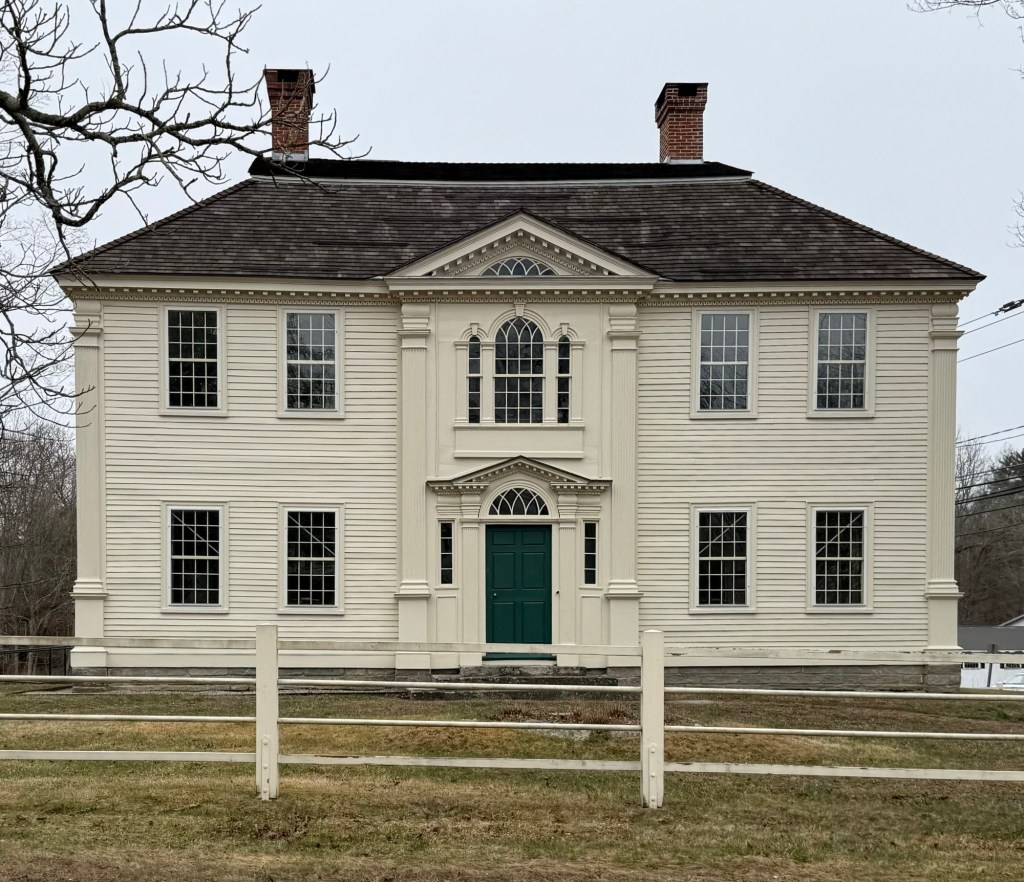
Prudence Crandall’s School for Young Ladies and Little Misses of Color // c.1805

Built c.1805 for Elisha Payne, this architecturally distinguished Federal style mansion in Canturbury, Connecticut is one of the most significant buildings in the state, not only for its architecture but historical significance. In 1831, a young white woman, Prudence Crandall, was asked to open a boarding school for girls in Canterbury. She purchased this mansion and began operations for the school, which was attended by many wealthy girls in town. In 1832, Ms. Crandall was approached by a young Black girl who worked as a servant in town, named Sarah Harris, asking to attend the school. Encouraged by conversations with both Harris and Maria Davis, a Black woman who worked for Crandall and shared copies of the abolitionist newspaper The Liberator with her, Crandall agreed to admit Harris. Almost immediately, residents protested the school’s admission of a Black girl and parents threatened to withdraw their students, Crandall undeterred, closed her school and reopened in 1833, solely for Black and Brown students. Young girls traveled from several states to attend the school. The legislature of Connecticut responded by passing the “Black Law,” which prevented out-of-state Black and Brown people from attending school in Connecticut towns without local town approval. Crandall was arrested, spent one night in jail, and faced three court trials before the case was dismissed. In September 1834, a nighttime mob of men attacked the house, smashing the windows, leading Crandall to close the school out of fear for her students as no protections were afforded to them. These events made national and international news in the 1830s and galvanized the burgeoning abolitionist movement. Crandall would later marry and left Connecticut, never to return. For her vision and brave actions at this school, Prudence Crandall is Connecticut’s official state heroine and the house was designated a National Historic Landmark in 1991.

Clough-Hinckley House // 1832

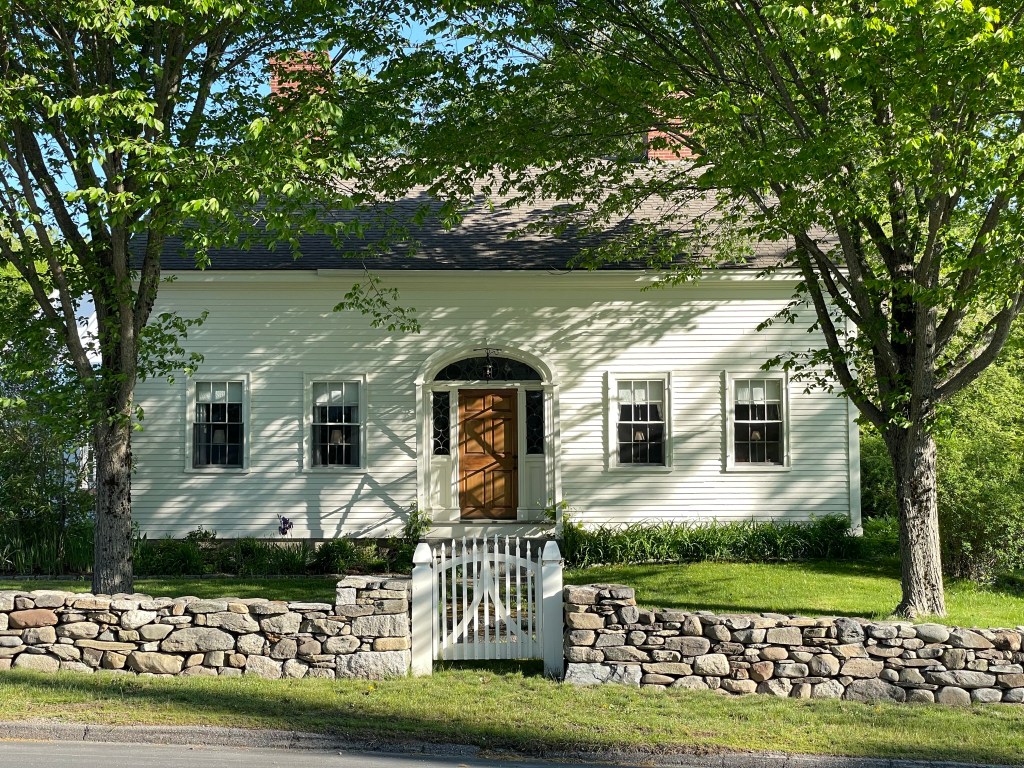
This charming Federal style cape in Blue Hill Maine was built in 1832 by Moses P. Clough, a sea captain seemingly as a wedding gift to his new bride of that year, Sally Prince. He resided in the home off-and-on between excursions and trips at sea until his untimely death at sea in 1836 of bilious fever, possibly caused by malaria. After his death, his widow Sally, remarried and moved to Cherryfield, Maine. The old family home was sold to Bushrod W. Hinckley, an attorney who was involved in the town affairs. Today, the old Clough-Hinckley home is known as Arborvine, a great restaurant known for using local, farm-to-table ingredients. The home is excellently preserved by the owners, down to the leaded glass fanlight and sidelights at the entrance. Swoon!

William Binney House // 1859

Another of Providence’s stunning monumental Italianate mansions on College Hill is this, the William Binney House, which was built in 1859 from plans by local architect Alpheus C. Morse. In the mode of an Italian Renaissance palace, it features a strong, symmetrical facade, molded string course, classic trim detail at the windows and doors in brownstone, and a shallow hip roof. The original owner, William Binney (1825-1909) was born in Philadelphia and became a prominent attorney and became involved on various boards, building more wealth. Additionally, he was elected as member of the Rhode Island Assembly and the Providence City Council continuously 1857 to 1874. The house’s rear ell and wooden bay would provide sweeping views to Downtown Providence even today from the aptly named Prospect Street.

Benjamin Bliven House // 1849

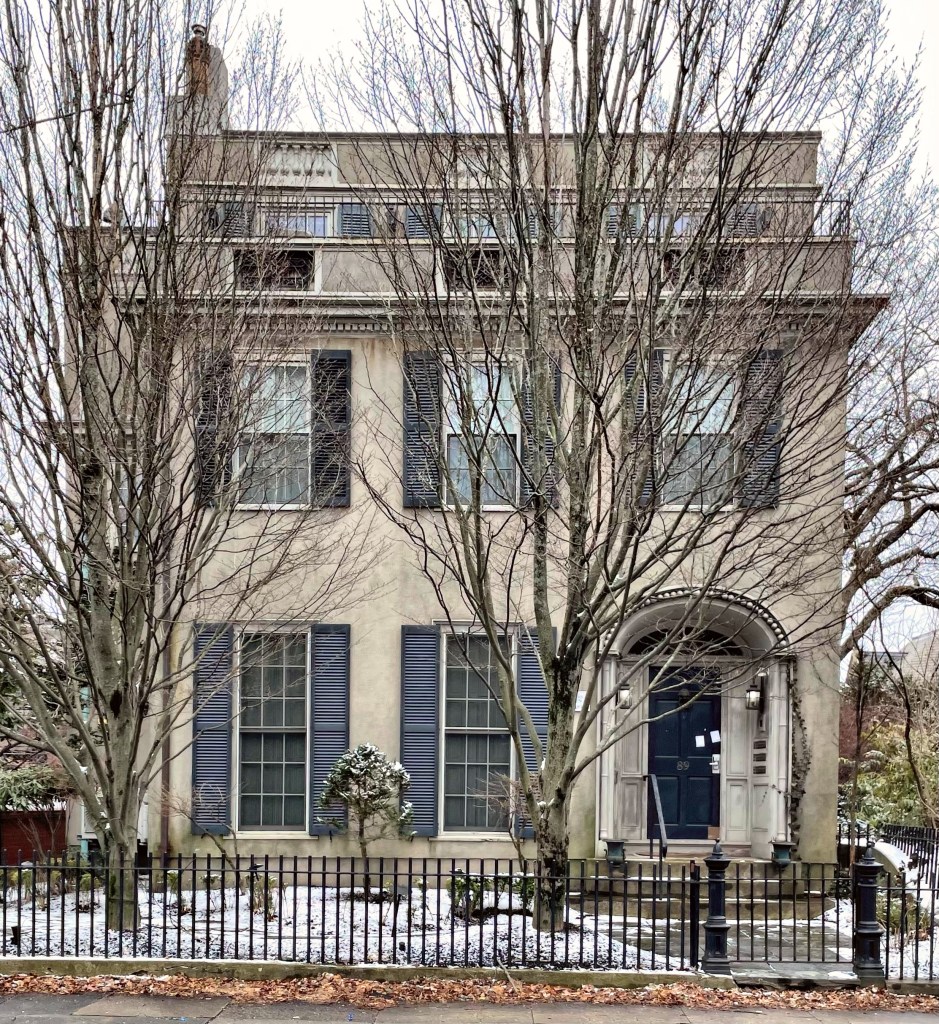
Although Benjamin Bliven built this house, he never owned the property, but the name lives on! This house on Angell Street in Providence was originally constructed in 1849 in the Greek Revival style, popular at the time. Bliven, a musician, rented the property to tenants until the deed was transferred to Abby W. Watson, wife of Robert W. Watson (owner of the property next door and featured on this account previously). The first owner-occupants were Grace A. and Eugene H. Greene, who bought the property in 1898. The house was completely remodeled in the early decades of the 20th century with Regency/Colonial Revival detailing. Changes including the former roof with its gable-end facing the street boxed off, a new modillion cornice with parapet above; recessed attic story with balustrade; small wing to the east. The stucco siding and Federal entry is icing on the cake!

Oliver Johnson House // 1905

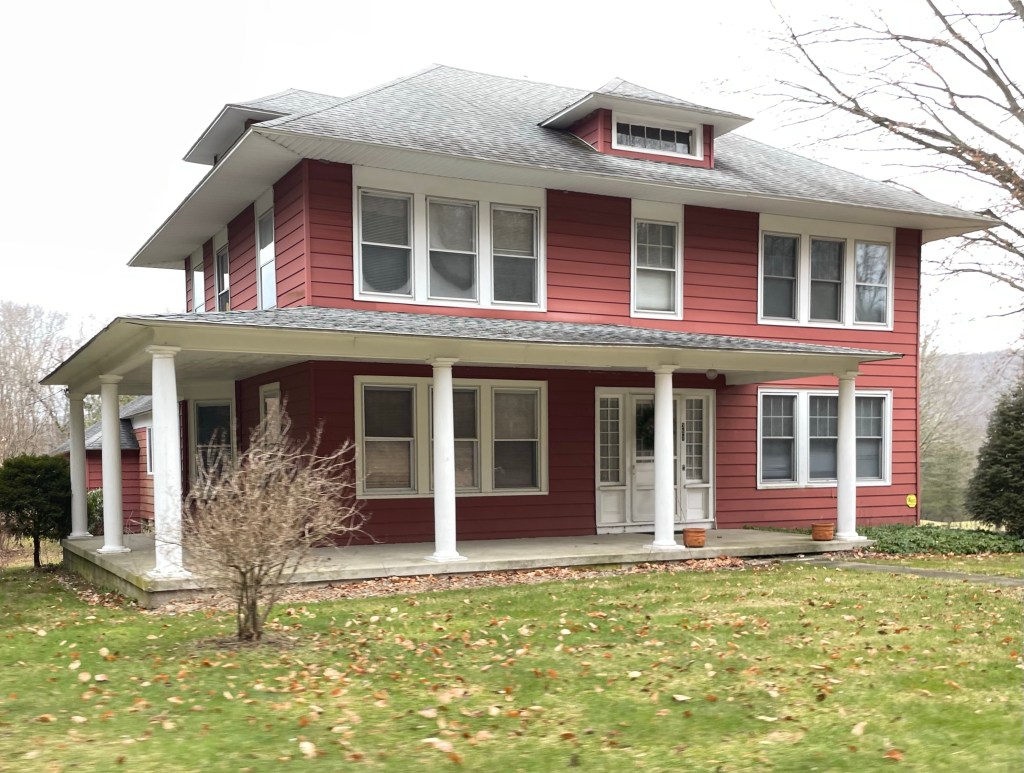
Prairie style architecture is not nearly as common in New England as it is in the Mid-western United States. The style was almost always seen in early 20th century residential designs and is characterized by horizontality, low slope roofs, overhanging eaves, and open interior floor plans. This New England vernacular version of the Prairie style employs some Arts and Crafts influence with Tuscan columned porch and wood frame construction, rather than the more bulky and bold use of brick and stone. This residence sits on a busy state route in the sleepy town of Franklin, Connecticut. This house appears to have been built for Oliver Johnson who was about seventy by the time the house was built. Do you know of any other Prairie Style houses in New England?