Jacob Weld Seaver House // c.1850

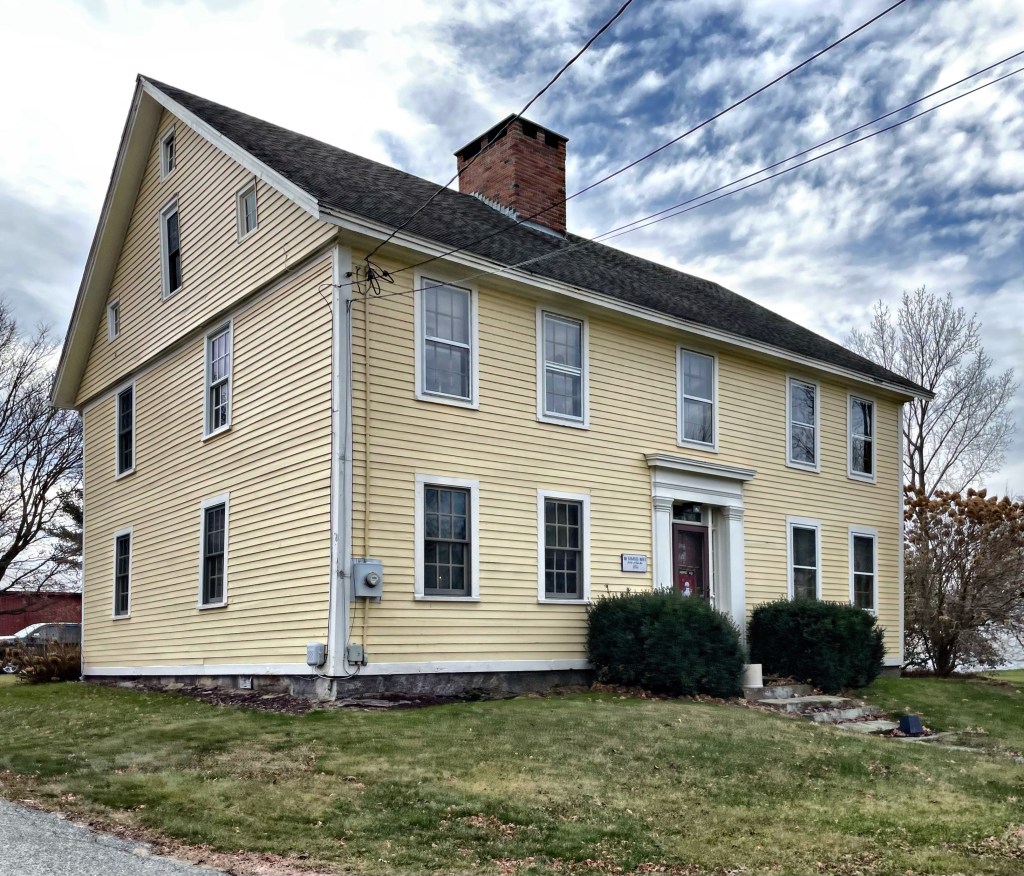
In 1849, Jacob Weld Seaver (1820-1914) married Sarah Abby Weld and built this Greek Revival home, perched on a hill near the burgeoning Forest Hills Cemetery. The property originally extended all of the area of Orchardhill Road and the dead end streets that extend off of it, and included a stable, caretakers cottage, and at least two rental properties (this house may have been one of them). Jacob Seaver grew up in the neighborhood and attended Harvard, graduating in 1838. He became involved with the drygoods business and must have met his future wife from her father George F. Weld, who was a commission merchant in Boston. He went on to become the director of the Second National Bank of Boston, commuting into the city from the Forest Hills station. In the early 20th century, Seaver sold this property to a Thomas Minton, who subdivided some of the lot and built houses on the estate.

Ambrose Knight House // c.1810

The most architecturally significant example of the Federal style in Waterford, Maine, is this c.1810 home built for Ambrose Knight, who operated a store in town. The high-style Federal home features a well-proportioned fanlight over the entrance with a Palladian window above, all with geometric moulding. The home was likely built by a housewright who employed designs from Asher Benjamin’s pattern books for builders, as the high-style features and Palladian windows are uncommon in this part of Maine.

Winfield S. Carr House // 1896

In 1895, Winfield S. Carr (1849-1911) purchased land on Windsor Road for a residence from William S. Strong, a horticulturist and developer of Waban Village. The lot is located at the peak of Moffat Hill, and provided sweeping views of undeveloped farm and marshland and possibly Boston in the distance. As a young man, Carr moved to Fall River from Maine, and was employed in the dry goods business. He eventually moved to Boston and opened up a toy shop, which clearly became a large success. The firm sold fireworks and children’s toys from the downtown location. The Queen Anne style home was occupied by Carr and his wife (they don’t appear to have had children) for less than a decade, when the couple downsized and moved to an apartment on Comm. Ave. in Allston.

F. W. Webster House // c.1895

When William C. Strong began developing land on the farm he purchased in Waban, he built a few homes to market the new neighborhood, and rented some of them for additional income. This really unique home was one of them. It was built around 1895 and exhibits elements of the Shingle and Colonial Revival styles. The home was eventually purchased by Frederic W. Webster, who was an alderman in Newton. The blocky proportions of this house and the prominent overhang of its hip roof are prevalent motifs in late 19th century adaptations of the Shingle Style. The style is even more evident at the recessed center entrance with curved reveals, and the diamond shingle motif at the second floor. Nods to Colonial Revival are the garrison (second floor overhanging the first, and the central dormer.

Stephen Cummings House // 1886

One thing about Victorian-era houses that I love so much is the fact that it’s so rare to find two houses that are the same! The uniqueness and detail is just amazing and stalking these homes never gets old! This 1886 beauty was built as a double-house for Stephen Cummings of Norway, Maine. Cummings was a member of the family which built many of the grand homes in town as they ran a woodworking and carpentry company. Architect John B. Hazen designed the Stick style home with a octagonal bay at the facade, capped by a tower, giving the home a sort of pagoda effect.

Edwin Cummings House // 1908

This two-and-a-half story mansion sits on a steep hillside overlooking Downtown Norway, Maine. The home was built in 1908 for Edwin Cummings, who appears to have been a son of Charles B. Cummings, who ran a profitable woodworking and carpentry firm in the village. Charles Cummings was the owner of the Evans-Cummings House (featured previously) and updated it to show off his carpentry skills. The house here is a great example of Neo-Classical architecture with the monumental columns to create a prominent portico. The home retains the original windows which really complete the facade!

Evans-Cummings House // 1855 & 1890

The most iconic house in Norway, Maine has to be the Evans-Cummings House (also known locally as the Gingerbread House) on Main Street. The ornate Victorian era home was originally built in 1855 for Richard Evans, who was born in Portland in 1805 and after training as a carpenter, moved to Norway in 1833 for work. He and his wife, Mary Warren Hill, had eight children and they resided in the home until their death. In 1890, Charles B. Cummings bought the house in 1890 and hired local architect John B. Hazen to remodel the house. Hazen added the gingerbread adornments for which the house is now known colloquially. The home attracted a lot of attention in the region, and the later heirs continued that whimsical appeal. When the home was willed to Fred and Cora Cummings, they were said to have kept a stuffed peacock at the top of the stairs, which delighted children when they toured the home. The house eventually became used as storage by the owners of the local Advertiser Democrat newspaper, and its future was threatened. Since 2012, a local group, Friends of the Gingerbread House, have poured tens of thousands of dollars and an equal amount of time restoring the iconic home to her former glory! Preservation is important!

Hiram Rider House // c.1820

Located on the southern edge of Willington Connecticut’s town common, this vernacular example of the Federal style with later alterations is really appealing, mostly for its simplicity and proportions. The house was built around 1820 for Hiran Rider, who served as a judge, county sheriff, and town selectman. The Rider Family were hit by tragedy in 1851 when dysentery hit the household, killing Hiram, his wife Sarah, and their daughter. The home was altered by a later owner with 2-over-2 windows, an Italianate style door, and a door hood.

William Bottomore House // c.1750

This well-kept Federal home in Newport was apparently built pre-Revolution, but it was likely significantly altered in the early 1800s for its namesake, William “Billy” Bottomore. “Billy” was born in Bologna, Italy, and moved to Salem, MA, where he possibly met Michele Felice Cornè, a prolific painter and who is credited in making tomatoes mainstream… seriously. In early 19th century New England tomatoes were thought to be deadly poison. Cornè was accustomed to eating tomatoes in his native land of Italy and would regularly eat them without ill effect and, thus, allayed the fears of the residents of his adopted country. Cornè became friends with Bottomore and they both moved to Newport. Bottomore likely modernized this house with help from his friend and ran a confectionery store in the home.

Soudant House // c.1850

This eclectic house in Collinsville was likely built in the mid-19th century in the Greek Revival style, with its gable roof serving as a pediment. By the end of the 19th century, the prominent corner tower with mansard roof and porch were added to create the oddly pleasing composition we see here today. The home was likely altered by Walter Soudant, who ran a grocery store in the village out of the Valley House (last post). Walter’s daughter, Belle Julie Soudant, was an established singer, who toured Europe before accepting a position as a singing teacher at the Institute of Musical Art in New York, known today as the Juilliard School.

Ward Parker Delano House // 1797

During the 1790s and early 1800s, the rise of the coastal schooner trade and whaling ushered in a long period of prosperity for coastal towns in New England, which continued unabated until the Civil War. The War of 1812 provided many Marion sailors and sea captains with the chance to experience life at sea with privateers papers issued by the United States government, these captains went to sea in their schooners to hunt down British ships, plundering them like pirates. One of these captains was Ward Parker Delano, who built this house in 1797 overlooking Sippican Harbor. Under subsequent owners in the Delano family, the home was modified on numerous occasions in styles popular at the time until the early 20th century when it was Colonialized, which added the portico, gable, and dentils.

Briggs House // c.1850

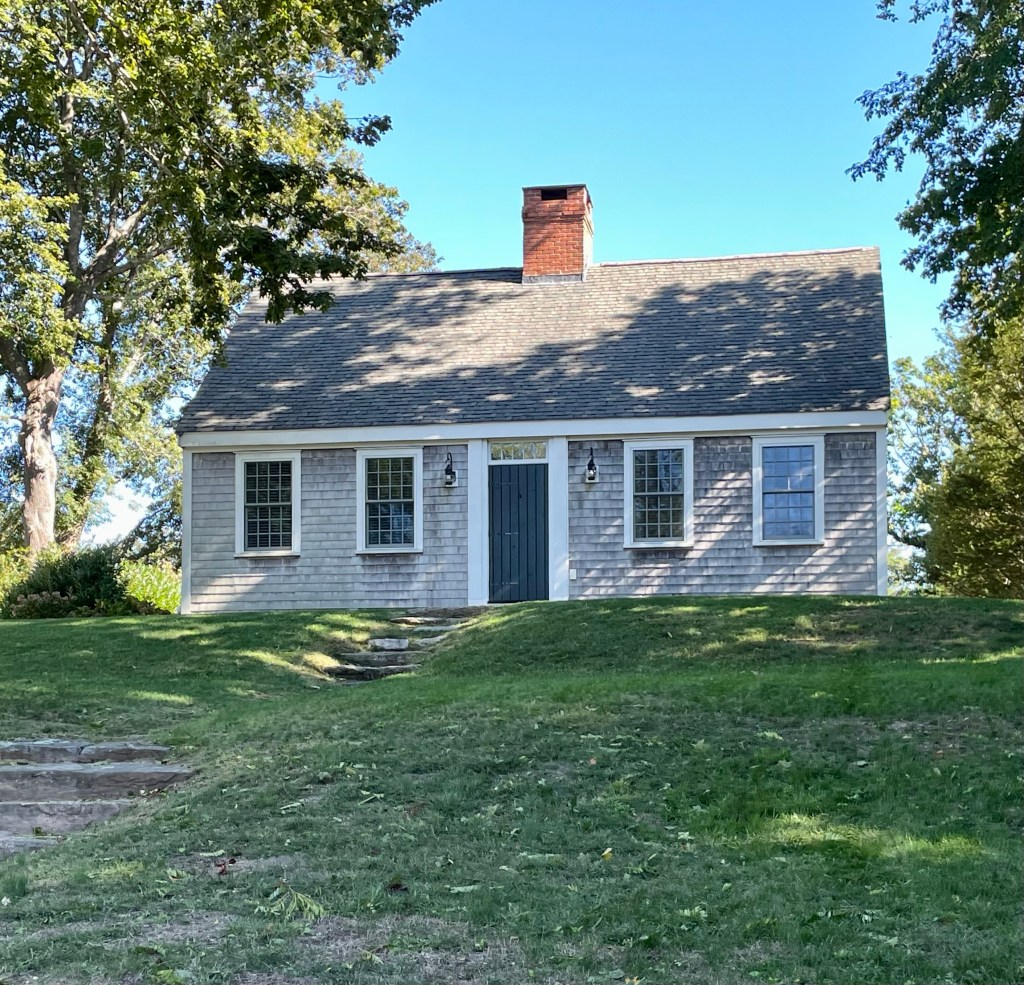
This tiny half-cape house in Marion was built in the mid-19th century for Timothy Hiller Briggs (1822-1877), a whaler. Based on the Federal/Greek detailing on the house, it is also likely the home was built much earlier for Timothy’s father, Silas, a sea captain, and was willed to his only son upon his death in 1833. Timothy died at the young age of 54 and his widow, Josephine, maintained the cottage until her death in 1924! The home is a half-cape as it has an off-center door with two bays of windows at the facade. A full-cape would be symmetrical with a central door and two windows on either side. The central chimney would provide heat to all rooms in the cold winter months.

Hamilton House // 1896

Providence is full of amazing residential architecture from all periods, but one house that stands out to me for being such a high style and unique mansion is the Hamilton House on Angell Street. The mansion was constructed in 1896 for local businessman, Francis W. Carpenter. From 1892 until his death, he was the president of Congdon & Carpenter Company, an iron and steel company which was founded in 1792, and operated in Providence into the 1980s. Carpenter was very influential as chairman of the committee on the construction of a new building for the Central Congregational Church (a previous post) in 1893. So pleased with how the church turned out, he hired the same architects, Carrère and Hastings of New York to design his own mansion which would sit next door to the church! Many in New England may not know how significant it was to have Carrere and Hastings design your house. To put it into perspective, while the firm was designing this house, they were designing the New York Public Library’s Main Branch building! The Carpenter Mansion was designed in the French Renaissance Revival style which was not too common in America, but always turns heads! The large hipped roof emulates the earlier French mansard roof forms, and the bold massing and use of limestone and brick makes the house look like a chateau or castle plucked from the French countryside. The house apparently was not finished until 1915, likely when the porte-cochere was added for the owner’s vehicles. The building is now occupied by The Hamilton House, a non-profit organization that serves as an adult learning exchange with programs from history classes to group fitness courses.

Powers-Rosenthal House // c.1877

This gorgeous stone house was built circa 1877 by Phillip M. Powers (1814-1889), who served as President of the Millstone granite quarry in Waterford, Connecticut. The home is said to have been built off an earlier 1700s home, but all was constructed in ashlar granite to showcase Mr. Powers’ quality stone. It is said that Phillip went bankrupt not long after the construction of this home. In 1930, the house was purchased by Beatrice H. Rosenthal and her husband. Ms. Rosenthal served as both a delegate and as a committeewoman of the Democratic National party, and a staunch advocate for women’s rights. She was also active in women’s educational institutions around New England. The old home and barn are now available for rentals for events or overnight stays.

George L. Allen Summer Residence // c.1895

This massive summer “cottage” in Rye Beach, NH, was built around 1895 for St. Louis businessman George L. Allen. The massive Colonial Revival home features a gambrel roof with a series of gabled, hipped and shed dormers to break it up. A circular driveway would have allowed visitors for Great Gatsby-esque parties to get dropped off by their driver and enter right into the home’s large stair-hall. The most stunning facade is the rear, which faces a lawn with views out to the Atlantic Ocean. A full-length porch on the first floor sits recessed under the floor above to provide shelter from the harsh summer sun. Sadly, the mansion has seen better days and appears to be a shadow of its former self. Luckily, almost all of the historic windows remain and the home can definitely be saved. Fingers and toes are crossed to see this beauty preserved.