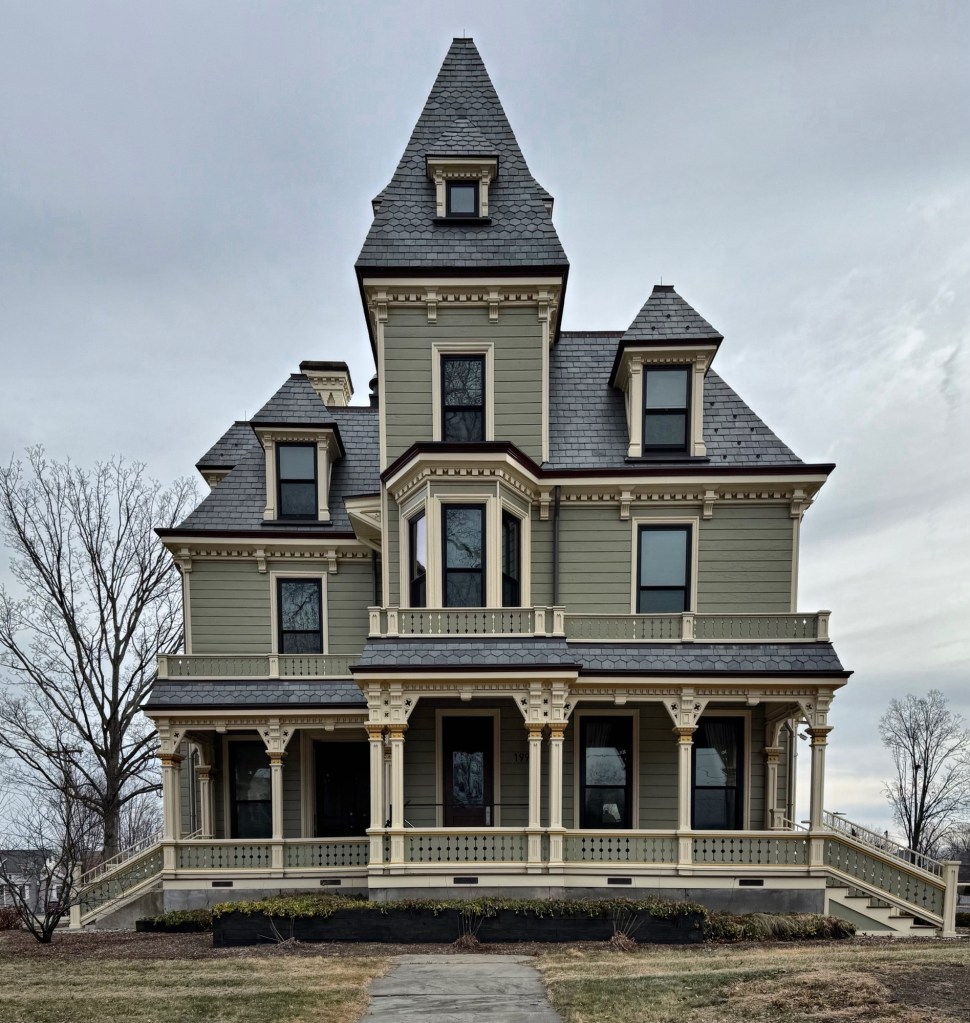
Emerson Gaylord Mansion // c.1871

Emerson Gaylord (1817-1899) was a businessman and politician from Chicopee, Massachusetts, who operated the Gaylord Manufacturing Company and later, the Ames Sword Company, furnishing military swords and other goods for the Union during the Civil War. His business did extremely well and he became one of the wealthiest men in the industrial city. In 1856, Gaylord purchased the property at the corner of Springfield Street and Fairview Avenue and resided in a home here until years following the war, when he demolished the original structures on the site in 1870 to build a new home currently known as the Gaylord Mansion, worthy of his stature and notoriety in Chicopee. In 1962, Elms College purchased the Gaylord Mansion for $50,000. In 1997, an Elms College Cornerstone Campaign raised $100,000 to refurbish the exterior of this historical treasure. In February 2020, the Gaylord mansion underwent another renovation by the college to transform the interior into a classroom-meeting space with dorm residences on the top floors dubbing it “Living-Learning, Community and Cultural Center”.

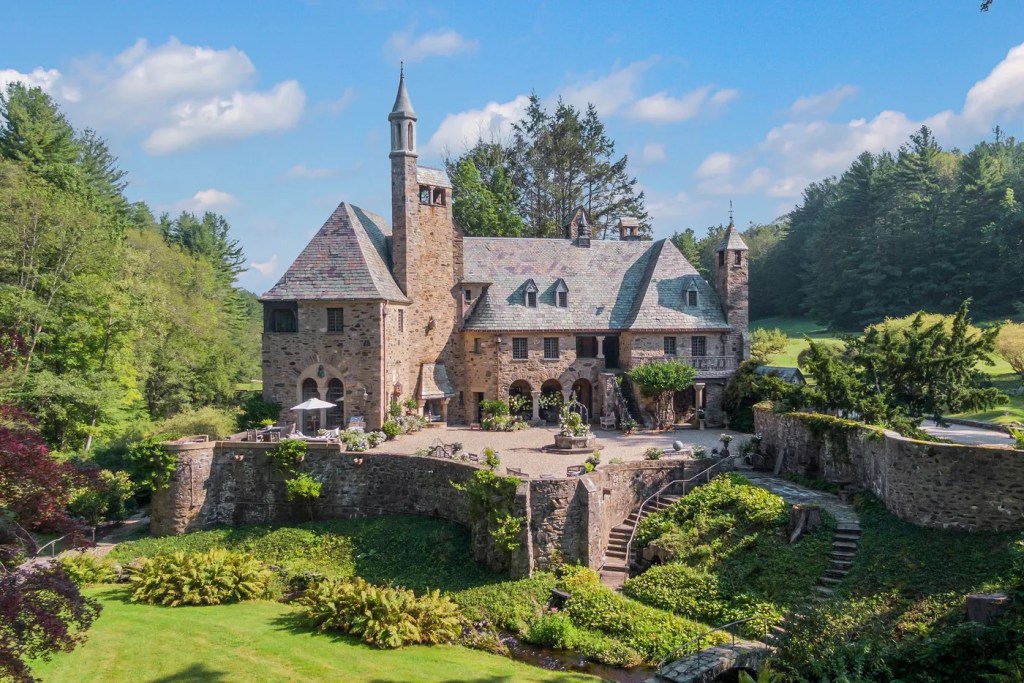
Hidden Valley Castle // 1921

Photo from listing.

A castle can be found in the small town of Cornwall, Connecticut! Set amongst 275 acres of woodland and streams, with several outbuildings on the property, this whimsical castle looks like it was dropped here from Cornwall, England, but it actually dates to the 1920s. Hidden Valley Castle, had its beginnings when socialite Charlotte Bronson Hunnewell Martin envisioned building a unique country retreat for herself and her husband, Dr. Walton Martin, in the Litchfield Hills of Connecticut as a summer retreat. Just before this, Charlotte had bought a group of 20 brownstones in Manhattan on 48th and 49th Streets, between Second and Third Avenues, and converted them into charming townhouses around a central Italian-inspired garden. Called Turtle Bay Gardens, the houses were highly acclaimed and almost immediately attracted prominent and celebrated residents. The Cornwall Castle was designed by architect, Edward Clarence Dean, who also redesigned the Turtle Bay Gardens for the couple. Dr. Martin imported many of the materials as well as the 100 workmen required to build the castle, a project that lasted five years. Charlotte would also have a cottage built on the estate and hired young Italian artist, Vincenzo Rondinone, to be her resident artist on the estate to create unique vases, bowls, and pots to be used at the house and to be given as gifts to visitors and friends. The property was restored in recent years and put up for sale, with the cottage sold as a separate dwelling.

Birdsey Hall // c.1804

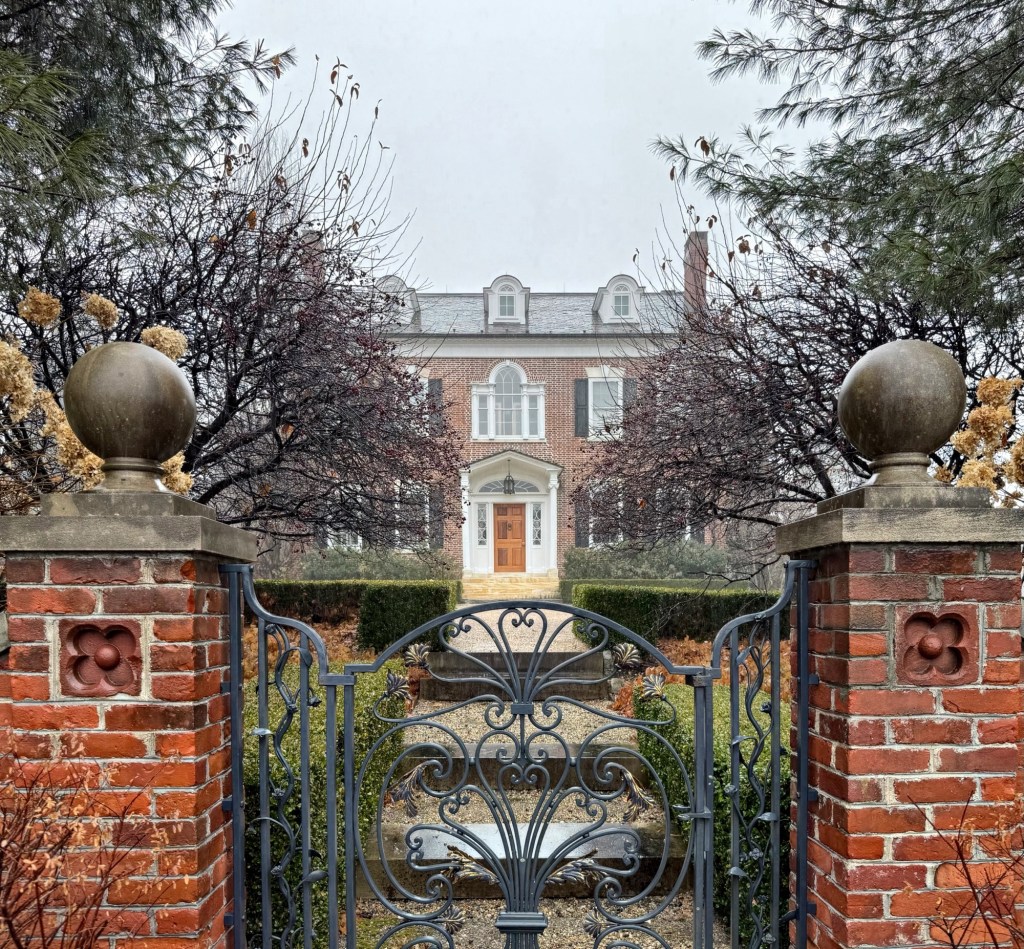
Built circa 1804 in the form of an English country estate house, Birdsey Hall stands as the finest property in the town of Goshen, Connecticut. The residence was built for Birdsey Norton (1763-1812), a wealthy cheese merchant who was said to have been inspired to build a country estate after travelling the American south on business. The high-style Federal/Adamesque mansion features expansive grounds bounded by brick walls and Victorian gardens. The property was later owned by Fred Favorite and Robert Devoe, friends of Liberace, who operated an antique store. Birdsey Hall remains one of the finest Federal estates in Connecticut.

Glen Magna Farms // c.1790

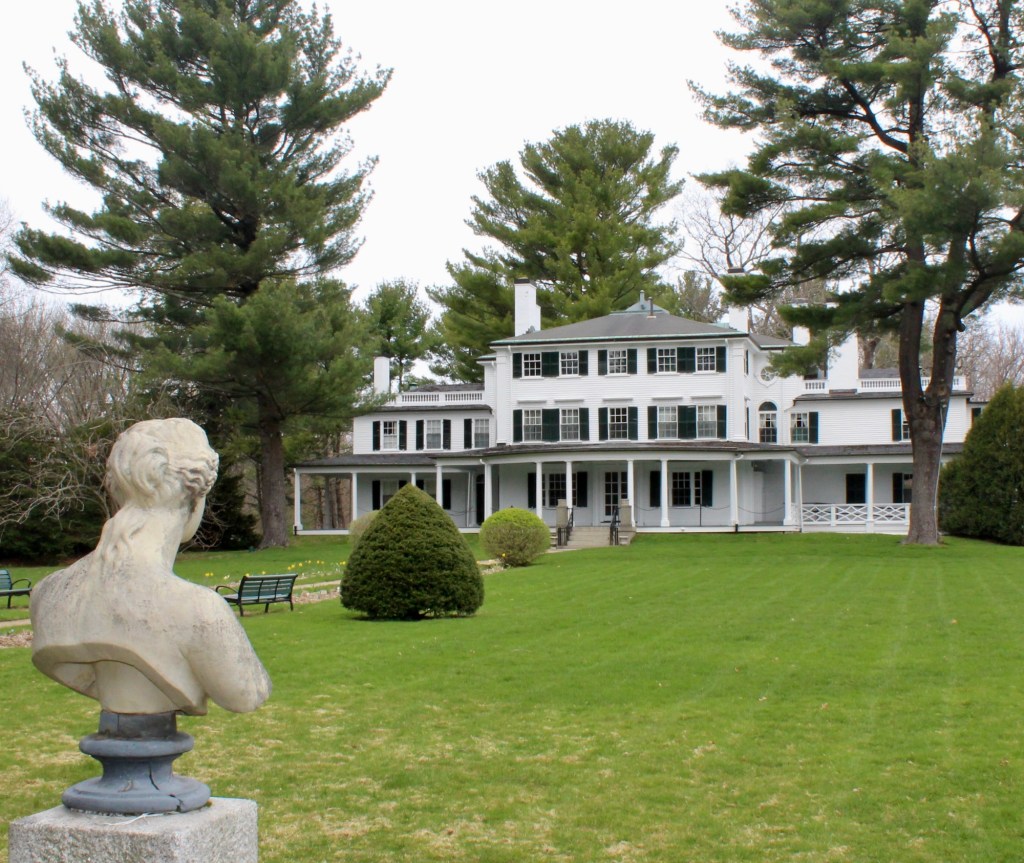
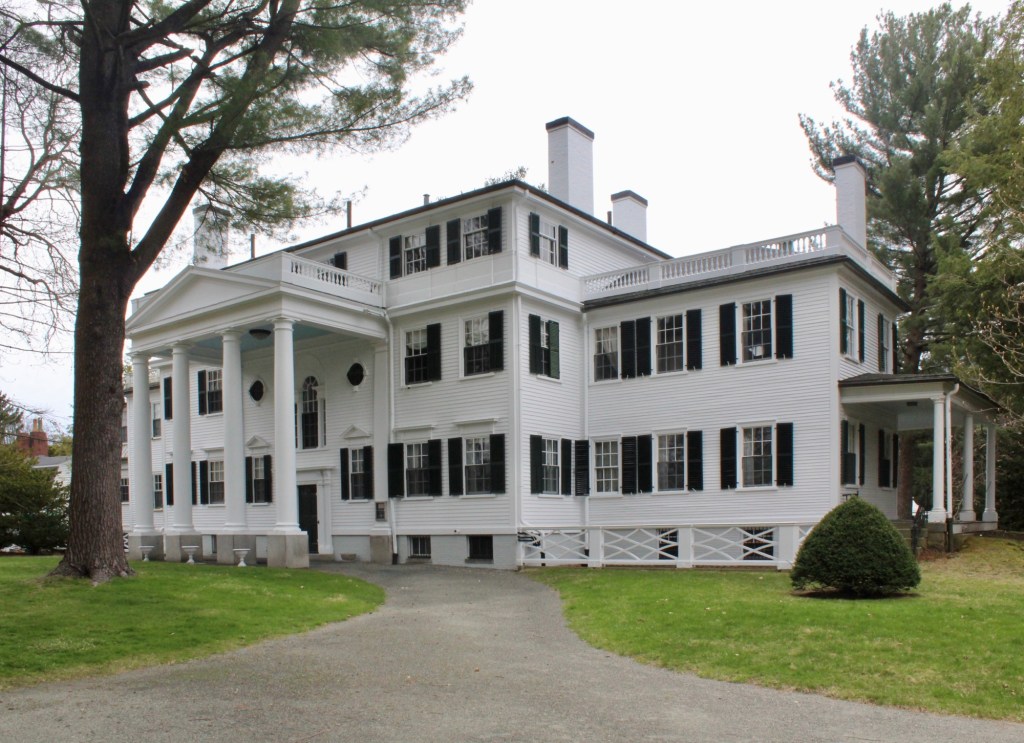
Glen Magna Farms is a historic estate located in Danvers, Massachusetts, and it is one of the lesser-known historic properties of this stature. During the War of 1812, Joseph Peabody, the wealthiest Salem shipping merchant of his day, bought a 20-acre Danvers farm with a dwelling house. The c.1790 house was likely updated at this time in a higher example of the Federal style, and used as a summer residence the family would escape to during the warmer months. Peabody purchased additional property and Glen Magna grew to over 130-acres. William Crowninshield Endicott, who served as Secretary of War during the Grover Cleveland administration, married Ellen Peabody, granddaughter of Joseph Peabody in 1859. The couple would inherit Glen Magna and later hire the firm of Little, Browne, and Moore in the 1890s to renovate the mansion and update the gardens. Ellen Peabody Endicott would also have the Derby Summer House added to the grounds by 1901. In 1963, the Danvers Historical Society purchased the house and eleven acres of surrounding gardens which they painstakingly restored to their early 20th century condition. Glen Magna can now be rented out for weddings and other events!

Porphyry Hall // 1880

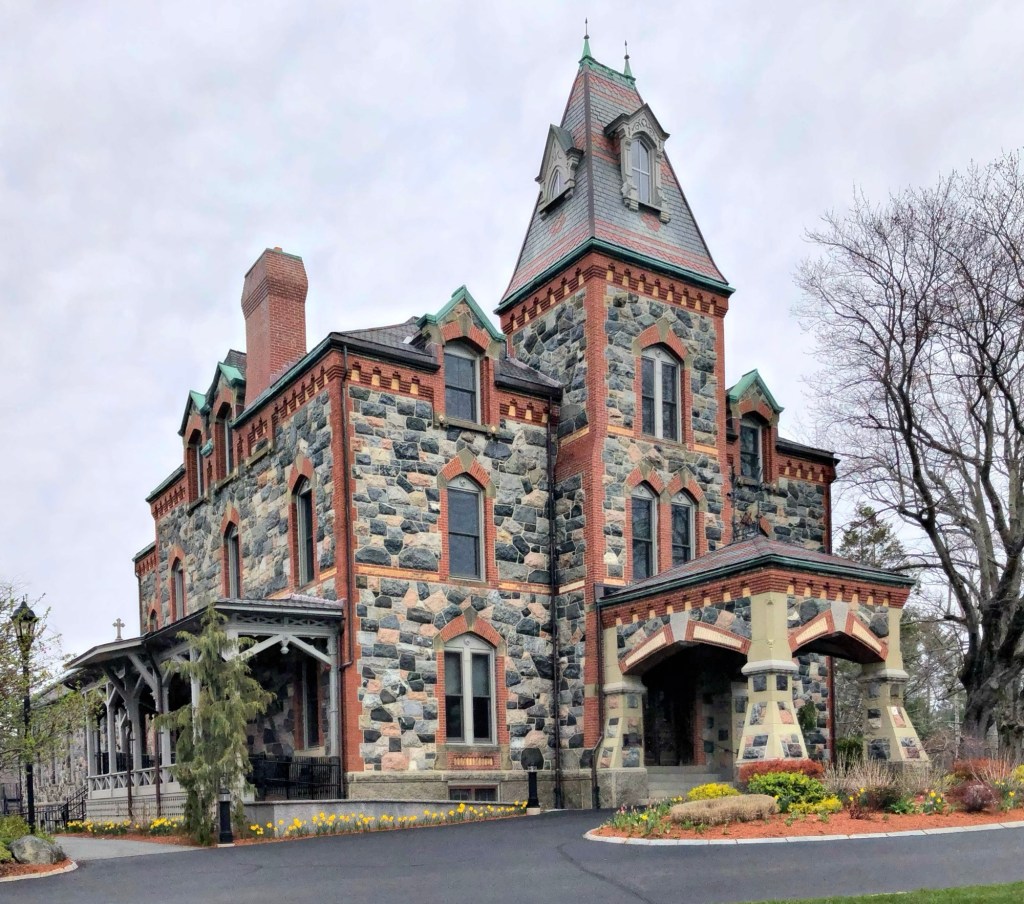
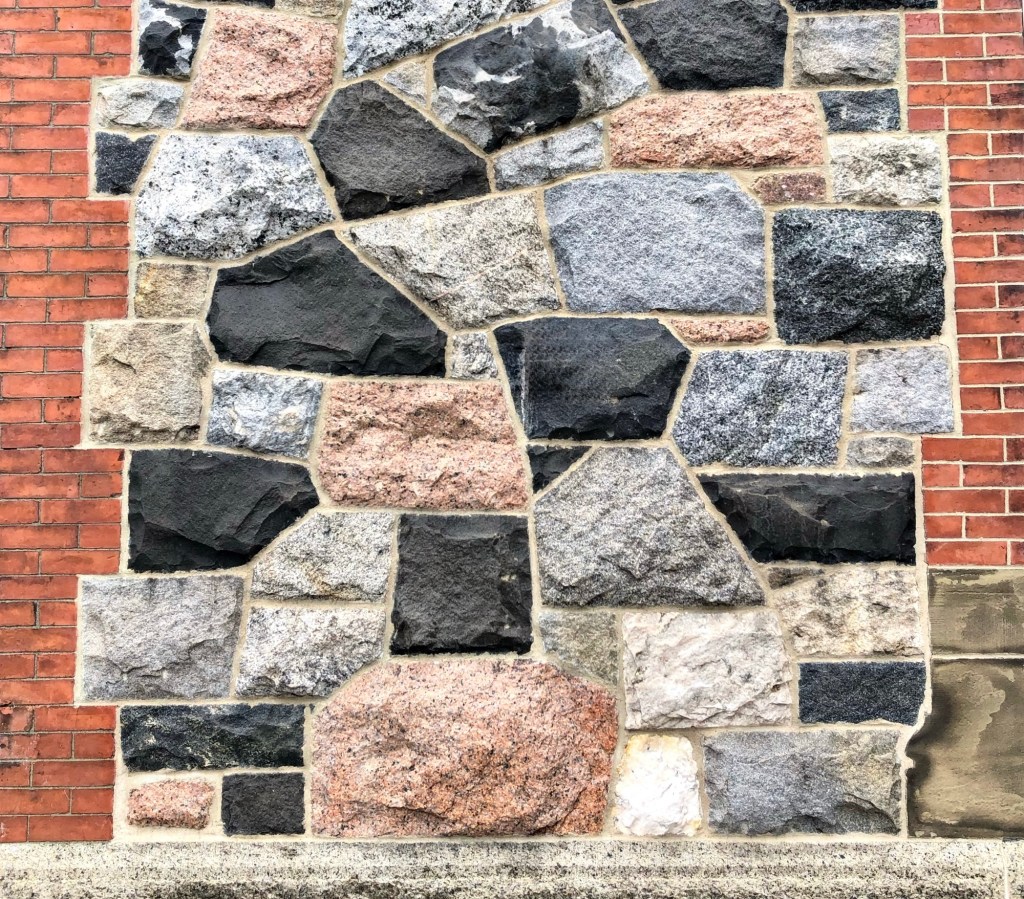
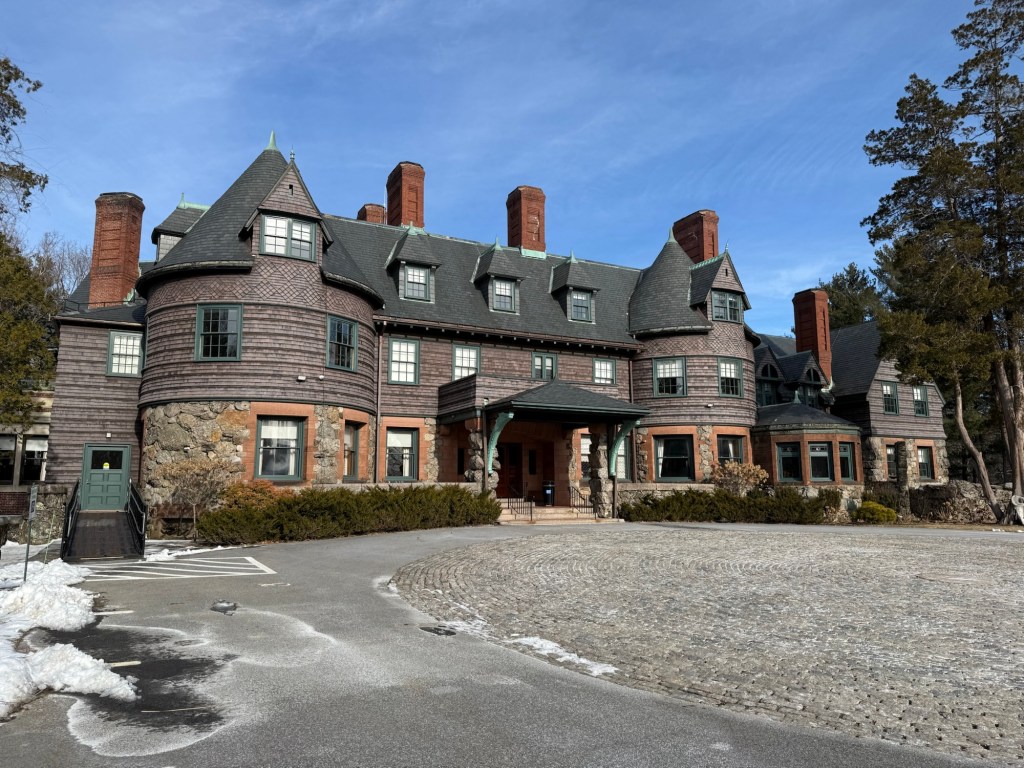
The Jacob E. Spring Mansion, also known as Porphyry Hall, is a high-style estate house located in Danvers, Massachusetts, that is one of the finest and most unique in the state! The house was built in 1880 for Jacob Evans Spring (1825-1905), who was born in Brownfield, Maine, and at the age of twenty, he went to Argentina and amassed a fortune in the wool business in Buenos Aires between 1845 and 1865, when he returned to the United States. Jacob and his wife, Sara Duffy, would purchase a large farm in Danvers and began planning for their family country home. Their residence was built on a high hill over two years and constructed of over 40 types of stones of irregular size and color with door and window sills of Nova Scotia freestone with arches of the doors and windows and corners of brick. The mansion was designed by architect George M. Harding of Boston, and built by several skilled masons over many months. Mr. Spring named his estate, “Porphyry Hall” with Porphyry meaning an igneous rock with large crystals in a fine-grained matrix; suitable for the walls of their mansion. The Spring’s lived lavishly at this home and spent nearly all of their fortune, selling the property after just ten years to the Xaverian Brothers, who opened it as Saint John’s Normal College. In 1907, the compound was re-organized as a Catholic boys prep school. In 1915, a chapel was added to the rear of the building, constructed from gray fieldstone to blend with the main house. Have you ever seen a building like this?

Lord Mansion // 1822

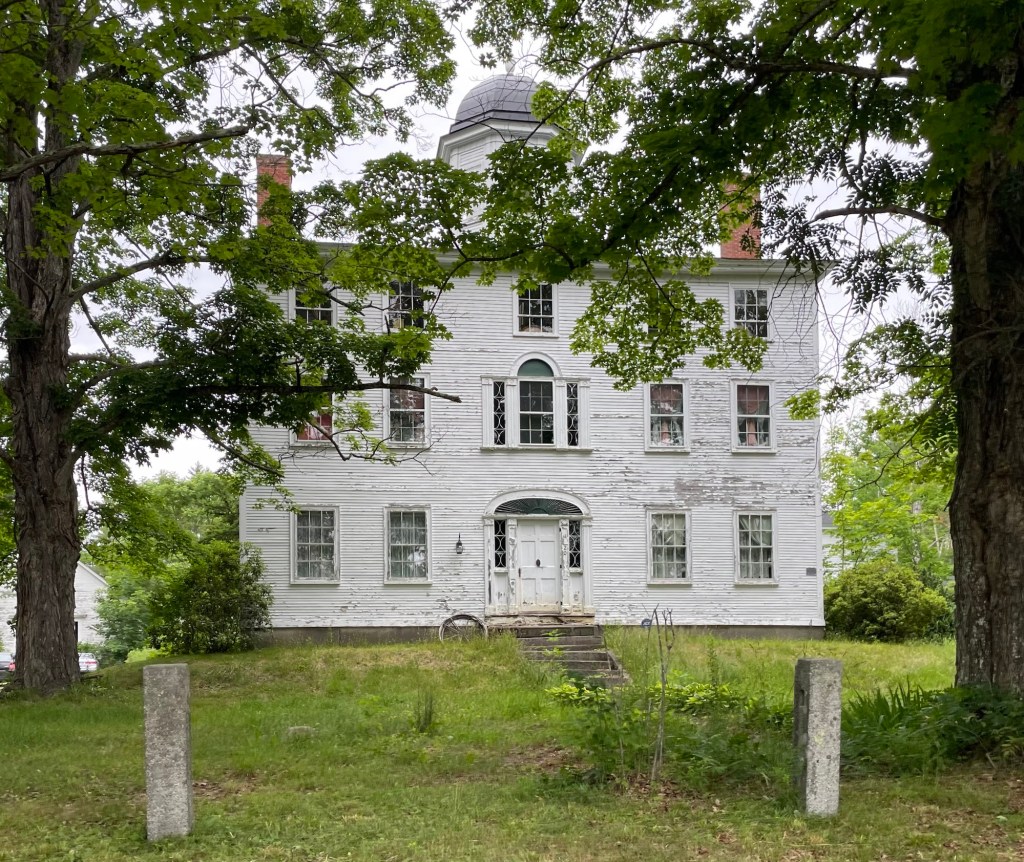
Isaac Lord (1772-1838) was born in Maine, but would spend much of his time transforming the small town of Effingham, New Hampshire. Isaac married the love of his life, Susanna Leavitt in Exeter in 1793 and the couple moved to Effingham, living and working in a tavern he built. Isaac prospered as an innkeeper, merchant, farmer, and entrepreneur, becoming Effingham’s wealthiest citizen, making the village he owned buildings to be called Lord’s Hill in his name. From 1818 to 1822, Isaac and Susanna lived in Portland, but he was ridiculed for “having money but no culture”. Growing tired of the city, he decided to return to Effingham. Mrs. Lord found the village too quiet and longed for the social life to be had in Portland, Maine. To convince his wife to remain with him, Isaac promised her a mansion that rivaled the homes in wealthy seaports like Portland and Portsmouth and began working on his mansion in Effingham in 1822. After years, the massive estate was completed, but Susanna remained in Portland. A heartbroken Isaac moved into the large mansion and continued business until his death in 1838. The Isaac Lord House consists of a three-story main block with a grand cupola on its roof and a three story ell to its rear. Stables and a carriage house are also on the lot today. I would do anything to see the inside of this beauty!

Ashton Croft Mansion and Carriage House // c.1892

Tucked behind the Jesse Lee Memorial Church on Main Street in Ridgefield, you will find this stately Queen Anne/Tudor Revival estate. The ‘Ashton Croft’ Manor House, now called Wesley Hall, is part of the Jesse Lee Memorial United Methodist Church complex and it has been modified several times blending two distinct styles into a single, pleasing composition. This house was originally constructed by Henry and Elizabeth Hawley circa 1892 in the Queen Anne style. The house was later sold to Electa Matilda Ziegler, a wealthy New York City widow in 1912, who reconfigured the structure to include half-timbering on the gables and upper story walls in the Tudor Revival style. She spent summers at a mansion in Darien, Connecticut, and would sell her Ridgefield property to Sanford H.E. Freund, a New York City attorney. The local order of Odd Fellows bought the estate from the Freund family in 1956. Three years later, the organization sold most of the property — retaining the carriage house for its lodge — to Jesse Lee Methodist Church, which planned to eventually build a new church there to replace the old one at Main and Catoonah Streets. Today, the entire former Ashton Croft estate is owned by the local Methodist Church and is known as Wesley Hall.

Skinner Mansion // 1886

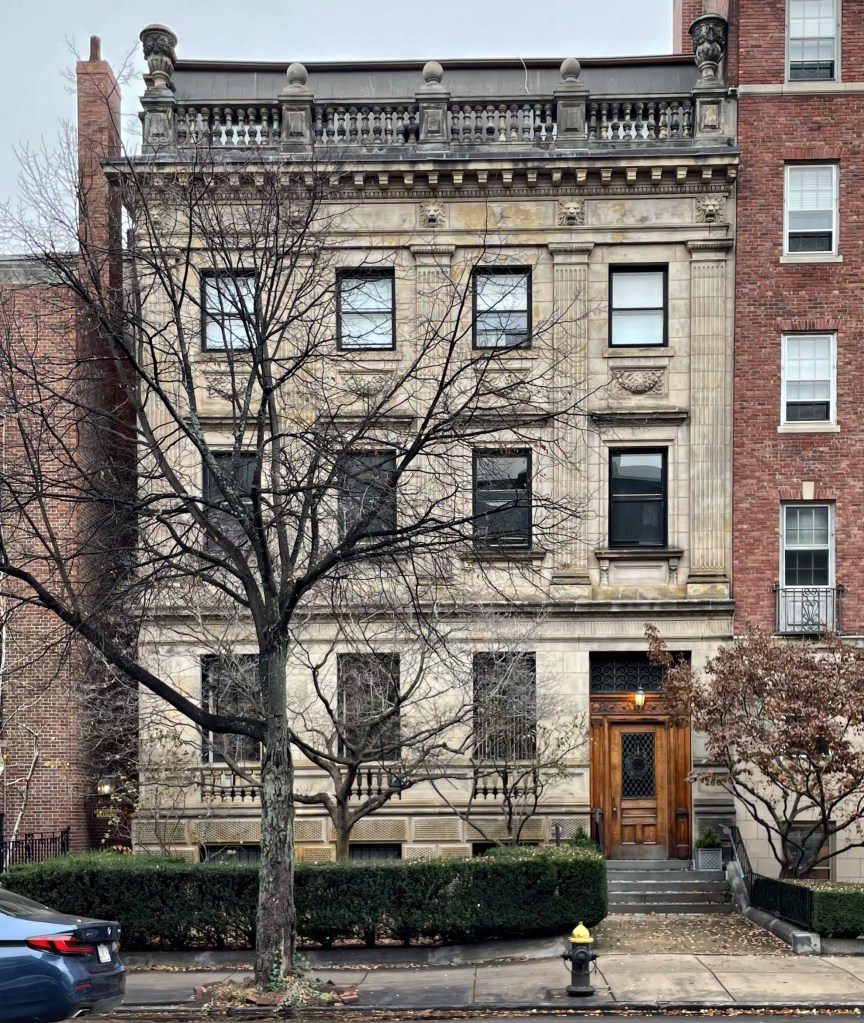
One of the best early examples of Classical Revival residential architecture in Boston can be found on Beacon Street in the Back Bay, at the Skinner Mansion. Built in 1886 for dry goods merchant Francis Skinner (1840-1905) and his wife, Eliza Blanchard (Gardner) Skinner (1846-1898), the house exhibits a light stone facade with carved detailed panels and fluted pilasters, stone parapet with urns at the corners and a decorative wooden entrance with ironwork. Eliza was the sister-in-law of Isabella Stewart Gardner who herself lived on Beacon Street until erecting what is now the Isabella Stewart Gardner Museum, in the early 1900s. The Skinners hired architects Shaw & Hunnewell to furnish plans for their Boston townhouse, and they did not disappoint! Today, the mansion is occupied by medical offices, but retains the residential charm and character as it is located in a local historic district.

A. C. Houghton Mansion // 1897

The first mayor of North Adams, Albert Charles “A. C.” Houghton (1844-1914), built this house on Church Street in 1897. Albert was born in Stamford, Vermont and would become president and principal owner of Arnold Print Works (now Mass MoCA campus) and the Beaver Mill in town. He did well for himself and had this large mansion built from plans by Berkshires architect Henry Neill Wilson. Tragically, on August 1, 1914, A. C. Houghton was being driven in town by his driver with his daughter Mary and her husband in the car. They crashed and both Mary and her husband died, with seventy-year-old Albert succumbing to his wounds over a week later in his home. His driver soon thereafter shot himself. The Houghton mansion was inherited by Albert’s wife Cordelia, who passed away in 1918. Their daughter Florence Gallup next inherited the mansion but was living in the Boston area, and she decided to sell the family home to the local Masonic Lodge in 1927. They likely added the brick addition at the rear for meetings and events soon after. It is not clear to me what the mansion is used for today, any locals have more information?

Lord-Gould House // 1799

Believe it or not, this stunning Federal mansion in Kennebunkport was a marriage present! When Phebe Walker married Nathaniel Lord in 1797, Phebe’s father, Daniel had this home built for the new couple. Phebe and Nathaniel had a total of nine children before Mr. Lord died in 1815 at 38 years old. Before his death, the wealthy couple used part of their property to erect a larger home, which is now known as the Nathaniel Lord Mansion. The couple sold the property, and it was owned for some time by Captain Alden B. Day, who passed it down to his daughter Nellie and her husband, William Gould. The property remained in the Day-Gould family until 2017. The house is very well-preserved and looks much like it would have appeared when built in 1799 besides the later entry added in the mid-19th century.