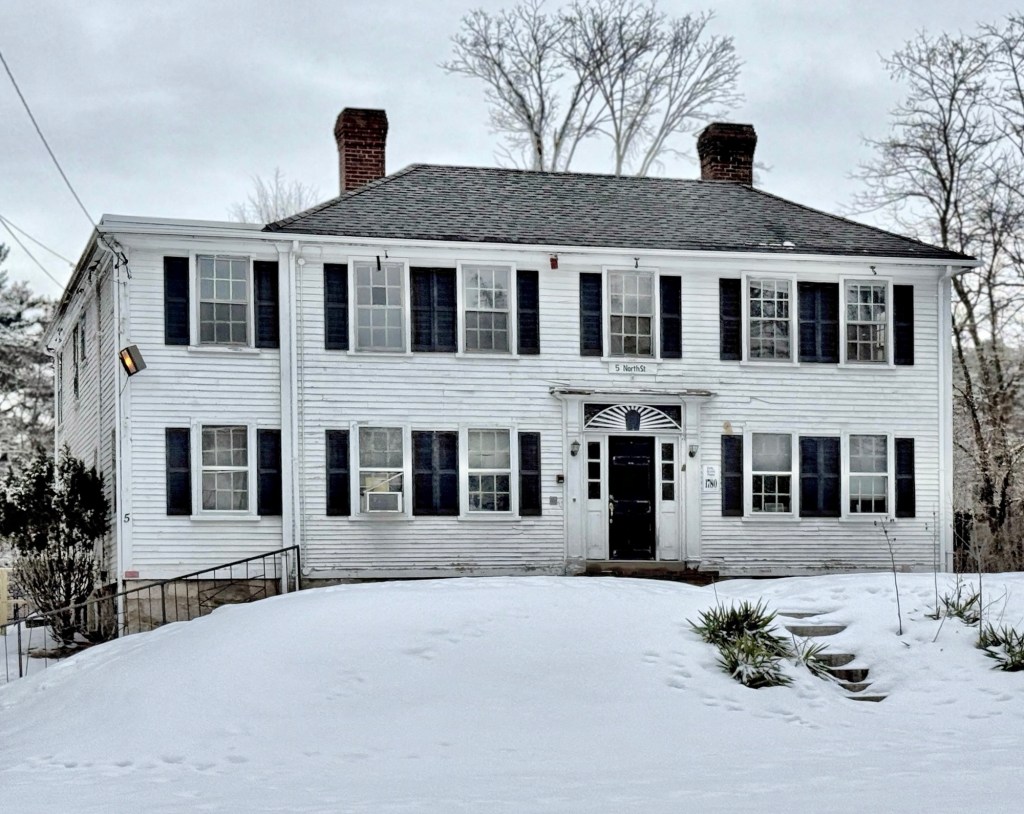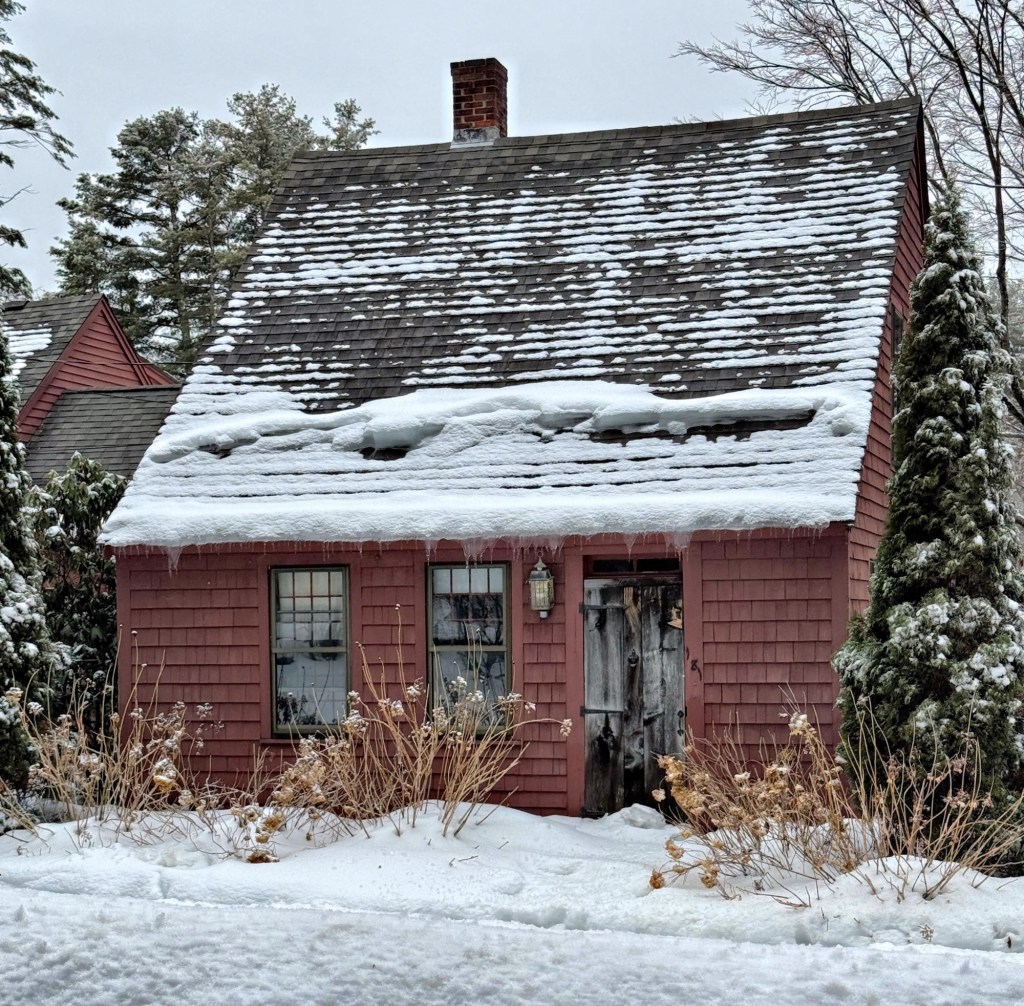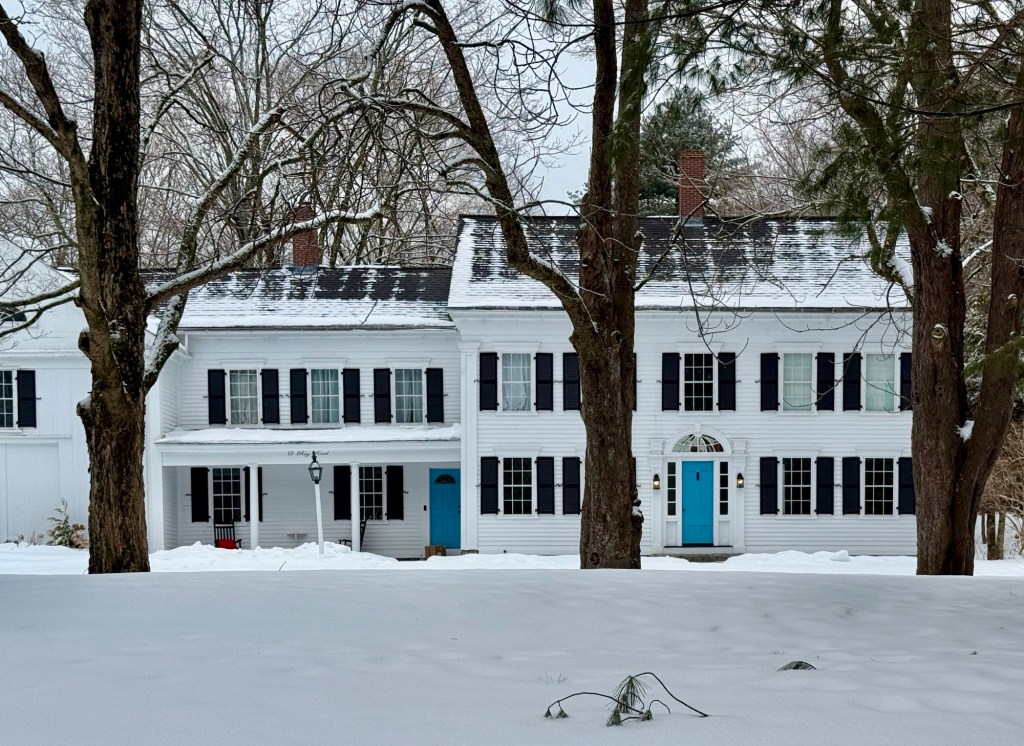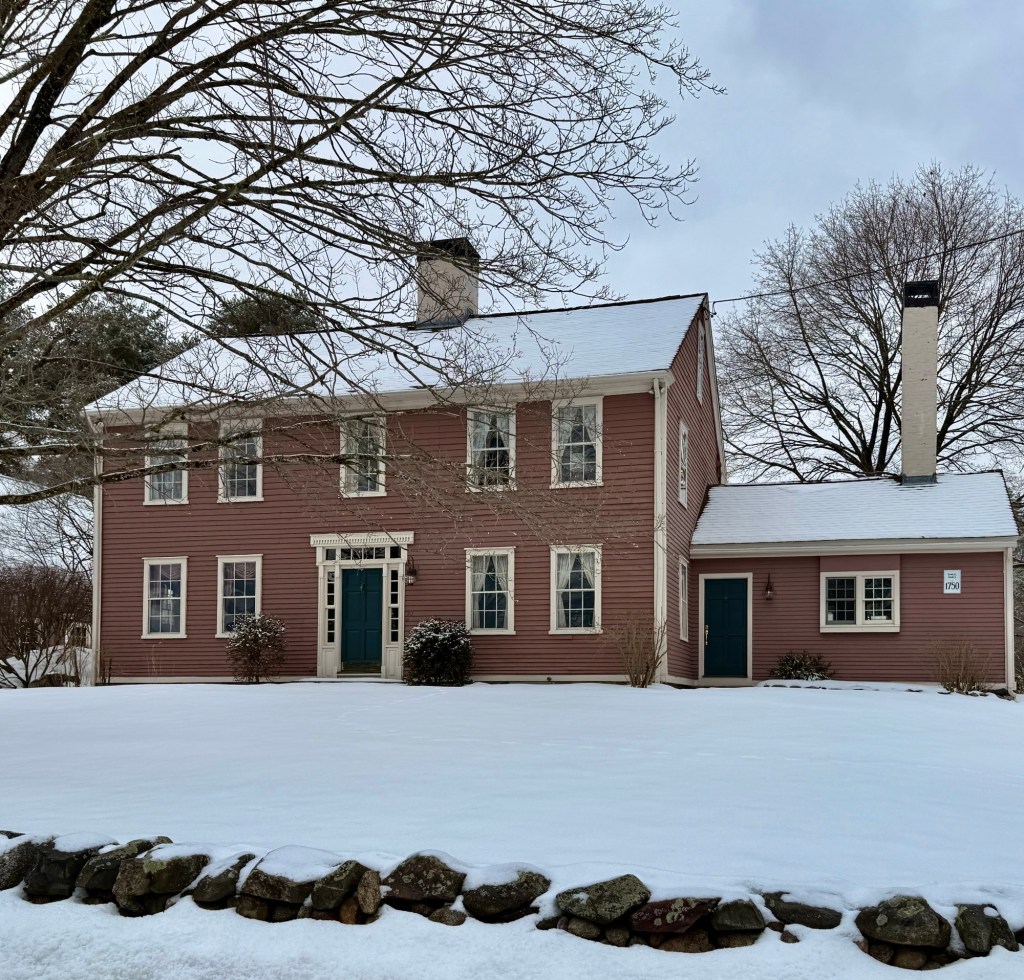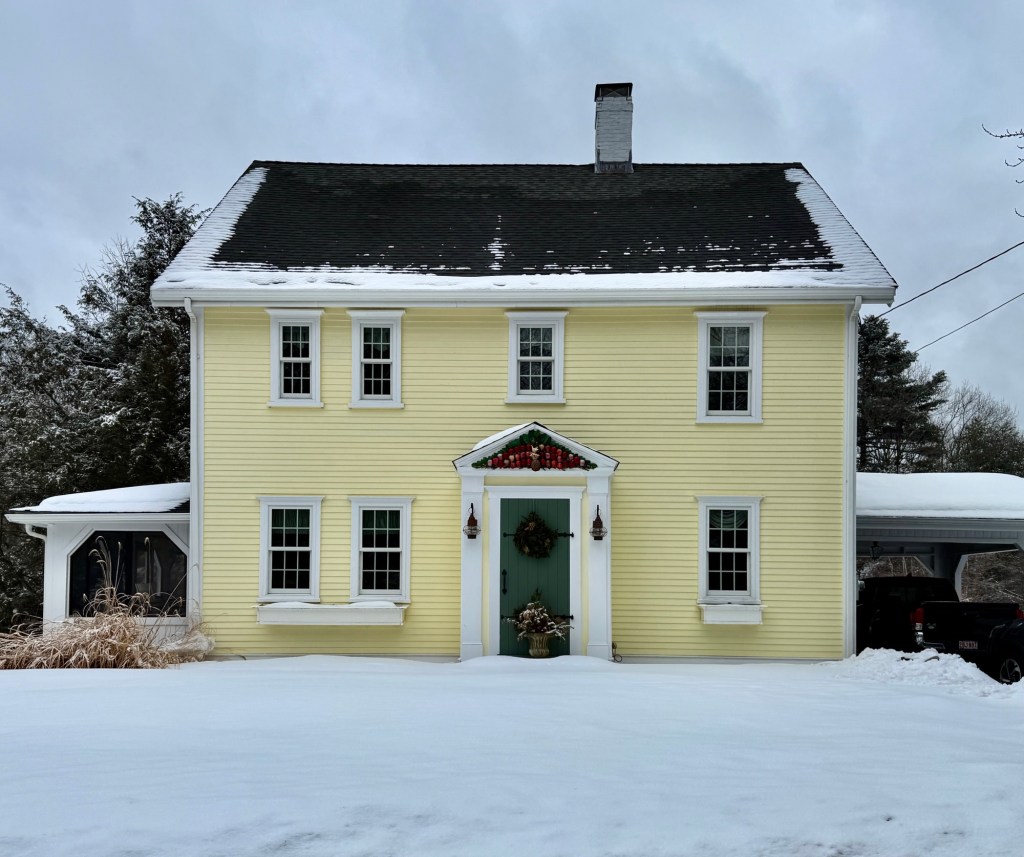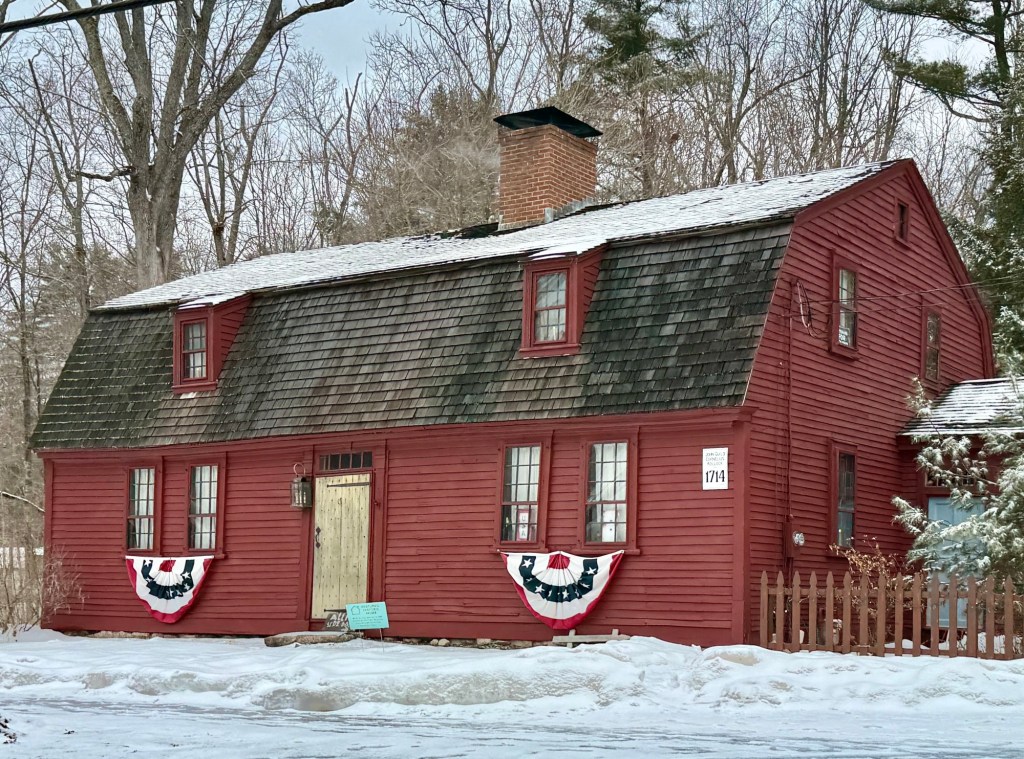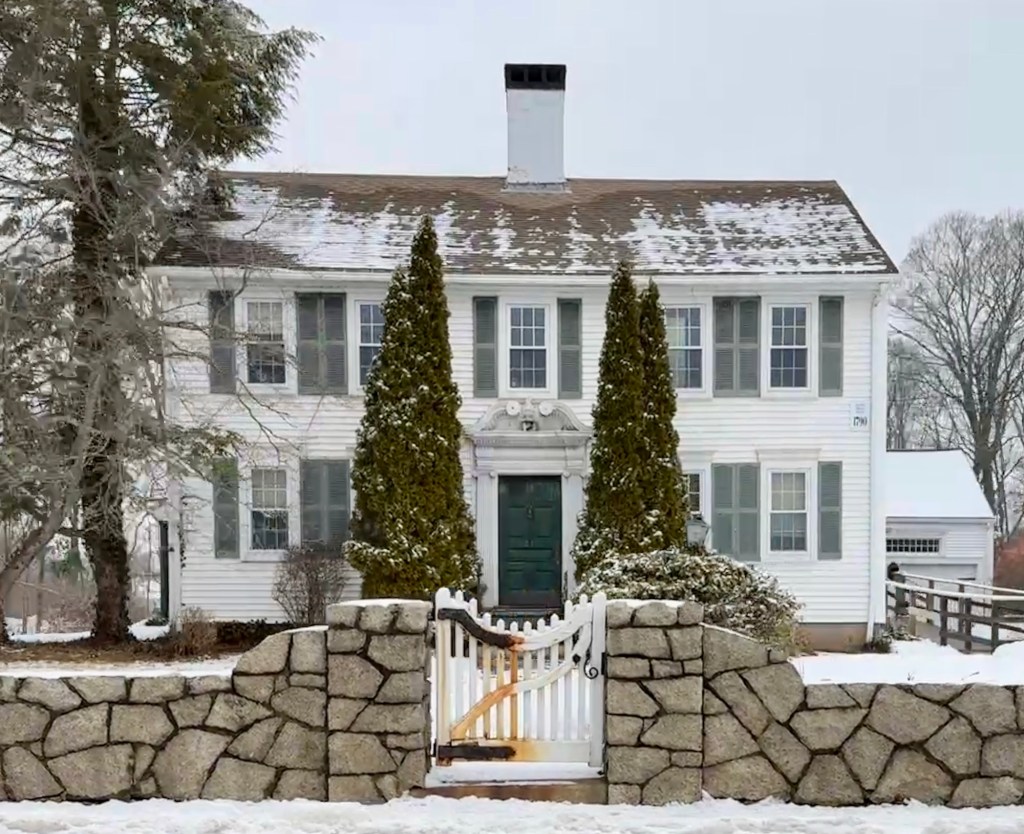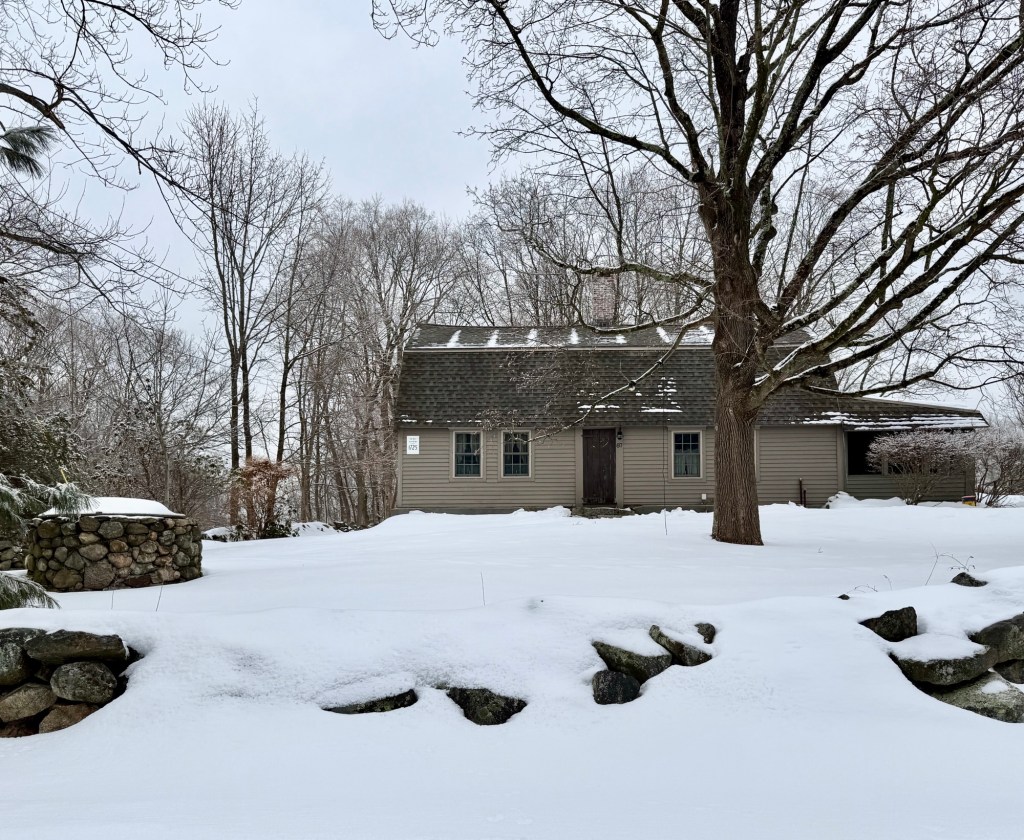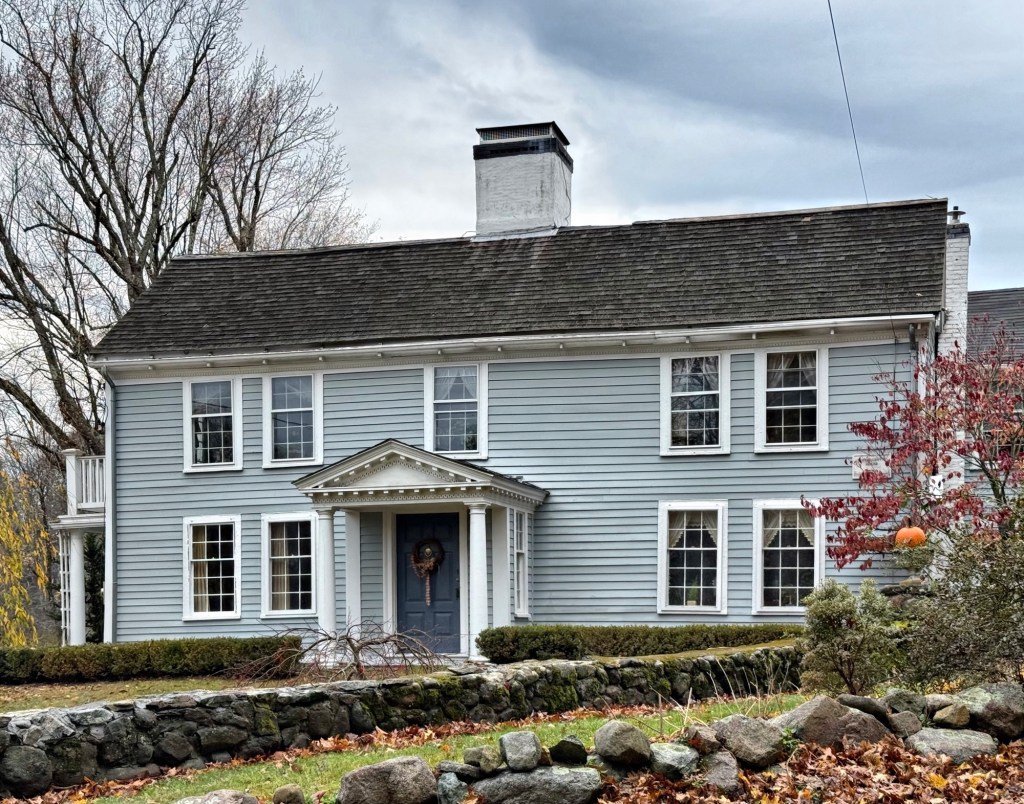
Dr. Amos Parker House // 1801

Built in 1800-1801, this house on Main Street in Bolton, Massachusetts, had multiple owners in quick succession until 1806, when it was purchased by Dr. Amos Parker. Amos Parker (1777-1861) was born in Hubbardston and later moved to Bolton to work as the town’s doctor, and also served as Bolton’s first Postmaster, from an ell that was once attached to this residence. Dr. Parker and his wife, Elizabeth (Whitney,) had at least four children, who of which died as infants and two daughters remained unmarried. Elizabeth Lydia Parker (1809-1882) and Louisa Jane Parker (1812-1900) inherited their parent’s home and lived here until their deaths. Louisa worked as a teacher in Bolton schools, and was forced to remain unmarried to keep her teaching position by law. In 1904, the Parker home was acquired by the local Baptist church and occupied as a parsonage and was later sold to private owners who restored the home to its near-original condition.

Thomas Jones House // 1834

Thomas Jones of Lancaster married Mary Tweed of Lunenburg, Massachusetts, in June 1834 and immediately began building this house on Main Street in Lancaster for his new family. The Greek Revival style house is a refined example of brick with six-over-six sash double-hung windows and a Classical entry portico supported by Doric columns. The house was later owned by Sewell T. Rugg (1821-1892), a blacksmith who had a shop nearby.

John Bennett House // 1717

The oldest residence in the North Village of Lancaster, Massachusetts, the John Bennett House dates to 1717 and evokes the old Colonial days of New England towns. John Bennett settled in Lancaster and built this large First Period house for his family and operated it as a tavern to weary travellers passing through town along the main turnpike. After Bennett’s death, local legend identifies that the property was a stopping place on the Underground Railroad for runaway slaves escaping to Canada. This, however, has never been substantiated. From 1872 to 1874, the house was occupied by the first Adventist missionary, John Nevins Andrews, co-founder of the Seventh-day Adventist Church. The house is well-preserved and remains as one of the oldest in Lancaster and an important landmark of the early days of the community.

John Sprague House // 1785

Judge John Sprague (1740-1800) was a Harvard graduate and settled in Lancaster, Massachusetts as one of only three lawyers in Worcester County following the departure of his Tory colleagues during the Revolution. From this, a young Sprague climbed the professional ladder quickly and represented Lancaster in the General Court beginning in 1782 and occasionally sat in the Senate. He was first appointed judge in 1784 and in 1798 became chief justice of the Court of Common Pleas for Worcester County. After being appointed a judge in 1784, Sprague purchased a house lot on Main Street in Lancaster and hired local housewrights Eli Stearns and Jonathan Whitney, to design and build this stately home. Judge Sprague moved from his 1771 houseshort distance away, to this more substantial late-Georgian home with projecting entry with pilasters and pediment. After his death in 1800, the property was inherited by his daughter, Ann Sprague Vose and her husband, a merchant, Peter Thatcher Vose

Mary S. Johnson Mansion // 1910

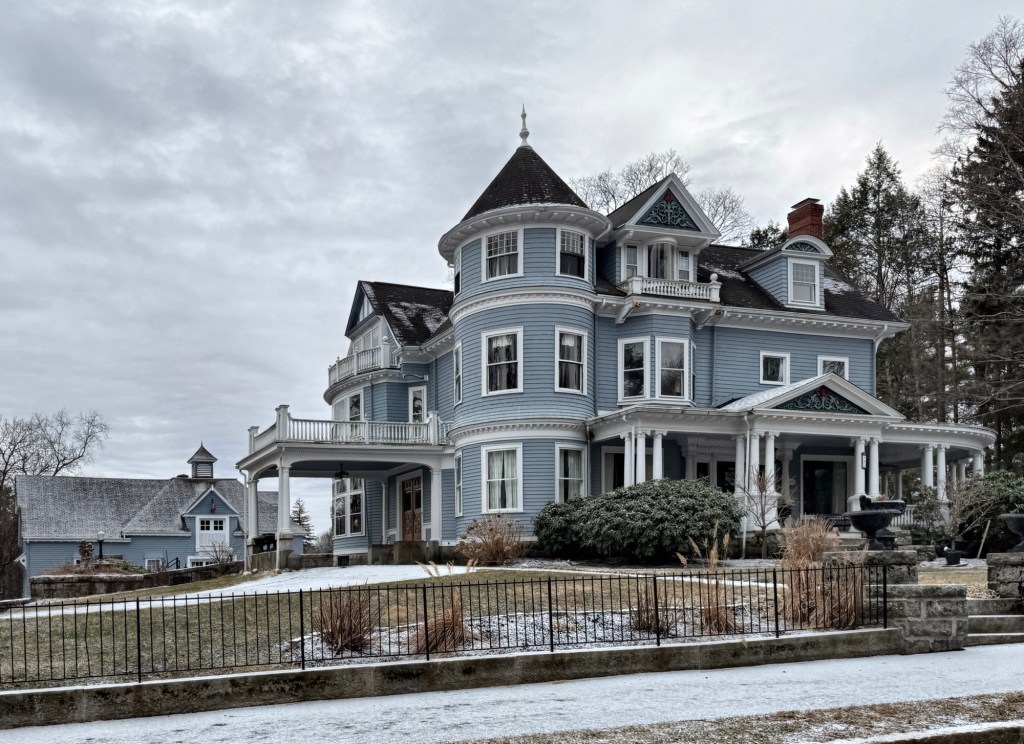
Mary Elizabeth Spiers (1847-1915) married Iver Johnson (1841-1895) in 1868 and raised their children until Iver’s death in 1895. The couple lived in Worcester before moving to Fitchburg where Iver Johnson was head of the Iver Johnson’s Arms & Cycle Works in Fitchburg, and had sporting goods stores in Worcester, Fitchburg, and Boston. After his death in 1895, his widow Mary, became president of the stores and trustee and operator of the Iver Johnson Sporting Goods Co. in Fitchburg. Ms. Mary S. Johnson sought retirement and purchased land on Main Street in the bucolic town of Lancaster and built this large mansion in 1910. The estate sat on 75-acres of land and comprised of an older farmhouse, the 20th century mansion, two caretaker’s cottages, and a large stable. Ms. Johnson died suddenly in 1915 and the estate of over $4 Million dollars was distributed amongst the couple’s children. In 1934, the estate became the Dr. Franklin Perkins School, a K-12 school for students with special needs.

Rice-Carter House // 1796

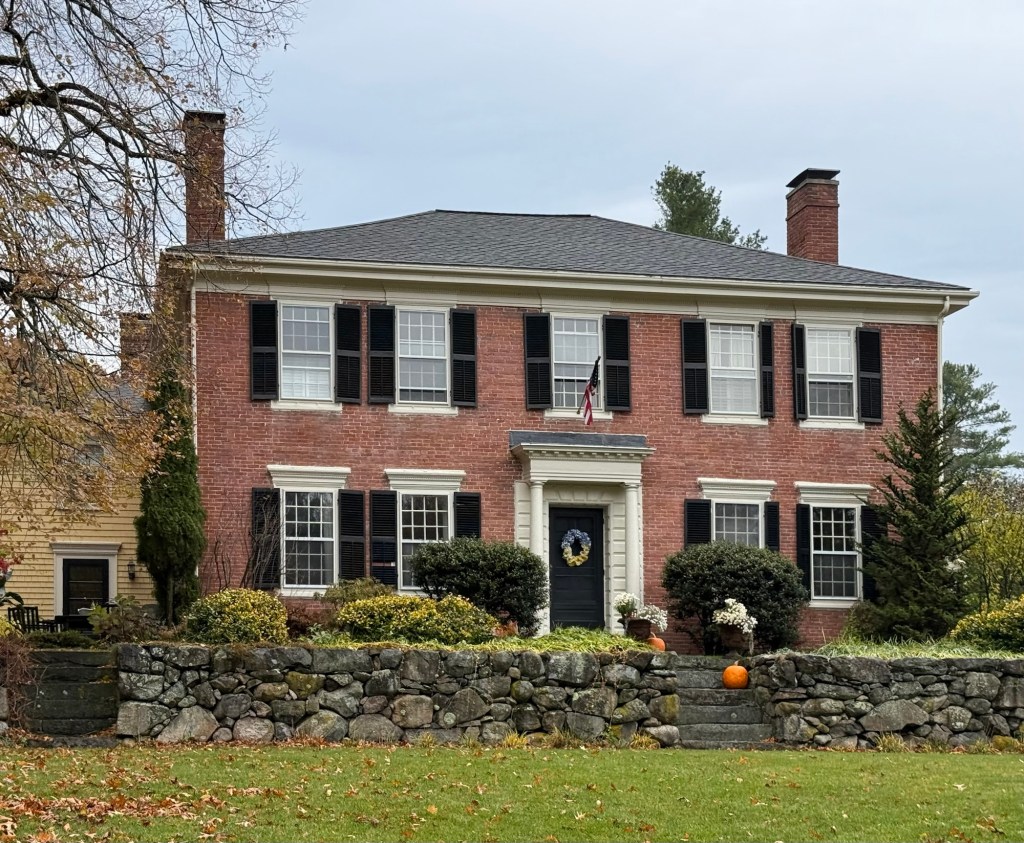
In 1796, attorney Merrick Rice (1764-1819) built this stately Federal style farmhouse on Main Street in Lancaster. The house exhibits a symmetrical facade with hipped roof and twin chimneys and portico at the entrance sheltering the front door with fanlight transom. The house has end porches which may have been added sometime in the 19th century. The property was later purchased by Rev. Asa Packard, who rented the residence to his daughter, Ann, and her husband, James Gordon Carter, a state representative and education reformer who wrote Influence of an Early Education in 1826, and in 1837, as House Chairman of the Committee on Education, contributed to the establishment of the Massachusetts Board of Education, the first state board of education in the United States. The Rice-Carter House is excellently preserved both inside and out.

Willard-Stedman Mansion // c.1760

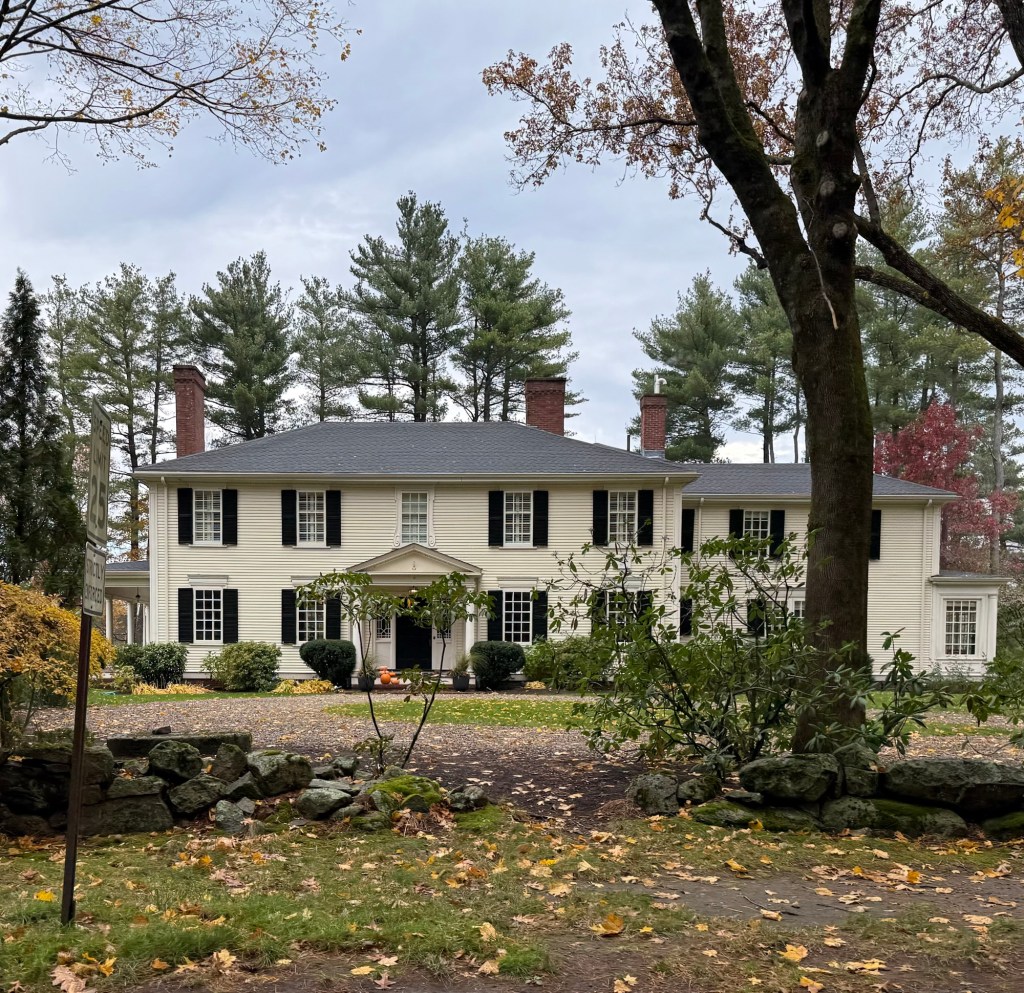
This stately Federal period mansion in Lancaster, Massachusetts, was originally constructed as a Georgian, two-story, five-bay house for Levi Willard (1727-1775), the son of a major landholder and descendant of one of the earliest settlers in the town. The residence is said to have been built by Levi’s cousin, Aaron Willard around 1760. Sometime after Levi’s death in 1775, the property was acquired by William Stedman (1765-1831), a notable attorney who served as town clerk of Lancaster 1795-1800, later becoming a member of the Massachusetts House of Representatives from 1802-1810. It was during Representative Stedman’s ownership that the house was remodelled into the fashionable Federal style appearance we see today, with the third floor added with shallow hip roof and classical entrance with pilasters and fanlight. In the mid-19th century, the house was operated as different boarding schools, though more information is needed. Today, the residence has been preserved and maintained as a single-family home, contributing to the charming Lancaster Center Village.

Joseph Andrews House // 1831

This stately temple-front Greek Revival style house in Lancaster, Massachusetts, faces southward and when originally built, had sweeping views of fields and the Nashua River which abuts the property. The residence was built in 1831 for Joseph Andrews (1806-1873), a renowned 19th century artist who engraved portraits and landscapes, and was also an elder in the local Swedenborgian Church when it still met at residences. The Andrews House was likely a wedding gift to his wife, Thomazine Minot of Brookline, when they married. Tragically, Thomazine died just years later in 1834 at the age of 22. Joseph Andrews remarried soon after and would later move to Waltham. The house, which is listed on the National Register of Historic Places, features a full-length projecting porch with pediment supported by four, two-story fluted Ionic columns and a flush-board facade.

Bessie & Murray Potter House // 1909

Murray A. Potter (1871-1915) and his wife, Bessie Lincoln Potter lived in Cambridge, Massachusetts, where Murray worked as a Professor of Romance Languages at Harvard College. The couple spent summers in Lancaster, Massachusetts, where they would purchase a house in 1909 that was built just a decade or so earlier. The couple were said to be big fans of history and decided to make their house resemble the 1782 Pierce-Nichols House in Salem, having the brown shingle Victorian house “modernized” in the current three-story near-symmetrical form.

Lawrence-Bartol House // 1861

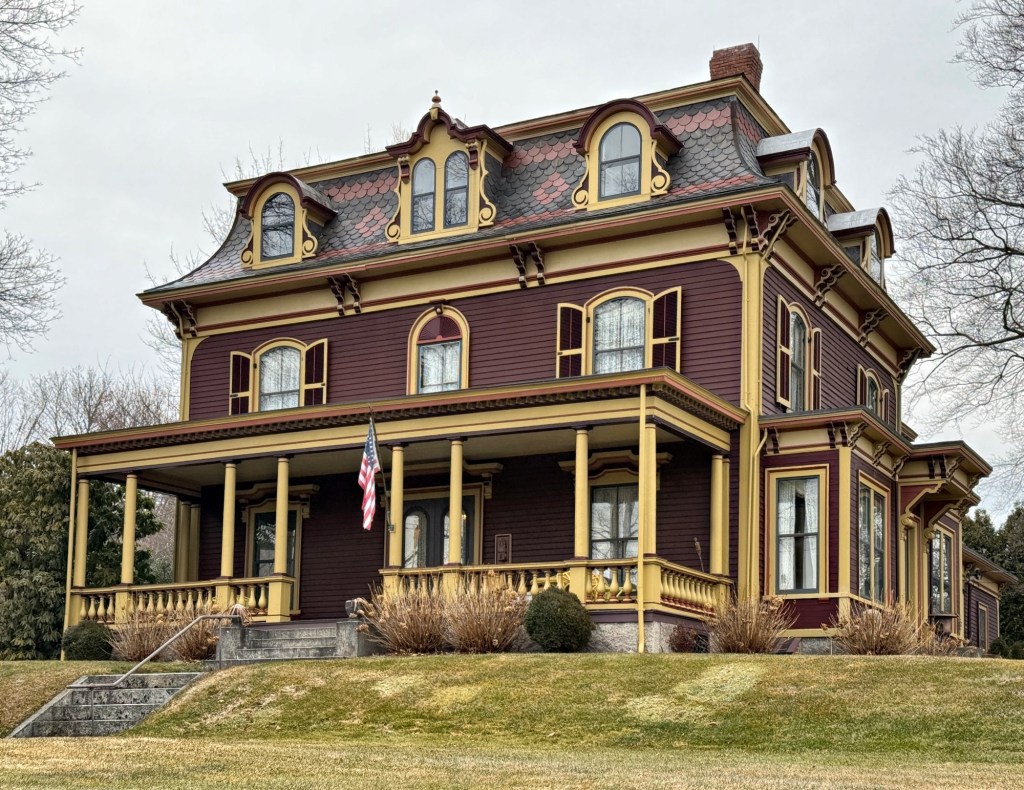
This handsome Victorian residence on Main Street in Lancaster, Massachusetts, was built in 1861 for Rev. Amos E. Lawrence (1812-1897), pastor of the local Evangelical Congregational Church. Amos Lawrence lived in the house for just 4 years until he sold it to Rev. George Bartol, of the First Church of Christ, Unitarian in Lancaster. George Murillo Bartol (1820-1906) served as the pastor for the iconic Bulfinch church for over 50 years until his death in 1906. The residence was then inherited by Reverend Bartol’s son, John Washburn Bartol, a prominent Boston physician who would spend time away from the city at his family home. The unique form of this mansard/gambrel-roofed house stands out along with its Colonial Revival alterations, which likely occurred in the late 19th or early 20th century.

John D. Runkle House // 1875

The John Runkle House on High Street, is one of the most interesting houses in Brookline. Built in 1875 for educator John Daniel Runkle (1822-1902), the brick residence excellently blends early Queen Anne form and flourish with Victorian Gothic design elements all with Stick style entry porches and dormers. John D. Runkle was a noted mathematician who later became the second President of the Massachusetts Institute of Technology from 1868 until 1878. This occurred before MIT moved over the Charles to Cambridge, so President Runkle would not have traveled far to the Institute when located in the Back Bay. The Runkle House was designed by the architectural firm of Weston & Rand with an irregular plan of elaborate belt courses in the brickwork that is set against the extremely steep slate roof with tall prominent chimneys and corner turret. Sadly, the residence is largely obscured by a tall wooden fence, but I caught it on a good day that a panel was down.

Major John Bradford Homestead // 1674

The Major John Bradford Homestead (also known as the Bradford House) is a stellar and well-preserved example of a First Period house in Kingston, Massachusetts. The house was reportedly built by Major William Bradford (1624-1704), the son of Governor William Bradford  who arrived to Plymouth via the Mayflower in 1620 and served as Governor of the Plymouth Colony between 1621 and 1657, purportedly built the west (left) half of the house in 1674 for his eldest son John Bradford and his bride, Mercy Warren. John Bradford (1653-1736) served as selectman, a deputy from Plymouth, and as a representative in the Boston General Court, who in 1717, led in the establishment of Kingston as a new town by donating land for the meeting house, school house, burial ground, training green, and minister’s house. In around 1715, John Bradford expanded this house which was not sufficient to house his wife and seven children. After centuries, the house began to show its age, and in 1921, coinciding with the tercentenary of the Pilgrims arriving to Plymouth, the Bradford House was thoroughly documented and restored by Frank Chouteau Brown and George Francis Dow. Since 1921, the property (including a historic barn moved here from a nearby site) has been owned and preserved by the Jones River Village Historical Society, who operate the property as house museum.

William Sever House // 1755

The William Sever House is an architecturally and historically significant residence in the town center of Kingston, Massachusetts. A prosperous merchant, owner of ships involved in coastal and international trade and member of the colony’s House of Representatives, William Sever (1729-1809) was prepared to erect a home of appropriate status when he married his cousin, Sarah Warren, in 1755. Sever joined his father Nicholas Sever’s commercial shipping business after graduating from Harvard College in 1745 and in 1754, was elected to the Massachusetts Bay Colony’s House of Representatives. In 1769, Squire Sever was elected to the Governor’s Council, a position he held until 1774 when he joined the Provincial Congress. Due to his experience and seniority, Sever was appointed to head the Congress and was declared “President of Massachusetts” and endowed with the governor’s executive powers. After his death in 1809, the house remained in the Sever family for generations, including as a summer residence for James W. Sever, the namesake of Sever Hall at Harvard University. The residence is well-preserved and showcases the telescoping nature of some of these early Colonial-era properties, with the main house adjoined by a barn and carriage house and diminutive ells and was thoroughly documented in the 1930s through the Historic American Buildings Survey, with detailed drawings, plans, and photographs of the exterior and interior spaces. 

General John Thomas House // c.1761

The General John Thomas House at 156 Main Street in Kingston, Massachusetts, is significant as a pre-Revolution Georgian style residence and for its connections with a notable Patriot. General John Thomas (1724-1776) was born in Marshfield and later studied medicine, completing his studies in 1746 at the age of 22. He practiced medicine until being appointed in March 1746, as assistant surgeon by Governor William Shirley in Samuel Waldo’s regiment. Liking military service, in 1747 he traded his post as surgeon for that of a lieutenant. By the time of the French and Indian War he had risen to colonel in the militia. After the war, he married Hannah Thomas in 1761 and either built or moved into this house in Kingston, where he practiced medicine. In the years leading up to the American Revolution, John Thomas was a Brigadier, and briefly resigned from the ranks, disappointed that while four major generals were named, he was not on the list. Congress was then trying to name no more than one major general from each state, and Artemas Ward was given preference. George Washington implored him to remain, and John Thomas returned to service. The Congress resolved that he would be given precedence over all other brigadiers in the army. On the night of March 4, 1776, he led his division to fortify the Dorchester Heights, overlooking the south harbor at Boston, by using cannon that Henry Knox had brought from Fort Ticonderoga. From that position, he threatened the British fleet and the British were forced to withdraw, evacuating Boston on March 17. Thomas was finally named a major general. Soon after, Thomas was assigned to command in Canada and take charge of the Canadian invasion. He joined the army besieging Quebec and remained there until he died of Smallpox in June 1776, not living long enough to see a free America. The John Thomas House is a lasting and important physical vestige of his legacy.

Holmes-Stetson House // 1841

Built the same year as the Old Kingston Town House in Kingston, Massachusetts, this handsome Greek Revival style house sits on the town’s Main Street and has ties to two of the communities oldest and most significant families. The house was constructed in 1841 with matching side porches for Horace Holmes (1809-1855), a merchant and son of Joseph Holmes, a wealthy ship owner and builder. Horace operated a store near his home until his death in 1855. The property was later purchased by Captain Charles Stetson, a master mariner. The couple’s weath soon allowed them to sell this older residence and they built a “modern” Italianate style house at the rear garden (now 20 Green Street) to reside in. After successive ownership, the Greek Revival style house was converted to a store, but has since been reverted back to a residence, retaining much of its original fabric.