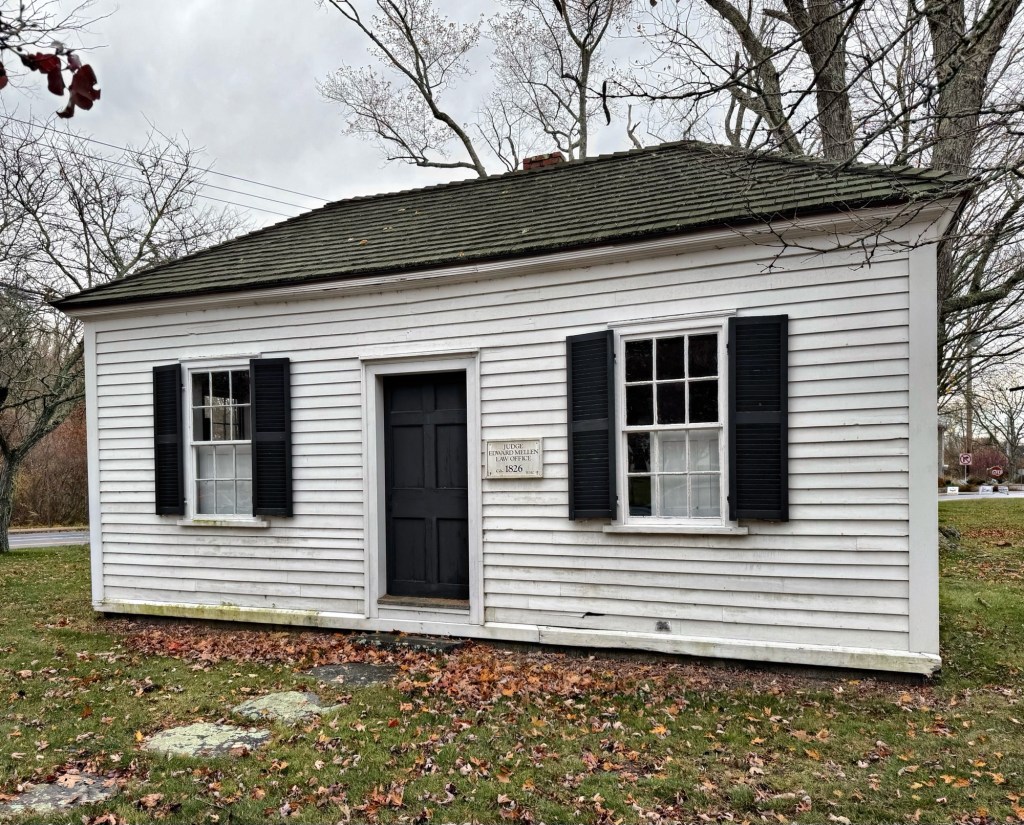
Mellen Law Office // c.1829

Samuel H. Mann (1801-1838), a lawyer, acquired the Dr. Ebenezer Ames House on Cochituate Road in 1829, only a month before his marriage to Isabella Ross. At about that time, Mann built this small law office across the road from his home, where he would practice law. It is not clear why, but within a year, Mann sold the house and this law office to Judge Edward Mellen (1802-1875), who was appointed Chief Justice of the Massachusetts Court of Common Pleas in 1855 and practiced law in Wayland until his death in 1875. After his death, the law office sat largely vacant until during World War II, when a newsletter to soldiers, The Village Bugle, was published here. After this, a couple of businesses used the former law office in the 1950s and 1960s until the owner donated the lot to the Town of Wayland in 1971. The diminutive building is a charming, and well-preserved example of a vernacular, Federal period professional office building that mimics the form and materials of the Ames House to which it was long affiliated with.
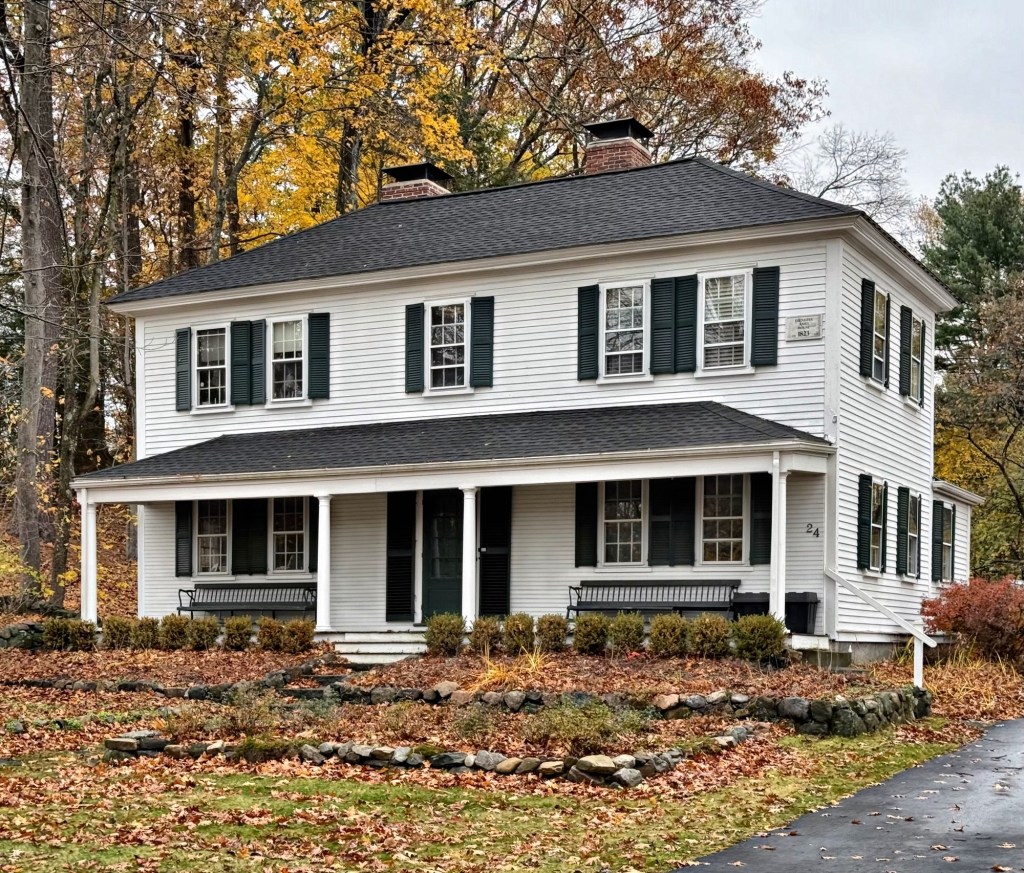
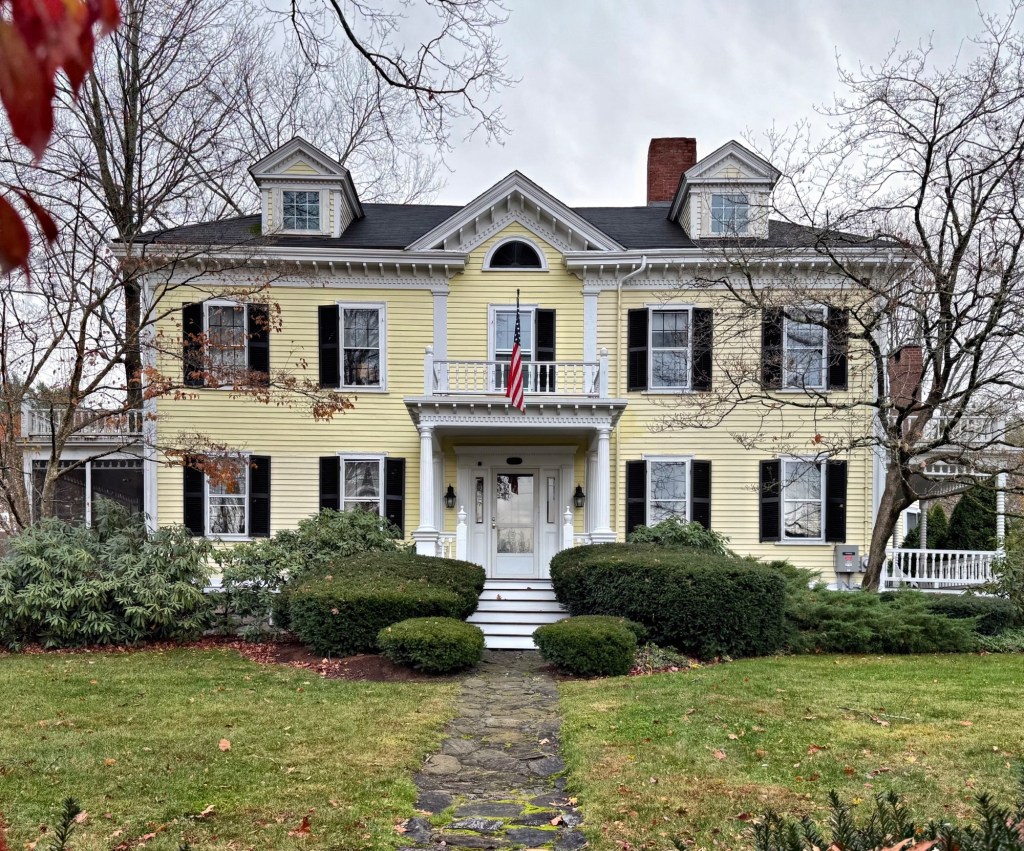
Ames-Mellen House // c.1823

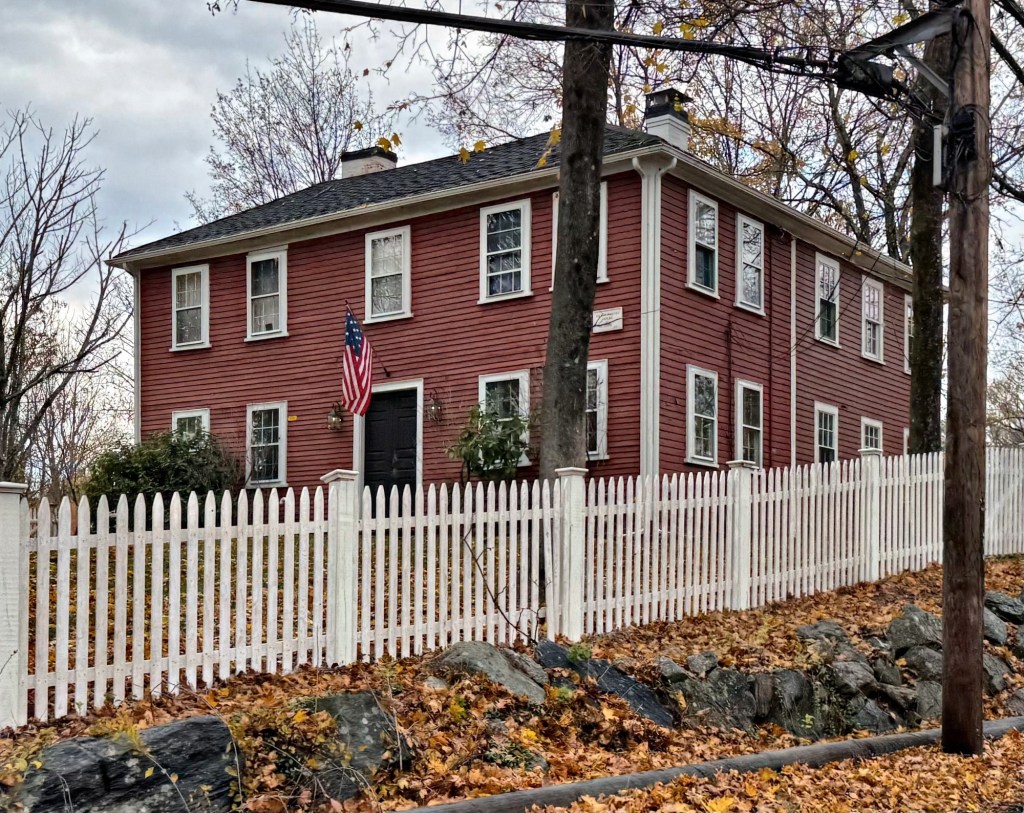
This house in Wayland Center was built for Dr. Ebenezer Ames (1788-1861) who had a medical practice treating patients in East Sudbury (later named Wayland) and other surrounding communities. Dr. Ames is believed to have built this house in about 1823, which is a five-bay, two-story Federal style house under a hipped roof. Dr. Ames moved to another home in the village by 1830 and this old residence was purchased by Judge Edward Mellen (1802-1875) who lived in the house from 1831 until his death in 1875. Judge Mellen was appointed Chief Justice of the Massachusetts Court of Common Pleas in 1855, and practiced law in Wayland from a small office that still stands in the center of the village. Mellen’s widow Sophia Mellen remained here after her husband’s death in 1875 until her death in 1893. The front porch was likely added in the early 20th century, but does not at all detract from the architectural significance of the 200 year old residence.

Warren Gould Roby House // 1888

The Warren Gould Roby House at 11 Concord Road in Wayland is located just north of the town’s public library building and is one of the community’s finest examples of the Colonial Revival style. The Roby family occupied this land going back to 1725, when Ebenezer Roby (1701-1772) came to Wayland and built a house on this site. His son, Dr. Ebenezer Roby, Jr. (1732-1786), inherited the large Georgian house which also had an office for his medical practice. The old homestead passed to Dr. Roby’s son, William Roby, and eventually to his grandson Warren Gould Roby who lived in Cambridge and worked as a metal merchant and would spend summers at the family homestead. The old colonial Roby House burned in 1886 which is when Warren Gould Roby (1834-1897) rebuilt a Queen Anne residence on the site. Before his death in 1897, Warren Roby donated a half-acre of his land to the south and $25,000 to the town for the purpose of constructing a library that would be as fireproof as possible, the result is the Wayland Public Library. After his death, the Roby heirs, who lived in Cambridge, sold the family estate to Daniel Brackett, a lawyer who also served as the Wayland Town Clerk and Assessor. It was likely Mr. Brackett who expanded the home in the early 20th century in the Colonial Revival style and form we see today.

Wayland Public Library // 1900

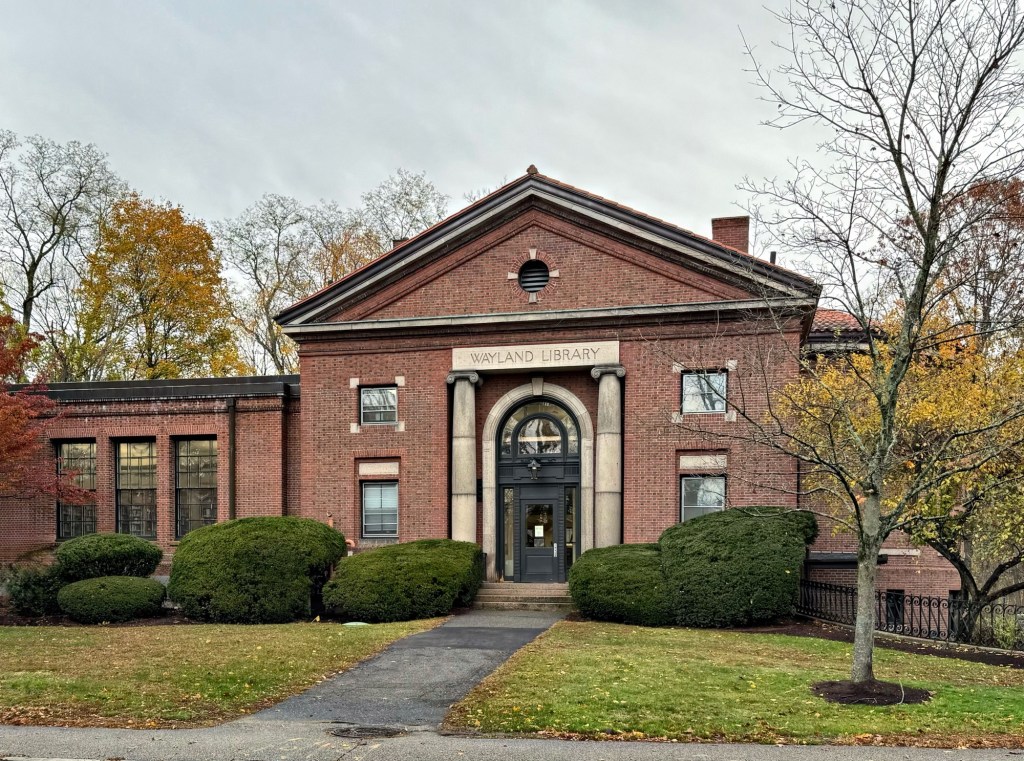
The Wayland Public Library is not only significant architecturally, but also historically as it was founded in 1848, with some claiming that it is the second free public library established in the United States. The first physical space for the Wayland Public Library was established in 1850 using a small room in the Town House. The Town House was outgrown and replaced in the 1870s by a large, Victorian Town Hall (razed in 1957) with designated space in the building for the expanded town library. As Wayland became an affluent Boston suburb in the late 19th century, wealthy resident, Warren Gould Roby (1834-1897), who lived just north of the town hall, donated land and $25,000 to the town for the purpose of constructing a library
that would be as fireproof as possible. Designed by architect, Samuel Mead of the firm, Cabot, Everett & Mead, the handsome building is said to have been inspired by Mead’s travels to Italy where he gained an interest in Roman architecture and Renaissance art. The influence is seen on the exterior with the Romanesque Revival style and on the interior with an ornate frieze around the rotunda. The building was expanded in 1988 by Tappe Associates and remains one of the great early 20th century libraries in New England.


James H. Small House // c.1898

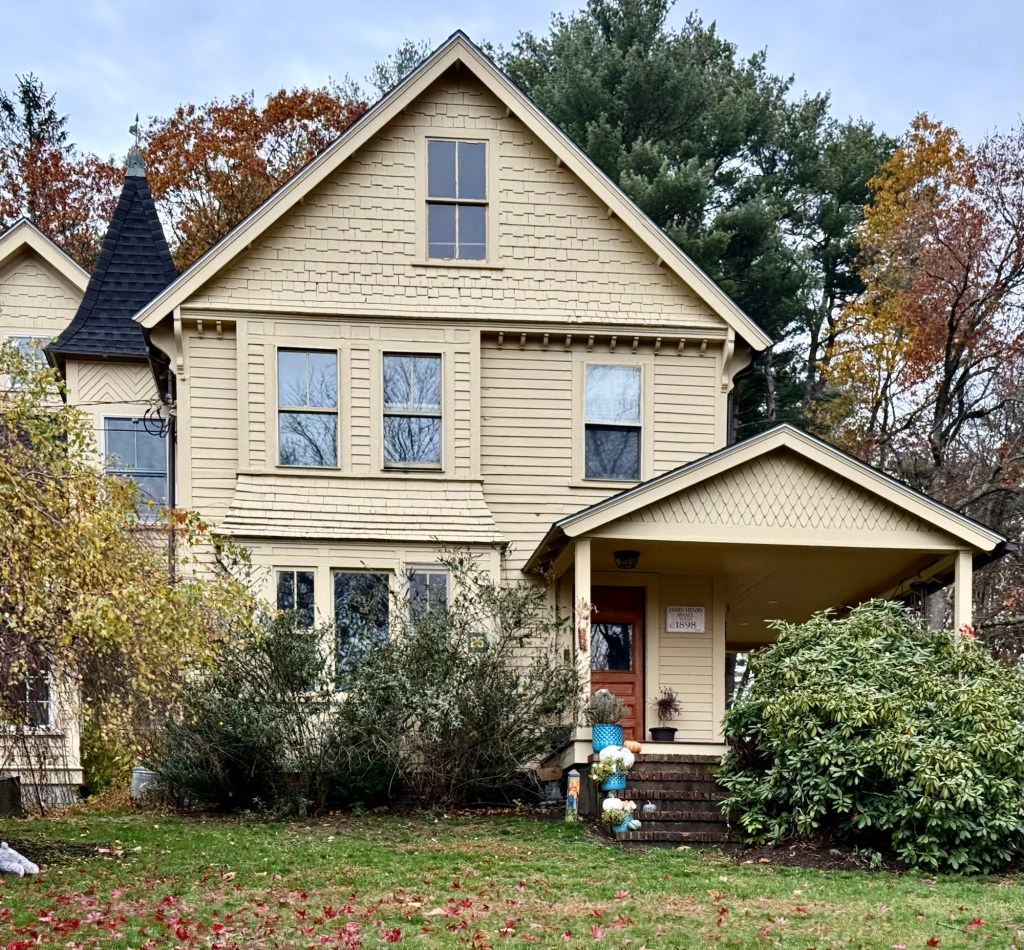
After the completion of the Wayland Railroad Depot in 1881, suburban development in Wayland Center increased, where the village saw dozens of large homes built in the late 19th and early 20th century. On Bow Road, the James H. Small House was built around 1898 by and for its namesake, who worked as a carpenter and builder in town. James Henry Small (1847-1913), while not a trained architect, built this home as a late example of the Queen Anne style, as the Colonial Revival style began to proliferate in the village, showing a changing of architectural taste. The James Small House consists of a main gable-front block with a side wing that includes a square tower. The use of clapboards, differing shingles, and diagonal sticks provide variety and texture to the house and serves as a unique contribution to the village which is largely dominated by rigid symmetry and vernacular of Colonial-era homes.

Elisha Rice House // c.1800

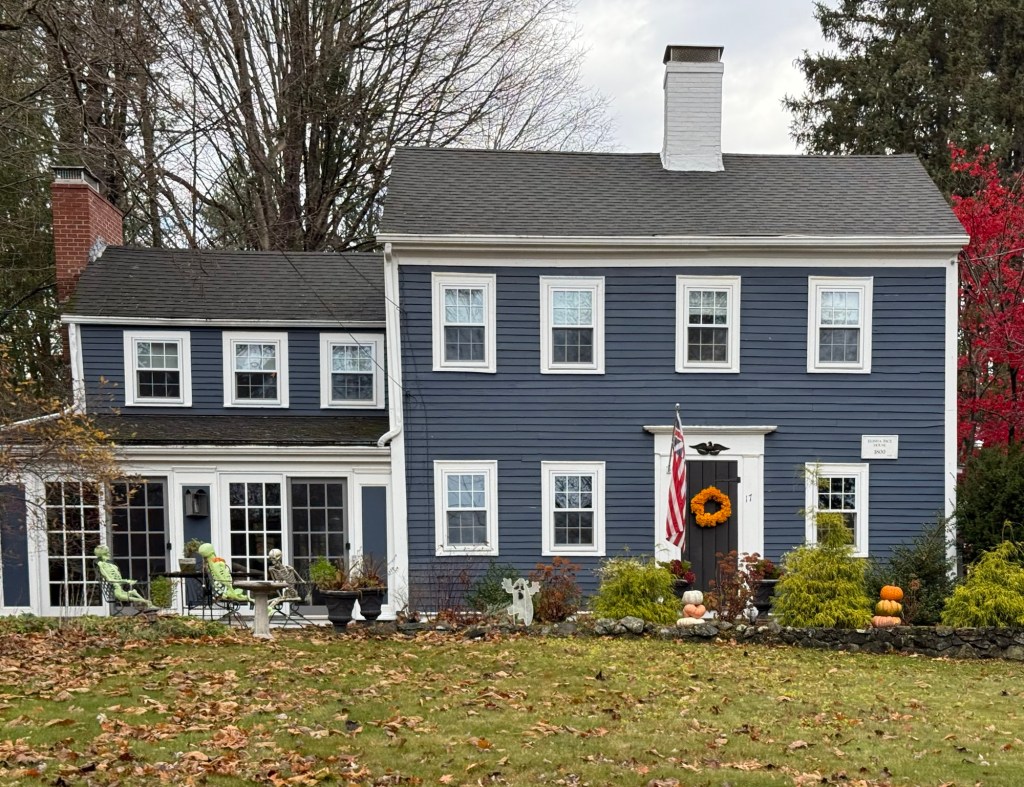
Elisha Rice (1784-1841) moved to Wayland, Massachusetts in 1800 and built this charming house on Bow Road for himself and his family. Elisha worked as a wheelwright, a craftsman who builds and repairs wooden wheels, and was able to build this home near the village. While built and later occupied by later artisans, the community has become an exclusive and wealthy Boston area suburb, which has subsequently made it so many “working class” citizens can no longer afford such a house, but has also allowed many of these great old homes to be lovingly preserved and maintained for future generations.

Reeves-Goodell House // c.1816

Built on a hill on Concord Road in Wayland, Massachusetts, the Reeves-Goodell House is a beautiful vernacular Federal period residence owned and occupied by a local builder and architect. The house was constructed by Henry Reeves (1789-1878), a local carpenter and descendant of Jacob Reeves (1720-1794) a tavern-keeper in town. In the 1920s, this property became the home of Edwin B. Goodell, Jr. (1893-1971), a prominent local architect who designed area houses before becoming a partner in the firm Andrews, Jones, Biscoe and Goodell of Boston. It was Goodell who added on the rear, three-bay addition to the residence, which blends in with the 1810s aesthetic. Interestingly, Edwin Goodell lived in this historic, vernacular house but designed some of the earliest International style modernist homes in New England.

Wayland Railroad Depot // 1881

The Wayland Railroad depot in Wayland, Massachusetts, was built in 1881 by the Massachusetts Central Railroad, which was later absorbed as part of the Boston and Maine Railroad. The line operated both passenger and freight service, with this structure serving as the passenger station and freight at the nearby structure, also built in 1881. Regular train service helped develop Wayland Center into a more prosperous Boston suburb, but industry and larger developments did not occur like in other communities. In its heyday, the Wayland station was manned by an agent with a small office in the building. The station agent was responsible for nearly all aspects of the operations from selling tickets; handling mail, baggage, and freight; keeping financial and operating records; and even maintaining the grounds. After WWII, car ownership and highway expansion harmed the rail industry and trains ceased to run in Wayland. To save the building from eventual demolition, the Town of Wayland purchased the old depots, which since the 1980s, has been leased to “The Wayland Depot“, a charitable women’s consignment craft shop with retail space in the station. The former rail line has largely been converted to a rail trail for pedestrians and bicyclists to traverse the old railroad right-of-way.

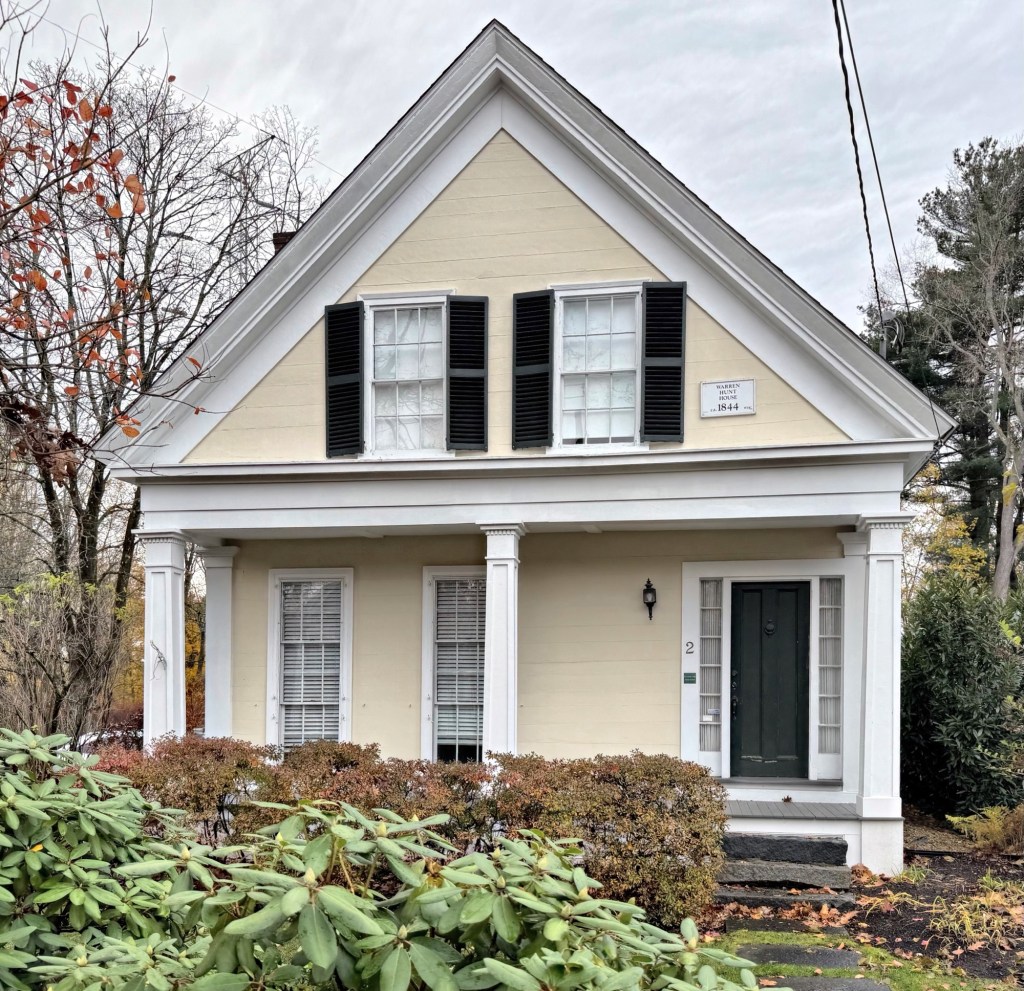
White-Dickey Cottage // c.1844

Located in the Wayland Center village, this c.1844 Greek Revival style cottage stands out not for flourish or scale, but for its excellent design, proportions, and state of preservation. The three-bay facade has a recessed first story set under the pediment extending over the open porch. The pediment is carried by squared, tapered columns with dentils and the facade retains its unique flush-board siding and triple-hung first-story window sash. The house was built by 1844 for Warren Hunt, who operated a small dry goods store near the town common. Not long after he had the house built, Hunt sold the property and store to Luther B. White (1822-1884), who lived here for at least two decades. In 1888, Mrs. Alice Dickey and her husband, Charles F. Dickey, a carpenter, purchased the house and expanded it at the rear.

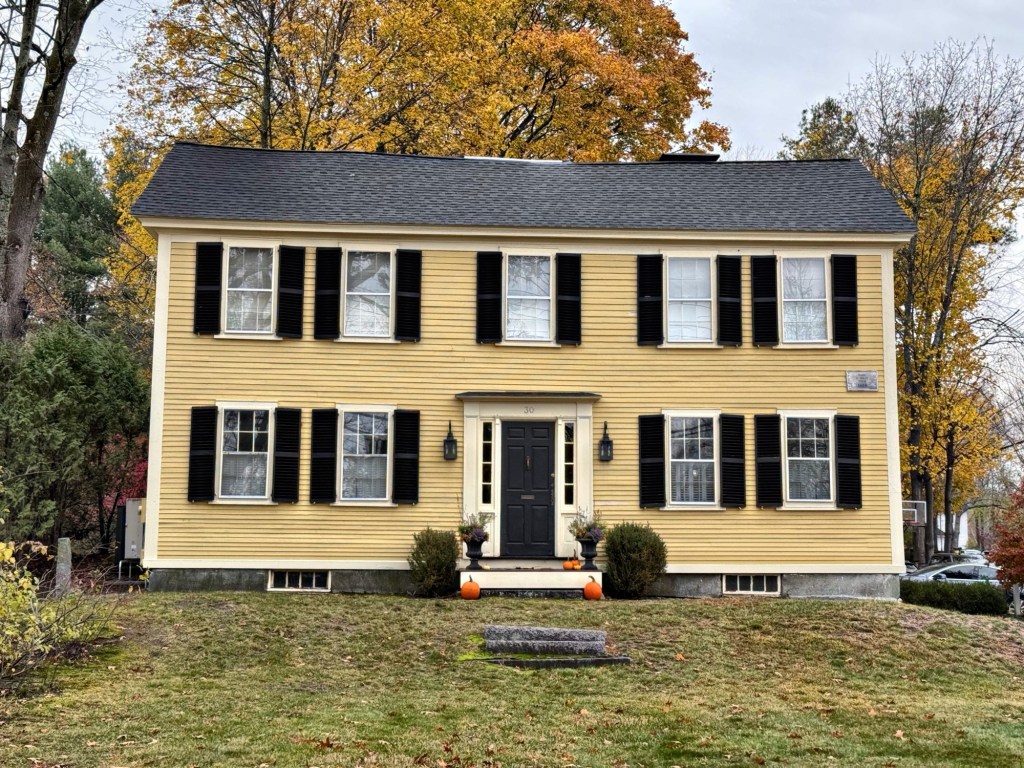
Sibley-Bennett House // c.1818

One of the many great old houses in Wayland, Massachusetts, is this well-proportioned Federal style residence at 30 Cochituate Road. The house was built sometime between 1818 and 1821 when owner Mark C. Sibley (1792-1876) married his first wife, Nancy Rice. Mark Sibley was the innkeeper at the Pequod Inn (no longer extant) that had served as an inn and stagecoach stop from when it was built in 1771. Mark Sibley remarried after Nancy died in 1839 and relocated to Weston. The Sibley House was acquired numerous times by real estate speculators. From 1886 until 1922, the property was owned by Anna Bennett, a widow. The five-bay, two-story Federal style house has a center entrance and six-over-six double-hung windows, all with a historically appropriate color scheme.