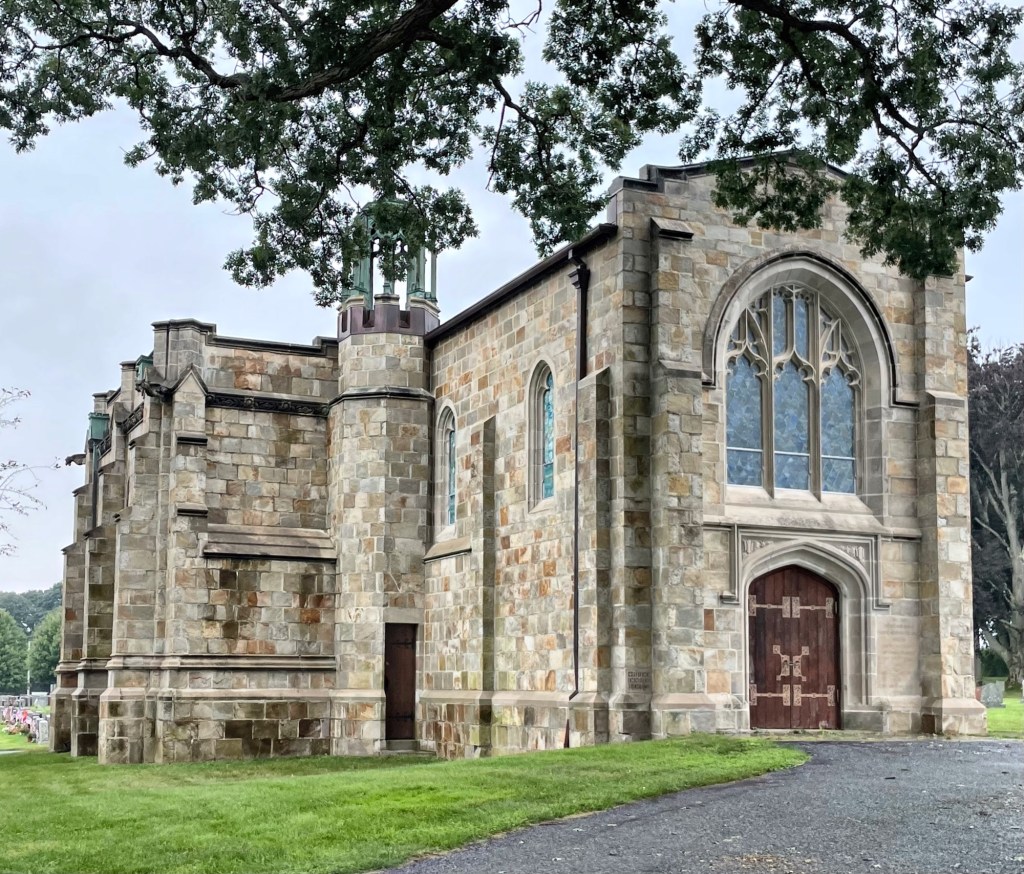
Highland Cemetery Chapel // 1903

Tucked away in Highland Cemetery, a typical looking cemetery in Norwood, Massachusetts, you will find a masterpiece chapel designed by one of the great architects of the Arts & Crafts movement. The Highland Cemetery was established in 1880 becoming the town’s second and primary burial ground. The town’s first burial ground was the Old Parish Cemetery which is located in the center of town on a 3/4-acre hill and because of its limited size and the difficult terrain; there was no room for growth. The rapidly developing town required a second cemetery and laid out Highland View on the outskirts of the village. In 1903, the Chapel of St. Gabriel the Archangel, also known as the Day Memorial Chapel, was erected at the center of the cemetery. The Chapel, which also acts as a mausoleum, was donated to the town by Lewis and Anna Smith Day in memory of their parents. Their only stipulation was that the chapel be available for use free of charge for any resident who desired to do so, no matter their religion or race. Esteemed architect Ralph Adams Cram designed the chapel in the Neo Gothic Revival style. Fred Holland Day, a renowned photographer and publisher, was the only child born to Lewis and Anna and he was a close friend of Ralph Adams Cram and Bertram Grosvenor Goodhue, likely leading to their commission here in Norwood. F. Holland Day lived in a Tudor mansion in town, modified from his childhood home. The Cemetery Chapel remains a seminal building for its genre and time.
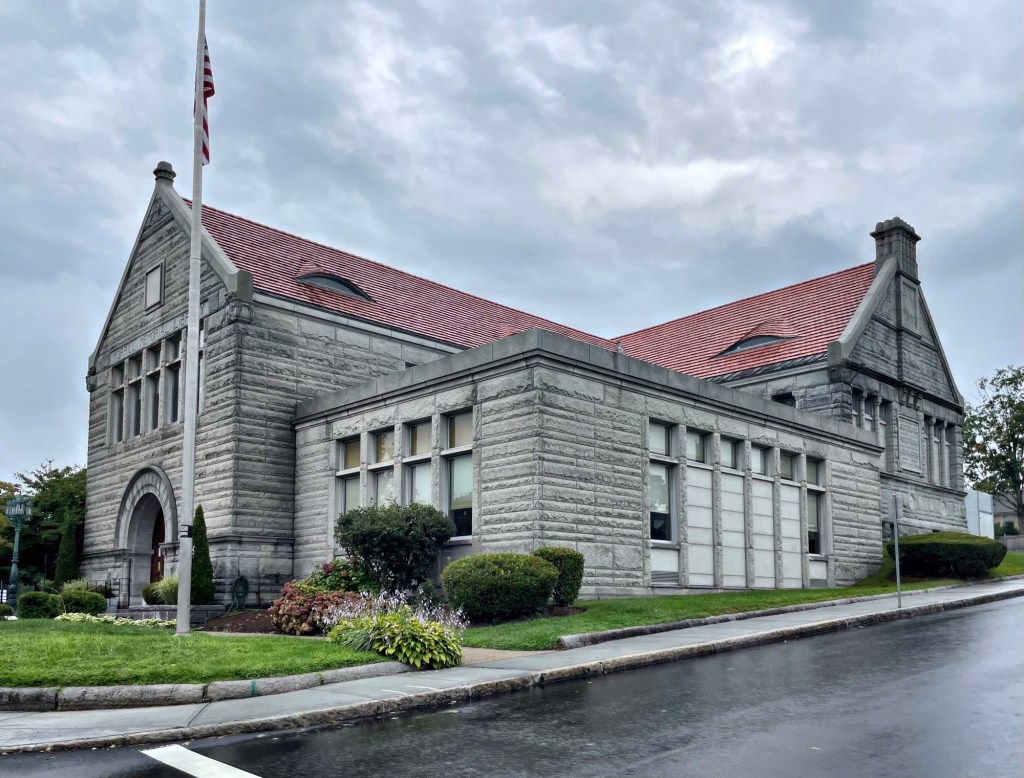
Morrill Memorial Library // 1896

One of the best parts about New England is the diversity of the architecture and history of local public libraries. The Morrill Memorial Library in Norwood, Massachusetts, was erected by George H. Morrill in memory of his daughter Sarah Bond Morrill, who apparently died in 1895 of Typhoid Fever at the age of 22. George Morrill made his fortune as one of the largest producers of printing inks in America. The business was founded by Samuel Morrill, father of George H. Morrill in 1845 in Andover, but in 1856, he moved the works to South Dedham (present-day Norwood). The company grew rapidly and factories were built in Norwood and expanded to meet increasing operations. Mr. Morrill built a massive estate in Norwood (no longer extant) and also houses for his family members nearby to create a small enclave for the family. One of the lots on Walpole Street was utilized for a memorial library in honor of his late daughter. Architect Joseph Neal, who originally worked for Shepley, Rutan & Coolidge in Boston, designed the Richardsonian Romanesque library constructed of rough-faced granite blocks with a red terracotta tile roof above. The main entrance was deeply recessed within a great Assyrian arch typical of an arch-type that was a hallmark of the public and ecclesiastical buildings of Boston architect Henry Hobson Richardson during the 1870’s and 1880’s, but has since been enclosed by a vestibule, somewhat diminishing the original entry. The library was originally cruciform in plan but one-story additions constructed in the 1960s, on either side of the original facade have altered its original volume, but at least they are of a similar material. The library is one of the more unique in the Boston area and a testament to a father’s love to their children.

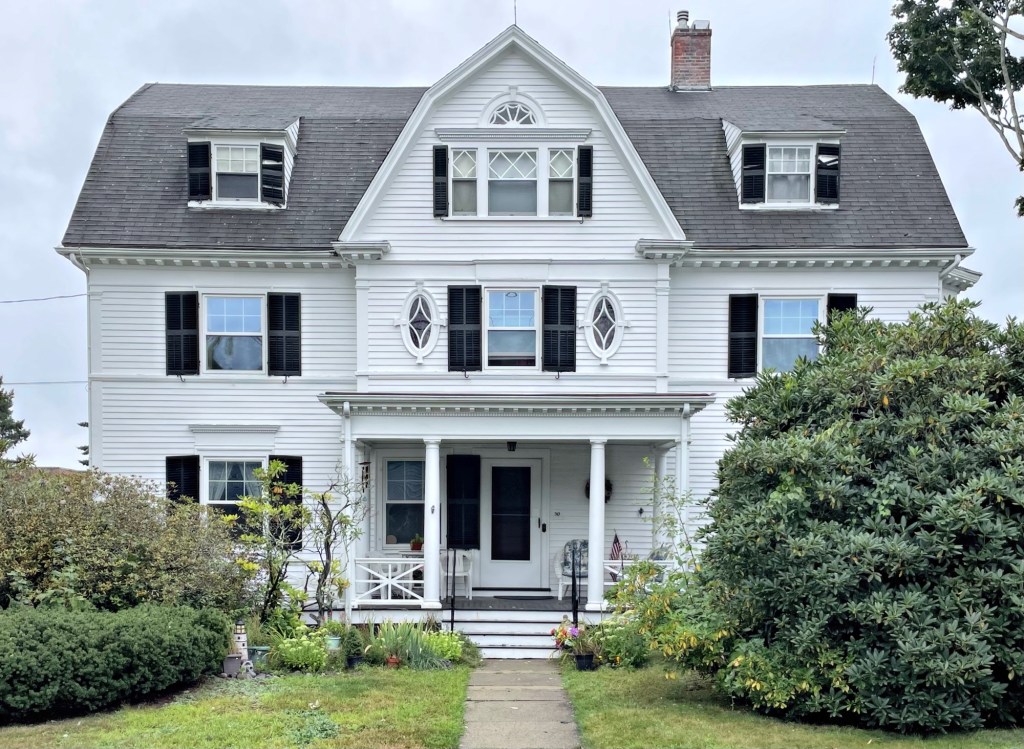
Bigelow-Stuntzner House // 1896

The Bigelow-Stuntzner House is a large, Colonial Revival style dwelling located on a side street in Norwood Center. The house was completed in 1896 for Waldo H. Bigelow (1856-1926), a lumber dealer with offices in Boston. Mr. Bigelow clearly used the best lumber for his own residence here in Norwood, and his Colonial Revival style house stands out for its gambrel gable which exhibits a modified Palladian window with diamond-shaped panes and a key stone arch. The central entrance is sheltered by a portico supported by Tuscan columns. In 1919, the house was sold to Guido Stuntzner (1876-1964), a German immigrant who arrived in the U.S. in 1887 and went on to become a successful Norwood businessman. The Stuntzer’s lived in the home through at least the 1960s.

Dr. Ralph Fogg House // 1893

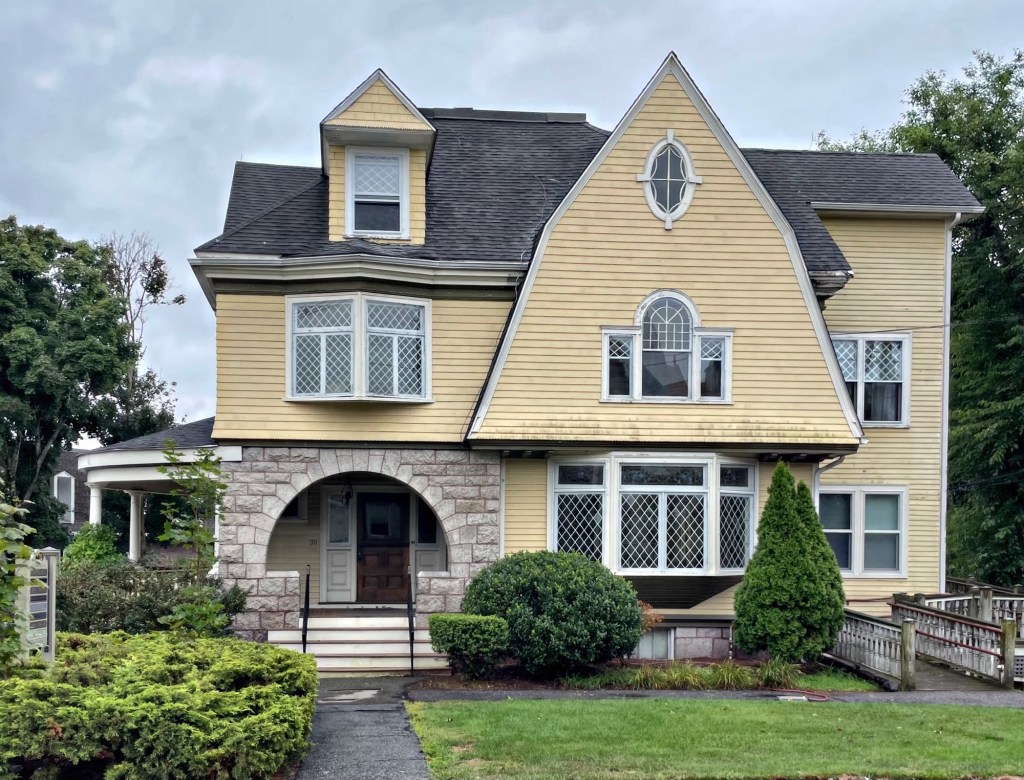
Built in 1893, this house in Norwood, Massachusetts, was built for Dr. Ralph Fogg, a leading dentist in the Boston area with offices in Boston, Norwood, and Quincy. Dr. Fogg was dissatisfied with nitrous oxide gas as an anesthetic, as it failed to protect the patient against pain; and, in trying to find some harmless compound to accomplish the desired results, he produced the “Boston Vegetable Vapor,” an anesthetic to compete with nitrous oxide in markets. In 1885, the Boston Vegetable Anesthetic Company was formed for the purpose of placing the vapor in the market, and it was used by leading dentists across the country. With his dental practice growth and success of his new invention, Dr. Fogg and his new wife, Anna Saville, hired architect, Herbert Mosely, to design a stately home for their family. The Queen Anne/Shingle style house features a sophisticated use of stone, clapboard and wood shingle materials. It’s main facade is dominated by a broad gambrel gable with the main entrance set within a rusticated stone arch which is edged with large voussoir blocks.

William Dexter House // 1899

One of the best examples of the eclectic architecture designed at the of the 19th century in Norwood, Massachusetts, can be found on Beacon Street in the William Dexter House. Built in 1899 for William W. Dexter (1827-1911), who in 1852, married Harriet Blake, later settling in Massachusetts. Tragedy struck the family in 1871, when on the same day, his wife and daughter died; two days later, his sister-in-law, and six days after that, his other daughter Carrie died, all of bacterial infections. All that remained of the family was William and his only surviving daughter, Nellie. William remarried and built a blended family until his death in 1911. This house was built by Dexter, who worked as a contractor and painter, and George F. Bagley, a local builder. The complex form, rooflines, varied siding types, corner tower, and intact historic windows all add to its beauty. If only it had a historically appropriate color scheme to compliment it!

Norwood Press Complex // 1897

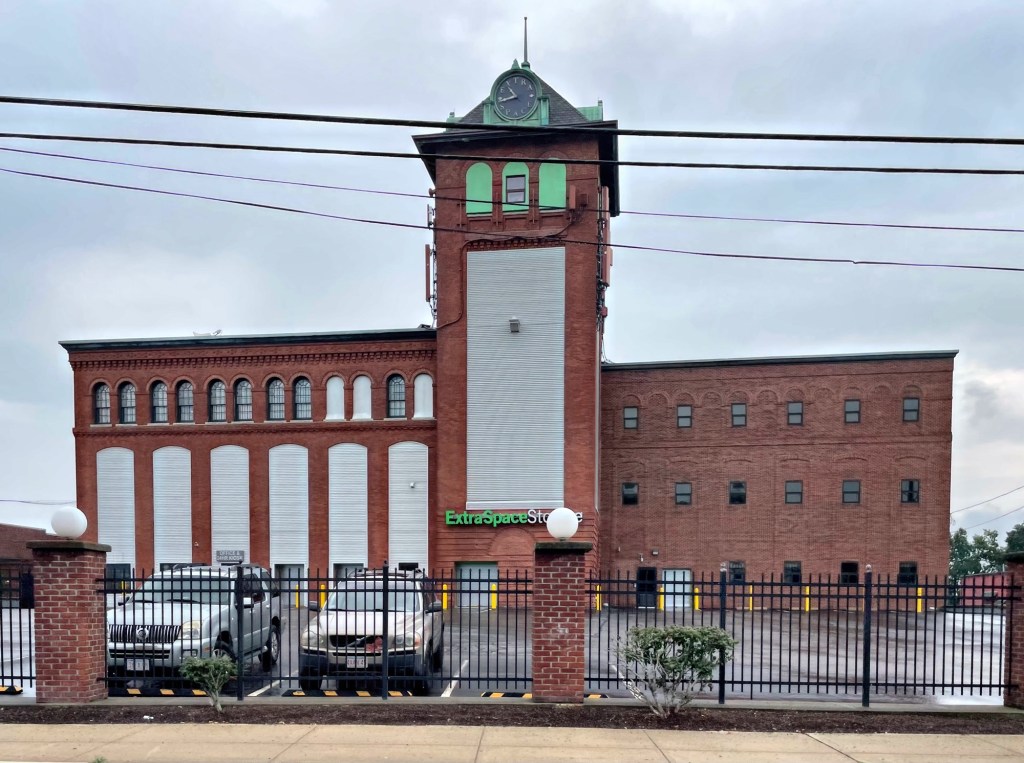
Now that is an interesting example of adaptive use… What do you think of this?

The Norwood Press was formed in 1894 by several companies which consolidated to form a company that covered all aspects of the book-making process. AII three companies had been located in Boston, but were lured to Norwood by free land offered by the local Business Association along with tax incentives that were too good to pass up. The underutilized land was quickly redeveloped in the 1890s with the several-building complex built on Washington Street in Norwood, Massachusetts with the largest building (pictured) constructed in 1897. By 1904,the press room of this plant was one of the largest in the U.S.,producing nearly seven million volumes ranging from 100 to 1,600 pages each. By 1917, the Norwood Press employed 600 workers in town! The Romanesque Revival style brick factory stands out for its five-story clocktower with (now enclosed) arches and corbelling. The Norwood Press closed after WWII and the plant was purchased by the Northrup Company. Today, the warehouse is under new ownership and is used as a storage facility, with many of the windows enclosed for the storage units.

United Church of Norwood // 1886

Located across from the church-like Norwood Town Hall, the United Church of Norwood is a landmark example of the Victorian Gothic architecture style and an important historical landmark for the town. The cornerstone of this present church was laid in 1885 and was completed and consecrated by December of 1886. Boston architect J. Williams Beal, got his start at the firm of McKim, Mead & White, designed the church here for the local Universalists, who lost their previous church to fire in 1884. In 1934, the town’s Universalist and Methodist congregations merged and they joined together in this, as a Union Church. Built of Milford granite and pressed brick, the United Church of Norwood features a side chapel and clock in its steeple which are unique and add charm to the historic church.

Oliver J. Barr House // 1908

Built in 1908 as a late example of the Queen Anne and Shingle styles, the Oliver J. Barr House is one of the finest Victorian buildings in Norwood, Massachusetts. The residence was built for Oliver J. Barr (1863-1935), who served as the General Manager of the Norwood Press in town, following his company from Boston to Norwood. The house was designed by Eugene Clark a Boston-area architect who specialized in suburban houses in the late 19th and early 20th centuries. The dwelling is noteworthy for its distinctive form, intact and rough textured wood shingle siding, and complex roof configuration. Particularly noteworthy is the verandah which encircles its northeast corner and rounded conically capped tower.

Norwood Theatre // 1927

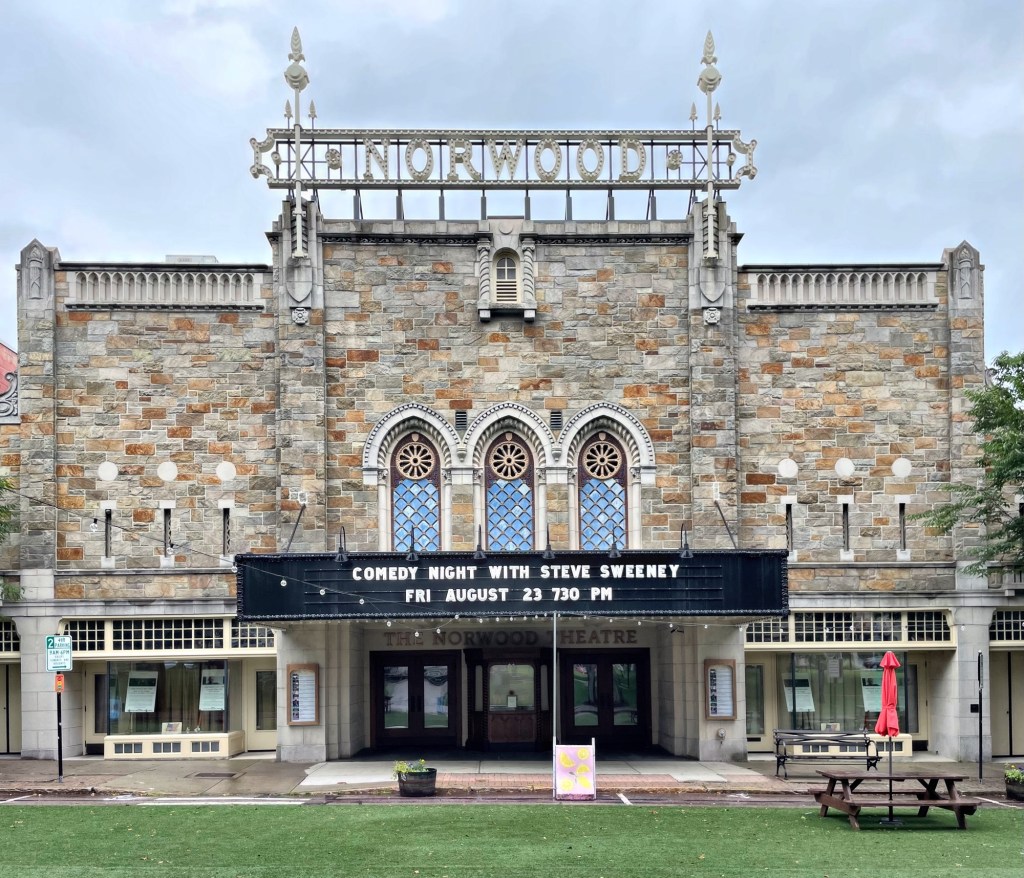
The Norwood Theatre was built in 1927 as a high-style showpiece for the re-invigorated downtown of Norwood, Massachusetts. Built at the same time as the Norwood Town Hall building, the building was constructed at a time of great development in the town, as local entrepreneur and philanthropist, George Willet and landscape architect Arthur A. Shurcliff, created a plan to evolve Norwood from a sleepy rural town to a commercial center. Architect William G. Upham is credited with designing the theatre and he enjoyed a prolific career which encompassed the design of masonic temples, commercial blocks, theatres, homes, and of course, the Norwood Town Hall. The Norwood Theatre was designed in a high-style Spanish Renaissance Revival style and was designed for motion pictures but also included a stage for possible vaudeville and theatrical productions. By the mid-20th century, a Modern sign covered much of the original facade, and lasted until the building came under its current ownership in 2010. A careful two-year restoration brought the theatre back to its former glory.

Chickering Farmhouse // c.1807

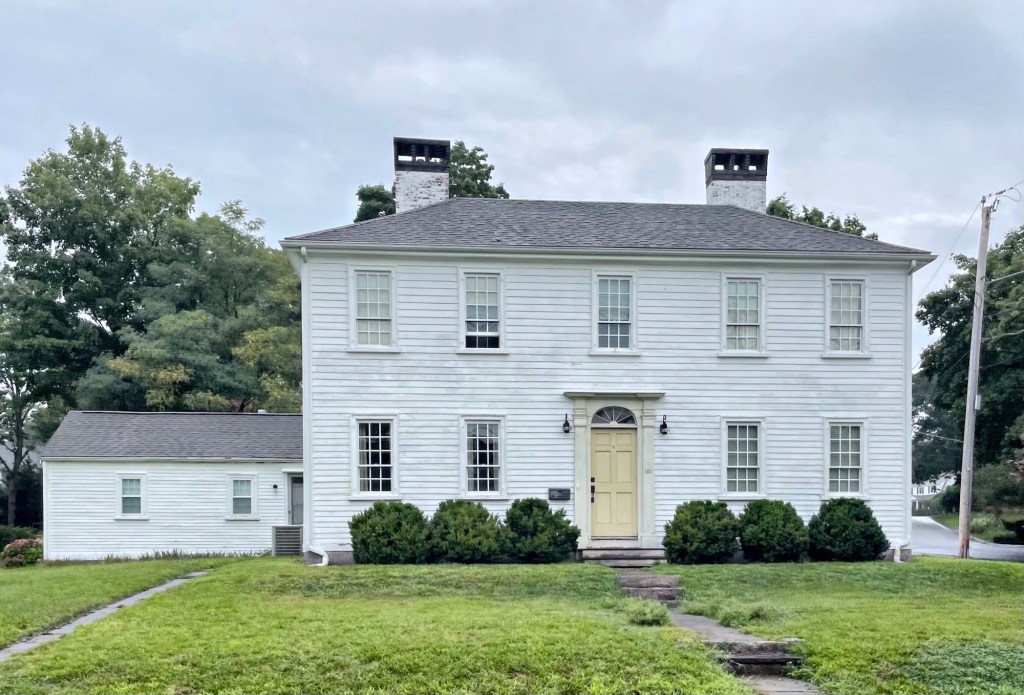
The Chickering House at 101 Walpole Street is significant as one of the oldest extant houses in Norwood, Massachusetts. Although local lore dates this house to 1781, it likely dates to 1807 (or was adapted from an earlier house) and was owned by Deacon Dean and Sally Guild Chickering, who farmed on the lot. Three generations of Chickerings farmed the land here until the early 20th century, when John D. Chickering, a local historian, sold much of the land for suburban development. The Federal style farmhouse remains as a vestige of the early, pre-suburbanization that Norwood is now known for.