Former Eli Whitney School // 1907

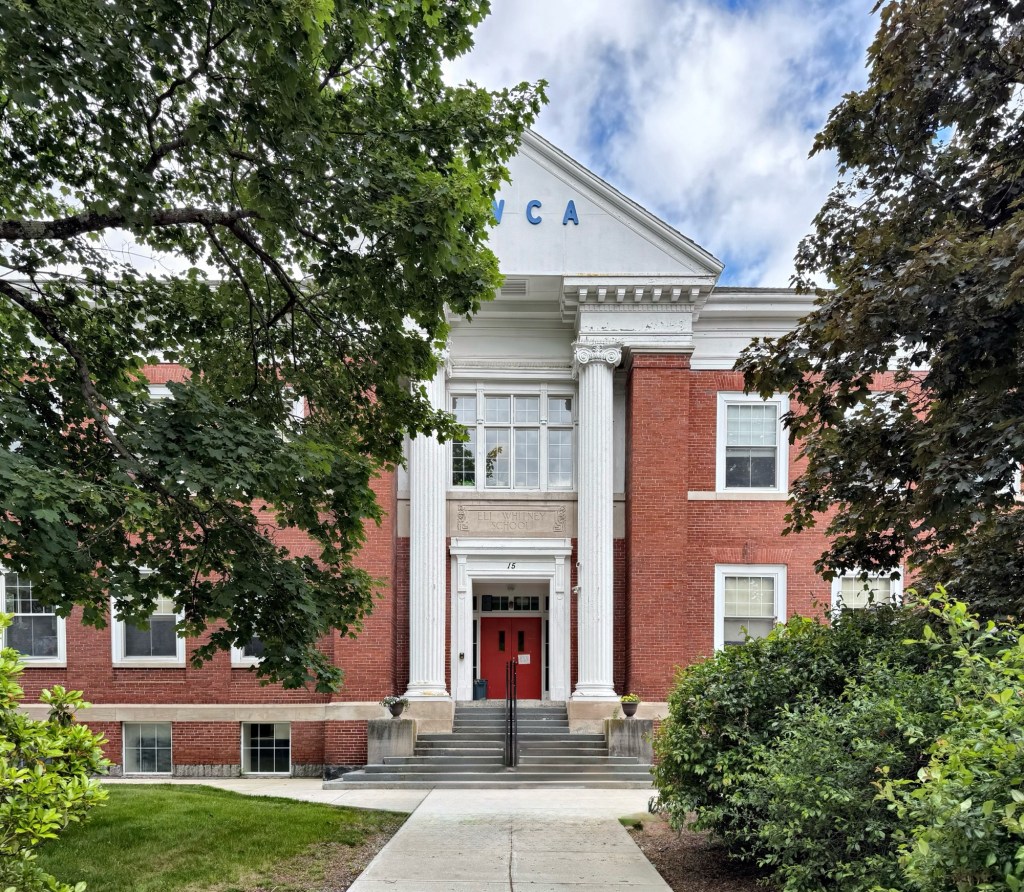
Built a few decades after and located behind the Harvey School in Westborough, Massachusetts, the former Eli Whitney School is a landmark example of an educational building designed in the Neo-Classical style. Built between 1906-7, the school building replaced an earlier school on the site that was outgrown and outdated. Designed by architects Cooper & Bailey, the building stands two-stories tall with a central pedimented pavillion containing the entry that is framed by monumental fluted columns. The school was named after Eli Whitney, the famous American inventor, born in Westborough, who is widely known for inventing the cotton gin in 1793, one of the key inventions of the Industrial Revolution, and later moving to New Haven and manufacturing weapons. When Westborough schools consolidated into modern facilities in the second half of the 20th century, this building was then occupied by the YWCA, and have rented the facilities from the town until it was purchased in 2000.

Westborough Arcade // 1890

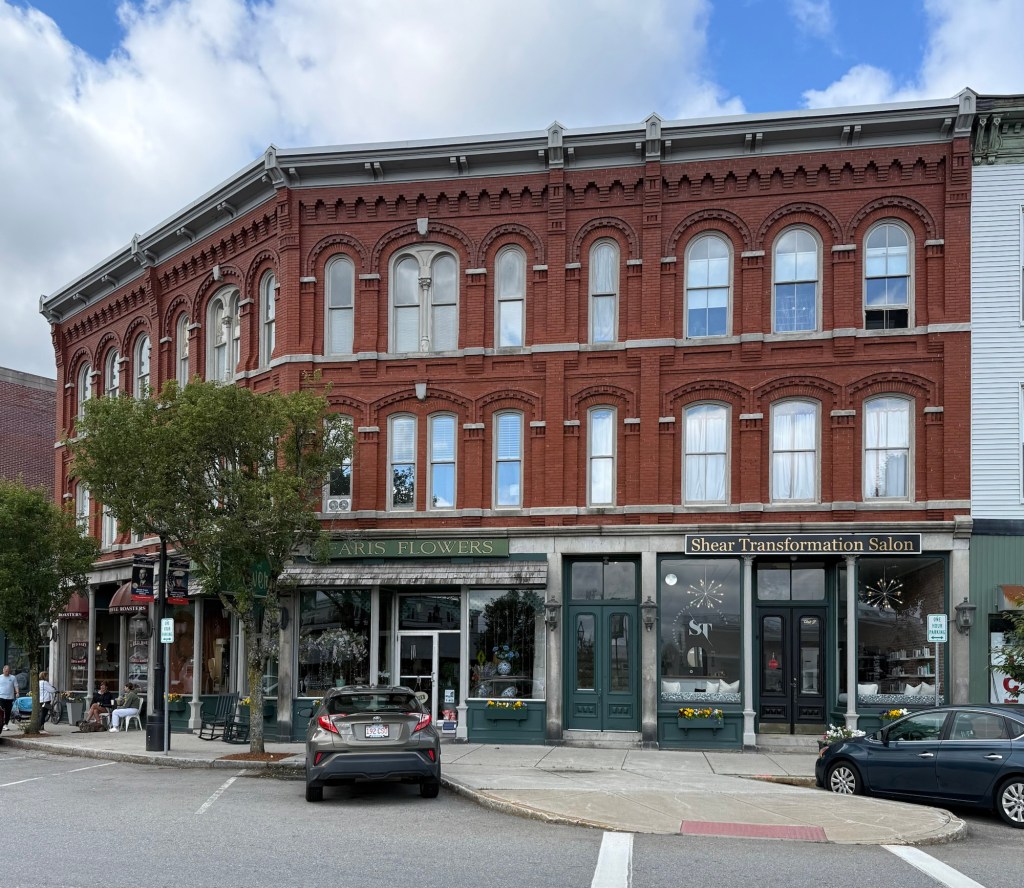
 The Second Meeting House of Westborough, Massachusetts, was built on this important site in the center of the village in 1749. It was a plain, wooden building and was used for both church services and town meetings, since church and state were essentially inseparable at the time. When a new church was built in 1837, this building was purchased and converted to commercial use. The first floor of the building was raised, and another floor was added underneath. The steeple was also removed. The building then became known as “The Arcade Building,” a kind of mall with small shops opening onto the porch. By the end of the 19th century, the old wooden building was nearing 150 years old and owners decided to demolish the structure, and replace it with a more permanent and stately block. The New Arcade was built in 1890 and is more Romanesque in style. The handsome brick block has retail spaces on the ground floor with residences above, a great example of mixed-use.

Westborough Savings Bank // 1928

The Westborough Savings Bank was incorporated in 1869 and shared space in a building with another bank and the post office. As the population and prosperity grew in the suburban community, so did the Westborough Savings Bank, who would move into a larger space. Just before the Great Depression, the bank sought to build its first purpose-built structure, and they hired the firm J. Williams Beal & Sons to furnish plans for this handsome masonry bank, designed to showcase the strength and stability of the institution. Renaissance Revival in style, the 1928 building is constructed of buff brick with limestone trim. The facade is dominated by large, round arched windows and is framed by pilasters with an off-center entrance. The Westborough Savings Bank would eventually merge into Avidia Bank and the West Main Street building was sold. The handsome building is well-preserved and home to Westborough TV, which makes broadcast media programming that is by, about, and for the entire Westborough community.

Westborough Public Library // 1908

The Westborough Public Library is a handsome, two-story, masonry building with additions to showcase the growth and importance of the library to the community. This building was constructed in 1908, replacing a small space in the first floor of the old Town Hall (since demolished) as the community’s first purpose-built library. The structure was designed by architect Penn Varney, who specialized in civic buildings in New England. The Classical Revival style building is constructed of buff brick with stone trimmings. Of particular note, the quoined arched entry and pediment with central wreath motif, add much to the design. The library was eventually outgrown, and in 1980, an addition was added to the rear, in a style taking cues from the main building, but clearly of its time. The Town of Westborough about to undergo a restoration and renovation to the library, including a new roof, HVAC systems, interior renovations and the restoration of the 1908 windows.

Rev. Ebenezer Parkman House // 1750

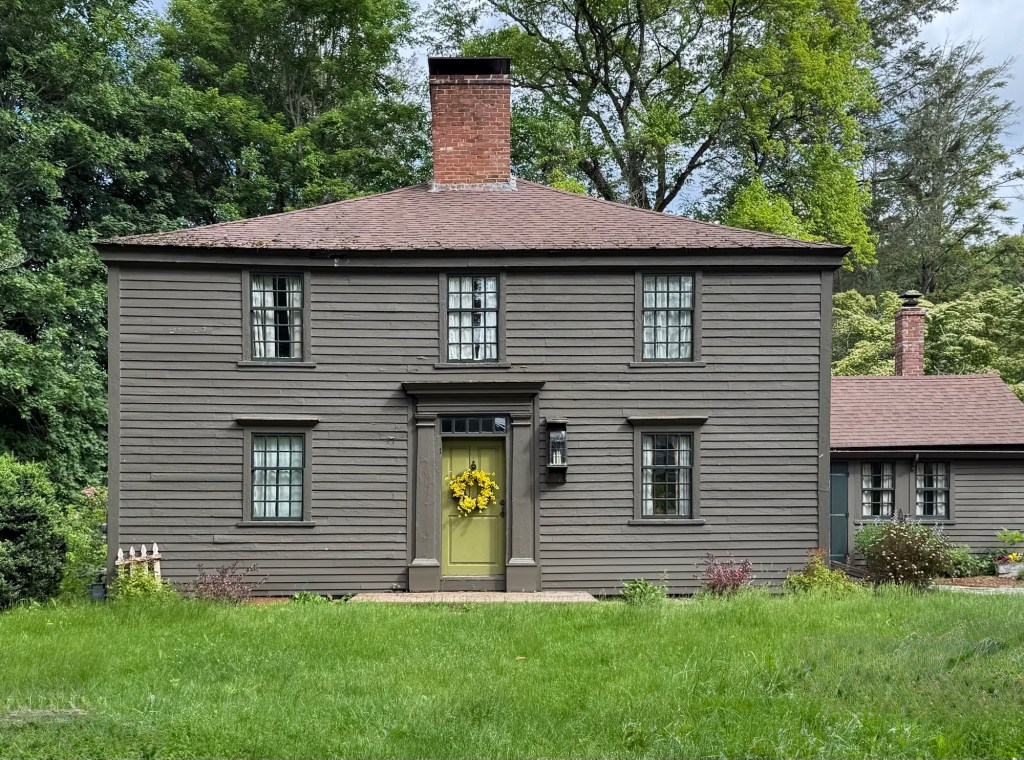
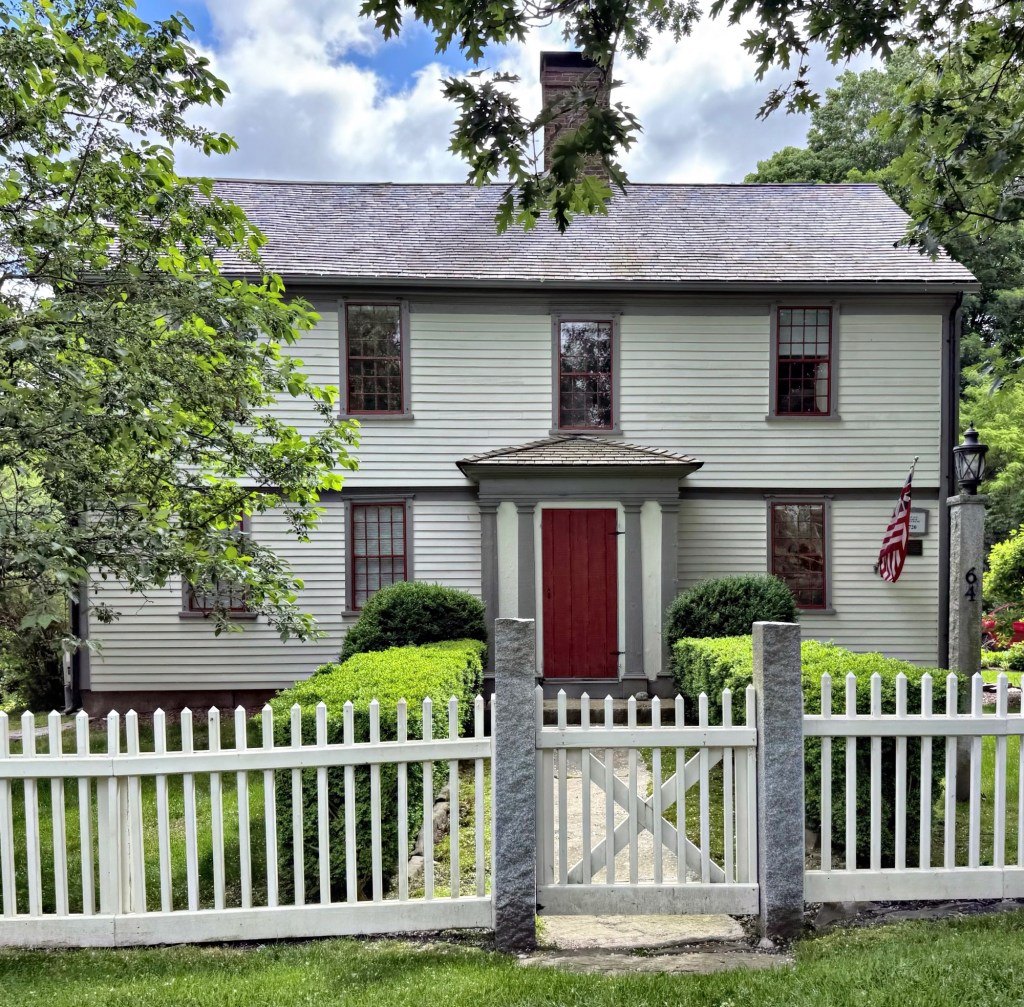
Reverend Ebenezer Parkman (1703-1782) was a graduate of Harvard University and served as the first minister in Westborough, Massachusetts, from 1724 until his death. The town’s first meetinghouse was located on Powder Hill; however, in 1748, the community decided to build a new meetinghouse closer to the town center. In 1750, the town built Reverend Parkman a second parsonage, this large Georgian house, closer to the meetinghouse which would accommodate his growing family. It is said that when built, some members of the church felt the home was too grand and luxurious for the minister and particularly made reference to the numerous windows as glass was an expensive commodity at the time. From his residence and serving as the town’s minister for 58 years, Parkman watched his town grow from an English settlement on the fringe of civilization to a prosperous village in the independent United States. Parkman’s insights into the life of these times are recorded in his daily journal, now housed at the American Antiquarian Society in Worcester. It has also been digitized, providing a glimpse into daily life at the time. The house was originally located nearby but relocated in 1867 to its present location on High Street, where it remains in a great state of preservation. 

Congregational Church of Westborough // 1834

The Evangelical Congregational Church of Westborough, Massachusetts, has its roots in the first church in Westborough, established on Powder Hill in 1724 under Reverend Ebenezer Parkman. The Religious Freedom Act of 1811 and the official separation of church and state, encouraged a diversity of religious views in Westborough and a branching out from the First Church. As a result the church here split in 1834, with some members forming the Evangelical Society, and those who remained, became the First Congregational Unitarian Society. The newly formed Evangelical Congregation built this church at the corner of West Main and Church streets in 1834 and the building is a typical 1830s Greek Revival style religious building in the state. In 1869, the church was remodeled, where the first floor was jacked up to provide basement meeting rooms.

Westborough Town Hall // 1929

Welcome to Westborough (sometimes spelled Westboro), Massachusetts, a suburban town in Worcester County that has a lot of history! Westborough was first settled by colonists in 1675, when a few families had settled on land in the “west borough” of Marlborough, which was settled decades earlier. Before this, the land was occupied by the Nipmuc Indians, who hunted and fished near Cedar Swamp and Lake Hoccomocco. The town grew as an agricultural center with turnpikes crossing through connecting Boston to Worcester and other points. Later connections from rail and later the Mass Pike, had allowed for rapid growth and commercialization of the current population of over 22,000 residents. After WWI, the town’s outdated wood-frame meetinghouse was deemed inadequate for the growing population and higher demand for quality services. The meetinghouse was demolished and soon-after replaced with this handsome Town Hall in 1929. Designed by Boston architectural firm, Kilham, Hopkins & Greeley, who specialized in thoughtful infill developments and were among the best to design in the Colonial Revival style. The building was highlighted in architectural publications in 1930 with one stating, “An ultra-modernistic building on the elm shaded street of this Massachusetts town would have been an intrusion and would have been felt as such by the citizens, but the designers felt that it was entirely possible to combine the new ideas with the well-known red brick and white cupola of the native idiom, and the result is a modern building harmonizing perfectly within its environment.” I couldn’t agree more!

Quabbin Lookout Tower // 1940

After the Quabbin Reservoir was filled (more on the history in my last post), the cleared land and body of water, with its over 181 miles of coastline, was seen as not only an engineering marvel, but a place of natural beauty and splendor. Upon a rise in the land and the edge of the reservoir, they saw a perfect location to build a tower that could serve many purposes. The Metropolitan District Water Supply Commission hired the firm of Densmore, LeClear & Robbins to design a tower that would serve as a radio tower, fire station and observation tower to view the reservoir. The structure, while designed in the Arts and Crafts mode, is of modern construction and is comprised of two main parts. The lower portion, is constructed of stone and concrete, with metal casement windows, granite lintels and sills and bronze doors. This section was used for radio equipment. The interior has glazed tile walls and cement floors. The six-story tower has five floors of metal and concrete stairs. At the top is a two-level, glass enclosed observation tower.

Quabbin Park Cemetery Building // 1940

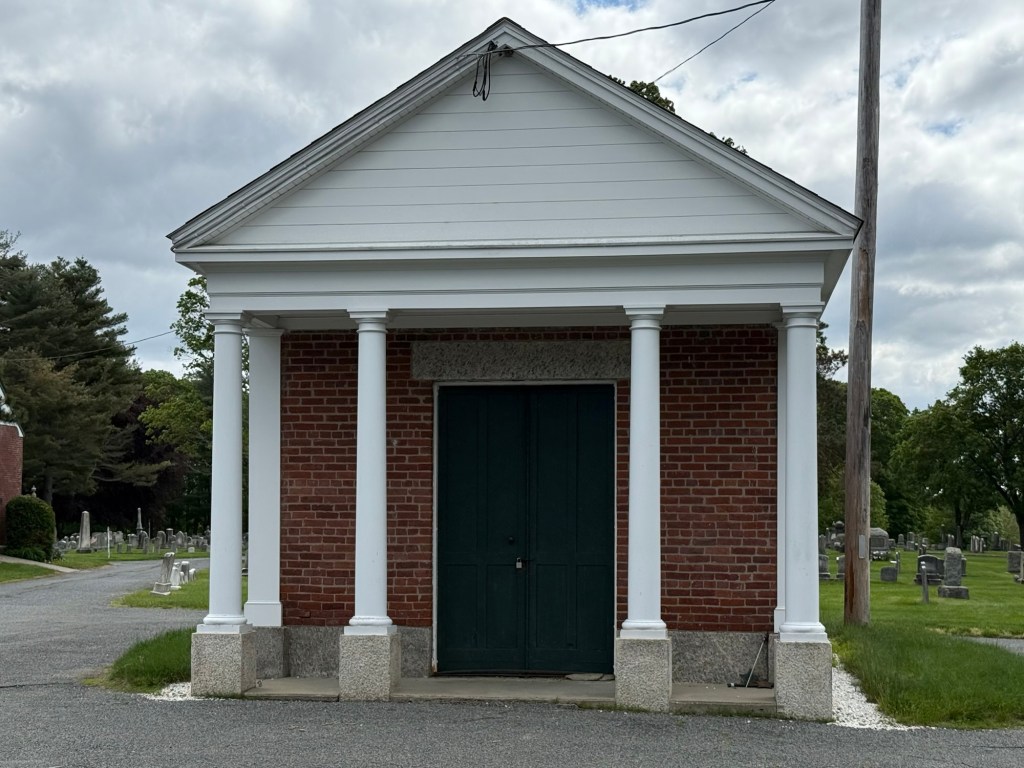
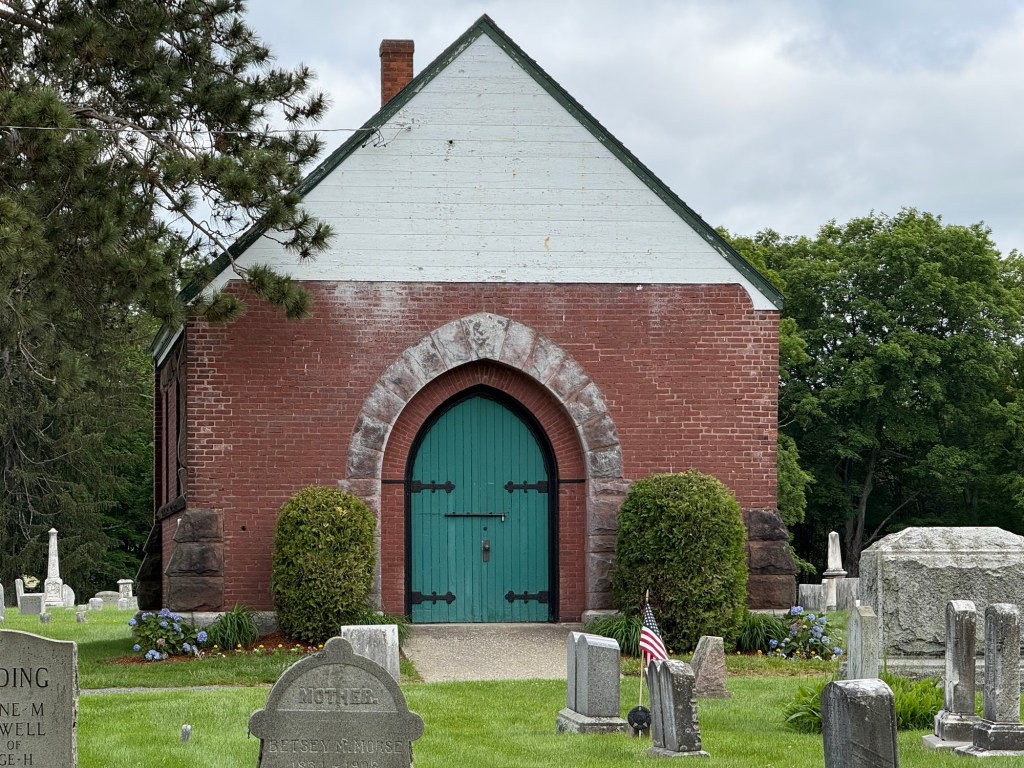
By the early 1900s, metropolitan Boston’s demands for freshwater began exceed its supply, causing the state legislature to look for other sources of water to supply the metro’s population growth. A 1922 study endorsed the Swift River Valley (Quabbin area) as the best location for a new reservoir that could supply Massachusetts with fresh water, but there was one issue, there were towns and people living there. To create the Quabbin Reservoir, the depressed land would need to be flooded, this required over 80,000 acres of land to be purchased or seized by eminent domain by 1938. Four towns: Dana, Enfield, Greenwich, and Prescott were disincorporated and their excess land not flooded was added to surrounding municipalities. In total, an estimated 2,500 residents lost their homes as part of the flooding. Not all elements of the towns were destroyed, however. Town memorials and cemeteries in the four towns were moved to Quabbin Park Cemetery, in Ware, a short distance from the Quabbin Reservoir. Many other public buildings were moved intact to other locations (like those in Dorset, Vermont featured previously). In the over 80,000 acres that were flooded, the Commonwealth had to relocate an estimated 7,500 burials in over 35 cemeteries in these flooded towns. Bodies were removed from their respective locations, and intered in the new Quabbin Park Cemetery, built by the Commission in 1932 with grounds designed by landscape architect Arthur A. Shurcliff. An area for unknown graves and a memorial area at the entrance to the cemetery also contains public war monuments from the abandoned towns. This service building was added to the cemetery from designs by architect Frederick Kingsbury who died during its construction.

United Church of Ware // 1926

The East Congregational Church in Ware was established in 1826, spurred by the industrial growth and subsequent immigrant population boom in the village of Ware, Massachusetts. The Ware Manufacturing Company, a major player in town, contributed $3,000 to towards the construction of a new congregational church in the village, which was matched by residents. The original church was built in 1826, following plans prepared by Isaac Damon, a noted church architect from Northampton, in the Federal style, popular at the time. In 1925, just a year before its centennial, the church burned to the ground. Plans to rebuild the church formulated immediately. Due to changes to the neighborhood since 1826 (notably the construction of tenement housing adjacent to the church), the decision was made to locate the new church setback from the street. Plans were drawn by Frohman, Robb and Little of Boston for the new building, which was to be Federal Revival, a nod to the former church building. The grounds in front were landscaped by the prominent landscape architect Arthur A. Shurtleff. After WWII, population decline and dwindling membership of some churches in town required a few congregations to consolidate, creating a union or united church here. The United Church of Ware came into being in 1969 when the East Congregational Church, United Church of Christ and the Ware Methodist Church, United Methodist Church joined together and became one federated church with ties to two denominations.