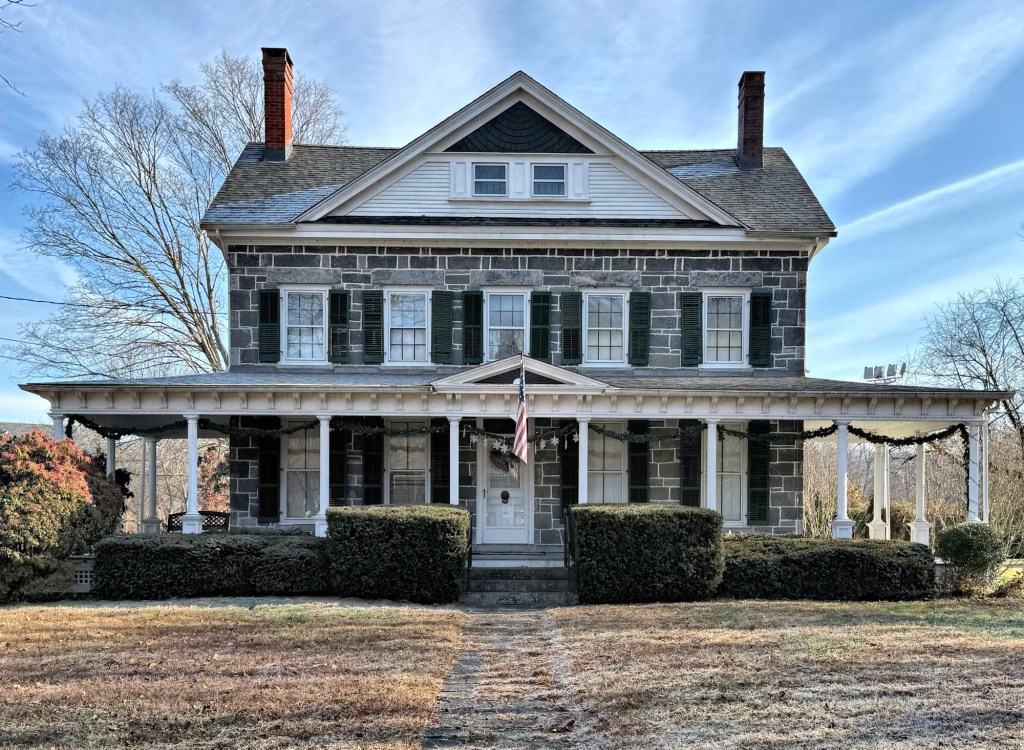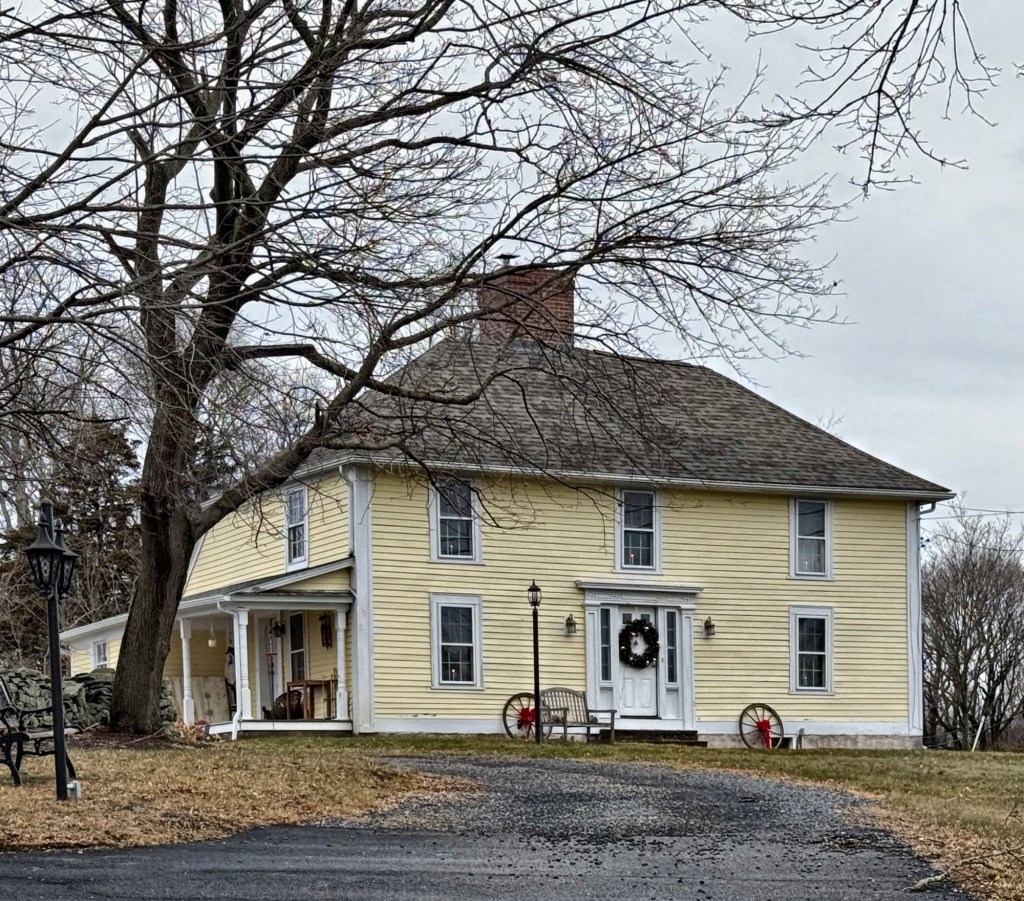
Pousland House // c.1865

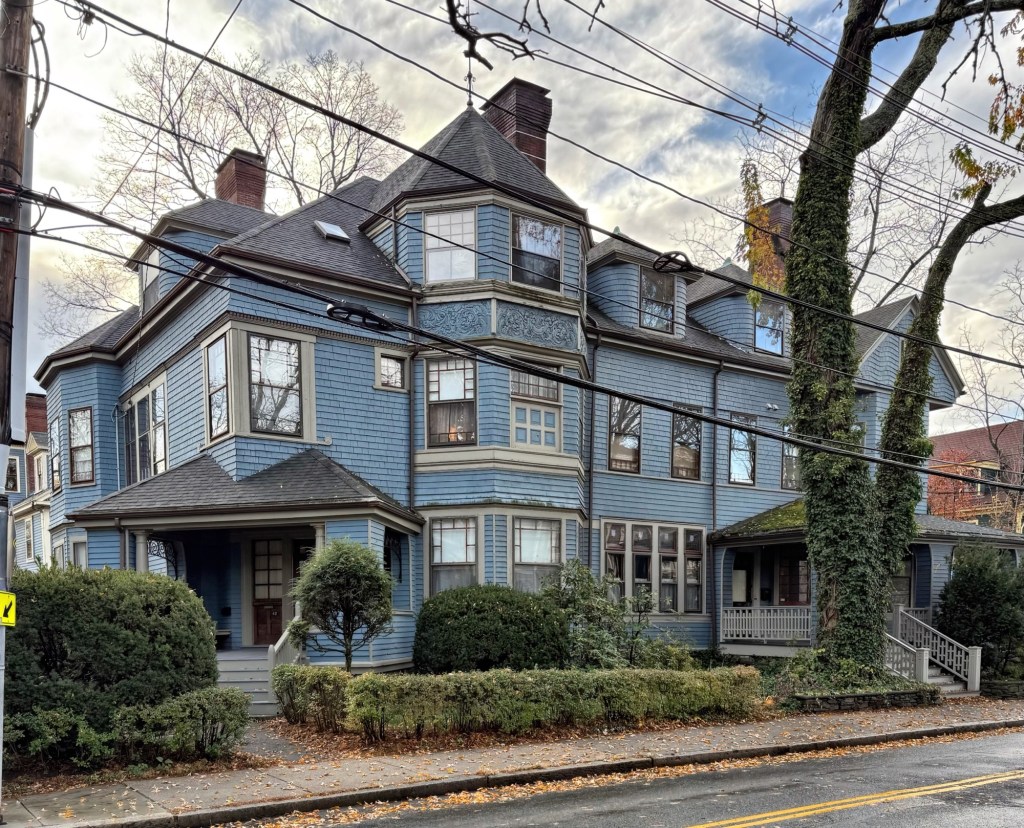
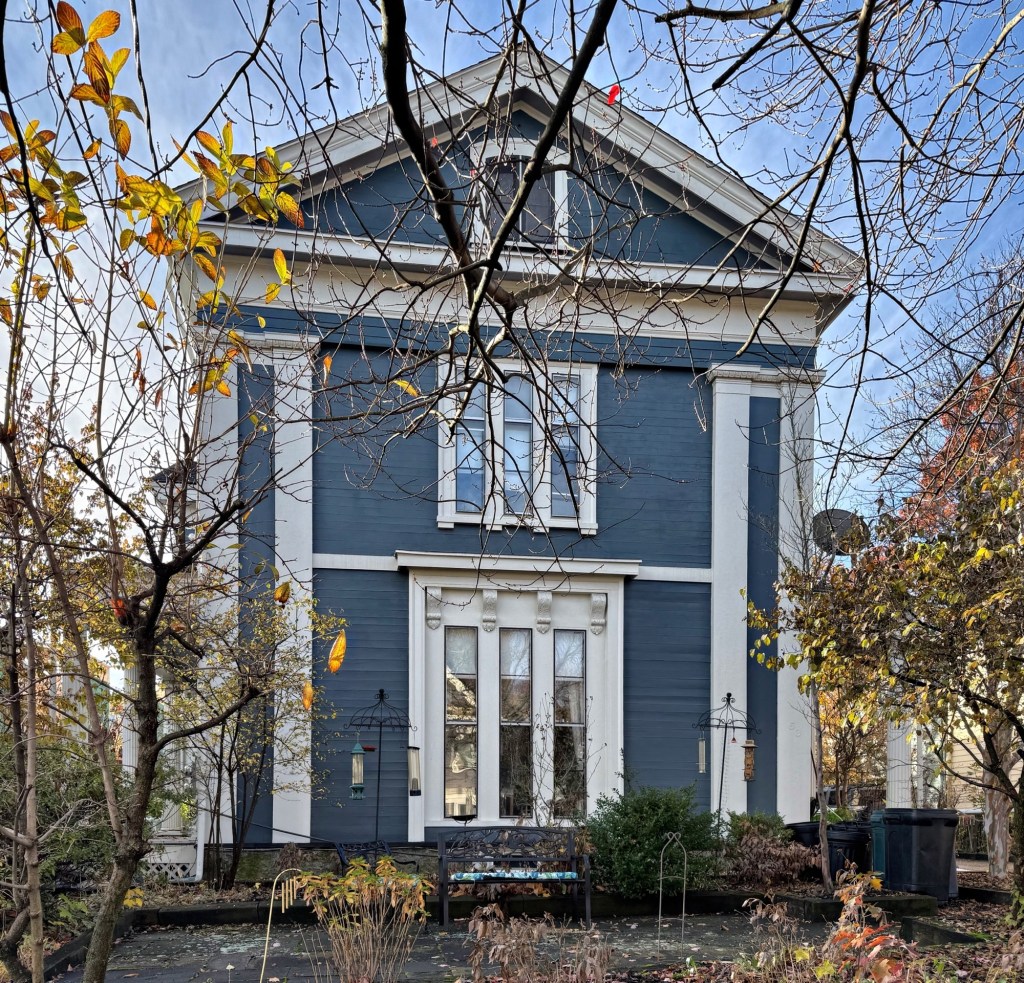
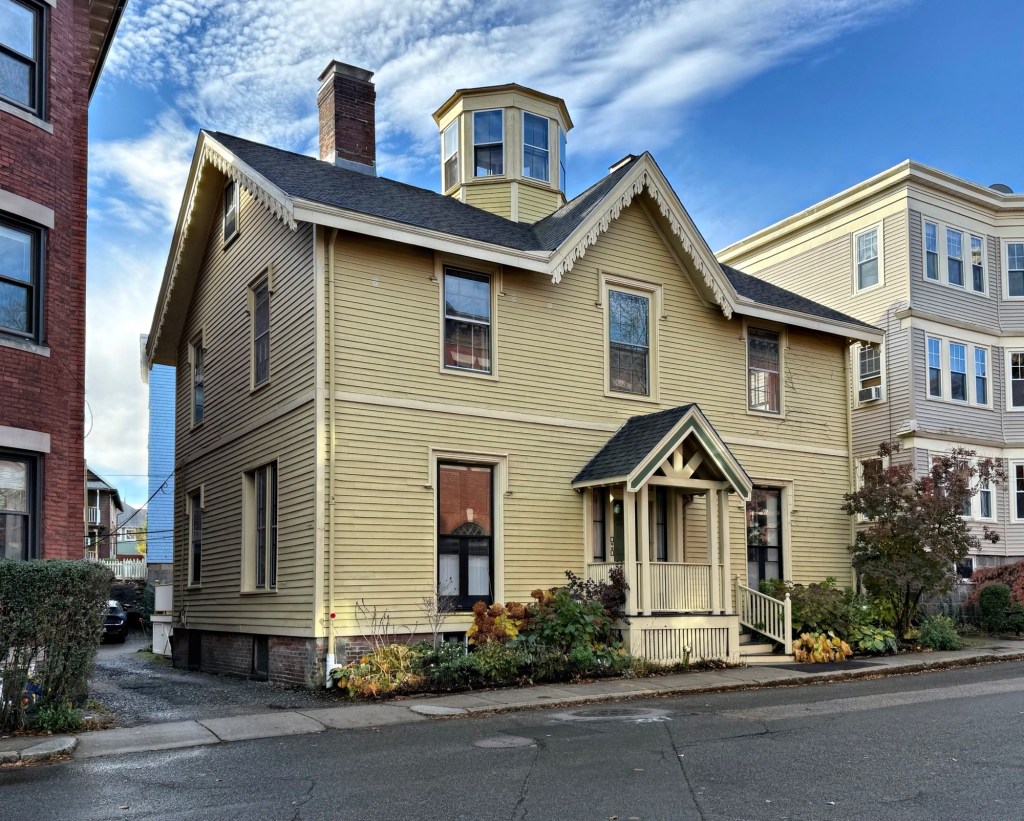
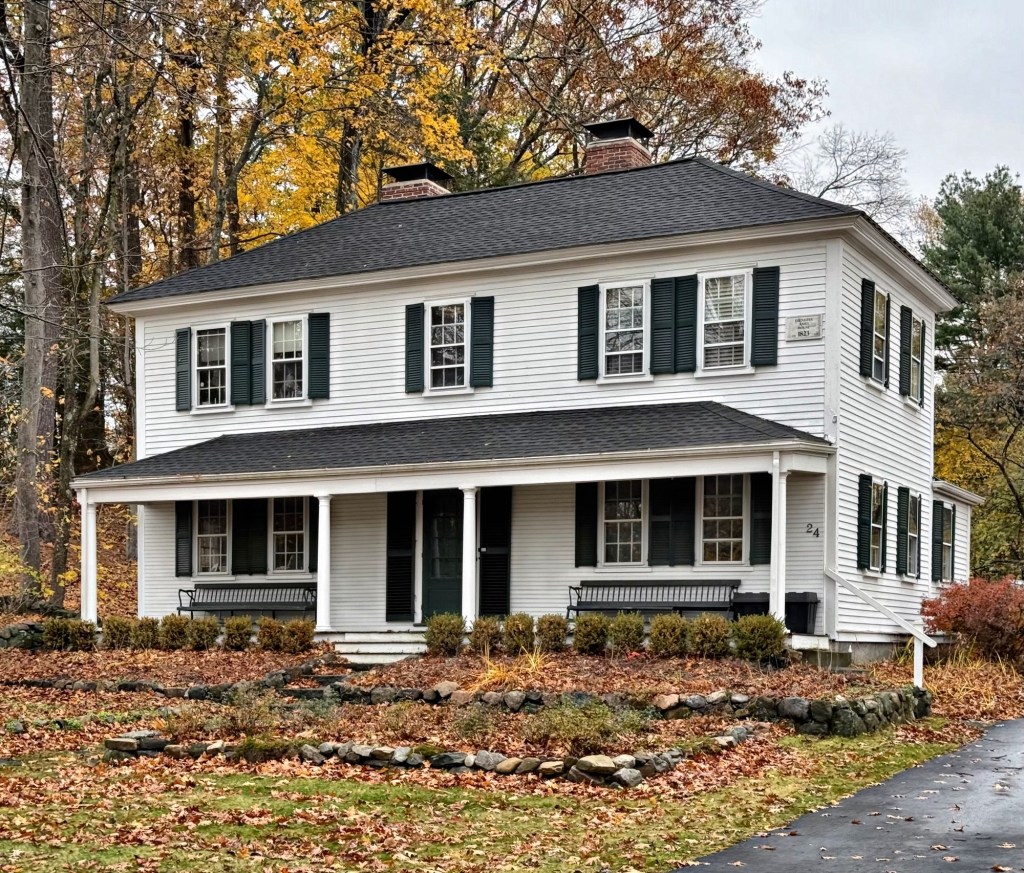
Built around 1865, this stately residence in Wayland, Massachusetts, was originally owned by sea captain, Edward Pousland who came to Wayland with his family around 1859. Interestingly, Mr. Pousland continued working as a sea captain, travelling to Salem and Beverly, where he would be at sea for months at a time. Likely due to his profession, the house features a ‘widow’s walk’, a common feature of houses by the sea where folklore holds that the wives of ships’ captains looked out for the return of their husbands. Edward, his wife Hannah W. (Langmaid) Pousland lived in this house at least until Edward’s death. After successive ownership, the property was purchased by Jonathan Maynard Parmenter (1831-1921), who gifted the house to the First Parish Church across the street, for use as a parsonage a use that continued until 1984 when the church sold the house back into private ownership. The house, designed in the Italianate style, was “modernized” in the early 20th century with Colonial Revival alterations, which added the portico and likely removed the brackets at the eaves.

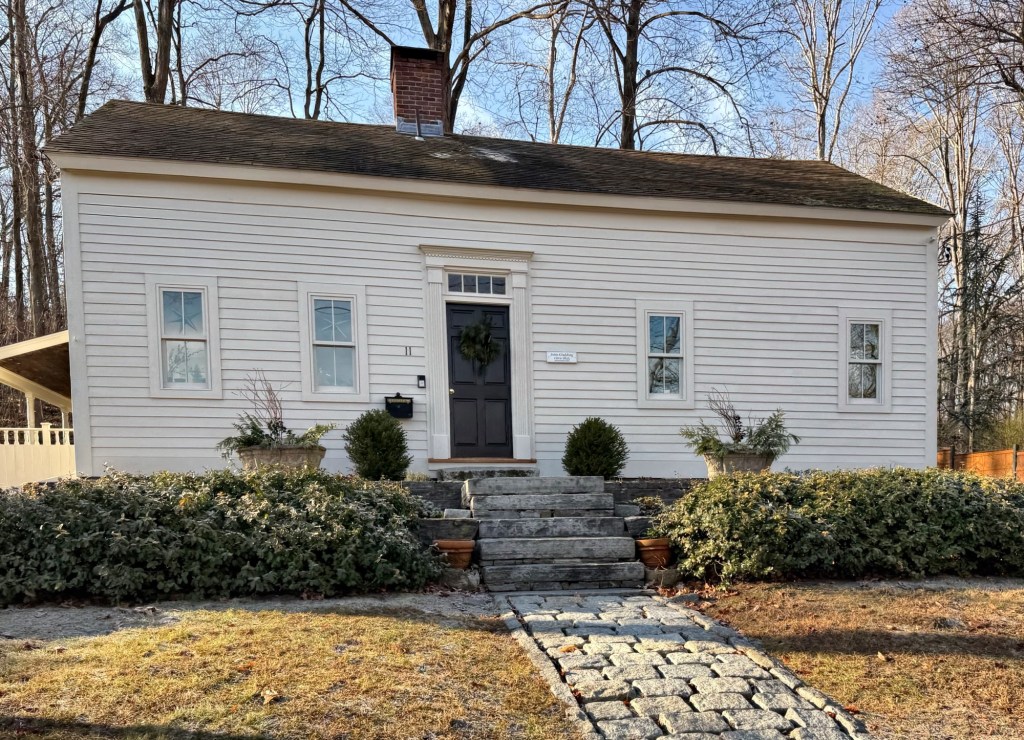
Smith-Curtiss House // c.1714

The Smith-Curtiss House, which is possibly the oldest extant building in Derby, Connecticut, has sat vacant and decaying for years and is owned by the State of Connecticut. Believed to have been built sometime between 1714 and 1740, this historic saltbox farmhouse at 411 Hawthorne Avenue is slowly decaying due to lack of maintenance and funding. Early ownership is difficult to determine, but by the 19th century, the property was owned by Ms. Alice E. Curtiss. The old estate was sold by Ms. Curtiss in 1913 to Frances Osborne Kellogg, a businesswoman, philanthropist and environmentalist, as part of her 350-acre dairy farm and land-conservation holdings. The Smith-Curtiss House was used as a residence for the herdsmen who ran the farm nearby. Before her death in 1956, Frances deeded the property to the state as a public park, and allowed her head herdsman life-occupancy of this house for the remainder of his life. The State of Connecticut assumed possession of this house in 1981. The building has suffered from deferred maintenance since this period, with the State attempting to lease the building to tenants. I hope that local and statewide preservation groups can mobilize to secure grants and funding to restore this important property.

Joseph and Ruth Sawyer House // c.1782

The town center of Bolton, Massachusetts, as we know it, was largely an early Colonial landholding and farm held by William Sawyer (1679-1741) who possessed roughly 300 acres in the area when Bolton was still a part of Lancaster. The Town of Bolton seceded along the Still River from Lancaster and incorporated in 1738. A year later, an aging William Sawyer gifted two acres of his land for the town’s newly designated burying ground, now the Old South Burying Ground, where his own grave (dated 1741), is the oldest marked burial in the cemetery. In 1780, William’s son, William Sawyer, Jr., sold over sixty-acres of the family farm to his son, Joseph Sawyer (1756-1828) who was to marry Ruth Walcott in 1782. This house was probably built about the time of their marriage. Joseph had previously fought in the Revolutionary War, and marched with the Bolton militia to Lexington on April 19, 1775, and upon his return, he worked as a blacksmith and operated the farm while serving in various town offices.

John Bennett House // 1717

The oldest residence in the North Village of Lancaster, Massachusetts, the John Bennett House dates to 1717 and evokes the old Colonial days of New England towns. John Bennett settled in Lancaster and built this large First Period house for his family and operated it as a tavern to weary travellers passing through town along the main turnpike. After Bennett’s death, local legend identifies that the property was a stopping place on the Underground Railroad for runaway slaves escaping to Canada. This, however, has never been substantiated. From 1872 to 1874, the house was occupied by the first Adventist missionary, John Nevins Andrews, co-founder of the Seventh-day Adventist Church. The house is well-preserved and remains as one of the oldest in Lancaster and an important landmark of the early days of the community.

John Sprague House // 1785

Judge John Sprague (1740-1800) was a Harvard graduate and settled in Lancaster, Massachusetts as one of only three lawyers in Worcester County following the departure of his Tory colleagues during the Revolution. From this, a young Sprague climbed the professional ladder quickly and represented Lancaster in the General Court beginning in 1782 and occasionally sat in the Senate. He was first appointed judge in 1784 and in 1798 became chief justice of the Court of Common Pleas for Worcester County. After being appointed a judge in 1784, Sprague purchased a house lot on Main Street in Lancaster and hired local housewrights Eli Stearns and Jonathan Whitney, to design and build this stately home. Judge Sprague moved from his 1771 houseshort distance away, to this more substantial late-Georgian home with projecting entry with pilasters and pediment. After his death in 1800, the property was inherited by his daughter, Ann Sprague Vose and her husband, a merchant, Peter Thatcher Vose

Mary S. Johnson Mansion // 1910

Mary Elizabeth Spiers (1847-1915) married Iver Johnson (1841-1895) in 1868 and raised their children until Iver’s death in 1895. The couple lived in Worcester before moving to Fitchburg where Iver Johnson was head of the Iver Johnson’s Arms & Cycle Works in Fitchburg, and had sporting goods stores in Worcester, Fitchburg, and Boston. After his death in 1895, his widow Mary, became president of the stores and trustee and operator of the Iver Johnson Sporting Goods Co. in Fitchburg. Ms. Mary S. Johnson sought retirement and purchased land on Main Street in the bucolic town of Lancaster and built this large mansion in 1910. The estate sat on 75-acres of land and comprised of an older farmhouse, the 20th century mansion, two caretaker’s cottages, and a large stable. Ms. Johnson died suddenly in 1915 and the estate of over $4 Million dollars was distributed amongst the couple’s children. In 1934, the estate became the Dr. Franklin Perkins School, a K-12 school for students with special needs.

Rice-Carter House // 1796

In 1796, attorney Merrick Rice (1764-1819) built this stately Federal style farmhouse on Main Street in Lancaster. The house exhibits a symmetrical facade with hipped roof and twin chimneys and portico at the entrance sheltering the front door with fanlight transom. The house has end porches which may have been added sometime in the 19th century. The property was later purchased by Rev. Asa Packard, who rented the residence to his daughter, Ann, and her husband, James Gordon Carter, a state representative and education reformer who wrote Influence of an Early Education in 1826, and in 1837, as House Chairman of the Committee on Education, contributed to the establishment of the Massachusetts Board of Education, the first state board of education in the United States. The Rice-Carter House is excellently preserved both inside and out.

Joseph Andrews House // 1831

This stately temple-front Greek Revival style house in Lancaster, Massachusetts, faces southward and when originally built, had sweeping views of fields and the Nashua River which abuts the property. The residence was built in 1831 for Joseph Andrews (1806-1873), a renowned 19th century artist who engraved portraits and landscapes, and was also an elder in the local Swedenborgian Church when it still met at residences. The Andrews House was likely a wedding gift to his wife, Thomazine Minot of Brookline, when they married. Tragically, Thomazine died just years later in 1834 at the age of 22. Joseph Andrews remarried soon after and would later move to Waltham. The house, which is listed on the National Register of Historic Places, features a full-length projecting porch with pediment supported by four, two-story fluted Ionic columns and a flush-board facade.

Jabez Sargeant Jr. House // 1797

Deacon Jabez Sargeant (1720-1788) was born in Malden, Massachusetts, and later moved to the newly established town of Chester, Vermont in 1763. He is thought to have been the first settler of European ancestry in the town. Upon the outbreak of the Revolution, he served in Captain Little’s Company in 1778, returning home to Chester after. His son, Jabez Sargeant Jr. built this stately three-story late-Georgian residence in 1797 as a tavern along the Green Mountain Turnpike, a highway connecting Boston and Montreal. The dwelling originally fronted directly on the road, but was moved back sometime in the 19th or 20th centuries. The building boasted a large ballroom on the second floor, likely for community and fraternal organizations, and a tavern in the brick first floor. It is likely that Jabez and his family lived on the third floor. Outside, the property contained a large apple orchard and cider house, providing drinks to weary travellers. Although the tavern is built to a large size, it lacks many of the high-style features often found in large Georgian houses, telling for its time of construction in a sparsely developed area without seasoned builders.

Frederick Fullerton House // 1861

This distinctive Italianate Villa style house in the charming village of Chester, Vermont, was built in 1861 for wealthy merchant, Frederick Fullerton (1817-1869). Mr. Fullerton worked in his family’s mercantile business in Chester, and was involved with cotton manufacture in Springfield and with the Cavendish woolen mill managed by his older brother, Henry, who built an equally distinctive residence in Cavendish called “Glimmerstone“. Basically cubic with asymmetrical gabled corner pavilions, the Fullerton House is an excellent example of an Italianate Villa with bracketed cornice, two-over-two sash windows, a wrap-around porch, and second floor balcony with a bracket-supported hood with decorative valance and an oculus window above. The residence is said to have been designed by architect, William P. Wentworth, who designed the St. Luke’s Episcopal Church across Main Street a decade later.