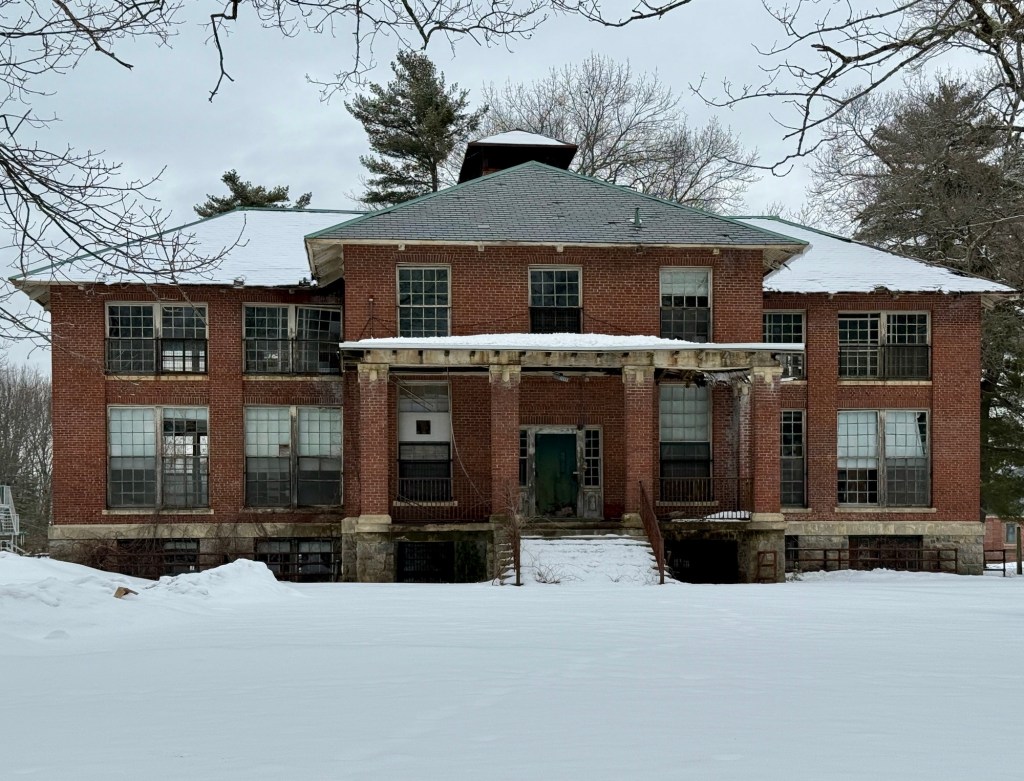
Draper Corporation Factory Complex // 1892-2021

2021 aerial photo

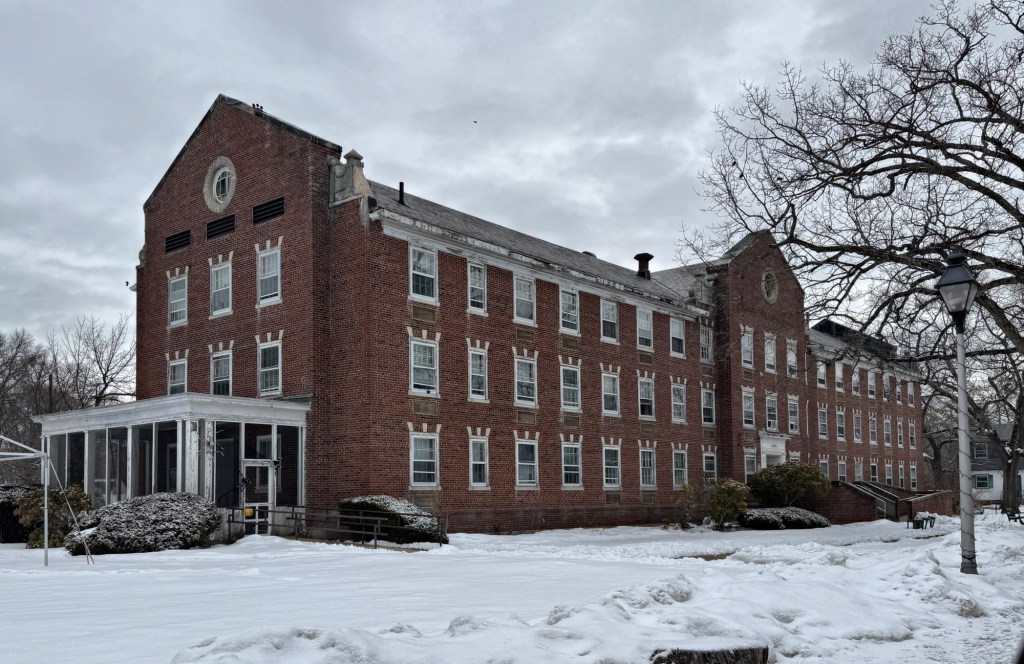
Hopedale, Massachusetts separated from Milford and incorporated in 1886. The “downtown” of the community encompasses industrial, institutional, and residential buildings in Hopedale Village, also known as Draper Village after the long-driver of the local economy, Draper Corporation. Hopedale was largely developed as a planned company town, and its architectural significance and ultimate preservation was largely due to the success of the Draper Corporation as majority owner until the 1950s. The Draper Corporation was originally a small operation in Hopedale in 1841 managed by George Draper (1817-1887), but grew exponentially thanks to his son, George Albert Draper (1855-1926), who had a passion for finding innovative technology to make the production of cloth more efficient. He led the company’s charge to become the nation’s leading producer of machines for the cloth-making industry. In the ensuing decades the factory village of Hopedale became a “model” company town under his leadership, with the business controlling every aspect of the town and worker life in a paternalistic program that extended beyond social structure to include architecture and urban planning of the village. The company developed hundreds of homes for workers, a town hall, library, churches, schools, a fire station, and recreational facilities, along with its factory complex at the center. In1892, with the advent of the Northrop Loom, Draper became the largest producer of textile machinery in the country. Due to their success at the end of the 19th century, much of the complex was built and rebuilt in fire-proof brick factory buildings with large windows to allow light and air into the facilities. Draper’s dominant position within the textile machine manufacturing industry began to erode shortly after World War II, and the company began to sell its company houses to their occupants as private homes in 1956. During the 1960s American textile machinery makers such as Draper lost their technological leadership to foreign manufacturers due to cheap labor, and the general American textile industry collapsed. The plant eventually closed in 1980, and sat vacant until it was decided by the local officials to raze the once great complex, as adaptive reuse was not feasible in the market for such large structures. The mill was demolished in the summer of 2021 and the lot at the center of town remains a brownfield site.

Brookline Village Fire Station // 1908

Built in 1908 from plans by the architectural firm of Freeman, Funk and Wilcox, the Brookline Village Fire Station is a massive, red brick structure with white sandstone trim and a copper cornice. Located on Washington Street in Brookline Village, the station stands out for its high-style Italian Renaissance style, notable for the use of brackets and off-center hose-drying tower with arched openings. The station replaced an earlier hose house, and was built before the fire department shifted to fire trucks, but was adapted later for larger fire apparatus. The station is one of the finest in the Boston area, and the Town of Brookline have done a great job preserving this significant structure.

Isaac Gleason House // 1805

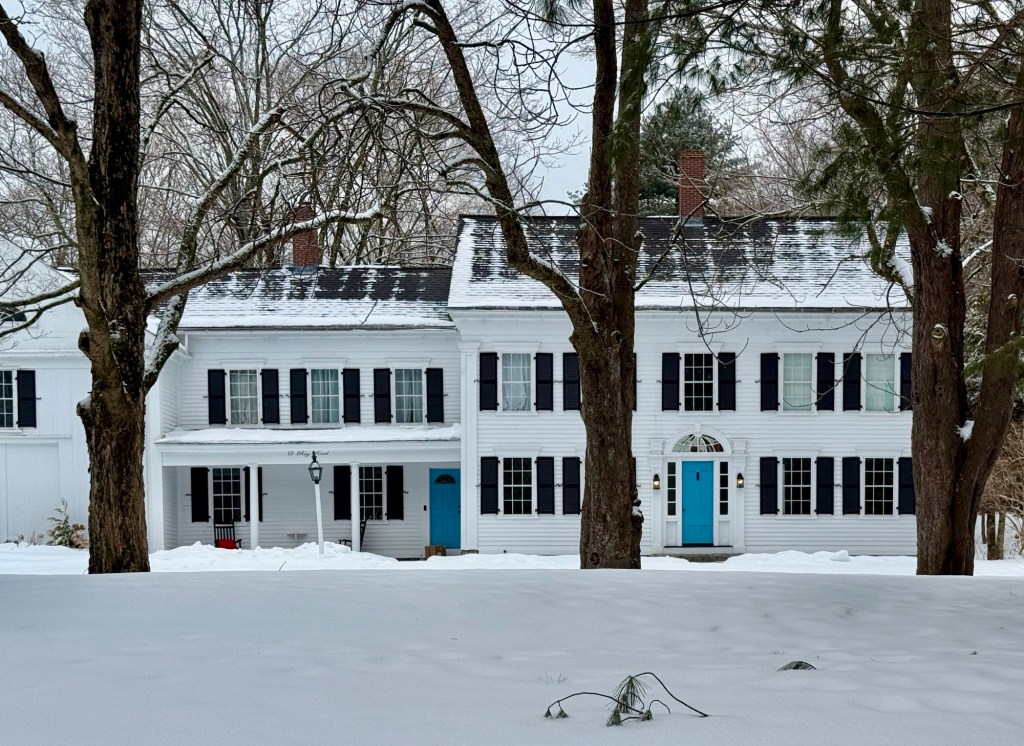
Built in 1805 by Isaac Gleason (Glezen), this Federal style mansion was later expanded in the early 20th century in the Colonial Revival style as Wayland became more of a wealthy Boston suburb. Located on the appropriately named Glezen Lane, this house was constructed for Isaac Glezen (1769-1843), who farmed the land here. Other family members built homes nearby. As Wayland shifted from rural community to a wealthy Boston suburb in the early 20th century, the property was purchased by Charles Ashley Hardy and his wife, Alice. The couple would sell the property in 1918, which comprised of 89-acres of land and a chauffeur’s residence, was purchased by Albert H. Beck, a New York banker. The property was later subdivided and consists of many other large, single-family homes.

Chamberlain Cottage // 1940

Nestled into the forests of Wayland, Massachusetts, one of the most significant examples of early Modernist architecture, the Chamberlain Cottage, represents the European Bauhaus style adapted to the American landscape and New England vernacular. Designed in 1940 and completed in 1941, the house was commissioned by Harvard Economics professor, Henry Chamberlain and his wife, Margareth, as a weekend retreat from Cambridge. Professor Chamberlain commissioned Marcel Breuer and his mentor, Walter Gropius, then Dean of the Harvard Graduate School of Design, to design a home with a specific request for a screened porch similar to Gropius’ residence in nearby Lincoln. For the Chamberlain Cottage, the design responds to the uneven terrain and the potential for river flooding by two distinct parts: a grounded stone base and a cantilevered wooden volume above. The lower stone level functioned as a foundation while providing storage for a canoe and housing a fireplace that extends vertically through the structure; with the upper wooden volume containing living spaces. Despite its compact size for weekend visits, the upper level is well planned and includes a living space, kitchen, a single bedroom, and the porch. Due to its small scale and siting, the one-bedroom cottage was not easily adaptable for modern living. After falling into disrepair in the 1980s and ’90s, the home was purchased by architects Sidney R. Bowen and Angela Watson, who expanded the structure over the course of a decade to its current size of 3,742 square feet. It has been occupied and lovingly maintained by later owners. It remains a private residence.

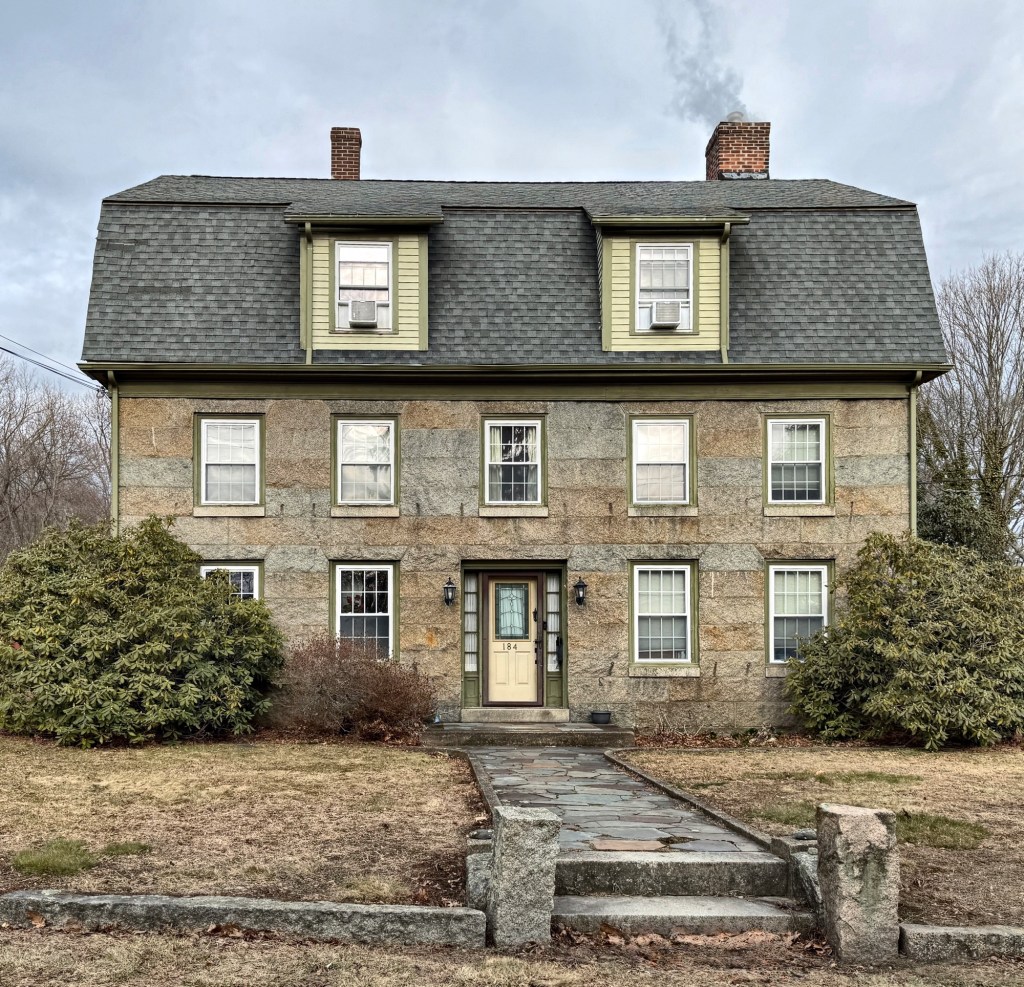
Griffin-Malloy House // 1720

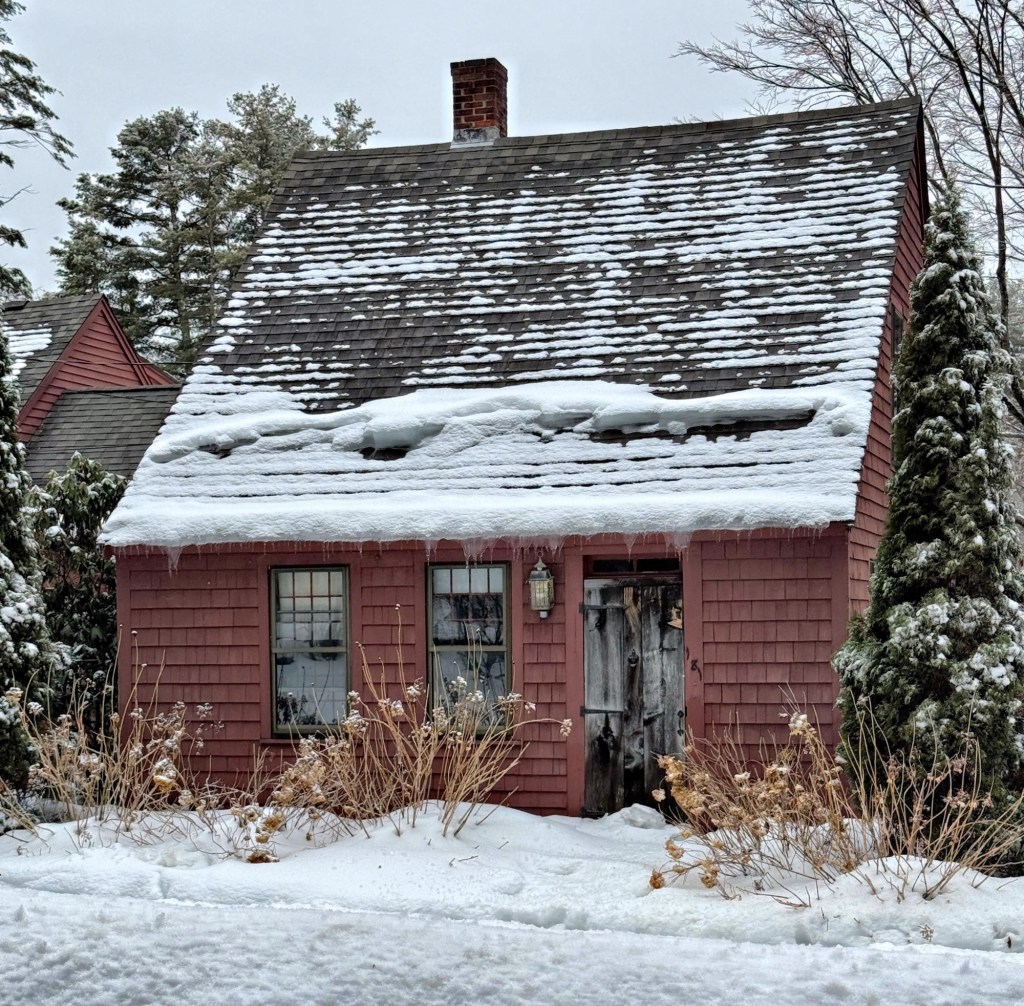
This First Period Home on in Wayland, Massachusetts, can be found at 184 Glezen Lane and is one of the community’s oldest residences. The Griffin-Malloy Homestead dates to about 1720 and is a large, single-family farmhouse that is just over 300 years old! Records state that the house was built by early settler, Samuel Griffin and possibly expanded later by his son, Deacon Jonathan Griffin. After generations of Griffin Family ownership, the old farmhouse was purchased in 1877 by Timothy Malloy (1839-1909) an Irish immigrant who settled in Wayland and operated a farm here. The house as of the 20th century, retained much of its original wood paneled walls and fireplaces, and has been lovingly preserved by generations of great stewards. 

Bryant-Finlay House // c.1713

This large First Period house in Wayland dates to the early 18th century and was originally located in Kingston, Massachusetts, and moved to its present location in the 40s. The historic home was built by 1713 for Jonathan Bryant (1677-1731). After 250 years in Kingston, the house was threatened with demolition, and was ultimately saved by Wayland resident, Allan Finlay. Allan was a member of the town’s Planning and School boards, and was active in overseeing the Modern expansion of Wayland’s schools in the 1950s and 60s. In 1941, Finlay had this house disassembled and rebuilt on land on Old Sudbury Road for his family. The house, with its expansive setback, overlooks preserved wetlands.

Happy Hollow Siphon House, Weston Aqueduct // 1903

The Weston Aqueduct was designed to deliver water from the Sudbury Reservoir in Framingham to the Weston Reservoir in Weston, Massachusetts. Built between 1901 and 1903, the aqueduct was designed to provide water to the suburbs north of Boston. All of the buildings that shelter the aqueducts above-ground elements, including this structure in Wayland, were designed by the architectural firm of  Shepley, Rutan and Coolidge, with landscaping along the route and at the reservoir designed by the Olmsted Brothers, landscape architects. This siphon house, known as the Happy Hollow Siphon House was built in 1903 and was an important part of the aqueduct system, as it transferred water through varied elevations using gravity and pressure to move the liquid without a pump. The aqueduct route is now a long, linear path and remains owned by the Massachusetts Water Resource Authority.

Cochituate School // 1910

The Cochituate School in Wayland, MA, was built in 1910 to educate the Cochituate Village’s growing student population. The industrial village was dominated by shoe manufacturing with workers largely consisting of first- and second-generation European immigrants who moved to New England for work. Boston architect, Willard P. Adden, designed the school, which replaced an earlier schoolhouse on the site that was outgrown. The two-story, brick school was expanded following WWII, when a long rear ell with classrooms and a cafeteria was designed by Perry, Shaw & Hepburn. In the 1990s, the old Cochituate School was renovated and converted to senior housing administered by the Wayland Housing Authority.

George Risley House // c.1870

This unique residence in Wayland, Massachusetts, is tucked away on Corman’s Lane, a dead-end street near Snake Brook, a small stream leading into Lake Cochituate. The house was built around 1870 for George William Risley (1836-1913), a shoe manufacturer and Civil War veteran who settled in Cochituate Village and ran a factory there. Risley was active in town affairs and served as Selectman in 1872, the year in which the annual meeting authorized the selectmen to petition the General Court for Cochituate to separate from Wayland. The petition was ultimately never was filed and Cochituate remains a part of Wayland. The Risley House has five bays and a shallow side gable roof with broad, overhanging eaves supported by brackets. A central porch runs along part of the facade and has intricate turned posts and spindlework. The home remains in great shape and is evocative of mid-late 19th century industrial housing built for factory managers.

Hopestill Bent Tavern // 1710

The Hopestill Bent Tavern is a historic First Period tavern, now a private residence, in Wayland, Massachusetts, on the Old Connecticut Path, a Colonial postal road. The tavern was owned and occupied by Hopestill Bent (1672–1725), a veteran from the King William’s War (one of the French and Indian Wars). Hopestill Bent was the great-great-grandfather of Charles Bent, a fur trader and first territorial Governor of New Mexico during the Mexican-American War, who was later scalped and killed by Pueblo warriors, during the Taos Revolt. The Bent Tavern served as a tavern until about 1780, was moved to the present site farther back from the street in 1800, and enlarged to the current size.