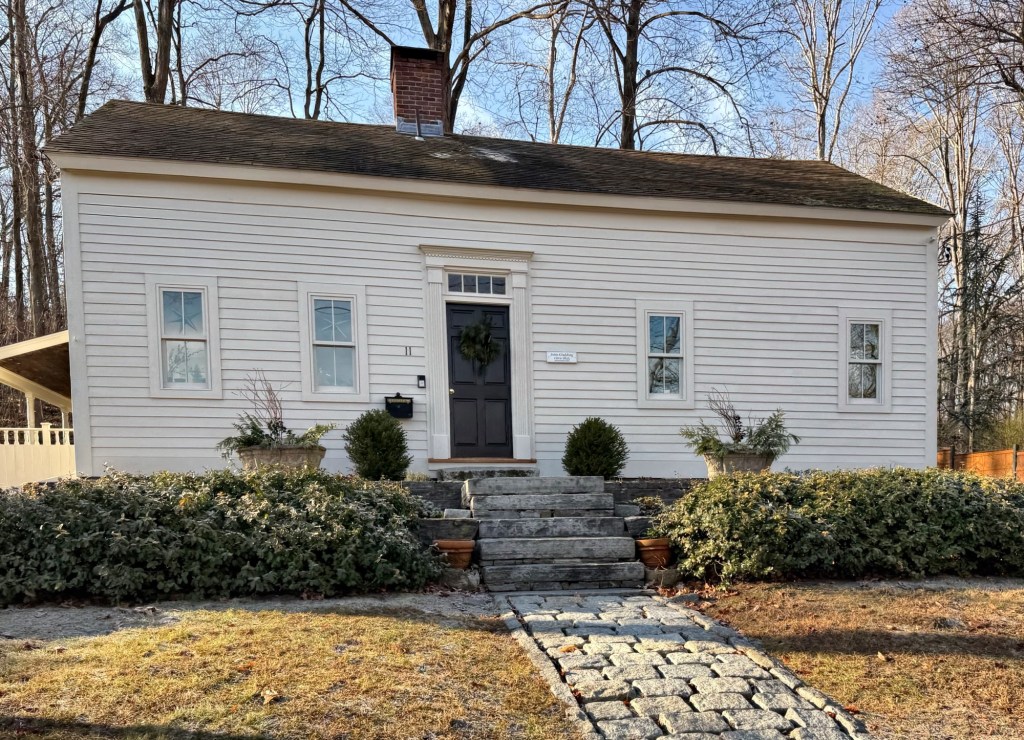
John Gladding House // c.1825

This vernacular, Federal period house on Union Street in Deep River, Connecticut, was built around 1825 for (and likely by) John Gladding. John worked in town as a joiner, a historic carpenter/woodworker, who either built houses or ships in the nearby Connecticut River. The Gladding House was likely originally built as a half cape, with a side hall entry and the two window bays to its left. As the family grew, the house was probably added onto to the right of the entry with the irregularly spaced bays. Houses like these that modestly grow and adapt to modernizations over time are what makes many New England villages great.
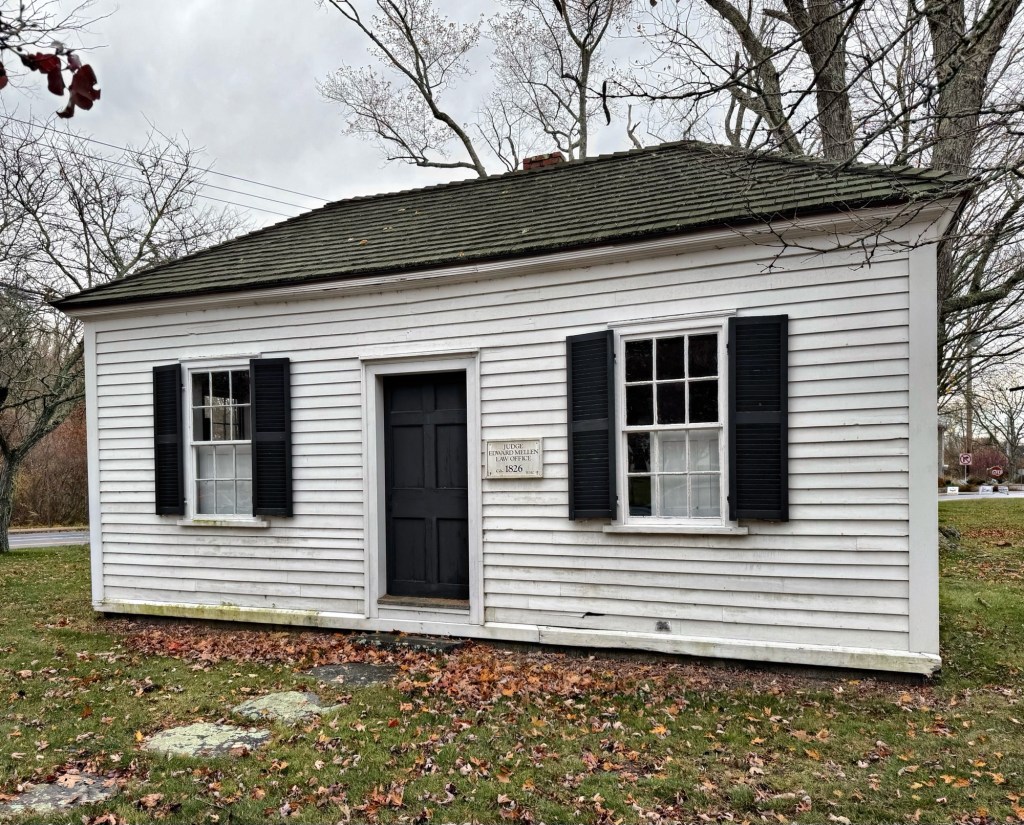
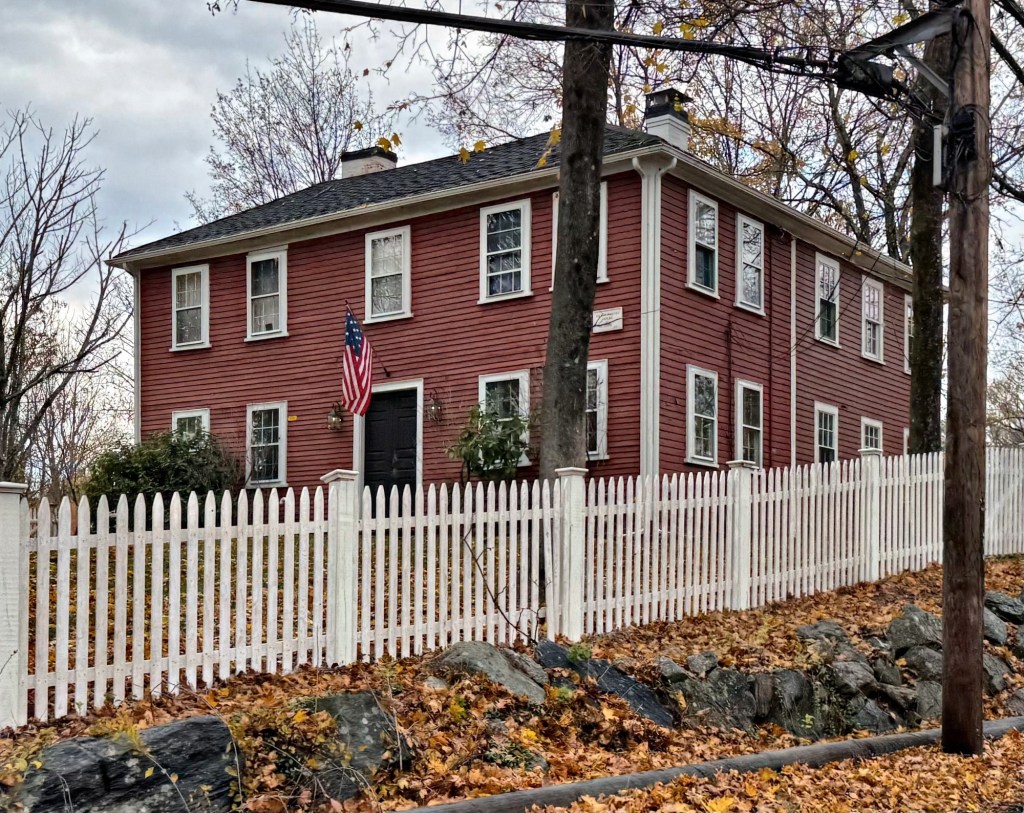
Mellen Law Office // c.1829

Samuel H. Mann (1801-1838), a lawyer, acquired the Dr. Ebenezer Ames House on Cochituate Road in 1829, only a month before his marriage to Isabella Ross. At about that time, Mann built this small law office across the road from his home, where he would practice law. It is not clear why, but within a year, Mann sold the house and this law office to Judge Edward Mellen (1802-1875), who was appointed Chief Justice of the Massachusetts Court of Common Pleas in 1855 and practiced law in Wayland until his death in 1875. After his death, the law office sat largely vacant until during World War II, when a newsletter to soldiers, The Village Bugle, was published here. After this, a couple of businesses used the former law office in the 1950s and 1960s until the owner donated the lot to the Town of Wayland in 1971. The diminutive building is a charming, and well-preserved example of a vernacular, Federal period professional office building that mimics the form and materials of the Ames House to which it was long affiliated with.

Reeves-Goodell House // c.1816

Built on a hill on Concord Road in Wayland, Massachusetts, the Reeves-Goodell House is a beautiful vernacular Federal period residence owned and occupied by a local builder and architect. The house was constructed by Henry Reeves (1789-1878), a local carpenter and descendant of Jacob Reeves (1720-1794) a tavern-keeper in town. In the 1920s, this property became the home of Edwin B. Goodell, Jr. (1893-1971), a prominent local architect who designed area houses before becoming a partner in the firm Andrews, Jones, Biscoe and Goodell of Boston. It was Goodell who added on the rear, three-bay addition to the residence, which blends in with the 1810s aesthetic. Interestingly, Edwin Goodell lived in this historic, vernacular house but designed some of the earliest International style modernist homes in New England.

Upland Farmhouse // 1929

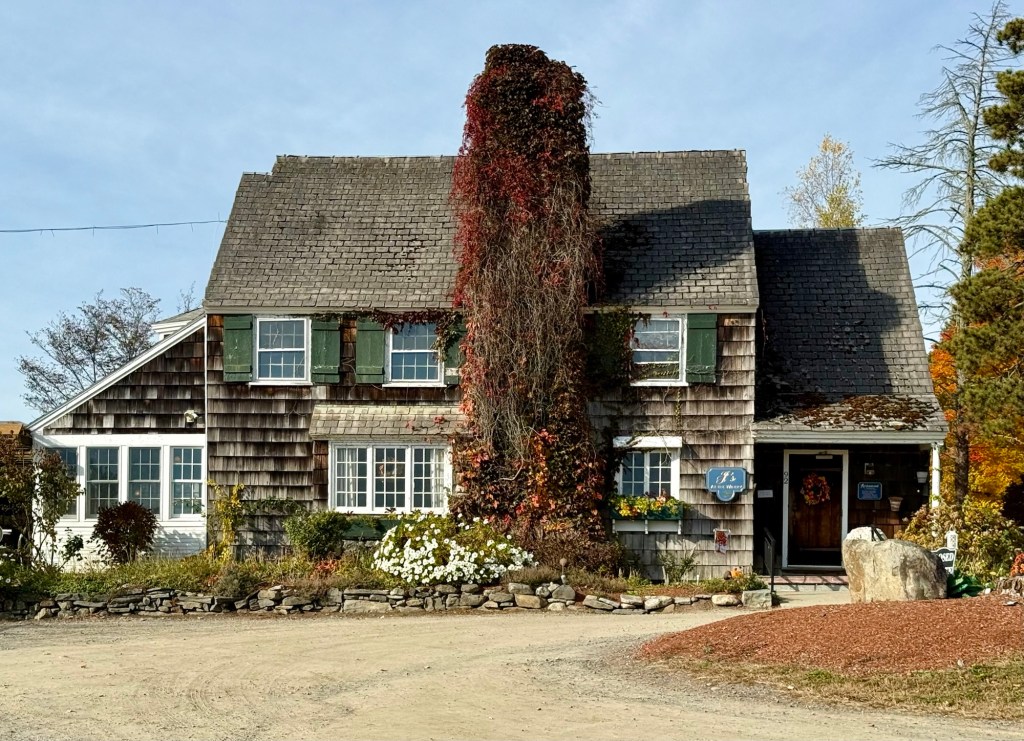
The Nashoba Valley Winery in Bolton, Massachusetts, is one of Bolton’s most successful examples of the adaptation of an old agricultural property in the state. The land here was first developed as a farm in the early 19th century by Captain Martin Houghton (1779-1833). The farmland here, which has always had a scenic view, was called “Valley View Farm” later owner, William N. Felton (1835-1920). Sadly, the old farmhouse burned down in 1928, and the property was sold that year to Roy Clemens, an osteopathic doctor, who had this charming shingled cottage built in 1929. Roy and his wife, Laura, planted an apple orchard on the hills and named the property “Upland Farm”. Roy died in 1969 and Laura followed in 1981. With suburban development likely, the property was ultimately saved when it was purchased by Jack Partridge as the new home of the Nashoba Valley Winery, which was founded in Somerville in 1978. The winery specializes in fruit wines, and grows most of the fruits and berries for them on the property. The business expanded, adding a distillery, brewery and restaurant, and the beautiful grounds are often host to weddings and events.

Abraham Wilder House // 1827

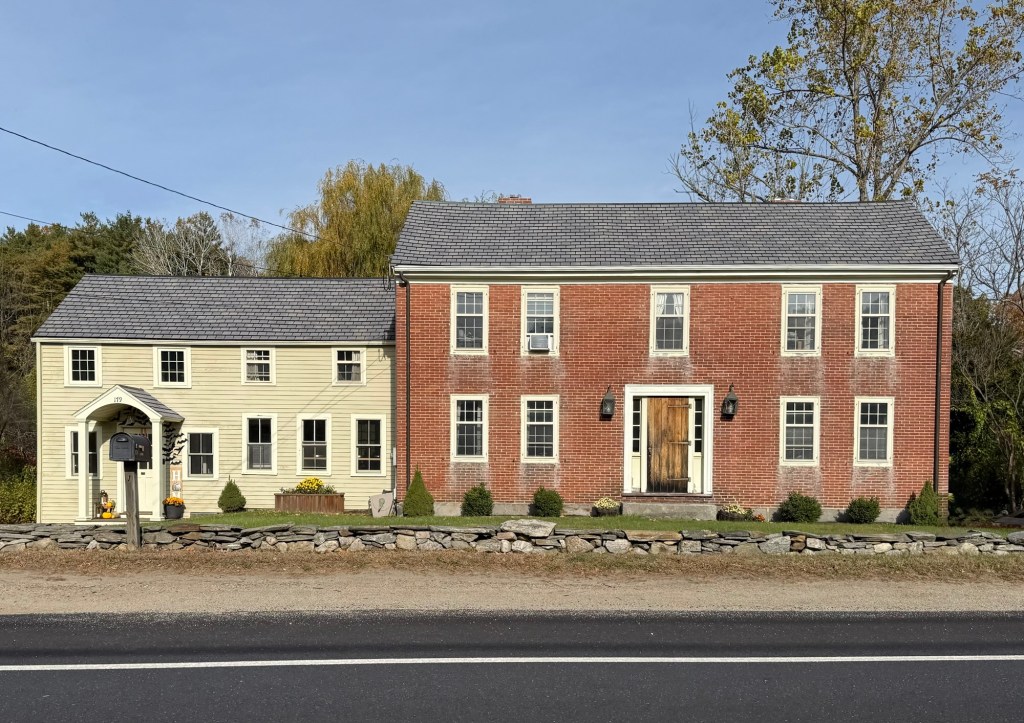
This exceptional vernacular example of a brick, Federal period house in Bolton, Massachusetts, sits on the town’s Main Street in the East Bolton village. Built in 1827, this house with attached wooden ell was the home to Abraham Wilder, a local blacksmith who followed his father’s footsteps in his professional pursuits. The house is two-stories with historic six-over-nine sash windows. The main center entry, rather than displaying a common elliptical fanlight for the period, is surrounded by trim boards, four-pane sidelights and a vertical-board door. Abraham’s blacksmith shop was once located next-door but was moved and reassembled in Old Sturbridge Village in 1957.

Simonsville Schoolhouse // 1856

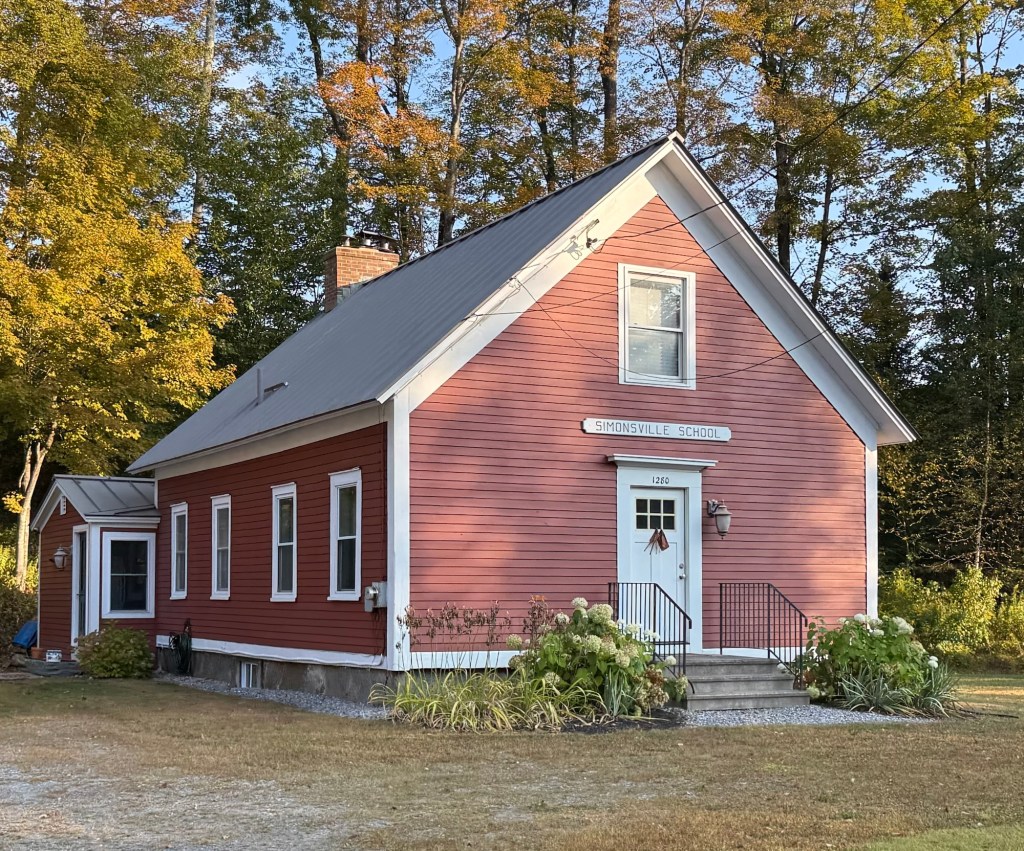
One-room schoolhouses like this example in the Simonsville area of Andover, Vermont, have been commonplace throughout rural portions of New England where children of most ages would share the classroom and be taught everything from basic spelling to math. The Simonsville schoolhouse was built in 1856 and is a typical example of a vernacular one-room schoolhouse in rural New England, with no frills or ornament, just a house of learning. The Simonsville Schoolhouse was converted to a residence sometime in the latter half of the 20th century and has been renovated, keeping the basic form and interior floorboards from the 1850s. The school-turned-home is currently (2025) listed for sale.

Pierce-Guild Lightning Splitter House // 1781

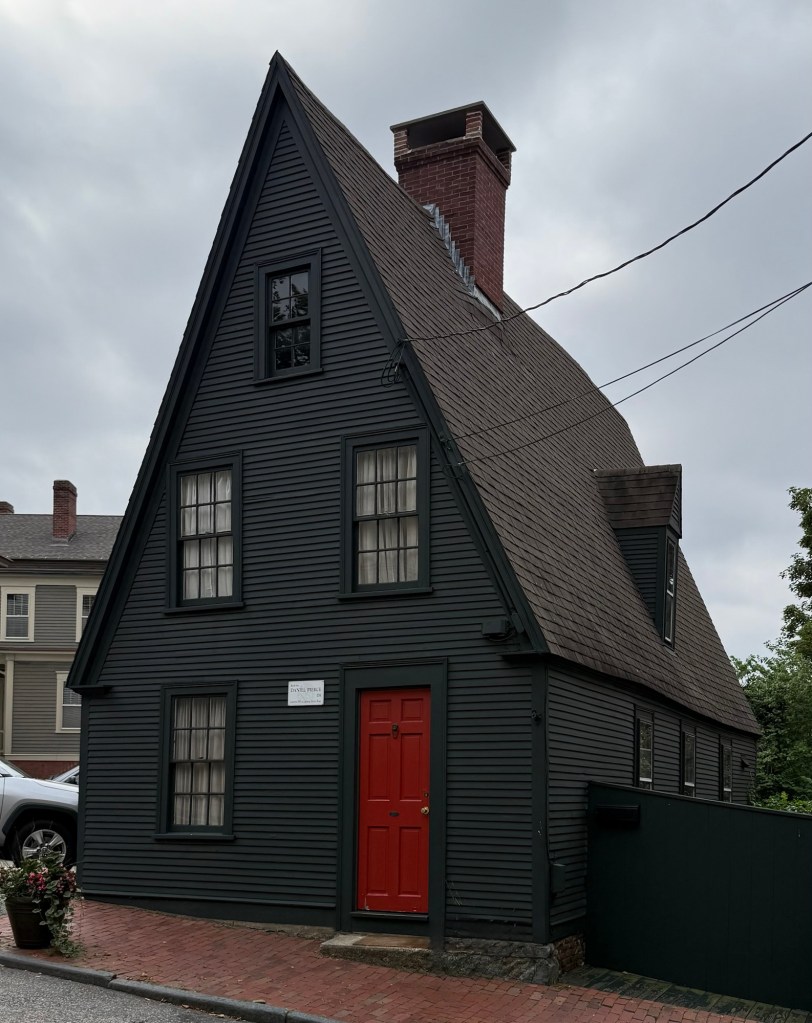
The Pierce-Guild House at 53 Transit Street in the Fox Point neighborhood of Providence, Rhode Island, is one of the most iconic and photographed residences in the state. Known as a “lightning splitter”, the unique name is taken from local folklore that the sharp angle of the gable roof will deflect or split lightning if struck. Whether or not this superstition is true, the unique house form numbers to less than a dozen in Rhode Island. This house, arguably the most well-known for its location off Benefit Street, was originally built in 1781 as a modest 1-1/2-story cottage with a gambrel roof for Daniel Pierce (Pearce), a tailor. In 1844, the property was sold to George Guild, a grocer, who modernized the house by creating the massive gable roof to provide a narrow third floor, which was illuminated by the end windows and a diminutive dormer at the roof. The house retains much of its character, after a restoration by owners in the mid-late 20th century.

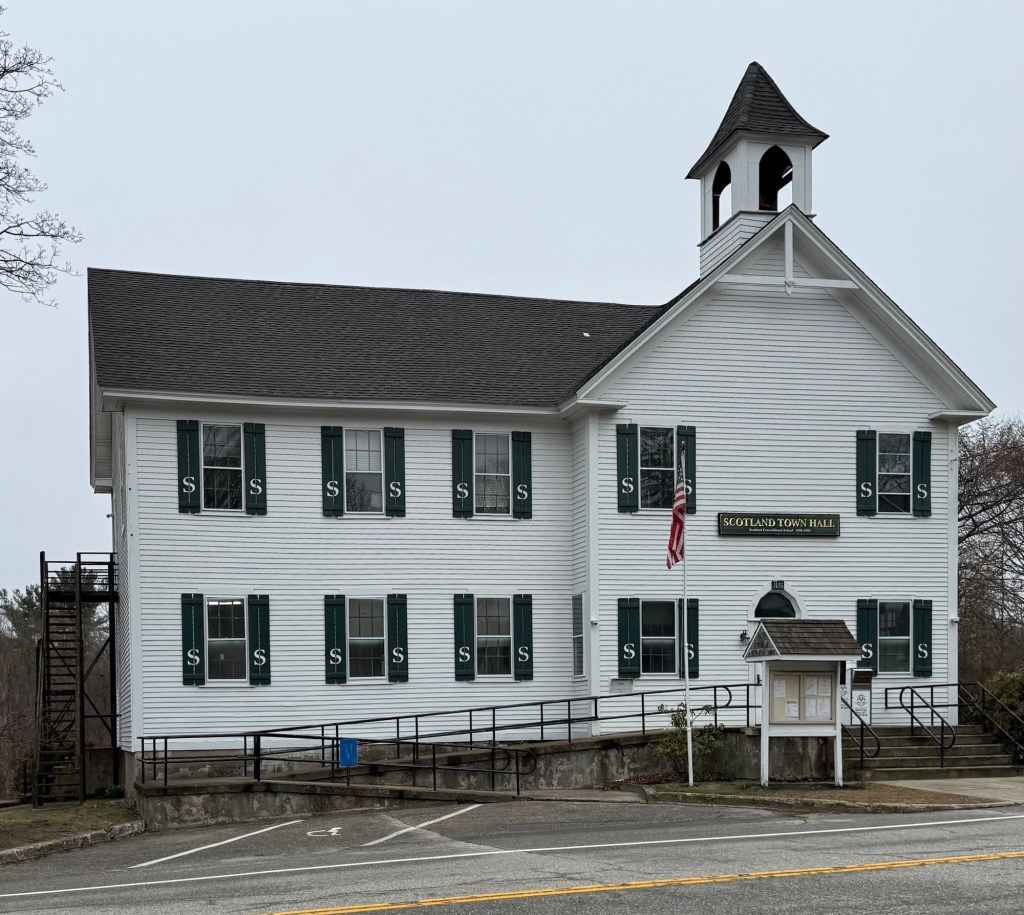
Scotland Town Hall // 1896

The town of Scotland, Connecticut, is a rural community centered around agriculture and is the smallest municipality in Windham County’s ‘Quiet Corner‘. European settlement began in earnest following the purchase of 1,950 acres of land from then Windham, by Isaac Magoon, a Scotsman, who named the new village after his ancestral home. The present-day town hall and offices of Scotland, was originally built in the 1840s as a one-room schoolhouse. In 1894, the town voted to consolidate all the school districts in a single building, and to expand the one-room village school to accommodate them. The present two-story structure was completed in 1896 and was added to the front of the old building. It is unclear if anything remains of the original schoolhouse. The vernacular, Stick style building served as the town’s consolidated school until a modern school building was constructed in the 1960s. This building became the town hall/offices and remains a significant visual anchor to the town’s common.

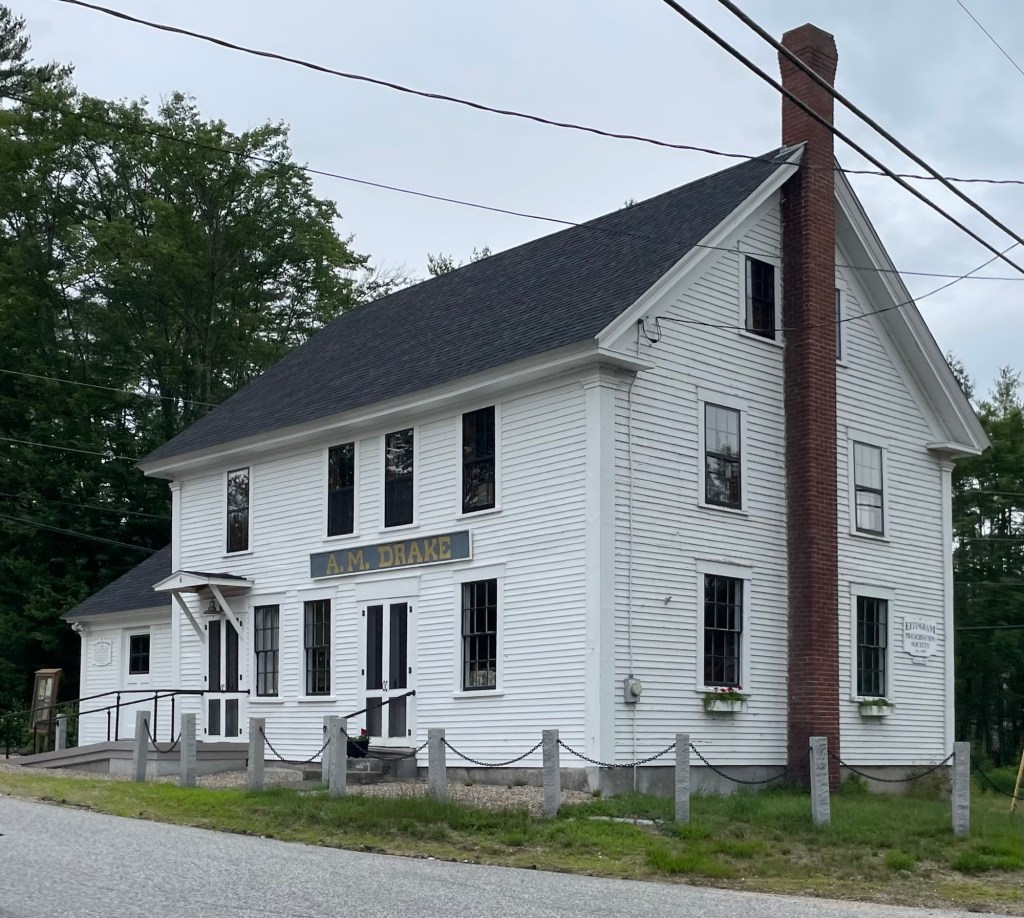
Drake Store // c.1816

The Drake Store is a vernacular, early 19th century commercial building located in the center of Effingham, New Hampshire. According to local sources, the building was erected around 1816 by Weare Drake, an original settler of the town at age 78, and his 23-year-old grandson, Thomas Parsons Drake. The store sold provisions and was home to a post office, when Thomas Drake served as the town’s postmaster. Within a few years, the store fell into disuse and the building was fitted up as an academy known as the Carroll Literary Institute. Due to insufficient enrollment, in the 1850’s, it was again occupied as a store by Alexander Mellen Drake (hence the sign) and changed hands several times before being purchased by Grange No. 313 in 1913, operating as a grange hall for local farmers. The building was given by the Grange to the Town in 1994 and purchased from the Town for $1 by the Preservation Society in 2002. The Preservation Society has been restoring the building through capital campaigns and grants and the old store shines once again!