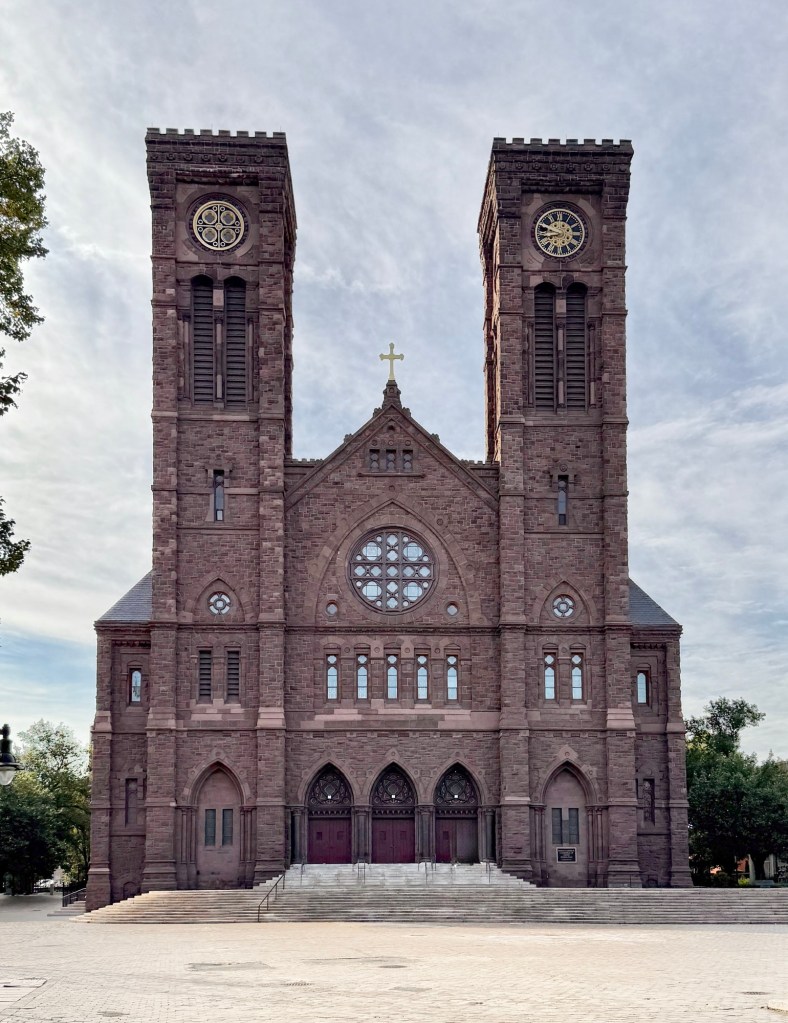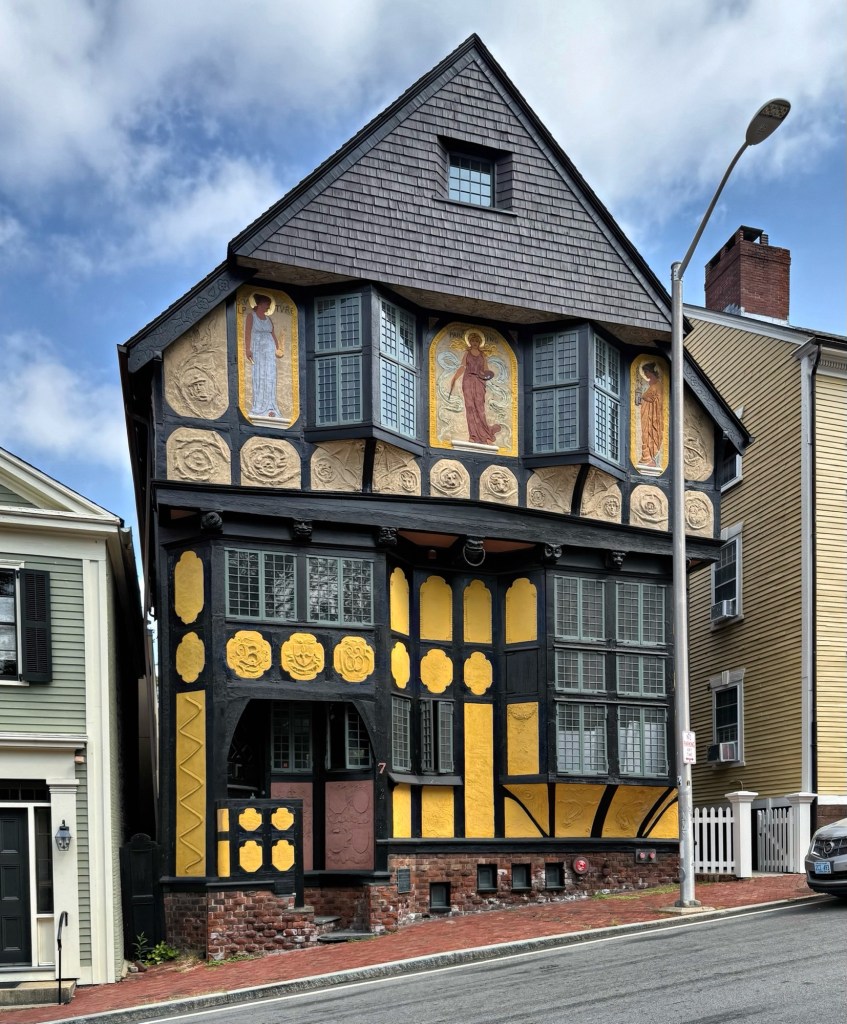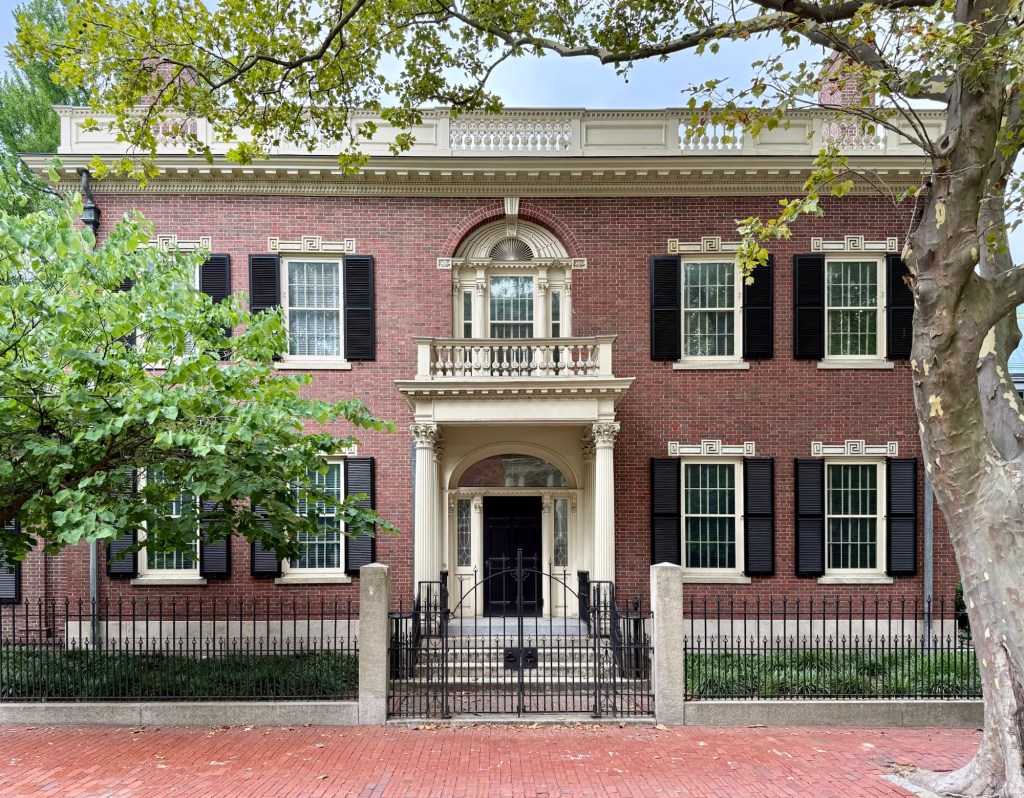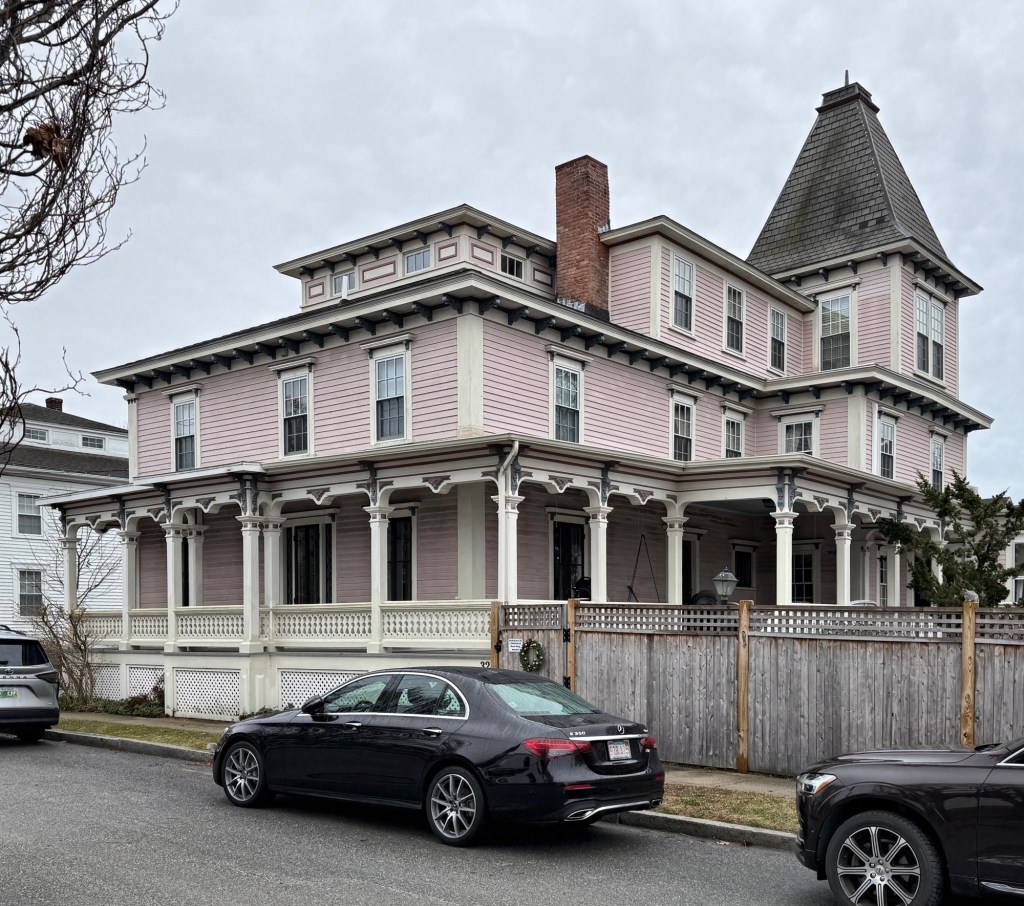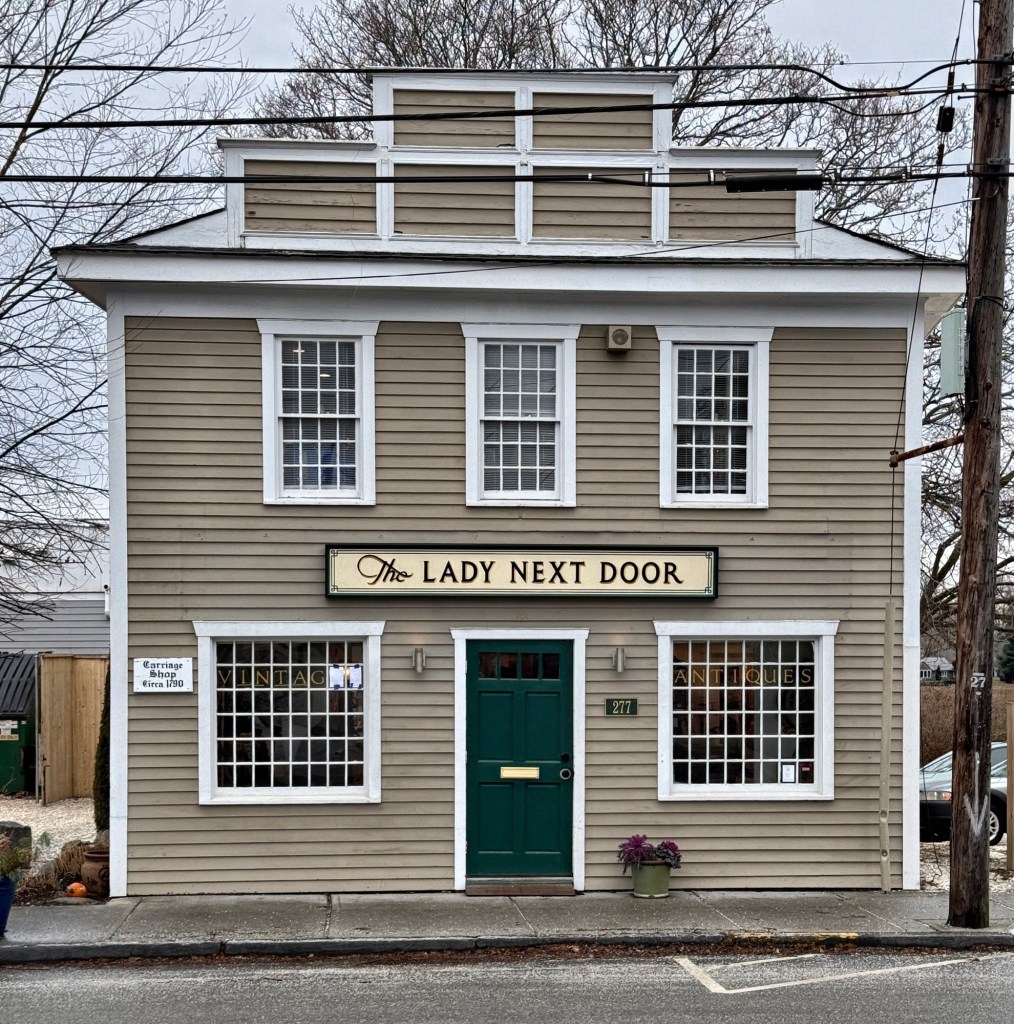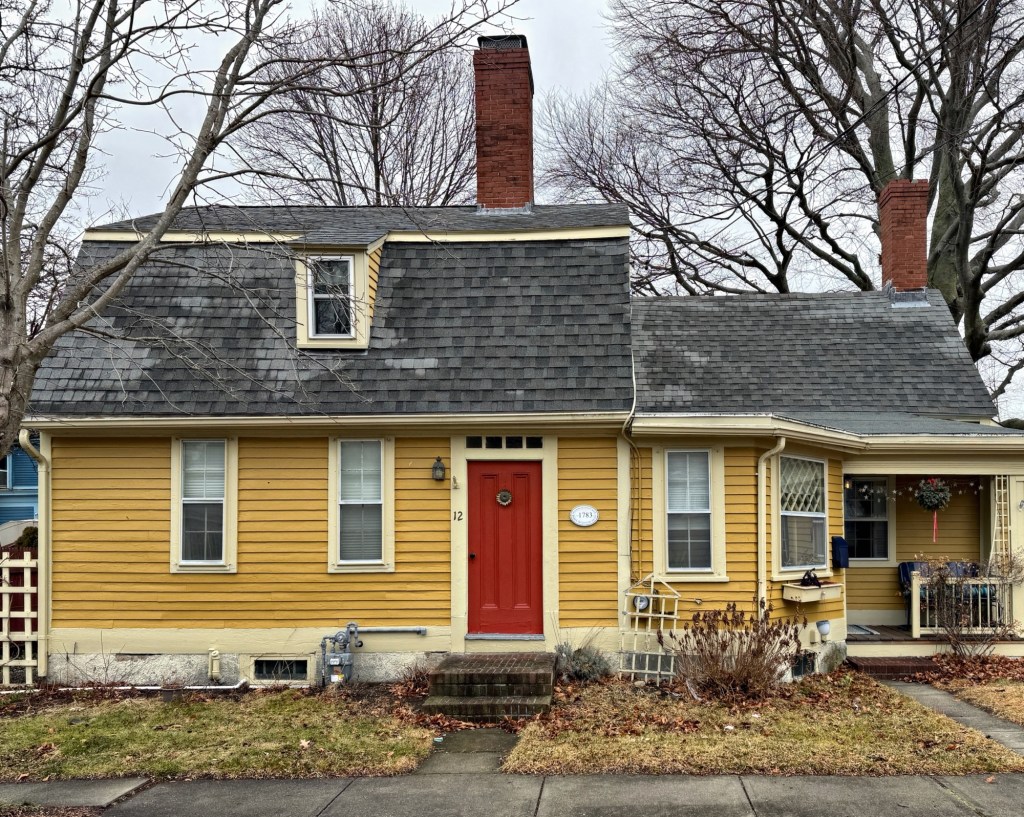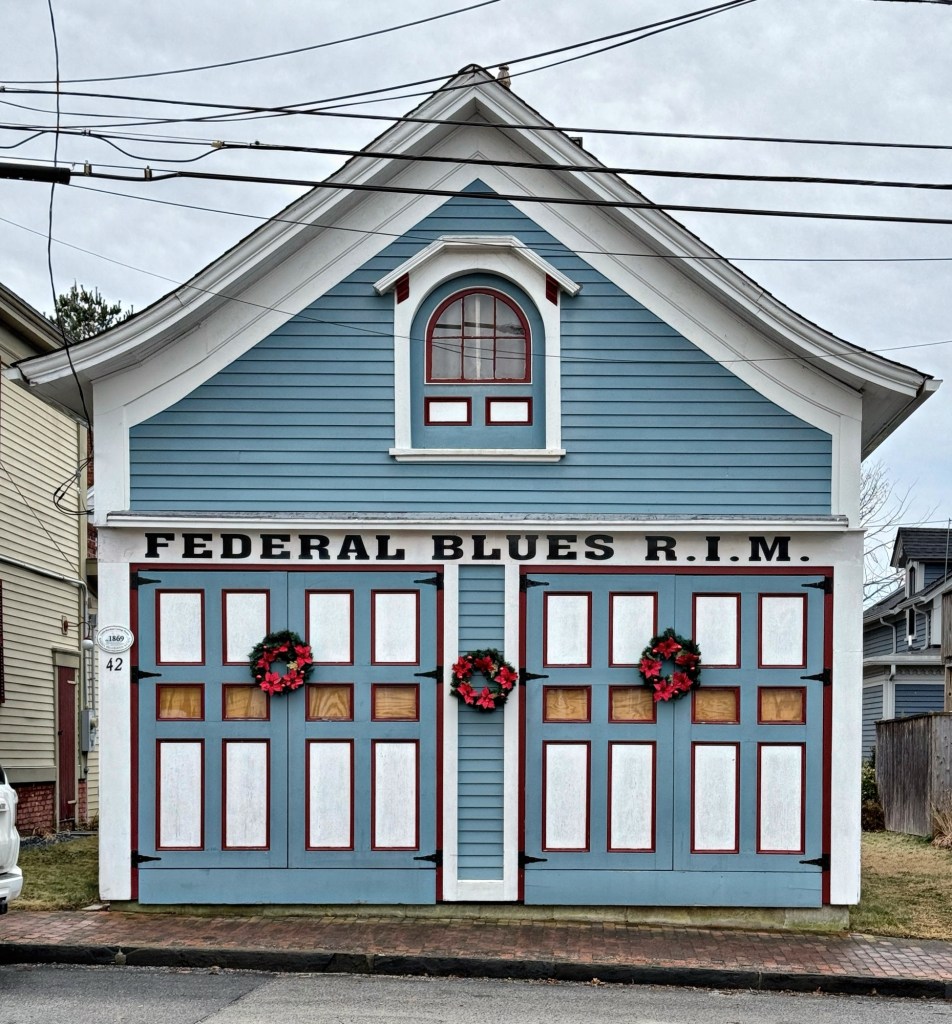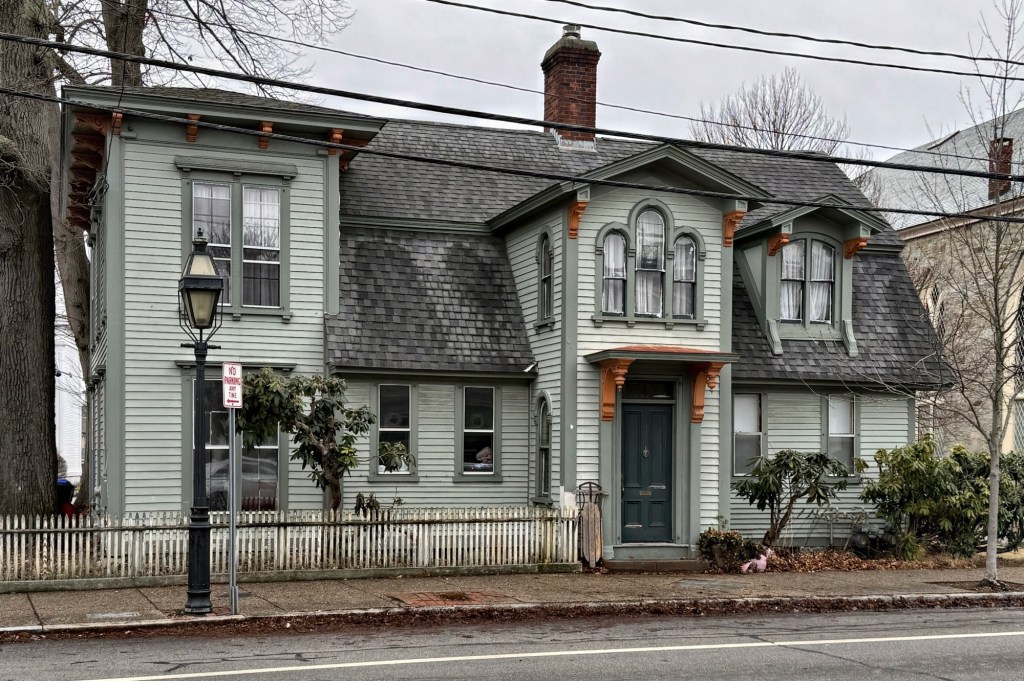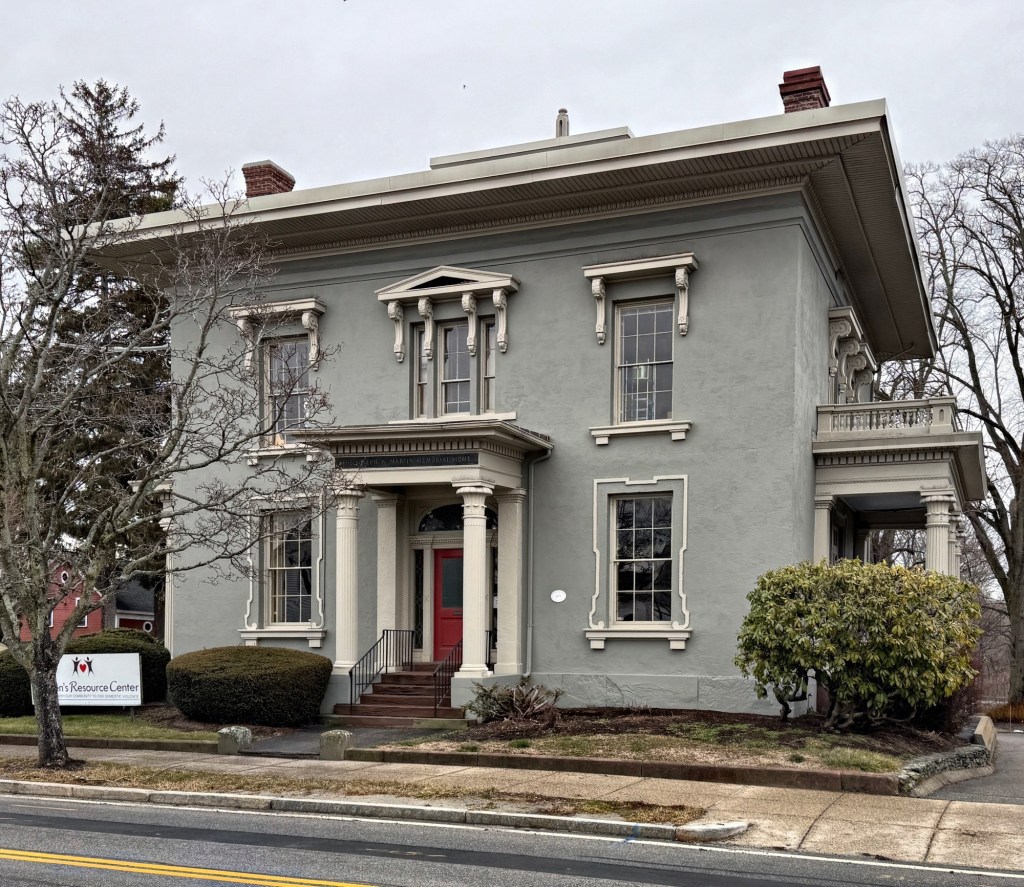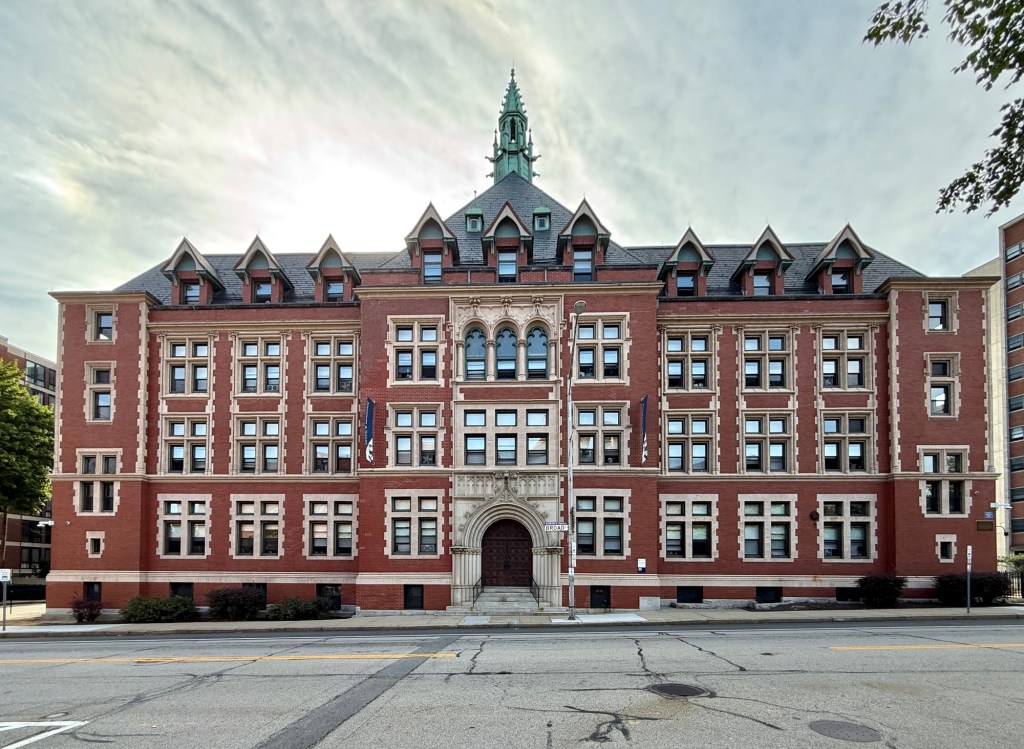
Judge Alfred Bosworth House // c.1849

The only two-story temple-front Greek Revival style house in Warren, Rhode Island, the Judge Alfred Bosworth House on Federal Street, is believed to be the work of great architect Russell Warren. Alfred Bosworth (1812-1862) ran a law office in Warren and Providence and represented Warren in the General Assembly from 1839 until 1854 and then served as a justice on the Rhode Island Supreme Court. Bosworth was of counsel for Rhode Island in suits growing out of the boundary question between Rhode Island and Massachusetts, specifically around Fall River. Judge Bosworth died at home in 1862 and his widow, Anne, lived here afterwards. At the end of the century the Bosworth House was converted to an ice cream parlor, named Maxfield’s, which became a very popular attraction in town. The company, owned by Nathaniel and Julia Maxfield, attracted throngs of local residents every summer who would eat ice cream on the front yard of the house. Maxfield’s was even frequented by Providence writer, H. P. Lovecraft, when he was a young man. During the mid-1900s, the house served as a nursing home until 1988, when owners restored the house back to a residence and removed the asphalt siding that was added to the exterior around the time of the Great Depression.

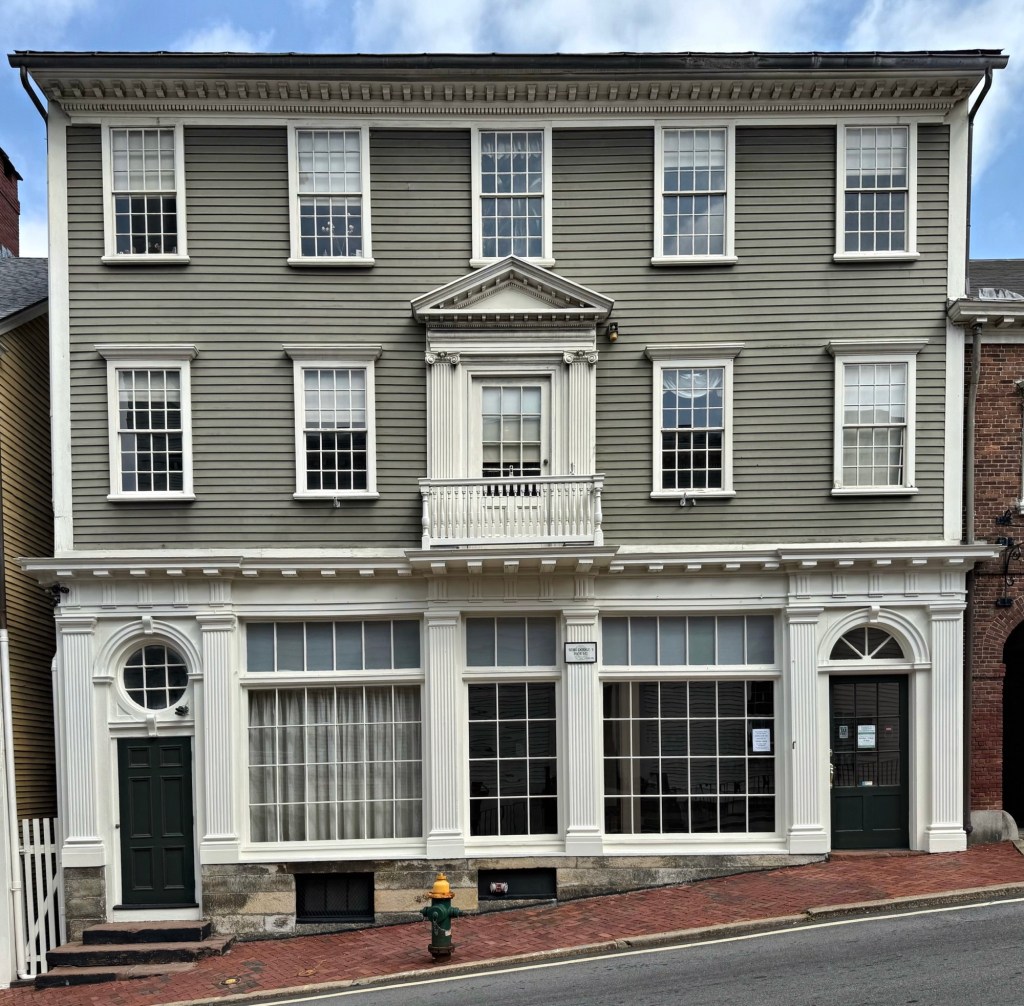
Old Cooper Shop // c.1800

This stunning Greek Revival house on Lyndon Street in Warren, Rhode Island, was according to historians, built around the turn of the 19th century as a cooper shop! A cooper as a professional, would make wooden barrels, tubs, and casks from wooden staves, which were all made in this building before it was converted and renovated around 1830 in the Greek Revival style for Deacon John J. Bickner, who was likely affiliated with the Episcopal Church across the street, which was designed by architect, Russell Warren. Due to the connection, it is possible that the renovation for Bickner was undertaken by Russell Warren as well. On its facade, the house has two-story applied pilasters which break up the bays and smooth flushboard siding which makes the house even more stately!

St. Mark’s Episcopal Church // 1829

St. Mark’s Episcopal Church in Warren, Rhode Island, is a small, yet architecturally significant building that was one of the first examples of the Greek Revival style in the community. The episcopal church was formed in Warren in 1828, with members originally meeting in Cole’s Hotel while this site and construction completed on their new house of worship. The well-connected congregation hired architect, Russell Warren, who had just completed the Westminster Arcade, a landmark in the Greek Revival style, in Downtown Providence. Distinguished by its beautiful four columned Ionic portico and canted door frames, the church also originally had a square tower and parapet, which were removed following the 1938 hurricane, and replaced with a simple pediment. The parish closed in 2010 and the diocese sold the building in 2012 to private owners, who converted it about ten years ago into a residence, but retained the historic stained glass windows and character of the building. The entire site today (2026) is being renovated with what appears to be a modern addition on the side (not pictured). Hopefully the architecture of this landmark will be preserved.

Warren Armory // 1842

Although somewhat altered from its original appearance, the Warren Armory on Jefferson Street in Warren, Rhode Island, can easily be identified as a playful example of a Gothic Revival building, one of several Romantic styles that prevailed in the mid-19″ century. Here, the distinguishing features are its octagonal castellated towers, pointed arched central entry, and thin, long, slit-like, window openings set into the thick, stuccoed stone walls, important fire/blast-proof construction due to the storage of arms and gunpowder. Built in 1842 and formally opened in 1843, the building was used for social affairs by the local artillery company as well as citizens of the town for general entertainment for the public, including performances by Gen. Tom Thumb of P.T. Barnum’s travelling circus. In 1952, the property was conveyed to the Warren Post #11 of the American Legion.

First Methodist Church of Warren // 1844

Located next door to the diminutive Easterbrooks Cottage on Church Street, the First Methodist Church of Warren, Rhode Island, stands as one of the community’s great 19th century buildings. Constructed in 1844 with its iconic steeple completed a year later, the Methodist Church is a great example of a vernacular, Greek Revival style with prominent, south-facing portico with four two-story Doric columns supporting the entablature and pediment above. Built by Perez Mason (1802-1881), a carpenter and later amateur architect, the church stands out for its iconic five-stage steeple, which has long served as a sort of landmark for sailors arriving into the harbor nearby.

Lewis T. Hoar House // c.1800

While a part of this Warren, Rhode Island, home may date from as early as the late 18th century, it was completely “modernized” in the mid-19th century by owner, Lewis T. Hoar, a successful housewright, giving us the playful design we see today. Lewis Thomas Hoar (1810-1881) worked in partnerships, building many of the stately Italianate style residences in the village of Warren before entering politics, where he was elected as a state representative. Rather than building his own home from scratch, Lewis updated an earlier Federal period house, retaining its Federal-era hipped roof with monitor, but added the more intricate bay windows and porch, embellished with carved balustrade, brackets and ornament. The large property even retains a Second Empire style stable or barn, which has been preserved by later owners. 

Salisbury-Johnson House // 1823

One of the great Federal style homes in the charming downtown of Warren, Rhode Island, the Salisbury-Johnson House at 43 Miller Street features many of the hallmarks of the prominent architectural style. The main body of the house was constructed by 1823 after Theophilus Salisbury (1781-1835) purchased the house lot at the corner of Union Street, possibly being moved from another site to the present location at this time. The two-story, five-bay façade is detailed by quoined corners and an exceptional center entrance with sidelights and large, elliptical blind fan carved from a single piece of wood. After later owners, the property was purchased by Rodolphus B. Johnson (1816-1884), a wealthy shipping agent who owned whaling ships and ran a wharf at the foot of Johnson Street nearby.

Warren Baptist Church // 1844

The Warren Baptist Church on Main Street in Warren, Rhode Island, is a landmark example of an ecclesiastical building in the Gothic Revival style completed in stone. Like many communities in Rhode Island, Baptists in Warren, were the first and largest denomination in the community, dating back to the 18th century. The congregation’s first purpose-built church was constructed in 1764 and was burned by the British in 1778 as they left Warren. Its replacement (1784) was demolished for the present building sixty years later. Interestingly, this site is significant additionally as the site of the founding of Brown University. as when Reverend James Manning was called in 1764 to take over the congregation and its new church building, he did so with the proviso that he could open a school for the training of Baptist ministers because all existing colonial colleges at the time provided for training only in the Congregational and Episcopal ministries. The school was located behind the present location of the church and it spent its first four years here in Warren, holding its first commencement in that church until the new school (and Reverend Manning as president) were lured to Providence, where Brown University has remained ever since. The present Warren Baptist Church was built in 1844 and was designed by famed Rhode Island architect, Russell Warren, who is best-known for his work in the Federal and Greek Revival styles, but here shows his expertise and skill in the Gothic mode. The building is notable for its lancet-arched windows and belfry with narrow lancet arched louvered windows set below the clock faces set in triangular trefoil tracery. The congregation also maintains Tiffany windows donated by members of the church.

Maxwell-Barton House // 1803

Built in 1803 for Captain Level Maxwell (1754-1828), this five-bay, Federal style house built of brick, is located on Main Street in Warren, Rhode Island, and has ties to the community’s maritime past. The original owner, Level Maxwell, was a member of the wealthy Maxwell Family who built their wealth in shipbuilding and the triangle trade. Level Maxwell was a captain and invested in ships, including the schooner Abigail, which would become Warren’s first slave ship in 1789, two years after slave trading had been declared illegal for Rhode Island residents. The Abigail was designed with a middle deck less than five feet high, where the kidnapped Africans would be imprisoned, with sources stating that 64 African men, women and children were forced onto the ship and then imprisoned for two months on the journey across the Atlantic. Eleven enslaved people died on the journey and were likely thrown overboard into the open sea, with the surviving 53 people sold into slavery in the Caribbean, with the Abigail returning home with the profits. It is unclear if Level Maxwell lived in this house or built it for sale, but the property was owned in the mid-19th century by George A. Barton, a merchant. The property was owned in the late 20th century by Mary King, who restored the old house and operated her antique store from the residence. Architecturally, the home exhibits many features of the Hazard-Gempp House nearby on Liberty Street, and was likely constructed by the same builder.

Hazard-Gempp House // c.1800

This elegant brick Federal style residence in Warren, Rhode Island, was built around the turn of the 19th century, sometime after Liberty Street was laid out in the mid-1790s. An excellent example of the Federal style finished in brick, the three-bay residence features a projecting belt course between the first and second stories, corbels and flared lintels at the windows, a hipped roof surmounted by a small, centered platform, and an elaborate entry with pediment and elliptical fanlight transom. The builder is not known at this time, but the house was owned by George C. Hazard and later inherited by his son, George G. Hazard and later by Mary Jane Hazard, who remarried to Lucius Warner. In the early 20th century, the property was purchased by Gottlieb and Louise Gempp, proprietors of the local American-German Club. Despite having its brick painted, the Hazard-Gempp House remains as one of the town’s great and well-preserved Federal period homes built of brick.

General Nathan Miller – Commander Joel Abbot House // 1789

The Miller-Abbott House at 33 Miller Street in Warren, Rhode Island, is significant architecturally as well as for its owners, who included a Patriot in the American Revolution and naval officer. The first owner, Nathan Miller (1743-1790) was a prominent local shipbuilder in Warren, Brigadier General of the Rhode Island Militia during the Revolutionary War, and delegate for Rhode Island to the Confederation Congress in 1788. This home was built in 1789, a year prior to his death in 1790; after-which, the general’s daughter, Abigail, and her husband, Charles Wheaton inherited the property and lived here with Nathan’s widow, Rebekah. In 1803, the house was expanded, likely when the right two bays were added to the home. Their daughter Laura married Joel Abbot in 1825 and resided here afterwards. Joel Abbot (1793–1855) was a Naval officer in the War of 1812, and after later important promotions, in 1852, he was made Commander by Commodore Perry. Soon after, Commodore Perry asked Abbot to accompany him on his famous Japan expedition, where U.S. ships sought to explore, surveying, and the establish diplomatic relations and negotiate trade agreements with the various nations in Japan, the first time in history. General Abbot died in Hong Kong in 1855 and his body was returned to Warren for burial. The Miller-Abbot House remains well-preserved despite replacement windows and retains its large side and rear yards in the dense downtown.

Warren Town Hall // 1890

Warren, Rhode Island, is one of the lesser-visited coastal communities of the state, but retains one of the best waterfront historic districts in all of New England. With a small population of just over 11,000 residents, the downtown is extremely walkable with a tight network of streets, lined with stellar buildings and homes of nearly every architectural style and period, and are largely preserved showcasing what New England communities were like in centuries past. On bustling Main Street, the Warren Town Hall was designed by the Providence-based firm of William R. Walker & Son, architects, and constructed between 1891-1894. Designed in the Romanesque Revival style, the two-story building with five-story central tower also features Classical detailing like the terra cotta swags and brick pilasters. Before the 1938 Hurricane, the tower was even higher, incorporating an open stage topped by a parapet and a clock face on each of the segments of its still extant dome, which now has a slightly reconfigured mini-cupola topping. Additional detailing includes a terra cotta bust of the sachem/leader Massasoit with leafage, above a fluttering ribbon inscribed “Sowams,” the Wampanoag settlement that preceded Warren. The Warren Town Hall remains well preserved by the local government and a visual landmark on the town’s Main Street.

John Larchar House // c.1820

The John Larchar House at 282 Benefit Street in Providence is one of the many stately Federal period homes in the city designed by great architect, John Holden GreeneJohn Larchar (also spelled Larcher), was born in Providence in 1787 and worked in local businesses, eventually becoming a bank director that was involved in many mercantile pursuits. The residence remained in John’s family long after his death in 1863, and has been maintained so well by subsequent owners. The 2½-story, brick Federal house features stone trim, four chimneys, a central elliptical fanlight doorway, modillion cornice and amazing 12-over-12 windows. The cupola at the roof appears to be a is a mid-19th-century addition, possibly after John’s death. The garage and two-story side addition dates to the 1960s but does not detract from the architectural integrity of the home. 

Stephen Hopkins House // 1743

The Stephen Hopkins House is a Colonial-era house in the East Side neighborhood of Providence, and has survived waves of commercialization and redevelopment for nearly 300 years. The home is associated with Founding Father of the United States, Stephen Hopkins (1707–1785), who served as Governor of the Colony of Rhode Island and Providence PlantationsChief Justice of the Rhode Island Supreme Court, and was a signer of both the Continental Association and Declaration of Independence. In 1742, Stephen Hopkins purchased a one-story cottage built in 1707 on Main Street, and enlarged the original house to its present size by 1743, incorporating the original cottage as the rear ell. The eight-room residence was occupied by Gov. Hopkins, his family, as well as enslaved Africans who lived under the same roof until his death in 1785. During his ownership, George Washington slept here, twice. After 150 years of successive ownership, in 1928, the house was moved to its current location at the corner of Hopkins and Benefit Streets to facilitate the construction of the new Providence County Courthouse complex. The Hopkins House was restored by architectural historian and architect, Norman M. Isham, and is owned by The National Society of the Colonial Dames of America, operating it as a historic house museum. The Gov. Stephen Hopkins House is a National Historic Landmark.

Providence County Courthouse // 1926

S. Main Street Elevation

The Providence County Courthouse complex occupies an entire city block running between Benefit Street and South Main Street and while of immense scale, is broken up into more human-scaled wings and masses that make the building one of the finest and contextual designs in a city full of amazing architecture. The courthouse here replaced the first courthouse, a stunning palace of justice designed by Stone & Carpenter in the High Victorian Gothic style, that was completed in 1877. The old courthouse was soon outgrown and a larger building was planned following WWI. The present courthouse was built between 1926 and 1930 following a design by Jackson, Robertson & Adams in the Georgian Revival style, fitting of its context amongst some of the finest Colonial-era houses and buildings in New England. The building today contains the Rhode Island Supreme Court, Providence County Superior Court, and the local trial court. The South Main Street facade is my favorite with the Guastavino tile roof entry and stunning colonnade at the street level. A multi-stage clocktower emerges from the center of the building, at a height of 216-feet, making the courthouse the 11th tallest building in Providence.

Benefit Street Elevation