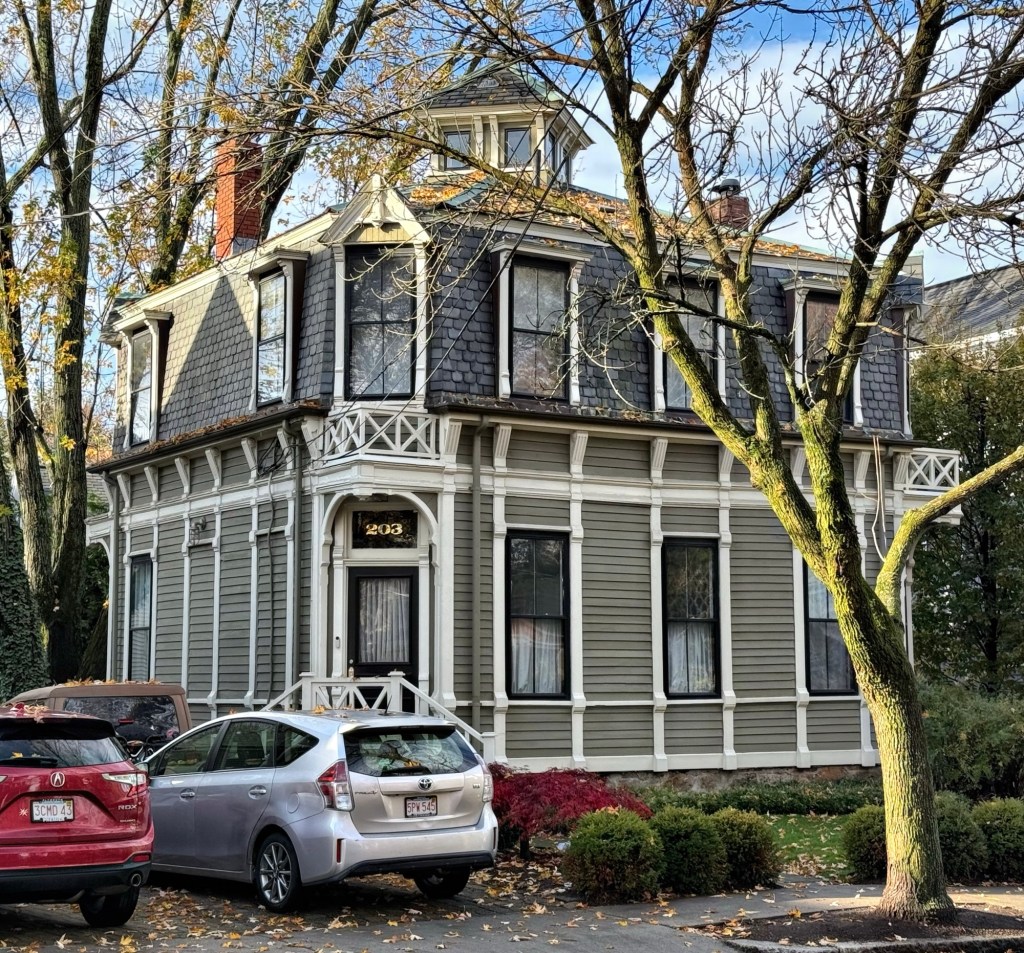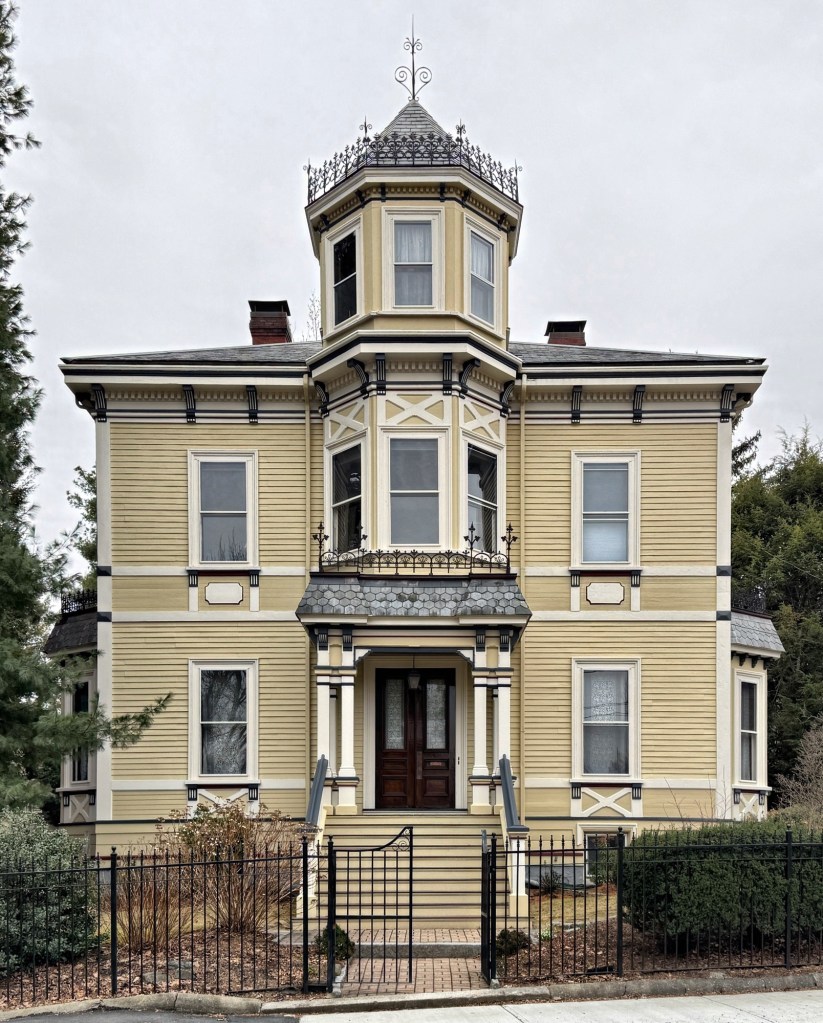
Toussaint House // 1879

In 1879, furniture-maker and amateur architect, Winand Toussaint (1826-1904), built this unique mansard roofed house at 203 Aspinwall Avenue in Brookline Village. Toussaint was born in Belgium, and immigrated to the United States about 1841, where he originally settled in Roxbury and operated a cabinetmaking business. Toussaint moved from Roxbury to Brookline about 1873, but lost his fortune in the Panic of 1874. After a few years, he found work and eventually purchased a house lot here, and designed and built this home in 1879. Winand was born into a family of architects and engineers in Europe with his grandfather being Jean Lambert Toussaint of Liege, an architect who reportedly built the first railway introduced in Belgium. He is said to have studied in France and Italy before working in furniture-making in the United States. He maintained a professional office from his Brookline house until his death in 1904. After his death, the family home was inherited by daughter, Emma Toussaint, who was unmarried and worked as a linguist and writer under the name “Portia”. The charming Toussaint House blends Second Empire and Stick styles with unique beveled corners, one of which contains the main entrance, and a belvedere at the crest of the mansard roof. Due to its unique architecture, the Toussaint House was individually listed in the National Register of Historic Places in 1985.

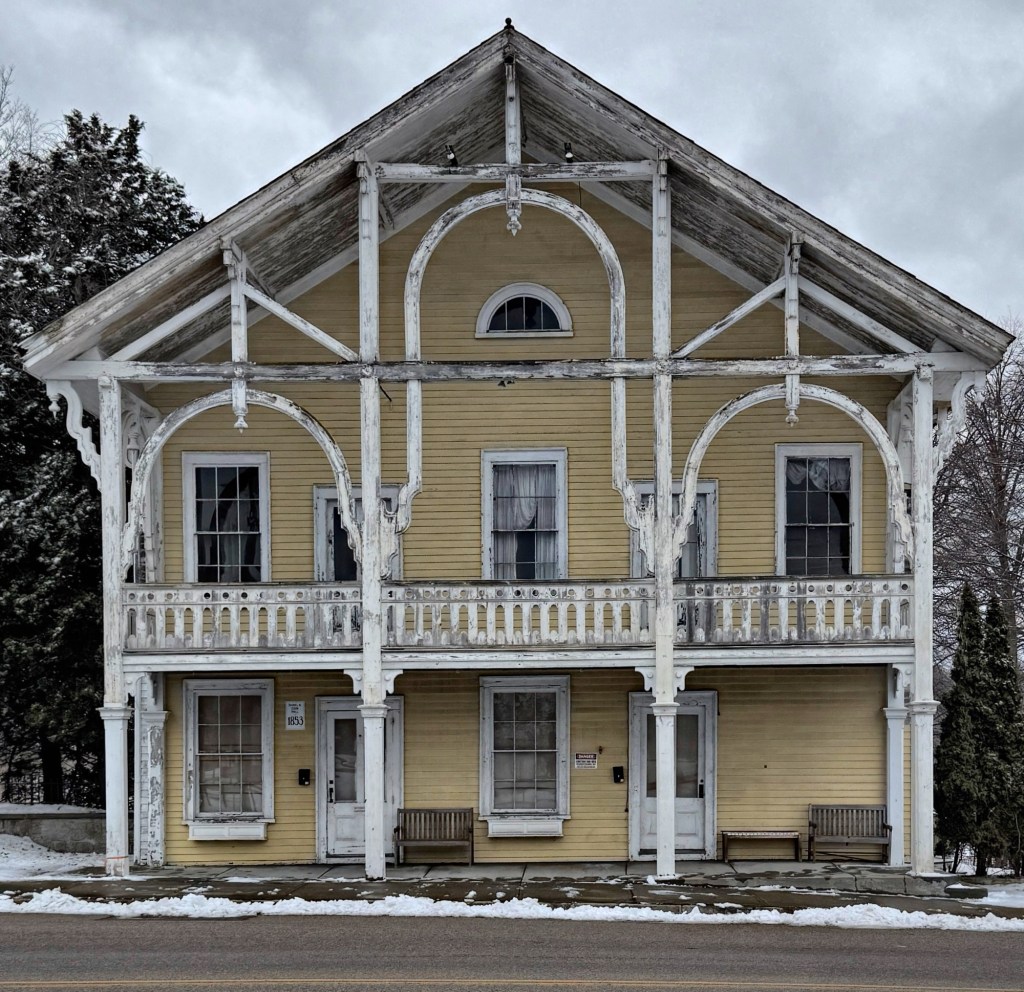
Wayland Railroad Depot // 1881

The Wayland Railroad depot in Wayland, Massachusetts, was built in 1881 by the Massachusetts Central Railroad, which was later absorbed as part of the Boston and Maine Railroad. The line operated both passenger and freight service, with this structure serving as the passenger station and freight at the nearby structure, also built in 1881. Regular train service helped develop Wayland Center into a more prosperous Boston suburb, but industry and larger developments did not occur like in other communities. In its heyday, the Wayland station was manned by an agent with a small office in the building. The station agent was responsible for nearly all aspects of the operations from selling tickets; handling mail, baggage, and freight; keeping financial and operating records; and even maintaining the grounds. After WWII, car ownership and highway expansion harmed the rail industry and trains ceased to run in Wayland. To save the building from eventual demolition, the Town of Wayland purchased the old depots, which since the 1980s, has been leased to “The Wayland Depot“, a charitable women’s consignment craft shop with retail space in the station. The former rail line has largely been converted to a rail trail for pedestrians and bicyclists to traverse the old railroad right-of-way.

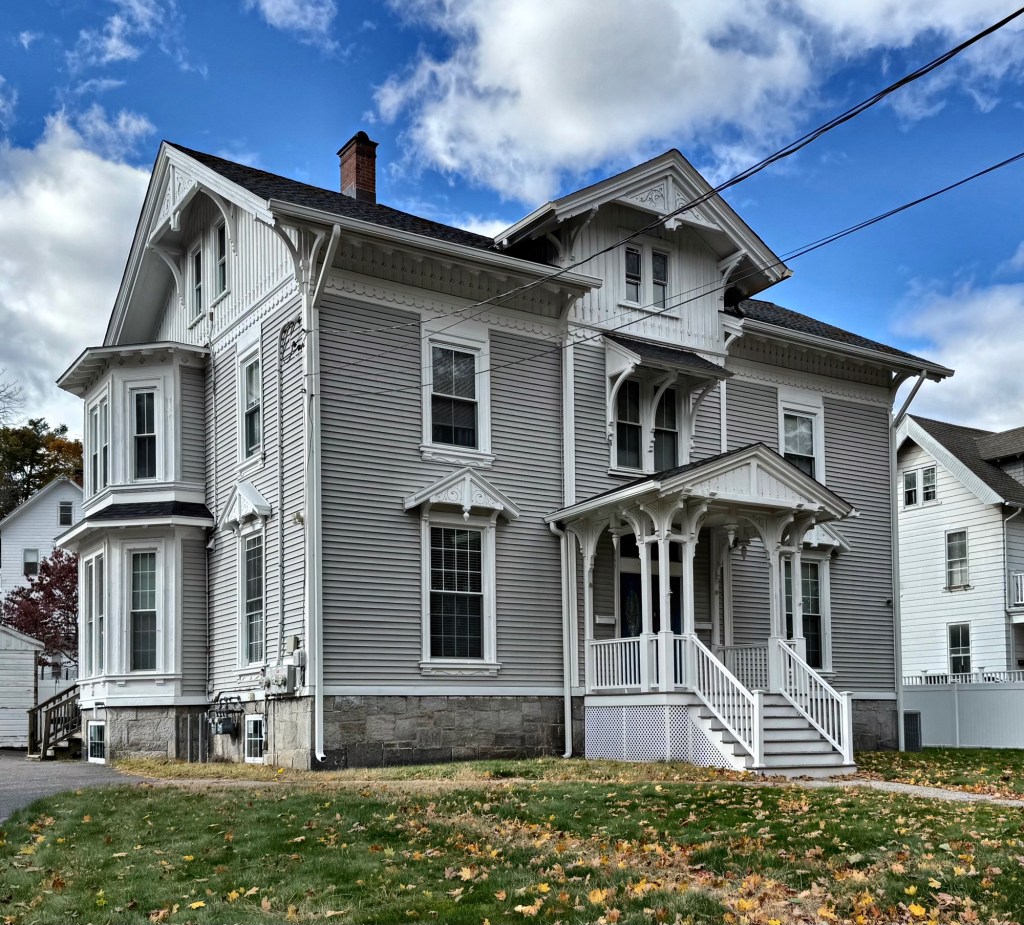
Dr. Albert Phillips House // c.1875

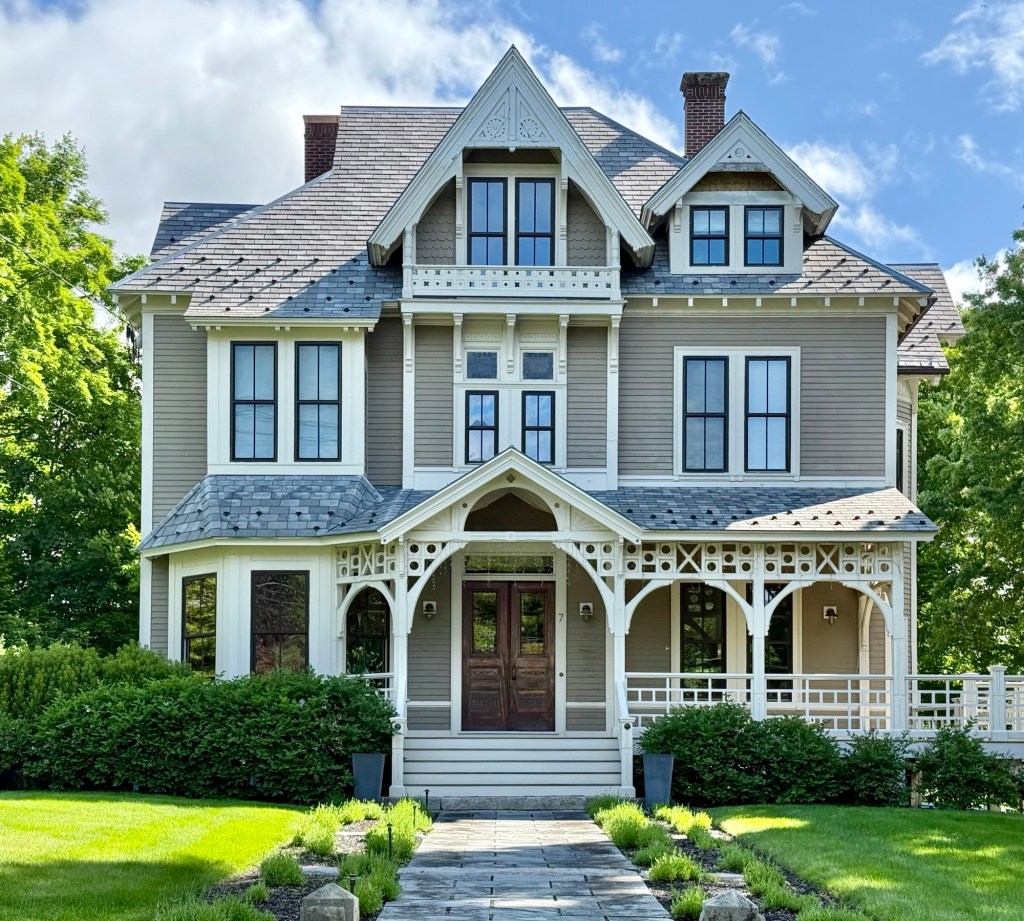
Dr. Albert W. Phillips (1838-1929) was born in Marcellus, New York, the son of immigrant parents from England. He studied medicine in the Midwest and later opened a medical practice in Rockport, Illinois, but in response to President Lincoln’s first call for volunteers, he returned to New York and enlisted as a private in the Union cause. He served as assistant surgeon with the 149th N. Y. Volunteers, where he saw action in many battles, including at Gettysburg. After the war, Dr. Phillips moved to the rapidly developing industrial city of Derby, Connecticut, where he opened a family practice. By the 1870s, he built this Stick style residence on Caroline Street. While working as a doctor of great esteem, Dr. Phillips was elected as the fifth mayor of Derby in 1901 and in 1903, was elected as a state senator.His home on Caroline Street in Derby maintains its unique entry porch and trusswork in the gables.

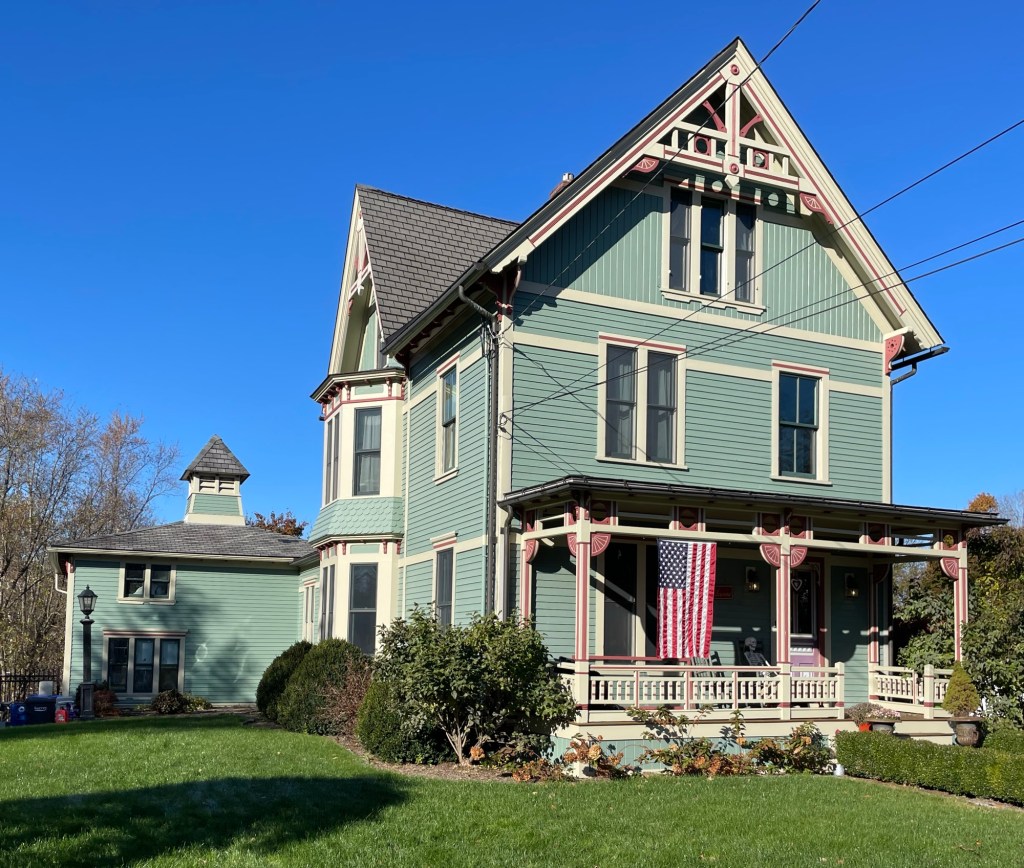
Solon Wilder House // 1883

On Main Street in the central village of Lancaster, Massachusetts, the Solon Wilder House stands as one of the town’s finest Victorian-era residences. The house dates to 1883 and was built for Solon Wilder (1828-1889) and his wife, Olive. Mr. Wilder ran a store and served as town treasurer, doing well enough financially to build this handsome, and modern house and rear stable for the time. The Stick style house features a porch with cut woodwork, decorative trusses in gables, and wooden wall cladding interrupted by “stickwork” patterns raised from the wall surface that is meant to symbolize the structural skeleton of the home.

John D. Runkle House // 1875

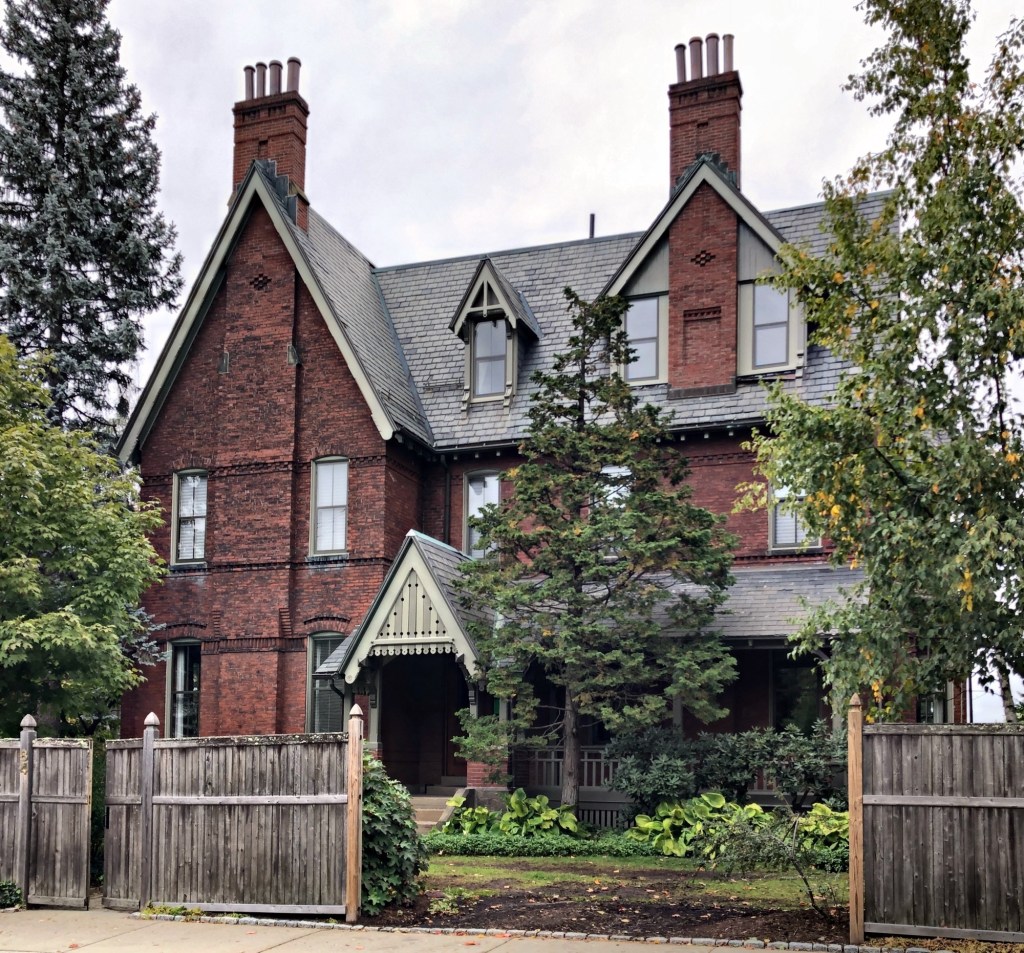
The John Runkle House on High Street, is one of the most interesting houses in Brookline. Built in 1875 for educator John Daniel Runkle (1822-1902), the brick residence excellently blends early Queen Anne form and flourish with Victorian Gothic design elements all with Stick style entry porches and dormers. John D. Runkle was a noted mathematician who later became the second President of the Massachusetts Institute of Technology from 1868 until 1878. This occurred before MIT moved over the Charles to Cambridge, so President Runkle would not have traveled far to the Institute when located in the Back Bay. The Runkle House was designed by the architectural firm of Weston & Rand with an irregular plan of elaborate belt courses in the brickwork that is set against the extremely steep slate roof with tall prominent chimneys and corner turret. Sadly, the residence is largely obscured by a tall wooden fence, but I caught it on a good day that a panel was down.

Mumford House // 1877

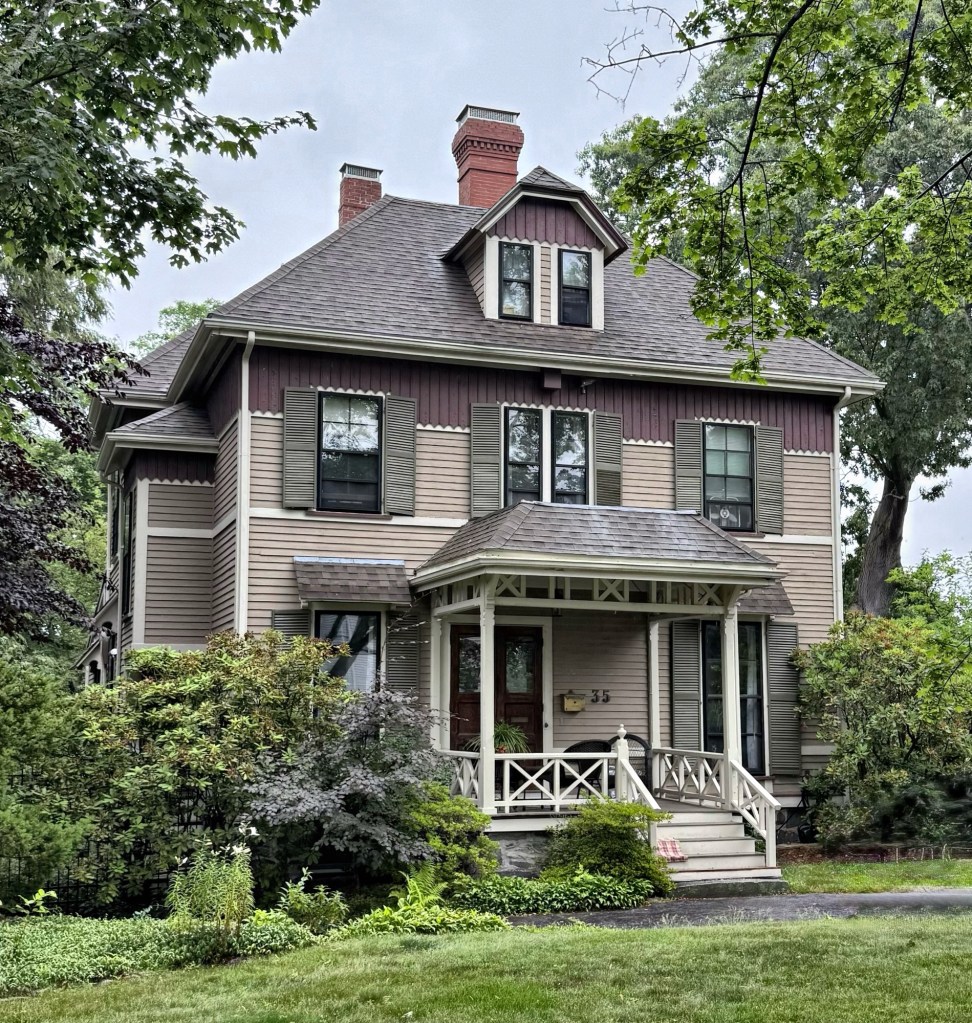
Set back behind a manicured lawn on the charming Alban Street in the Ashmont Hill neighborhood of Dorchester, this Victorian era residence was both a family home as well as a finishing school for young ladies. The house at 35 Alban Street was completed in 1877 for the Reverend Thomas James Mumford, pastor of the Third Church of Dorchester and anti-slavery advocate, who died the year his home was completed. His widow, Elizabeth Goodrich Warren Mumford (1834-1897) would inherit the home from her husband and for supplemental income to maintain the home, she opened the Mrs. Mumford’s Finishing School for Young Ladies, a school to educate and teach young girls manners and religion. Elizabeth Mumford would also publish books on how to conduct classes for Sunday School, Kindergarten, and the home. The Mumford House is a great example of a Stick style residence with less exuberance than some other examples. The picket frieze, applied stickwork on the siding, and more ornate porch are all typical of the style. 

Forbush-Brigham House // c.1875

This stately and well-preserved Stick style residence is located on High Street in Westborough, Massachusetts. The house was built around 1875 for Mr. William Henry Forbush and his wife, Alice. William was a sleigh manufacturer in town and served in the Civil War, mustering out years after injuring his left hand during the Second Battle of Bull Run. Forbush died in 1881 at the age of 37, and Alice married to Dexter Brigham, a carpenter who also fought in the Civil War. It was possibly Mr. Brigham who added the intricate woodwork on the home.

Scotland Town Hall // 1896

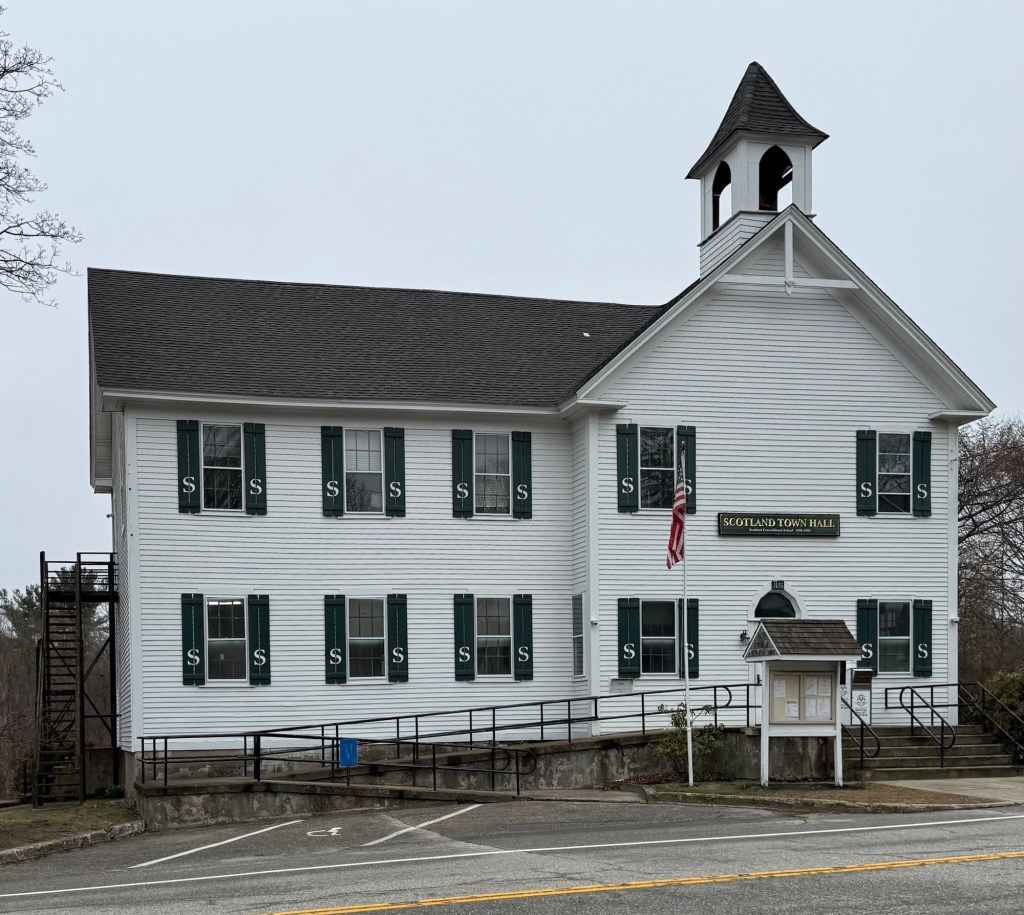
The town of Scotland, Connecticut, is a rural community centered around agriculture and is the smallest municipality in Windham County’s ‘Quiet Corner‘. European settlement began in earnest following the purchase of 1,950 acres of land from then Windham, by Isaac Magoon, a Scotsman, who named the new village after his ancestral home. The present-day town hall and offices of Scotland, was originally built in the 1840s as a one-room schoolhouse. In 1894, the town voted to consolidate all the school districts in a single building, and to expand the one-room village school to accommodate them. The present two-story structure was completed in 1896 and was added to the front of the old building. It is unclear if anything remains of the original schoolhouse. The vernacular, Stick style building served as the town’s consolidated school until a modern school building was constructed in the 1960s. This building became the town hall/offices and remains a significant visual anchor to the town’s common.

Mudge Family Cottage // 1852

Edwin Mudge (1818-1890) was a major shoe manufacturer and a representative to the Massachusetts General Court. In 1844, he married Lydia Nichols Bryant, and in 1852, the couple hired Edwin’s brother, a carpenter, to build this house at 108 Centre Street in Danvers, Massachusetts. A son, Francis was born October 4, 1846, and his sister Lydianna was born March 20, 1853. Tragically, both brother and sister died in 1855 of what was described as “brain fever” or “dropsy in the head.” Frank, one month shy of 10 years of age, passed away on September 8, 1855, followed by little two-year-old Lydianna exactly one month later. They are buried together in the local cemetery and a portrait of them is in the Danvers Historical Society collections. Edwin and Lydia would have one other child, Sarah Mudge (1857-1938), who grew up to be a prominent citizen and one of the founders of the Danvers Historical Society. The formerly simple Greek Revival style cottage was “Victorianized” in the Stick/Eastlake style with the addition of delicate bargeboards, a hood over the new double-door entry with iron balustrade, and side dormers.

First Congregational Church of Georgetown // 1874

The First Congregational Church of Georgetown, Massachusetts, is significant both architecturally as a Victorian Gothic/Stick style church designed by a prominent architectural firm, and historically as an important gathering place for the town’s members for 150 years. The congregation however is much older than 1874, as when Georgetown was then a part of Rowley, Massachusetts, members here in 1731 petitioned to create their own parish in Rowley to travel a shorter distance to services. The church, then known as the Second Church of Christ in Rowley, was organized in 1732 with services held in a rustic Meeting House. A second meetinghouse was built in 1769, which was both outgrown and in much need of repairs by the time the congregation decided to build a new building on a new site in the new commercial center of town. The congregation hired the esteemed firm of Peabody & Stearns to design the church which today, is the most high-style and architecturally grand building in the suburban town.