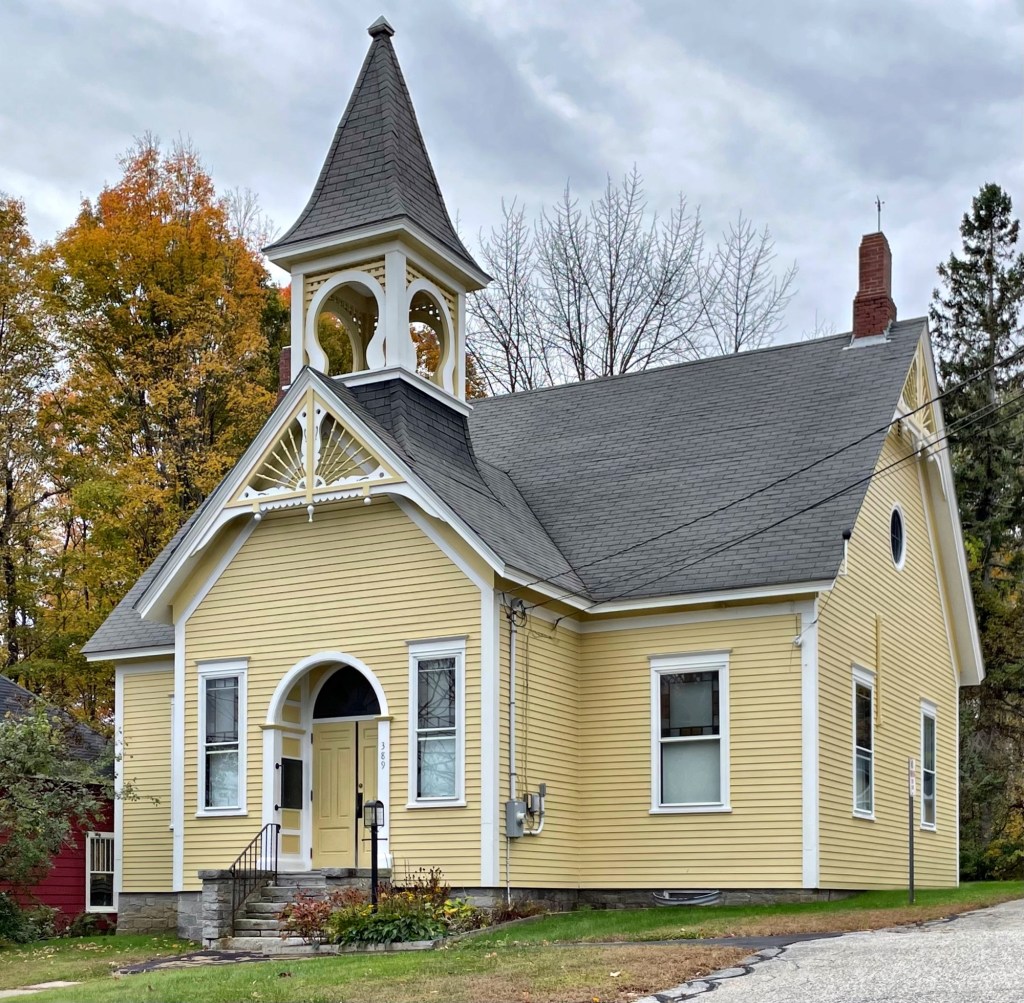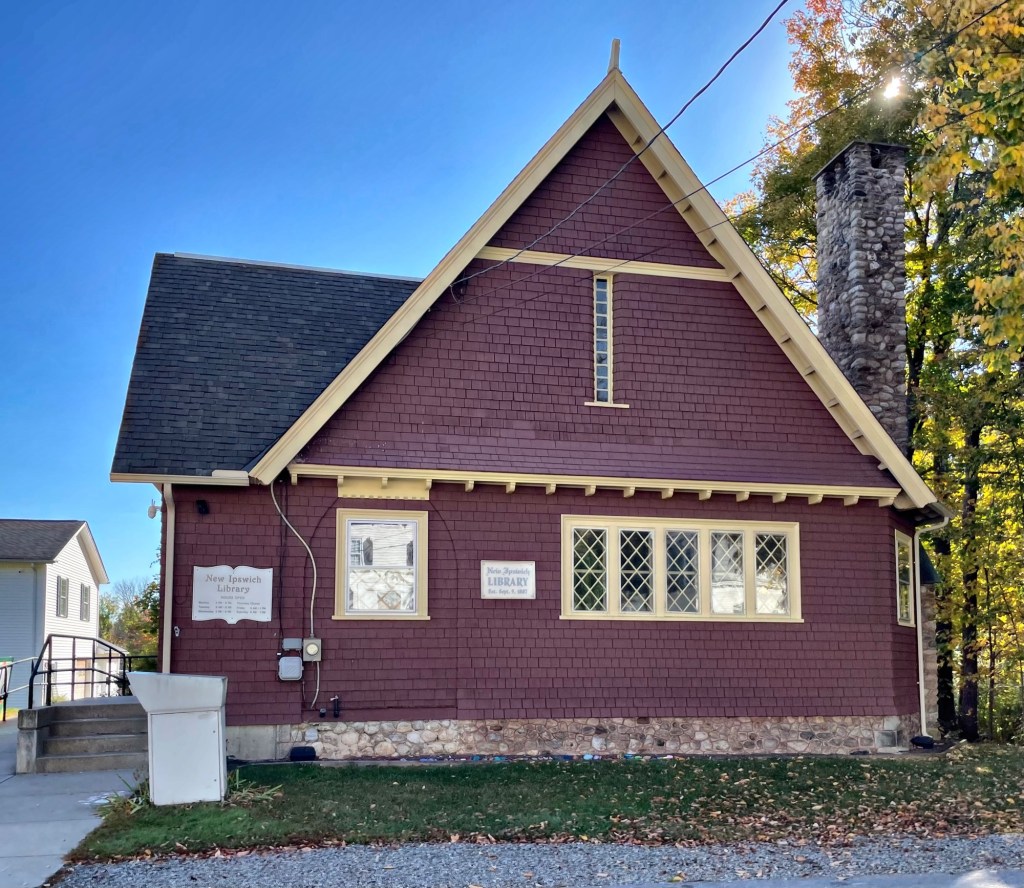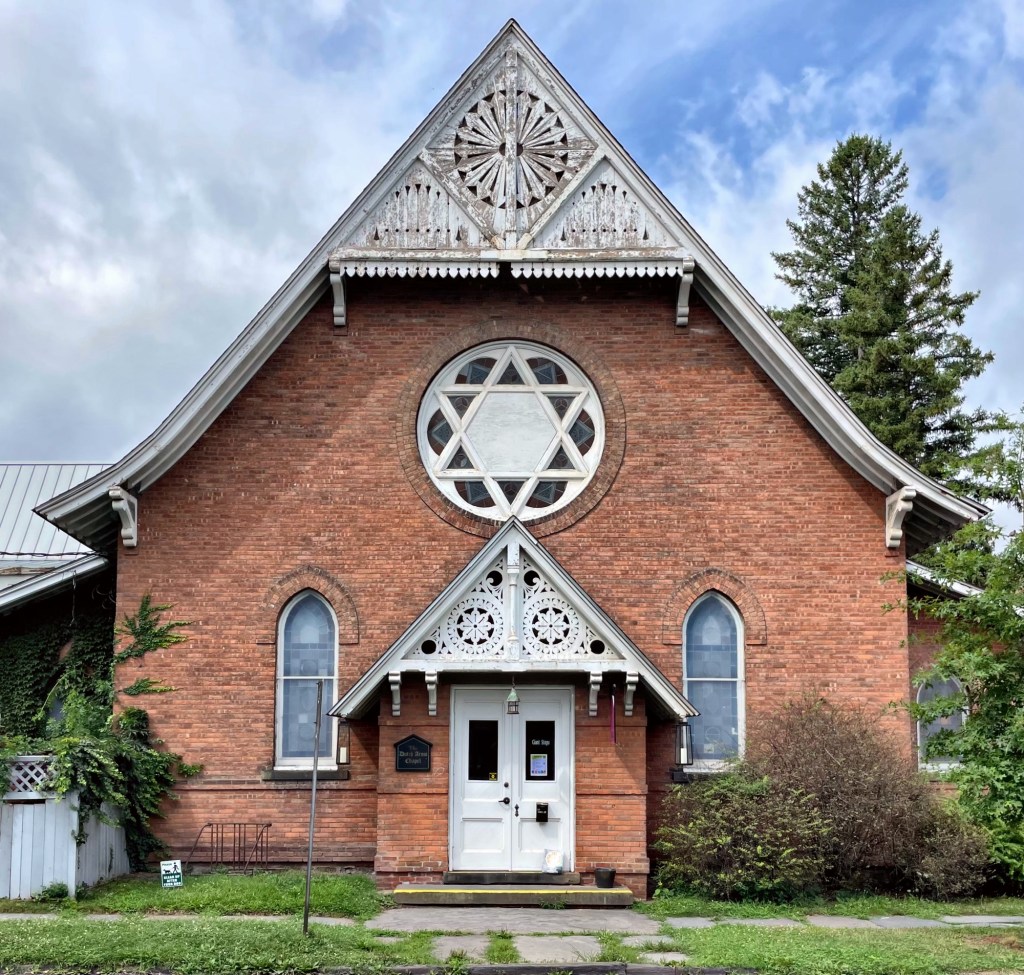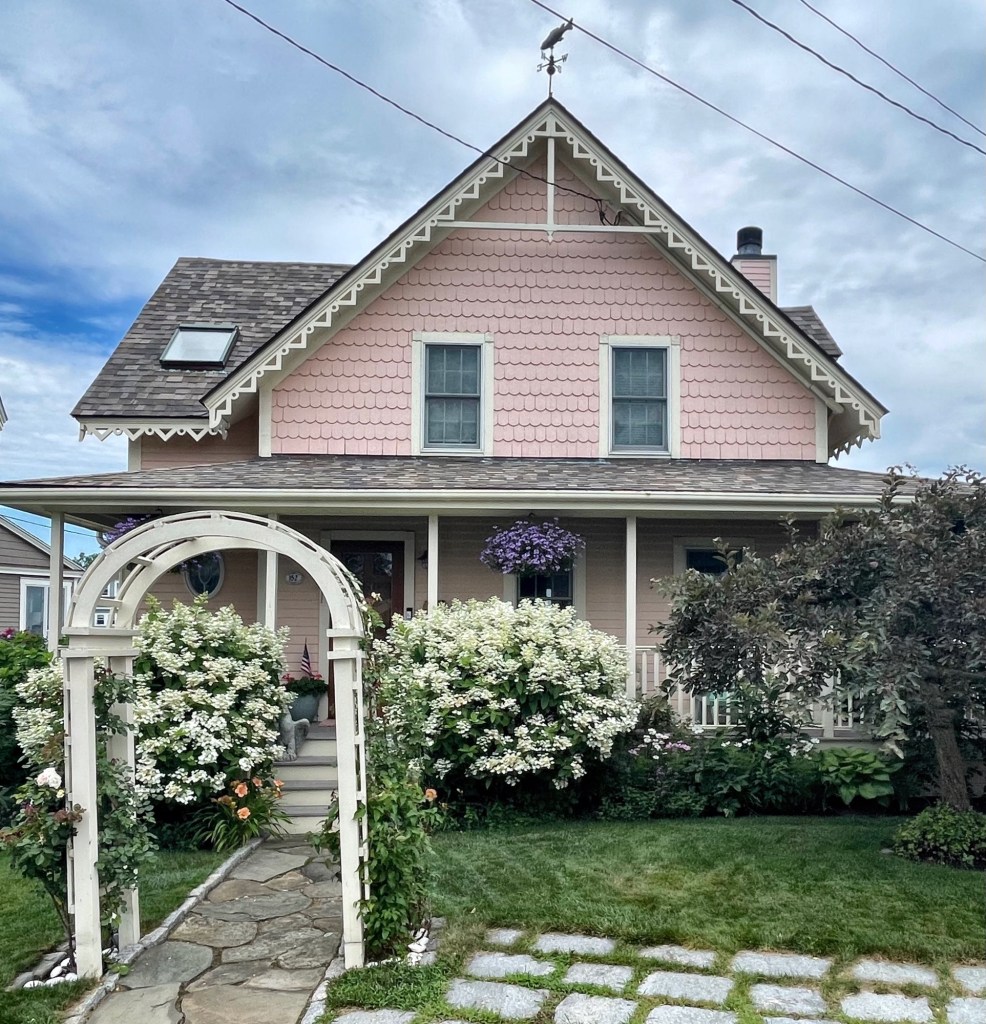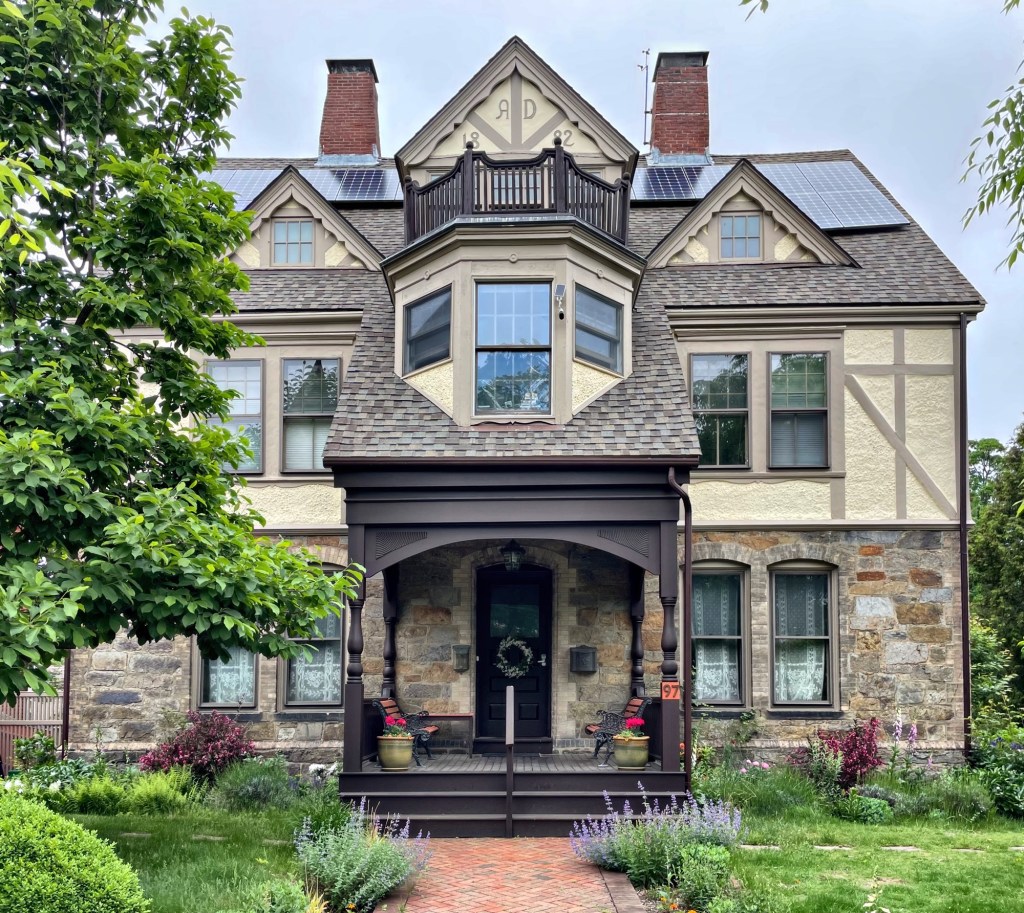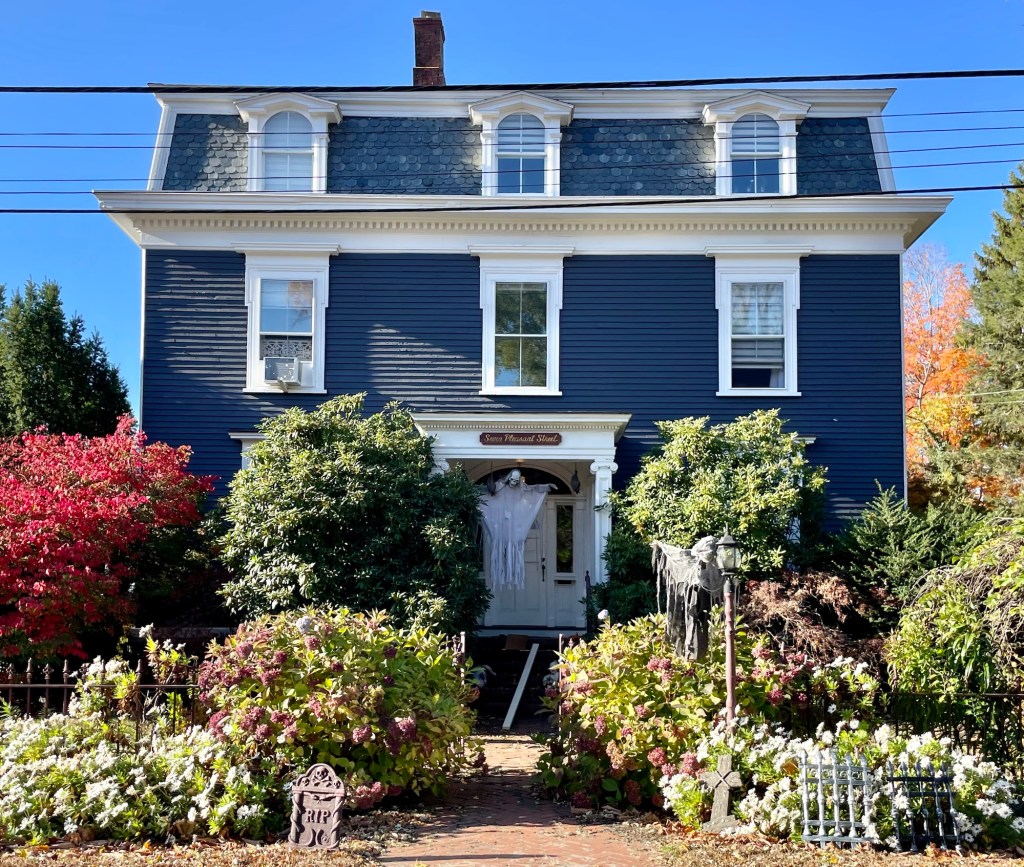
Henry S. Chase House // c.1882

One of the many “hidden” gems of old houses in Brookline is this charmer on Francis Street, just west of the Longwood district. The residence was built by 1882, by Henry Savage Chase (1825-1885) who lived in a larger stone mansion across St. Paul Street (no longer extant). This house was rented out by Chase, possibly to friends and remained in the family for decades. This early Queen Anne style dwelling (and likely the main house) was designed by architect Edgar Allen Poe Newcomb, a relatively unknown architect of the period. The house has an irregular plan with varied siding and materials, with applied ornament that has survived intact for nearly 150 years.

Potter-Leland House // c.1888

Francis Street in Brookline, Massachusetts, has some of the finest Queen Anne Victorian residences in the Boston area. This is the Potter-Leland House, built by 1888 by William Potter, a wealthy shoe manufacturer and businessman who developed rental housing in the neighborhood not far from his house on Kent Street. He built this just before the larger Queen Anne duplex was built nextdoor from plans by Rand & Taylor, architects, and it was rented out as a single-family income-producing property. Various exterior wall textures, irregular massing, and turned supports on the front porch contribute to the Queen Anne character of this house, but the real showstopper is the rounded bay projection with three, 25-over-1 (yes you heard that right) curved sash windows! The property was later purchased by Herbert M. Leland, a broker.

William Potter Rental House // 1889

William W. Potter, a shoe manufacturer and businessman, and his wife, Isabella Abbe Strickland Potter, lived in the Longwood section of Brookline and became active in the surround areas development in the last decades of the 19th century. William bought land off Kent Street and began to lay out house lots, becoming a developer overseeing construction of stately Queen Anne Victorian rental properties marketed to upper-middle-class residents. For this house on Francis Street, he commissioned architects George Rand and Bertram Taylor, who were known for producing stylish residential designs for the middle class in the Boston area. The massive property was a duplex, providing units to two lucky families! The building has just about every hallmark feature of the Queen Anne style including: the conical roof on a rounded corner bay, a complex roofline, asymmetrical plan, varied siding/materials, and applied ornamentation. In the 1920s, the house was owned by Simmons College, and used as a boarding house. Luckily, the property was restored and now is one of the finest residences in the neighborhood.

Highgate Manor // c.1870

Henry Baxter (1821-1897), a doctor and owner of a local mill and multiple area farms, built one of the most remarkable Second Empire style houses in New England, and it can be found in the small town of Highgate, Vermont! Dr. Baxter was said to have acquired an earlier Federal period house on the site in the 1860s and began planning a high-style Mansard estate here for his family. The earlier Federal house was incorporated as a rear ell and the new Second Empire mansion was built in front. Architecturally, the house stands out for its bellcast mansard slate roof topped by a square belvedere with arched windows and heavy scrolled brackets. His patented medicine, Dr. Baxter’s Mandrake Bitters, was sold throughout Vermont in the late 19th century and afforded him the wealth to erect this stately home. There are many unsubstantiated claims of Dr. Baxter “performing experiments on his children” for the sake of people to state that the house is haunted, but this appears to be lore in poor taste. It is said that the house was also a stop on the Underground Railroad, but that appears unproven as well. After Dr. Baxter’s death in 1897, the property became a lodge and restaurant. A basement bar was built and during prohibition, was said to have hosted the likes of Al Capone. Today, Highgate Manor, with its larger-than-life lore, remains one of New England’s most important and high-style Second Empire houses in one of the most unlikely places. It goes to show that it is worth exploring all of New England!

Highgate Springs Union Church // 1877

Rural parts of Vermont always surprises me with amazing old buildings. This white wood-frame church is known as the Highgate Springs Union Church, an 1877 edifice which effortlessly blends Victorian Gothic and Stick style details. The building became the village’s union church, providing a worship space for members of all denominations who on their own, could not afford the cost of building and maintaining a building. The small congregations eventually moved out and the church appears to now be largely unused beyond small events or weddings/funerals. I am glad to see it is kept up well at least!

Bay Crest Cottage // c.1850

Located across from the Winthrop-Eckley Double House on Corne Street, this gorgeous Italianate style summer cottage is a perfect blending of stature and whimsy. The house was built around 1850 and owned by Charles B. Peckham. Built in the Italianate style, the symmetrical house stands three-stories with covered side entrances divided by a projecting two-story bay. The house exhibits broad, overhanging eaves and paired and ganged round arched windows. The property was known as “Bay Crest” and remains one of the unsung landmarks of the 1850s in Newport.

“Park Gate” Cottage // 1879

“Park Gate” Cottage sits on Bellevue Avenue near Touro Park in Newport, Rhode Island and is one of many summer “cottages” for wealthy summer residents. The home replaced the Atlantic House, a large summer hotel formerly on the site. The wood-frame dwelling was designed by Newport architect George Champlin Mason for Seth Bunker Stitt of Philadelphia and constructed in 1879. Mason’s design for “Park Gate” includes many features typical of the Queen Anne style including the asymmetrical facades, wrap-around front porch, tower, and even the small details like dentils, spindle work and balustrades. The house was later purchased by Newport Lodge #104 of the Benevolent and Protective Order of the Elks in 1920, who own the building to this day.

Johnston-Sullivan House // c.1894

One of the more exuberant and ornate homes in Roxbury’s Washington Park neighborhood is this charmer on Howland Street. The eclectic house was built in around 1894 for Ellen S. Johnston from plans by local architect Timothy Edward Sheehan and stands out for its preserved exterior in a neighborhood where many homes are covered in later siding, obscuring the ornate details underneath. Details include: swag and garland applied ornament, two bays at the facade (one polygonal and one rounded), a Colonial Revival style porch, and central rounded dormer. Wow!

Abbotsford Mansion // 1872

The Abbotsford Mansion in the Roxbury neighborhood of Boston was designed in the High Victorian Gothic style and was built of Roxbury puddingstone, which was quarried locally. Abbotsford, originally named “Oakbend”, was built in 1872 as the residence of Aaron Davis Williams, Jr., (1821-1899) an industrialist and son of the founder of the Roxbury Institution for Savings. Roxbury-based architect Alden Frink designed the country estate and it is his most notable work. When Davis lost his fortune, James M. Smith, a brewer who had a passion for Sir Walter Scott, acquired the estate and renamed the house Abbotsford after Sir Walter Scott’s ancestral keep of the same name. The house continued to serve as a private residence until 1924, when the City of Boston acquired it for use as an elementary school and a disciplinary school for boys. The parcel was subdivided and the David A. Ellis School was built on the former grounds. After the building slipped into decline in the 1970s, the National Center for Afro-American Artists purchased the property, filling in the windows to create exhibit space. They have maintained the building to this day.

Betteley Cottage // c.1883

Albert Cabot Betteley (1816-1893) was an inventor and coal dealer in Boston. He invented an elevator to hoist goods into a warehouse, a peat grinder for the speedy drying of peat for fuel, and even patented wooden pavement…seriously. He eventually would build this home on Cobden Street in Roxbury where he and his wife Mary Jane would live out their retirement. While he didn’t “make it big” persay with his inventions, he exemplified the typical middle-class resident of Roxbury at the time and built this modest home, with its two-story form with octagonal bay, bracketed cornice, and mansard roof. The cottage was recently repainted the purple color, which I really enjoy!