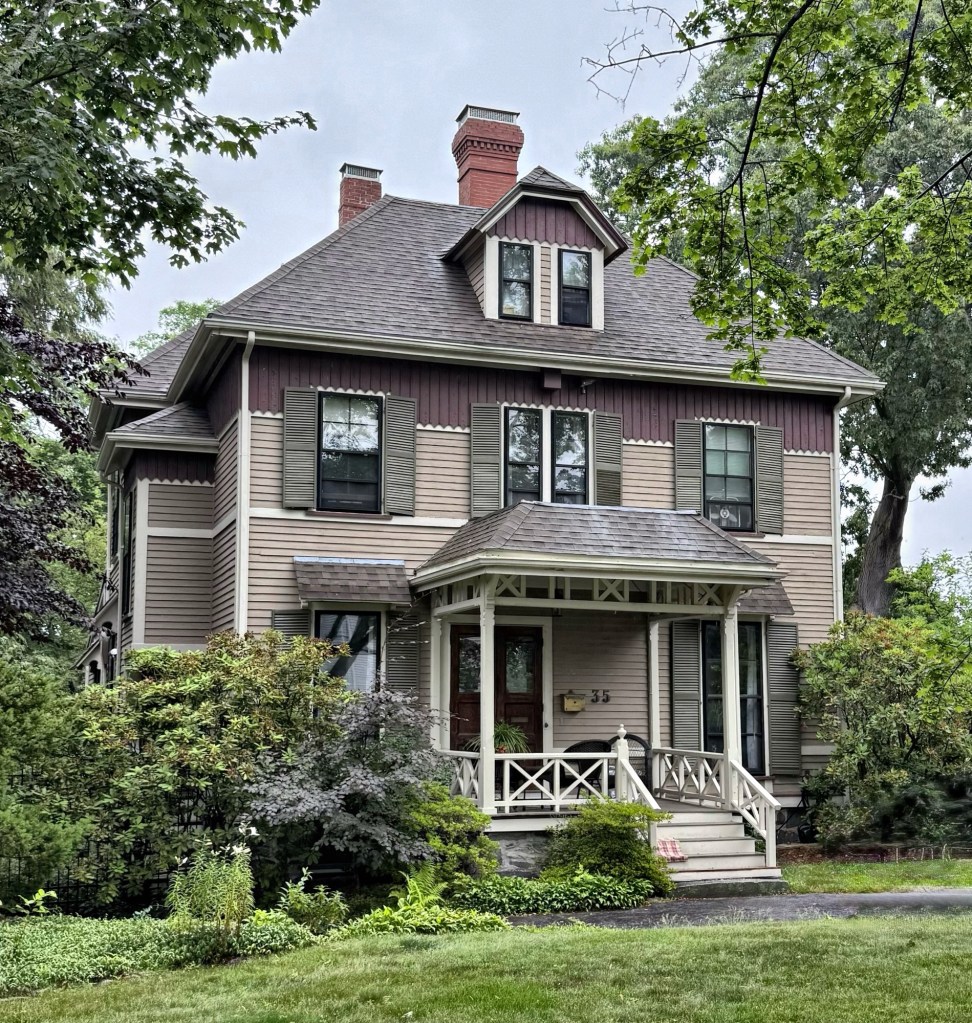
Mumford House // 1877

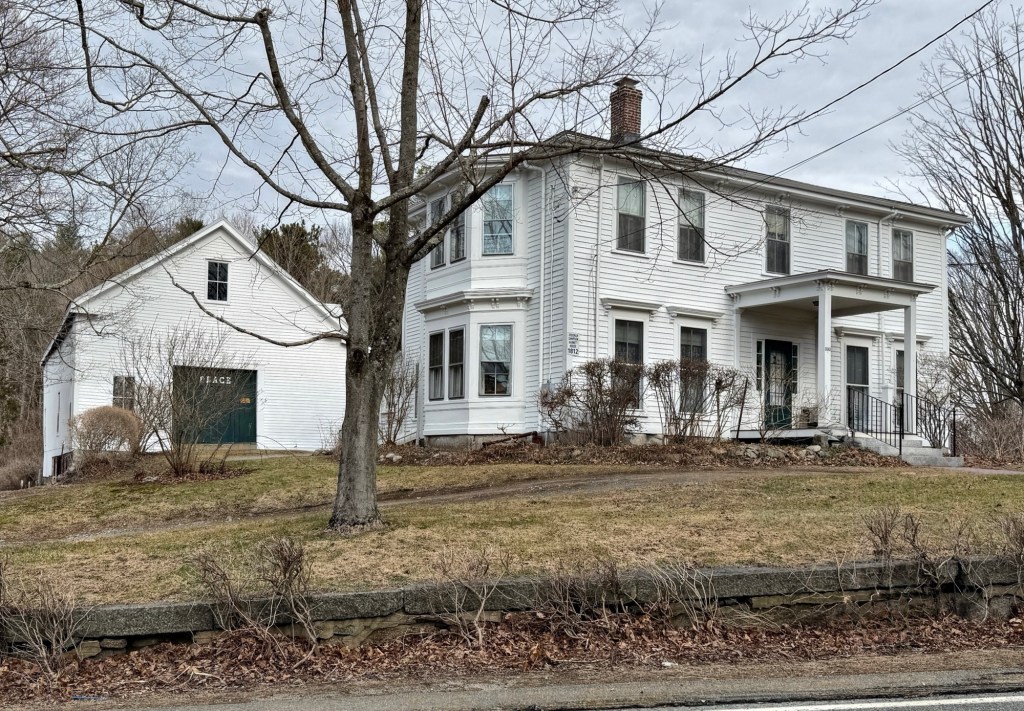
Set back behind a manicured lawn on the charming Alban Street in the Ashmont Hill neighborhood of Dorchester, this Victorian era residence was both a family home as well as a finishing school for young ladies. The house at 35 Alban Street was completed in 1877 for the Reverend Thomas James Mumford, pastor of the Third Church of Dorchester and anti-slavery advocate, who died the year his home was completed. His widow, Elizabeth Goodrich Warren Mumford (1834-1897) would inherit the home from her husband and for supplemental income to maintain the home, she opened the Mrs. Mumford’s Finishing School for Young Ladies, a school to educate and teach young girls manners and religion. Elizabeth Mumford would also publish books on how to conduct classes for Sunday School, Kindergarten, and the home. The Mumford House is a great example of a Stick style residence with less exuberance than some other examples. The picket frieze, applied stickwork on the siding, and more ornate porch are all typical of the style. 

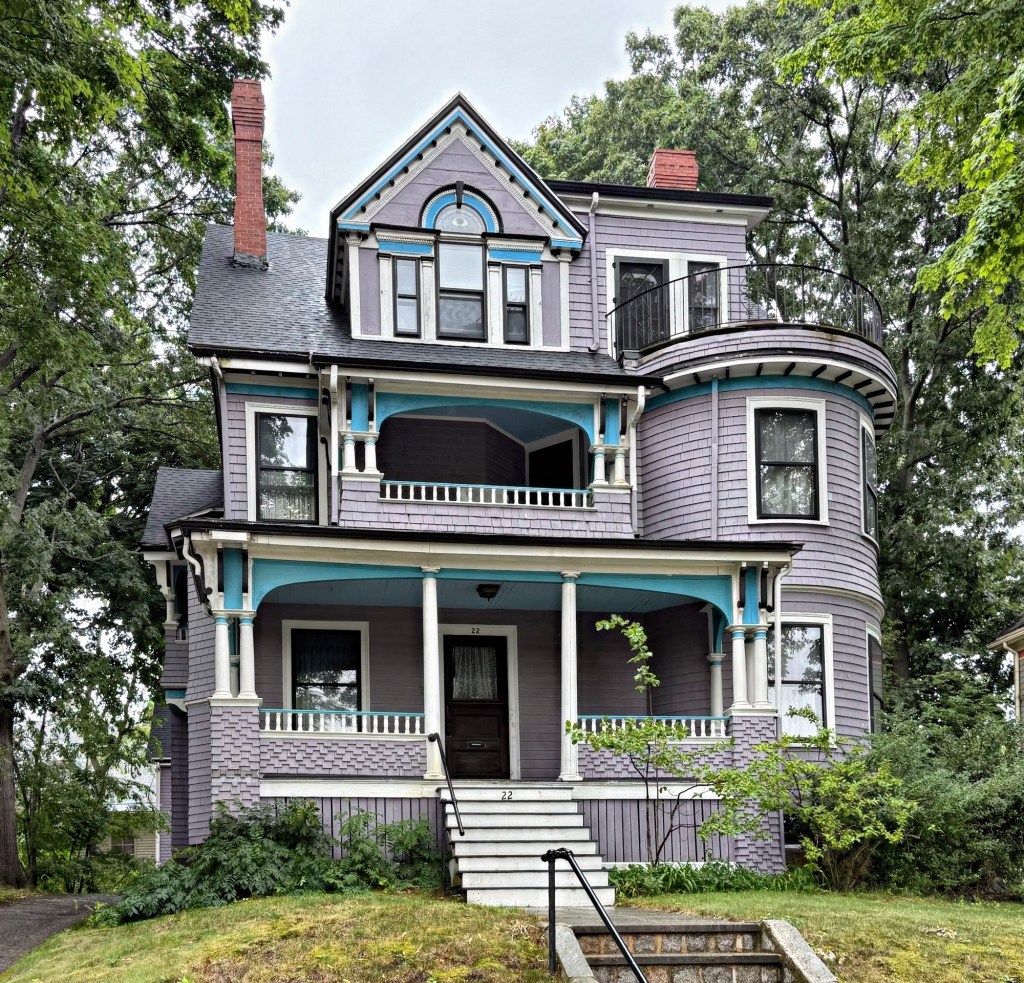
Chansonetta Stanley Emmons House // 1893

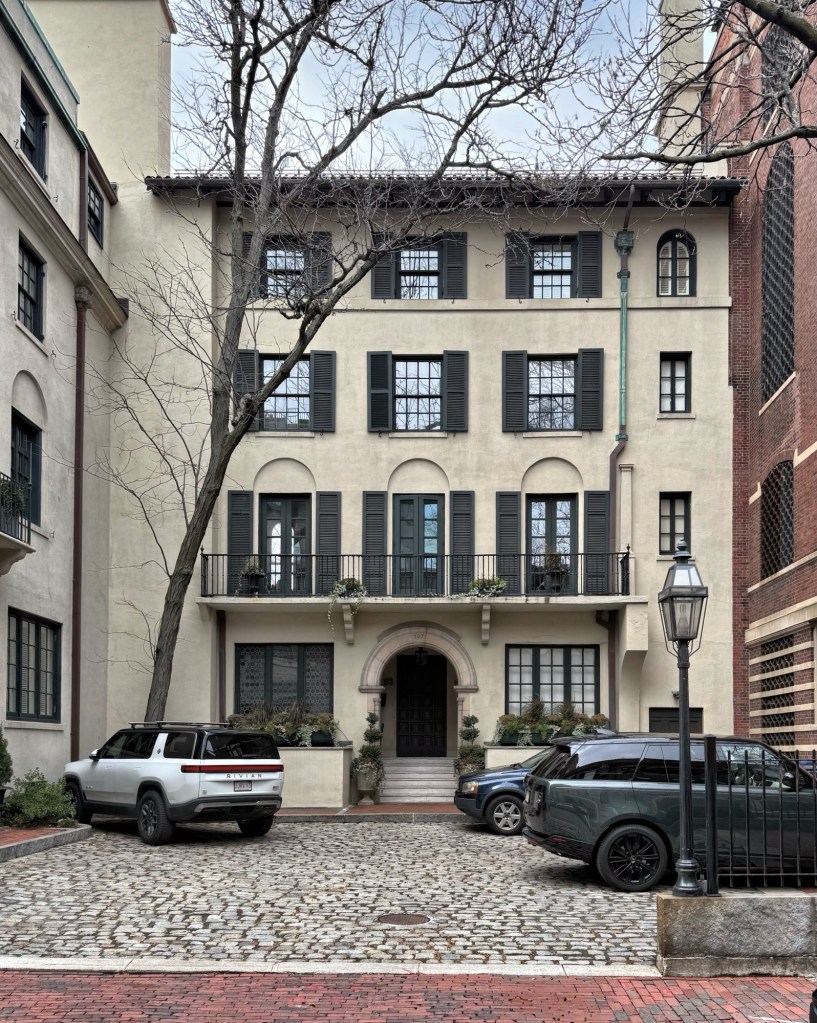
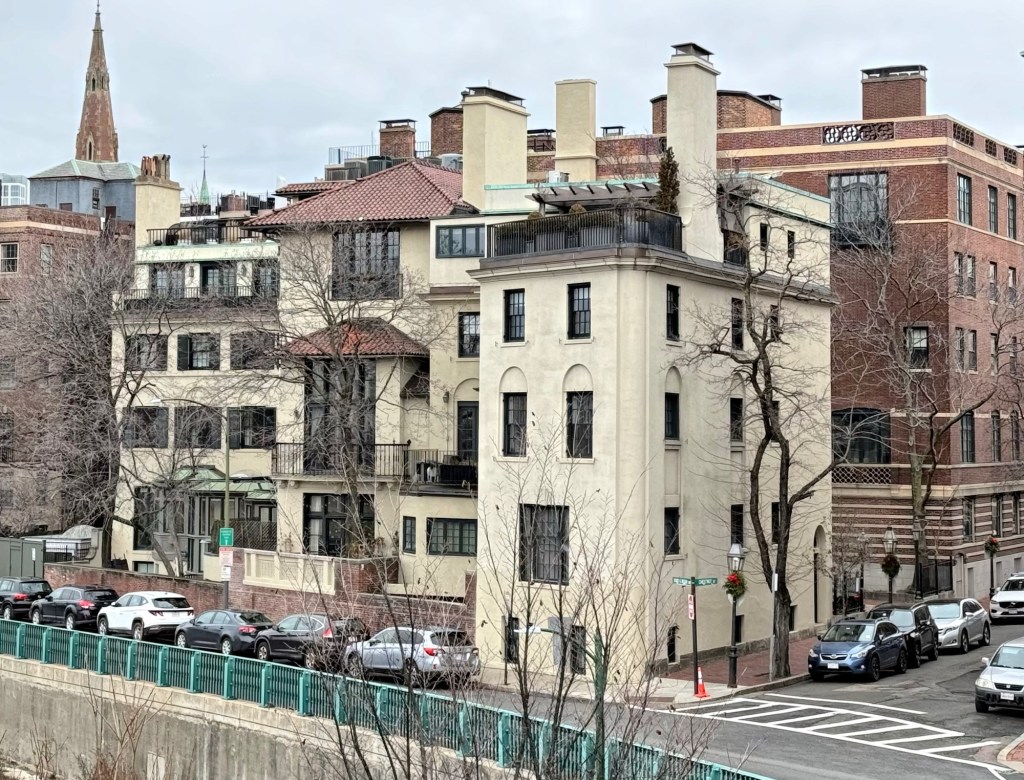
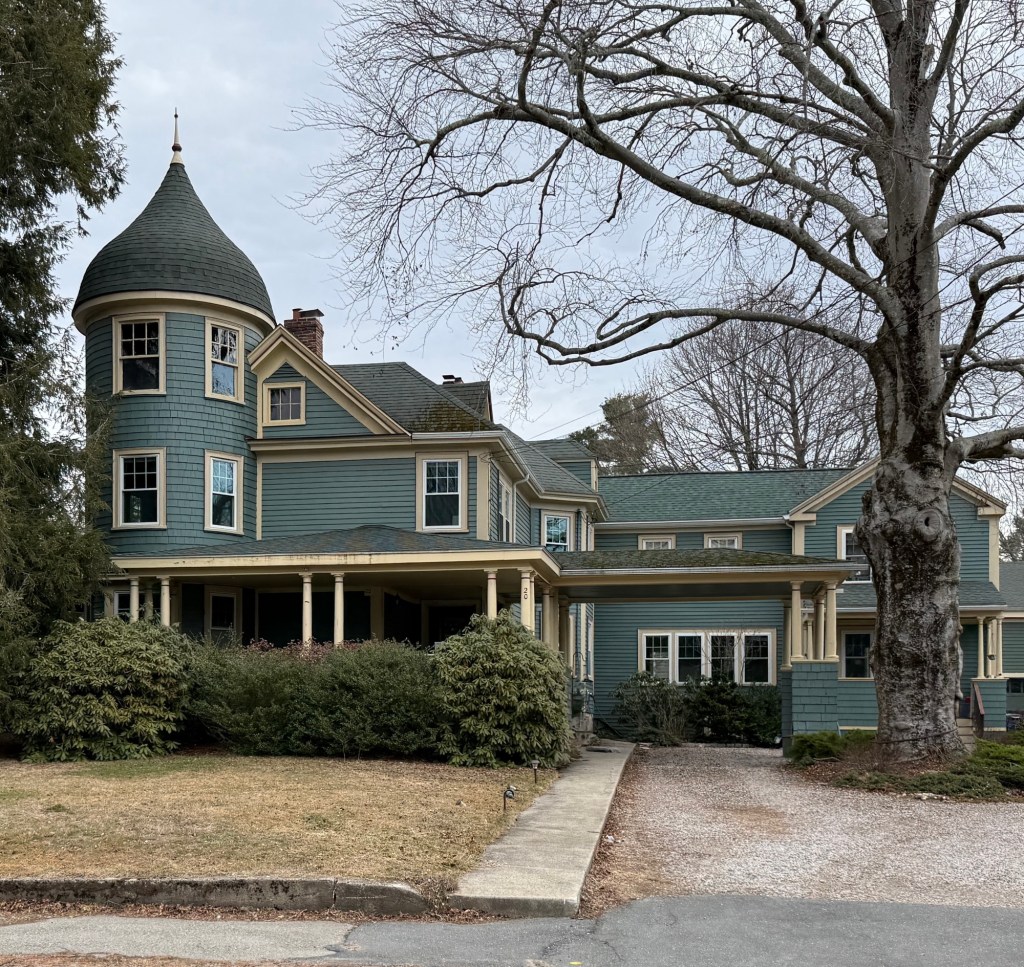
Chansonetta Stanley Emmons (1858-1937) was born in Kingfield, Maine, and was one of the great women photographers in the 19th and early 20th century, often depicting domestic life and New England scenes. The young Chansonetta Stanley grew interested in photography after her brothers’ (Francis E. and Freelan O. Stanley) dry-plate printing invention, they also invented the steam-powered automobile known as the Stanley Steamer. She married James Nathaniel Whitman Emmons in 1887 and in 1894, James hired architect Henry McLean, to design a residence for him and Chansonetta, this lovely home on Harley Street on Ashmont Hill. The couple occupied the house until 1898, when James died of blood poisoning at the age of 41. Chansonetta sold the home and moved to Newton, where her two brothers lived and operated their business. The house blends Queen Anne and Colonial Revival styles and originally had a conical roof over the corner rounded bay. The roof was replaced with a flat roof at about the time of the large balcony and extended dormer.

Temple Court Apartments // 1912

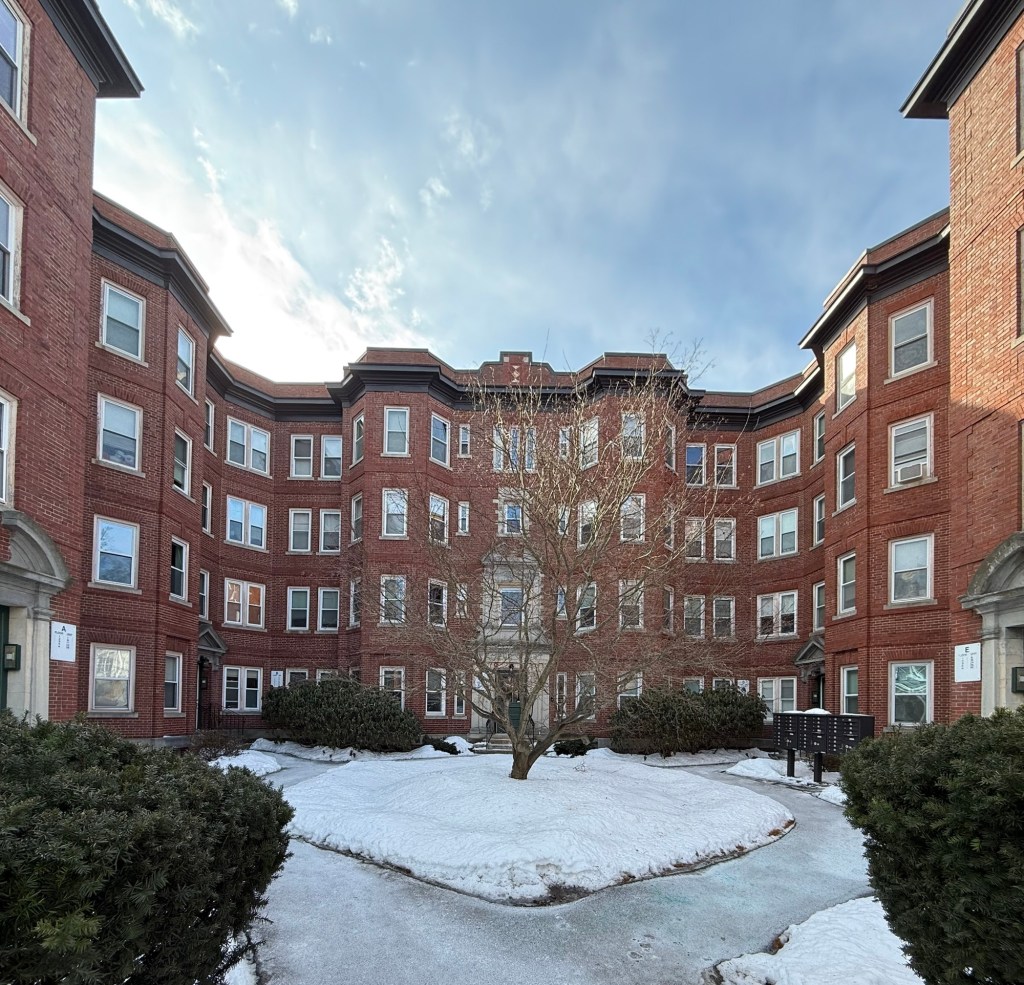
Constructed in 1912, Temple Court at 15 Lynde Street was erected on the site of two earlier buildings during a period of great population growth in Salem. The parcels here were acquired by Aroline C. Gove (1857-1939), a prominent local property-owner and developer between 1908 and 1911. Ms. Gove was a prominent Salem citizen and daughter of notable inventor and businesswoman Lydia Pinkham. With a business-oriented mindset like her mother, Aroline hired architect Harry Prescott Graves of Lowell to furnish plans for an apartment building on this site. Completed in 1912, the apartment building, known as Temple Court, included 36 units with two-, three-, and four-room suites with a live-in janitor. The building is unique for Salem as a courtyard style building, more common in Boston and Brookline. The building’s large mass is broken up by its setback with the U-shaped form and central landscaped courtyard, series of projecting octagonal bays, and multiple entrances. Temple Court was converted to condominiums in the 1980s.

Harriet Bennett House // c.1912

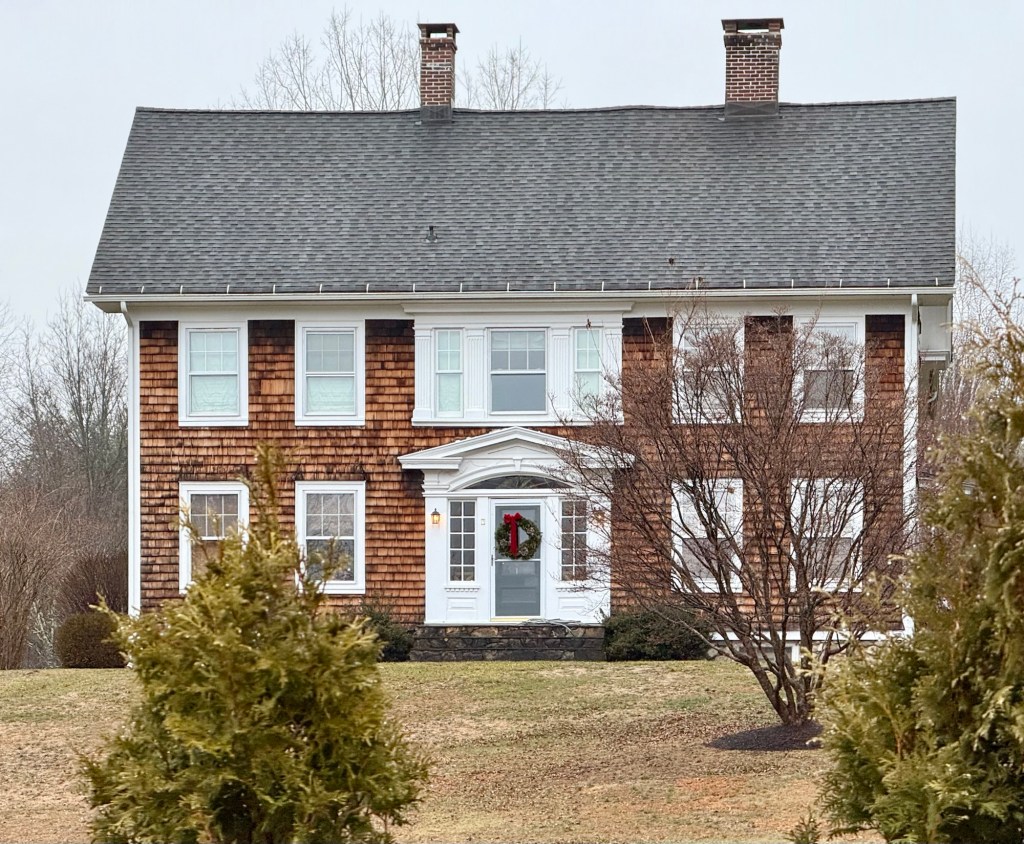
While most houses I have featured in Cornwall date to the early-mid 19th century, there are some great examples of early 20th century Colonial Revival dwellings, built at the time the town became eyed as a wealthy retreat for city-folk. This Colonial Revival residence was built for Ms. Harriet Bennett (1841-1928), an ardent suffragist and an active member of the Connecticut Woman Suffrage Association. Harriet was married to William C. Bennett and after his death in 1898, she devoted the rest of her life to charitable causes and giving back to others. As a widow and in her seventies, Harriet oversaw construction of this house, which was completed by 1912, in that same year, established the Cornwall Equal Suffrage League, hosting many of its events and meetings from this house. The League’s activities mirrored the efforts of suffragists throughout the nation. The house remains a well-preserved example of a house in the Colonial Revival style in town.

Maud Howe Elliott Bungalow // c.1912

This shingled Craftsman bungalow on Rhode Island Avenue in Newport was built in the 1910s for Maud Howe Elliott (1854-1948), a Pulitzer prize winning author and active member in Newport’s art scene and her artist husband, John Elliott. Maud Howe was born at the Perkins School for the Blind in Boston, founded by her father, Samuel Gridley Howe. Her mother was the author and abolitionist Julia Ward Howe. In 1887, she married English artist John Elliott. John is known for his epic Symbolist murals including working alongside his friend and colleague John Singer Sargent to provide murals for the Boston Public library, and a mural at the Smithsonian Museum of Natural History. In Newport, Maud became a founding member of the Newport Art Association, and served as its secretary from 1912 to 1942. She also took part in the suffrage movement as she was greatly influenced by her mother’s ideas and convictions about women’s role in society and particularly so in terms of women’s suffrage. She fought passionately for women to be liberated from the societal expectations and roles determined to them by male dominated society. This was her home in Newport until her death in 1948.

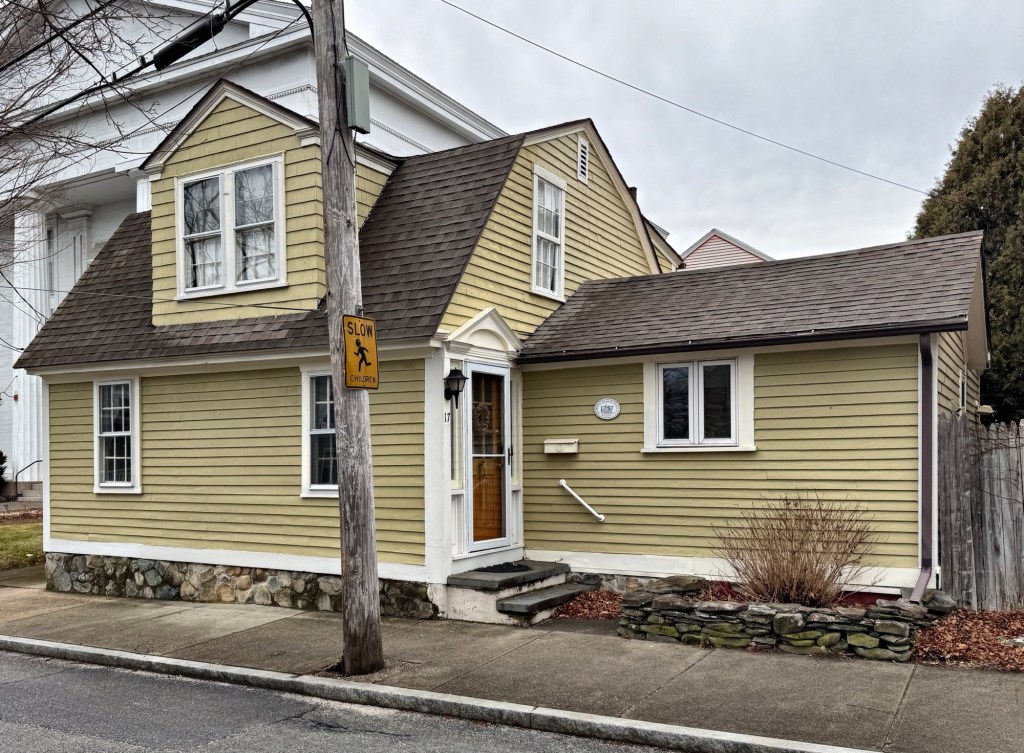
McCrea Cottage // 1891

In 1891, Laura Denby McCrea, a wealthy widow based Philadelphia, sought to maintain her social standing all year by building a summer cottage on Grindstone Neck, a summer colony in Winter Harbor, Maine. She was one of the first to build a cottage here, and she hired renowned architect Wilson Eyre to furnish plans for the rustic home. The Shingle style house is dominated by its massive gambrel roof and was historically clad entirely with wood shingles (asphalt shingles have since replaced cedar at the roof).

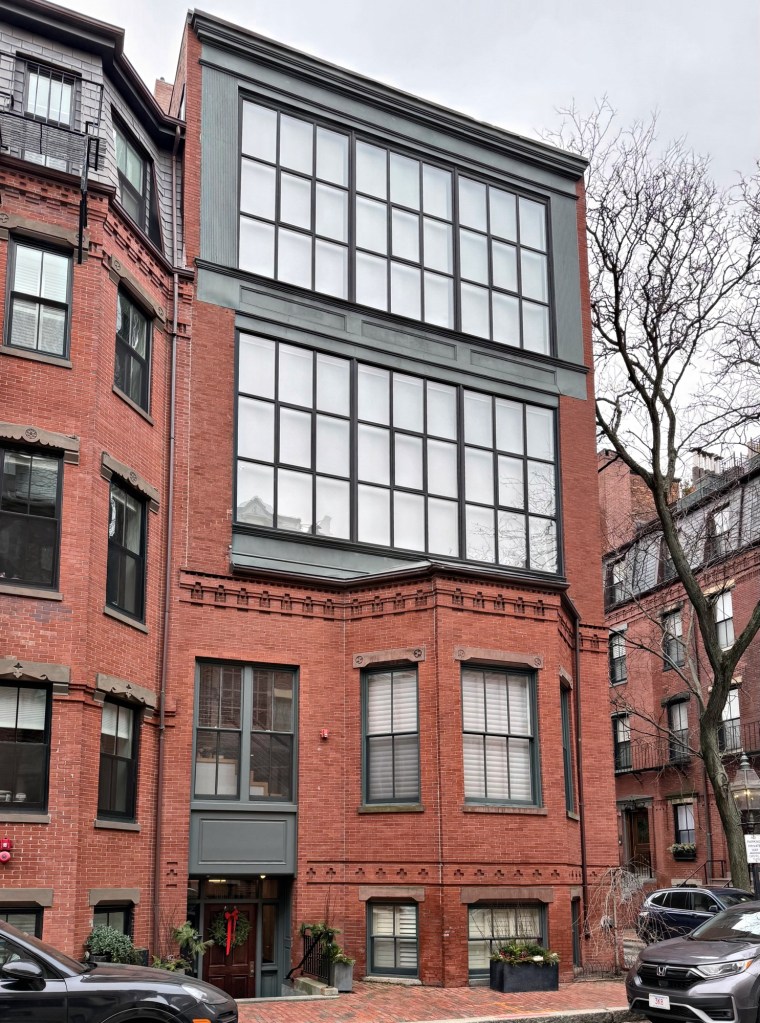
Clements Apartment Building // c.1885

Brookline is pretty great as you can find unique and well-preserved examples of nearly every type of building in almost every architectural style! Staying in Brookline Village, this apartment building stands out as one of the best panel-brick apartments I have seen. The property was developed in the mid-1880s by Thomas W. Clements, who served in the Army during the American Civil War and later settled in the Boston area working as a dentist. Thomas married Lydia R. Clements, who is much more interesting than her husband! She was a graduate of the Boston University School of Medicine and worked locally for years, but wanted more. In the spring of 1898, she set out with a party of men and women, determined to make their fortune in the gold fields of the Klondike. During the months long trek, all of the other women and some of the men in her party left the expedition before reaching their goal, but Lydia Clements persevered and became one of the first white women — possibly the first from the East — to cross the Chilkoot Pass into the Klondike region. She never made a fortune, but upon returning, she was more spiritual, and got involved in the occult philosophy of Prof. Charles H. Mackay and his West Gate School of Philosophy in Boston. She used her new learnings to go back to Alaska to make her fortune, but there is no indication that Clements ever did make her fortune. She did however, remain in Nome and elsewhere in Alaska for more than a decade, hiring men and mining tin and gold. She retained her Brookline residence here on Davis Avenue and travelled back and forth across the continent many times before returning to Brookline, before dying there in February 1927.

Katherine Forrest Home and Studio // c.1860

This vernacular cottage in Noank was built in phases (and likely added onto from other historic buildings) since 1860. While the building dates to the 1860s, its significance derives from a later owner, Ms. Katherine Forrest. Katherine Forrest (1883­-1952) was a graphic designer and part of the Arts & Crafts movement of the early 1900s. She specialized in textile design and printmaking. Forrest came to Noank in 1914 and purchased her house in 1926. She was locally known by the nickname ‘Speedy’ and was remembered for dying textiles in a bathtub outside the house. The building’s vernacular character and its significance as a locally historic site as part of the village’s rebirth as an artist colony in the 20th century showcases how even smaller, unpretentious buildings in New England can tell a story.

Sayles Hall – Pembroke College – Brown University // 1907

Sayles Hall was the second purpose-built building erected for Pembroke College, a women’s college affiliated with Brown University in Providence. Sayles was originally built as a gymnasium facility for female students and was designed by the same architects as Pembroke Hall, Stone, Carpenter and Willson. Architecturally, the building compliments Pembroke Hall which was built the decade prior with the use of red brick, terracotta trim, and arched openings and gabled pediments at the roof. The funds for the construction of the building were a gift from Frank A. Sayles (whom the building was originally named after). Until 1990, Sayles Gym was used for sports and offices by the Physical Education Department. In 2001, Sayles Hall was completely renovated and converted into classroom space, receiving a new name (Smith-Buonanno Hall). A great example of adaptive reuse!

Pembroke Hall – Brown University // 1896

Brown University from its founding in 1764 until 1891 never admitted women. Brown’s all-male student body was first challenged in 1874, when the university received an application from a woman (who to this day is still unnamed). The Advisory and Executive committees decided that admitting women at the time was not a good proposal, but they continued to revisit the matter annually until 1888, when they began work to establish a separate women’s college affiliated with Brown. After similar institutions like Radcliffe (affiliated with Harvard) and Barnard College (affiliated with Columbia) were established in 1879 and 1889 respectively, Brown had a blueprint for how to operated the new women’s college. Professors at Brown would work alongside women educators and taught many of the the same courses to men as they did for female students. Pembroke Hall was the first building for Pembroke College and was built in 1896 from plans by local firm Stone, Carpenter and Willson in the Elizabethan Revival style. The building was designed to be multi-purpose with administrative offices, classrooms, reception rooms, and a library in the attic. Pembroke College was officially merged with Brown University in 1971, which was long overdue. The building is one of the finest on Brown’s now co-educational Ivy-league campus.