Built in 1896, this handsome, four-story flatiron building at the corner of Bow Street and Somerville Avenue in Union Square, Somerville, was the largest tenement building in the city when completed. The property was developed by Charles Drouet, from plans by local architect, Aaron Hibert Gould. The block originally housed 37 apartments above six retail spaces at the street-level. The series of projections and an interior courtyard provided light and air into the apartments, which made them highly functional and desirable for families in the area. The building is more Colonial Revival than the 1892 Queen Anne style Richmond Apartments, also designed by Aaron H. Gould for Mr. Drouet nearby. The Drouet Block is a well-preserved example of late 19th century tenements in Somerville.
Union Square is the oldest and largest commercial district in Somerville, and its growth is tied to the residential and commercial growth of the City. The three main streets that form Union Square—Somerville Avenue, Bow Street, and Washington Street—were originally 17th- and 18th-century trade routes used by farmers in Somerville to transport products, mostly dairy and produce, to larger markets in Charlestown and Boston. As the region grew, so did Union Square, with later hotels, civic buildings, churches and later, more car-centric uses like automobile garages and gas stations. By the 1920s, prosperity stagnated and one-story commercial blocks replaced larger, more ornate structures. This small building, the Cities Service Refining Co. Fuel Station at 69-71 Bow Street, was built in the mid-1920s and is an example of the wave of automobile-oriented development that occured here at the time. Before WWII, many service station companies created brand-identities by designing the appearance of their service stations like the Cities Service Stations and Beacon Oil Company, who regionally, developed distinctive Colonial Revival cottage prototypes for their chains to fit better within local context. This small service station, now 100 years old, is Colonial Revival in style with a hipped roof with cupola, symmetrical facade, and fanlight transom over the center entrance. When a developer proposed to demolish the station, the local preservation commission found the building preferrably preserved, initiating a delay on the demolition, forcing the developer to either wait out the delay or incorporate the structure into the new building. They chose the latter, and now we can visually see the layering of history on this site in Union Square, incorporating preservation with a 24-unit passive house development with the old station used as a mailroom. What do you think of this story?
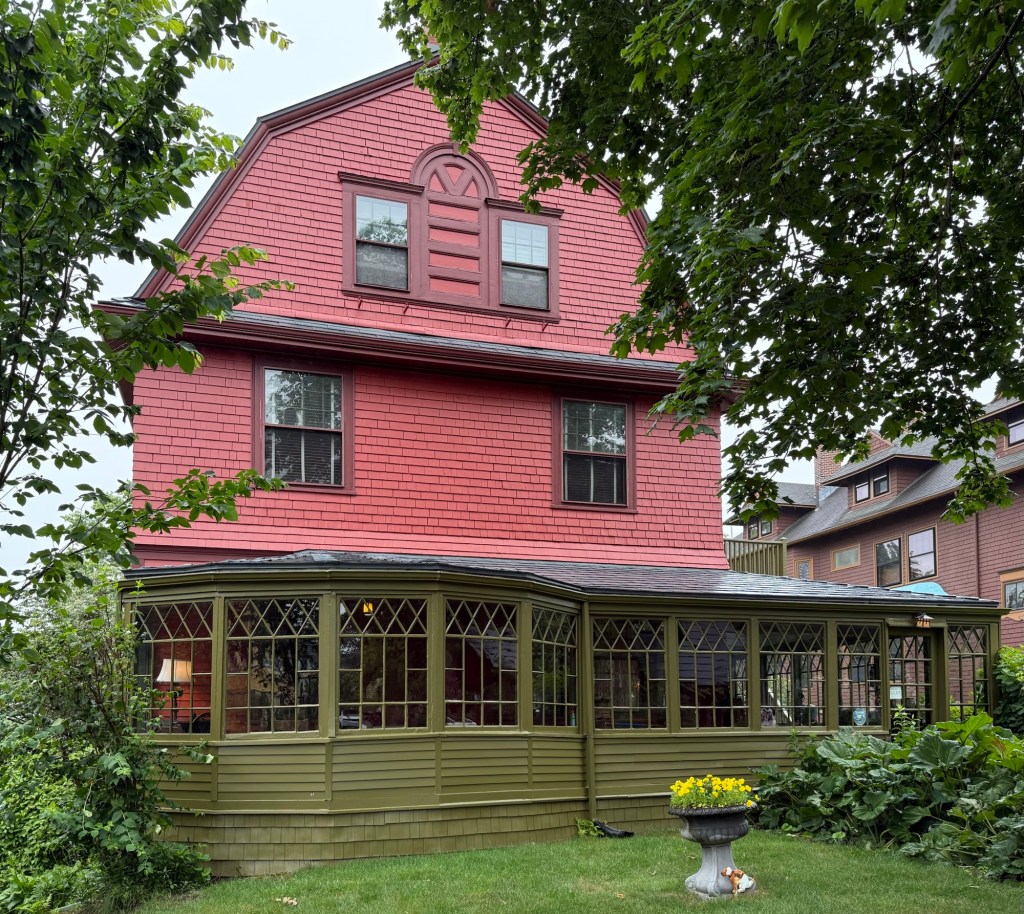
Located next to the colorful Wadleigh-Friend House on Highland Avenue in Somerville, the Dr. Thomas M. Durell House stands as a more academic example of the Colonial Revival style, but leaning more towards Arts and Crafts style than Queen Anne like its neighbor. This residence was built in 1897 for Dr. Thomas M. Durell, a Harvard-educated doctor and surgeon who, at the formation of the Tufts Medical School, was appointed Lecturer on Legal Medicine, and in 1895, was made Professor of that subject. Architects (and brothers) Edwin King Blaikie and William Everett Blaikie designed the residence for Dr. Durell along with a stable at the rear. While the house exhibits Colonial Revival detailing from the Palladian window and proportions, there are some Arts and Crafts style influences including the shed dormers, shingled siding, inset porches, and broad overhanging eaves with exposed rafters.
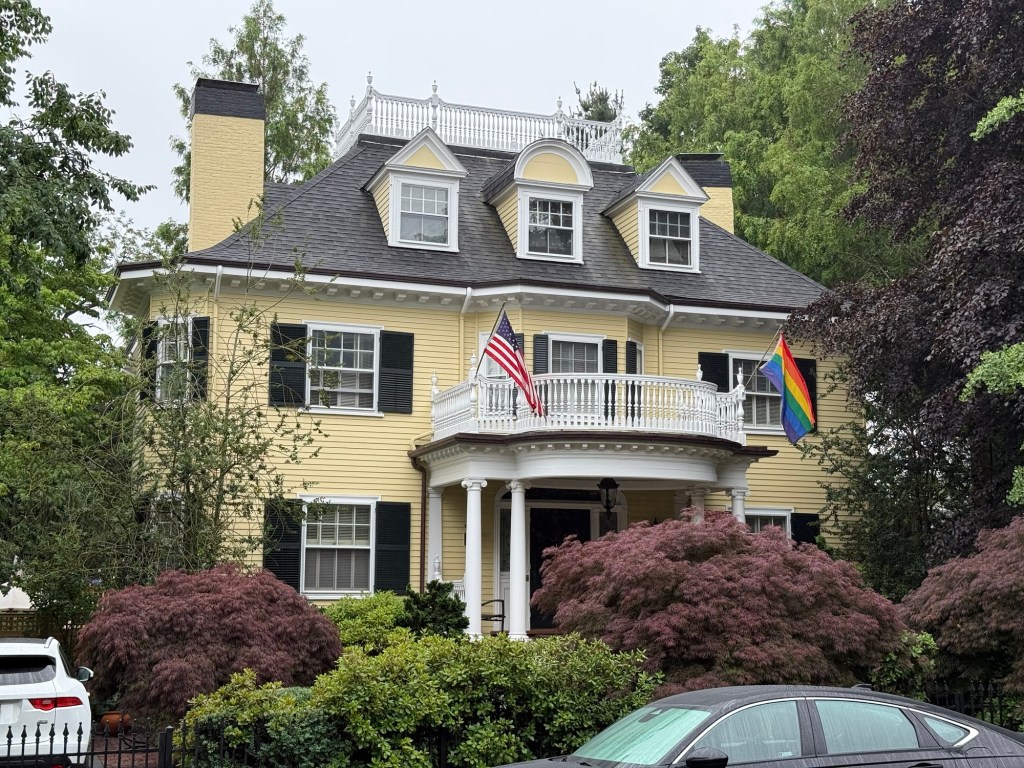
One of the most beloved houses in Somerville, Massachusetts is this beauty on Highland Avenue, known best for the unique assemblage of colorful found objects in the front yard, as a living museum. The residence was built in 1893 for William Y. Wadleigh, a wholesale grocer who operated markets all over the region. The house is an eclectic blending of Queen Anne and Colonial Revival styles with an asymmetrical plan and rounded corner tower taken from Victorian styles, along with a classical porch and swan’s neck pedimented dormers at the roof, clearly Colonial Revival in style. Today, the Wadleigh House is best-known for its owner, artist Martha Friend, who has preserved the house, and created an enchanting, ever-evolving installation outside and inside the residence. Sapphire City, an installation in the front yard, draws passersby in to see the assemblage of blue bottles and Dance Party, an assortment of animals at the porch roof, make the house a favorite in the neighborhood. It is houses and owners like this that make Somerville such a vibrant and great place to live and explore.
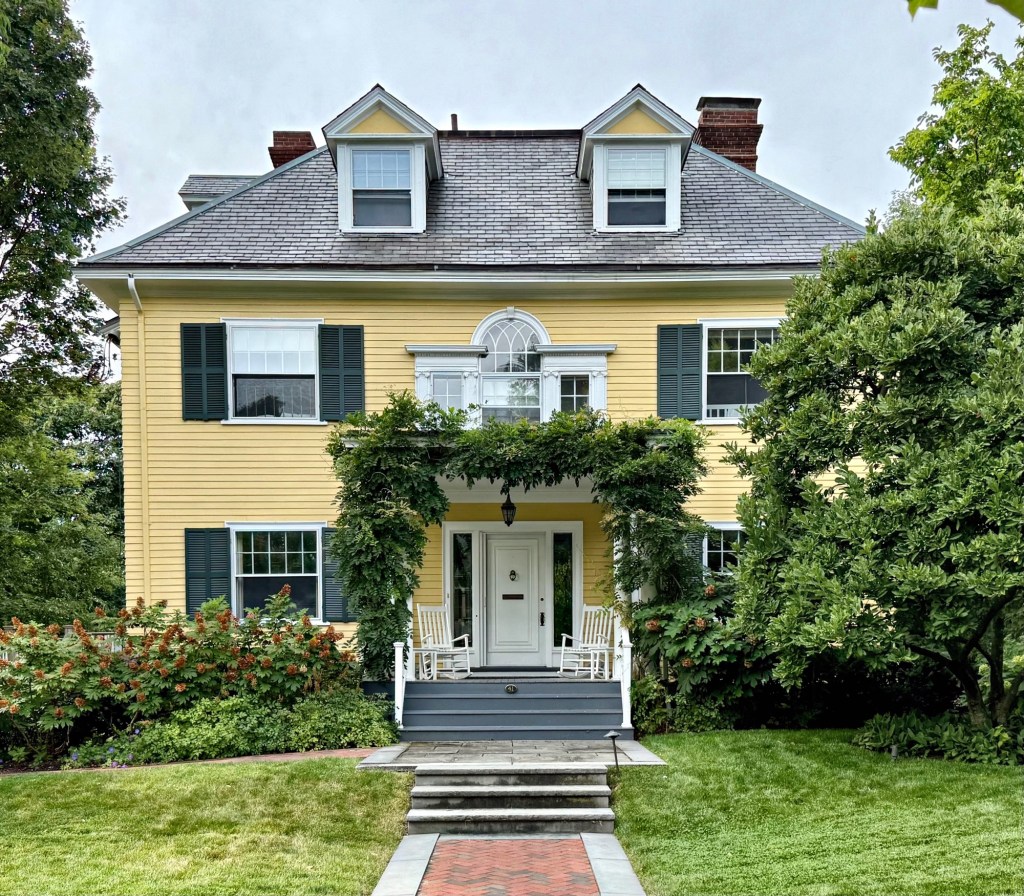
In 1902, Francis Bryden Dana (1865-1917) began construction on his home here in the Cottage Farm neighborhood of Brookline, Massachusetts. Francis was a member of the wealthy Dana Family and as a young man, attended the Boston Latin School and Harvard College. He became the president of the Dana Hardware Company of Boston. For his Brookline residence, Dana hired the exclusive architect, William Gibbons Rantoul to design the house which blends Arts and Crafts and Colonial Revival styles. The use of stucco siding, shed dormers, and portico with low sloped roof revealing exposed rafters falls squarely within the Arts and Crafts style; while the symmetrical facade, gambrel roof, and projecting octagonal bays are reminiscent of the more traditional New England Colonial Revival style.
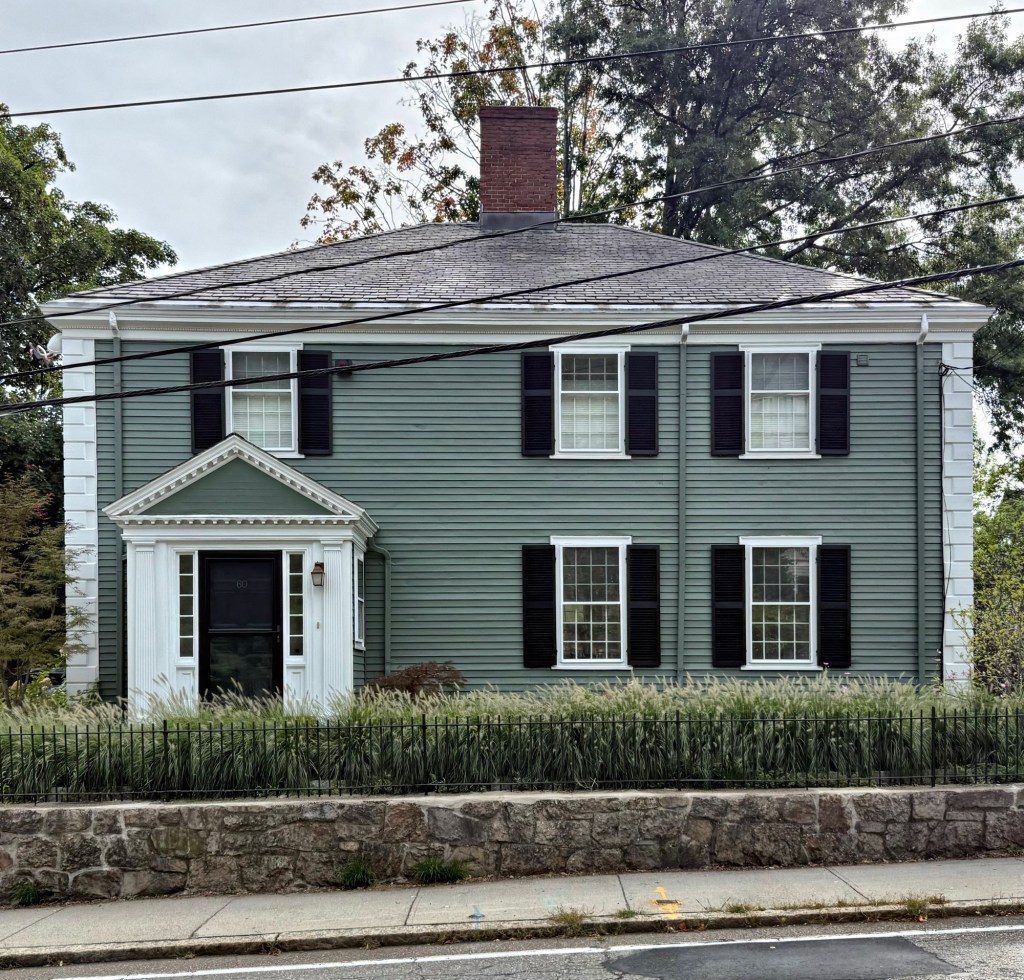
As the heirs of Amos A. Lawrence began subdividing and selling off desirable house lots in the Cottage Farm neighborhood of Brookline in the 20th century, we can see a visual representation as to the ever-changing architectural tastes of wealthy residents, from Colonial Revival to Tudor Revival. This residence, the Joseph and Jane Cotton House, was built adjacent to the Amos A. Lawrence Cottage, and is an excellent example of a Colonial Revival style brick home. The property was built for Joseph Hall Cotton (1869-1919), treasurer of the American Tube Works, and his wife, Jane Eaton Cotton. The couple remained in the home for about a decade until they relocated to the Back Bay neighborhood of Boston. The architectural firm of Chapman & Frazer, esteemed suburban architects, designed the house as an elongated rectangle with projecting columned porches on the first floor, pilastered entrance and window above, and hipped roof with overhanging eaves and shed dormers, a nod to the Arts and Crafts style.
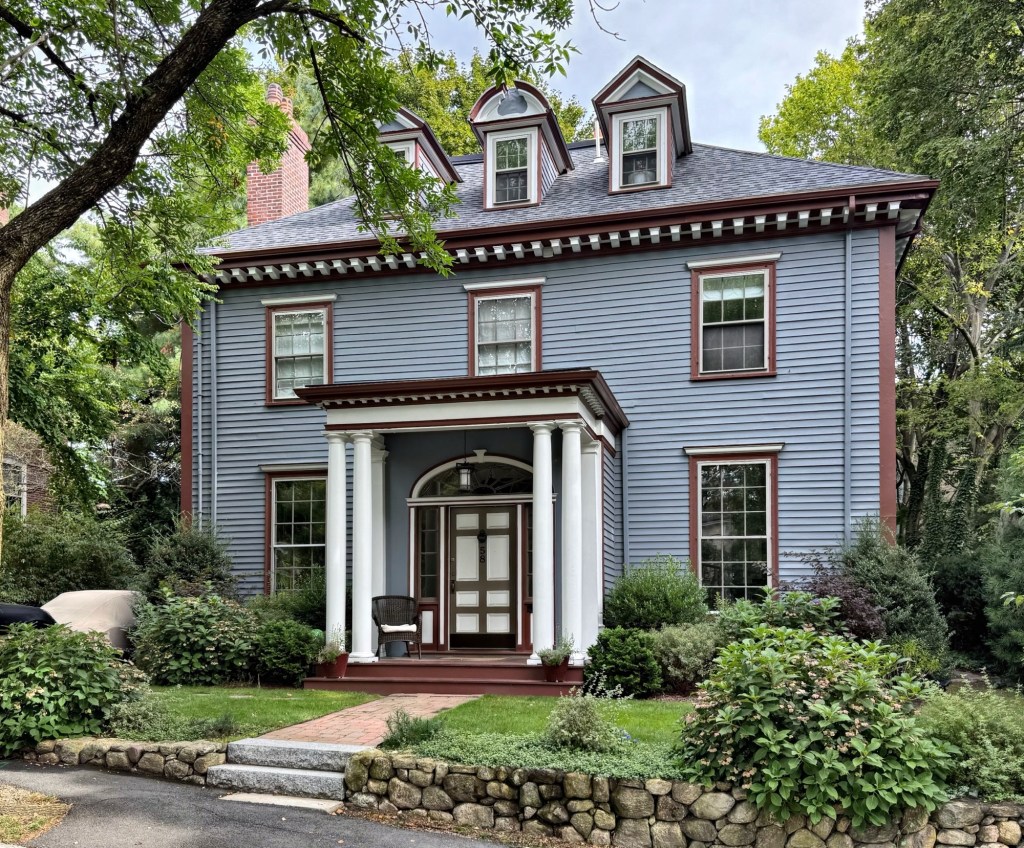
Built in 1903 for Walter Briggs, this stately Colonial Revival style residence showcases the bold proportions and scale of the style. Located on Euston Street in the Cottage Farm neighborhood, this house was designed by Walter H. Kilham of the firm, Kilham & Hopkins, who specialized in large, suburban homes in the Boston area during the early decades of the 20th century. The symmetrical facade includes a projecting center vestibule, an arched window with blind fan above, bold window trim, and a shallow hip roof broken by two pedimented dormers. The house is so special that it was featured in a 1909 publication highlighting 100 country houses of various styles of the United States.
The Rowe House at 11 Mason Street is an over-the-top, and high-style example of the Colonial Revival style, showcasing the oversized proportions and scale that architects in the early 20th century followed when referencing Colonial American architecture. The house here was built in 1911 for Edward Prescott Rowe (1879-1936) and his wife, Eleanor Livingstone. Designed by the firm of Rowe & Keyes of Boston and New York, the commission was likely a relative of Mr. and Mrs. Rowe. The symmetrical house features a broad gambrel roof with Palladian windows in the side gable and central dormer at the facade, large pilasters breaking up the bays on the facade, a projecting Colonial Revival entry, and squat windows at the second floor terminating at the entablature above. The property even retains its Colonial Revival gateway.
This stately mansion is located at 200 Ivy Street in the Cottage Farm neighborhood of Brookline and was built in 1910 for Martha and John Endicott Peabody. Designed in a Renaissance/Colonial Revival style by architect John Worthington Ames, the house has since been converted to institutional use, but retains much of its original character. John Endicott Peabody (1853-1921) was a businessman and later got involved with the arts in Boston. The building was acquired for institutional use beginning in the 1950’s and was occupied as the St. Dominic’s Institute and has been owned by the Massachusetts Association for the Blind since 1976, and today is occupied by the organization’s Ivy Street School, a special education residential and day high school for neurodivergent youth to help prepare pupils for adulthood with the tools they need to achieve their greatest independence. The brick house is covered in stucco and features an elaborate stone door surround, symmetrical facade, and massive chimneys.