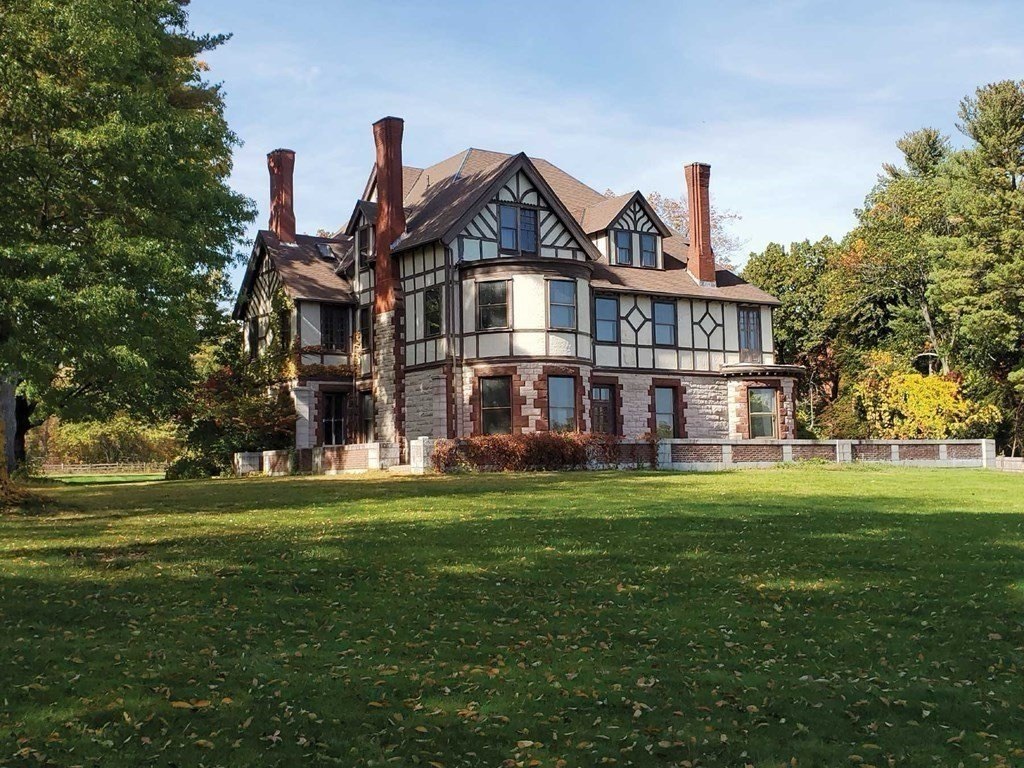
The Charles Torrey House at 36 Edgehill Road in Brookline, Massachusetts, is a great example of a Queen Anne style residence in the Boston suburbs. The stately home was constructed in 1889 for Charles Torrey, an artist who specialized in nautical scenes. The house is unique for its brick first floor, shingled second and stucco with half-timbering in the gable, a feature that suggests the renewed interest in English medieval motifs. The architect for the Queen Anne style home could not be located, but it appears to be from a more prominent Boston-area firm of the late-19th century. The house is currently (2025) undergoing a renovation.
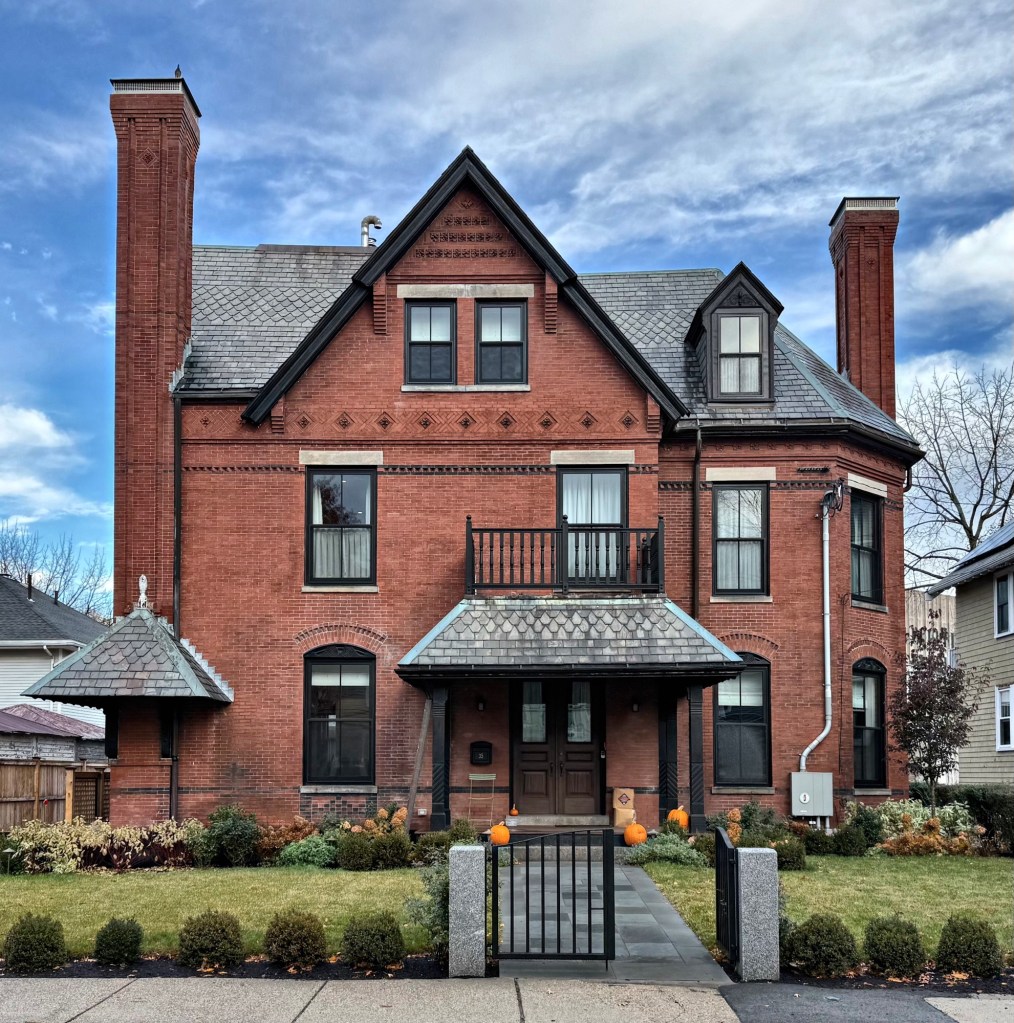
The house at 44 Edgehill Road in Brookline, is a brick Queen Anne style residence built for Moorfield Storey (1845-1929) by architect and neighbor, Robert Swain Peabody, who was Moorfield’s friend and college roommate. Both Peabody and Storey would later move in the early 20th century to the Fenway in neighboring houses, also designed by Robert S. Peabody. Moorfield Storey was a president of the American Bar Association and the president, for most of its existence, of the Anti-Imperialist League, an organization founded to oppose the annexation of the Philippines as a colony and to support free trade and the gold standard. Storey consistently and aggressively championed civil rights, not only for African Americans, but also for Native Americans and immigrants. He opposed immigration restrictions, and supported racial equality and self-determination. He would become the first president of the National Association for the Advancement of Colored People (NAACP), from its founding in 1909 until his death in 1929. The Storey House in Brookline is a well-preserved and early example of the Queen Anne style, that would dominate architectural tastes for the following decades.
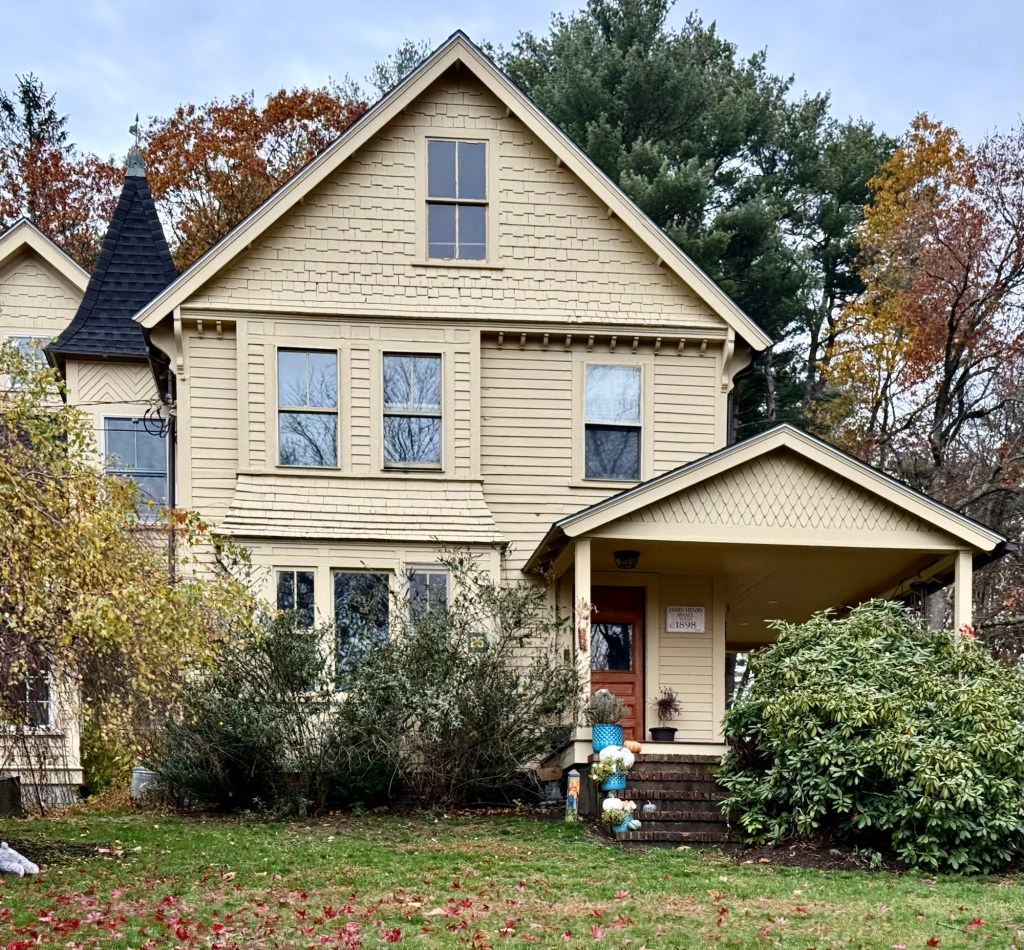
This handsome shingled Queen Anne style home on Allerton Street in Brookline, Massachusetts, is part of the reason why the “Pill Hill” neighborhood gets its name. The residence was built in 1888 for Mr. Sumner Flagg, likely as an investment property as the neighborhood developed into one of the finest in the Boston area. An early resident here was Judith Motley Low (1841-1933), founder of the Lowthorpe School of Landscape Architecture, which was the first school intended solely to prepare women as landscape professionals in a field dominated by men. In 1945, the Lowthorpe School merged into the Rhode Island School of Design and became the basis of RISD’s Landscape Architecture Department. Another prominent resident of the house in the 20th century was Dr. John Rock (1890-1984), a physician and scientist who worked nearby at the Massachusetts Hospital for Women. As a Catholic doctor, John Rock is best-known for two groundbreaking medical discoveries in women’s health: the birth control pill and in-vitro fertilization. Dr. John Rock and his lab technician, Miriam Menkin, were the first researchers to fertilize a human egg outside of a human body in February of 1944, this research was compounded and later led to in-vitro fertilization as we know it today. Additionally, while running his clinic, Dr. Rock encountered a number of women bearing unwanted children that they could neither afford financially nor handle physically. Rock observed numerous women who, after giving birth to multiple children, had prolapsed uteri, malfunctioning kidneys, and were prematurely aging. In 1952, Rock was recruited to investigate the clinical use of progesterone to prevent ovulation. Enovid, the brand name of the first pill, was approved by the U.S. Food and Drug Administration (FDA) and put on the market in 1957 as a menstrual regulator. In 1960, Enovid gained approval from the FDA for contraceptive use.
The John Runkle House on High Street, is one of the most interesting houses in Brookline. Built in 1875 for educator John Daniel Runkle (1822-1902), the brick residence excellently blends early Queen Anne form and flourish with Victorian Gothic design elements all with Stick style entry porches and dormers. John D. Runkle was a noted mathematician wholater became the second President of the Massachusetts Institute of Technology from 1868 until 1878. This occurred before MIT moved over the Charles to Cambridge, so President Runkle would not have traveled far to the Institute when located in the Back Bay. The Runkle House was designed by the architectural firm of Weston & Rand with an irregular plan of elaborate belt courses in the brickwork that is set against the extremely steep slate roof with tall prominent chimneys and corner turret. Sadly, the residence is largely obscured by a tall wooden fence, but I caught it on a good day that a panel was down.
This oversized stable and carriage house is located at 3 Maple Street in Kingston, Massachusetts and it dates to about 1880. The stable was built for Horatio Adams (1845-1911), a wealthy resident who operated a successful slaughterhouse and stockyards nearby along with maintaining stores adjacent to the nearby the train tracks. After Horatio Adams died, the stable was eventually purchased by Edgar W. Loring and converted to a cranberry screen & warehouse for his cranberry farm. The significant Queen Anne/Stick style building suffered from deferred maintenance by the late 20th and early 21st centuries, but was purchased in recent years and undergoing a restoration of the exterior. Does anyone know what its use is today?
The Queen Anne style pumphouse of the Kingston Waterworks in Kingston, Massachusetts, is a unique brick building capped with a hipped roof and wood shingle tower over the arched entrance, surmounted by a bell-cast metal roof. The structure was built in 1888 from plans by Quincy Adams Faunce, a mason, who likely worked with an architect to design the building. Before the building was completed, residents had to pump and transport their own water. This was until the first private Kingston Aqueduct Company formed, when householders of means bought stock in the company. The Aqueduct Company used a natural spring near a local pond. Before the waterworks, water was piped through the village through hollowed logs with their joints covered with iron bands. The building remains a well-preserved and significant structure that allowed Kingston to grow from a sleepy agricultural town to a vibrant community.
The Kingston Fire Department was officially established in 1887, and previous to this, the town had generally relied on individual action and volunteers to provide fire protection for the Town and its many buildings. In 1888, the town of Kingston purchased this building, a storage facility constructed in 1860 on Main Street, with the aim to convert the building into a hose hose. Soon after purchasing the structure, funding was set aside to renovate the building, adding a hose tower at the rear of the building, shingle siding, and double doors to make the Hose House more equipped for the fire department. The local fire department, known as the Surprise Hose Company operated here until 1940, when a new, modern facility was built, leaving this structure for storage and hose drying. The building was restored in recent decades and is now a landmark on the town’s Main Street.
Tucked away in the town of Hunter in the Catskill Mountains of New York, the summer colony of Twilight Park has stood as an exclusive and private resort community established in the late 19th century. Twilight Park was born out of the Twilight Club, a Manhattan social club in the late-19th century and brought to life by founder, Charles F. Wingate. Mr. Wingate traveled to the mountaintop in 1887, and became enamored by its natural beauty. He arranged for the purchase of a former sheep’s meadow and led the construction of the first cluster of cottages in what would become a large community of over 100 summer homes. Cottages were laid out on roughly parallel roads at different elevations and on old connecting paths that later became roads with all lots built on ledges overlooking the Catskills. The first cottages were log cabins, and quickly followed by larger, Queen Anne style “cottages” as others invested in the development. Crossways Cottage is one of the many unique late-Victorian summer “cottages” in the exclusive Twilight Park colony in the Catskills of Hunter, New York. The cottage stands out for its cross-gable roof with overly deep eaves which are supported by rustic twig brackets, diamond sash windows, and the use of varied clapboard and shingle siding.
Tucked away in the town of Hunter in the Catskill Mountains of New York, the summer colony of Twilight Park has stood as an exclusive and private resort community established in the late 19th century. Twilight Park was born out of the Twilight Club, a Manhattan social club in the late-19th century and brought to life by founder, Charles F. Wingate. Mr. Wingate traveled to the mountaintop in 1887, and became enamored by its natural beauty. He arranged for the purchase of a former sheep’s meadow and led the construction of the first cluster of cottages in what would become a large community of over 100 summer homes. Cottages were laid out on roughly parallel roads at different elevations and on old connecting paths that later became roads with all lots built on ledges overlooking the Catskills. The first cottages were log cabins, and quickly followed by larger, Queen Anne style “cottages” as others invested in the development. This cottage, known as Sans Souci Cottage, was built in 1894 in Twilight Park, during the “rustic” period, where Queen Anne Victorian styles made way for a more rustic, Arts and Crafts mode. The cottage was built for owner John McClure and it is notable for its varied siding, diamond-pane windows and large porch overlooking the Catskills.