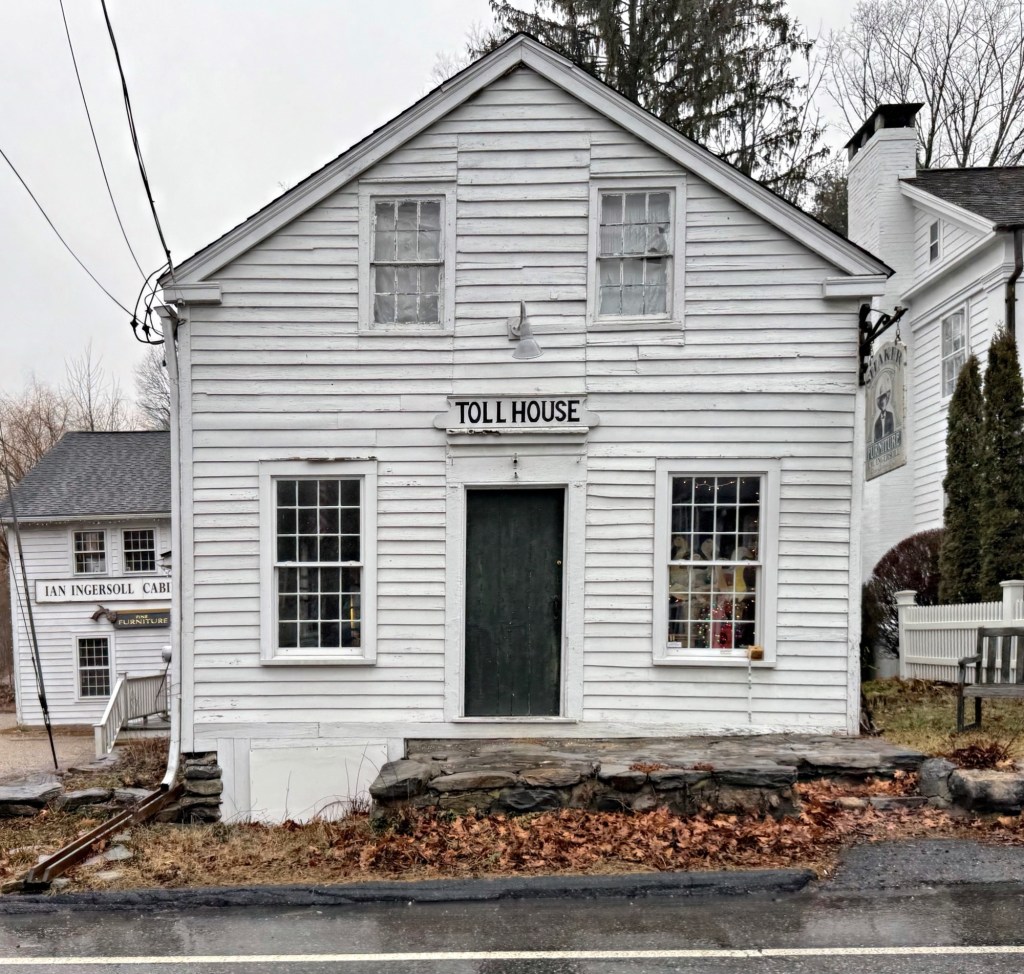
West Cornwall Old Toll House // c.1800

This modest, vernacular frame structure in West Cornwall, Connecticut, perhaps erected as early as 1800, has served a number of commercial purposes in its history, most significantly as a toll house. The structure was a toll booth for the two turnpikes which crossed near the site – the Sharon-Goshen Turnpike, and the Warren Turnpike, which ran along the Housatonic River. Before the days of EZ-Pass and transponders, travellers would pay their tolls to a worker in this building. Eventually the street became free to use, and the building was acquired for commercial use. It now serves as a showroom for a local cabinetmaker, but retains the original charm and historic sign above the door. How charming is that?

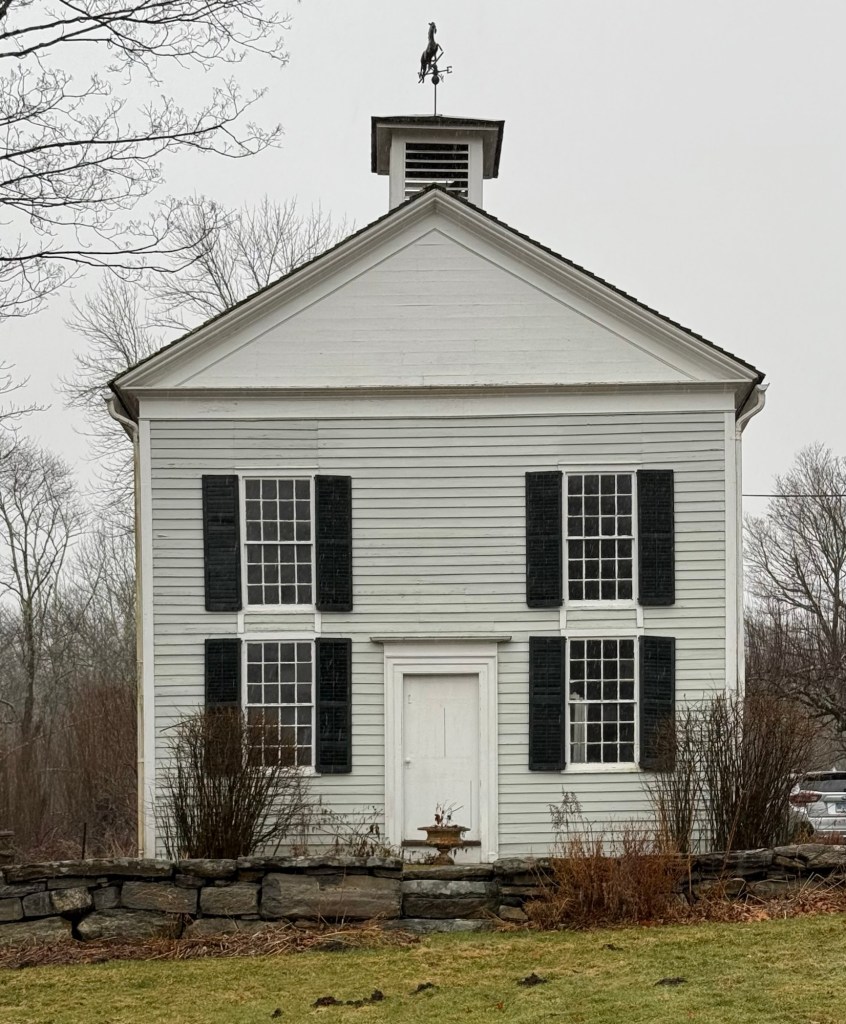
Old Goshen Academy Building // 1824

The former Goshen Academy building is located in the central village of the rural town of Goshen, Connecticut, and it is an important vestige of early education in the small town. The Goshen Academy building was built in 1824 from funds by shareholders of the institution. The academy featured a lecture room on the second floor with smaller classrooms downstairs. The academy would eventually close, and it has been occupied by the Goshen Historical Society.

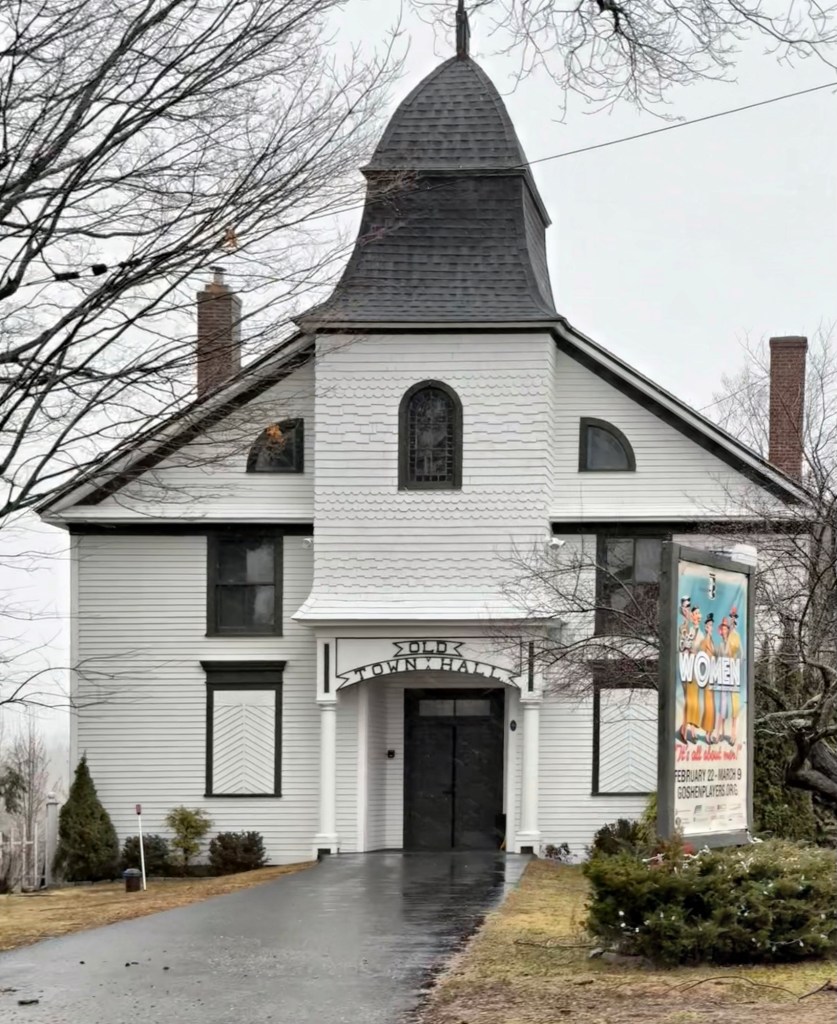
Old Goshen Town Hall – Goshen Players // 1895

The first purpose-built official town building of Goshen, Connecticut, was this wood-frame structure at the main junction in the central village as the town’s first town hall. Built in 1895, the structure originally housed offices for the selectmen and town clerk, a fireproof vault for records, and a large audience-room with stage for town meetings and ceremonies. The building employs a more traditional form similar to the old Greek Revival meetinghouses built in New England in the first half of the 19th century, but with a shingled, Victorian entry tower with bell roof. When the Town of Goshen moved into its present town hall building, this structure became the home to the Goshen Players, a community theatre established in 1949, and is the second oldest continuously performing theatre group in the state.

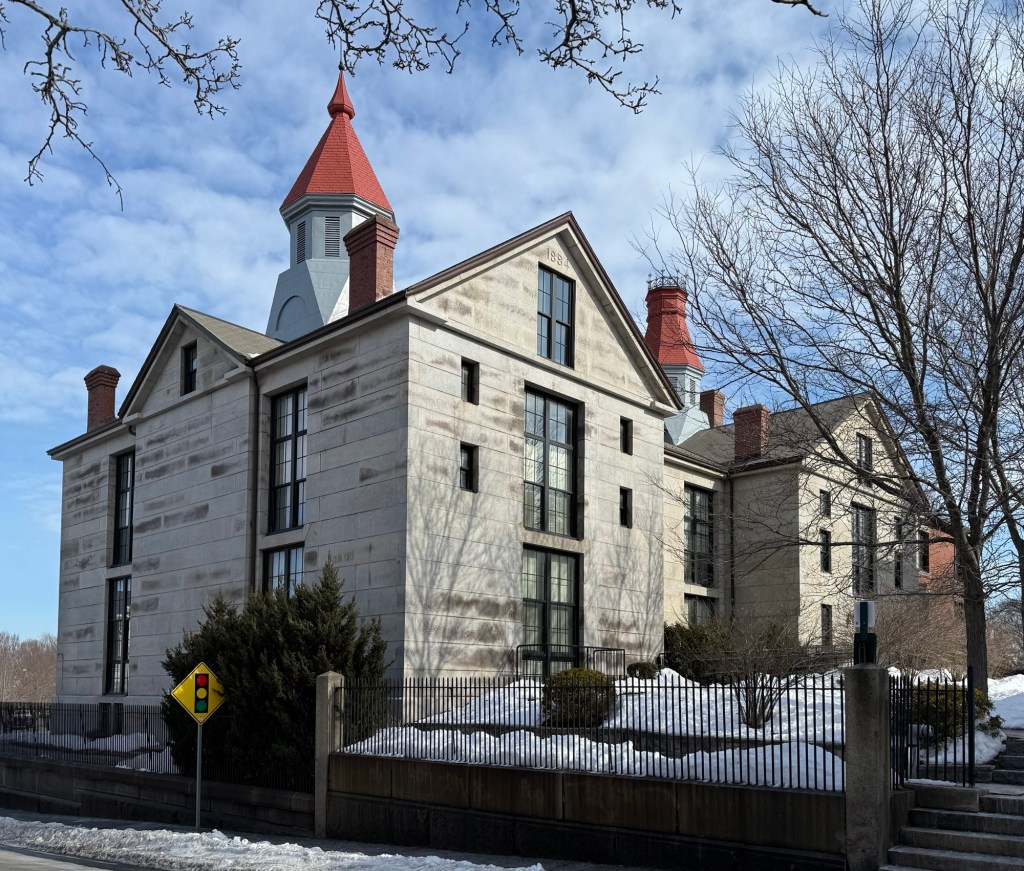
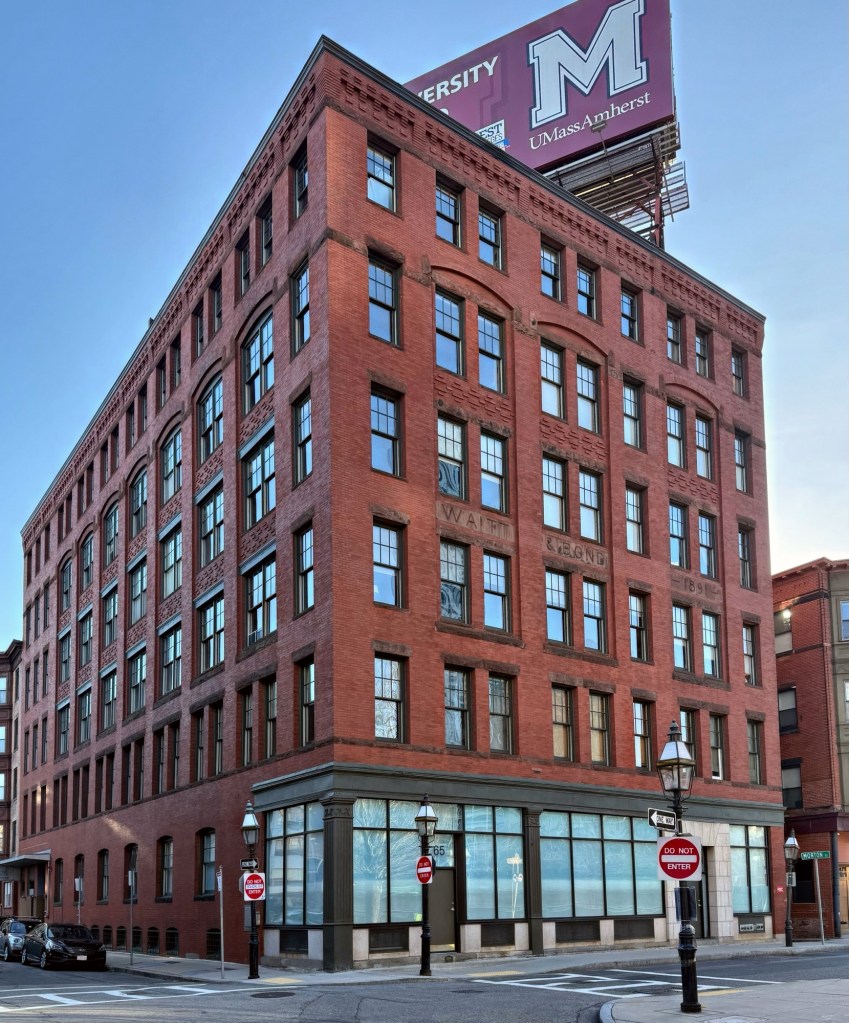
Waitt and Bond Building // 1891

One of several late 19th-century industrial buildings in the North End, the Waitt & Bond Building stands on Endicott Street, looking over the scar on the landscape that is I-93. This six-story building was constructed in 1891 and is the oldest extant building in Boston associated with cigar manufacturers Henry Waitt (1842-1902) and Charles H. Bond (1846-1908), who started business in 1870. The business relocated from Saugus to Boston in 1873 and moved into this building upon its completion. Waitt & Bond produced handmade cigars with each employee hand-rolling over 300-a-day. The architect, Ernest N. Boyden, designed the building in the Panel-Brick and Romanesque styles with decorative brick panels, cornice, and arched detailing. Rooftop billboard signage (blight) was first added to the building in 1956, with increased visibility via the elevated John Fitzgerald Expressway (the Central Artery). By the early 1960s, Joseph Castignetti moved his men’s clothing store, Castignetti Brothers, to this location. In 2001, the building was converted into 28 loft-style condos, an early sign of the gentrification to come to the North End.

William Slattery Tenements // c.1893

It is not always the architect-designed, high-style buildings that give a place character. The North End is a neighborhood almost entirely built of working-class tenement housing, but its density, immigrant history, and vernacular, make it one of the most visited and unique in the city. Michael Slattery, an Irish-born teamster, and his son, William, a grocer, developed this handsome block of tenement housing on North Margin Street in the North End neighborhood of Boston. The row of apartments stands out for its elevated design elements, including the projecting metal oriels with decorative wreath and swag motifs, arched openings, and brick corbeling at the cornice. The apartments here were rented by the Slattery family until the mid-1920s when the buildings were sold to Italian-Americans who continued to rent the buildings to lower-income residents. There is something about the North End’s vernacular that is so charming.

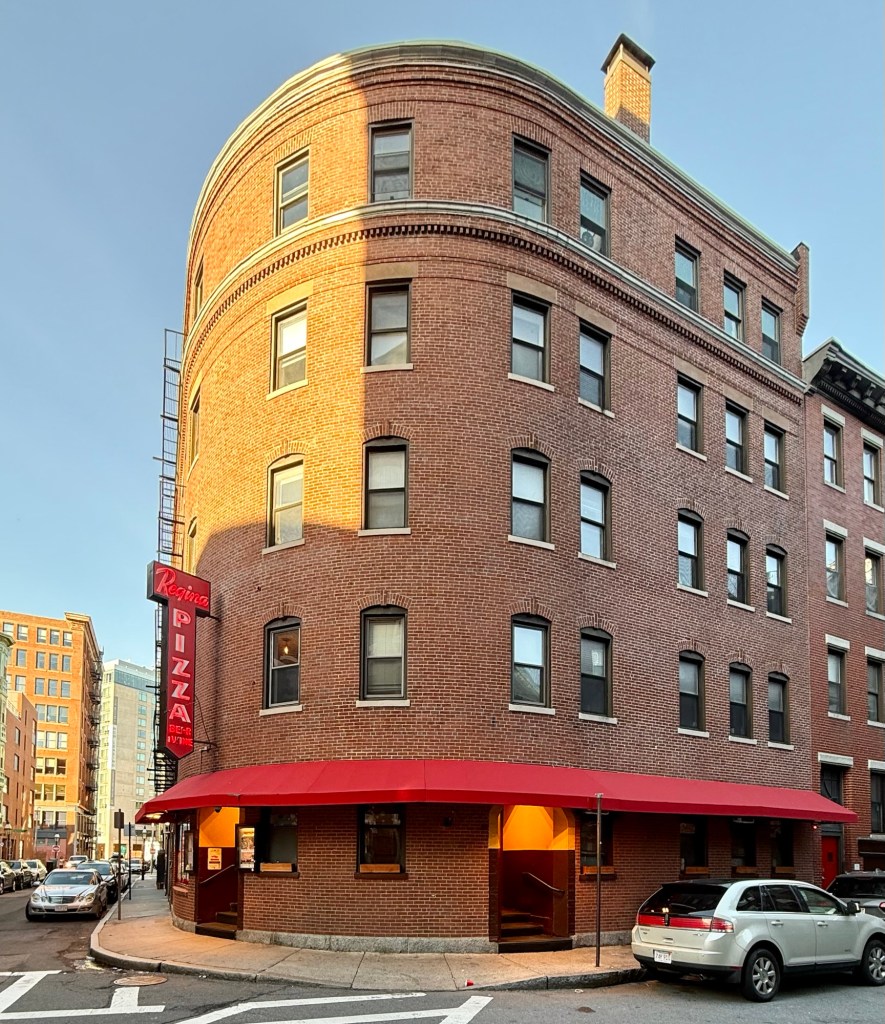
Boston Cooperative Building Company Tenements – Regina Pizzeria // 1886

What is your favorite pizzeria in the Boston area? For many, it is likely to be Regina Pizzeria, but specifically this location in Boston’s North End. The building was originally constructed in 1886 for the Boston Cooperative Building Company, a charitable organization which built and rented tenement housing for low-income residents in the city. Many recently arrived immigrants would have lived in the building and paid a nominal rent, giving them the opportunity to work and grow their savings to move into better, more permanent housing. The Association was incorporated in 1871 and its original stockholders represented the financial elite of Boston. As a result of their financial backing, the association was able to hire the white-shoe architectural firm of Cabot & Chandler to design this tenement block in 1886. While not ornate, the building fits within the late 19th century vernacular of brick tenements of the North End. The building is now best known as the home to Regina Pizza, which was founded in 1926 by Luigi D’Auria, who was born in Campania, Italy, who purchased the building around that time. Regina Pizza (translated to “Queen Pizza” in Italian), was sold to the Polcari family in 1956, who have operated the restaurant since. The pizzeria with its prominent blade sign is one of the best landmarks in the North End.

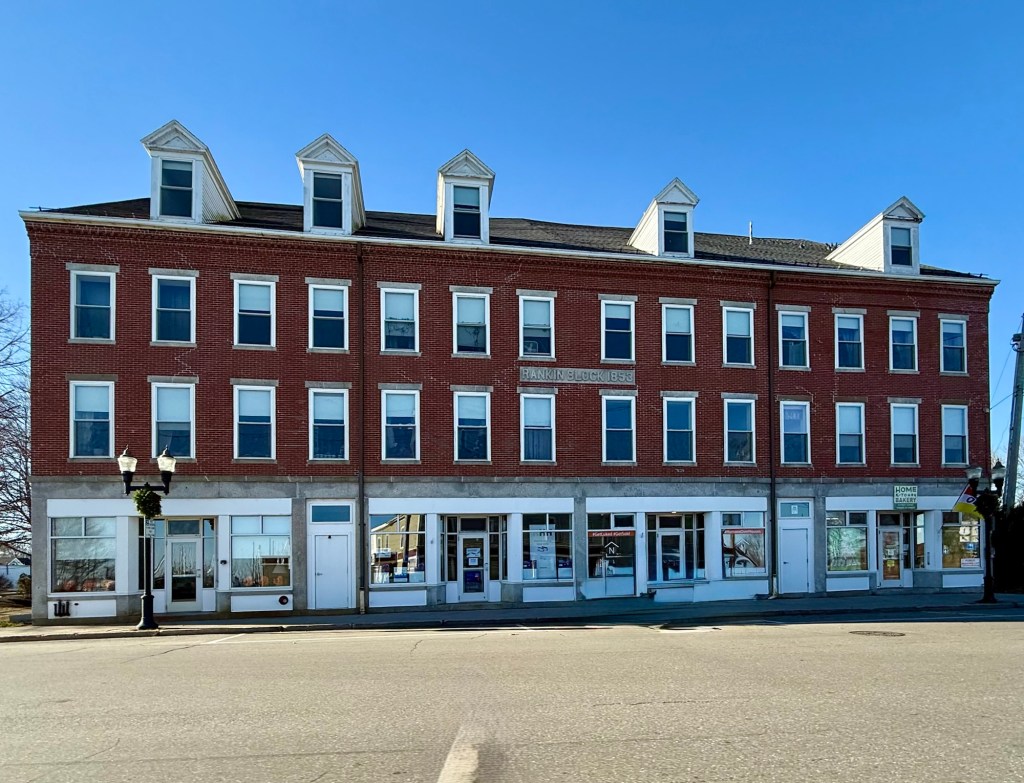
Rankin Block // 1853

The Rankin Block is a significant early commercial building in Rockland, Maine. The brick block was built in 1853 by Samuel Rankin, a descendant of one of the area’s first European settlers. Its location was near the center of the city’s shipbuilding industries, and replaced an earlier commercial building destroyed by fire. Its early tenants included a ship chandlery, shipping offices, and a sail loft. The vernacular Greek Revival style building is constructed of brick and granite, showcasing the no-frill architecture that working Maine sailors preferred. The building is now occupied by a senior living facility. Talk about a great adaptive reuse!

Georgetown Engine House No.5 // c.1860

Following a devastating fire in Georgetown in 1874, local residents of the town petitioned at a town meeting to purchase a fire engine and a lot to erect a new engine house to prevent such a loss again. Within a year, voters approved not only the construction of a new engine house on Middle Street, near the commercial center of town, but also to move this charming single-engine firehouse at to a site to “the south part the town”. This structure was deemed inadequate for the dense commercial village and instead of demolishing it, town voters decided it could be relocated to another area and put to use. A volunteer company was formed for the new engine house and the small structure remained as a firehouse until the early 20th century when modern fire apparatus would no longer fit in the building. The building was sold by the town and has remained in private ownership since the 1920s, and its use is unknown to me, but the owners are doing a great job maintaining this significant structure.

First Parish Congregational Church of Pownal // 1811

Completed in 1811, the First Parish Congregational Church of Pownal, Maine, is an excellent and well-preserved example of a vernacular Federal-period church in a rural setting. Located across from Mallett Hall and built at the foot of Bradbury Mountain, the church was built by a crew headed by master-carpenter Uriel Whitney, a Revolutionary War veteran who moved to the area after the war. He was active in this church and is buried in the church cemetery. Little remains of the original Federal Style architecture, as its current Greek Revival Style (architects unknown) dates from remodeling apparently undertaken in 1838 and 1857.

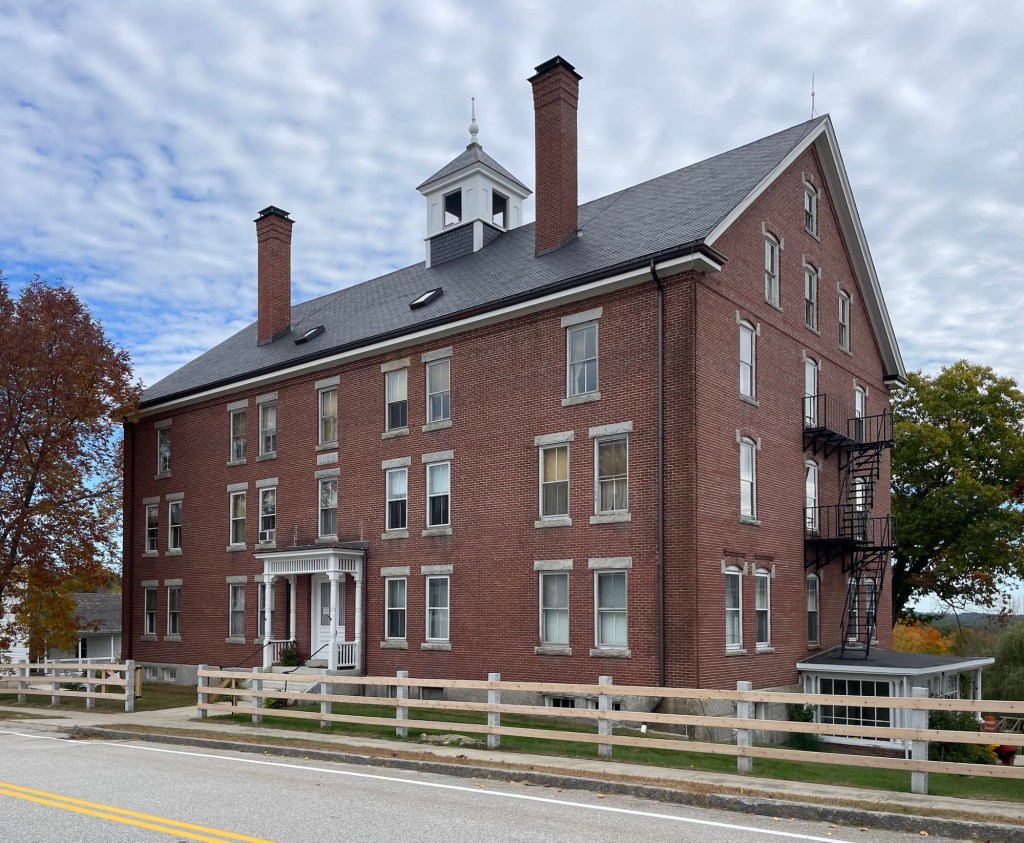
Sabbathday Lake Shaker Dwelling House // 1883

Located across the street from the Sabbathday Lake Shaker Meeting House in New Gloucester, Maine, this large, three and one-half story brick building has historically housed many of the active Shakers in the community. Built in 1883-4, the central dwelling house contains a self-contained town of rooms, including sleeping rooms, a chapel, music room, kitchen, and dining facilities. The building features granite lintels and sills and a square cupola at the roof. The building was designed by the Portland architects Francis H. Fassett and John Calvin Stevens.