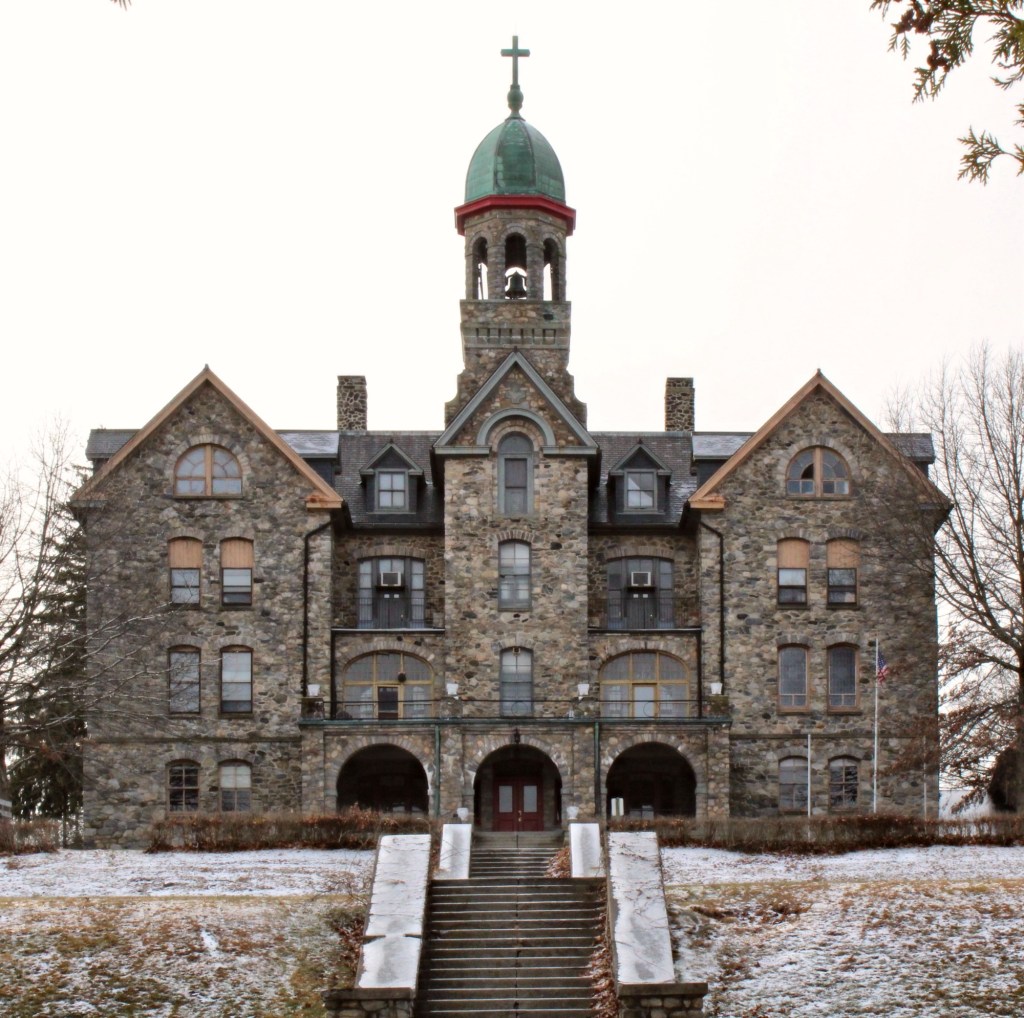
Mount Saint John School // 1908

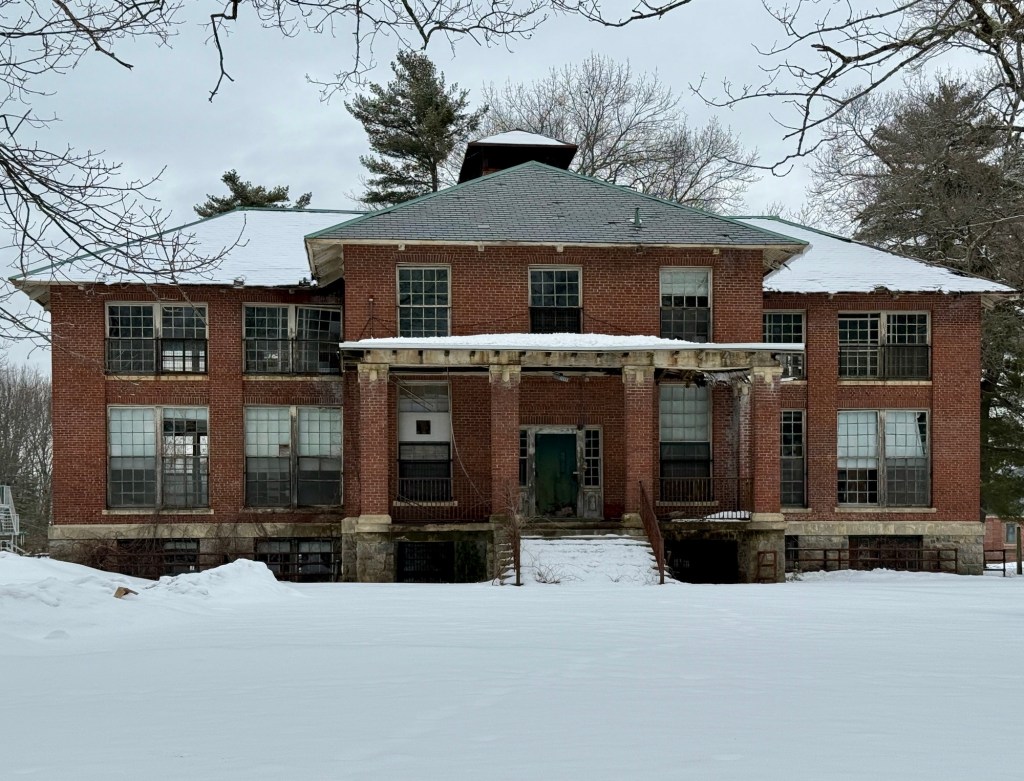
The former Mount Saint John School in Deep River, Connecticut, sits atop a hill on the western banks of the Connecticut River and is a visual landmark in every sense of the word. The school was founded by the Diocese of Hartford, who acquired the site in Deep River and began construction on the present building in 1907. Completed by 1908, the stone building (architect not known at this time), served as an industrial school for 100 boys in the Hartford region aged 8-16. The school, led by the Xaverian Brothers, was intended to educate troubled young men in the Catholic faith and learn working skills for a profession. The use changed numerous times throughout the 20th century, and ended up becoming the Mount Saint John School. Then under the Norwich Diocese, the school became known as the Mt. Saint John School. The school closed years ago and the historic building and surrounding campus’ future are uncertain.

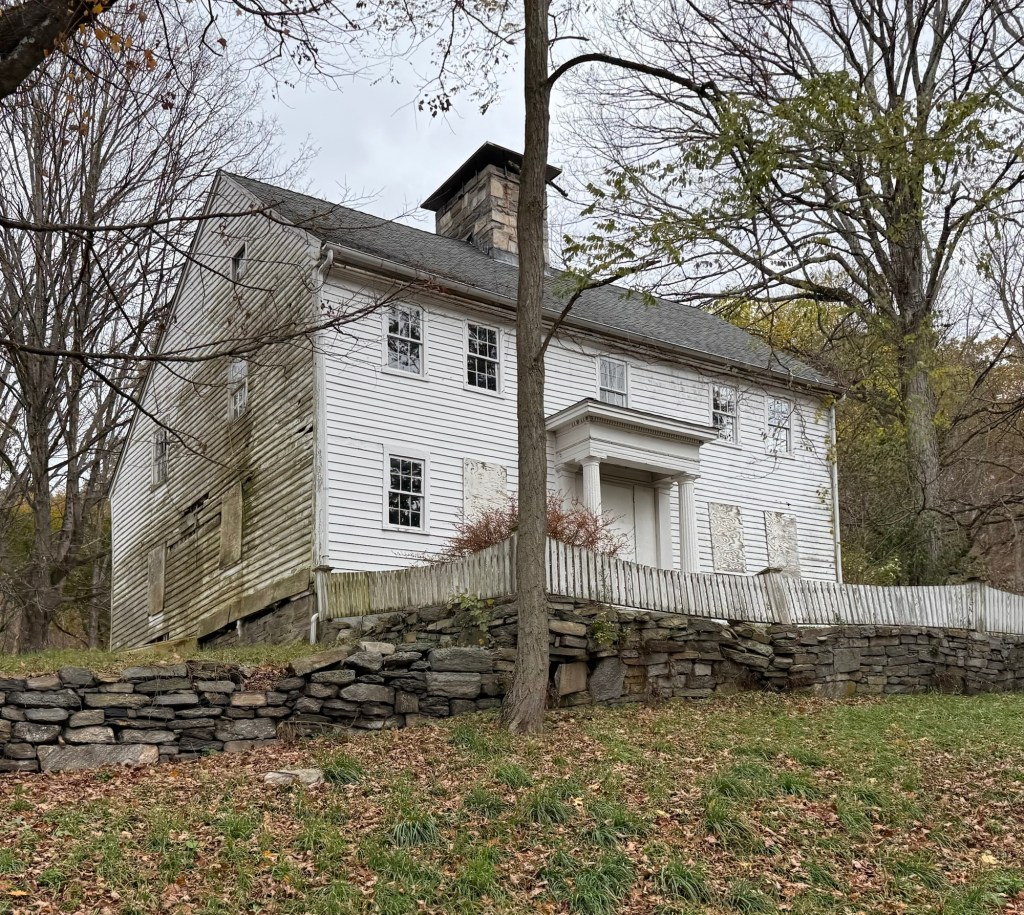
Smith-Curtiss House // c.1714

The Smith-Curtiss House, which is possibly the oldest extant building in Derby, Connecticut, has sat vacant and decaying for years and is owned by the State of Connecticut. Believed to have been built sometime between 1714 and 1740, this historic saltbox farmhouse at 411 Hawthorne Avenue is slowly decaying due to lack of maintenance and funding. Early ownership is difficult to determine, but by the 19th century, the property was owned by Ms. Alice E. Curtiss. The old estate was sold by Ms. Curtiss in 1913 to Frances Osborne Kellogg, a businesswoman, philanthropist and environmentalist, as part of her 350-acre dairy farm and land-conservation holdings. The Smith-Curtiss House was used as a residence for the herdsmen who ran the farm nearby. Before her death in 1956, Frances deeded the property to the state as a public park, and allowed her head herdsman life-occupancy of this house for the remainder of his life. The State of Connecticut assumed possession of this house in 1981. The building has suffered from deferred maintenance since this period, with the State attempting to lease the building to tenants. I hope that local and statewide preservation groups can mobilize to secure grants and funding to restore this important property.

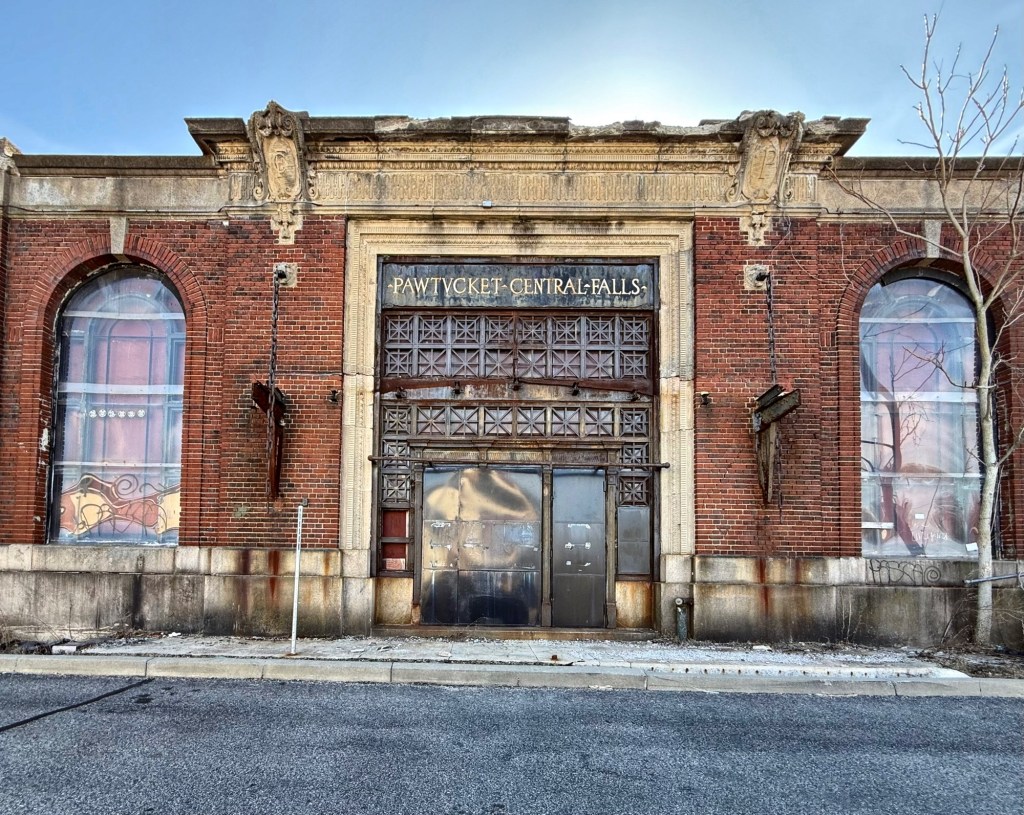
Pawtucket-Central Falls Station // 1916

The Pawtucket-Central Falls Railroad Station is a crumbling relic of a time once dominated by rail travel. This architectural landmark spans the border of the cities of Pawtucket and Central Falls, along with the tracks of the former New York, New Haven and Hartford Railroad and is one of the more unique buildings in Rhode Island. The station opened in 1916 to replace separate stations in the two cities from plans by F.W. Mellor, architect for the New Haven Railroad with Norcross Brothers of Worcester facilitating the construction over a structural steel base spanning the tracks. As many as 140 trains per day once passed under this station, but in 1959, it closed. The building was purchased by a private owner and plans failed to materialize for decades, leaving us with a crumbling masterpiece in architecture and engineering. In 2007, the lot was partially developed with the addition of a suburban, soulless CVS store and parking lot, which today, directly abuts the station. In 2023, a new Pawtucket/Central Falls station opened nearby, which has brought new calls to demolish this building, with people actively seeking grants to fund the estimated $10 Million dollar demolition.

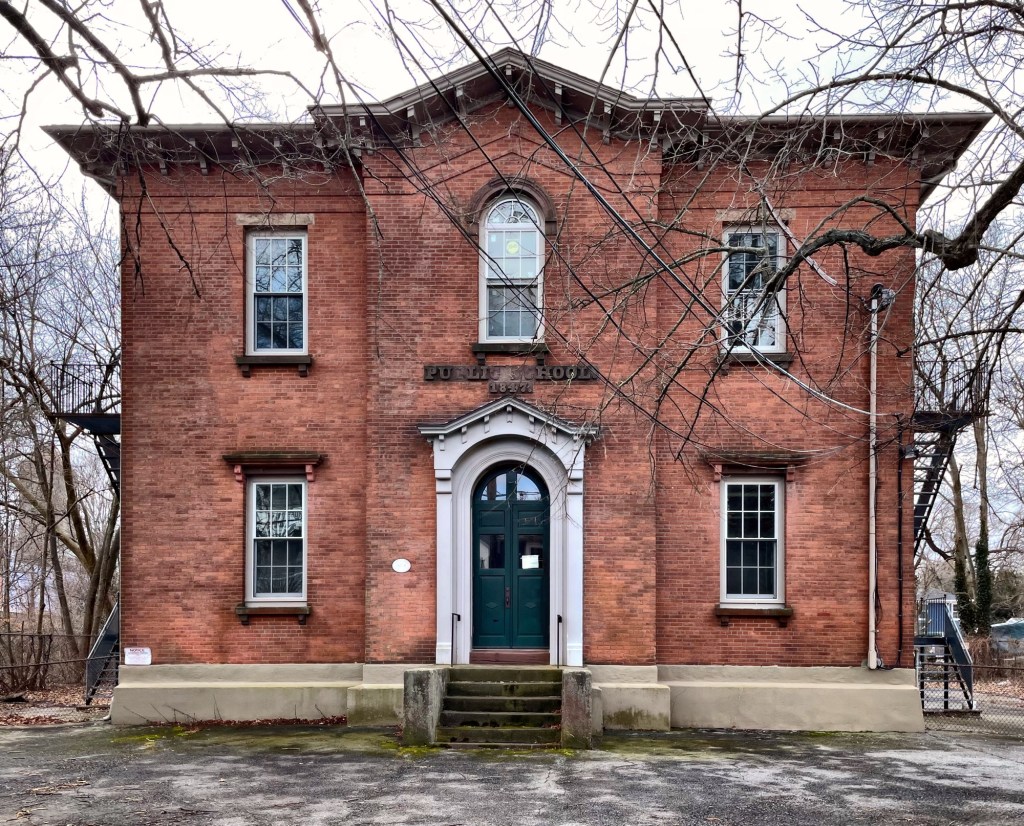
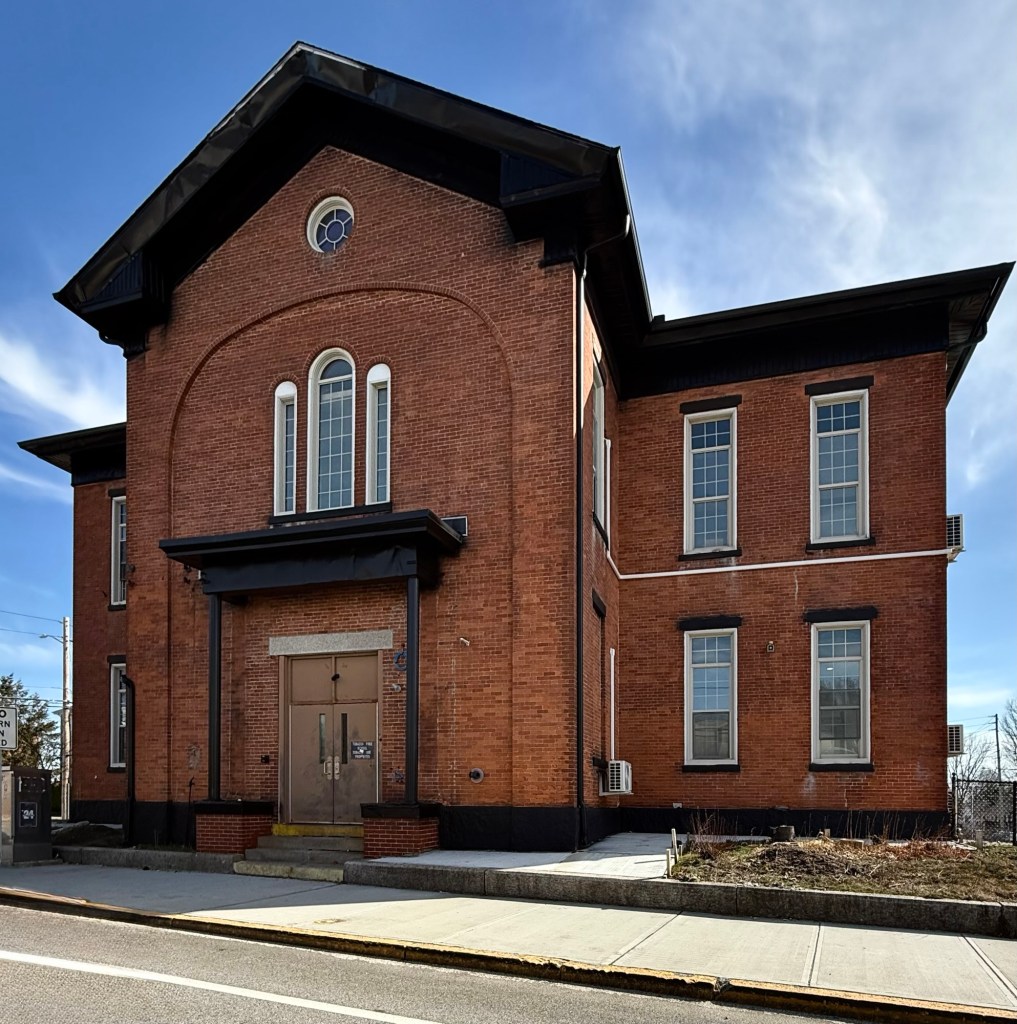
Former Broad Street School // 1861

The oldest extant school building in present-day Central Falls, Rhode Island, is this brick schoolhouse, constructed in 1861, to serve as the main village school. The rather plain two-story brick building was built just before the Civil War, during a period of rapid industrialization and growth in Central Falls, when it was then the dense core of the town of Smithfield, Rhode Island. The building contained classrooms for pupils from elementary through high school. Italianate in style, the rather unadorned building does feature oversized windows with some containing rounded tops, deep eaves, and a subtle recessed arch in the central bay on the facade. The school has been vacated for some time, and in 2024, plans materialized to convert this building into affordable housing. Hopefully the renovation/restoration is thoughtful for such a significant piece of the city’s history.

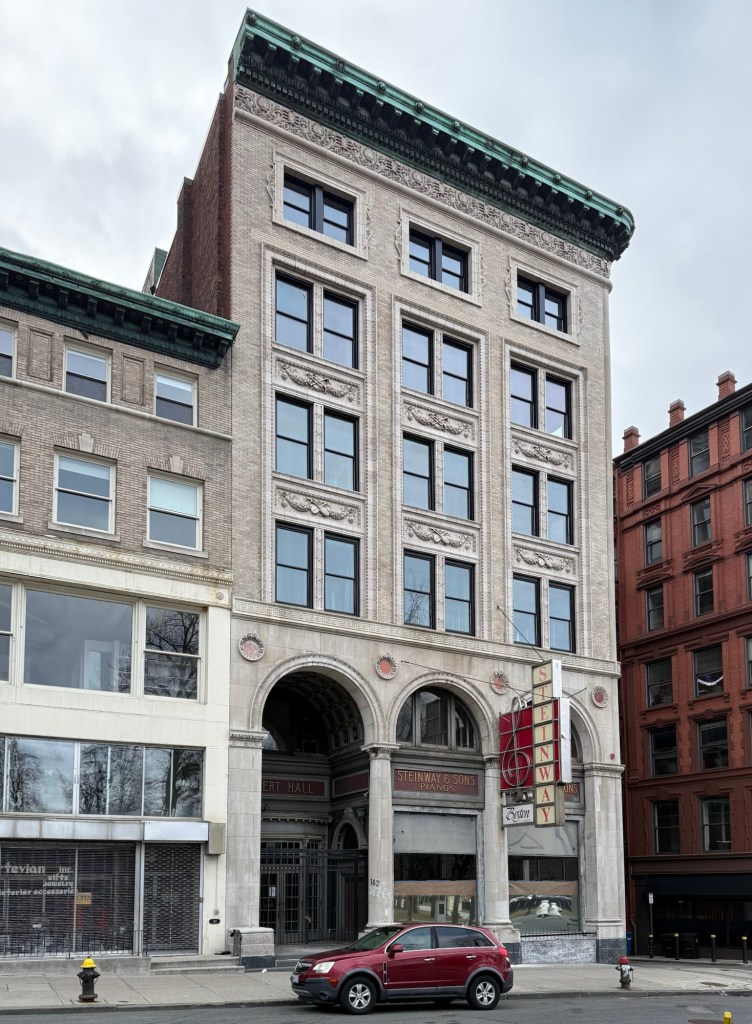
Steinert Building // 1894

The Steinert Building on Boylston Street in Boston is one of the city’s most iconic and mysterious buildings. The Beaux Arts style building was constructed in 1894 from plans by architects Winslow & Wetherell and contained three floors of display rooms, three floors of teaching studios and practice rooms. The building is arguably best-known for the 650-seat Steinert Hall, a basement concert hall constructed 35′ under ground and considered by some to be one of the most perfect concert halls, acoustically, in the U.S. The building was constructed as the national headquarters for the prestigious firm of M. Steinert & Sons, one of the largest and finest music stores in New England. Established in 1860 by Morris Steinert, a Bavarian musician, musical instrument collector and founder of the New Haven Symphony (originally Steinert’s Family Orchestra). The company was expanded under his second son, Alexander Steinert, who had the Steinert Building in Boston built, requiring a music hall to showcase musicians and their products. The subterranean concert hall closed in the 1940s, following the 1942 Cocoanut Grove fire, the third-deadliest building fire in American history, which resulted in deaths of 492 people. This tragedy inspired an entirely new set of building and fire codes throughout the city; which ultimately would close Steinert Hall, as it had only one means of egress, making it too cost-prohibitive to bring the theatre into compliance. The building was long-operated as a piano showroom, but closed in 2017 and has been vacant ever-since. The basement music hall remains frozen in time, awaiting a new life.

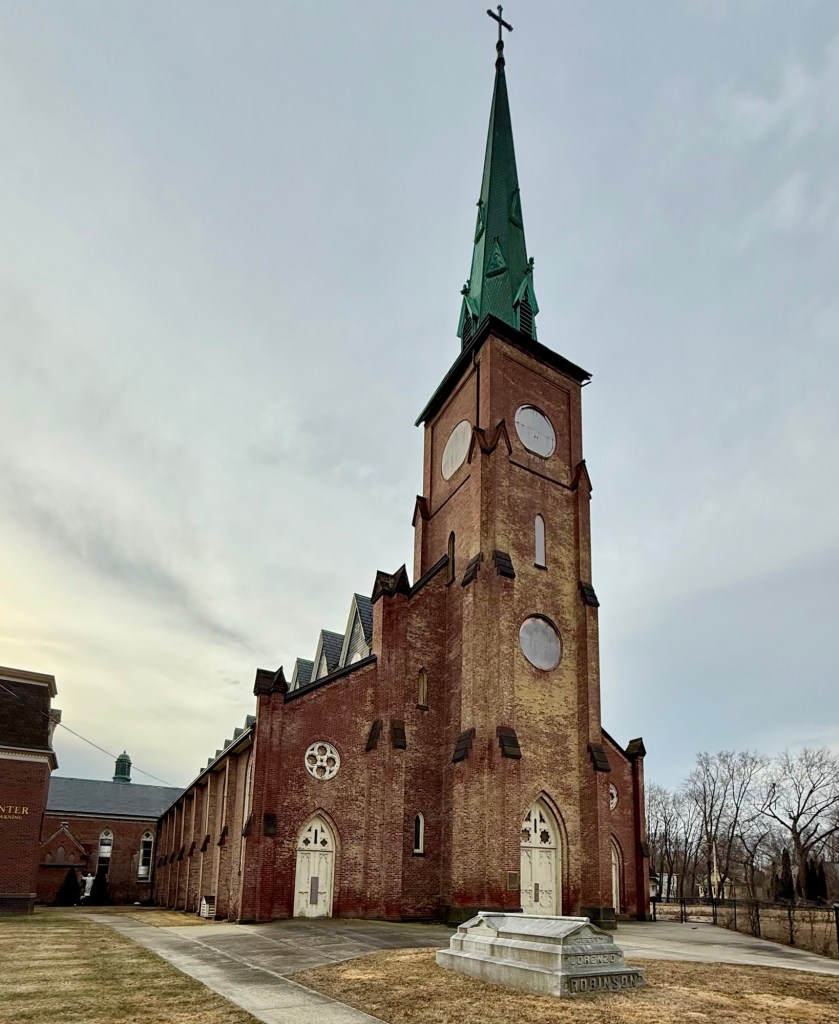
Church of the Holy Name of Jesus, Chicopee // 1857

With crop failure a common occurrence in 1830s Ireland, immigration from Irish to New England surged with workers and families looking for a better life. Labor opportunities were abundant in the newly established mill town of Chicopee, with the Irish flocking here to dig canals, build dams and mills and later work in those same buildings. Their wives and daughters would work as cooks and maids, but later as operatives in those same mills. As many Irish were Catholic, it became apparent that a Catholic congregation should be established, St. Matthew’s was first organized in Chicopee in 1838. An earlier wood-frame church was built and used for a number of years until a large site on South Street was purchased by the Diocese for a new campus. Irish-born ecclesiastical architect Patrick Keely designed the church building which was constructed between 1857-1859 in the Gothic Revival style. The church was dedicated the “Holy Name of Jesus” church and exhibited sandstone-topped buttresses, rows of pointed dormers running down the clerestory on the sides, and a prominent central steeple. In 1910, the present copper spire replaced the original steeple which was damaged and burned in a lightning strike. The complex grew throughout the 19th and 20th centuries, with a rectory, schools, convent and monastery built on the site. Sadly, due to dwindling membership and fiscal considerations, many of these buildings were demolished in the past decades. The church appears now to be closed and is still owned by the Archdiocese of Springfield. I hope something can be done to preserve this landmark structure and the remaining buildings on the site.

Ames Sword Company Offices // c.1865

Adjacent to the main Ames Manufacturing Company mills in Chicopee, Massachusetts, this handsome brick structure has ties to industry and the economic growth of the city in the 19th and early 20th centuries. Tucked away on Grape Street, at the edge of the Chicopee River, this building was built following the American Civil War as the offices of the Gaylord Manufacturing Company, a later subsidiary of the Ames Manufacturing Company. The company was run by Emerson Gaylord, a manufacturer, who produced leather belting and swords for the military just before and during the War. After the Civil War, the Gaylord company manufactured cabinet locks and society swords. In 1881, the adjacent Ames Manufacturing Company consolidated its own sword department with the Gaylord Manufacturing Company, forming the Ames Sword Company. The company would close in the 1930s, and today, this handsome brick building with corbelled cornice and segmental arches, sits vacant, awaiting preservation and a new life.

Dwight Manufacturing Company Complex // 1841+

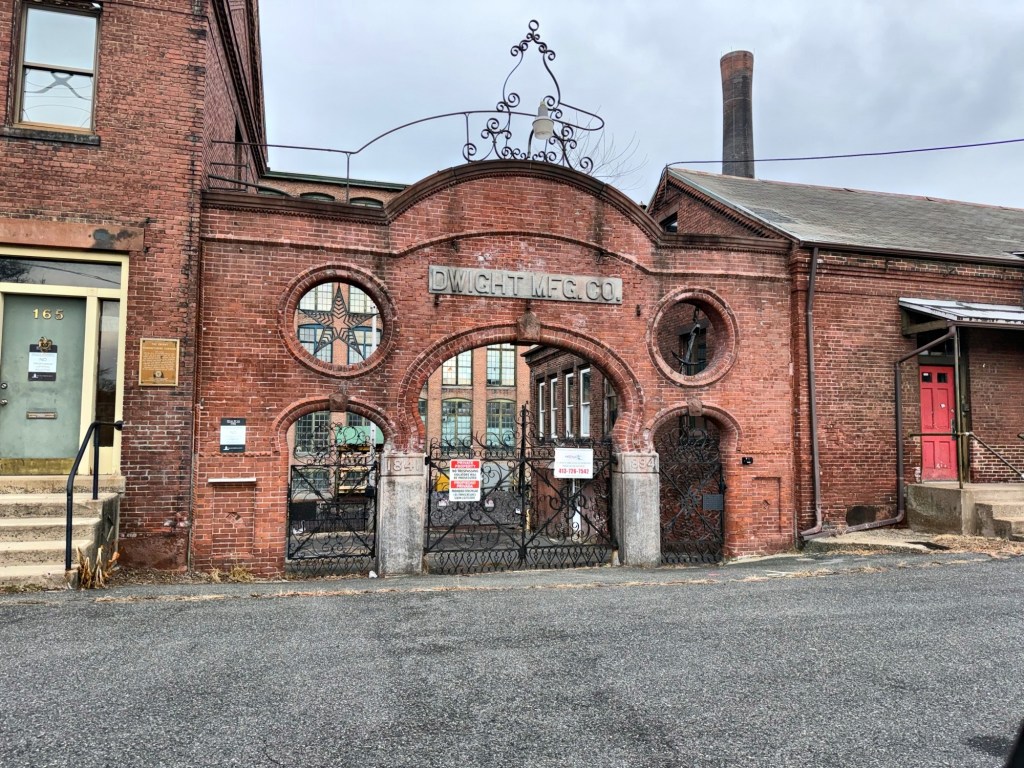
The Dwight Manufacturing Company is named for Edmund Dwight (1780-1849) of Boston, an industrialist who envisioned an industrial town on the Chicopee River. Dwight, having a country home in Chicopee, had begun a venture with his brother, Jonathan, at Chicopee Falls creating the Chicopee Manufacturing Company, to produce cotton cloth. Due to the company’s immediate success, the Dwights along with other investors formed the Springfield Canal Company in 1831, with the goal to create the “new Lowell”, an industrial community in what is now Chicopee Center. In 1856, the Dwight Mills purchased some earlier mill complexes, creating the Dwight Manufacturing Company and consolidating all their cotton cloth manufacturing into one organization. In addition to the mills, the Company also built employee housing
along Depot and Dwight Streets, a stone’s throw from the mills. The creation of employee housing allowed the Company to attract new employees in particular women and children, nearly all immigrants, who could be housed together. My favorite part of the complex is the entrance gate, built in 1894, connecting the Office and Cloth Building. It is amazing to think of all of the people who passed through this portal, working long hours for a better life. Overtime as production methods changed and technology evolved, nearly all the original mills would be replaced or retrofitted. Despite the changes, the Company could not remain profitable and shut down production in 1927 and ultimately selling the land and equipment in 1930. Some smaller manufacturing has since occupied some of these buildings, but they remain largely (if not entirely) vacant, awaiting a new life.

Fisk Rubber Company Offices // c.1916

The Fisk Rubber Company was founded in Chicopee, Massachusetts, in 1898 by Noyes Wilson Fisk, who purchased the Spaulding and Pepper Company in 1895 and renamed it to the Fisk Rubber Company. The company originally produced bicycle tires and other rubber items, later branching out with automobile tires in 1899 which proved to be an impressive success. The company’s “Fisk Tires” became a household name, especially popular among early automobile owners for their durability and performance. At its peak, the company employed thousands of workers, contributing significantly to the local economy of Chicopee, as well as other branch factories in in New Bedford, Massachusetts, Jewett City, Connecticut and Pawtucket, Rhode Island. The firm grew rapidly, and an entire complex was built here in Chicopee, centered around this building, constructed around 1916 as the Administrative Offices for the company. Architect George B. Allen designed the building in the Classical Revival style. During the Great Depression, Fisk Rubber was crippled by competition and eventually was acquired by United States Rubber (later Uniroyal) in 1940. Uniroyal, Inc. closed their Chicopee plant in 1980, and the complex sat largely unused for decades, with a majority of buildings demolished in recent years. Hopefully this lovely building, instrumental to the growth of Chicopee and America as we know it, will be preserved for generations to come.

Mount Cutler Grange Hall // 1875

The two-and-a-half story Mount Cutler Grange Hall in Hiram, Maine, is a plain but important vernacular structure near the western end of the town’s Main Street. Originally organized in 1875 by local farmers, the local grange was able to dedicate its present building in late December of that year. Attributed to local builder James Lot Hill, the clapboard-covered frame building has a three-bay facade and retains its original windows. Once the site of grange store, the well-preserved structure still displays a fine late-nineteenth century sign above its first story. Little changed over the years, the Mount Cutler Grange Hall remains an important part of Hiram’s social fabric, but appears vacant or largely unused. Hopefully some life can be brought back to this significant building (and other abandoned Grange Halls in New England).