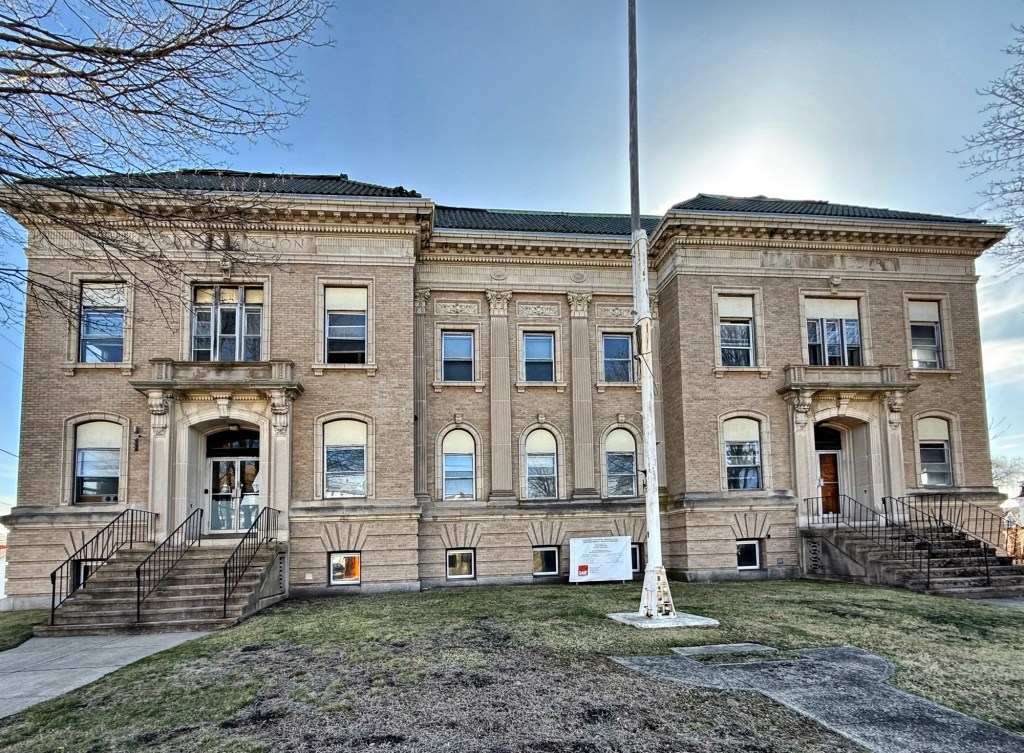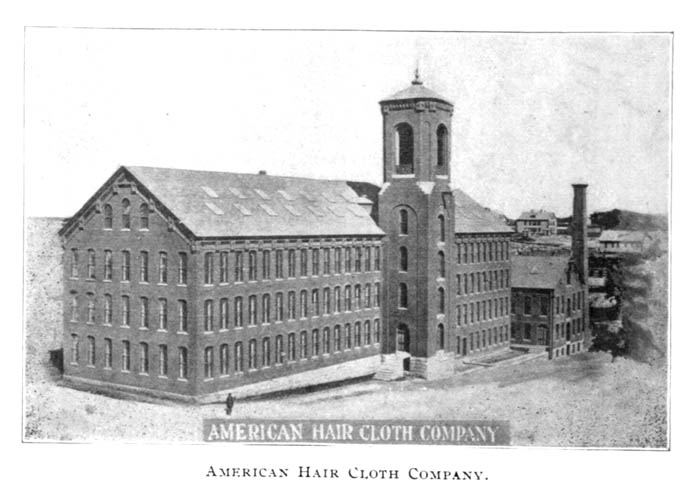
Central Falls Police Station and Courthouse // 1914

Built jointly by the city of Central Falls and the state of Rhode Island, this Classical Revival style building originally contained both the local police station and a district court house. The symmetrical building was designed by William R. Walker and Son, a Providence design firm, who specialized in large, civic and commercial buildings. The gray brick building is trimmed with limestone and stands three-stories under a hipped tile roof capped by decorative cresting. In the 1970s, the courthouse moved out and the entire building came into the ownership of the City of Central Falls and is today owned by the Central Falls Redevelopment Agency, which frankly worries me about the future of this important building. Does anyone know about plans for the building? 

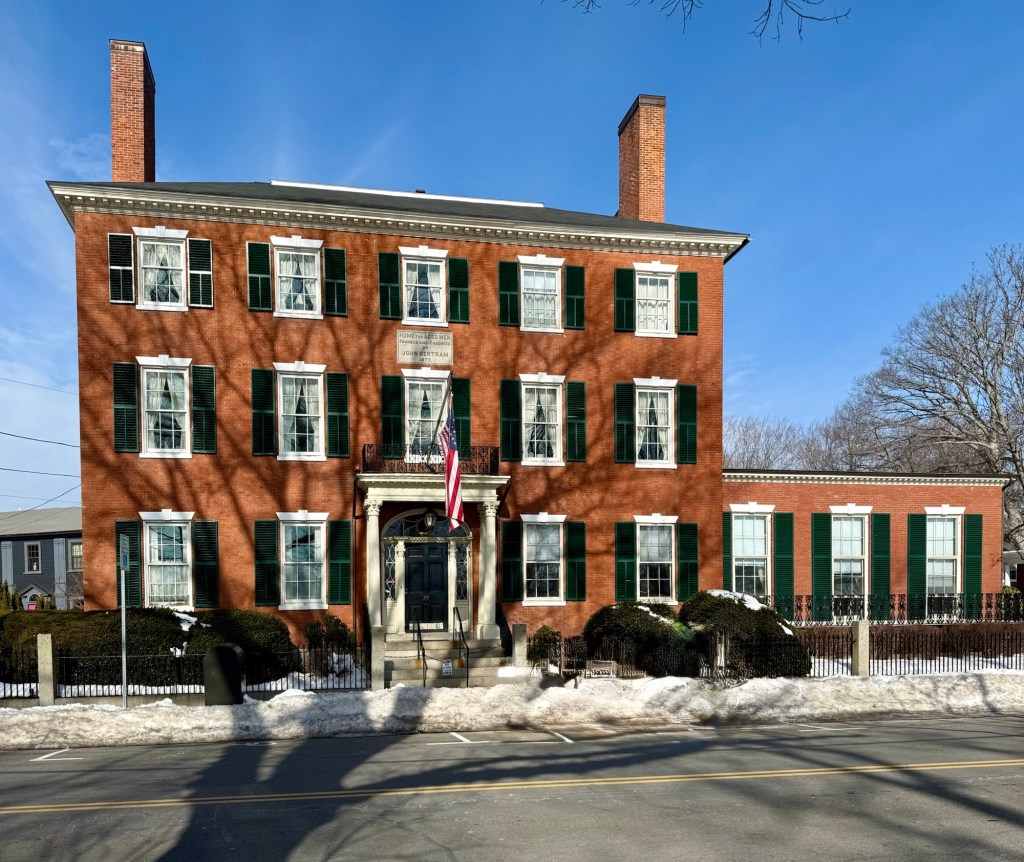
Forrester-Peabody House – Salem Home for Aged Men // 1818

Overlooking the Salem Common, this 1818 Federal style dwelling has served as everything from a single-family home to a boarding house and ultimately an assisted living facility, showcasing that old buildings can always be repurposed into new uses. The home was built for Captain John Forrester, son of Simon Forrester, one of Salem’s most successful merchants. The Forrester House was purchased in the 1830s by George Peabody, who added the one-story ballroom wing. Peabody lived in the house until 1892 and the building later housed the Salem Club, a men’s social organization with over two-hundred well-connected members. In the 1920s, it became the Bertram Home for Aged Men, named after Captain John Bertram, who founded the organization in 1877 as a charitable residence providing housing and socialization space for aged men in Salem. The home had fallen into disrepair when it was closed in 1988, to reopen two years later as the first free-standing assisted living community for men and women in Massachusetts, today known as the Bertram House.

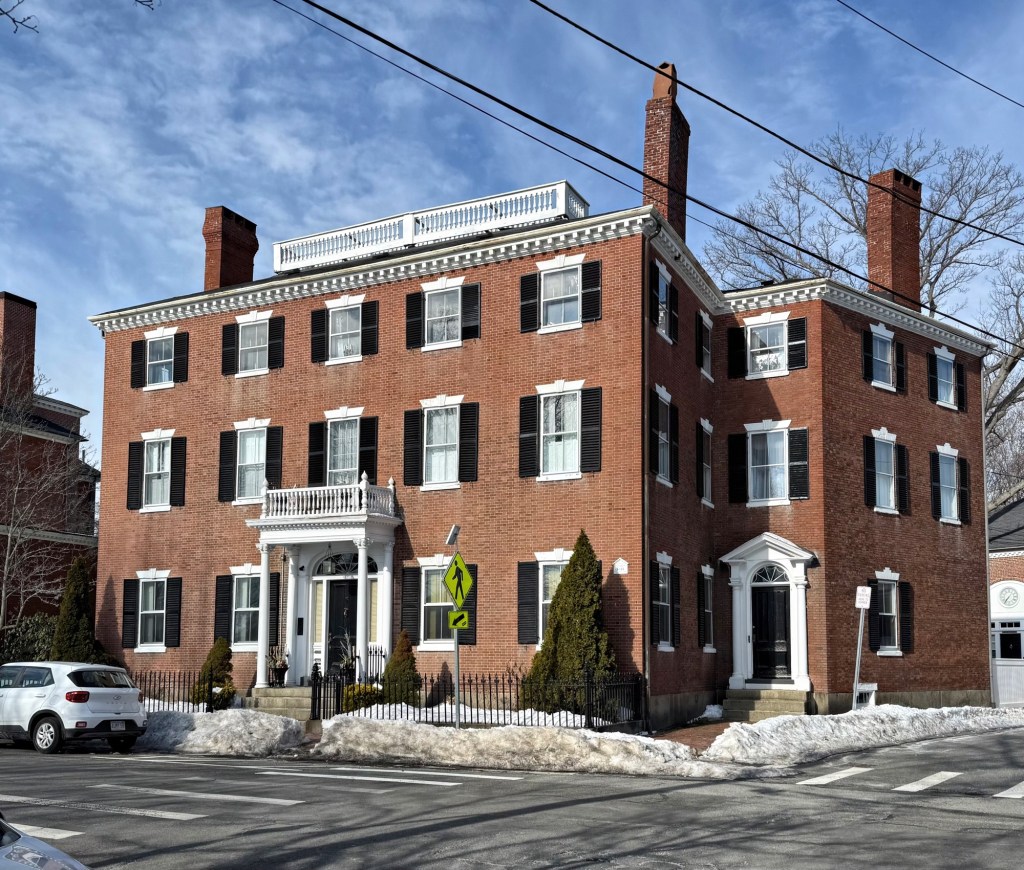
White-Lord House // 1811

The White-Lord House at 31 North Washington Square in Salem, Massachusetts, is one of a row of stately brick, Federal style mansions built for wealthy 19th century merchants overlooking the bucolic Salem Common. This house was built in 1811 for merchant Stephen White by master mason Joshua Upham (1784-1858), adjacent to his brother’s mansion across the street. It was later the home of merchant John W. Rogers from 1831 to 1844 and merchant Thomas P. Pingree from 1844 to 1858 before it was acquired by Nathaniel Lord in 1858 and members of the family continued to occupy the house for the next ninety years. George R. Lord (1817-1891) was a lawyer and assistant Clerk of the Courts. The exterior of the White-Lord House has changed little beyond the switch to the two-over-two sash windows sometime in the latter half of the 19th century.

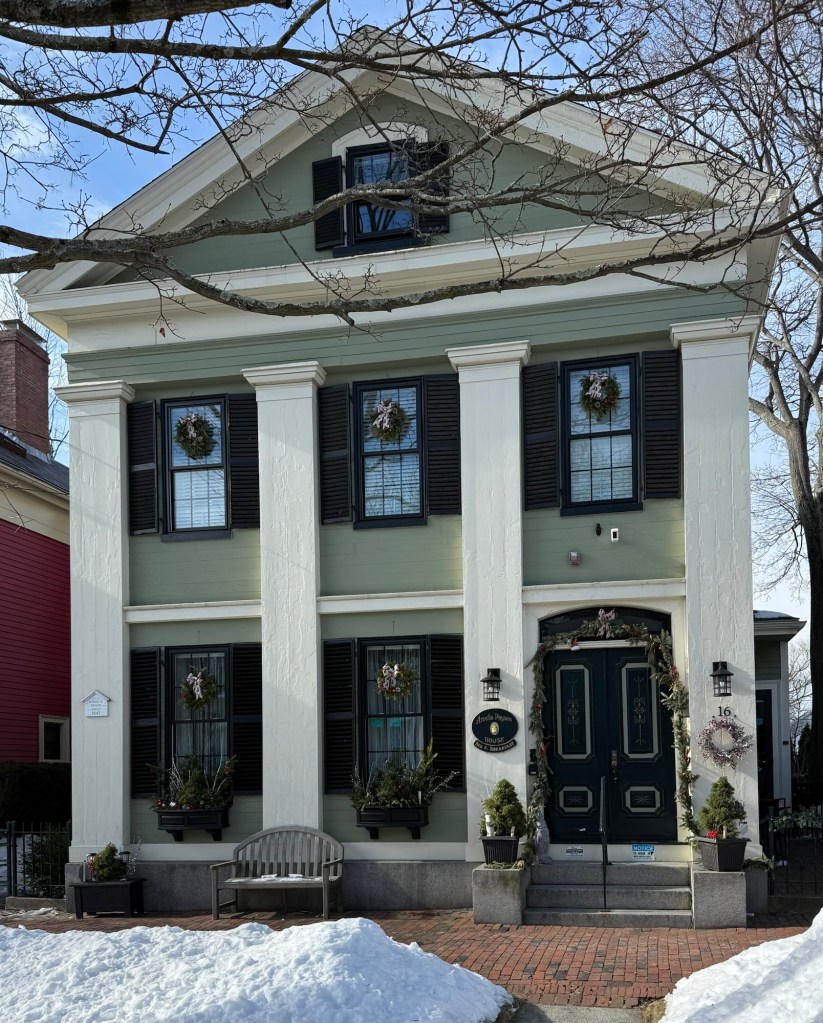
Payson-Fettyplace House // 1845

Behold, one of the finest, and well-preserved Greek Revival style homes in Salem. This is the Payson-Fettyplace House on Winter Street, built in 1845 with its gable facing the street to create a pediment, a wide entablature and cornice, and pilasters on the flushboard façade, which together make the building read more like a Greek temple than a residential home. The residence was built for Edward H. Payson, a bank officer, and his wife, Amelia, who lived in the home for only two years before moving into a larger residence across the street just two years after this house was completed. The property was sold to a Carleton Dole of Maine and again sold in 1850 to Thomas J. Fettyplace. The Fettyplace family were based out of Marblehead and many of them relocated to Mobile, Alabama, to make money in the cotton and shipping industry in the South. Thomas purchased this home in Salem for his mother who spent her final years here until 1861. After the Civil War, the Fettyplace brothers would move back north and this home remained in the family until 1912. The house is now a bed & breakfast known as the Amelia Payson House, named after the original owner.

Conway-Trumbull House // 1848

Built in 1848 for Rev. James Conway of Salem, this stunning Greek Revival home on Winter Street blends architectural integrity with a bold pop of color! James Conway was born in Ballinamore, Ireland and moved to the United States and was ordained as a Catholic priest. He was a missionary with the Penobscot Tribe in Maine, before preaching in Lowell and later in Salem, Massachusetts. When he moved to Salem, he had this house on Winter Street built with flush board siding, paneled side-hall entry, and moulded window surrounds with corner blocks. Conway would later sell the property to Edward Trumbull, a Salem merchant and later to Ebenezer Putnam. It was likely Putnam who added the oversized second-story bay window on the facade of the house.

Joseph Story House // 1811

Built in 1811 for Joseph Story, lawyer, politician, and judge of the United States Supreme Court, this stately brick residence on Winter Street in Salem, Massachusetts, is significant, not only for its architecture, but for its esteemed owners. Judge Joseph Story (1779-1845), who was then Speaker of the House of Massachusetts in 1810, purchased this house lot near the Salem Common, and proceeded to have this three-story brick house constructed. By the time it was finished, Story had been appointed by President Madison to the bench of the United States Supreme Court. He was just 32-years-old when nominated to the bench. The house is also the birthplace in 1819 of Story’s son William Wetmore Story, a well-known sculptor. Judge Story would reside here until 1829, when he moved to Cambridge in order to pursue his work at the new Harvard Law School. The property was sold in 1831 to Robert Upton (1788-1863), a self-made merchant heavily engaged with trade in South America. Robert Upton and his sons were among the most important men in Salem in the 1830s-1850s, for they were able to maintain a successful foreign commerce, and keep ships and men employed, at a time when Salem was otherwise fading as a seaport. The house has been lovingly maintained by centuries of stewards, and the house was designated as a National Historic Landmark in 1973.

Brown-Battis House // 1851

Captain Nathaniel Brown (1800-1866), a master mariner in Salem, built this fine brick house on Brown Street in 1851. Captain Brown bought the lot from the heirs of Nathaniel Kinsman in 1850, with an older house already occupying the site. The existing house was razed and construction began on this house, with it completed by 1851. The building is unique as it resembles the Federal period form of the five-bay and three-story residence with shortened third-floor windows under a low hipped roof. Although the Federal period waned in popularity by the 1830s, this house clearly took cues from the earlier homes nearby. Following Nathaniel Brown’s death in 1866, James Herrick Battis, a tobacconist and cigar manufacturer, purchased the home. City records state that Battis was issued a building permit in 1878 for an addition to the dwelling. It is probable that the bay windows and front door hood were also added at this time, giving the residence more of an Italianate style. Battis continued to own the property until his death in 1891. By 1930, the residence was converted into apartments and was known as the Conant Apartments. It remains a six-unit apartment building today.


Edgerly-Hawthorne House // 1824

The Edgerly-Hawthorne House on Mall Street, near the Salem Common, is one of the most significant residences in Salem, Massachusetts. The Federal style residence was built in 1824 for Peter Edgerly, who ran a teamster/trucker or distribution company in Downtown Salem. After a decade, Peter became insolvent and the property was sold to Joseph Leavitt, a wealthy property owner in Salem. This house is best-known as the place where Salem-born Nathaniel Hawthorne and his family, lived from 1847 to 1850, and where he wrote The Scarlet Letter. It was in the room closest to the street, on the third floor, that Hawthorne sat at his desk and wrote the American masterpiece of fiction. After publishing The Scarlet Letter, Hawthorne moved to the Berkshires and then back to Concord, Massachusetts, never to live in Salem again. In c.1906, the Edgerly-Hawthorne House was photographed by the Detroit Publishing Company highlighting some landmarks in town. The house looks nearly identical from when it was built over 200 years ago!

Old Essex County Superior Courthouse // 1861

Located to the west of the Old Granite Courthouse on Federal Street in Salem, the Old Essex County Superior Courthouse is a visual depiction of the emergence of the Victorian styles from the more Classical Greek mode. Originally built in 1861 from plans by Salem architect, Enoch Fuller, the building was distinctly Italianate in style and built of brick until a major renovation in 1889 gave the building its present Richardsonian Romanesque appearance. The building was enlarged and renovated by architects Holman K. Wheeler and W. Wheelwright Northend which includes: changes to the roof line, creation of dormers, alterations to the window surrounds to create Romanesque arches and more. A three-story projecting pavilion, whose first floor is finished with rusticated brownstone, contains a recessed entry with a large semicircular arch supported on three columns with carved capitals at each end. The central pavilion resolves into a gable with corner pilasters with carved finials centering a blind arch containing the full date span of the complex, “1861-1891” in a field of square rusticated brownstone blocks. The courthouse remained in use until the J Michael Ruane Judicial Center at the end of the block was completed in 2012. The Old Granite Courthouse and adjacent Old Superior Courthouse were both vacated and have been essentially mothballed ever-since under the ownership of the Division of Capital Asset Management and Maintenance as surplus. The fate of the two buildings remains undetermined.

Essex County Old Granite Courthouse // 1841

Aligned in a row on the north side of Federal Street in Salem, the Essex County Court complex is a tour de force of the evolving architectural tastes of three centuries. At the eastern edge of the complex, the Old Granite Courthouse stands as the oldest of the group. The two-story temple-form building is of rectangular plan with gabled roof oriented towards the street. The facade features a recessed porch with paired columns surmounted by Greek Corinthian capitals which are set between broad, squared Doric corner pilasters. The granite building was designed by architect, Richard Bond (1797-1861) of Boston, and the structure is often referred to as one of the finest Greek Revival-style Civic buildings in New England. The courthouse remained in use until the J Michael Ruane Judicial Center at the end of the block was completed in 2012. The Old Granite Courthouse and adjacent Old Superior Courthouse were both vacated and have been essentially mothballed ever-since under the ownership of the Division of Capital Asset Management and Maintenance as surplus. The fate of the two buildings remains undetermined.