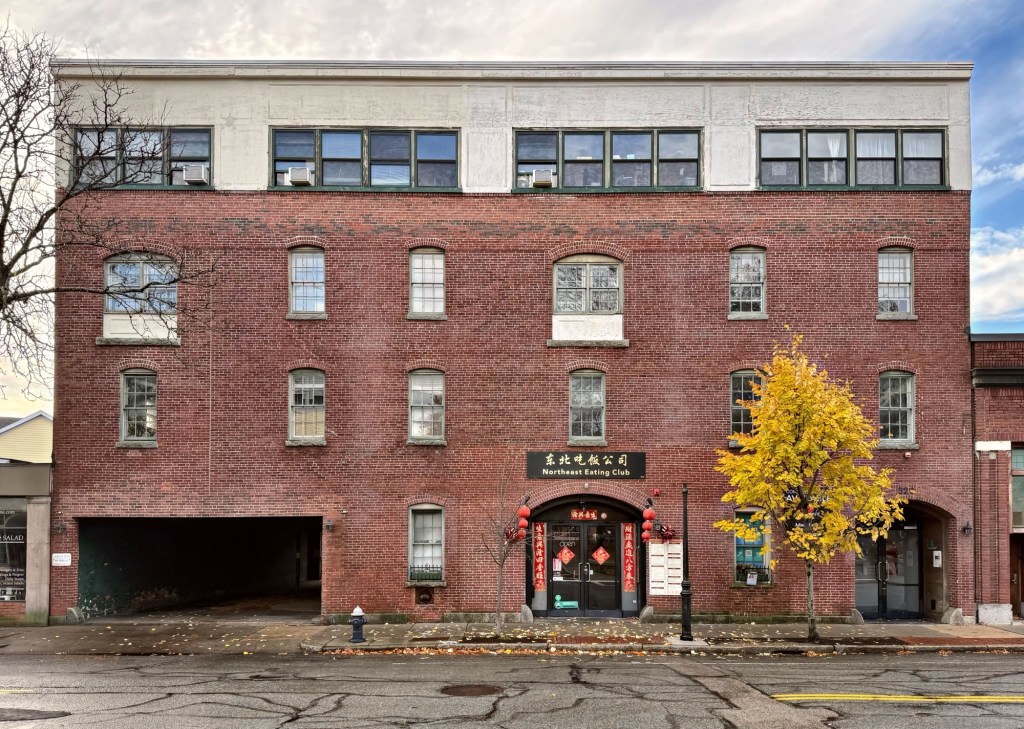
Goodspeed Livery Stable // c.1870

This somewhat unassuming brick building at 316-320 Washington Street in Brookline Village, which now houses offices and a Chinese barbecue restaurant, was for many years the home of a livery stable. Livery stables were facilities where horse owners would pay a weekly or monthly fee to keep their horses and sometimes carriages, with 24/7 staff who take care of and feed the horses. Liveries were essentially the 19th century equivalent of parking garages today, just with more hay and manure. This building was long-owned by Monroe Goodspeed (1842-1921) who originally found work with an express company, delivering packages by horse-drawn wagon. By 1874 Goodspeed was operating this stable, first in partnership with Grafton Stone, and later as sole proprietor. The building was originally a two-story wooden structure but was expanded by the 1880s and built of brick, to fireproof the building. Munroe Goodspeed was succeeded in the business by his son Carl, and remained in operation until the early 1930s. After this, the vehicular door was cut into the first floor for garage use and the upper floor was boxed off from the original gabled design. Two of the original wagon entrances remain on the facade and are now the entrances to the restaurant and to offices in the upper floors. 

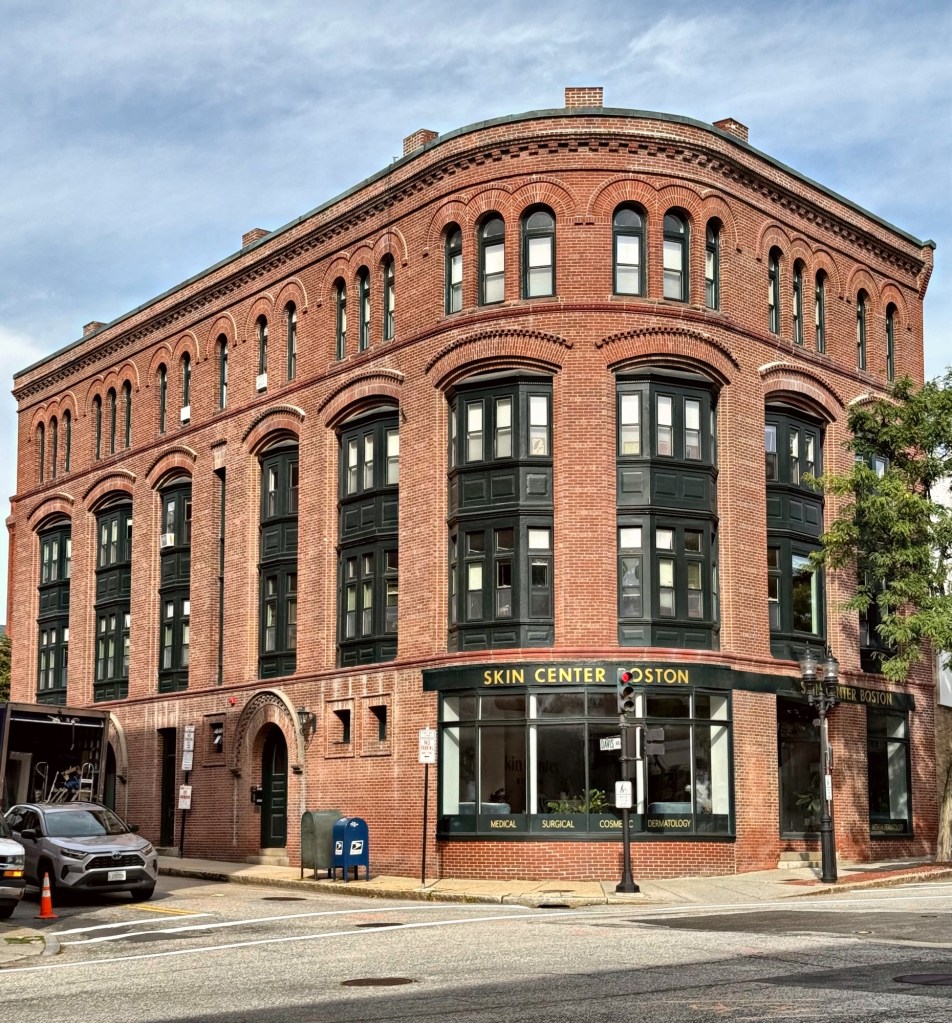
Seamans Block // 1888

One of the more impressive commercial blocks in Brookline is located at the corner of Washington Street and Davis Avenue in Brookline Village. The Seamans Block was developed by its namesake, James Manning Seamans (1834-1908), a wealthy grocer who operated a store from the building. The handsome masonry block was built from designs by the firm of Shepley, Rutan and Coolidge, a successor firm to H.H. Richardson. As partner of the firm, Charles H. Rutan lived just down Davis Avenue, it is likely that he was in charge of this design. The structure follows the Richardsonian Romanesque style, popularized by Richardson through the rounded corner and heavy arches, but is done entirely in brick rather than adding brownstone or terracotta detailing. The building has long been an excellent example of a historic “mixed-use” block with ground floor retain and apartments above, something that many new developments try and emulate today. 

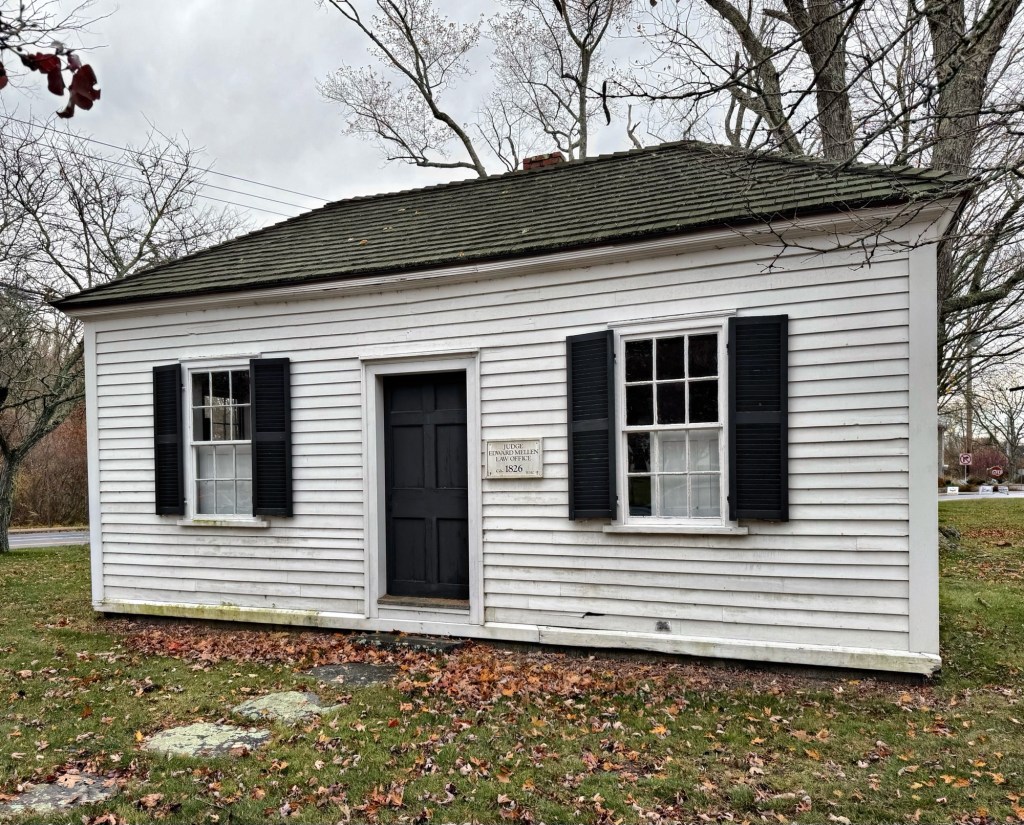
Mellen Law Office // c.1829

Samuel H. Mann (1801-1838), a lawyer, acquired the Dr. Ebenezer Ames House on Cochituate Road in 1829, only a month before his marriage to Isabella Ross. At about that time, Mann built this small law office across the road from his home, where he would practice law. It is not clear why, but within a year, Mann sold the house and this law office to Judge Edward Mellen (1802-1875), who was appointed Chief Justice of the Massachusetts Court of Common Pleas in 1855 and practiced law in Wayland until his death in 1875. After his death, the law office sat largely vacant until during World War II, when a newsletter to soldiers, The Village Bugle, was published here. After this, a couple of businesses used the former law office in the 1950s and 1960s until the owner donated the lot to the Town of Wayland in 1971. The diminutive building is a charming, and well-preserved example of a vernacular, Federal period professional office building that mimics the form and materials of the Ames House to which it was long affiliated with.

Old Houghton School // 1849

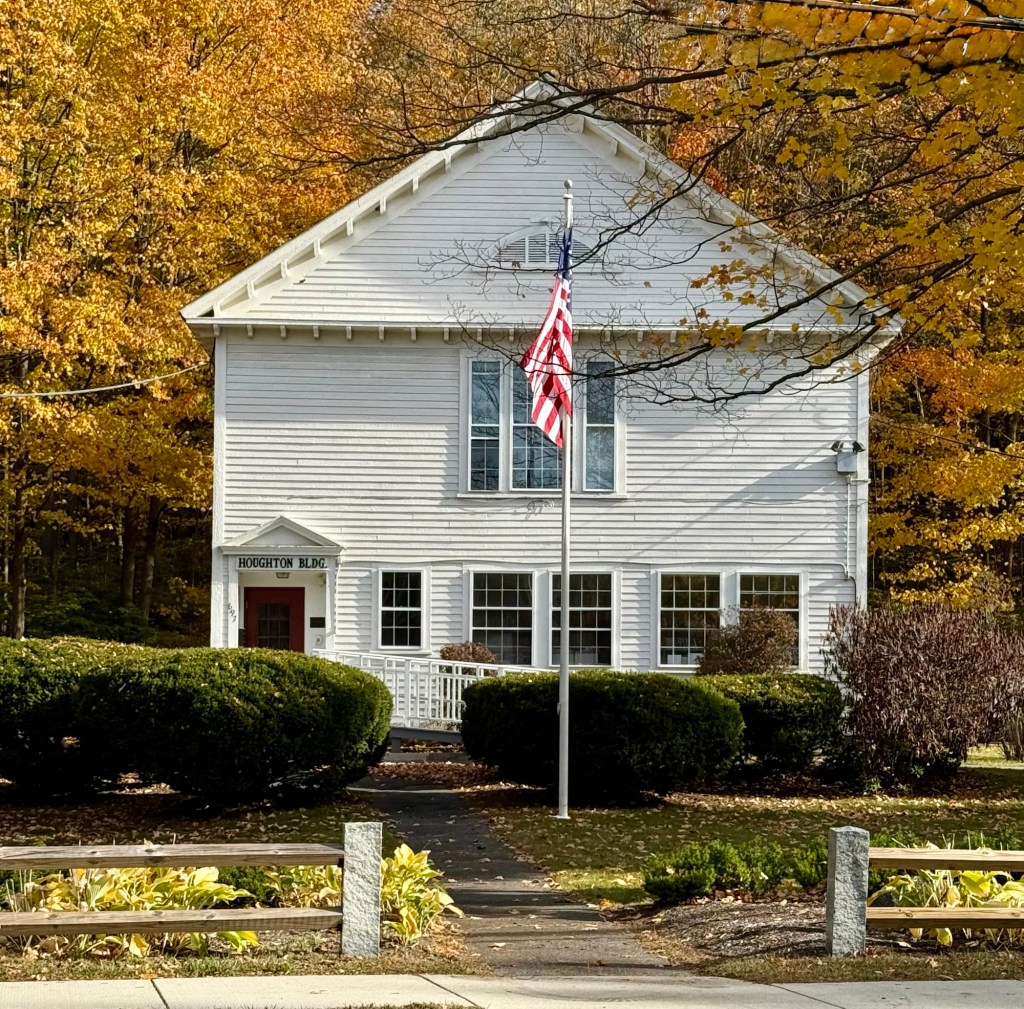
In 1849, the Town of Bolton, Massachusetts, built its first high school, the Houghton School at 697 Main Street in the town center. Blending Greek Revival and Italianate styles, similar to Bolton’s 1853 Town Hall, the Houghton School is a large, two-story, pedimented building of wood-frame construction. Interestingly, the school was largely funded privately by a local resident, Joseph Houghton (1772-1847), who in his will, bequeathed land and $12,000 for a public high school for the town. By the terms of the donation, nine men (all of whom had at one time served as a Bolton tax assessor) and their descendants, were barred from attending the school for a hundred years. Questions about the bequest were put before the Massachusetts Supreme Court, which disallowed this clause. An additional requirement, stipulated that no teacher could serve there longer than two years. That restriction was eventually put aside in the early 20th century. In 1917, the high school was discontinued. The fenestration was likely altered around this time. Bolton began sending its high-school students out of town to a school of their choice, and the Houghton School became the Bolton junior high school. In 1970-71, the building was converted to town offices, with the Town Clerk and Assessor on the first floor and the Police Department on the second. Since 2012, the building houses Bolton Access TV, as well as The Conservation Trust and Friends of the Bolton Library.


Cloon Stores // c.1880

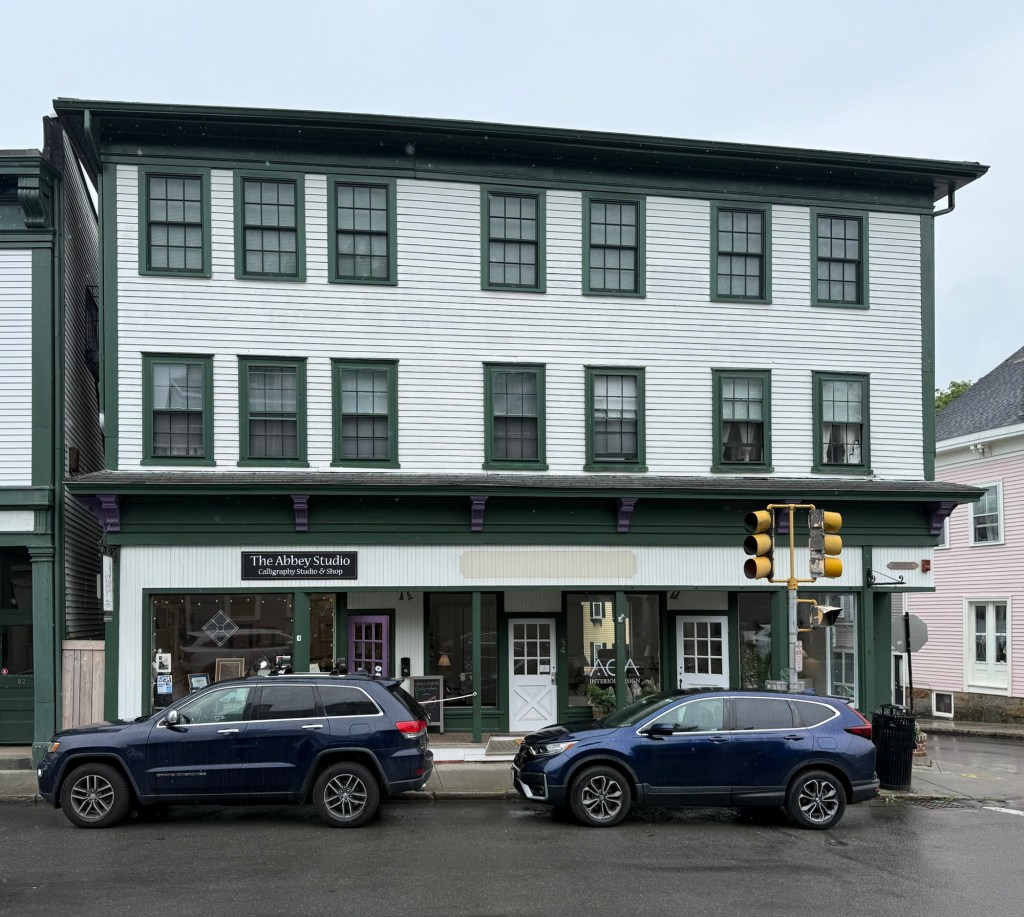
Washington Street in Marblehead is lined with dozens of amazing old homes, civic, and commercial buildings, that serves as the “downtown” spine of the old village. Located at the corner of Washington and State streets, this handsome late-Victorian commercial block serves as an important contributing building to the character of Marblehead. The structure was built around 1880 for a member of the Sparhawk Family, who operated the building as a factory or store for their shoe manufacturing. By the 1890s, the building was owned by Horace Cloon and Samuel G. Cloon, who operated a hardware store from the ground floor and leased the upper floor as apartments. The block retains its original bracketed cornice over the storefronts, but the brackets at the upper cornice are no longer extant. 

Old Rockland High School // 1908

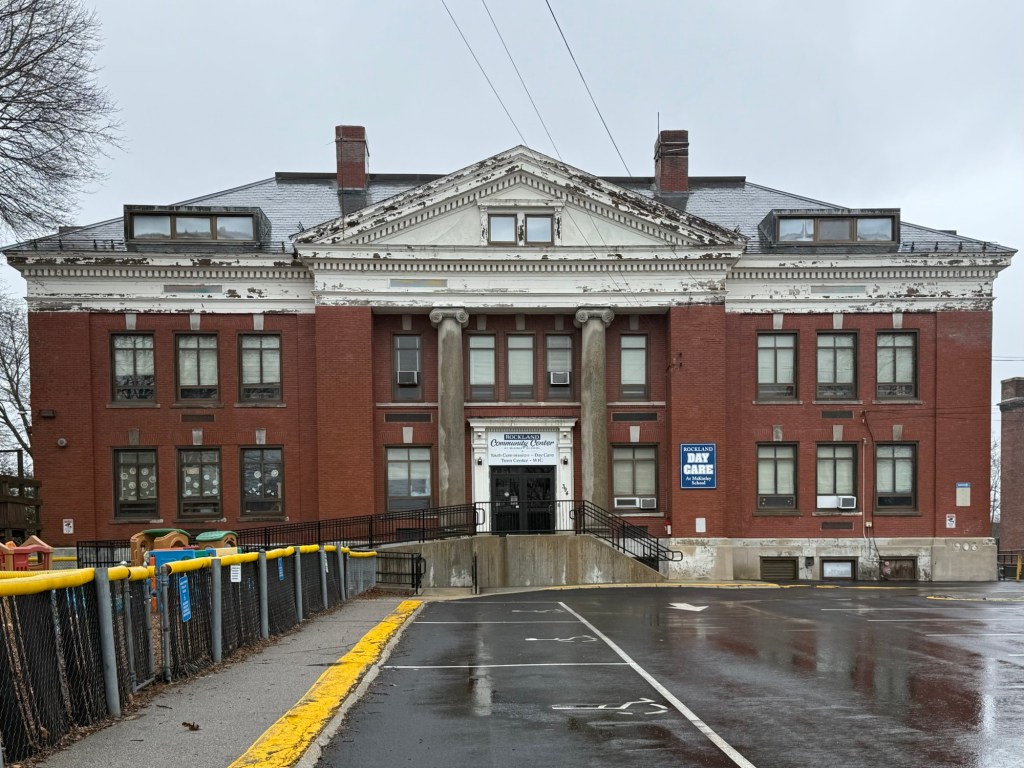
Rockland, Massachusetts, was incorporated in 1874 as the result of a dispute over the construction of an expensive school building in Abington Center in 1871 and the belief that East Abington could develop into a more successful industrial community if separate from Abington. By the turn of the 20th century, there were approximately 900 children in Rockland between the ages of 5 and 15 who were being educated in the local school system, largely comprised of first- and second-generation immigrants, arriving to the area to work in shoe manufacturing. Many smaller, schools dotted the landscape until a larger, consolidated school was built 1892. Decades later, prosperity and a growing population necessitated a new school, and the architectural firm of Cooper & Bailey, designed the town’s first brick school building. Classical Revival in style, the building features a prominent pediment supported by two, two-story Ionic columns and dentilated cornice. The building is now a community center – housing a day care, pre-school and meeting spaces for Girl Scouts. The building also housed Rockland’s senior center prior to the construction of a new senior center elsewhere in town. It suffers from deferred maintenance and is in need of some attention.

Gallup Farm Carriage House // 1906

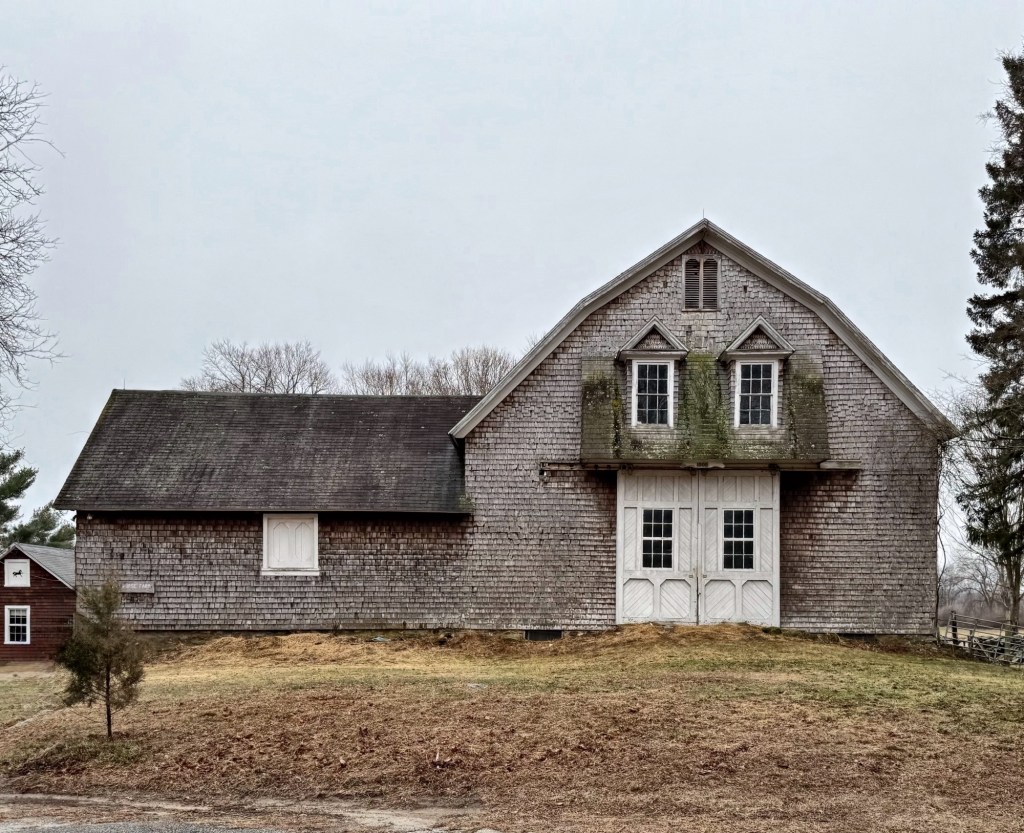
This handsome Shingle style building was constructed in 1906 as a carriage house of a larger farm property in Scotland, Connecticut. The barn is said to have been built for Archie Gallup, who purchased the old Manning farm just west of the town green in Scotland. The 1 1/2-story carriage-house with a gambrel-roof stands out for its principal entry of paneled wooden doors and above, a large, flared hood featuring two pedimented gable-dormers. The entire building is clad with varied shingles to add complexity to the design, catching the attention of all who drive by.

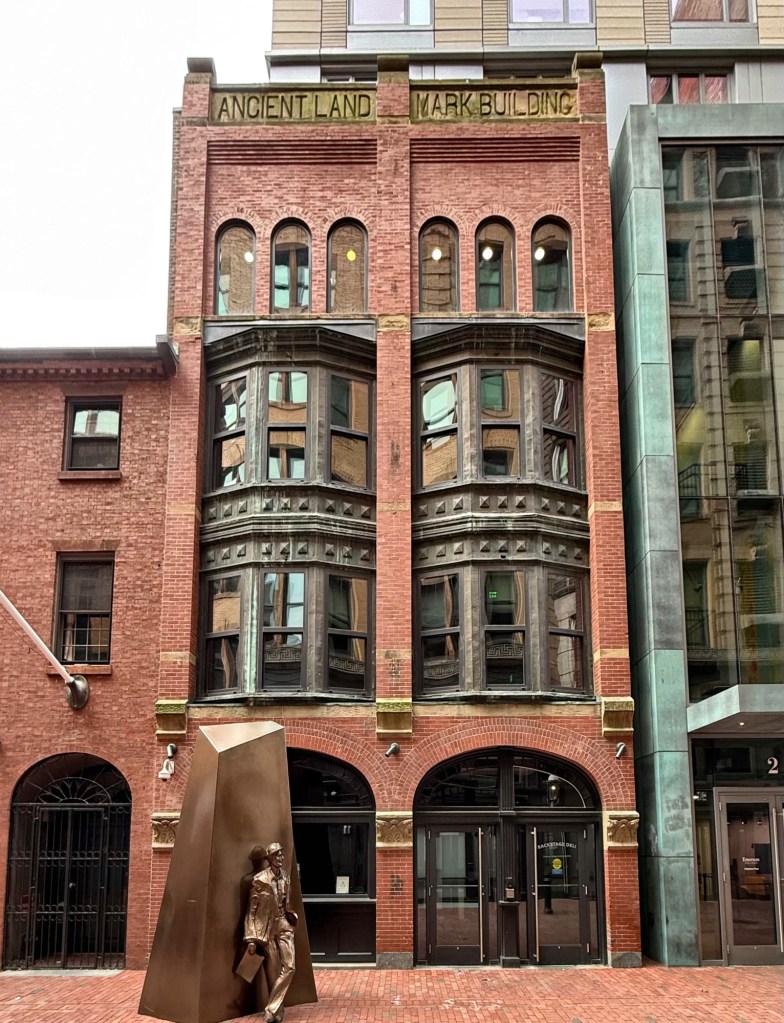
Ancient Landmark Building // 1887

Tucked away on Boylston Place, a dead-end pedestrian way off the bustling Boylston Street in Boston, you will find a collection of 19th century buildings that have miraculously survived over a century of growth, urban renewal, and rebirth. This is the Ancient Landmark Building, constructed in 1887 as a IOOF Lodge. The Independent Order of Odd Fellows (IOOF) is a non-political, non-sectarian international fraternal order established in the United States 1819. The four-story Ancient Landmark Building blends Queen Anne and Romanesque Revival styles effectively with its two arched openings, arched windows in the top floor and two-story metal projecting bays. In the 1970s, the building was listed as “substandard” by the infamous Boston Redevelopment Authority, and luckily did not get demolished as part of its Urban Renewal push. The property was eventually acquired by Emerson College, a great steward for historic buildings and cultural institutions, who restored the building and built a new dormitory above and alongside the Ancient Landmark Building. The project preserves the important streetscape of Boylston Place, while providing needed dormitories for the school.

Cornwall Bridge Railroad Station // 1886

One of the most attractive railroad depots in Connecticut, the Cornwall Bridge Railroad Station exists in almost complete originality. Its siding is board and batten and its slate roof with a wide overhang supported by the original brackets, showcases the attention to detail railroad companies paid to design and appoint these important landmarks. Built in 1886, the building can be classified as Stick Style and is one of a few buildings in town of the style, adding to its significance. The station was built by the Housatonic Railroad to replace an earlier station on the site. The Housatonic line was acquired by the New York, New Haven and Hartford Railroad in 1892 and later by the Penn Central Railroad in 1969, which went bankrupt by 1970. This station was subsequently sold to private ownership and listed on the National Register of Historic Places as a tool to bring awareness to its significance and threatened status. Luckily, the building was preserved and has been converted to a private residence.

Peter Parley Schoolhouse // 1756

The Peter Parley Schoolhouse (also known as the West Lane Schoolhouse) in Ridgefield, CT, is an excellent example of a well-preserved one-room school building in Fairfield County. The little red schoolhouse was originally built in 1756 and either replaced or enlarged in the early 1800s. As Ridgefield in the early days was primarily an agricultural community, many children split their time either helping family on the farm or in school, with work almost always coming before education. The school is named for its most famous student, Samuel Griswold Goodrich. Goodrich went by the alias Peter Parley and was born in Ridgefield, attending the school between 1799-1803. He was a prolific writer, with over 170 books to his credit, and is believed by many to have written the first American textbooks. Samuel wrote about his experiences as a student there, giving locals and historians a look into early life in the town. In the early 1900s, the town consolidated schools and this building was closed. The town seemed to simply close the building and it saw some neglect over time until the Ridgefield Historical Society assumed a lease of the property, recently restoring it.