First Parish Church, Kingston // 1851

The original Congregational Church of Kingston was part of the established, tax-supported church of the Commonwealth of Massachusetts, and was built in 1718, after present-day Kingston established itself as Plymouth’s North Parish. The church was replaced in 1798 with a more substantial building with two steeples. In 1833, when the separation of church and state was finalized in the Commonwealth, two new religious societies formed in Kingston and established churches. The 1798 church, which had been built as the only church in town, was now too large for its diminished population and suffering from structural difficulties. In the spring of 1851, the 1798 church was taken down, and the present church, the third on the site, was constructed. The church blends Greek Revival and Italianate styles, both popular for ecclesiastical buildings of its time, and the structure looks much like it did when built 175 years ago. The congregation here is Universal Unitarian.

Cloon Stores // c.1880

Washington Street in Marblehead is lined with dozens of amazing old homes, civic, and commercial buildings, that serves as the “downtown” spine of the old village. Located at the corner of Washington and State streets, this handsome late-Victorian commercial block serves as an important contributing building to the character of Marblehead. The structure was built around 1880 for a member of the Sparhawk Family, who operated the building as a factory or store for their shoe manufacturing. By the 1890s, the building was owned by Horace Cloon and Samuel G. Cloon, who operated a hardware store from the ground floor and leased the upper floor as apartments. The block retains its original bracketed cornice over the storefronts, but the brackets at the upper cornice are no longer extant. 

Henry Block // 1873

Mid-late 19th century commercial blocks provide human-scaled density, high quality design, and often contain intimate storefronts providing reasonable rent to local businesses. The Henry Block in Westborough, Massachusetts, is one great example of a historic commercial building that checks all of these boxes. The brick building was constructed in 1873 by its namesake, Samuel Gates Henry (1813-1877), a pharmacist and dentist who rented space in an earlier building on the site. When a fire destroyed the old structure, Samuel Henry had this block erected on the site and leased out spaces in the building to other businesses and tenants in the floors above. The block is Italianate/Italian Renaissance Revival in style with the typical round arched windows and bracketed cornice. The granite storefronts even retain some of the original cast-iron supports.

Sibley House – Westborough Historical Society Building // 1844

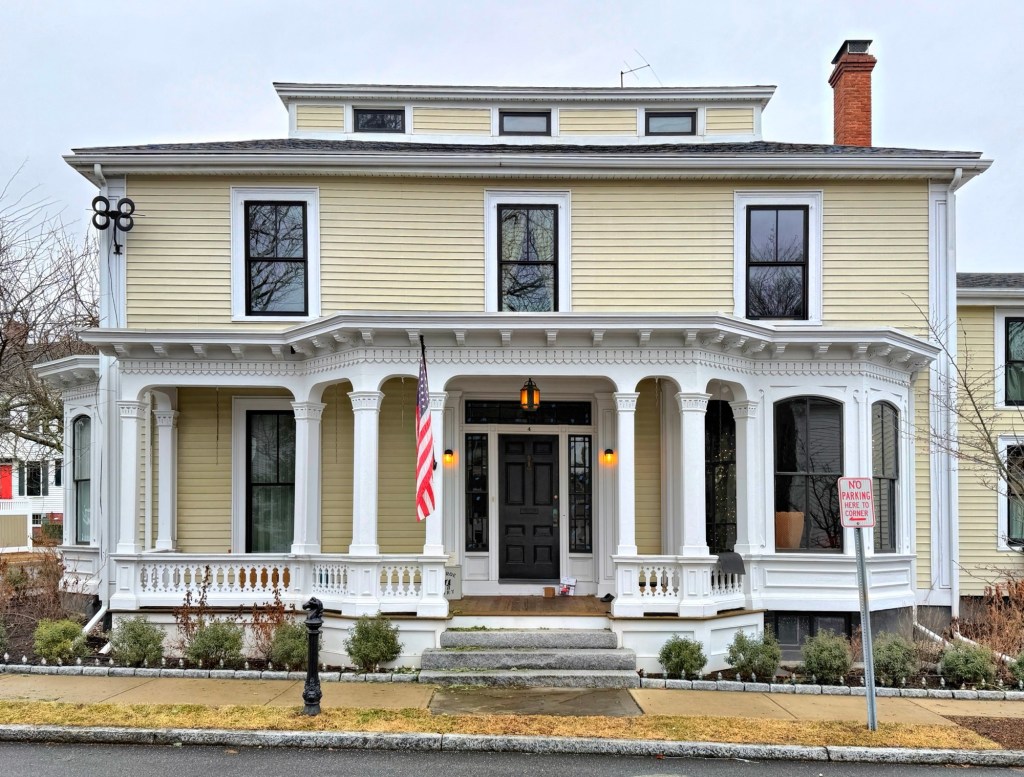
The Sibley House is a historic house museum as well as the headquarters of the Westborough Historical Society. Located on Parkman Street in the center of Westborough, Massachusetts, the transitional Greek Revival/Italianate style house was built in 1844, by William Sibley, who was a blacksmith and wheelwright. Soon after the house was built, William married Jane Caroline Gibson, and the couple raised five children here. William joined Westborough’s Company K, 13th Massachusetts Regiment during the Civil War and was wounded at Antietam. After the war, William returned home and he and his brother Frank began to manufacture sleighs.  At one point, they produced as many as 300 a year! The Sibley House was purchased by the Westborough Historical Society in 1990, nearly 100 years after the society was established in 1889. The house is open to visitors and provides a glimpse into daily life for Westborough citizens at the time. 

Oceanview House // 1883

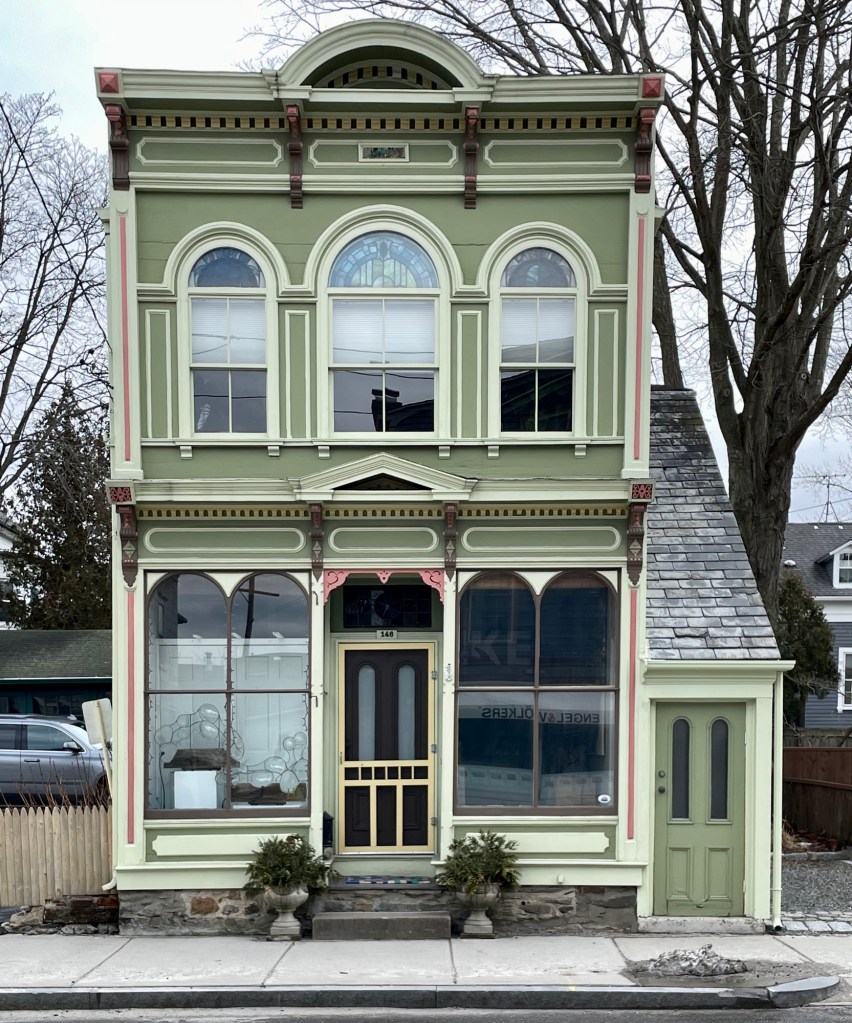
At the tail-end of the 19th century, the active fishing town of Stonington, Maine, like many other coastal communities Down East, began to see growing seasonal tourism and summer residents escaping the woes of city life for the cool sea breezes. Although there were neighborhoods of summer cottages built and occupied in the 1890s on Deer Isle, no summer colonies formed in Stonington in the late 19th century, likely due to its industrial nature with fishermen and quarry-workers living in the village. There were however, visitors, and the 1883 Oceanview House was built to house “people from away” every summer. The Oceanview House property also included its own water tank and windmill along with a meeting room for local groups. The late Italianate style building has been lovingly maintained by later owners and most recently, housed an antique store!

Samuel & Susan Gaut House // c.1855

Built in the 1850s, the Samuel and Susan Gaut House on Highland Avenue in Somerville, Massachusetts, is one of the finest examples of a symmetrical, three-bay, Italianate style house in the city. Samuel Norton Gaut (1816-1891) worked as a baker with shops in downtown Boston, and married Susan Dutton (1824-1892), the daughter of a wealthy shipbuilder in Newburyport. The Gaut House was listed on the National Register of Historic Places for its architectural significance as an intact example of a gabled Italianate style home. Special details include the brackets in the gable, trefoil window in the peak, and the octagonal cupola at the roof. Early 20th century alterations include the shingle siding, replacement windows, and enclosed portico, but neither truly detract from the beautiful home.

Zenas Lane House // c.1860

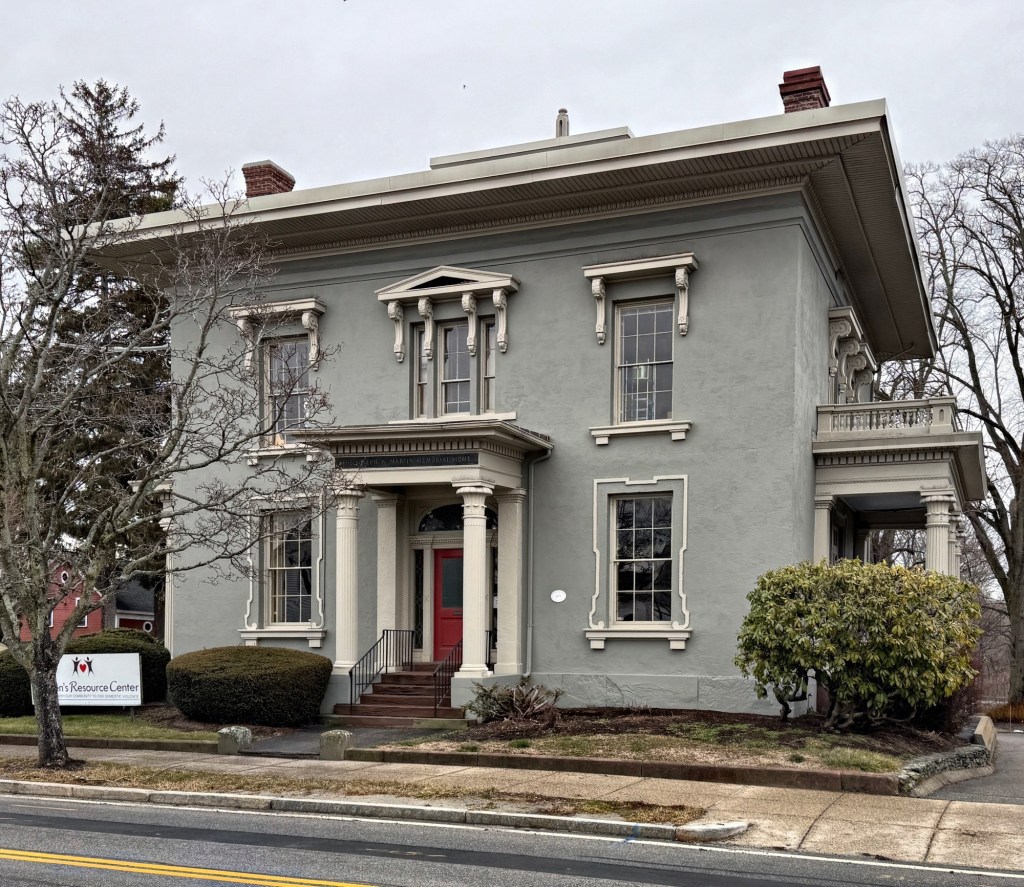
The Zenas Lane House on Union Street in Rockland, Massachusetts, was built circa 1860 for its namesake, a shoe manufacturer who later engaged in real estate and local politics. Zenas Meriet Lane married Emeline Morse and had this handsome Italianate style residence built on the town’s main street. The two-story house is capped with a shallow hip roof with eyebrow window heads breaking the eaves. At the rear of the site, there is a preserved carriage house which echoes design details from the main structure.

Arnold Shoe Factory // 1875

Moses Noyes Arnold (1844-1919) was born in Abington, Massachusetts and began making shoes in his free time, a task that would make him his fortune later as an adult. After serving in the Civil War and mustering out in 1863, he began a shoe-making business from his father’s property before renting a small factory space in town to increase operations. His company continued to grow and it was decided that Arnold would build his own factory in town. In 1875, Moses N. Arnold began the building of the main wing of the present brick shoe factory near the railroad station in North Abington. As the M. N. Arnold Shoe Company grew, five additions were made until it attained its present capacity of 3,000 pairs of shoes daily. The company weathered the collapse of the stock market in 1929 but the economic instability took its toll on the company, leading the company to sell in 1931 to the Stetson Shoe Company of South Weymouth. This factory was sold at auction and later in 1943, was purchased by The Abington Company which manufactured, installed, and serviced vacuum cleaning systems for textile factories. The handsome brick, Italianate style factory remains in a great state of preservation, and showcases the type of factories built all over New England following the Civil War. 

Peerless-Capitol Theater // 1894

Located across from the North Abington Depot, this structure was constructed in 1894 as a leather harness and saddle shop by local businessman, Henry Crossley. The expensive building of cut granite and brick seemed to have overextended Mr. Crossley’s means, as he would soon-after file for bankruptcy. The building would remain as commercial use until 1915, when the property was purchased by the Peerless Amusement Company for use as a 300-seat theater. By the 1930s, the building became known as the Capitol Theater, and was listed to seat 230 customers on the main floor and 70 in the balcony. Due to the more rural nature of the cinema, it closed in the mid-20th century, and suffered from neglect for decades until it was restored and is currently housing apartments. 

Dana-Jewell House // 1872

This house at the corner of Freeman and Powell streets in the Cottage Farm area of Brookline, Massachusetts, was one of the first to be built on Sears family land in the years following the death of the family patriarch, David Sears. In 1871, Dennison Dean Dana (1827-1899) purchased land here from the Sears heirs and constructed this Italianate house with three-story square tower. Dana owned the house through the 1880s, and by 1893 it had been acquired by Albert L. Jewell, a real estate developer who added the large veranda and a two-story addition to the house, and would subdivide the property, developing fashionable houses along Powell Street to the south. The house (while clad in asbestos shingles since the 1960s) is an important early residence in the neighborhood which is today, dominated by late 19th and 20th century architecture.