Simmons House – Japanese Relocation Hostel // 1856

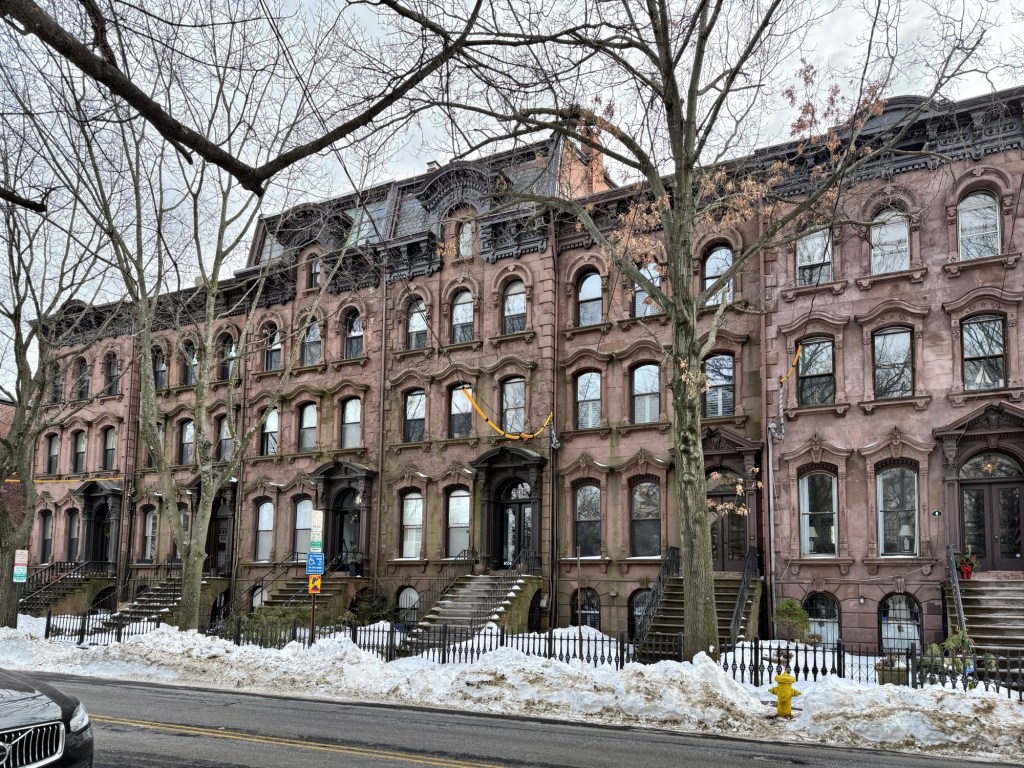
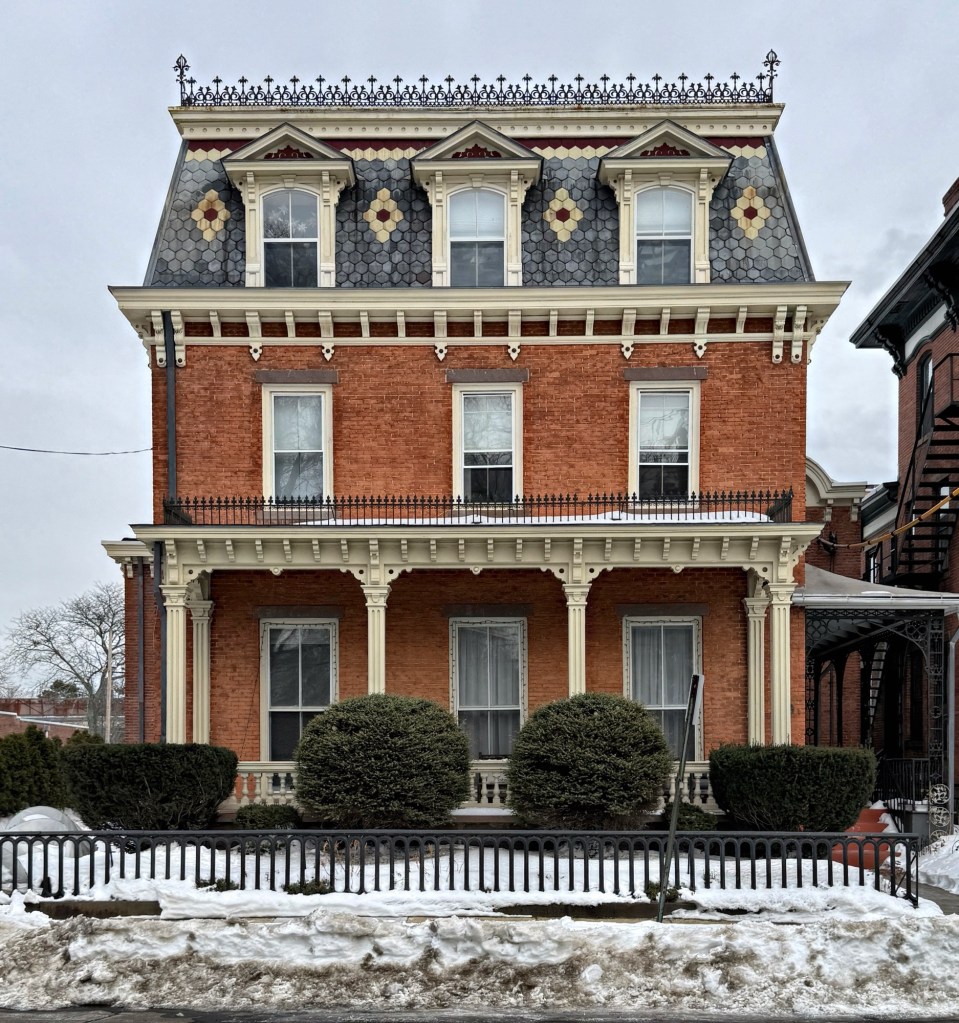
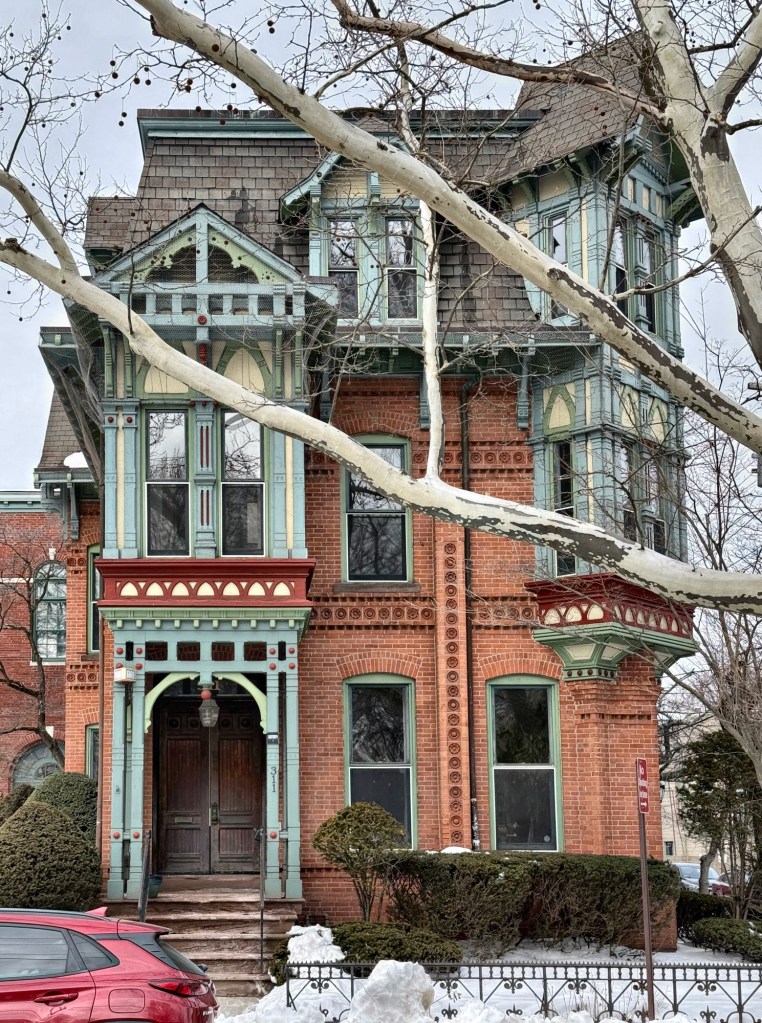
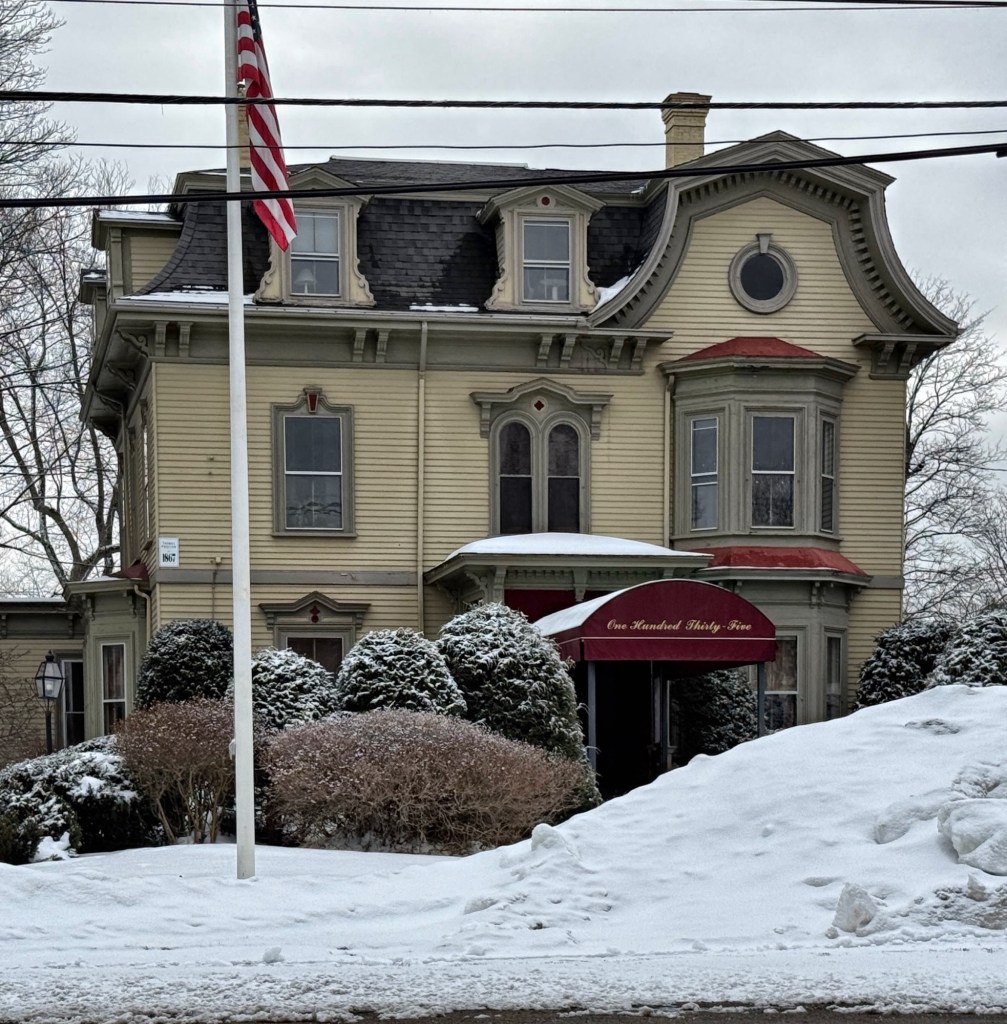
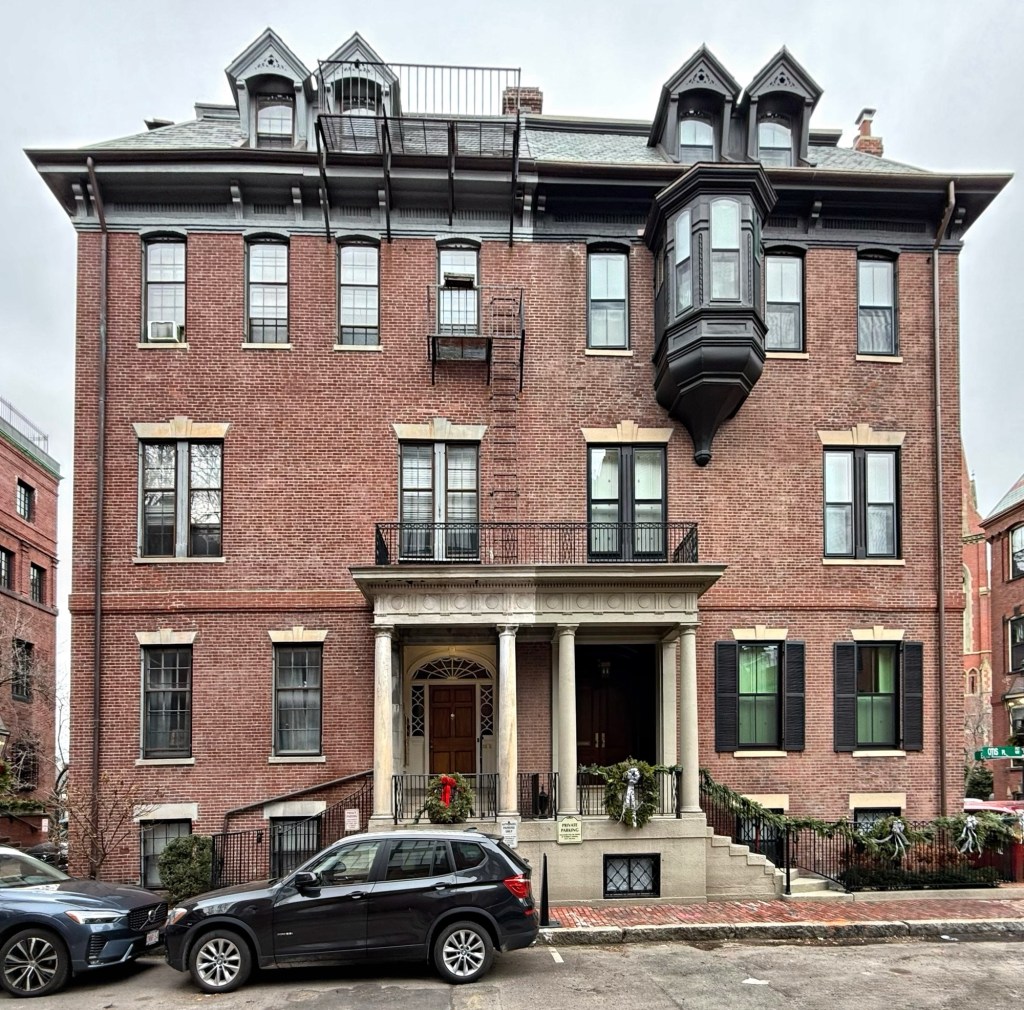
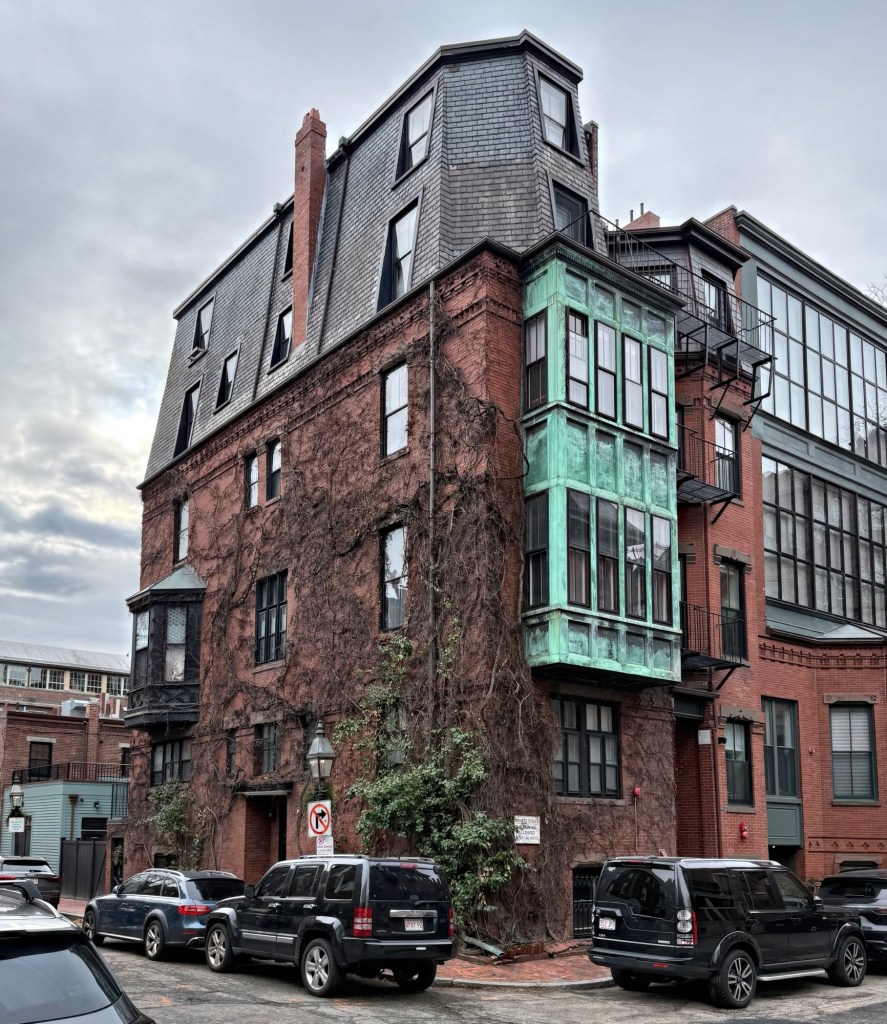
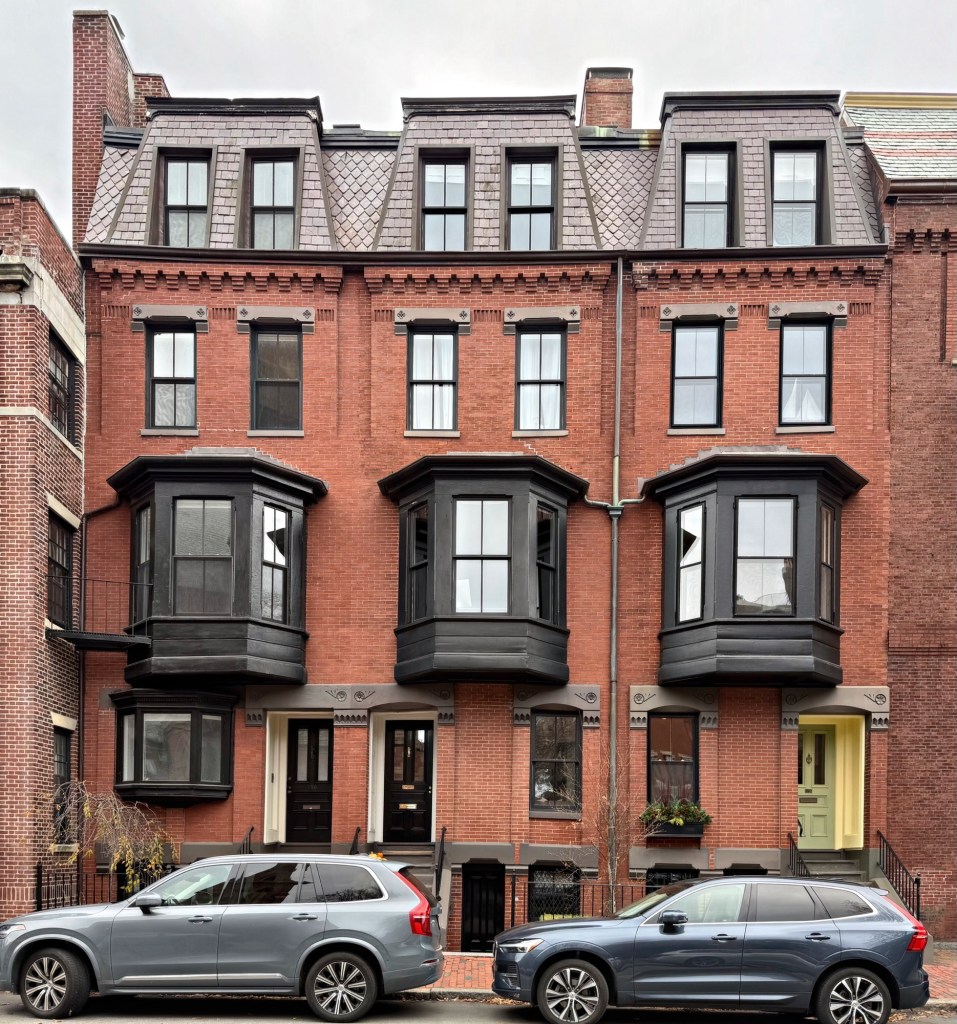
Together with its two neighbors to the south, this townhouse at 6 Walnut Street represents the development of the South Slope of Beacon Hill in the second half of the 19th century, when larger estates continued to be carved up for housing, typically in the Italianate/Second Empire styles. Built in 1856, this residence was constructed on one of the last undeveloped lots in the area and was originally owned by George W. Simmons. Simmons was the owner of a well-known clothing emporium at Oak Hall, North Street, where he sold all kinds of ready-made clothing for men, including that needed by sailors, as well as sets of clothing for those headed for the California gold fields. His business was renowned also for its ambitious and creative advertising campaigns. Simmons died in late 1882, leaving this property to his heirs who sold the property. After successive ownership, the residence was converted to a boarding house during the Great Depression and rented out to families who could no longer afford the large single-family dwellings in the city. After WWII, in 1945, the boarding house was converted into the first Relocation Hostel for Japanese Americans in New England. The mission of the Relocation Hostels was to provide temporary lodging and career guidance to Japanese Americans who had been uprooted from their homes because of unfounded accusations of sabotage during World War II. Massachusetts joined New York, Pennsylvania, Illinois, and other states in establishing these hostels. Today, the residence is a four-unit condominium. 

Tebbetts-Bowditch House // 1856

The townhouse at 4 Walnut Street in Beacon Hill is among the most architecturally unique buildings in the neighborhood. The main facade consists solely of a bowed front, which contains a deeply recessed entry to the side. To the right of the entrance, a later tripartite window exhibiting Queen Anne/Colonial Revival multi-pane sash pierces the southern half of the bow front.  At the third story, a massive wooden oriel window projects over the street below and contains a window set within a recessed panel. Above, the mansard roof ties in with its neighbor. The residence was built in 1856 and purchased by William C. Tebbetts, a dry goods merchant who was partner in a Downtown firm. By 1890, the residence was owned for a short period by Ernest W. Bowditch (1850-1918), a celebrated landscape architect and engineer. By the 1930s, the property became a boarding house, primarily for single women and widows. Today, the former single-family home contains eight apartments and from the exterior, presents some Victorian flair and quirkiness not commonly seen on the South Slope of Beacon Hill. 

Henry S. Grew Townhouse // 1856

Built in 1856, the townhouse at 2 Walnut Street is a unique Second Empire style townhouse erected on one of the last undeveloped lots on the South Slope of Boston’s exclusive Beacon Hill neighborhood. The three-story, brick residence is capped by a mansard roof and its facade is dominated by a full-height octagonal bay, which at the center on each floor, is a recessed brick panel in lieu of windows. The property was originally owned by Henry Sturgis Grew (1834-1910) a real estate developer and politician who split his time between this residence and a large estate called Grew’s Hill, that grew to several hundred acres and contained an active farm, part of which was later incorporated into Stony Brook Reservation. Henry Grew’s daughter, Jane Norton Grew, would go on to marry John Pierpont Morgan Jr. (J. P. Morgan) in 1890. The Grew House was modernized in the 20th century with a Classical door surround, but otherwise, it maintains the appearance of when it was built in 1856. 

Emerson-Arnold Double-House // c.1875

Elijah Carleton Emerson (1807-1888) was a wealthy Boston merchant, making his fortune as Director of the Second National Bank and President of the Middlesex Horse Railroad. In his late 30s, he purchased land in Brookline Village and established his estate on the land that is now Emerson Park in 1846. The bucolic setting of his estate included a pond, boathouse and adjacent cottage, but as the surrounding area continued to develop with easy access to Downtown Boston, Elijah Emerson began to develop his estate. Emerson began to build residences on his land for supplemental income. This handsome Stick style double-house was built around 1880 and rented by Mr. Emerson and was eventually occupied by his granddaughter, Tirzah and her husband, George Francis Arnold. The residence features a mansard roof, decorative brackets and applied stickwork, and a handsome porch with turned posts.

Isaac Rich House // 1846

The Lindens neighborhood, located just east of the civic and commercial core of Brookline Village, was long an apple and cherry orchard known as Holden Farm. Beginning in 1843, the area became the earliest planned development in the town and was laid out as a “garden suburb” for those wishing to escape the growing congestion of Boston. As originally conceived in 1843, it reflected the latest ideals of planned residential development for a semi-rural setting on land owned by Thomas Aspinwall Davis. The streets, parks, and house lots here were laid out by civil engineer, Alexander Wadsworth, who two years earlier, laid out plans for Mount Auburn Cemetery in Cambridge, the first “Rural Cemetery” in America. Early homes were built on speculation by John F. Edwards, an architect-builder, for Davis, who was strict about high-quality designs in the Greek and Gothic revival styles in his newly laid out neighborhood. This house on Linden Street was built in 1846 in the Greek Revival style and was purchased upon completion by Isaac Rich. Isaac Rich (1801-1872) was a prominent merchant and philanthropist and founder of Boston University. The house was modernized in the 1860s with the addition of a mansard roof and paired windows.

Toussaint House // 1879

In 1879, furniture-maker and amateur architect, Winand Toussaint (1826-1904), built this unique mansard roofed house at 203 Aspinwall Avenue in Brookline Village. Toussaint was born in Belgium, and immigrated to the United States about 1841, where he originally settled in Roxbury and operated a cabinetmaking business. Toussaint moved from Roxbury to Brookline about 1873, but lost his fortune in the Panic of 1874. After a few years, he found work and eventually purchased a house lot here, and designed and built this home in 1879. Winand was born into a family of architects and engineers in Europe with his grandfather being Jean Lambert Toussaint of Liege, an architect who reportedly built the first railway introduced in Belgium. He is said to have studied in France and Italy before working in furniture-making in the United States. He maintained a professional office from his Brookline house until his death in 1904. After his death, the family home was inherited by daughter, Emma Toussaint, who was unmarried and worked as a linguist and writer under the name “Portia”. The charming Toussaint House blends Second Empire and Stick styles with unique beveled corners, one of which contains the main entrance, and a belvedere at the crest of the mansard roof. Due to its unique architecture, the Toussaint House was individually listed in the National Register of Historic Places in 1985.

Damon-Griffin House // 1869

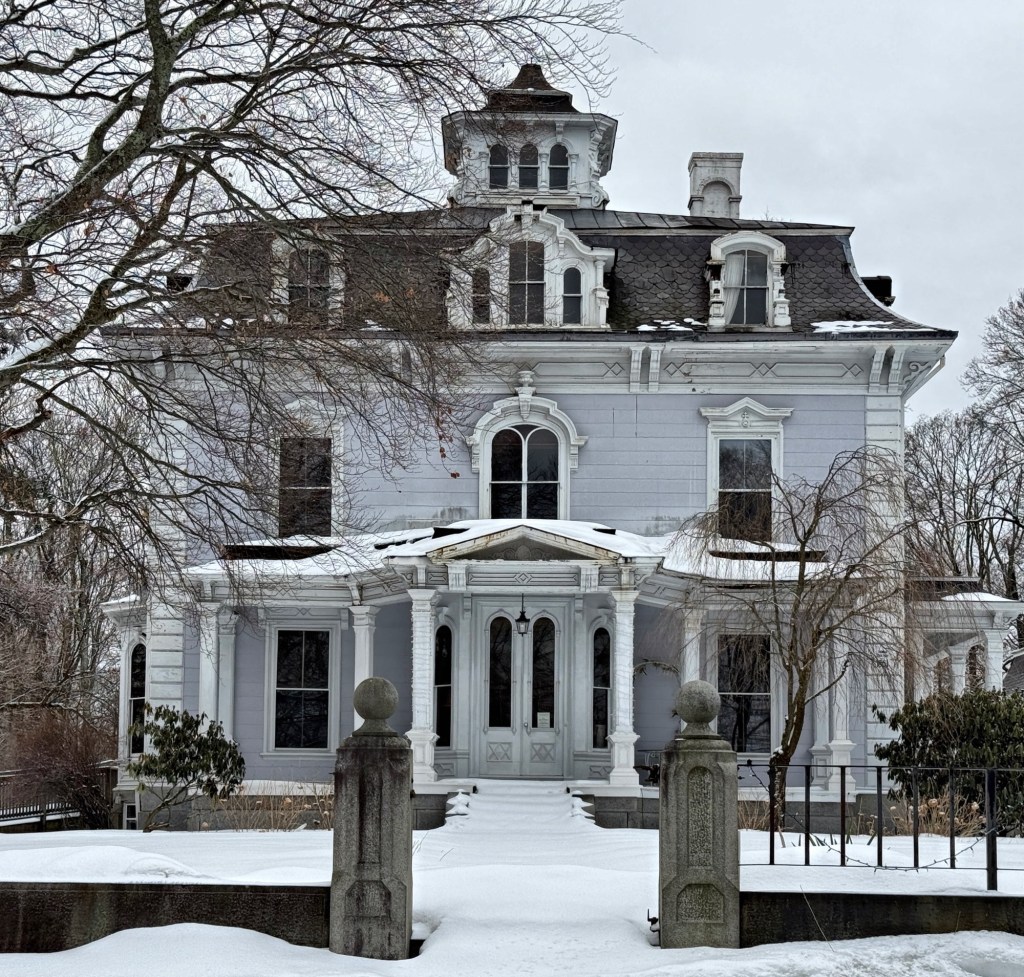
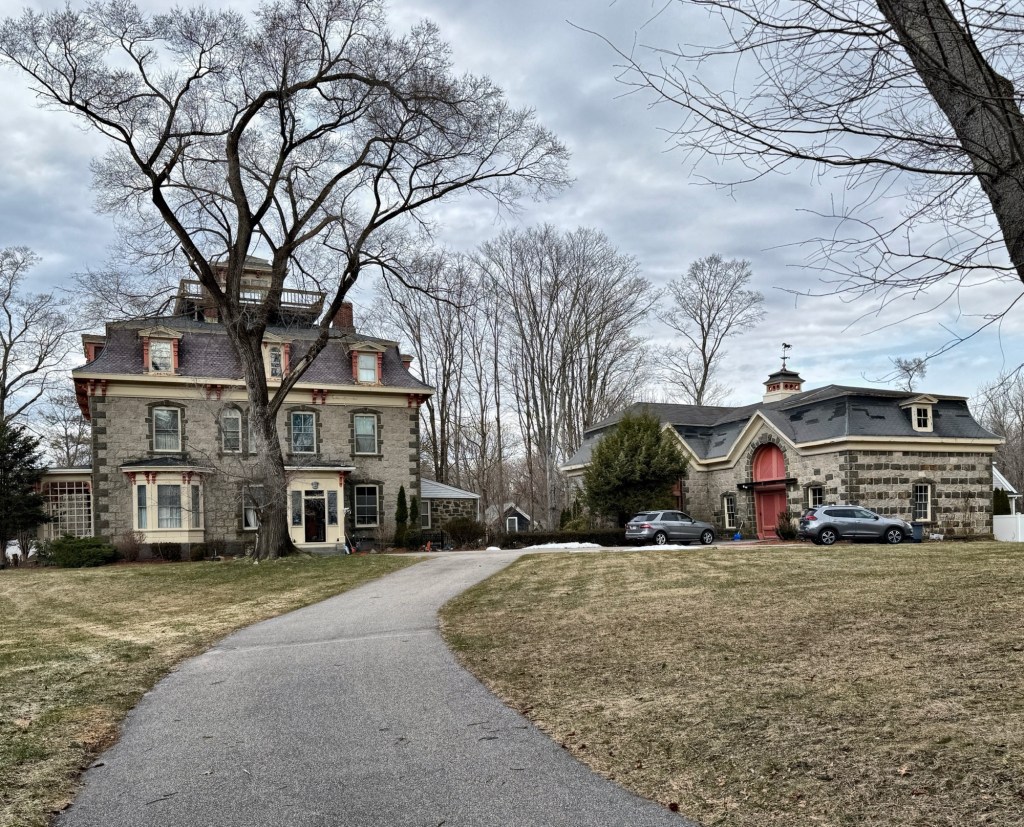
The Damon-Griffin House at 92 Commonwealth Road in Wayland, Massachusetts, is one of the exemplary buildings constructed in the Cochituate village in town, which prospered in the 19th century and centered around industry. This stately Second Empire style mansion is sited on a rise in the land overlooking Lake Cochituate and was completed in 1869 for George A. Damon (1826-1885), a wealthy businessman. George Damon died in 1885, and the house was sold to Wallace Griffin, one of the Griffin brothers who worked for the Bent Company, a prominent local shoe manufacturer. In 1890, Noble Griffin bought the house from his brother and, as his business prospered, proceeded to fix up the house as the showplace of a successful shoe manufacturer. In the mid-20th century, the Damon-Griffin House became a funeral home, and later was purchased by a developer who subdivided the land to build a suburban-style development of detached homes behind the house, and constructed an addition to the rear with more condominium units.

Lawrence-Bartol House // 1861

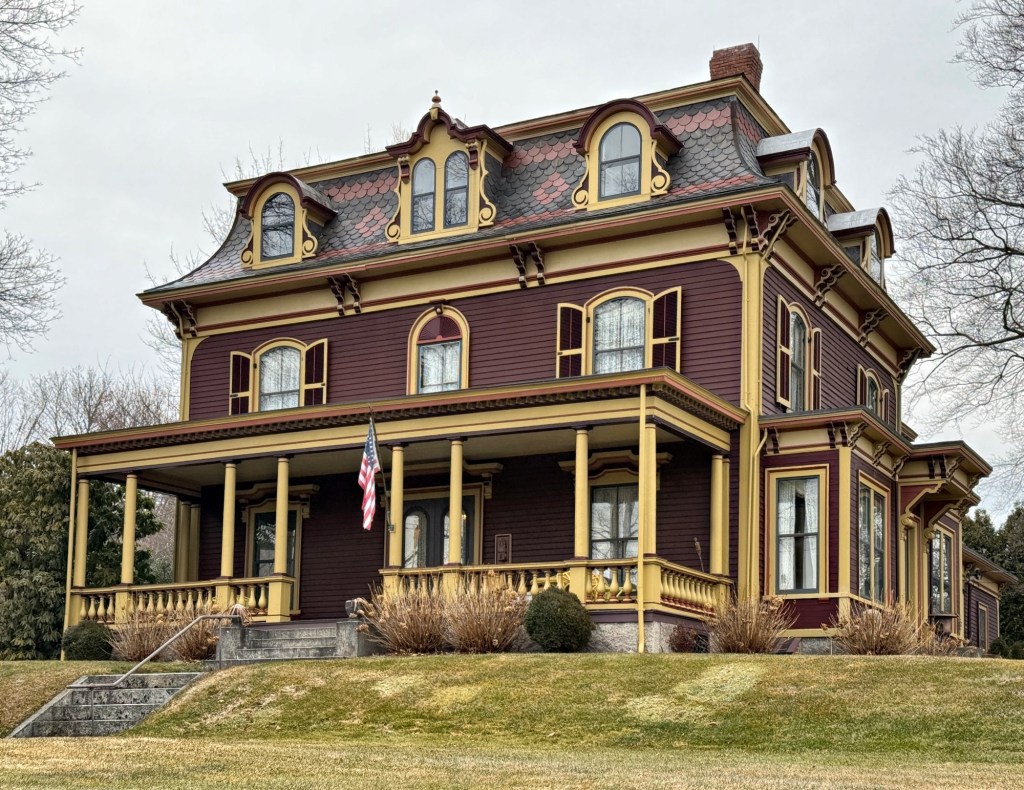
This handsome Victorian residence on Main Street in Lancaster, Massachusetts, was built in 1861 for Rev. Amos E. Lawrence (1812-1897), pastor of the local Evangelical Congregational Church. Amos Lawrence lived in the house for just 4 years until he sold it to Rev. George Bartol, of the First Church of Christ, Unitarian in Lancaster. George Murillo Bartol (1820-1906) served as the pastor for the iconic Bulfinch church for over 50 years until his death in 1906. The residence was then inherited by Reverend Bartol’s son, John Washburn Bartol, a prominent Boston physician who would spend time away from the city at his family home. The unique form of this mansard/gambrel-roofed house stands out along with its Colonial Revival alterations, which likely occurred in the late 19th or early 20th century.

Yosemite Engine House // 1879

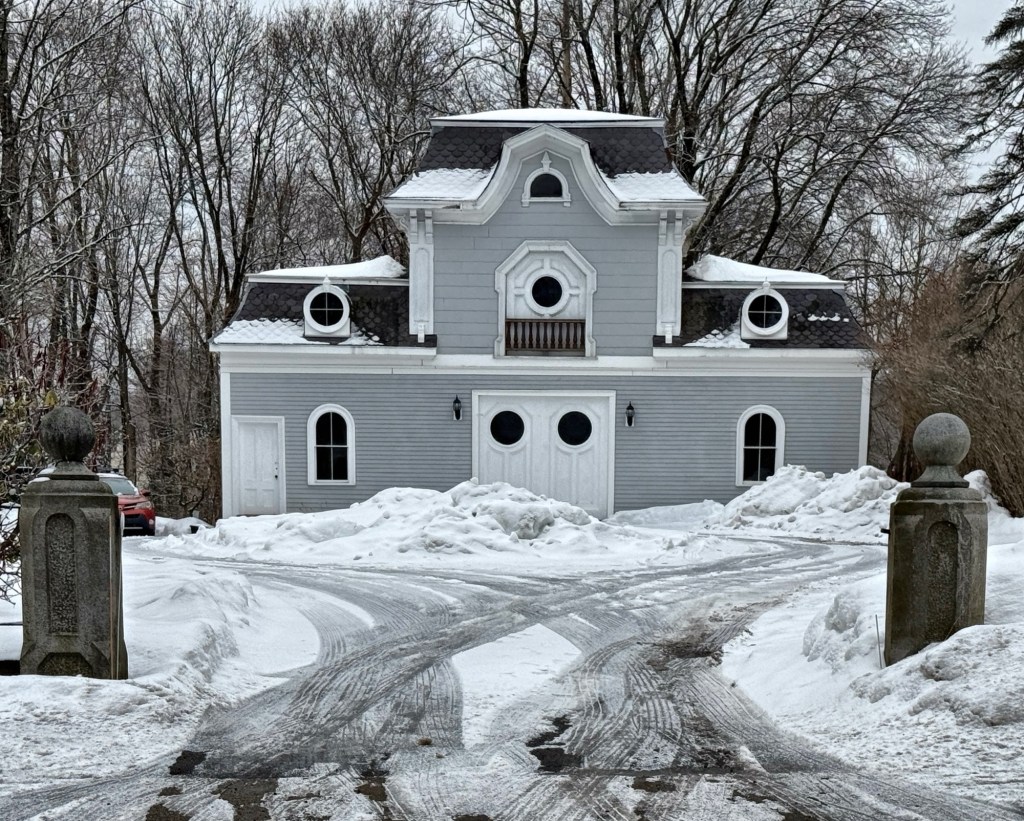
The Yosemite Engine House on Route 103 in Chester, Vermont, is a unique and iconic architectural landmark that has stood for almost 150 years. Chester’s second fire district was established in 1871, following a number of large fires in the village, prompting funding from businessmen and the town for a new engine house. Built in 1879, the Yosemite Engine house was built as a fire station for the village defined by its rectangular massing, first-floor engine hall, second-floor meeting hall, and twin bell and hose-drying towers that are capped by mansard roofs. The station originally housed horse-drawn and human-operated fire engines until the 1920s, when the doors were enlarged for the first engine-powered fire truck. The fire district, a separate taxing entity from the town since its creation, was dissolved in 1967, and its properties, including this iconic fire station, reverted to the town. It was eventually sold into private hands, and was operated for a short time as a museum by the local historical society before being reacquired by the town in 2018. The building is awaiting a full restoration.


Ambrose Burnside House // 1866

What do this unique Victorian house and sideburns have in common? Well, you are about to find out!

The Ambrose Burnside House is sited on an oddly shaped, and sloping corner lot on Benefit Street in Providence’s East Side neighborhood, and is one of the most unique Second Empire style residences in New England. The house was built in 1866 for General Ambrose Burnside (1824-1881), a Union general in the American Civil War, who returned to Providence and was about to begin a term as governor, followed by two terms in the United States Senate. Ambrose Burnside hired local architect, Alfred Stone, to design his new city mansion, which upon completion, was deemed one of the most “modern residences” in Providence. Built of brick with Nova Scotia stone with a concave slate mansard roof and one-of-a-kind rounded corner bay, the Ambrose Burnside House does not disappoint! Ambrose Burnside died in 1881 and the property was occupied by his sister-in-law until the property was sold in 1884 and housed the Providence Children’s Friend Society House for Aged Women and the Providence Association for the Benefit of Colored Children, providing shelter and food for elderly women and children of color without parents or guardians. After WWII, the Burnside House was converted to apartments.

Now, to the sideburns… Ambrose Burnside was noted for his unusual beard, joining strips of hair in front of his ears to his mustache but with the chin clean-shaven; the word burnsides was coined to describe this style. The syllables were later reversed to give sideburns.