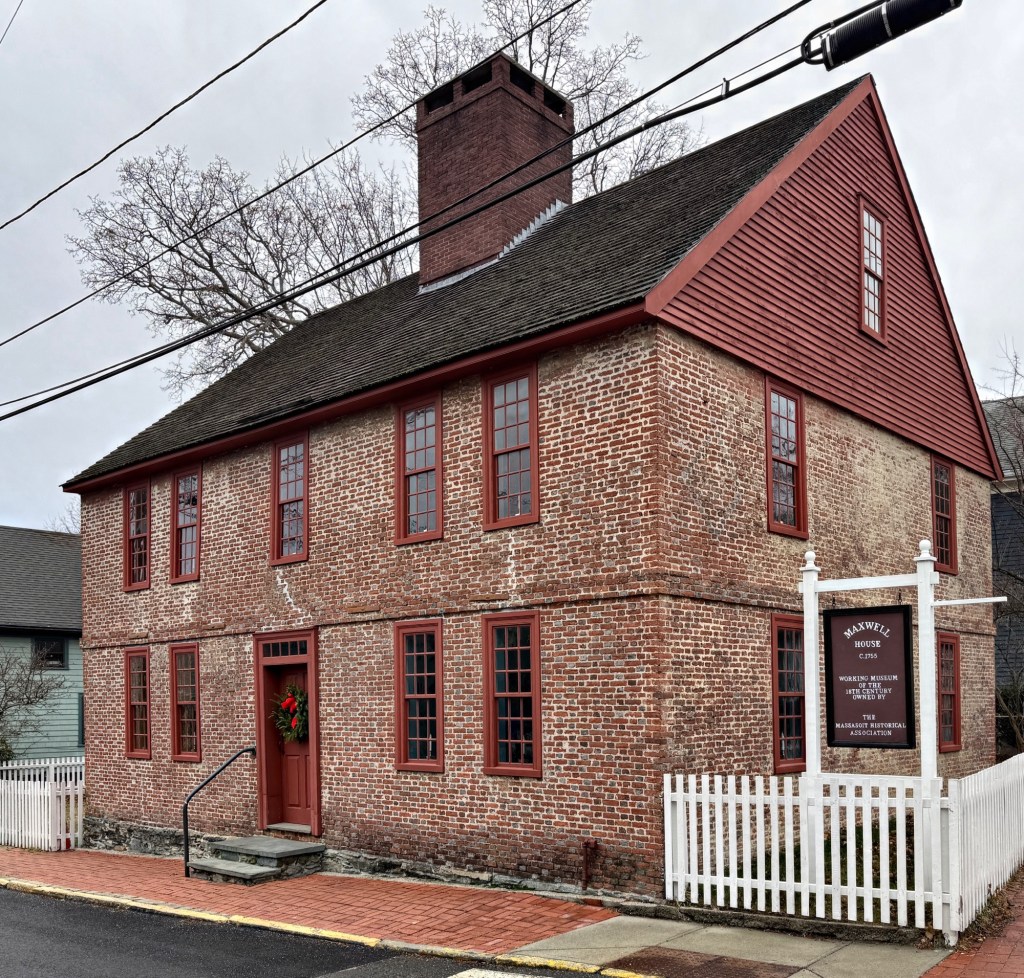
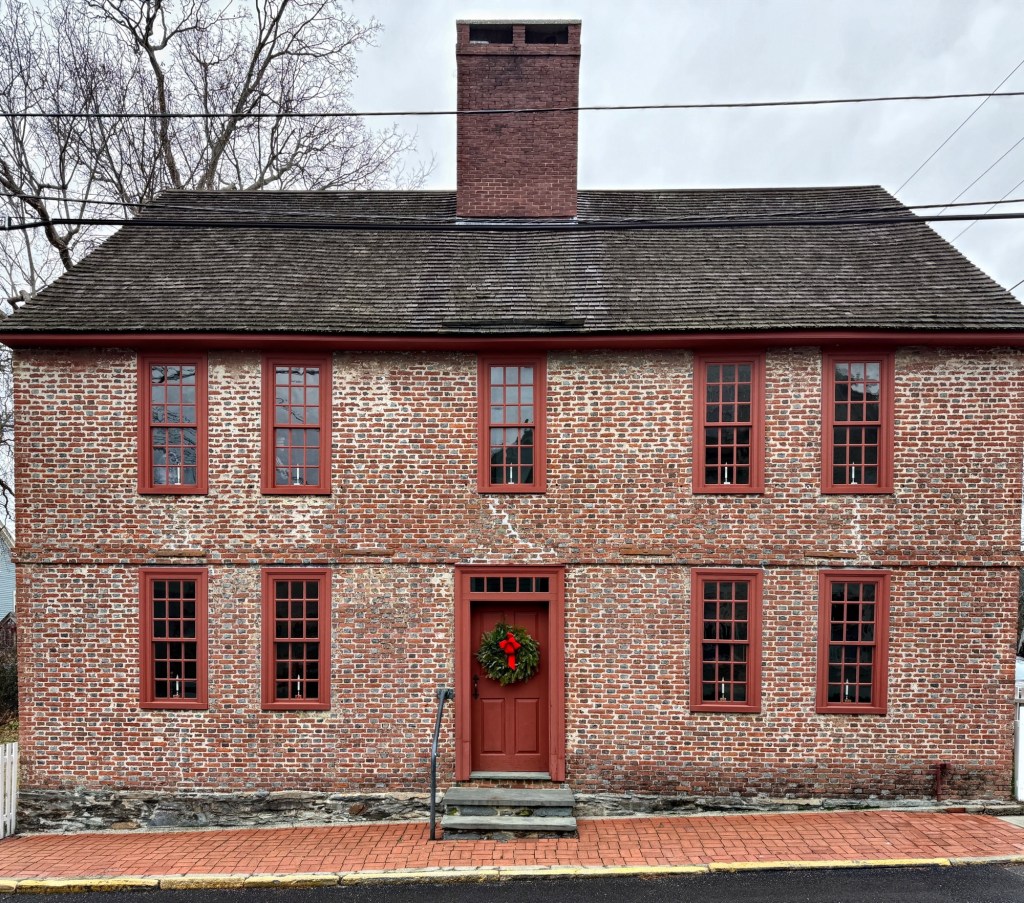
The Maxwell House in Warren, Rhode Island, is a striking example of mid-18th-century colonial architecture and one of the oldest brick dwellings in the waterfront town. Built before 1755, the house is one of the finest brick Georgian-era residences in New England with its characteristic Flemish bond brickwork, fieldstone foundation, wood-frame gable ends, and massive central chimney that anchors its historic pre-Revolutionary form. Originally constructed for the Reverend Samuel Maxwell (1688-1778) and later home to members of the Maxwell family, prominent shipowners, merchants, and slave-owners in town. The Maxwell family’s wealth was tied to the maritime economy of the era, which tells the story of many Rhode Island merchants of the time, who participated in the trans-Atlantic slave trade that enriched local elites and shaped the region’s economic growth, a history that communities are increasingly confronting alongside preservation efforts to this day. Today, the Maxwell House serves as a house museum preserved by the Massasoit Historical Association, who (hopefully) share the full story of the house, from its architecture to funding to construct it.
Located at the corner of Brimmer and Mount Vernon streets in Beacon Hill, this stately mansion showcases the various architectural styles and methods utilized by architects in the waning decades Victorian-era Boston. Set atop a brownstone base, the floors above are in the “Panel Brick” style, which utilizes brick masonry in a variety of decorative patterns of slight projecting or receding panels. The style was popularized by the Boston architectural firm of Ware & Van Brunt, as noted by architectural historian, Bainbridge Bunting. As expected, this house (and the attached townhouse next door) was designed by William Robert Ware for his uncle, Dr. Charles Eliot Ware (1814-1887) and his wife, Elizabeth Cabot Lee Ware. Dr. Ware was a physician at Massachusetts General Hospital and secretary of the Massachusetts Medical Society. After the death of Dr. Ware and Elizabeth, the property was inherited by their daughter, Mary L. Ware (1858-1937), a naturalist and botanist who was the principal sponsor of the Harvard Museum of Natural History‘s famous Glass Flowers. After the death of Mary, the property sold out of the family to Robert Wales Emmons III, a financier from a yachting family. The mansion remains in a great state of preservation, and is among the great Victorian-era residences in Beacon Hill.
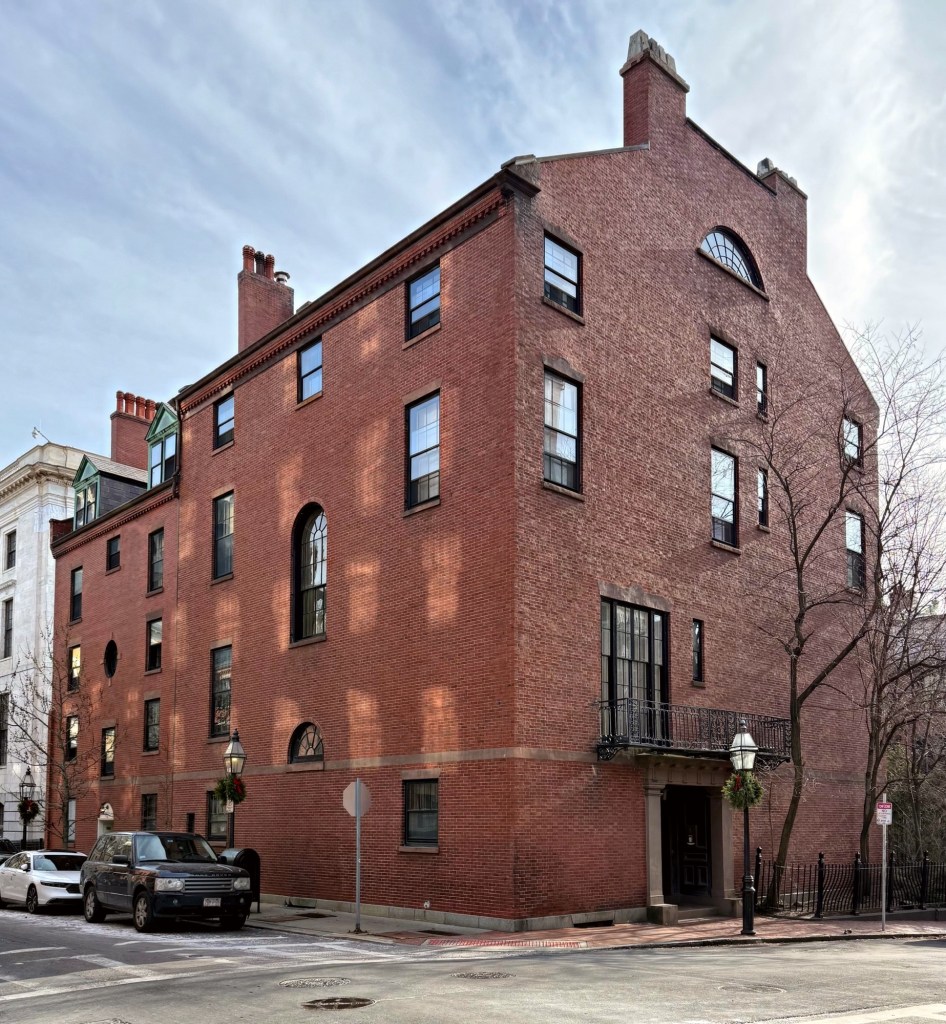
The Lyman-Paine Mansion at the corner of Joy and Mount Vernon streets in Boston’s Beacon Hill neighborhood is an architecturally significant Federal style house designed by a skilled architect and was owned by members of prominent local families. This four-story mansion was designed in 1824 by architect Alexander Parris for George Williams Lyman (1786-1880), a shipping merchant who became one of the Boston Associates, a group of wealthy Bostonians who funded the expansion of New England textile mills, which helped grow many industrial communities all over the region in the 19th century. This house served as Lyman’s winter estate, his summer mansion was the the Lyman Estate, “The Vale”, in Waltham, which he had inherited from his father. Upon George Lyman’s death in 1880, Lydia Lyman Paine, George’s youngest daughter, inherited this Beacon Hill mansion. Lydia’s husband, Robert Treat Paine, was a graduate of Harvard and a successful local attorney. Mr. Paine retired from law in 1872 to become the treasurer for the new Trinity Church building committee, where he averted a fiscal crisis during the mid-1870s when Henry Hobson Richardson’s cost overruns in designing the new Copley Square church threatened its completion. In addition to his pro bono work with Trinity’s finances, Paine was deeply interested in improving the quality of life of the working class, founding building and loan associations and institutes to allow immigrants to buy homes in the Boston area. In addition to their Joy Street mansion, the Paines had a country estate called Stonehurst, which is adjacent to the Vale in Waltham; it was renovated by Richardson. The mansion was converted to apartments (now condos) in the mid-20th century, and maintains its unique, vernacular Federal character, with asymmetrical facade and oddly placed and shaped windows.
Mount Vernon Place is a short, dead-end street in Boston’s Beacon Hill neighborhood. The street was once an entire block of eight rowhouses, and was developed in the 1830s on land formerly owned by John Hancock and his family. The residences numbered 1-5 Mount Vernon Place were torn down during the 1910s to accommodate the expansion of the landscaped grounds of the State House, leaving just 6, 7, and 8 Mount Vernon Place. The center rowhouse, 7 Mount Vernon Place, was built in 1834 and is believed to have been designed by Alexander Parris, a prominent local architect who designed Quincy Market and mastered the Federal and Greek Revival architectural styles with many notable buildings all over the east coast. The residence has a three bay facade and brownstone sills, lintels, and door surround and has been preserved for nearly two centuries. The house was long-owned by George W. Lyman, an industrialist who lived nearby on Joy Street. The residence was rented for decades until it was purchased by Francis C. Gray a physician, and inherited by his grandson, Ralph Weld Gray, an architect through the 1940s.
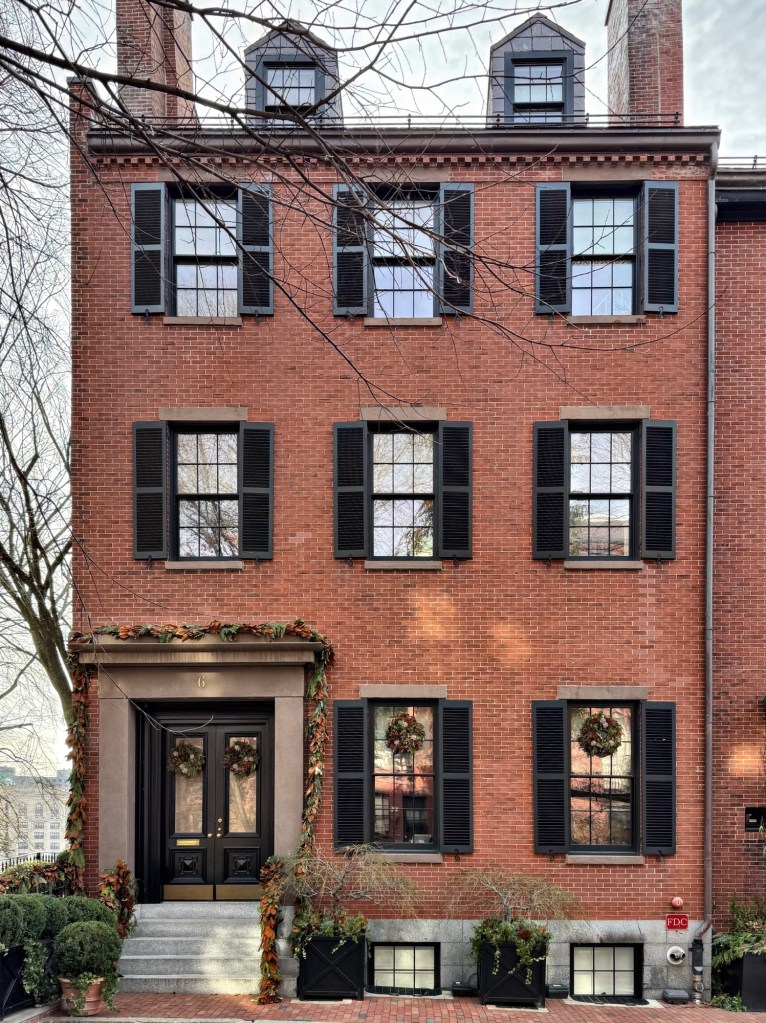
Mount Vernon Place is a short, dead-end street in Boston’s Beacon Hill neighborhood. The street was once an entire block of eight rowhouses, and was developed in the 1830s on land formerly owned by John Hancock and his family. The residences numbered 1-5 Mount Vernon Place were torn down during the 1910s to accommodate the expansion of the landscaped grounds of the State House, leaving just 6, 7, and 8 Mount Vernon Place. The easternmost rowhouse, 6 Mount Vernon Place, was built in 1834 and is believed to have been designed by Alexander Parris, a prominent local architect who designed Quincy Market and mastered the Federal and Greek Revival architectural styles with many notable buildings all over the east coast. This house was purchased in 1834, when still unfinished, by William Savage, a merchant, who sold the property to Pliny Cutler, president of the Atlantic National Bank, who appears to have bought it for his son, Dr. William Ward Cutler (1812-1870). The property was owned in the early 20th century by Robert Treat Paine Jr., who likely rented the home to boarders. The residence has a three bay facade and brownstone sills, lintels, and door surround.
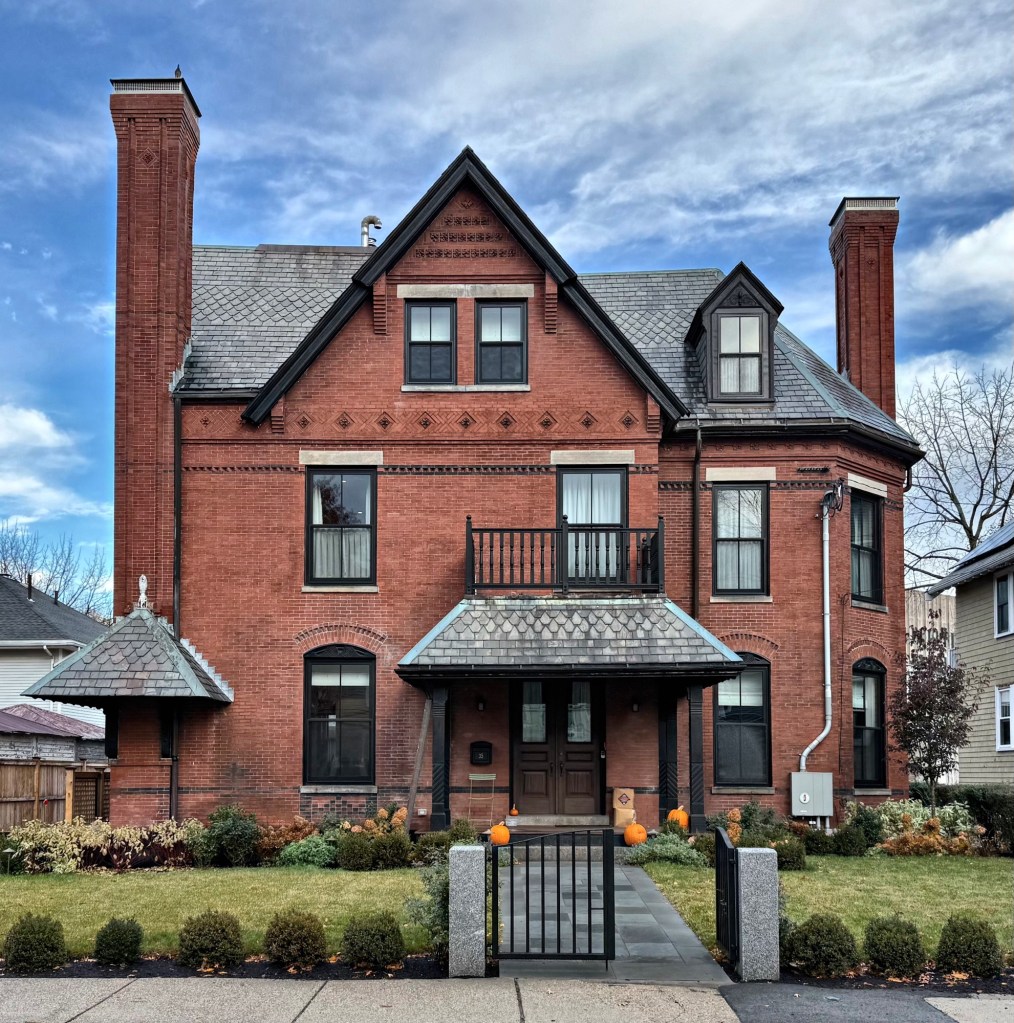
Located on Davis Avenue, a narrow residential street in Brookline Village, the Dr. Tappan Eustis Francis House is an unusual work by an architect that differs from the style they became best-known and sought after. Dr. Tappan Eustis Francis (1823-1909) graduated from Harvard College in 1844 and Harvard Medical School in 1847 and moved to Brookline where he practiced medicine for over 50 years. For his Brookline residence, Dr. Francis hired William Ralph Emerson, who has become best-known for his Shingle style designs and summer cottages that lined the New England coastline and in Boston suburbs, to furnish plans for his suburban residence. For Dr. Francis’ home, Emerson envisioned a brick house in the English Queen Anne style. The tall chimneys with panel brick designs, corbeled brick brackets and terra-cotta decorations in the gable peaks, and the massive slate-roofed entry porch are all stunning features on the house; but the most intriguing has to be the bracketed hood on the corner of the house which originally sheltered a wooden bench, as depicted in an 1879 drawing.
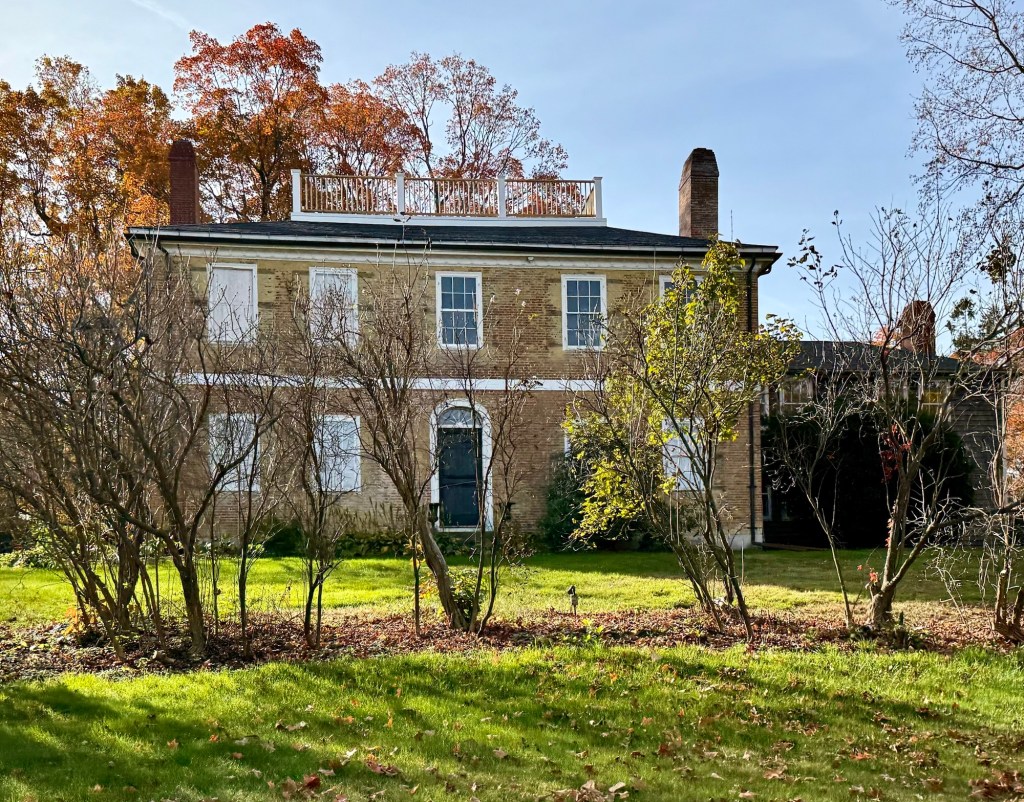
This stately Federal style residence constructed of brick sits atop a lovely hill in the town of Bolton, Massachusetts, and has been lovingly maintained by its owners for over 225 years. The home was built by Caleb Moore (1768-1826) just before his marriage to Achsah Whitney in 1796. Caleb was a merchant and later a shareholder and president of the Lancaster & Bolton Turnpike Corporation, chartered in 1805, to collect tolls for travellers from or to Boston from central Massachusetts. Caleb and Achsah had eight children, sadly, five of their children died as teenagers or young adults. The farmhouse was inherited by Alpheus Moore (1802-1882), who operated his late-father’s store and held a liquor license, possibly running the home as a tavern along the turnpike.
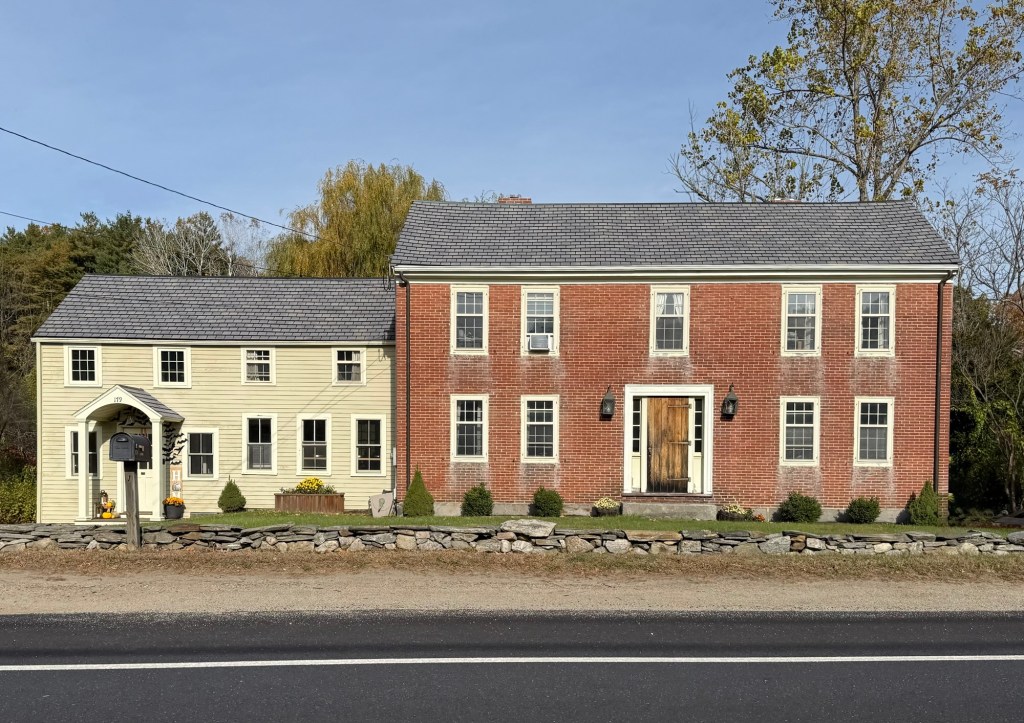
This exceptional vernacular example of a brick, Federal period house in Bolton, Massachusetts, sits on the town’s Main Street in the East Bolton village. Built in 1827, this house with attached wooden ell was the home to Abraham Wilder, a local blacksmith who followed his father’s footsteps in his professional pursuits. The house is two-stories with historic six-over-nine sash windows. The main center entry, rather than displaying a common elliptical fanlight for the period, is surrounded by trim boards, four-pane sidelights and a vertical-board door. Abraham’s blacksmith shop was once located next-door but was moved and reassembled in Old Sturbridge Village in 1957.
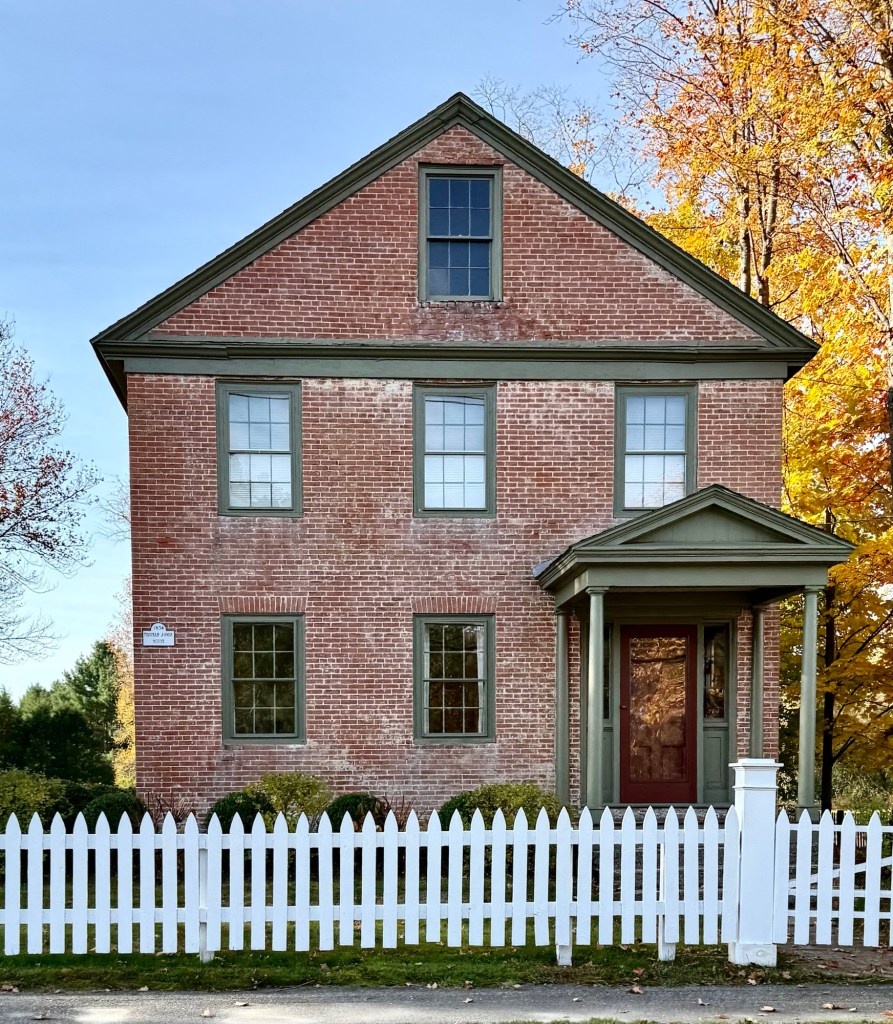
Thomas Jones of Lancaster married Mary Tweed of Lunenburg, Massachusetts, in June 1834 and immediately began building this house on Main Street in Lancaster for his new family. The Greek Revival style house is a refined example of brick with six-over-six sash double-hung windows and a Classical entry portico supported by Doric columns. The house was later owned by Sewell T. Rugg (1821-1892), a blacksmith who had a shop nearby.


 Buildings of New England