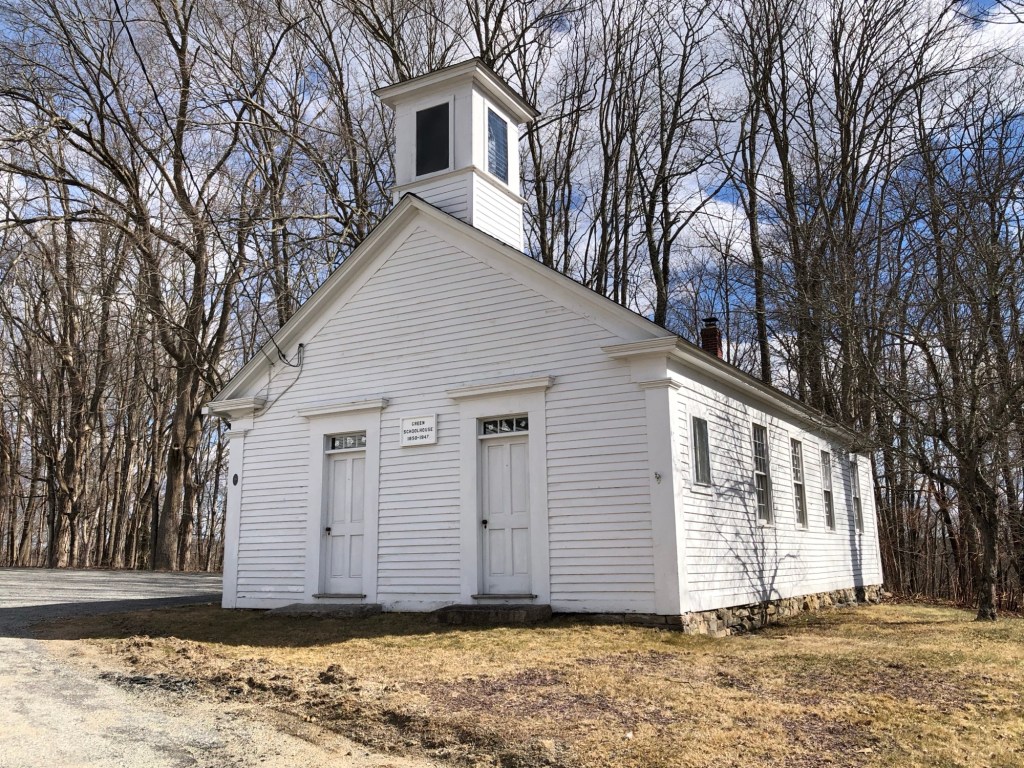
The Center District Schoolhouse of Canterbury, Connecticut, sits behind the village church and is the town’s best-preserved example of a district schoolhouse. Built c.1860, the vernacular, Greek Revival one-room schoolhouse served the central village through the 19th and into the 20th centuries with its twin entry, double-hung windows to allow light and air into the classroom, and a belfry with bell to notify pupils when class was about to start. Like many similar one-room schools in rural New England, pupils attended class with neighbors and siblings in the small, intimate classroom of varied ages.
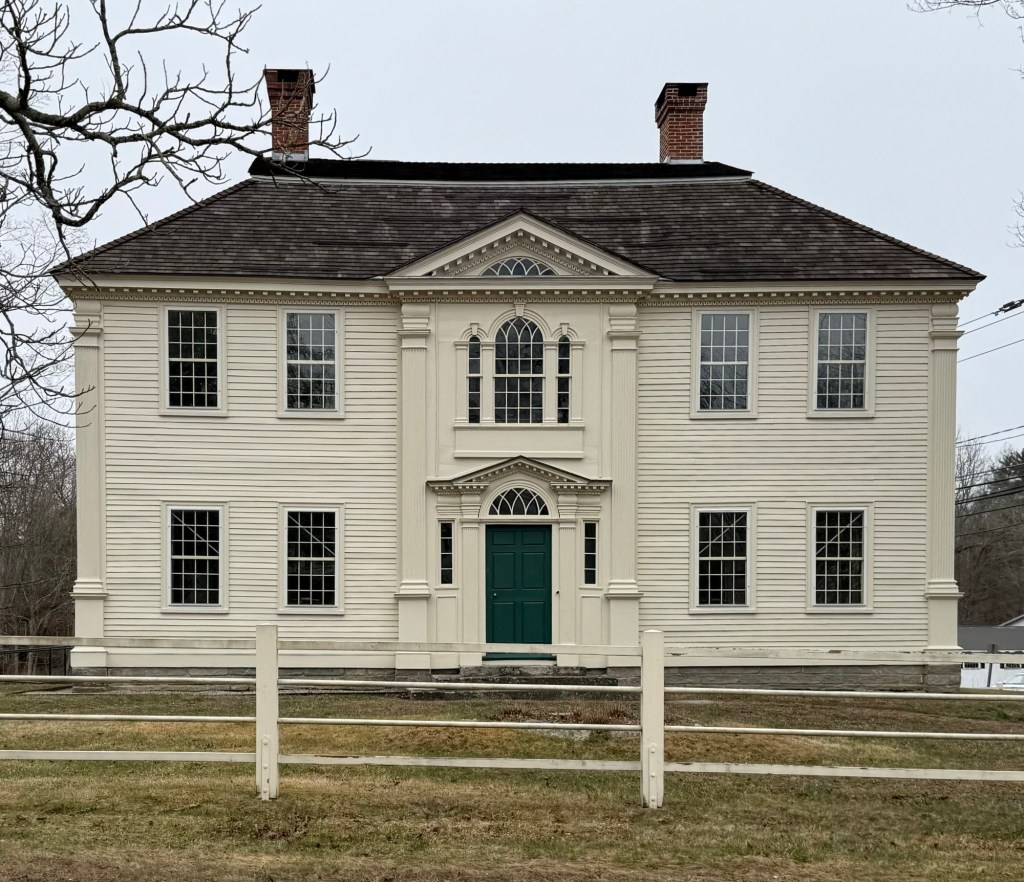
The Samuel Pellett House in Canterbury, Connecticut, dates to the mid-18th century and is an excellent example of a Colonial-era home in this part of the state. Research in the land records suggests that this house may date from the time of Samuel Pellett’s second marriage in 1752 to Hannah Underwood. The couple planted two sycamore trees in front of the house to signify husband and wife but one was lost in the 1938 hurricane while the other survives to this day. According to historians, Sarah Harris Fayerweather, the first Black student at Prudence Crandall’s school nearby, worked as a servant in this house, then owned by Jedediah Shepard. The Pellett House is an excellent example of a Colonial Georgian home in Connecticut, with clapboard siding, center chimney, five-bay facade and small pane sash windows.
Built c.1805 for Elisha Payne, this architecturally distinguished Federal style mansion in Canturbury, Connecticut is one of the most significant buildings in the state, not only for its architecture but historical significance. In 1831, a young white woman, Prudence Crandall, was asked to open a boarding school for girls in Canterbury. She purchased this mansion and began operations for the school, which was attended by many wealthy girls in town. In 1832, Ms. Crandall was approached by a young Black girl who worked as a servant in town, named Sarah Harris, asking to attend the school. Encouraged by conversations with both Harris and Maria Davis, a Black woman who worked for Crandall and shared copies of the abolitionist newspaperThe Liberatorwith her, Crandall agreed to admit Harris. Almost immediately, residents protested the school’s admission of a Black girl and parents threatened to withdraw their students, Crandall undeterred, closed her school and reopened in 1833, solely for Black and Brown students. Young girls traveled from several states to attend the school. The legislature of Connecticut responded by passing the “Black Law,” which prevented out-of-state Black and Brown people from attending school in Connecticut towns without local town approval. Crandall was arrested, spent one night in jail, and faced three court trials before the case was dismissed. In September 1834, a nighttime mob of men attacked the house, smashing the windows, leading Crandall to close the school out of fear for her students as no protections were afforded to them. These events made national and international news in the 1830s and galvanized the burgeoning abolitionist movement. Crandall would later marry and left Connecticut, never to return. For her vision and brave actions at this school, Prudence Crandall is Connecticut’s official state heroine and the house was designated a National Historic Landmark in 1991.
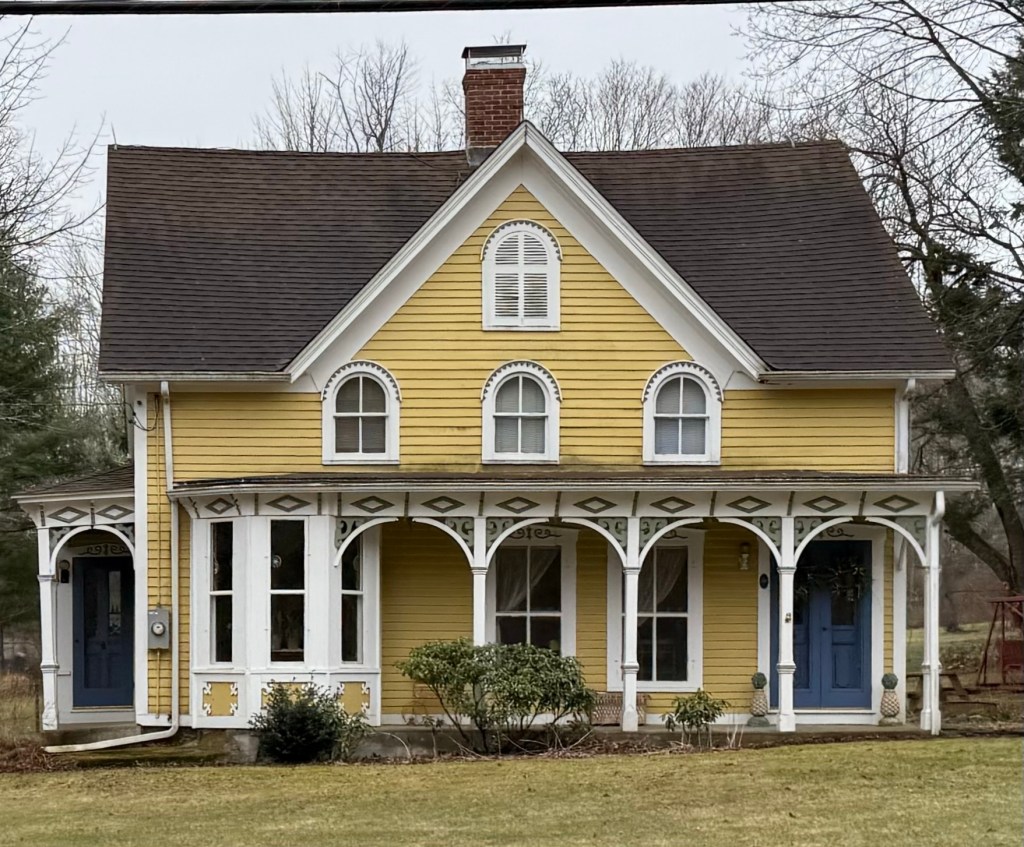
This house on Westminster Road in Canterbury, Connecticut, is architecturally distinguished by its extensive and imaginative detailing, which reflects the widespread availability of manufactured architectural ornament in the Victorian period. The porch columns, archways, bay window, and round-arched windows all reflect an Italianate influence and the work of its original owner, Mr. George Washington Smith (1857-1937). The house dates to about 1886 when George W. Smith, built it from his workshop formerly located across the street. Smith manufactured mast-hoops, the wooden fixtures for attaching sails to the masts of sailing ships, and utilized his woodworking skills to build and decorate the exterior of his family home.
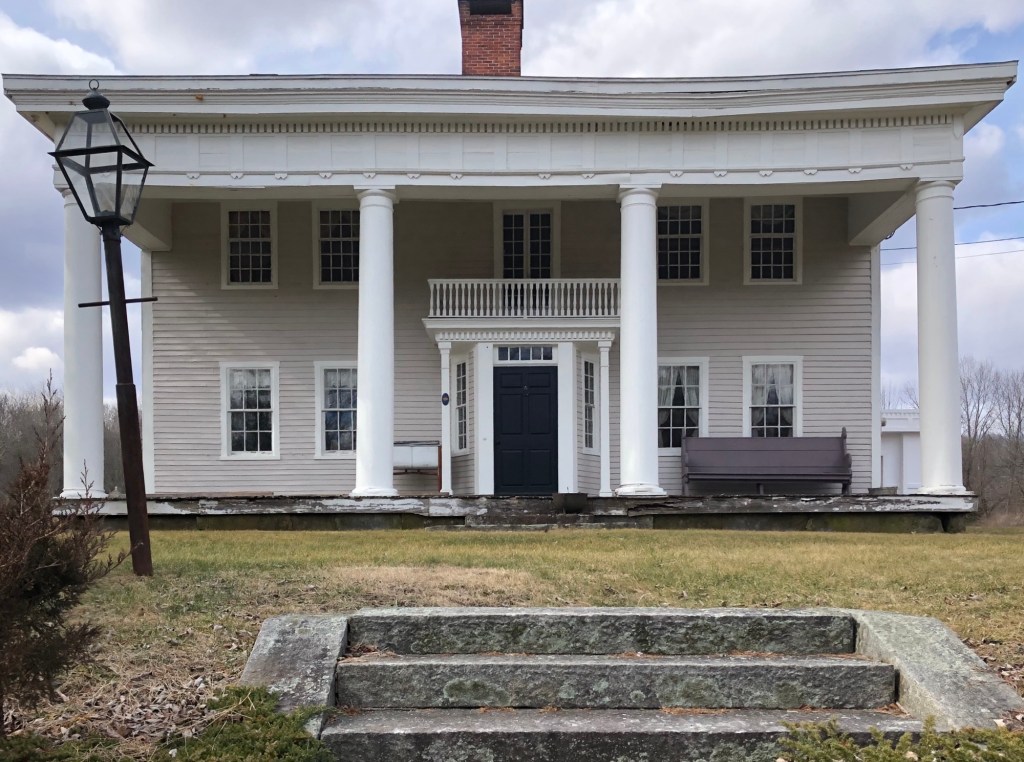
Renovated in the early 20th century from a Federal style farmhouse, “The Pillars” in Canterbury, Connecticut, is an extravagant example of a Colonial Revival style residence in this quiet part of the state. The Pillars was the creation of Frank Edwin Miller (1856-1947) and his wife, Hattie Jenks Miller. The Miller’s retired here in 1913 after Hattie inherited the family homestead, which dated to the late 18th century, and they had the home renovated, adding the massive two-story columned porch and projecting entry. The house is a visual representation of the difference between Colonial and Colonial Revival styles as this home, the latter example, is a free interpretation of its prototype with exaggerated architectural details in a scale not seen centuries earlier.
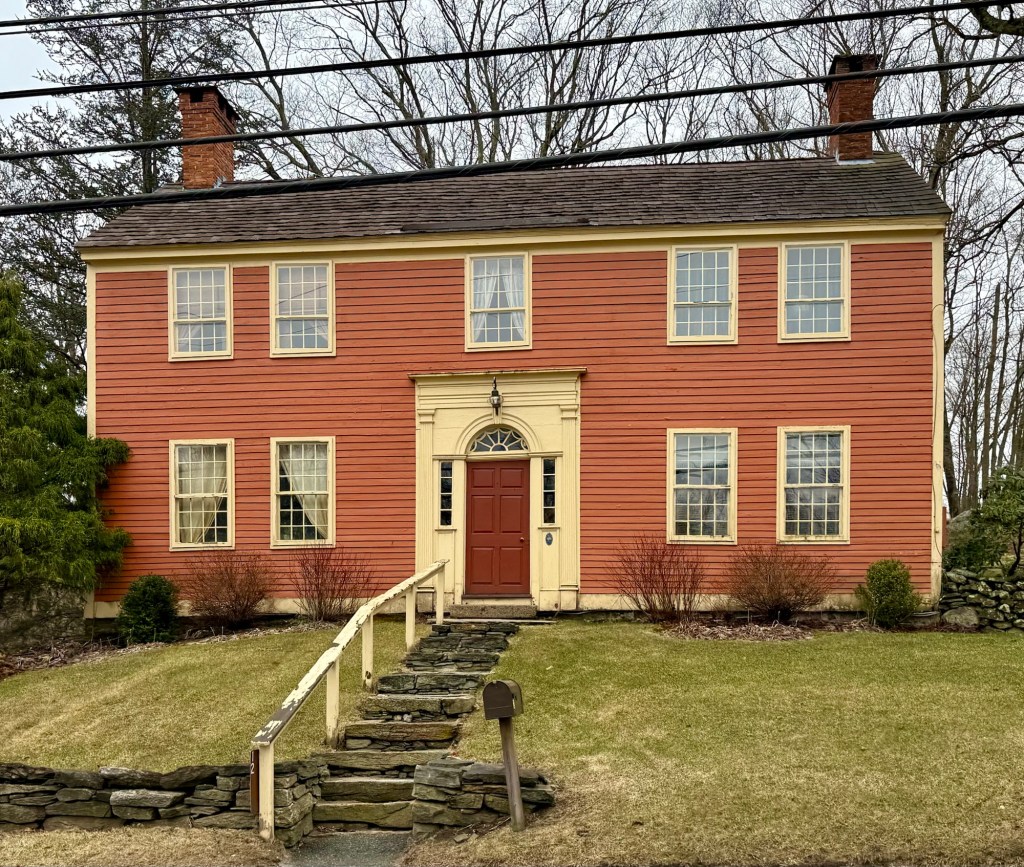
This house in Canterbury, Connecticut, is known as the Turnpike House and dates to the early 19th century. A great example of a Federal style residence, the symmetrical, five-bay home exhibits pair chimneys, multi-light double-hung windows, and an elaborate center entry with sidelights and fanlight transom. The house was built along the Windham Turnpike (now Connecticut Route 14), which was an early toll road established in 1795. Behind the main block of the house is a squat gambrel-roofed ell, that is believed to be made from an older house that previously stood on this site, perhaps dating as early as 1745. According to tradition, this early house, which was also at one time supposedly used as a jail, was the home of Rev. Dr. James Coggswell when he ran a school for boys in Canterbury. One of his pupils at that school was Benedict Arnold, the infamous turncoat.
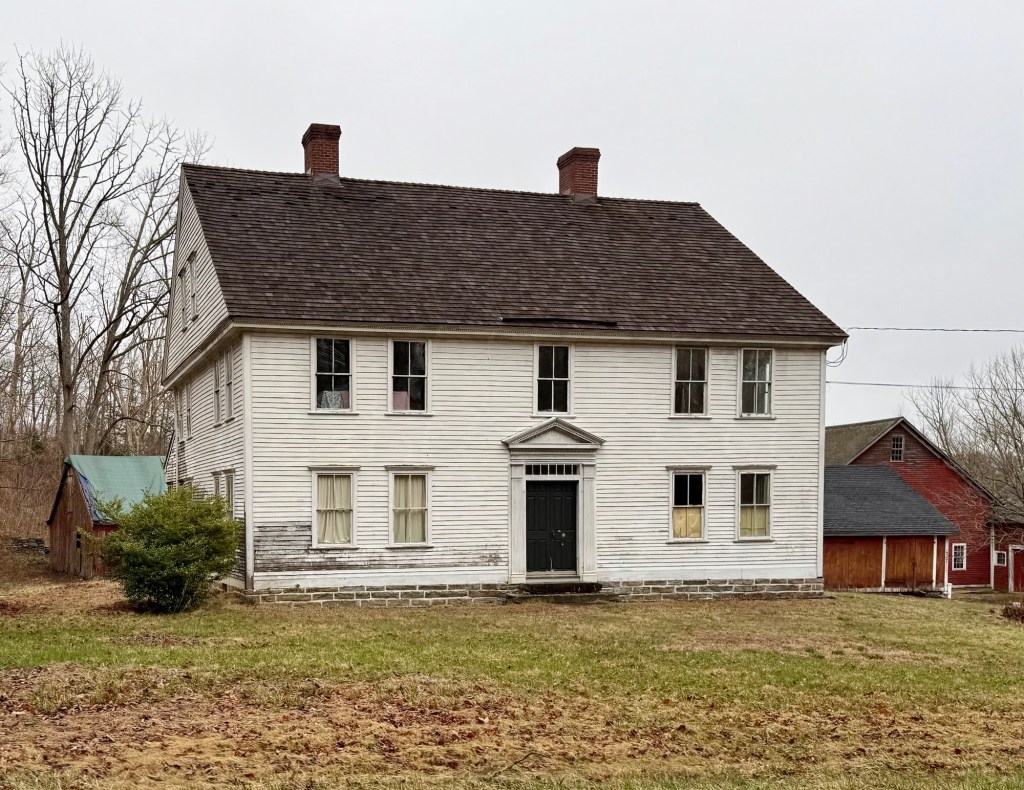
Located in northern Canterbury, Connecticut, this rural farmhouse was built following the American Revolution, showcasing the emergence of the Federal style from the Colonial Georgian type farmhouses before. The house dates to 1783 and was built by Captain Asa Bacon (1735-1819), a wealthy farmer and captain in the Revolutionary War. The home was also occupied by his son, Asa Bacon Jr. (1771-1857) a Yale educated lawyer who practiced law in town before moving to Litchfield. Asa Jr. was a turnpike promoter, advocating for turnpikes through the formerly sleepy agricultural town, opening it up to trade and commerce. The early Federal-period home features a five-bay facade and central entry with triangular pediment and fluted pilasters. The house appears much like it would have when originally built besides the Victorian-era two-over-two window sashes installed in the late 19th century. The farm even retains a few 19th century barns, likely built when the windows were replaced by later owners.

 Buildings of New England