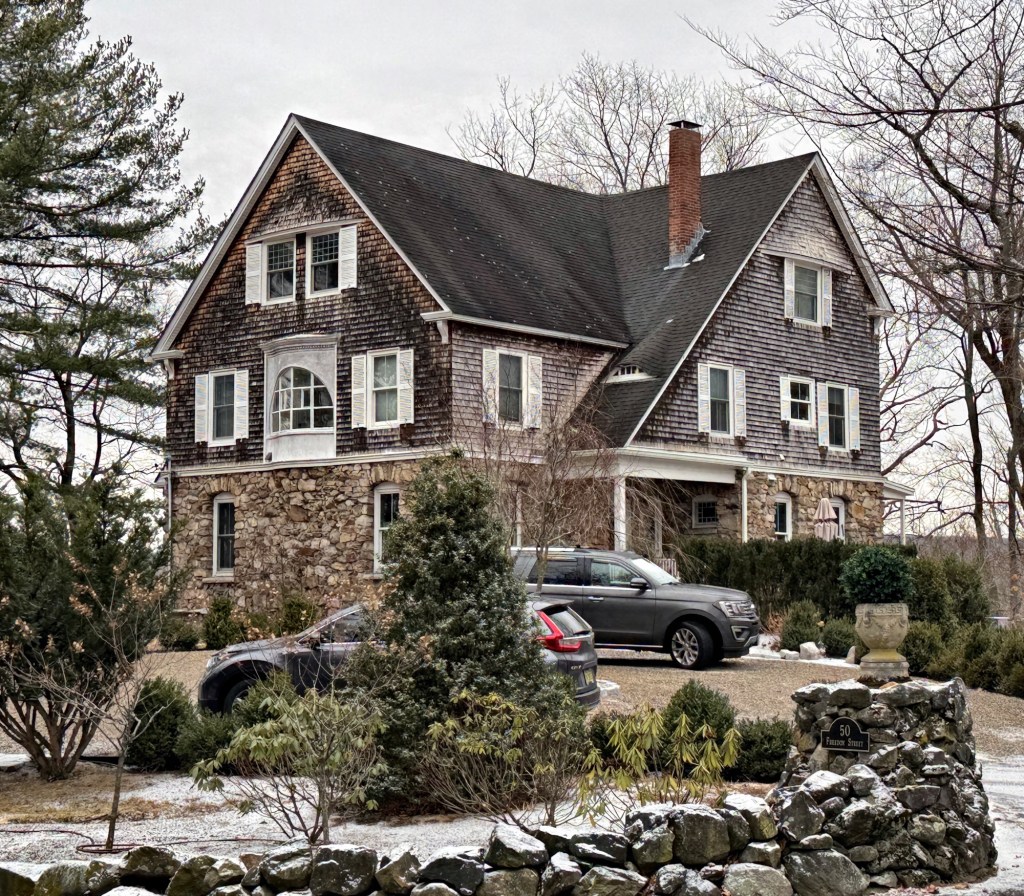
Charles Frederick Roper (1847-1916) was a machinist and inventor who moved to Hopedale, Massachusetts, where he found employment from the Draper Corporation. His inventions were important for the company, and included loom machinery, air supply for motors to prevent overheating, and grinding machines. Before his death, Charles Roper had over 100 patents and from his success, he afforded one of the finest Victorian homes in Hopedale. In around 1890, Charles Roper had this Shingle style residence built on Freedom Street from plans by Robert Allen Cook, a Milford-based architect who was a favorite of the Drapers. The residence sits on a rubblestone first floor with cedar shingles above.
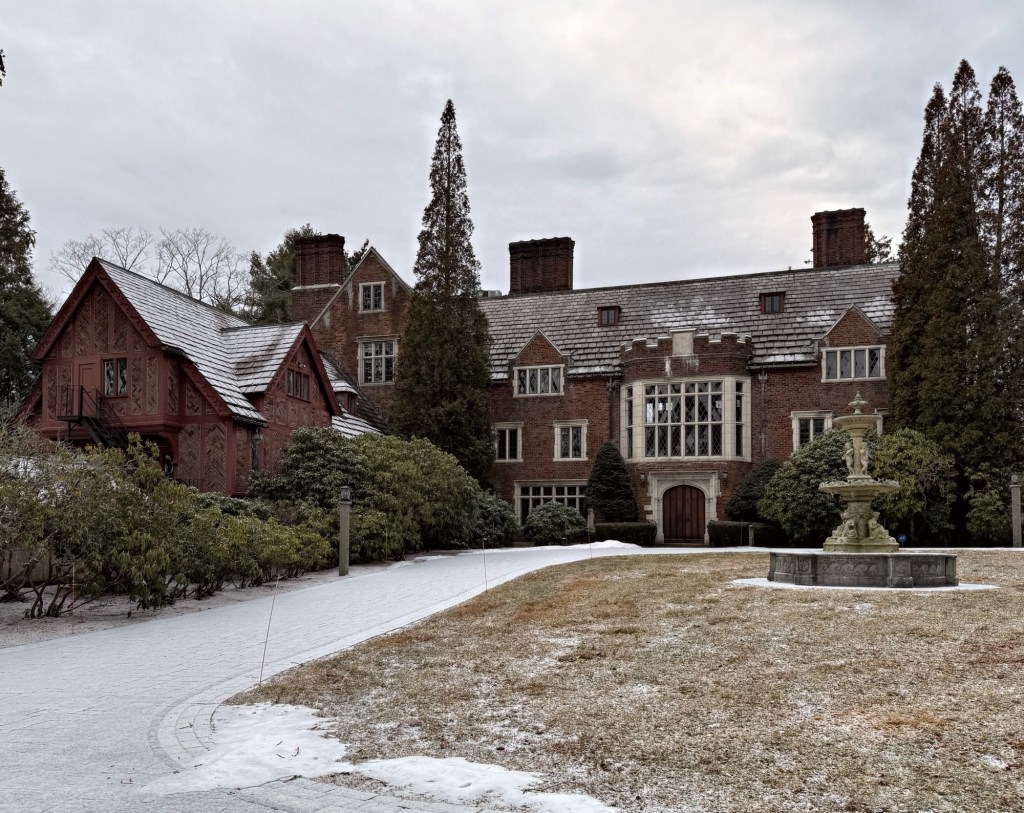
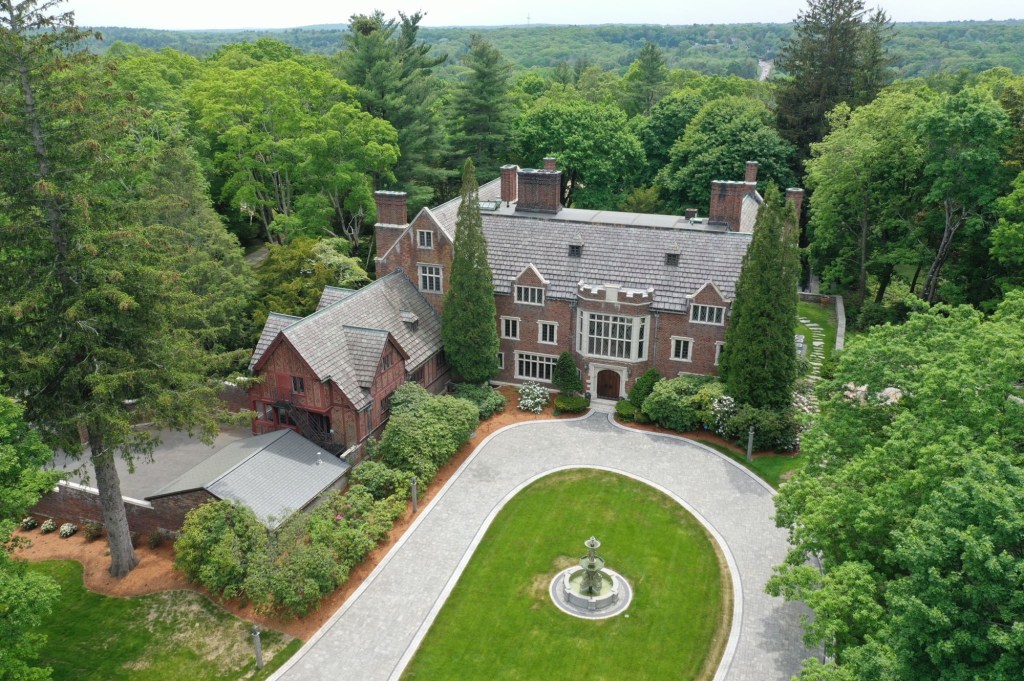
Built in 1926 for Eben Sumner Draper Jr. (1893-1959), the son of Massachusetts Governor and Draper Corporation executive, Eben Sumner Draper, this massive Tudor Revival style mansion in Hopedale, provided a secluded country estate for the wealthy industrialist. The home was designed in 1926 by Boston architects Bigelow & Wadsworth, and replaced Eben’s father’s Shingle style country mansion “The Ledges“. The new Draper mansion was highlighted in numerous architectural magazines shortly after it’s construction, which highlighted the amazing brickwork, layout, and interior finishes, all of which remain to today! This spectacular home is over 14,000 square feet and has 17 bedrooms, several located in the staff wing, 10 full-baths and four half-baths, an in-ground swimming pool, gazebo, tennis court, and landscape design attributed to the notable landscape architect Warren Manning. In the 1960s, the home sold out of the family and was used as a home for adults living with developmental disabilities, mental illnesses, physical disabilities, the facility has since sold the Draper mansion and occupies the former carriage house on the grounds.
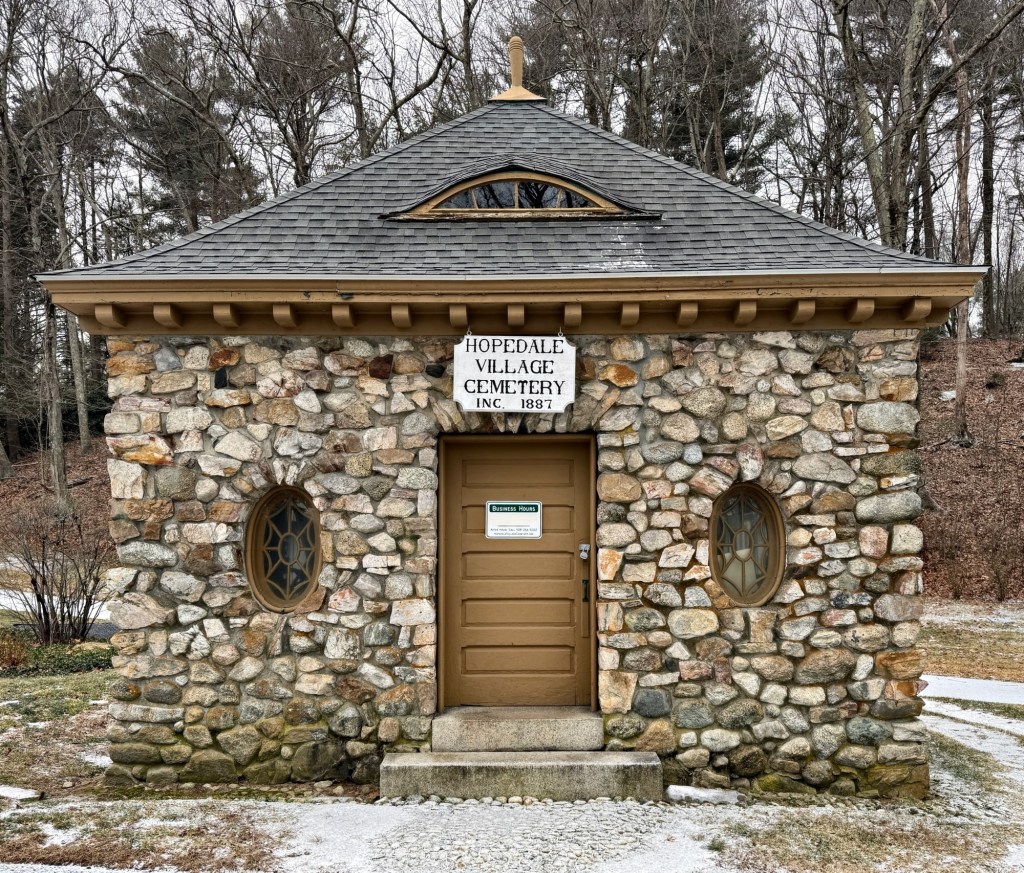
At the heart of the Hopedale Village Cemetery, this diminutive historic tool shed and office showcases that even for functional buildings set within a cemetery, high-quality materials and good design can enhance the landscape. The cemetery was laid out in 1845 in connection with Hopedale’s Utopian settlement, but expanded later in the 19th century as a formal landscaped cemetery in about 1887. The growth and investment of the cemetery coincides with the growth of the community as it prospered with the success of the Draper Corporation factories in town. Landscape architect, Warren Henry Manning updated the landscape here, with scenic vistas and hills, which followed the popular Rural cemetery movement of the 19th century. The cemetery contains many graves and mausoleums of the wealthy factory managers and benefactors of the community, which dot the sprawling landscape. In 1894, architect, Robert Allen Cook, designed this stone tool shed, which may have also contained a small office with cemetery records. The one-story, hip-roofed building features rough rubblestone walls with an eyebrow dormer centered on the façade, and has been preserved by the community for well over 100 years.
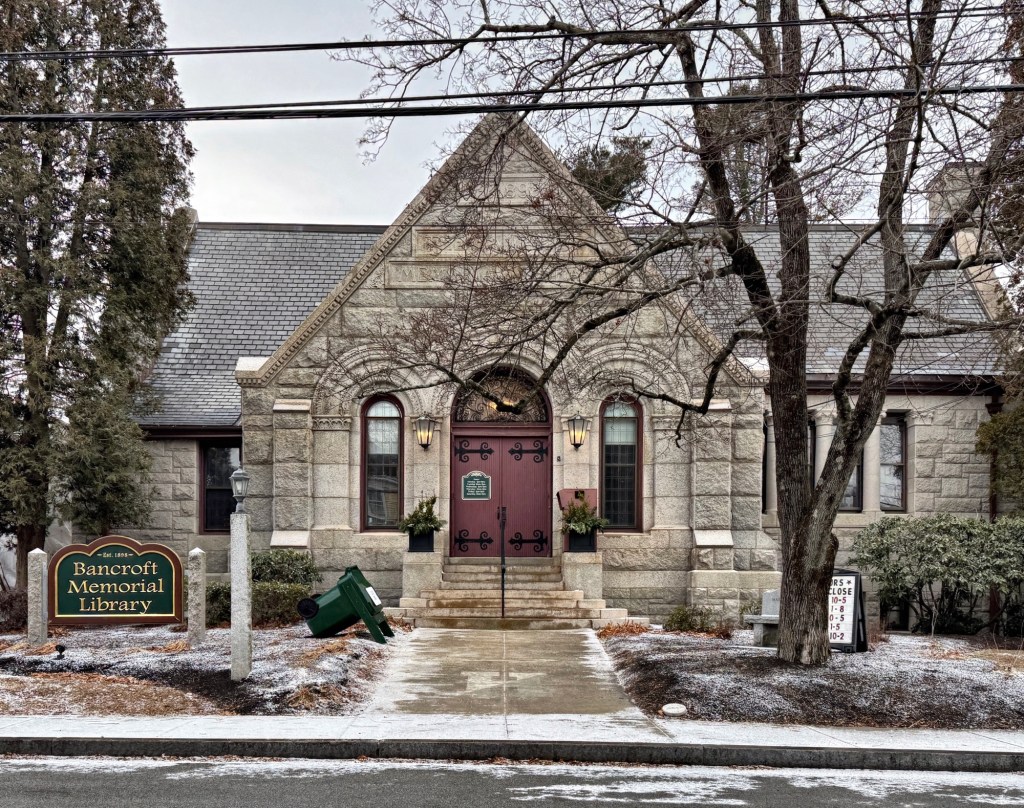
The Bancroft Memorial Library on Hopedale Street in Hopedale, Massachusetts, was built in 1898 and is one of the finest examples of a Romanesque Revival style library in New England. The library’s benefactor, Joseph Burbier Bancroft (1821-1909), moved to Hopedale and joined the Hopedale Community in 1846, where he became connected with the Hopedale Machine Company founded by the Draper Family. Shortly afterward Mr. Bancroft entered into a partnership with Ebenezer and George Draper, and was put in charge of the cotton machinery department of the Draper Corporation. Joseph married Sylvia W. Thwing, sister of the wives of Ebenezer and George Draper. As he rose through the ranks of the Draper Company, he decided to fund a library as a gift to the company town. Designed by architect, C. Howard Walker of the Boston architectural firm Walker & Kimball, the library is constructed of granite and features arched entry at the facade with carved stone panel above. Before the building was completed, Sylvia died, and the library became a memorial in her memory by Joseph Bancroft.
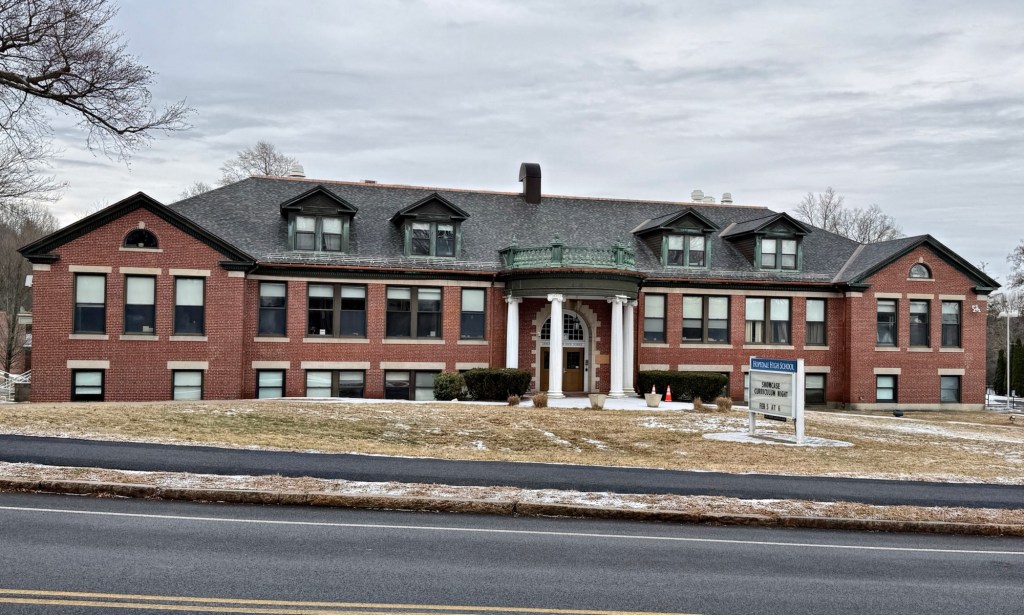
The General Draper Memorial High School is one of the many civic and institutional buildings in Hopedale Village that were donated to the small industrial community by members of the wealthy Draper Family, who operated the Draper Corporation Factory in town. The school was built in 1927 on land donated to the Town by Princess Margaret Bonocompagni, the youngest child of the late William F. Draper, who married Prince Andrea Boncompagni of Italy in 1916. The marriage ended in divorce by 1924 and years later, she had no need for the family home in Hopedale, and bequeathed the site to the community for a new high school in memory of her late father. General William Franklin Draper (1842-1910) was a Civil War veteran who became a politician and managed the Draper company in Hopedale, where he built a massive mansion for his family. The mansion was demolished and replaced by this Colonial Revival style High School, designed by New Hampshire-based architect, Chase R. Whitcher, the handsome structure has since been expanded at the rear to service the growing student population in town.
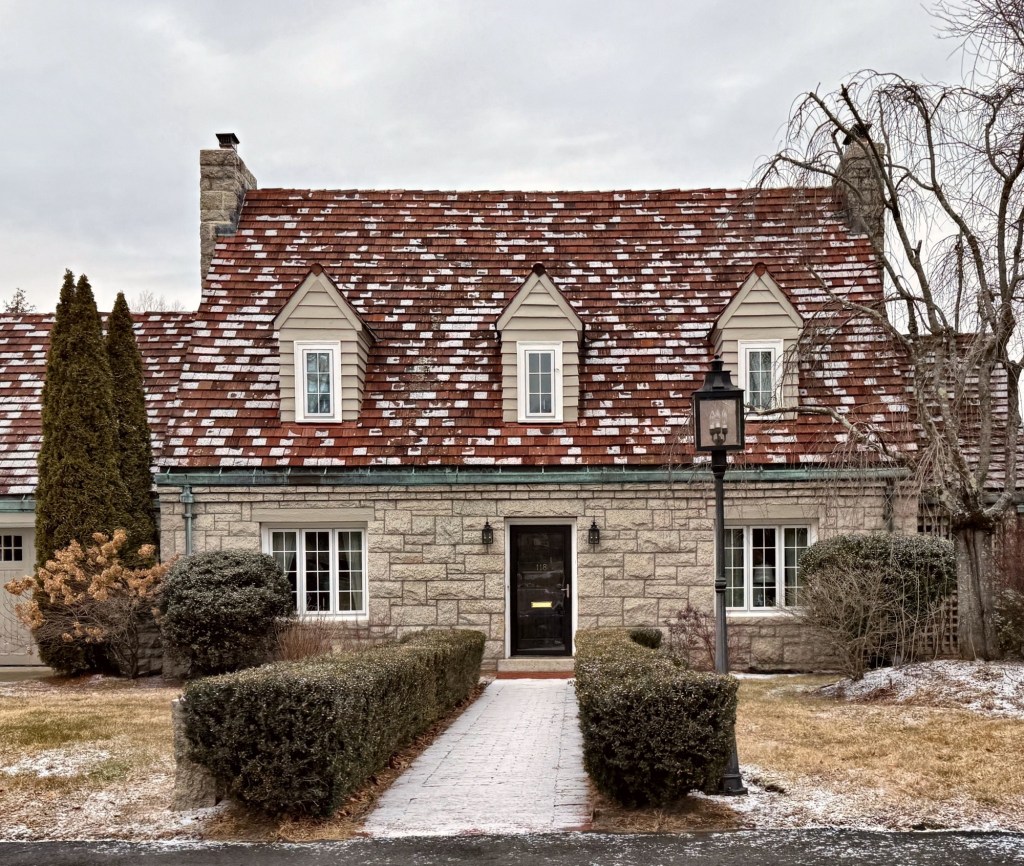
Dr. Byron Freeman Brown (1902-1962) was born in Maine and was educated at Bowdoin College before moving to Boston for medical school. After he graduated, he married and accepted a position as a doctor at Milford Hospital, not far from Hopedale, Massachusetts. Dr. Brown and his wife, Veronica, had this cottage on Adin Street built around 1930. Distinguished by its stone veneer walls and steeply pitched red clay tile roof punctuated by dormers and symmetrical facade, the Dr. Brown House is a great example of a Colonial Revival style house with Arts and Crafts flair built in the inter-war period.
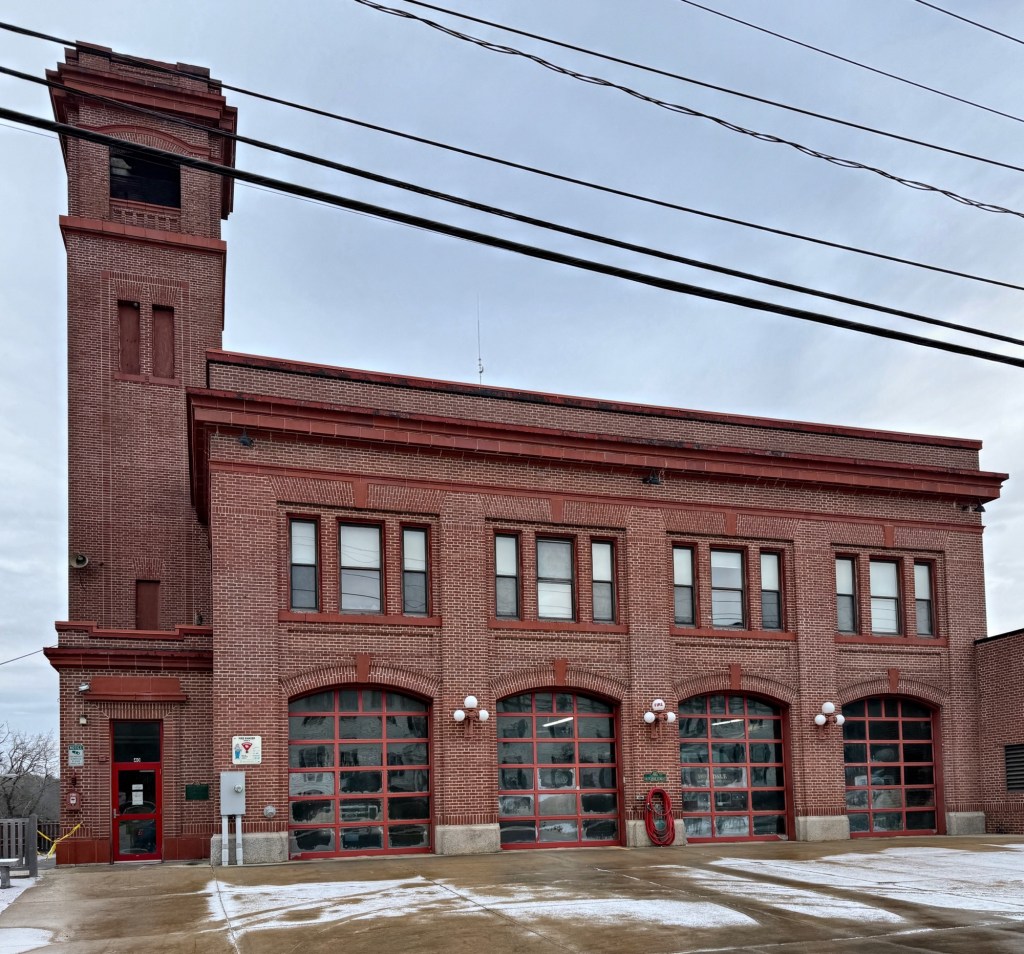
Hopedale’s Renaissance Revival Central Fire Station on Dutcher Street was designed by Milford architect, Robert Allen Cook, a favorite of the Draper Corporation, who had oversaw the design of the Draper Company Offices just five years earlier. Very similar in style and detailing to the Draper Offices, Cook created a fire station of brick and terra cotta with a monumental hose tower at the corner, all in the Renaissance Revival style. The building was largely funded by the company, who was by far the largest employer in town and had funded many municipal and institutional buildings in the community as part of the company town. As fire prevention was important for the Draper Corporation, they even funded some of the first fire trucks in Massachusetts, even for such a small community. The town has done a great job preserving this architectural landmark for over 100 years.
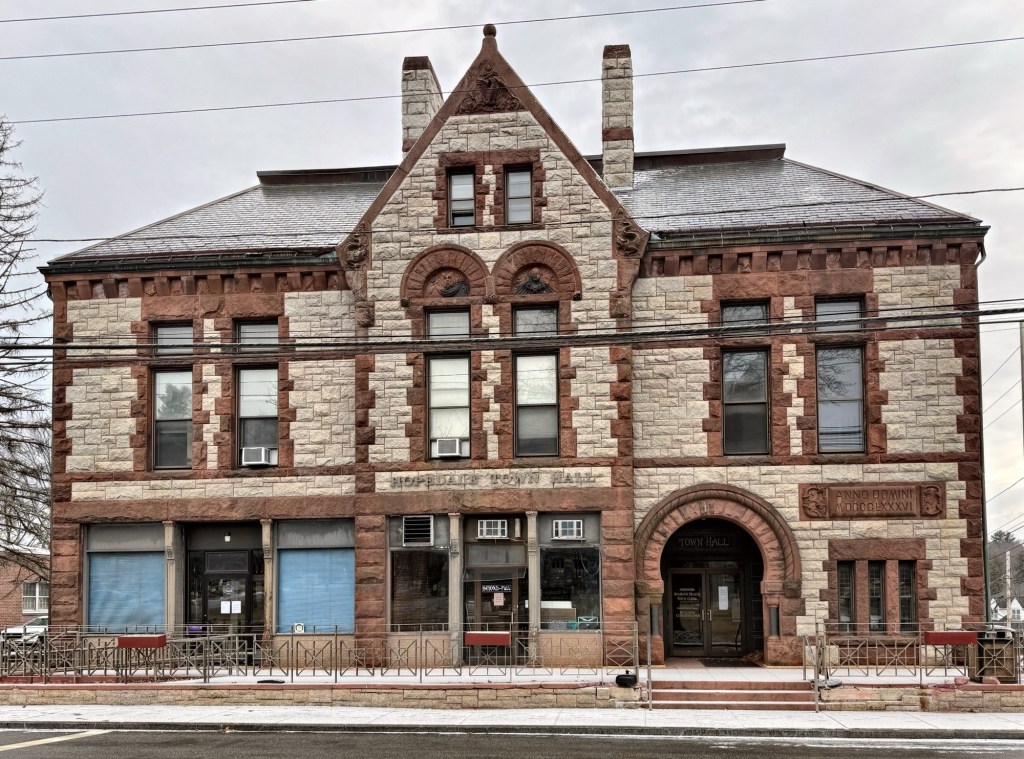
In 1886, when the Town of Hopedale was incorporated, George Draper, the head of the Draper Corporation, bankrolled $40,000 for the design and construction of a new town hall building for his new hometown. Designed to house municipal offices, a meeting hall, the town’s library, with ground floor commercial spaces, the building is the work of architect, Frederick Swasey. The Richardsonian Romanesque style town hall is constructed of Milford granite with contrasting trim in Longmeadow sandstone with a lot of great detailing and a prominent entry arch with engaged colonettes. Before the building opened, its donor, George Draper died, and the building was officially donated to the town by his heirs. After over 100 years as the town hall, in 2025, the town voted to sell the building as its restoration and updates to make the building fully accessible would be too expensive. As of the time of posting, the building’s future is uncertain, but the building really needs to be preserved!
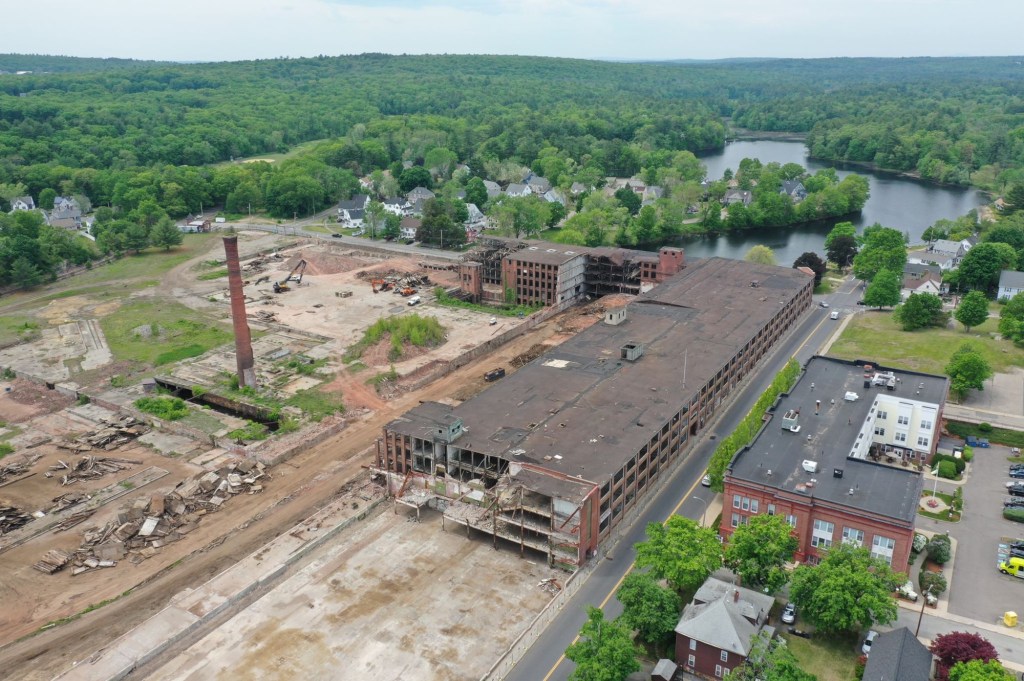
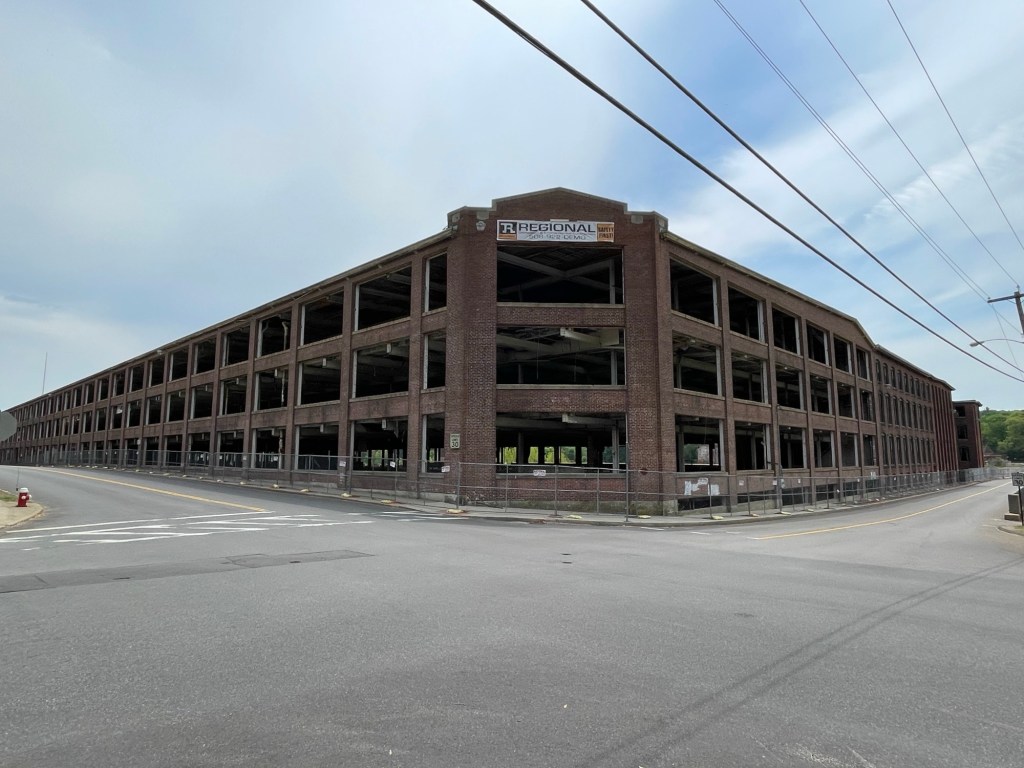
Hopedale, Massachusetts separated from Milford and incorporated in 1886. The “downtown” of the community encompasses industrial, institutional, and residential buildings in Hopedale Village, also known as Draper Village after the long-driver of the local economy, Draper Corporation. Hopedale was largely developed as a planned company town, and its architectural significance and ultimate preservation was largely due to the success of the Draper Corporation as majority owner until the 1950s. The Draper Corporation was originally a small operation in Hopedale in 1841 managed by George Draper (1817-1887), but grew exponentially thanks to his son, George Albert Draper (1855-1926), who had a passion for finding innovative technology to make the production of cloth more efficient. He led the company’s charge to become the nation’s leading producer of machines for the cloth-making industry. In the ensuing decades the factory village of Hopedale became a “model” company town under his leadership, with the business controlling every aspect of the town and worker life in a paternalistic program that extended beyond social structure to include architecture and urban planning of the village. The company developed hundreds of homes for workers, a town hall, library, churches, schools, a fire station, and recreational facilities, along with its factory complex at the center. In1892, with the advent of the Northrop Loom, Draper became the largest producer of textile machinery in the country. Due to their success at the end of the 19th century, much of the complex was built and rebuilt in fire-proof brick factory buildings with large windows to allow light and air into the facilities. Draper’s dominant position within the textile machine manufacturing industry began to erode shortly after World War II, and the company began to sell its company houses to their occupants as private homes in 1956. During the 1960s American textile machinery makers such as Draper lost their technological leadership to foreign manufacturers due to cheap labor, and the general American textile industry collapsed. The plant eventually closed in 1980, and sat vacant until it was decided by the local officials to raze the once great complex, as adaptive reuse was not feasible in the market for such large structures. The mill was demolished in the summer of 2021 and the lot at the center of town remains a brownfield site.
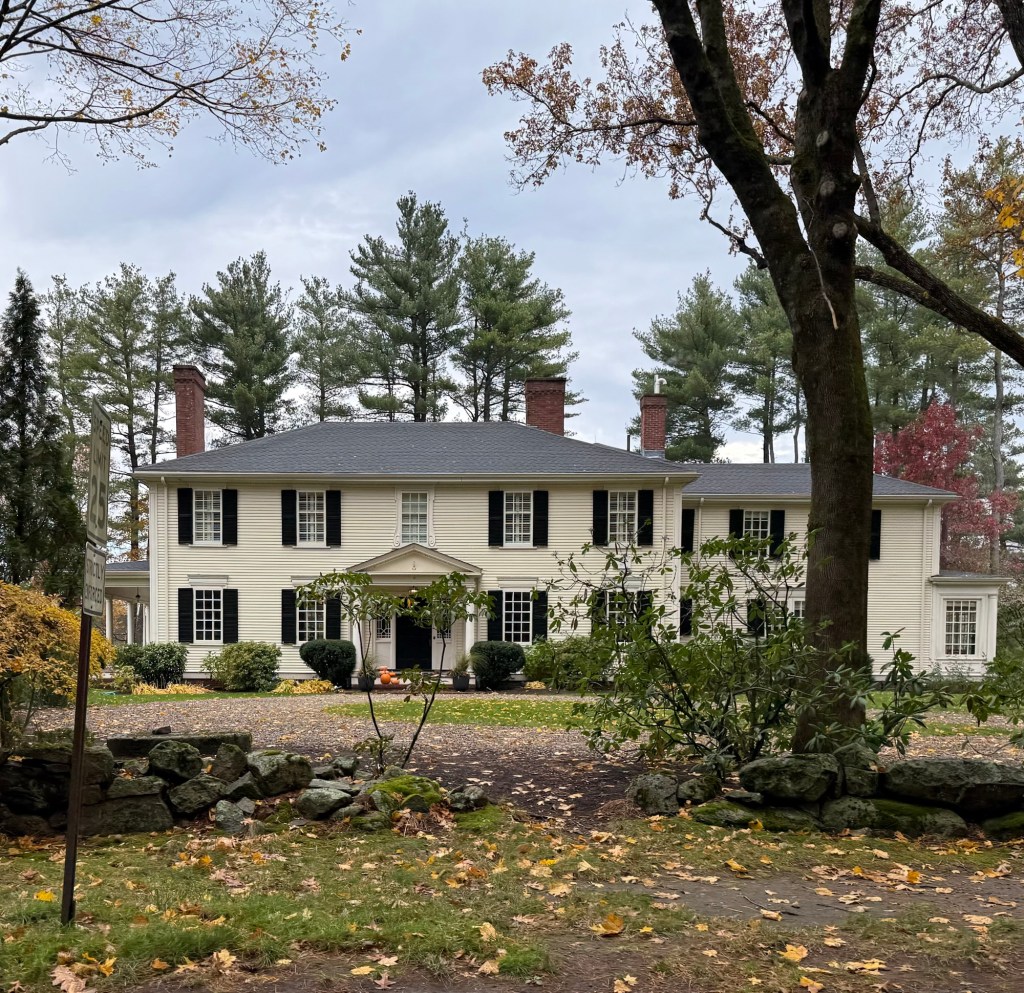
Built in 1805 by Isaac Gleason (Glezen), this Federal style mansion was later expanded in the early 20th century in the Colonial Revival style as Wayland became more of a wealthy Boston suburb. Located on the appropriately named Glezen Lane, this house was constructed for Isaac Glezen (1769-1843), who farmed the land here. Other family members built homes nearby. As Wayland shifted from rural community to a wealthy Boston suburb in the early 20th century, the property was purchased by Charles Ashley Hardy and his wife, Alice. The couple would sell the property in 1918, which comprised of 89-acres of land and a chauffeur’s residence, was purchased by Albert H. Beck, a New York banker. The property was later subdivided and consists of many other large, single-family homes.
 Buildings of New England