At the turn of the 20th century, the town of Sprague (including Baltic Village), had 1,300 residents. Just ten years later, in 1910, the population doubled, largely due to Frederick Sayles‘ purchase of the Sprague Mill and re-investment in the village’s housing and buildings. The need for new town offices and a fire station was evident, and this building in the village was constructed in 1911 to serve both needs. The old Town Hall and Fire Station is a late example of Romanesque Revival style architecture with the arched windows at the second floor and in the dormer. The space was outgrown again and the town offices relocated to a Modern building down the street after WWII.
This old gambrel-roofed home sits on the beginning of Pautipaug Hill Road just outside the industrial village of Baltic, in Sprague, Connecticut. The house’s history is a little unclear, but it shows up on historic maps as being owned by W. Giddings. This appears to have been Walter Giddings (1788-1854). Walter may have built or inherited this property from his father Nathaniel, who died in 1809. Walter married Laura Lucretia Fillmore in 1811 and they had four children. Laura died in 1827 at just 37 years old and Walter remarried within a year to Lydia Lathrop Ladd. The property remained in the Giddings Family at least into the second half of the 19th century. It was later “Victorianized” with two-over-two windows, side and front porches, and a octagonal bay window. The home has been suffering from deferred maintenance for over 15 years (as far back as Google maps goes) and was listed for sale, so here’s to hoping this old beauty survives!
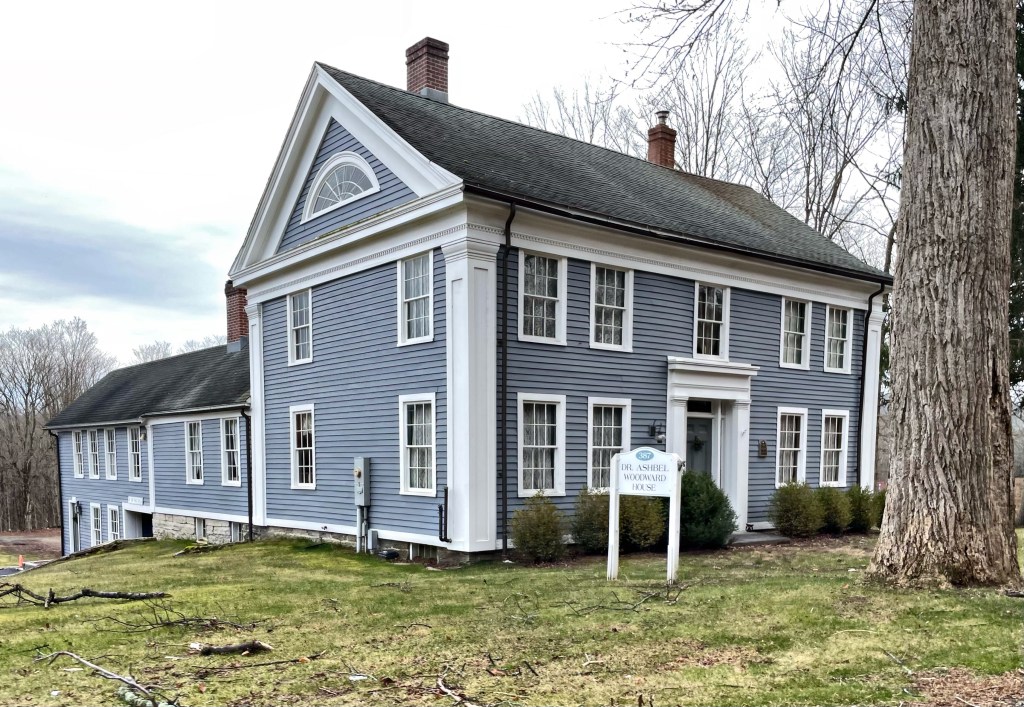
The Ashbel Woodward House in Franklin, Connecticut was built in 1835, on land purchased by Doctor Ashbel Woodward, a prominent local physician, a year prior. Woodward, was a graduate of Bowdoin College, and he began practice in Franklin in 1829, serving as the town’s primary medical practitioner until his death in 1885. Though in his 60s at the outbreak of the Civil War, Woodward perhaps lent his greatest service to his country when he served as a battlefield surgeon and medical facilities inspector for the Union army. Besides his work in medicine, Woodward collected literature and numerous artifacts pertaining to Franklin’s past and eventually wrote a book detailing the town’s history. The Ashbel Woodward House is an excellent example of the Greek Revival architectural style in a five-bay form. Interestingly, there are semi-elliptical windows in the pediment gable ends on the side elevations, seemingly a nod to the Federal style that was waning out of style at the time. The property is in use today as a museum, documenting the life of Dr. Woodward and the people of Franklin, Connecticut.
On the second floor of The Elms mansion in Newport, you will find two separate bedrooms for the owners Edward and Sarah Berwind, a husband and wife of high society. The larger of the two bedrooms was for Mrs. Berwind as you know what they say, “happy wife, happy life”. Mrs. Berwind’s bedroom has cream-colored woodwork covered with custom-woven celadon green damask with borders of coordinated green, gold, and cream material. She had an adjoining bathroom and her chambers had access to her husband’s chamber along with a shared fireplace.
The Dining Room of the Elms Mansion in Newport, Rhode Island, is represents the Gilded Age in all the best ways. The room sits just off the ballroom and like all of the other rooms in the summer residence of the Berwinds, it was designed by famed interior designer Jules Allard. The dining room was specifically to display a collection of early18th-century Venetian paintings purchased by Mr. Berwind from the Ca’ Corner estate in Venice (the Berwinds were avid collectors of 18th century French and Venetian paintings). The iconic coffered ceiling is not of wood, but of molded plaster, grained and painted to imitate oak. Each coffer is decorated with the winged lion of Saint Mark, the patron saint of Venice. Pour custom-made crystal chandeliers hang in the four corners of the room. At the end of the room is a stunning green marble, agate and onyx fireplace that is framed by a ceiling-high pediment supported by carved Ionic columns. Could you see yourself entertaining in this dining room?
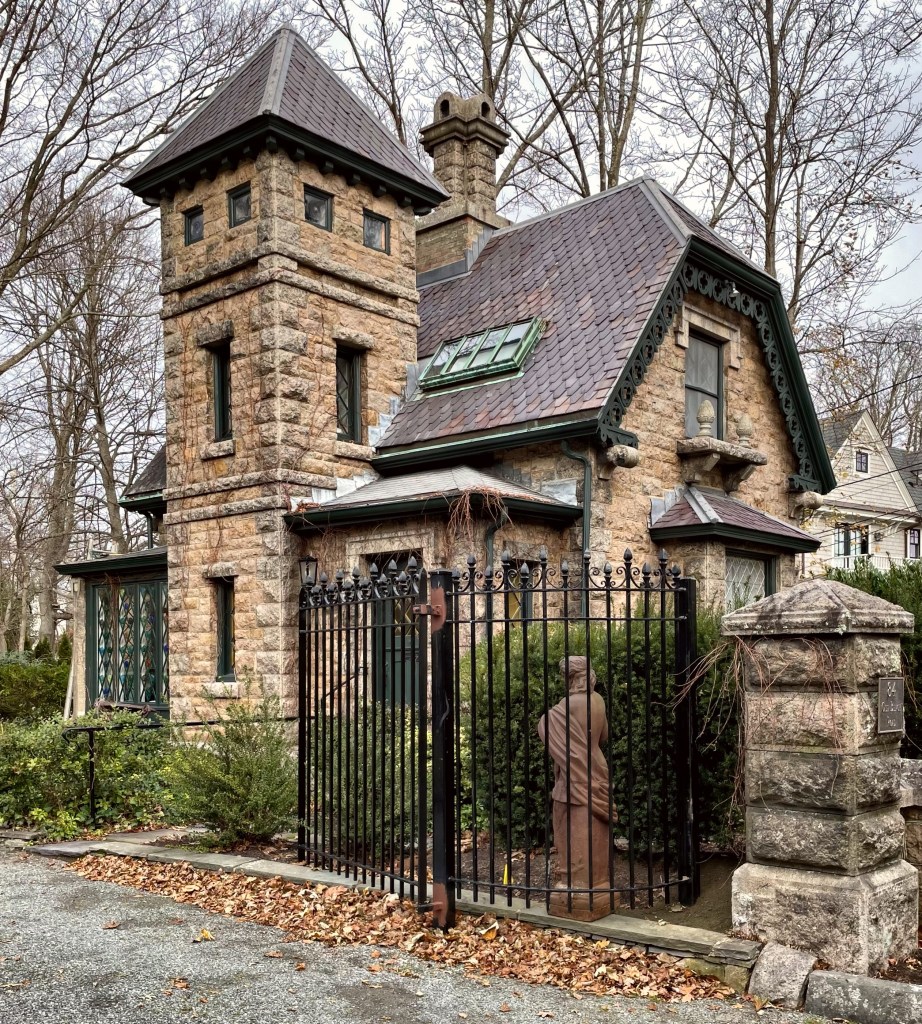
Located at the historic entry to Belair (last post), one of the largest estates in Newport, you would be greeted by this charming stone building, the Belair Gate Lodge. The building is symmetrically massed, 1½-story and built of rough-face-granite-ashlar, similar to the main house. This building can be classified as French Eclectic in style and was designed by Newport architect Dudley Newton, who also designed the 1870 Second Empire renovations to the main house at the same time for owner George Henry Norman. When the Belair estate was subdivided, the gate lodge was sold off as a separate unit, and is now a single family home, aka my dream home. There is something so enchanting about gatehouses!
Another of the less common Victorian-era houses on Nantucket is this beauty located right on Main Street, named after its first owner. Eliza Starbuck was the third child of Joseph Starbuck and Sally Gardner, a Nantucket family that had become wealthy in the whale oil industry. At 18, Eliza married Nathaniel Barney and despite their wealth, the couple shared a home with Eliza’s sister, Eunice, and her husband William Hadwen. The husbands became business partners, opening a whale oil refinery on the site of the current Nantucket Whaling Museum. This house was built around 1873 for Eliza Starbuck Barney after the death of her husband. Mrs. Barney is best known as an abolitionist, a temperance and women’s suffrage advocate, and a local genealogist. The home is a fine example of Italianate-style architecture. Note the round-arch or Roman windows and bracketed cornice typical of the style.
Colonial-inspired homes on Nantucket never will go away, and that is because the entire island is a local historic district! New construction, demolitions, and alterations to existing structures all need to be reviewed and approved on Nantucket, no easy task! This home was built in the inter-war period (before the historic district), when New Englanders still harkened back to the classics, Colonial homes. The house was built in 1939 for Annie Robb, and it was later purchased by artist couple Vladimir Kagan and Erica Wilson. Vladimir had a really interesting life. A cabinetmaker’s son, Mr. Kagan came to the United States at 11 after fleeing Nazi Germany with his family. He trained at his father’s New York workshop and by the 1940s was producing his own designs. One of his first orders was a set of tables and chairs for a delegate lounge at the fledgling United Nations! Meanwhile, across the English Channel, a young woman named Erica Wilson came into the world in 1928 in the town of Tidworth, England. Her father was in the military and the family moved to Bermuda soon after Erica’s birth. A drawing prodigy, Wilson “translated her drawing techniques into needlework,” Illya said. Needlework became her artistic focus and she graduated from the Royal School of Needlework in London. The duo lived in this home as a summer respite, where they could hone their artistry and skills. Their son, Ilya Kagan (also an artist, of course) also stayed in the home and still resides on the island. Love it!
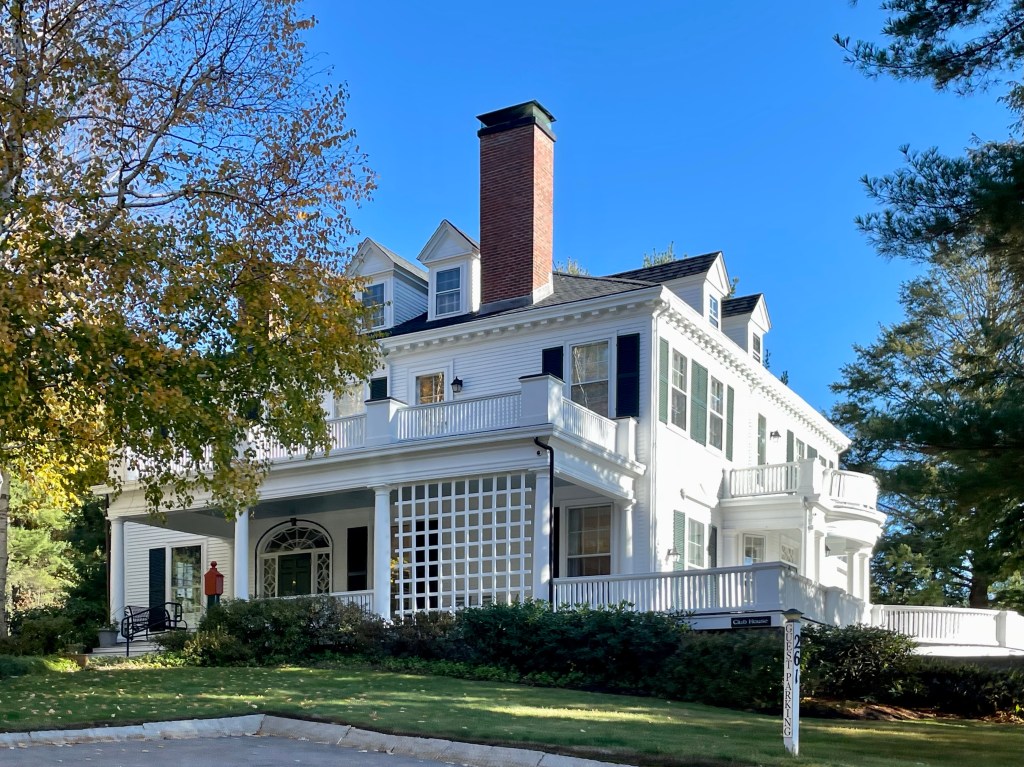
Ellen Banning Ayer (1853-1918) of Minnesota married Frederick Ayer in 1884 and her life completely changed. Frederick Ayer was one of the richest men in New England and he was involved in the patent medicine business, but is better known for his work in the textile industry. After buying the Tremont and Suffolk mills in Lowell, Massachusetts, he bought up many textile operations in nearby Lawrence, combining them in 1899 into the American Woolen Company, of which he was the first president. The couple had at least three houses in Lowell, Boston, Pride’s Crossing and had three children (one of whom Beatrice, later married the famed general George Patton). As the Ayer Mansion on Commonwealth Avenue was being built, the family was looking for a country house near the city. One year, Frederick asked Ellen what she wanted for a gift and she said “roses”. Frederick purchased an old farmhouse on Nahanton Street in Newton and had greenhouses and a stable built immediately, followed by a Colonial Revival country house for his wife Ellen. The mansion held lavish parties for the Ayers, who loved to entertain and it was passed down to their eldest daughter Katharine Ayer Merrill. The property was purchased in the 1920s by Clive and Mona Lacy for decades until it sold in the 1980s. The large site was eyed for redevelopment. The architectural firm of Dimella Shaffer was hired, and they restored the Ayer House, and designed forty residential units on the site, all tucked into the woods gently peering out here and there. The old Ayer House remains as the clubhouse of the Ledgebrook Condominiums Association.
After the Quabbin Reservoir was filled (more on the history in my last post), the cleared land and body of water, with its over 181 miles of coastline, was seen as not only an engineering marvel, but a place of natural beauty and splendor. Upon a rise in the land and the edge of the reservoir, they saw a perfect location to build a tower that could serve many purposes. The Metropolitan District Water Supply Commission hired the firm of Densmore, LeClear & Robbins to design a tower that would serve as a radio tower, fire station and observation tower to view the reservoir. The structure, while designed in the Arts and Crafts mode, is of modern construction and is comprised of two main parts. The lower portion, is constructed of stone and concrete, with metal casement windows, granite lintels and sills and bronze doors. This section was used for radio equipment. The interior has glazed tile walls and cement floors. The six-story tower has five floors of metal and concrete stairs. At the top is a two-level, glass enclosed observation tower.
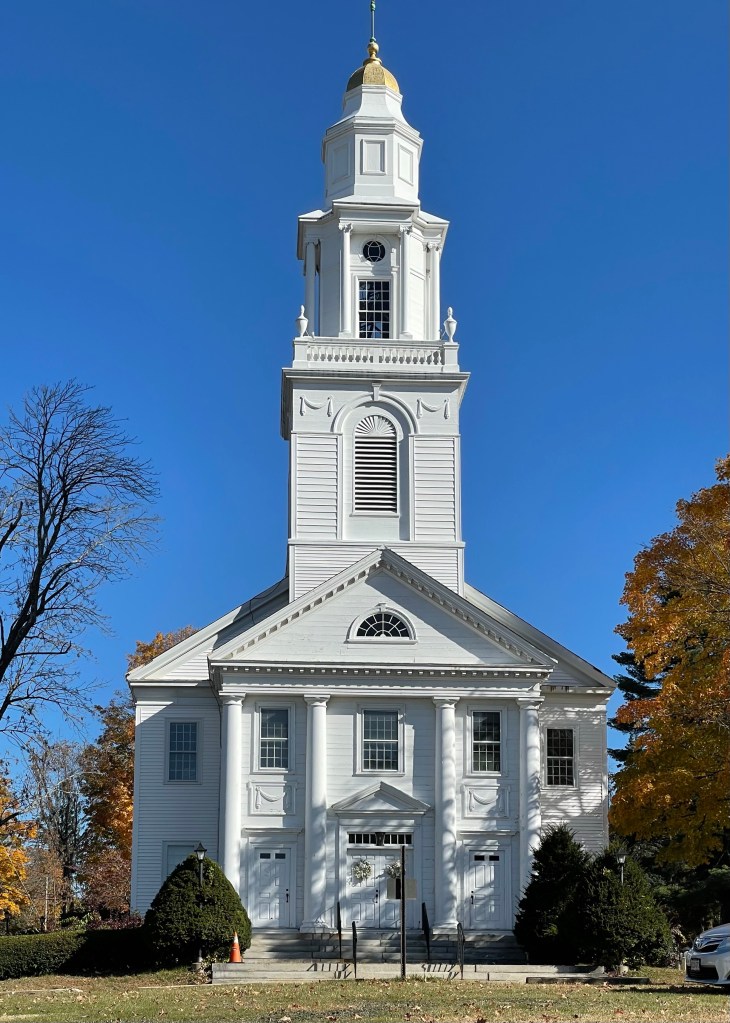
The East Congregational Church in Ware was established in 1826, spurred by the industrial growth and subsequent immigrant population boom in the village of Ware, Massachusetts. The Ware Manufacturing Company, a major player in town, contributed $3,000 to towards the construction of a new congregational church in the village, which was matched by residents. The original church was built in 1826, following plans prepared by Isaac Damon, a noted church architect from Northampton, in the Federal style, popular at the time. In 1925, just a year before its centennial, the church burned to the ground. Plans to rebuild the church formulated immediately. Due to changes to the neighborhood since 1826 (notably the construction of tenement housing adjacent to the church), the decision was made to locate the new church setback from the street. Plans were drawn by Frohman, Robb and Little of Boston for the new building, which was to be Federal Revival, a nod to the former church building. The grounds in front were landscaped by the prominent landscape architect Arthur A. Shurtleff. After WWII, population decline and dwindling membership of some churches in town required a few congregations to consolidate, creating a union or united church here. The United Church of Ware came into being in 1969 when the East Congregational Church, United Church of Christ and the Ware Methodist Church, United Methodist Church joined together and became one federated church with ties to two denominations.
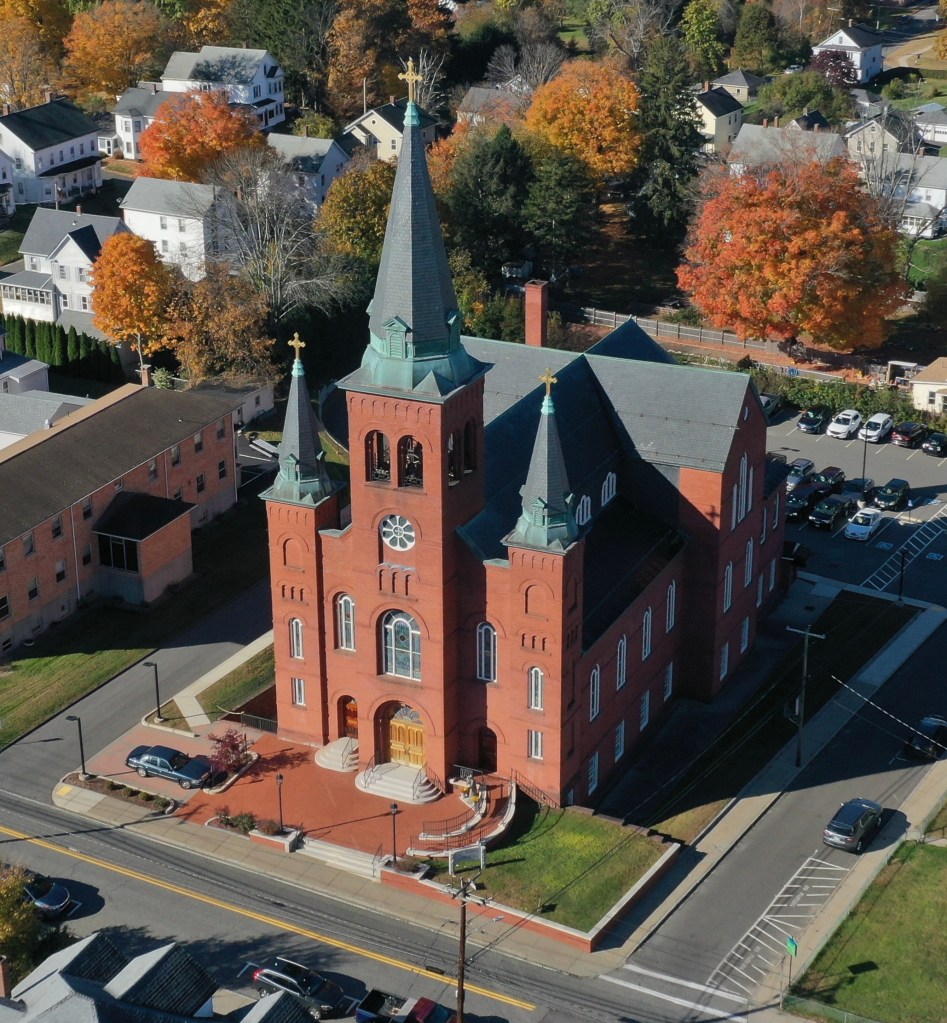
As the industrial town of Ware developed into a manufacturing powerhouse in Central Massachusetts, European immigrants moved to the town for work in the textile mills. Polish workers were a large proportion of this workforce in Ware, and they sought a place of worship, establishing St. Mary’s. Polish residents initially worshiped in the basement of a church in town until 1906 when a lot was acquired just south of the mills. The Archdiocese seemingly noted the desire for a church and possibly bankrolled some of the building and design costs for the new congregation. The late Romanesque Revival church building is stunning inside and out, and I would love to learn the architect for the building. Does anyone know?
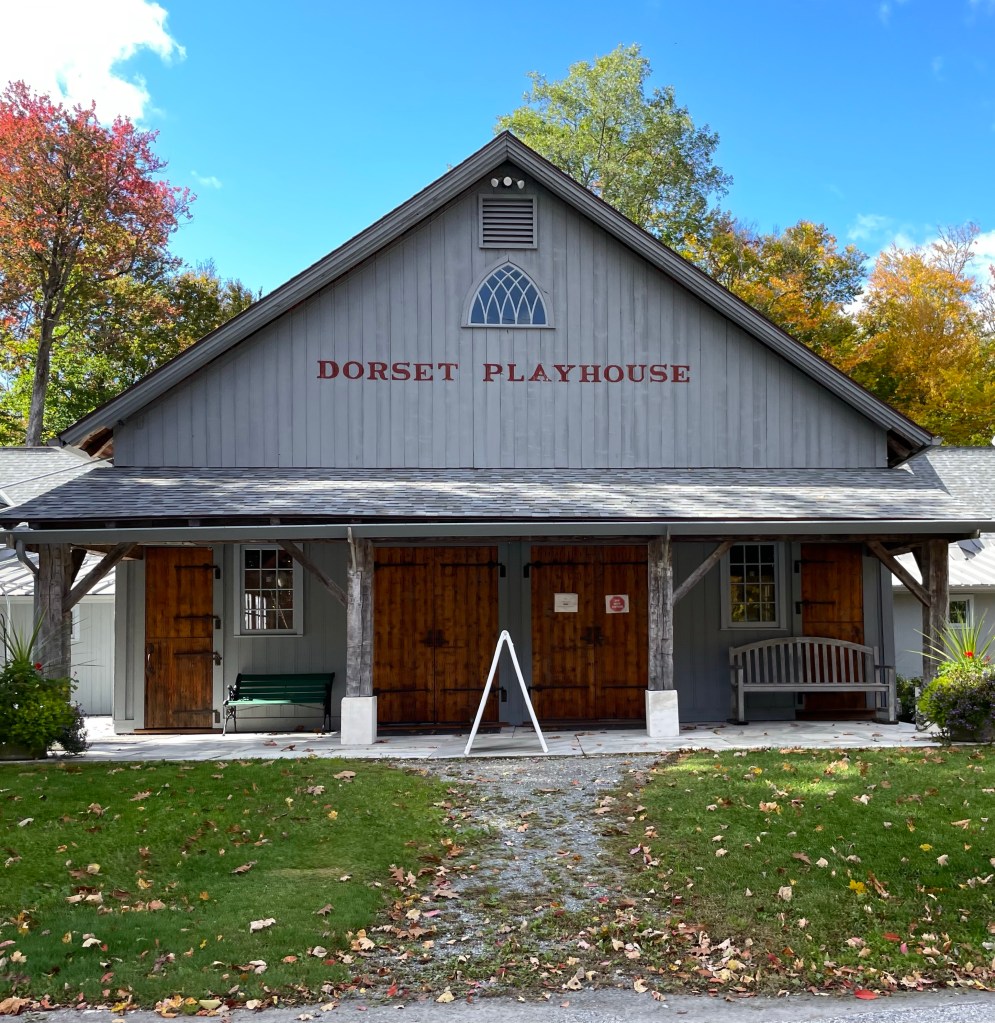
During the spring of 1927, Mr. and Mrs. Edward Goodman, devotees of the performing arts, were able to interest a number of Dorset residents in producing a play. In April 1927, a three-act play entitled ’39 East’ was presented in the Dorset Town Hall for the benefit of the PTA and was received with great enthusiasm. From this, a movement took off. Many summer residents and artists in town formed a group, the Dorset Players, who would continue performances for the town. They realized that the space in Town Hall was not suitable nor permanent enough for the goals of the group. May Goodman purchased land at the edge of the village and the group held two years of performances in nearby towns to gather funding to erect a playhouse. Ernest West, a member, offered two barns on his property in town and it, plus one more barn, were incorporated into the new playhouse. The auditorium was built so that the weathered sides of the barn boards were on the inside and hand hewn timbers 12 by 12 inches were used to achieve a rustic effect which draws many favorable comments from those visiting the Playhouse. It remains a cultural center of the town and greater region to this day.
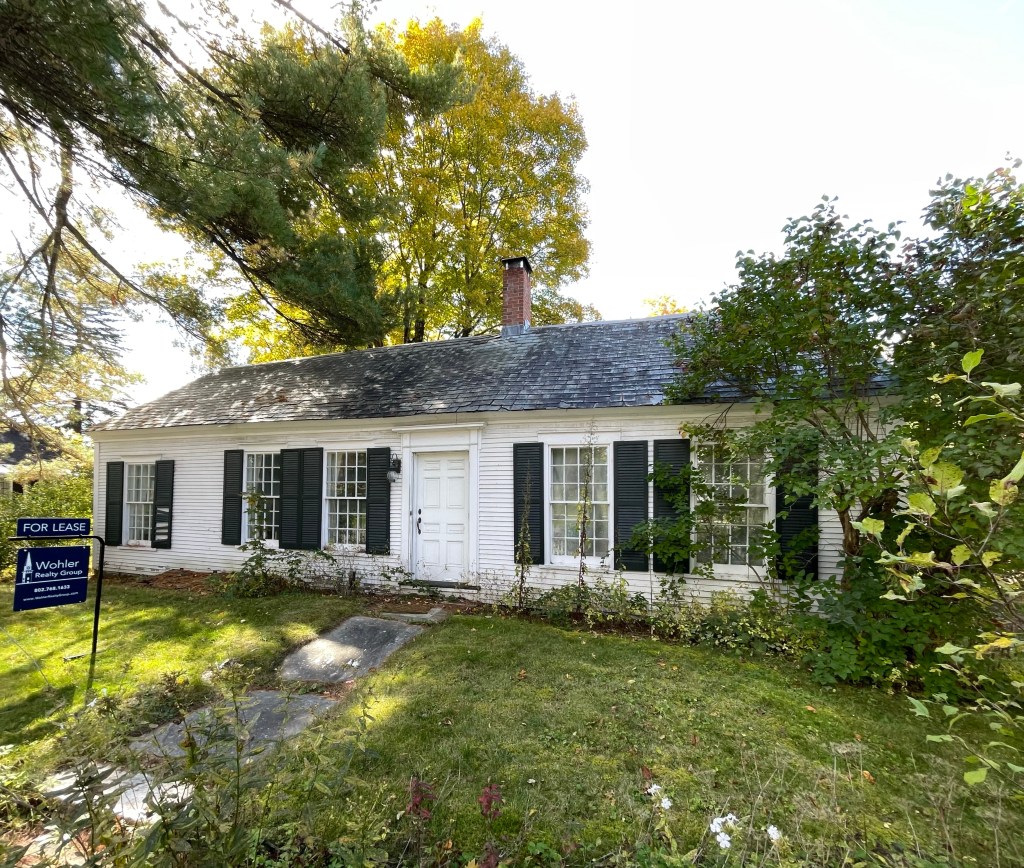
One of the oldest extant houses in Dorset, Vermont, this gorgeous Federal Cape house adds so much charm to the village. The house is possibly the homestead of James Abel Hodge (1756-1826) who settled in Dorset from Connecticut after serving in the Revolutionary War. Hodge settled in the town when it was but wilderness, opening up a store in the village and helping the infant township grow into a thriving marble manufactory. This house was later owned by stonecutter I. W. Dunton and after, by “Grandma” Annette Weeks (1841-1925). Like many Cape houses, it probably evolved, adding wings to the right and left as the family inside grew.
In 1816, the turnpike to Manchester, Vermont was completed and ran through the small town of Peru. As a result, inns and taverns were built, and the young village of Peru began to grow, with farming and lumber businesses being the most common employment in town. A village school was built here and in the town’s other school districts. By the end of the 19th century, the lure of moving to the Western U.S. and cities for industrial work caused some population decline in Peru, and a larger, consolidated school was built in the town village. This schoolhouse on the hill was constructed in 1864, replacing the former one-room schoolhouse on the lot. The school consolidated again in the mid-20th century when further population decline necessitated a school district encompassing Peru and nearby towns. This building was later converted to town offices, a use that remains to this day.
The good news is that the town’s population is seeing a resurgence, led by both tourism and the Bromley Mountain Ski Resort as an anchor.