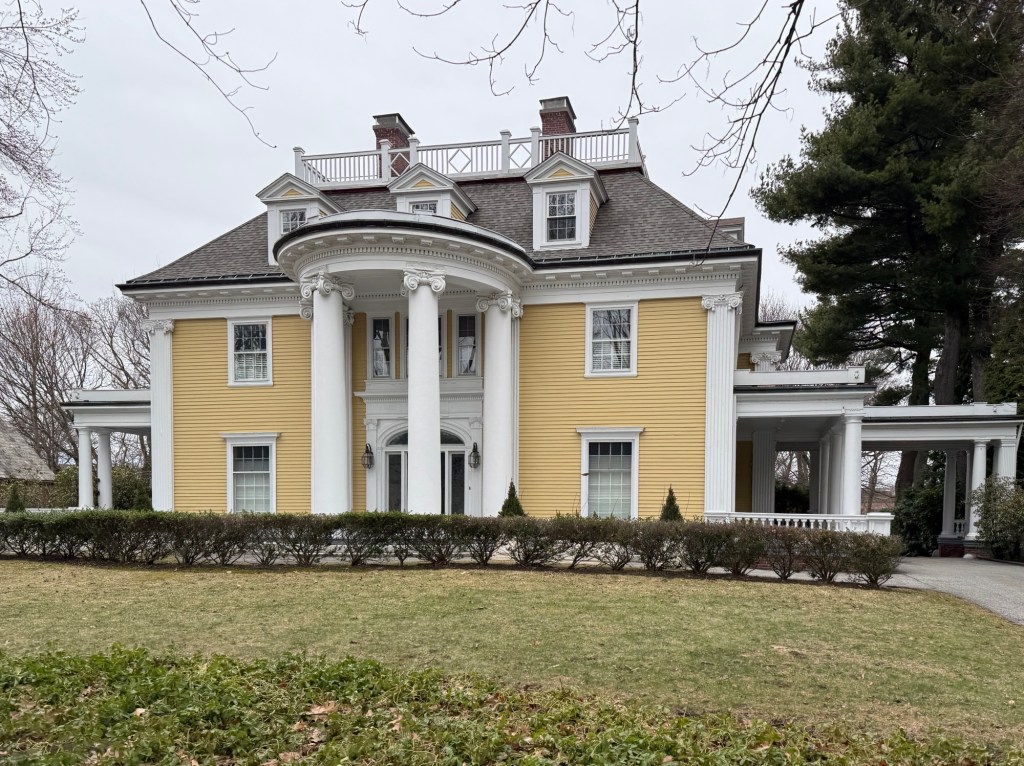
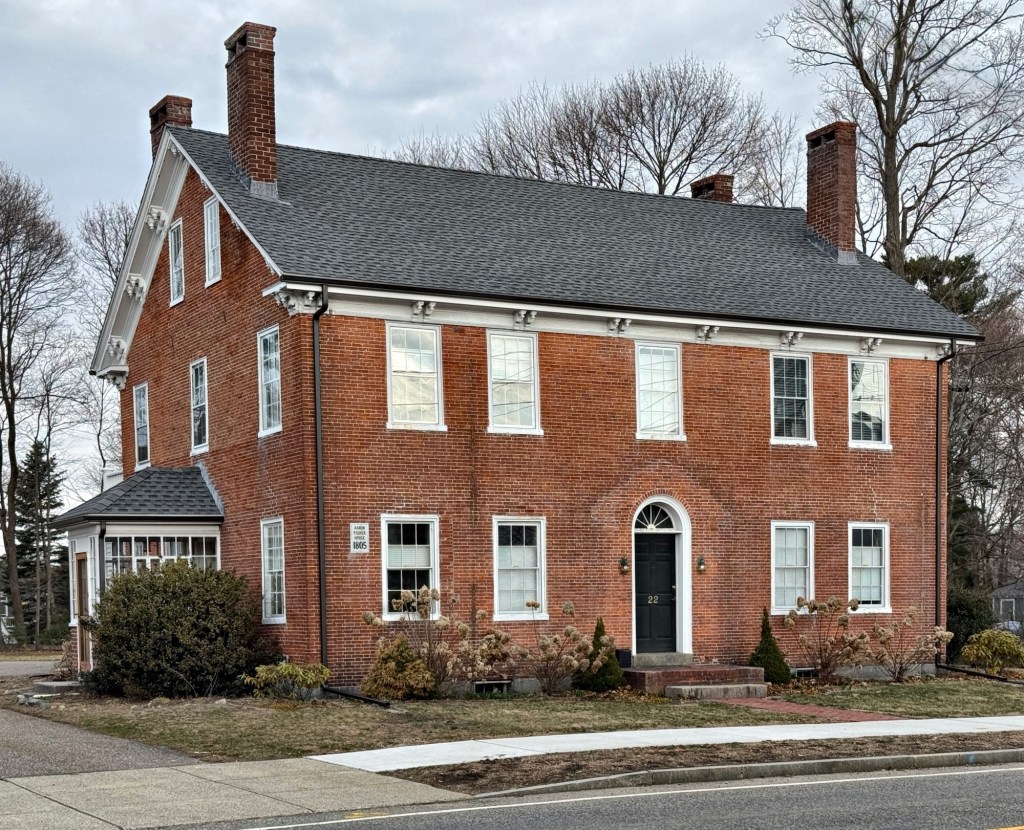
Silas Peavy (1858-1939) was born in Waterville, Maine, and with his brothers, Gustavus and Leopold, worked at his father’s clothing and merchandise store. The family moved to the Boston area and established J. Peavy and Brothers, continuing the family business in Boston with locations in New York. In 1904, Silas Peavy purchased a house lot on Kent Street and hired the architectural firm of Hartwell & Richardson to design a house there for his family. Peavy likely moved to this neighborhood as it became a Jewish enclave around the turn of the 20th century. The Silas Peavy House is an excellent example of the Neo-Classical style with symmetrical facade, porte cochere on the side, and monumental elliptical portico supported by two-story Ionic columns.
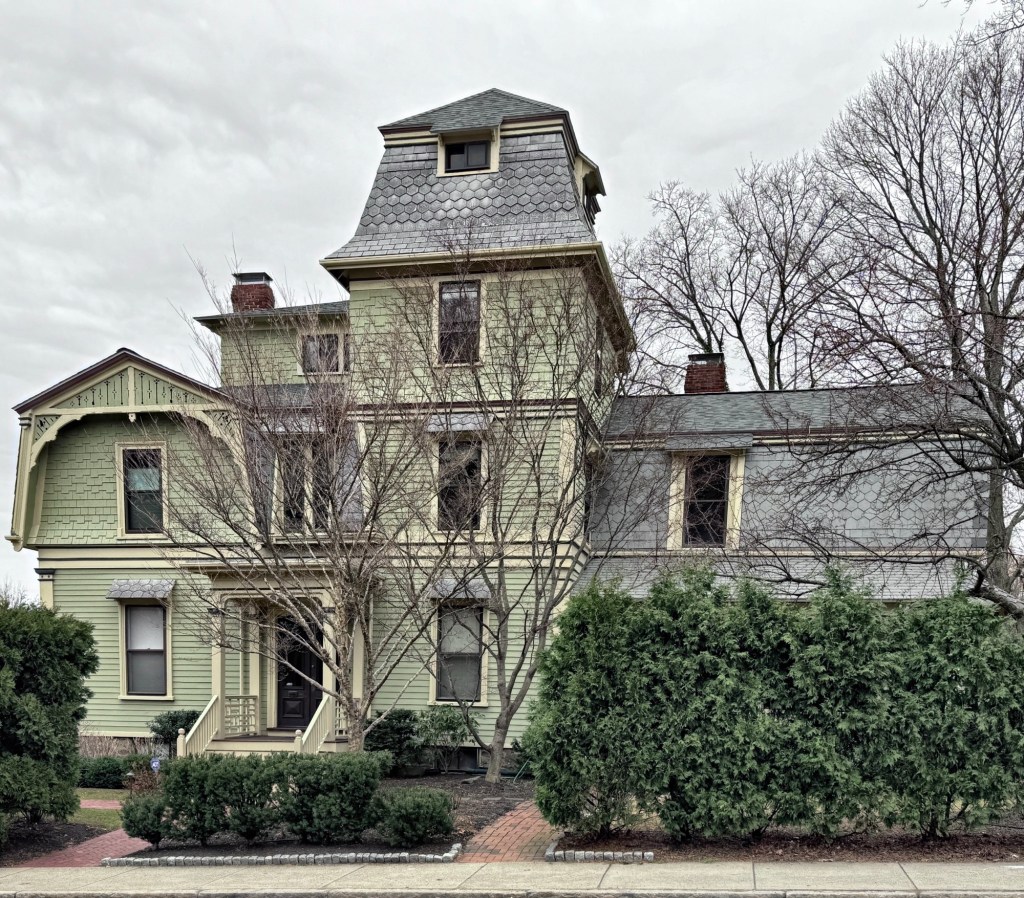
In 1868, James Wilkinson Clapp (1847-1931) married Eliza Tuckerman and they soon after moved into this large Victorian-era house on St. Paul Street in Brookline. James was the second son of Otis Clapp, a politician, publisher, and promoter of homeopathy. Otis Clapp operated a large homeopathic pharmacy, Otis Clapp & Son, which continued as a business after his death, evolving to encompass different areas of medical technology. It was one of the oldest-operating pharmaceutical manufacturers in the United States by the time it was acquired by Medique in 2008. James Clapp was also a medical doctor and at the young age of 22, acquired a house lot here on St. Paul Street and had this large Second Empire style residence built for his family. Dr. James W. Clapp worked as a pharmacist and taught courses at the Boston University School of Medicine. He spent summers at his gentleman’s farm in Bolton, Massachusetts, until his death in 1931. The Clapp House was later used as a doctor’s residence and office and a nursing home, suffering from neglect, but was ultimately restored in the early 21st century.
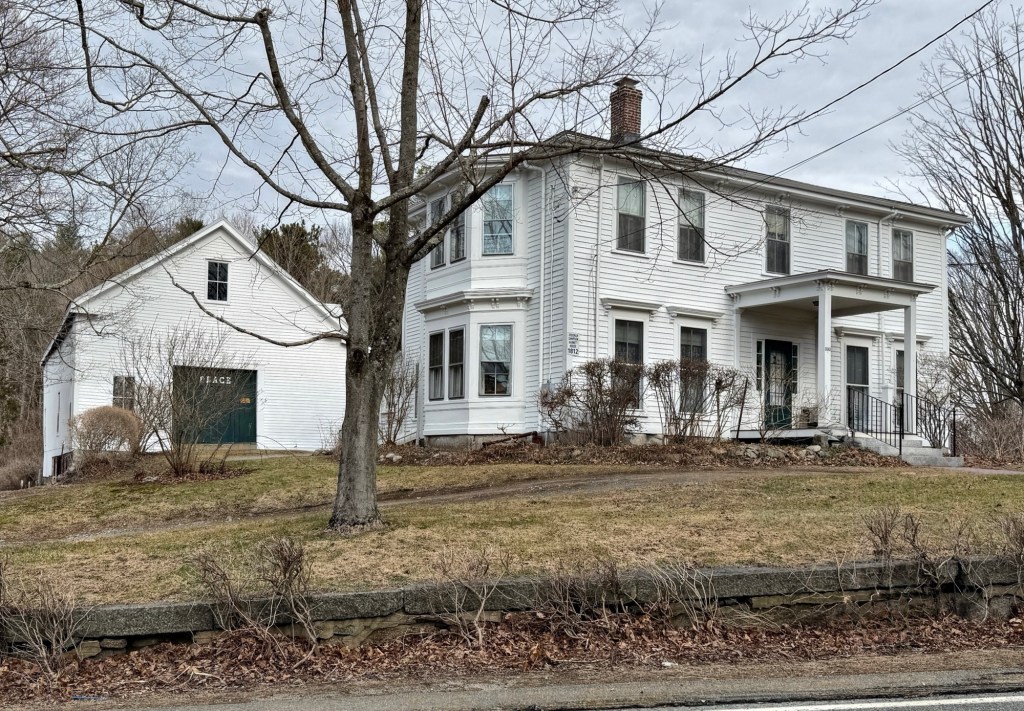
Deborah Sampson (1760-1827) was born in Plympton, Massachusetts, and after a troubled childhood, she worked as an indentured servant until the age of 18. She subsequently worked as a teacher during the summer, though she had little in the way of formal education. In the early 1780s, Deborah tried to disguise herself in men’s clothing and enlist in the military to fight against the British forces. She was rebuffed but tried again under the name Robert Shirtliff (sometimes spelled Shurtleff) and this time was successful. Deborah was described as being exceptionally tall, plain looking, and masculine in appearance and mannerisms. She spent at least 17 months as a combat soldier and participated in several skirmishes and sustained multiple injuries. She was reportedly hit by musket fire in the summer of 1782 but refused medical treatment for a leg injury due to fears that her true identity would be discovered. Sampson is said to have extracted one piece of shrapnel from her leg by herself; another remained in her body for the rest of her life. Sampson’s time as a Revolutionary fighter came to a halt a few months before the end of the war, after she fell ill in Philadelphia and a doctor realized that Shurtleff was, in fact, a woman. Sampson received an honorable discharge and went back to Massachusetts. She married Benjamin Gannett (1757–1837), a farmer, on April 7, 1785, and the couple moved to this farmhouse in Sharon, Massachusetts, where she lived the remainder of her life as a farmer’s wife. After Deborah Sampson died at the age of 66, her husband petitioned Congress to receive a pension as the widower of a Revolutionary veteran. A committee ultimately decided to award him the money, concluding that the war had “furnished no other similar example of female heroism, fidelity and courage.” She was the only woman to earn a full military pension for participation in the Revolutionary army. The Deborah Sampson Gannett Farmhouse is a private residence.
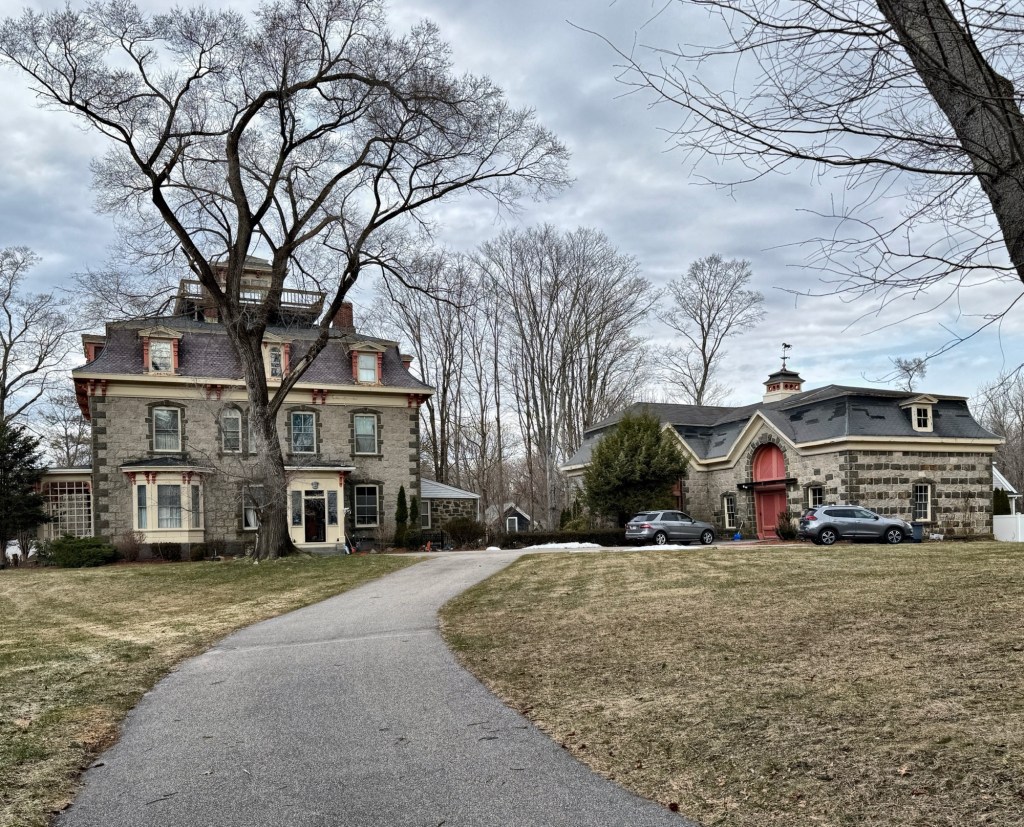
Stoneholm Manor is a historic estate tucked away in Sharon, Massachusetts, that remains one of the finest examples of a Second Empire style mansion and carriage house built of stone in New England. Stoneholm was built in 1865 for Horace Augustus Lothrop (1828-1898) within a year of his marriage to second wife, Sarah Gorham Swain. Horace A. Lothrop was a manufacturer and businessman with factories in Sharon and nearby towns and he invented innovative tools like hoes and wooden shanks for foot support in shoes and boots. He was also engaged in politics, serving in the state legislature and on the local school board. His country estate in Sharon is unique for its construction of locally quarried rock-face granite walls, fine mansard roof with cupola, and matching L-shaped carriage house, all in great condition. Stoneholm was listed on the National Register of Historic Places and remains a private residence.
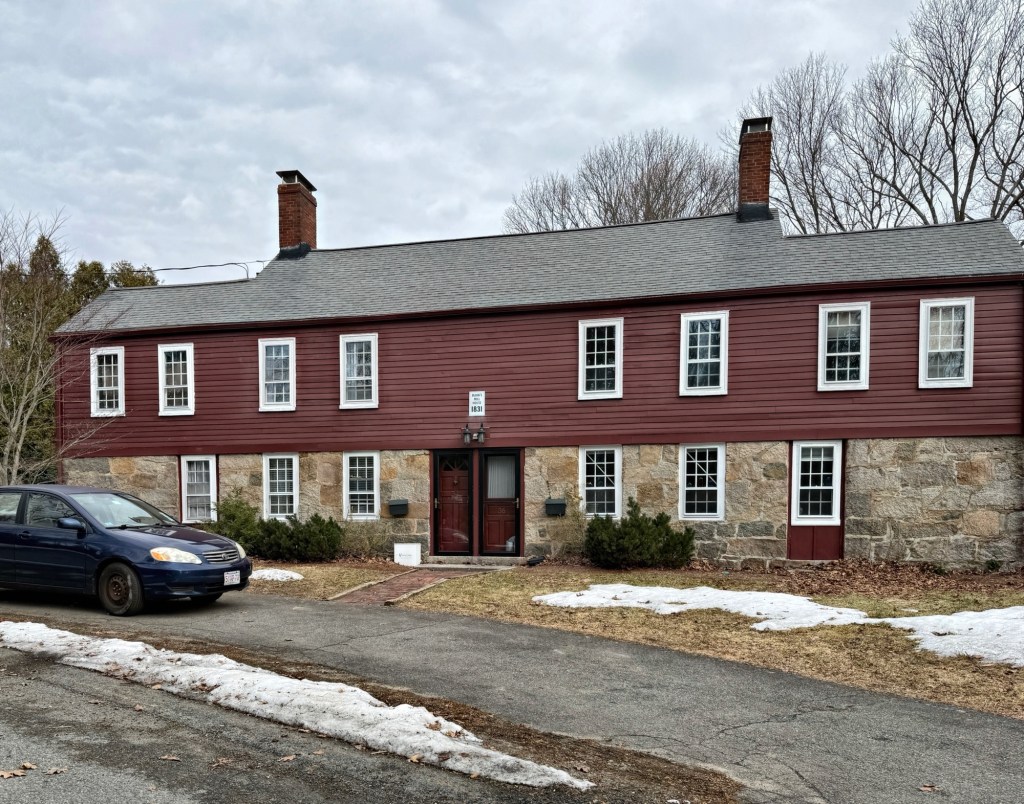
Located on the aptly named Mann’s Hill Road in Sharon, Massachusetts, this historic double-house was built in 1831 as worker’s housing affiliated with the former Mann’s Cotton Mill. The first Mann’s Cotton Mill was constructed in 1831 by George Harvey Mann on Devil’s Brook on the East Branch of the Neponset River. George Harvey Mann (1793-1847) bought the water privileges from Joseph Warren Revere, the son of Paul Revere, and built a factory. The business carried on until a fire in 1840 destroyed the factory and it was rebuilt by George and his son, George Rodney Mann. As part of the original mill complex in 1831, a series of double-houses were built nearby for workers at the mill, making them always available for long days at work. The Mann’s Mill closed in 1900, and it was destroyed by fire in 1919. The double-houses like the one seen here, were sold by the heirs of the family at the turn of the 20th century and feature a stone base and wood frame second floor.
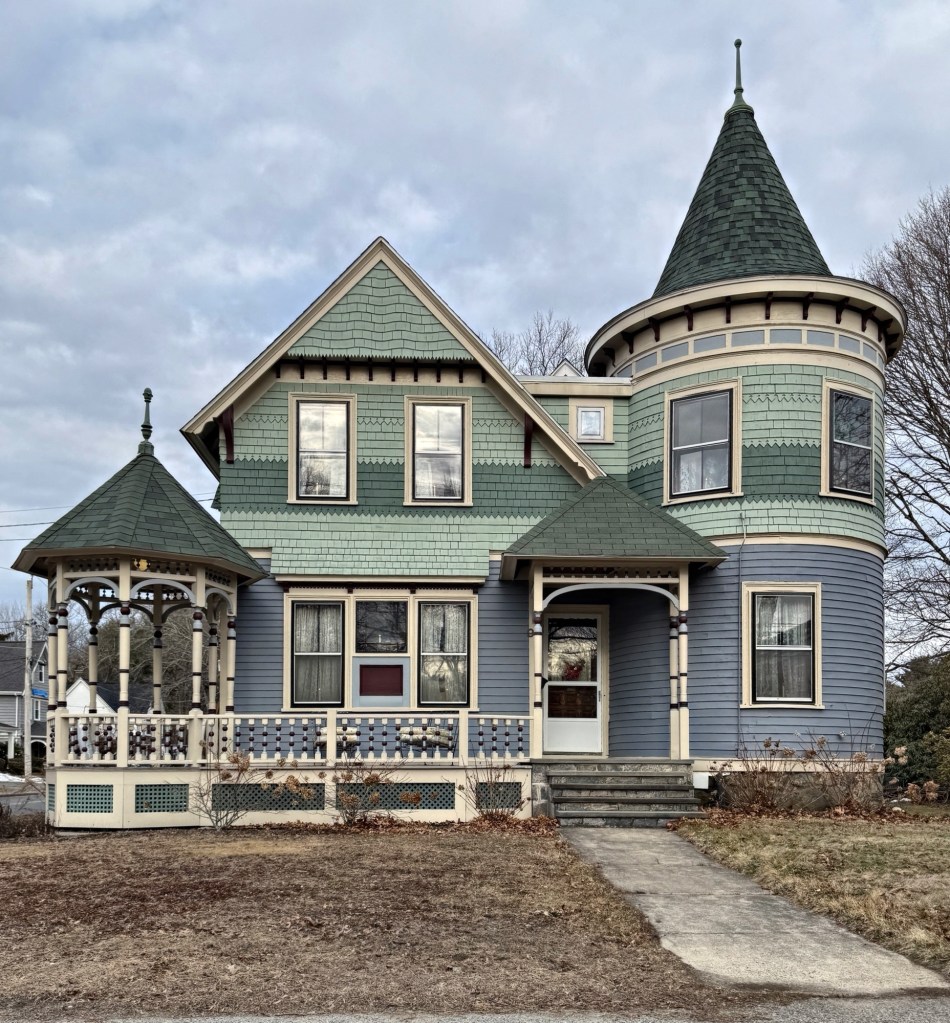
The Timothy Quinn House on South Main Street in Sharon, Massachusetts, is an extravagant example of the Queen Anne style that maintains its flourish and ornate details. The residence was built in 1892 for Timothy Francis Quinn (1863-1934), a first-generation Irish resident who owned and managed a shipping business with his brother, John. Timothy Quinn was active in local affairs and with the local Catholic church and historical society. After his death in 1934, the property was inherited by his wife, Elizabeth, and later by their daughter, Esther. Architecturally, the Quinn House has an irregular plan and features varied siding, brackets, a tower capped by a conical roof, and elaborate porch, all painted to highlight the many unique details.
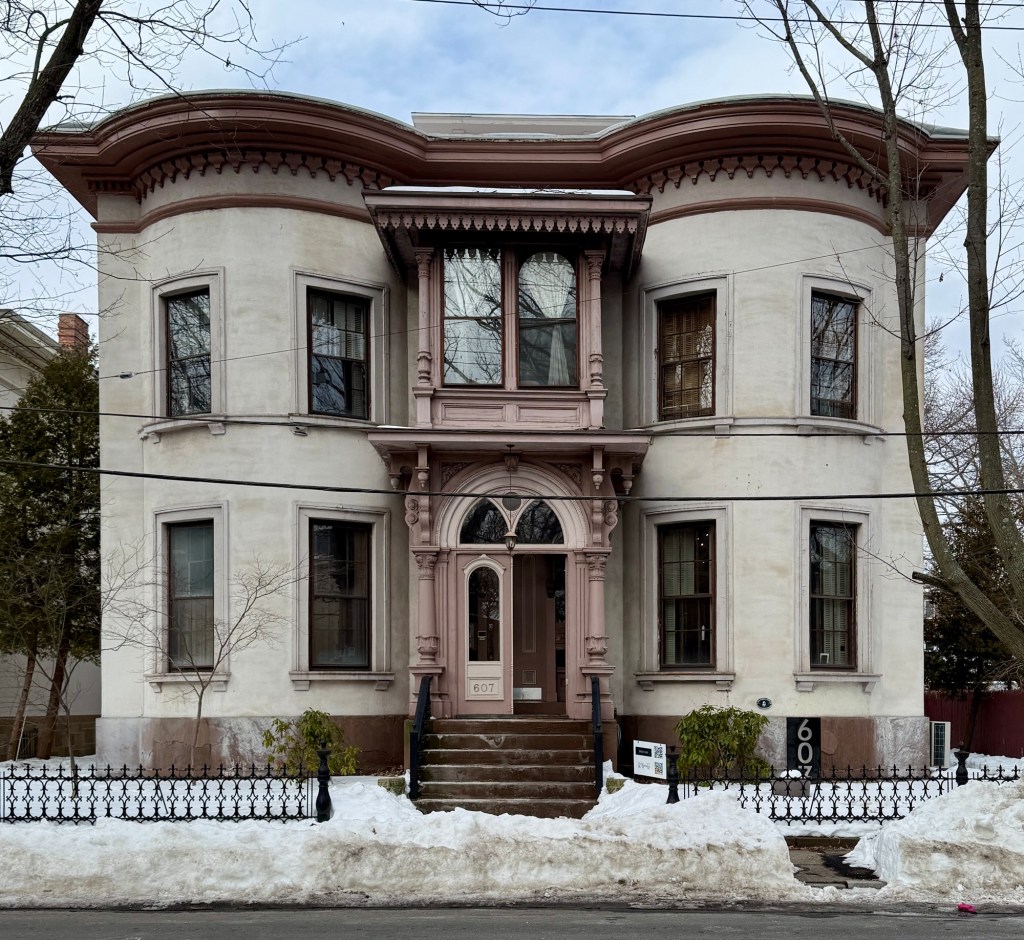
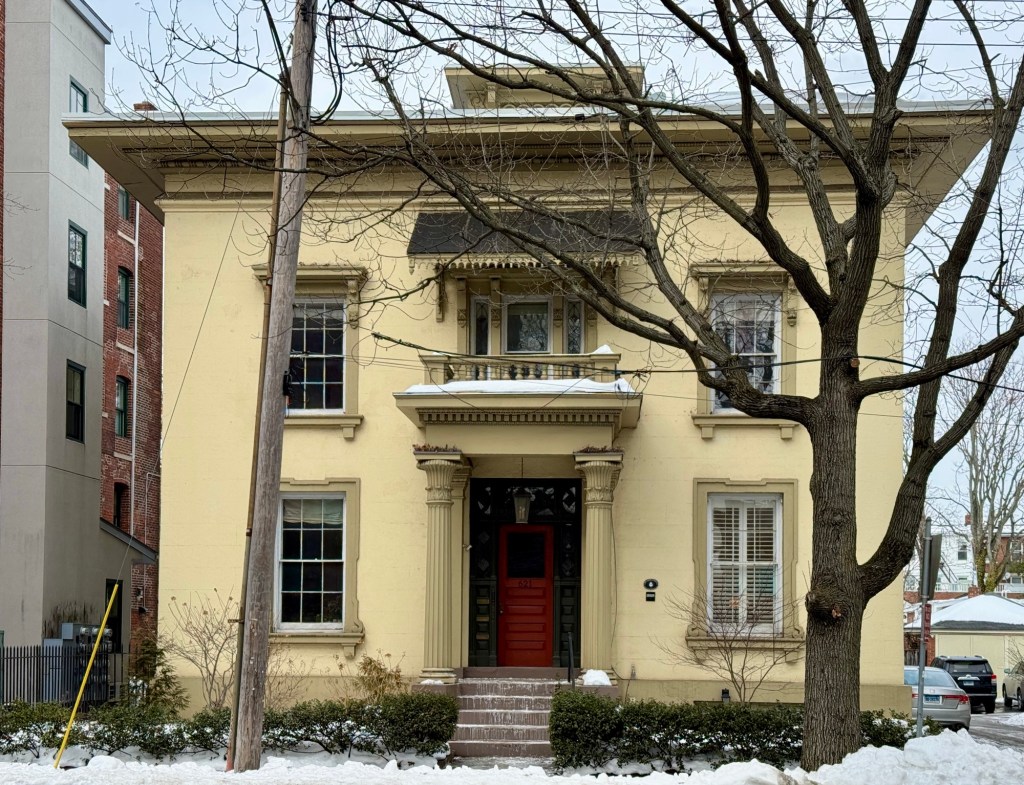
Nelson Hotchkiss was a New Haven lumber dealer and developer in the Wooster Square district and had this stately home on Chapel Street built for his family. While the architect is not confirmed, it is probable that the residence (along with neighboring homes also developed by Hotchkiss) was the work of Henry Austin, who partnered with Hotchkiss on developments in New Haven and Trenton, New Jersey. The Nelson Hotchkiss House was built in 1850 and is an excellent example of Italianate style with boxy form, broad overhanging eaves, brick walls covered with stucco and Austin’s signature Greek Doric columns with fluted shafts and foliate capitals. The house maintains a window hood over the upper floor window with delicate carved wood bargeboard.
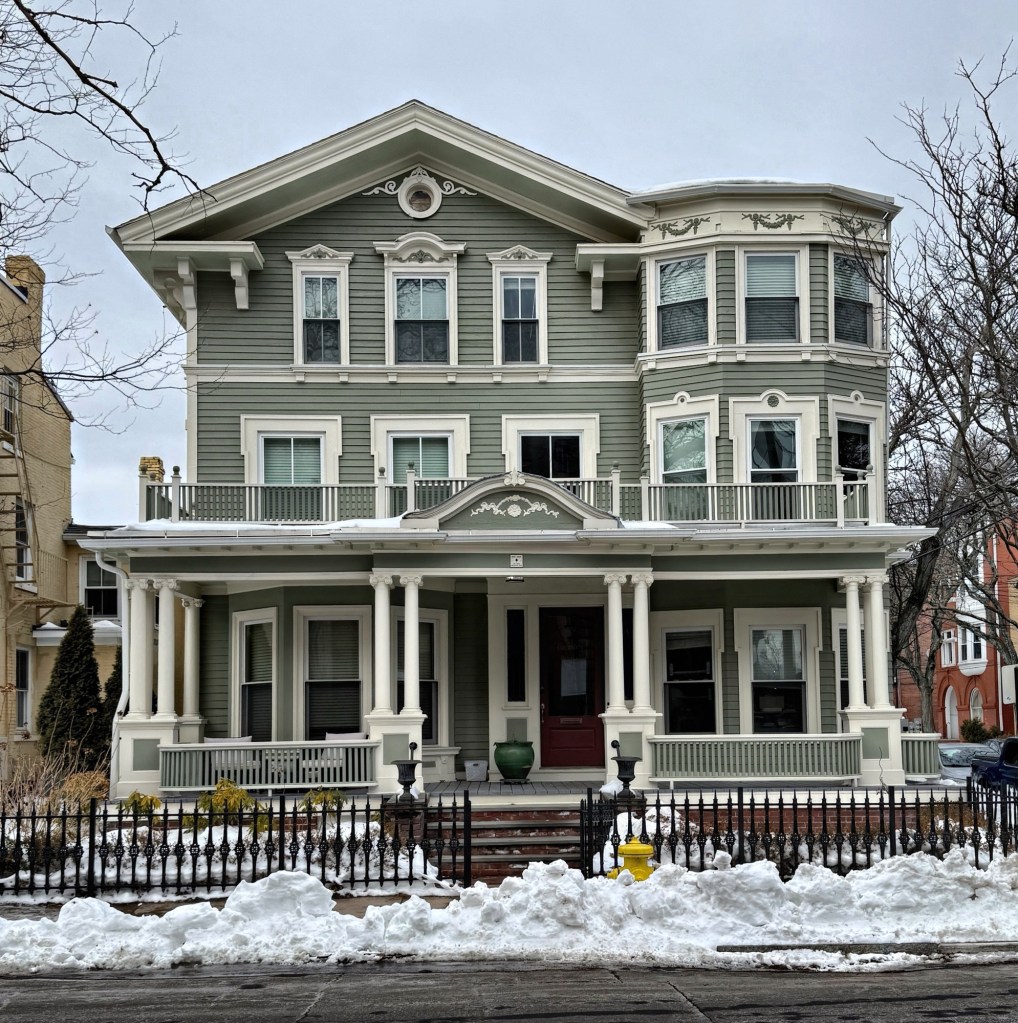
One of the eclectic mid-19th century residences in New Haven’s Wooster Square neighborhood is the Bromley House, an exuberant blending of architectural styles that have been lovingly preserved. The history is a little murky on this residence but from research, the home was built around 1850 and was possibly a two-story flat-roofed Italianate style design with three-bay facade and off-center entrance. The home was acquired by Joseph Bromley, who appears to have added a third-story with gable roof. After the Civil War, the property was purchased by Lyman Erving Bradley, a veteran of the war who was employed as a police officer and later as private security for an area factory. It appears that Mr. Bradley, before his death in 1901, had the property expanded with a whimsical front porch, three-story side addition, and applied ornament in the Queen Anne style. The home is today a three-unit condominium, similar to the three-deckers found in cities all over New England.
 Buildings of New England
