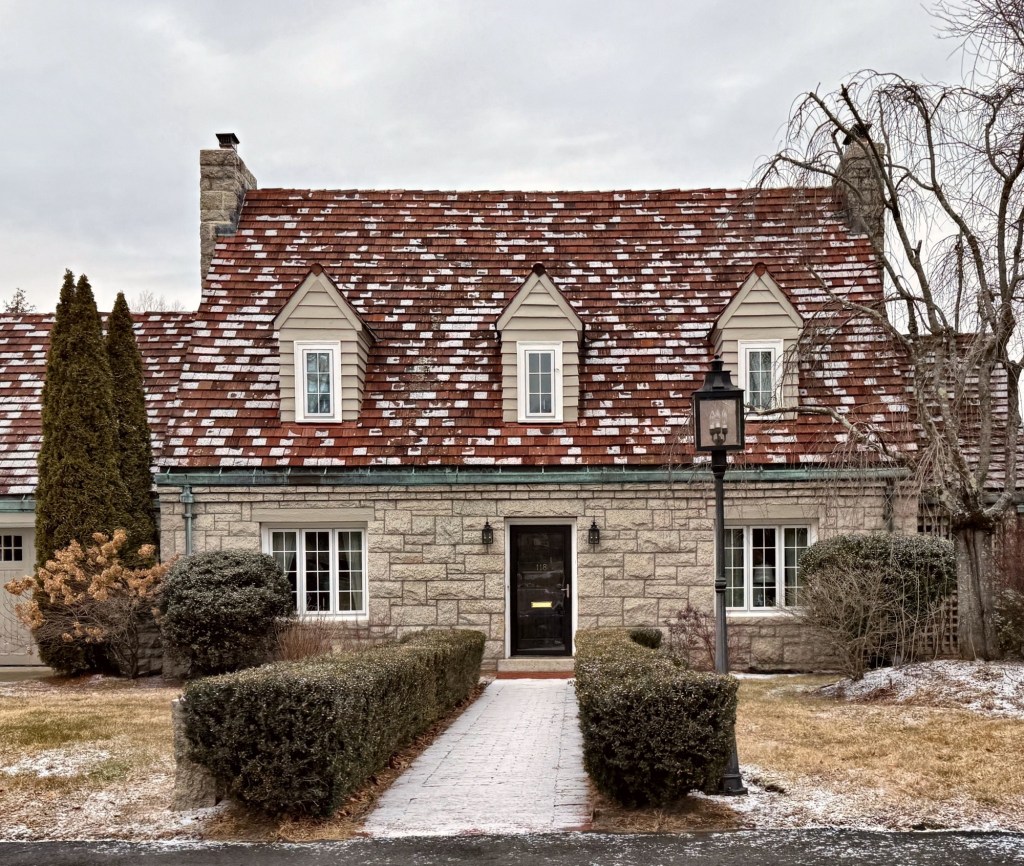
Dr. Byron Freeman Brown (1902-1962) was born in Maine and was educated at Bowdoin College before moving to Boston for medical school. After he graduated, he married and accepted a position as a doctor at Milford Hospital, not far from Hopedale, Massachusetts. Dr. Brown and his wife, Veronica, had this cottage on Adin Street built around 1930. Distinguished by its stone veneer walls and steeply pitched red clay tile roof punctuated by dormers and symmetrical facade, the Dr. Brown House is a great example of a Colonial Revival style house with Arts and Crafts flair built in the inter-war period.
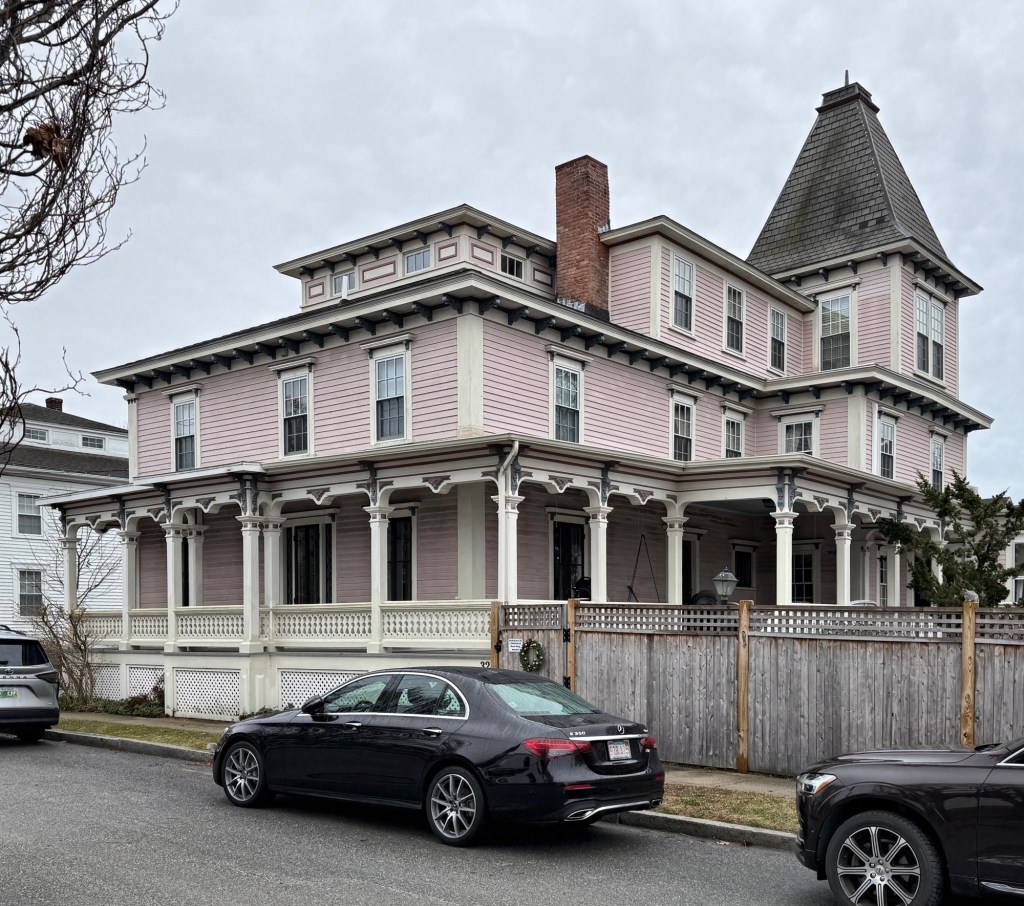
One of the many great examples of Federal period houses being “Victorianized” later in the 19th century, the Smith-Waterman House on Broad Street in Warren, Rhode Island, stands out as one of the most elaborate. The residence was originally built by 1820 and possibly owned by Nathaniel P. Smith (1799-1872). After his death, the house was inherited by his son, N. P. Smith Jr., who would later sell the property to John Waterman, the Manager and Treasurer of the Warren Manufacturing Company. It was under Mr. Waterman’s ownership that the once standard Federal style house was enlarged and given Italianate features, including the wrap-around porch, overhanging eaves with brackets, addition and the three-story tower at the rear.
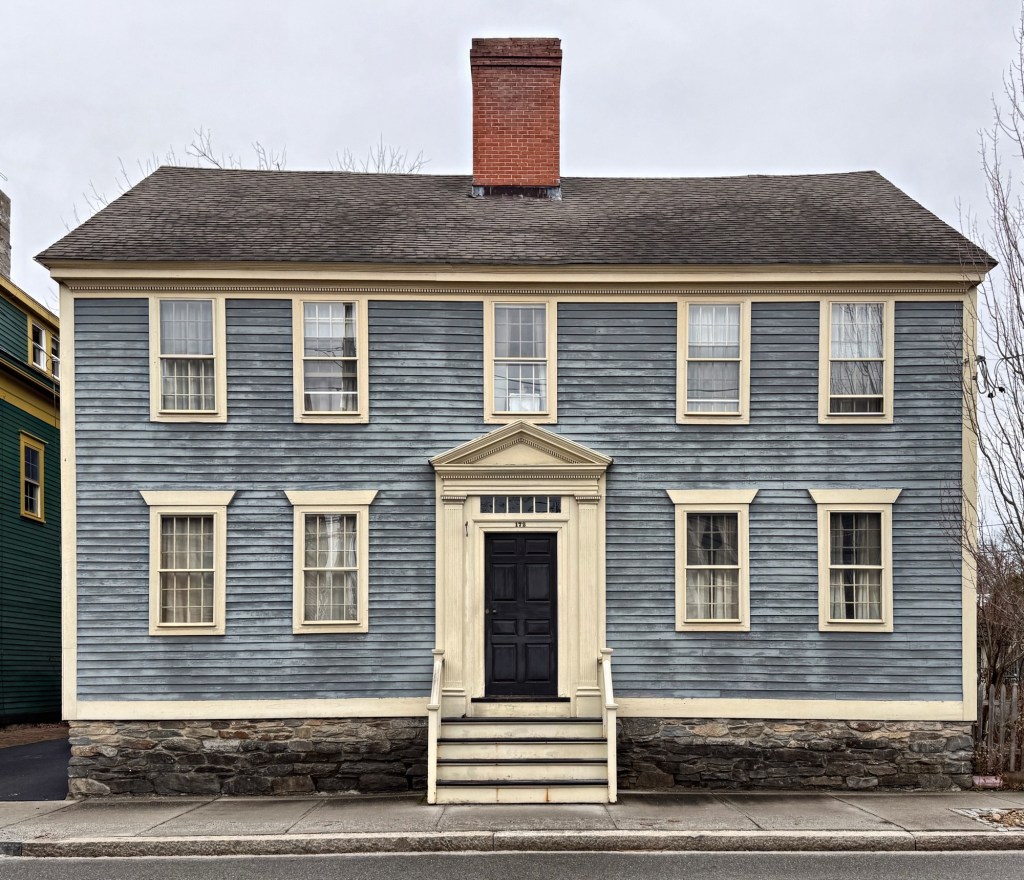
This stately two-story, five-bay Colonial house at 172 Water Street in Warren, Rhode Island, is significant as a well-preserved Georgian style residence that has connections to a prominent local family. It is unclear who originally owned the residence, but by the mid-19th century, the property was owned by John C. Hoar, a blockmaker for the maritime trade. Passed through members of the Hoar family into the mid-19″ century, owned by John Champlain Hall (1818-1912), the son of John C. Hoar, who actually changed his last name from Hoar to Hall in 1867, but it is unclear why. John C. Hall worked as a carpenter and builder in town, building homes and commercial buildings for area residents, including his own shop nearby.
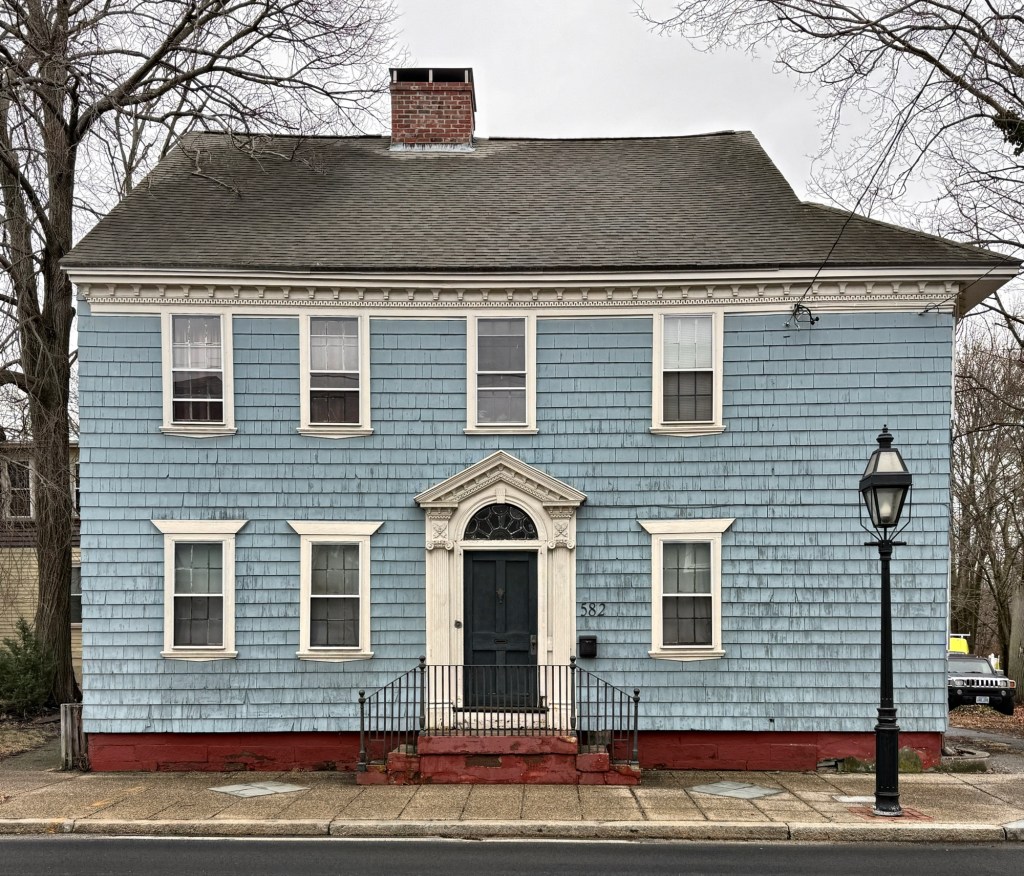
This Federal style residence on Main Street in Warren, Rhode Island, features one of the town’s most spectacular entries, likely dates to the 1780s and exhibits later alterations. The house was originally owned by Rufus and Anna Burr, and was possibly built following their marriage in 1786. The late 18th century front entrance is one of Warren’s most elaborate examples with fluted Ionic pilasters supporting embellished frieze blocks, above which the pediment rests and contains a elli[tical fanlight transom. In the 19th century, the property was owned by James Maxwell Eddy (1811-1901), who, after the Civil War, elongated the southernmost bay on the facade, adding a bay window on the side which ties into the roofline with a half-hipped connector. In the 20th century, this was the home of illustrator Henry Jarvis Peck 1880-1967, whose work was re gularly published in Colliers, Harper’s Weekly, Ladies Home Journal, and other prominent magazines. The shingle siding was likely added in the first half of the 20th century.
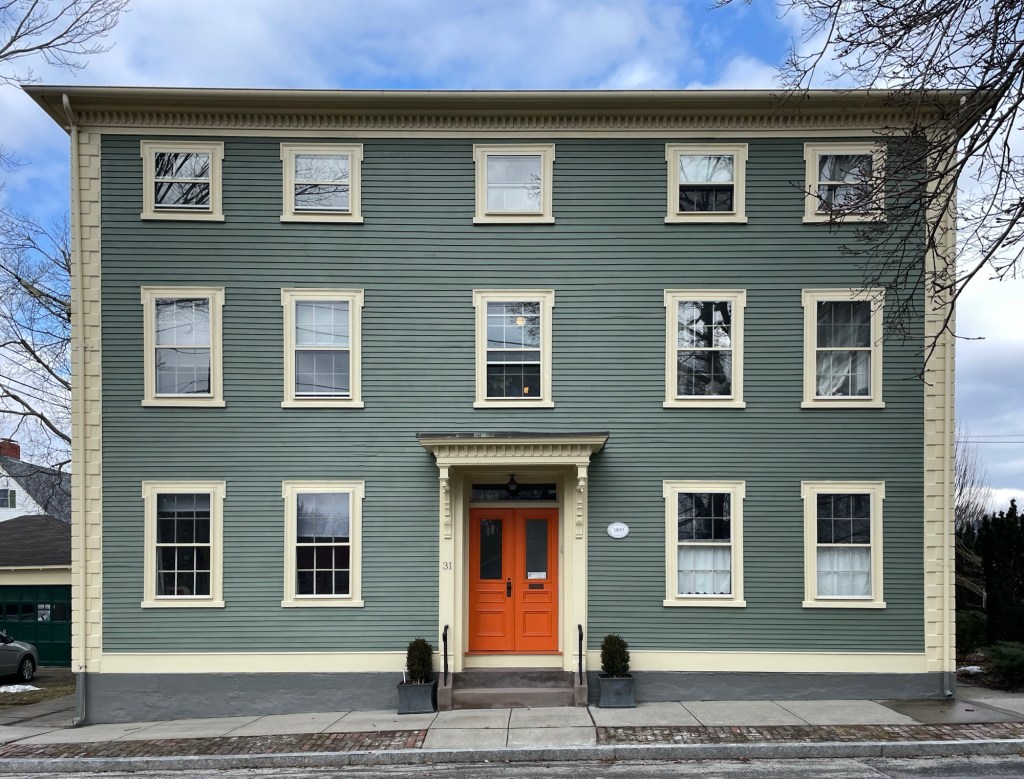
This stately three-story Federal style mansion on Baker Street in the lovely town of Warren, Rhode Island, was built in 1809 as a gift from a father to his daughter as a wedding gift. The house was funded by James Maxwell, of the local family of merchants and slave traders, for his daughter Martha “Patty” Maxwell and her soon-to-be husband, Samuel Randall. Judge Randall operated a school in town and published three local newspapers, the Telescope, the Clarion, and the Telegraph, all rather short-lived. In 1822, he was appointed judge of the court of common pleas for Bristol County, Rhode Island, and served in that capacity until 1824, when he was made justice of the supreme court of the state. The pop of color at the entry and the bracketed, Victorian era door hood complete the facade to give it some serious curb-appeal.
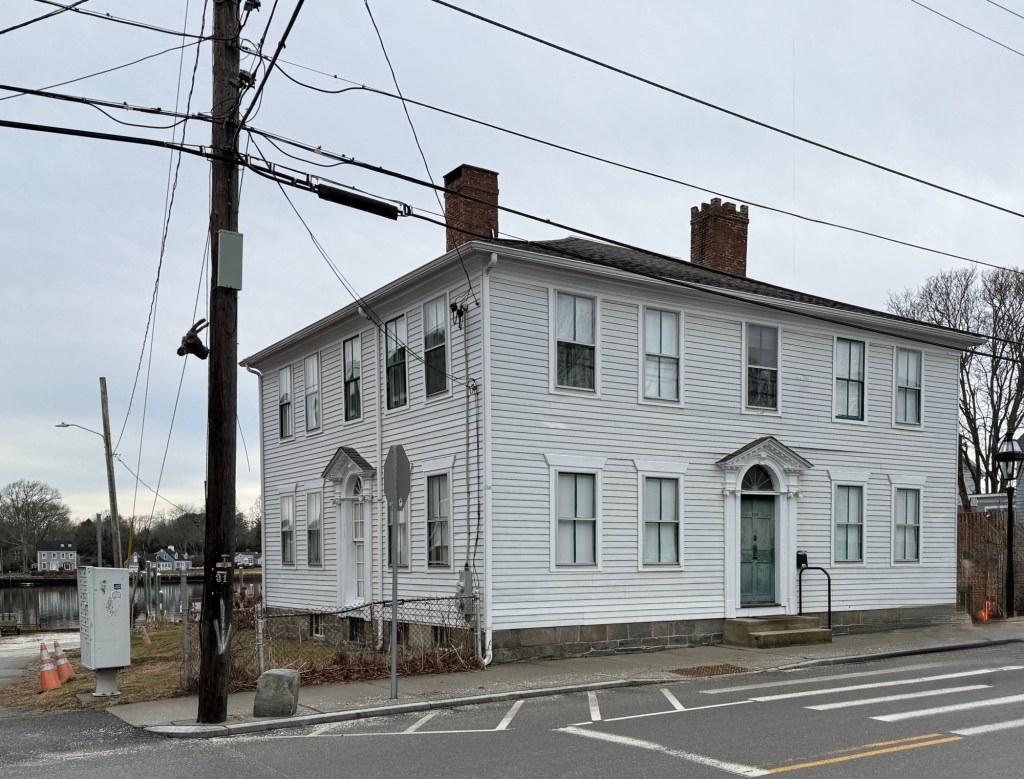
This house, located on Water Street in Warren, Rhode Island, is said to have been built in the 1760s, but its present appearance in the Federal style is credited to owner, Caleb Carr (1768-1853). In around 1790, Caleb fully renovated the property in the Federal style for his residence and as a tavern, with an elegant fanlighted door put on each facade—one for household use, the other for tavern customers. The property was inherited by his son, Captain Caleb Carr Jr., who continued as a tavern owner, but was also an important shipbuilder and operator of the ferry to Barrington, which docked at the end of the street. The Carr Tavern is today covered with later aluminum siding and has Victorian-era two-over-two windows but if restored, would shine as one of the best Federal style homes in town!
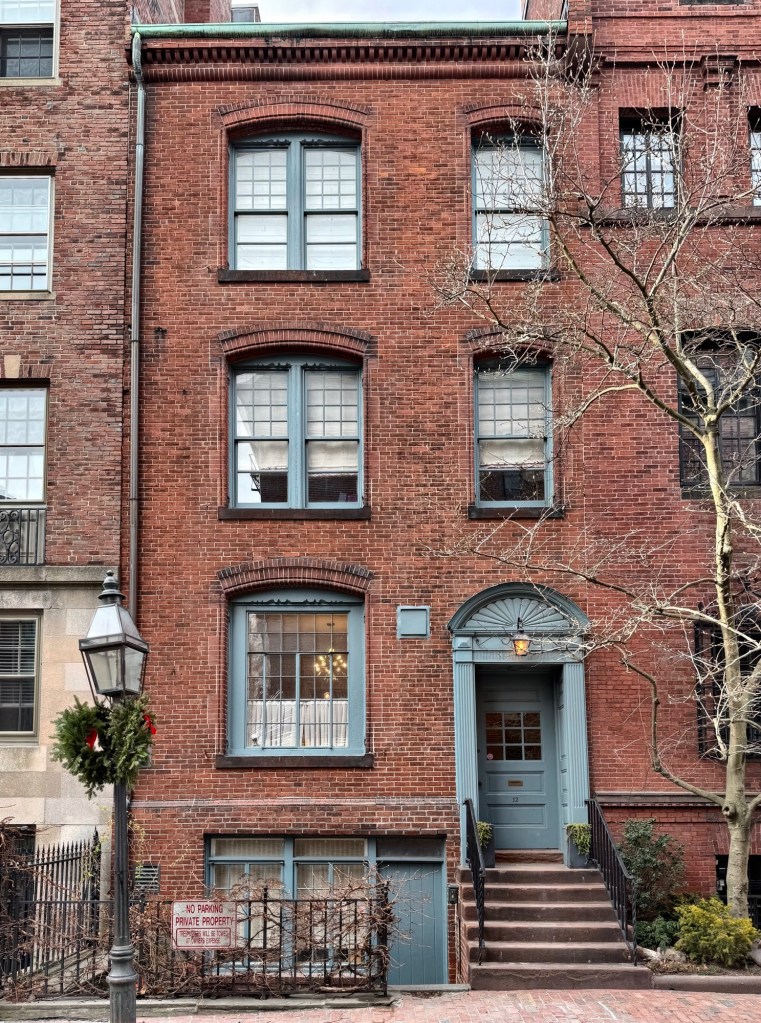
This unique brick house at 12 Otis Place in Beacon Hill was built in 1883 by the architect, Carl Fehmer for attorney Glendower Evans and his wife, Elizabeth Gardiner. Mr. Evans died in 1886 of Hodgkin’s Disease at just 30 years of age. His widow, Elizabeth Glendower Evans (1856-1937) was greatly influenced by her husband during their brief marriage, even taking her husband’s first name as her middle name after his death. Elizabeth Glendower Evans became a prominent social activist, studying child labor conditions in the South and took up the cause of women’s suffrage and the associated problems of tenements and factory work arising from disenfranchisement in the late 19th and early 20th centuries. In 1915 Evans served as a delegate to the International Congress of Women at the Hague. She was the first National Organizer of the Woman’s Peace Party. From 1920 until 1937 she served as a national director of the American Civil Liberties Union. In the 1910s, Elizabeth sold the home to Edward Albert Filene (1860-1937), who, together with his younger brother Abraham Lincoln Filene, reorganized his father’s department store into “William Filene’s Sons Company”, which would later becomeFilene’s. He was a supporter of credit unions to help ordinary American workers to access loans at reasonable rates and allow workers to save their money so that when hard times hit, they were prepared.
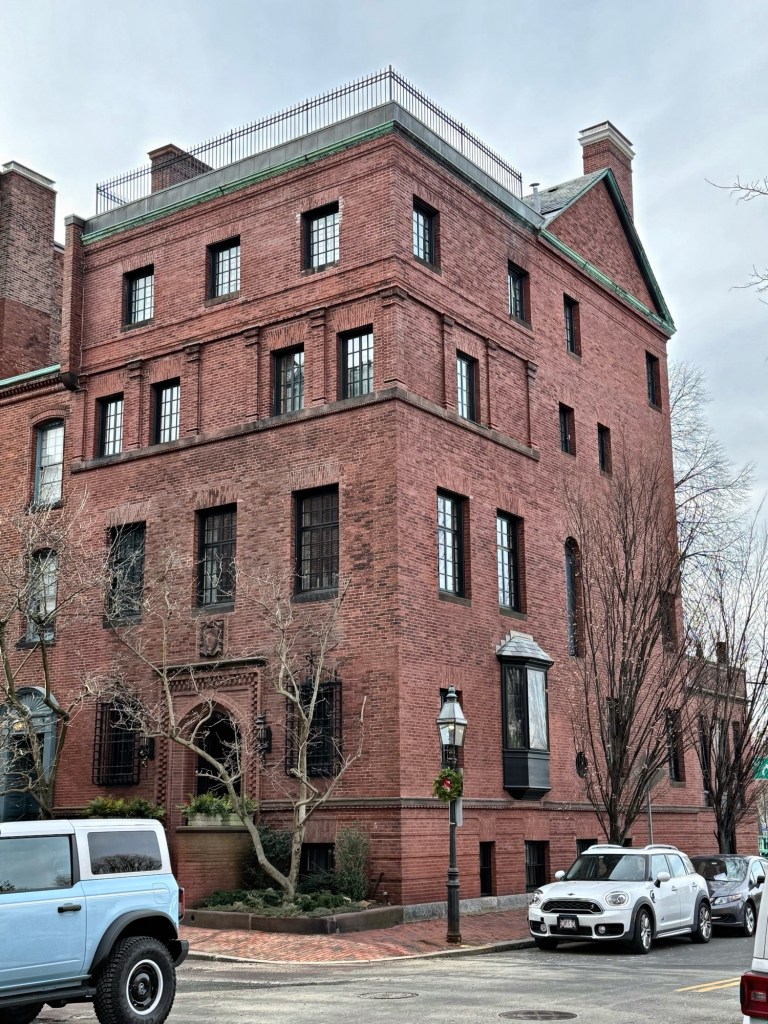
This unique four-story brick townhouse on Otis Place in Beacon Hill, Boston, was built in 1885 by the architectural firm of Rotch & Tilden for Mrs. Octavia L. Apthorp and her husband, William F. Apthorp. Elevated on a tall brick basement, the exterior of the house is richly detailed with masonry decoration in what has become known as the “panel brick” style; with an elaborate brick entrance archway, paneled pilasters at the third floor, and vertical brick lintels above the windows. Over the ground floor windows near the entrance, iron grates with spear-like finials give the design a Medieval/English Queen Anne presence. William F. Apthorp was the only son of Robert Apthorp, a prominent Boston attorney and abolitionist who lived across the street at 2 Otis Place. William was a pianist and teacher at the New England Conservatory of Music and writer who married Octavia (sometimes spelled Octavie) Loir Iasigi in 1876, she was also from a well-connected Beacon Hill family.
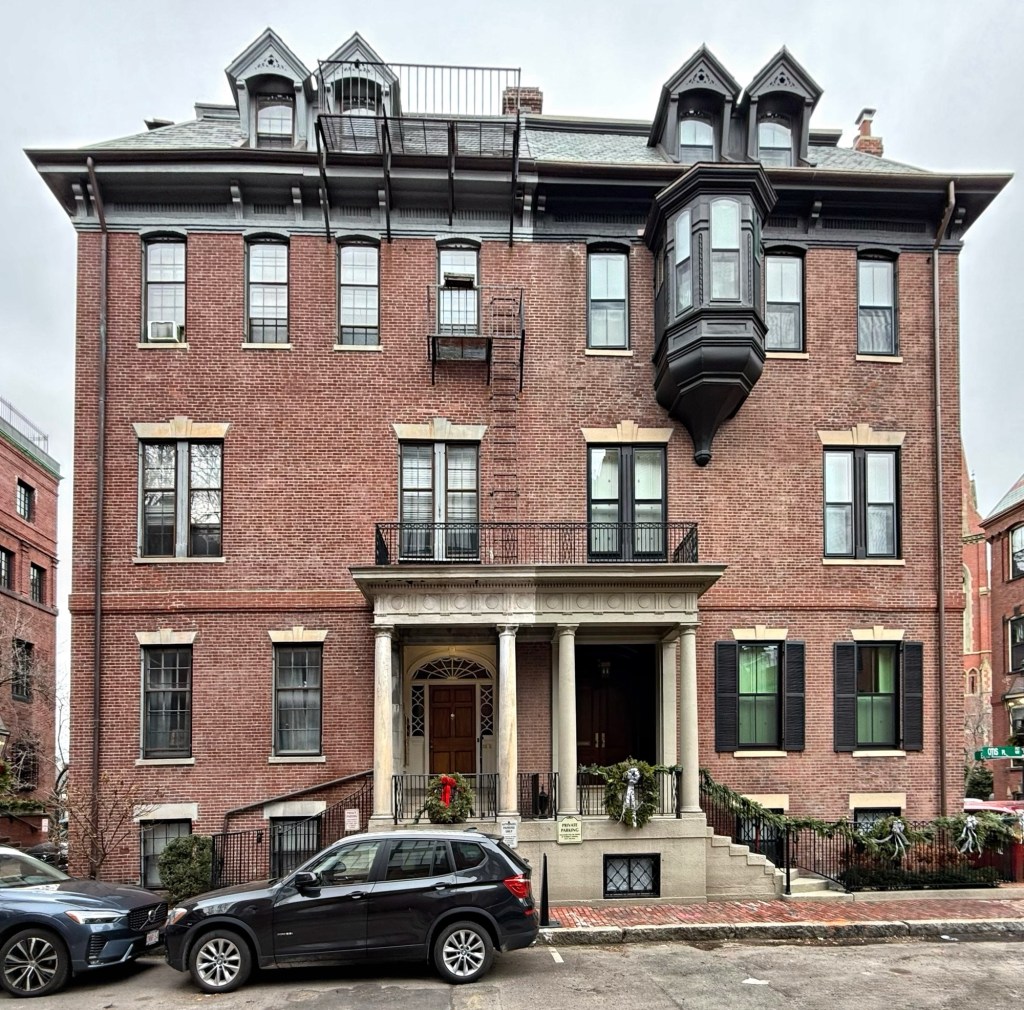
These two near-identical townhouses at 1 & 2 Otis Place in Beacon Hill are significant architecturally and as they are bounded by four streets. The unique lots were created when Otis Place was laid out on made land in 1869 and were built the following year as an identical pair sharing a party wall and with their front facades facing south on Otis Place. The two residences were designed by the firm of Ware and Van Brunt, who blendedSecond Empire and Victorian Gothic styles with gothic arched windows, bracketed cornices, slate mansard roof, and later Colonial Revival porticos added in 1916 by architect, Frank A. Bourne. No. 1 Otis Place (right side with the oriel bay window) was first owned by Henry G. Pickering, a dealer in engines and machinery at the height of New England’s industrial revolution. No. 2 Otis Place (left with later fanlight entry), was originally owned by Robert E. Apthorp, an attorney and realtor, who decades earlier, was an active member of the Boston Vigilance Committee, the group established to harbor and assist fugitives from slavery after the passage of the Fugitive Slave Act in September 1850.
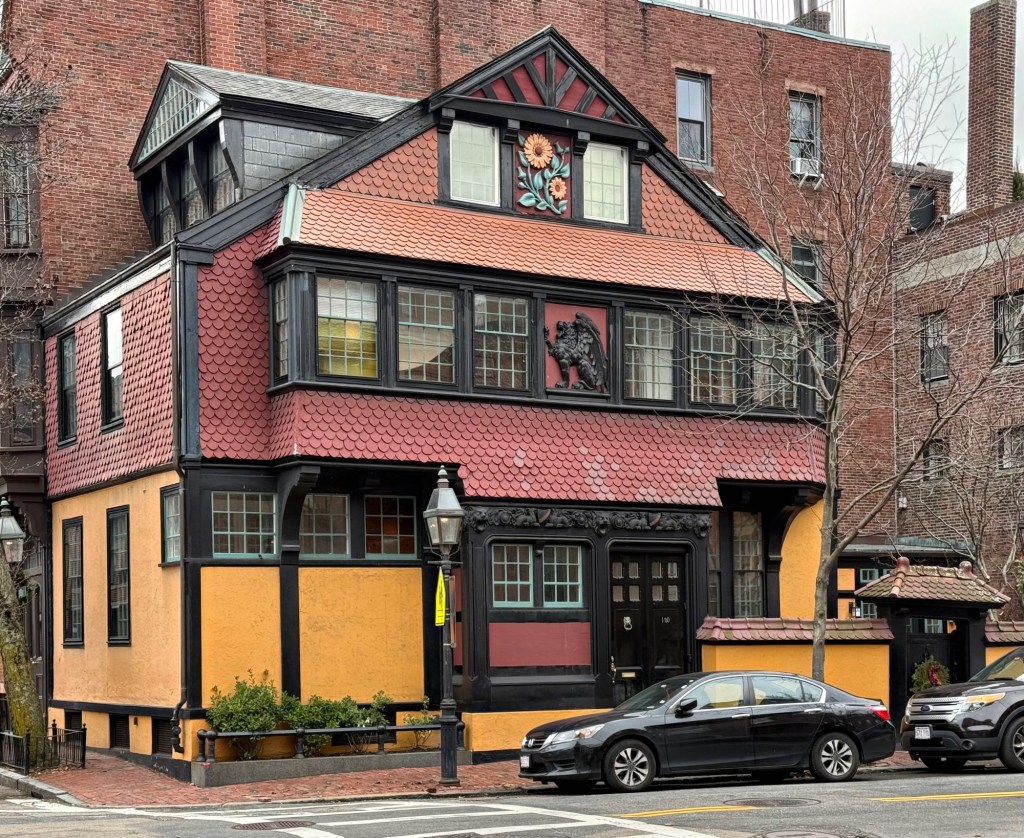
This absolutely unusual and enchanting cottage on Mount Vernon Street in Beacon Hill, Boston, was originally was constructed in the 1840s but completely altered decades later in its distinctive English Queen Anne style. In 1878, Frank Hill Smith, an artist and interior designer, worked with architect, Clarence Luce to renovate what was originally a two-story Greek Revival house into one of the most eclectic and unique residences in New England. The Sunflower Castle, a name reputedly coined by Oliver Wendell Holmes, features a yellow stucco first floor with the upper floors covered with red fish-scale shingles. Further detail includes the half-timbering, decorative panels depicting a gryffin and a sunflower in the gable, and carved wood frieze over the doorway. Clarence Luce was likely so inspired by this project, that he built an even more extravagant example of this house for Edward Stanwood in Brookline soon after. By 1903, the property was sold to the painter, Gertrude Beals Bourne and her husband, architect, Frank A. Bourne, who were both key players in the revival and gentrification of the Beacon Hill Flat neighborhood west of Charles Street in the early 20th century. The Sunflower Castle was used as their home and as an artist’s studio for the couple, with Frank adding the side garden wall with tile-roofed gateway to enclose a private open space. The property remains as a private residence.
 Buildings of New England