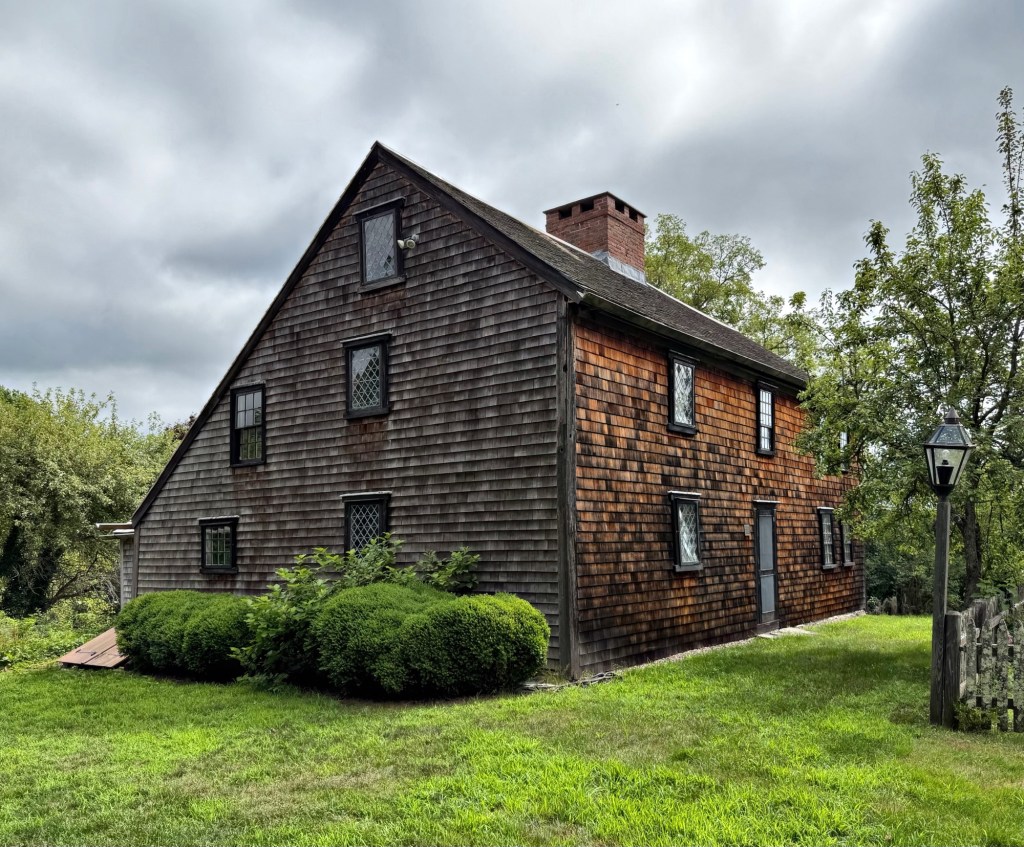
Major John Bradford Homestead // 1674

The Major John Bradford Homestead (also known as the Bradford House) is a stellar and well-preserved example of a First Period house in Kingston, Massachusetts. The house was reportedly built by Major William Bradford (1624-1704), the son of Governor William Bradford  who arrived to Plymouth via the Mayflower in 1620 and served as Governor of the Plymouth Colony between 1621 and 1657, purportedly built the west (left) half of the house in 1674 for his eldest son John Bradford and his bride, Mercy Warren. John Bradford (1653-1736) served as selectman, a deputy from Plymouth, and as a representative in the Boston General Court, who in 1717, led in the establishment of Kingston as a new town by donating land for the meeting house, school house, burial ground, training green, and minister’s house. In around 1715, John Bradford expanded this house which was not sufficient to house his wife and seven children. After centuries, the house began to show its age, and in 1921, coinciding with the tercentenary of the Pilgrims arriving to Plymouth, the Bradford House was thoroughly documented and restored by Frank Chouteau Brown and George Francis Dow. Since 1921, the property (including a historic barn moved here from a nearby site) has been owned and preserved by the Jones River Village Historical Society, who operate the property as house museum.

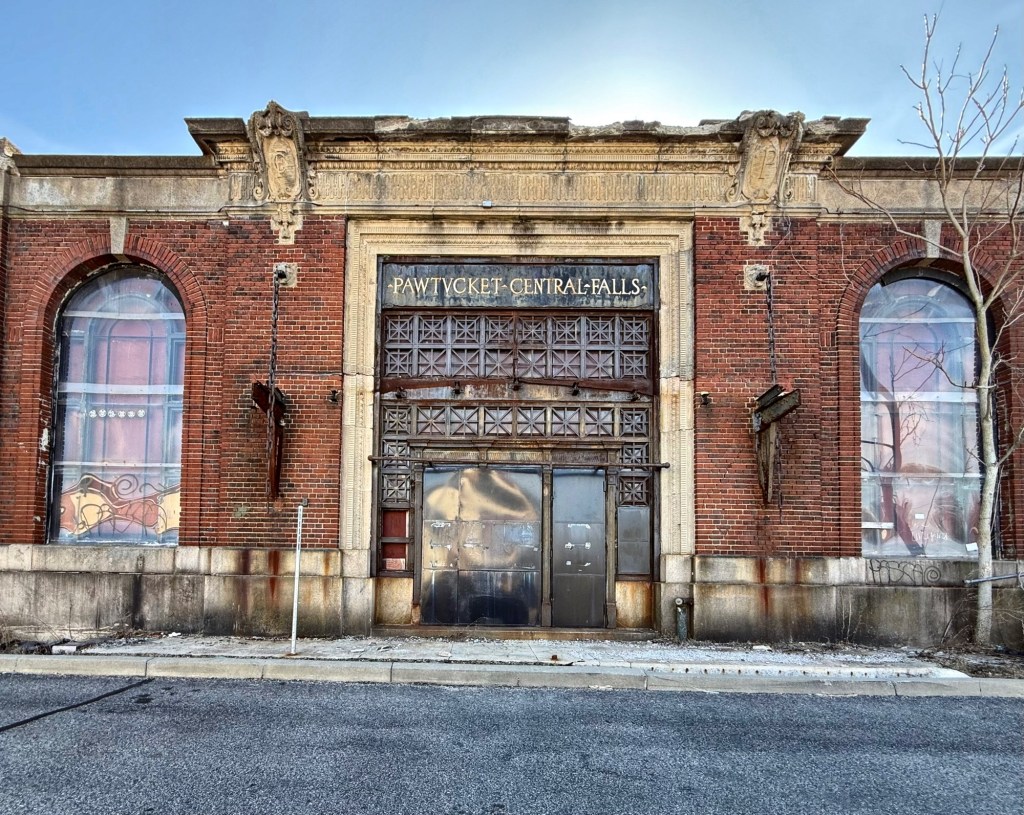
Pawtucket-Central Falls Station // 1916

The Pawtucket-Central Falls Railroad Station is a crumbling relic of a time once dominated by rail travel. This architectural landmark spans the border of the cities of Pawtucket and Central Falls, along with the tracks of the former New York, New Haven and Hartford Railroad and is one of the more unique buildings in Rhode Island. The station opened in 1916 to replace separate stations in the two cities from plans by F.W. Mellor, architect for the New Haven Railroad with Norcross Brothers of Worcester facilitating the construction over a structural steel base spanning the tracks. As many as 140 trains per day once passed under this station, but in 1959, it closed. The building was purchased by a private owner and plans failed to materialize for decades, leaving us with a crumbling masterpiece in architecture and engineering. In 2007, the lot was partially developed with the addition of a suburban, soulless CVS store and parking lot, which today, directly abuts the station. In 2023, a new Pawtucket/Central Falls station opened nearby, which has brought new calls to demolish this building, with people actively seeking grants to fund the estimated $10 Million dollar demolition.

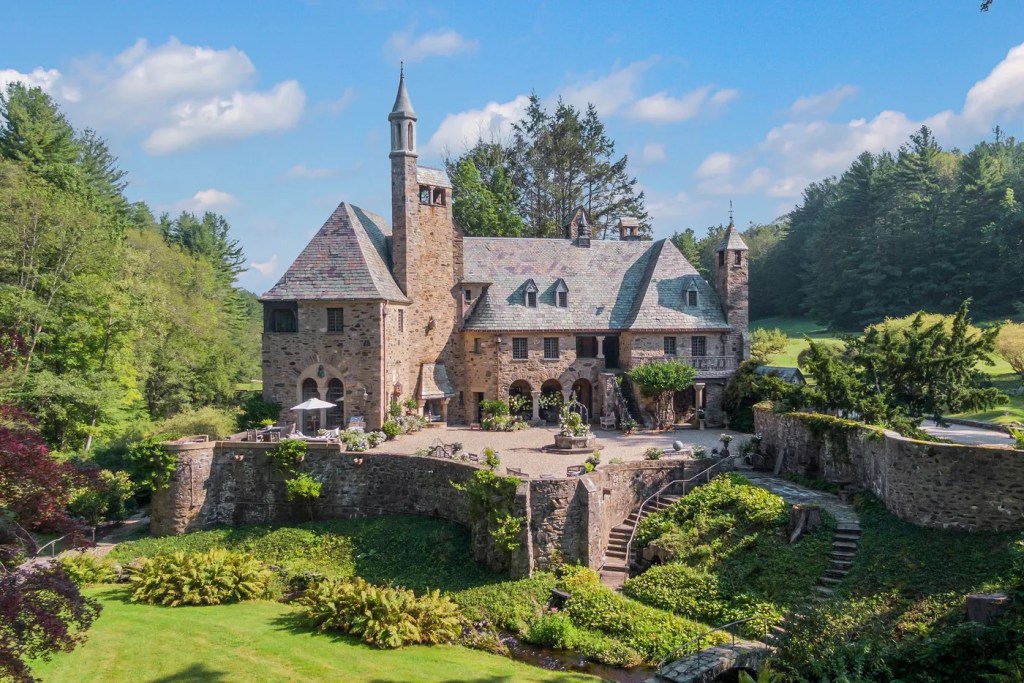
Hidden Valley Castle // 1921

Photo from listing.

A castle can be found in the small town of Cornwall, Connecticut! Set amongst 275 acres of woodland and streams, with several outbuildings on the property, this whimsical castle looks like it was dropped here from Cornwall, England, but it actually dates to the 1920s. Hidden Valley Castle, had its beginnings when socialite Charlotte Bronson Hunnewell Martin envisioned building a unique country retreat for herself and her husband, Dr. Walton Martin, in the Litchfield Hills of Connecticut as a summer retreat. Just before this, Charlotte had bought a group of 20 brownstones in Manhattan on 48th and 49th Streets, between Second and Third Avenues, and converted them into charming townhouses around a central Italian-inspired garden. Called Turtle Bay Gardens, the houses were highly acclaimed and almost immediately attracted prominent and celebrated residents. The Cornwall Castle was designed by architect, Edward Clarence Dean, who also redesigned the Turtle Bay Gardens for the couple. Dr. Martin imported many of the materials as well as the 100 workmen required to build the castle, a project that lasted five years. Charlotte would also have a cottage built on the estate and hired young Italian artist, Vincenzo Rondinone, to be her resident artist on the estate to create unique vases, bowls, and pots to be used at the house and to be given as gifts to visitors and friends. The property was restored in recent years and put up for sale, with the cottage sold as a separate dwelling.

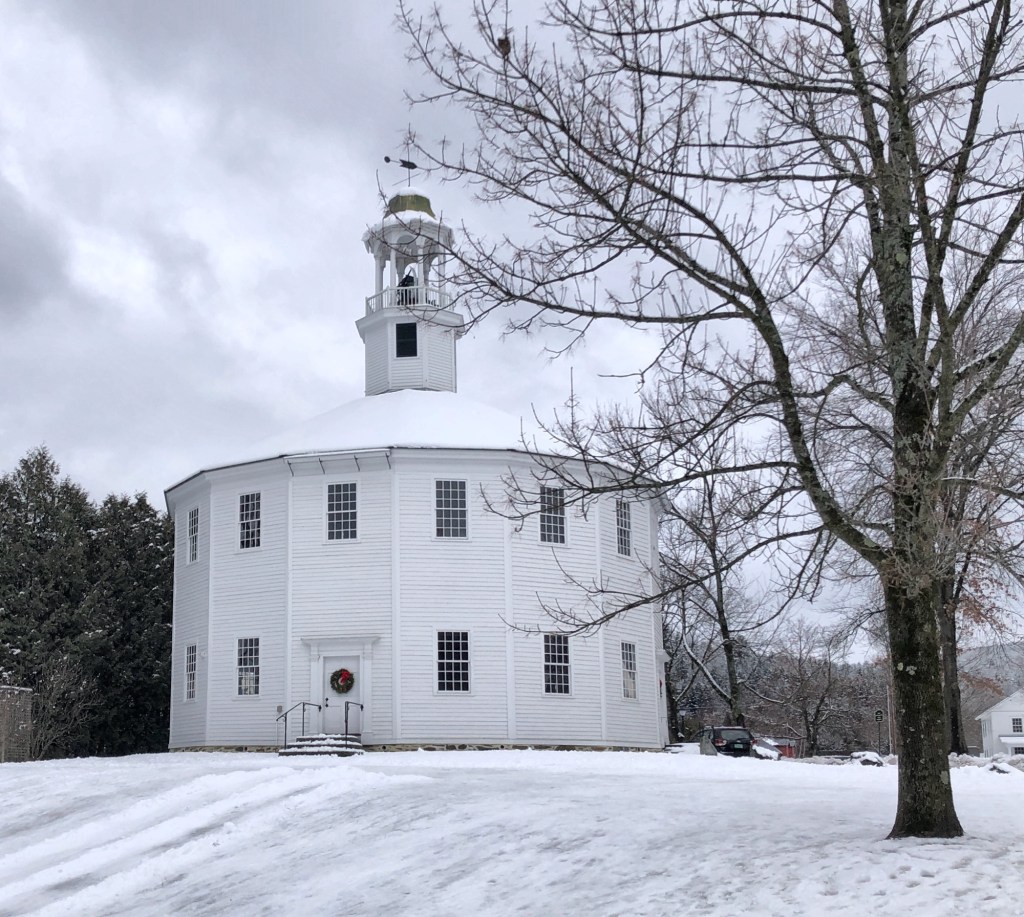
St. Sergius Chapel // 1932

Formerly known as “Churaevka,” the community known today as Russian Village in Southbury, Connecticut, was established in 1925 as an artistic community for Russians who fled to America after the Russian Revolution of 1917. The village was created by two Russian writers, Count Ilya Tolstoy, the son of Leo Tolstoy (the author of War and Peace and Anna Karenina), and the famous Siberian novelist George Grebenstchikoff. Although Tolstoy was first to discover the area while visiting his translator in Southbury, it was Grebenstchikoff who dreamed of establishing a cultural center and planned to create a rural community of cottages where Russian writers, artists, musicians and scientists could live and flourish statestide. The village was named after a mythical Siberian village mentioned in the works of Grebenstchikoff and the centerpiece is this chapel, St. Sergius Chapel, which was built in 1932-33 from plans by Nicholas Roerich. The small square-plan chapel was likely built of stone gathered from the neighborhood.

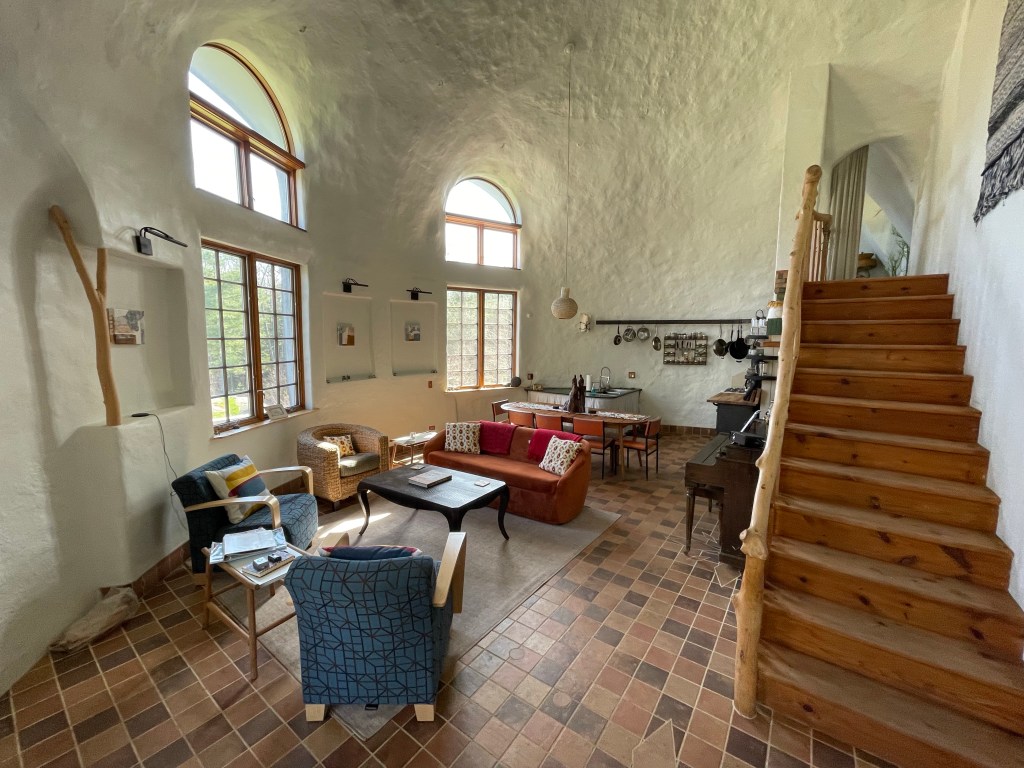
The Dome Home // 2003

This past weekend, I was lucky enough to stay at one of the most unique Airbnb’s in New England, the Dome Home in idyllic Kennebunkport, Maine! The house itself was hand-built in 2003 by trained architect and sculptor Daphne Pulsifer with her husband Daniel Bates, on 43-acres of forest just miles from the iconic Maine beaches. Inside, the house features numerous custom touches designed and built by the original owners, including light fixtures, floor tiling, hand-built oak doors, wall tiling, woodwork — much of it claimed from the property itself. The Dome Home is completely sustainable with solar panels providing all the power needed, making the property completely off-the-grid. The original owners sold the property in 2022 to the new owners who have lovingly updated the spaces, keeping the charm and unique qualities of the Dome. If you are ever in Kennebunkport and are looking for a unique, off-the-grid stay with all of the amenities of modern living, definitely check out the Dome!