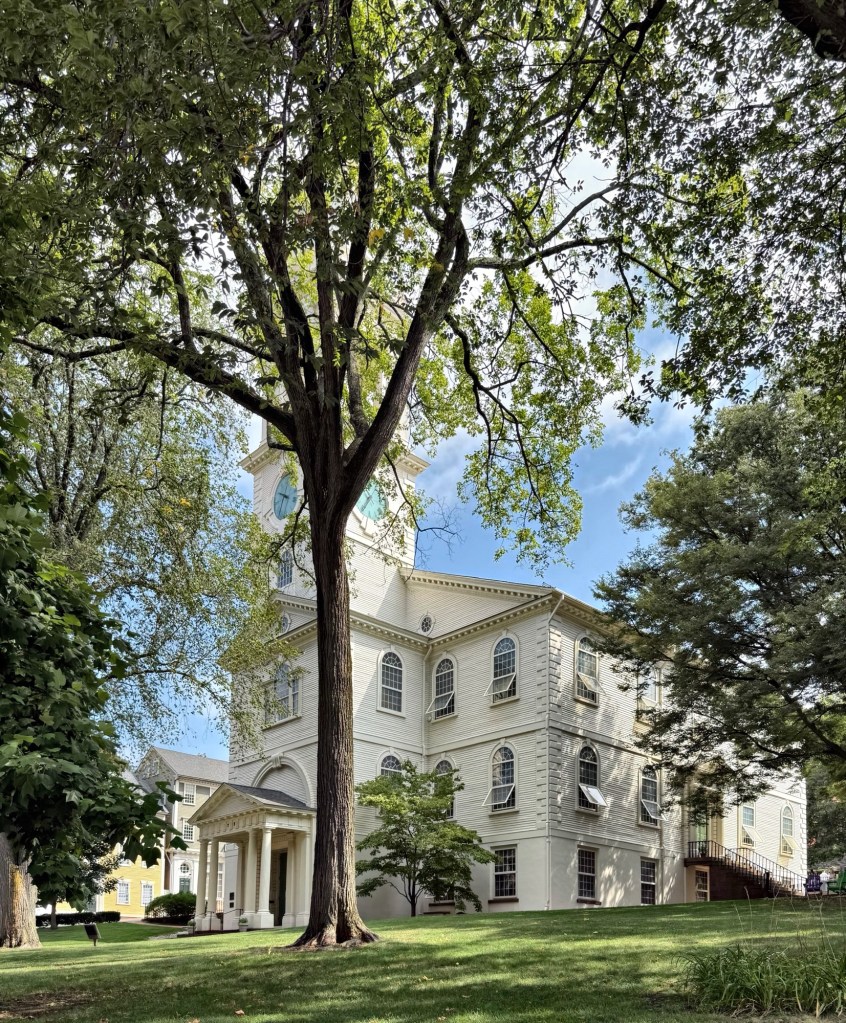
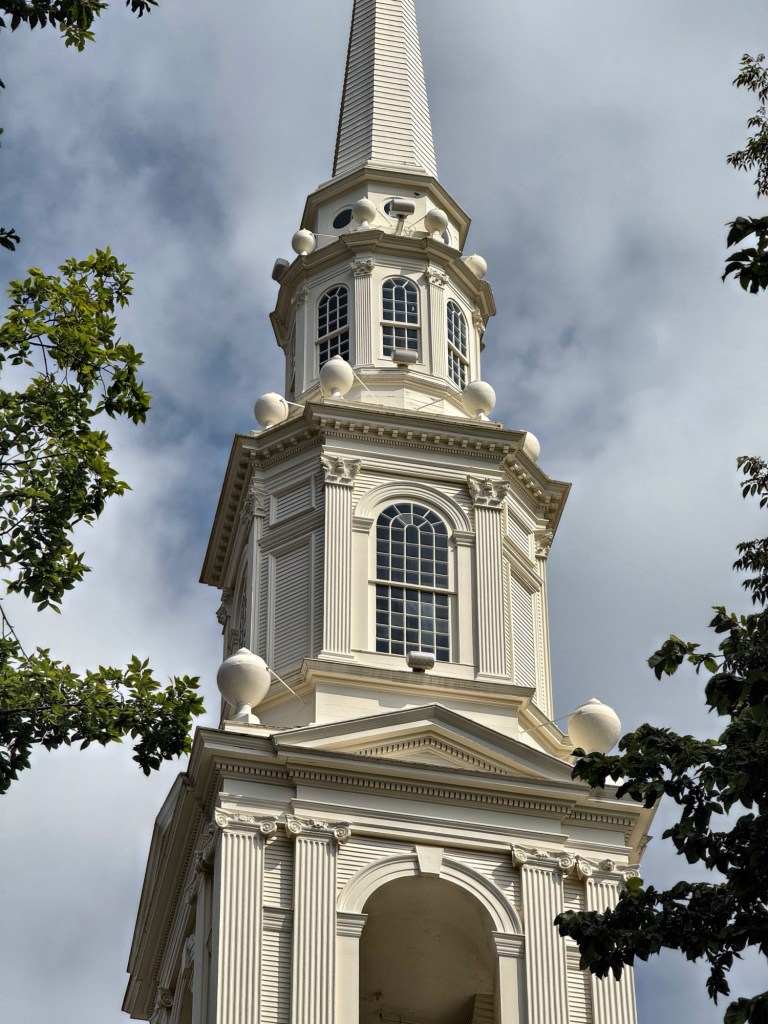
First Baptist Church, Providence // 1774

The First Baptist Church of Providence, also known as the First Baptist Church in America is the oldest Baptist church in the United States. The Church was founded in 1638 by Roger Williams, who before building this church in 1774, often met in private residences or in more plain meetinghouses to not show vanity. By the early 1770s, a new building for Providence Baptists was needed, and it was conceived in a very large (and ornate) way. Built to accommodate over 1,200 people (just under a third of the entire population of Providence at that time), this church was built “for the publick Worship of Almighty God; and also for holding Commencement”, referring to the commencement ceremonies of Rhode Island College (later Brown University), also founded under Baptist auspices. The church was designed by local amateur architect, Joseph Brown, who was likely inspired by Sir Christopher Wren’s London churches in James Gibbs’s Book of Architecture (1728). The construction was greatly aided by the fact that the British had closed the port of Boston as punishment for the Boston Tea Party. Many shipwrights and carpenters were thrown out of work and came to Providence to build the meetinghouse there. The structure was dedicated in May 1775, and the 185-foot steeple was added shortly thereafter. This was the first Baptist meetinghouse in New England to have a steeple, and it has survived dozens of hurricanes and hundreds of years of change since. The church is a National Historic Landmark and remains as one of the most significant buildings in New England.
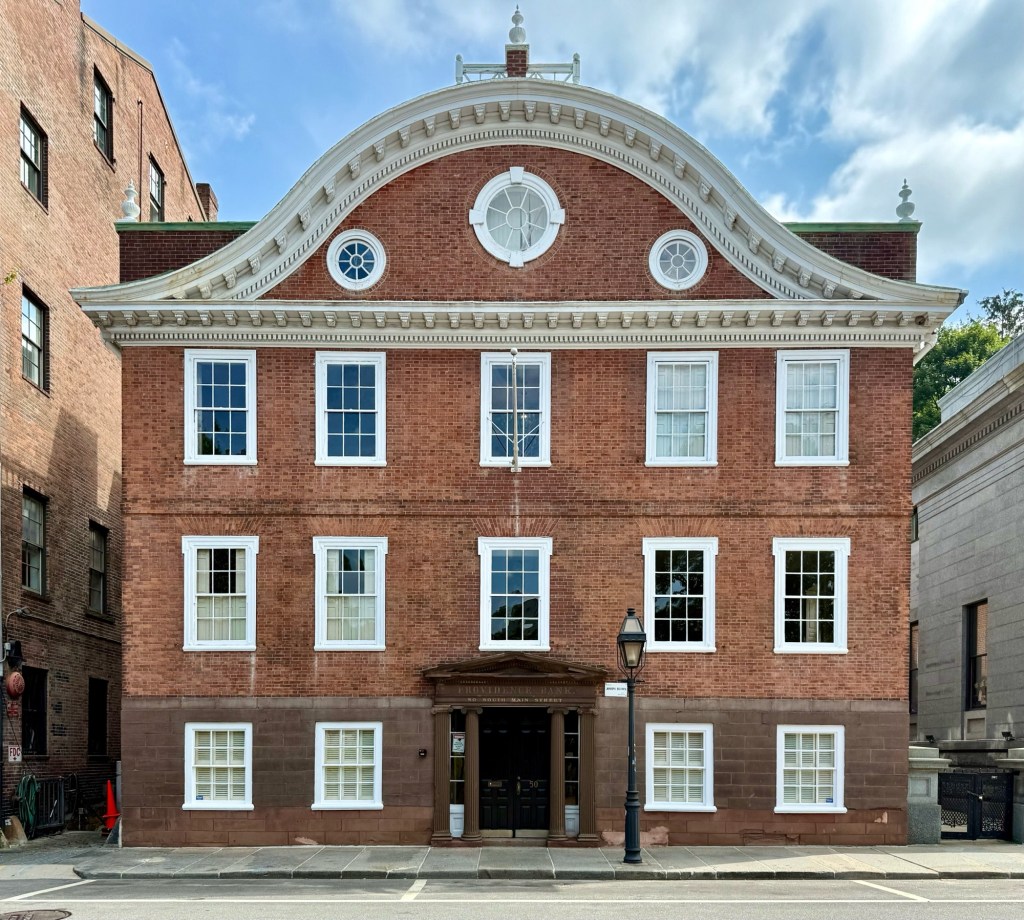
Joseph Brown House // 1774

Constructed in 1774 by architect Joseph Brown (1733-1785) of the Brown family of Rhode Island as his personal residence, the John Brown House of Providence, stands as one of the oldest (if not the oldest) house built by an American architect for his own use. Joseph Brown, while a member of the Brown Family, was not as much in the shipping business as others in his family, instead turning his attention to scientific matters, becoming an expert in astronomy, electrification, and architecture. He was an architect in the Thomas Jefferson-gentleman mode, owning English architectural books from which he selected motifs for inclusion in his designs. It is believed that the eccentric curved ogee gable that caps the façade was adapted from the roof design of a garden house published in William Salman’s Palladio Londinensis, owned by Joseph Brown’s builder, Martin Seamans. The same ogee gable was later replicated in the Colonial Revival period in Providence. The residence’s entrance was originally raised above ground and accessed via symmetrical flights of stairs; in the late 18th century, the entrance was moved to street level in the brownstone basement level. Over a decade after Joseph’s death in 1785, the structure was acquired by the Providence Bank, an enterprise founded by Brown’s brothers John and Moses, and used as an office. The bank occupied the structure until 1929, and the Joseph Brown House was subsequently owned by the Counting House Corporation, and still appears to be owned by descendants of the Brown Family.

Rhode Island Hospital Trust Building // 1917

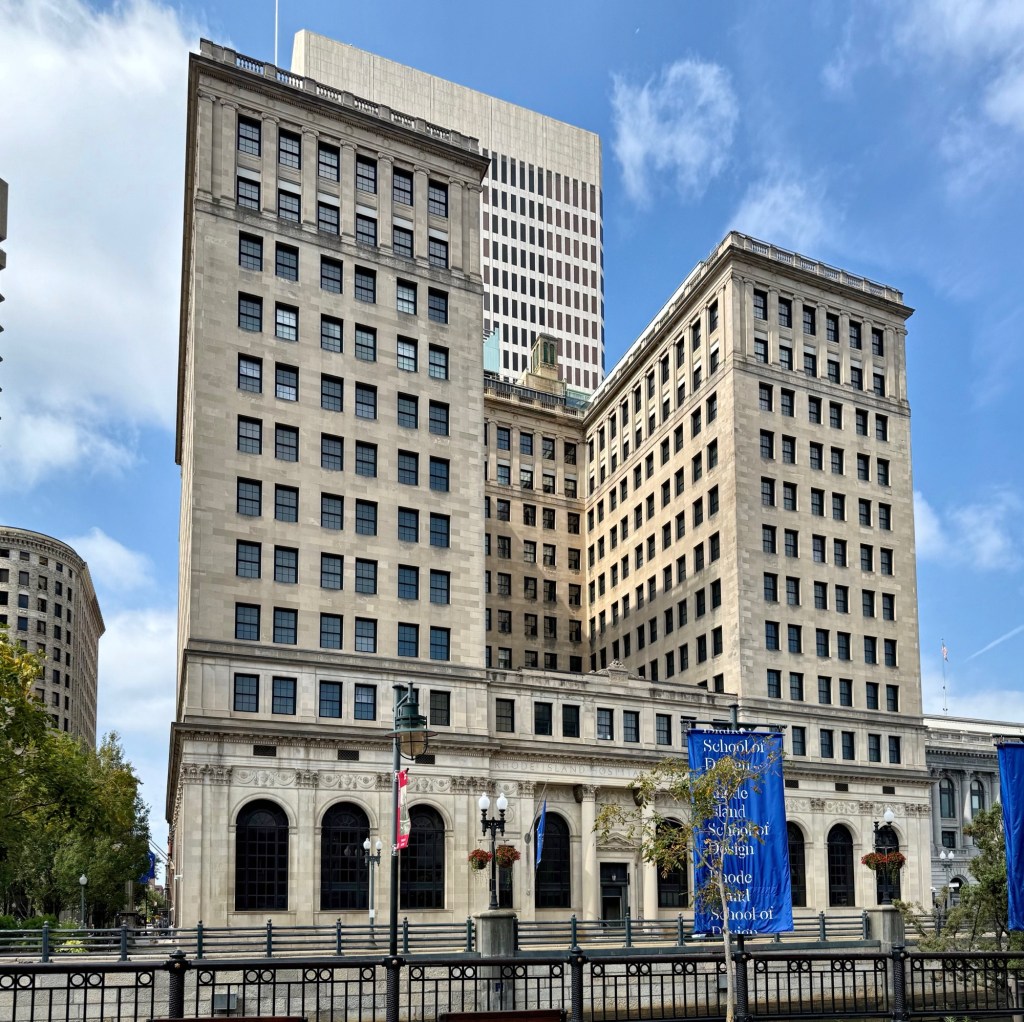
Located at the eastern edge of Downtown Providence, the Rhode Island Hospital Trust Building is significant as one of the city’s finest examples of the Beaux Arts style of architecture and as the headquarters of what was once the largest banking institution in the state of Rhode Island. The Rhode Island Hospital Trust incorporated in 1867 as the first trust company in New England. It owes its unique name to the fact that it was chartered by the board of trustees of Rhode Island Hospital, founded four years earlier, with the trust company established to help finance operations of the hospital. The original, purpose-built bank was constructed in 1891, and quickly outgrown as the institution grew exponentially into the early 20th century. In 1916, the trust hired the New York architectural firm of York & Sawyer to furnish plans for the present structure. Construction began in 1917, and after delays caused by WWI, the building finally opened in 1919. The 11-story U-shaped building was designed in an exaggerated form of Renaissance palazzo, with steel-framed construction that is faced with marble on the two lower levels and limestone elsewhere. After a series of mergers throughout the 20th century, the building was owned by FleetBoston, who donated this pristine building to the Rhode Island School of Design (RISD), which was renovated into a dormitory by RISD-alumni and architect Nader Tehrani of NADAAA Architects. It is today known as the Mandle Building.

Peirce Mansion // 1799

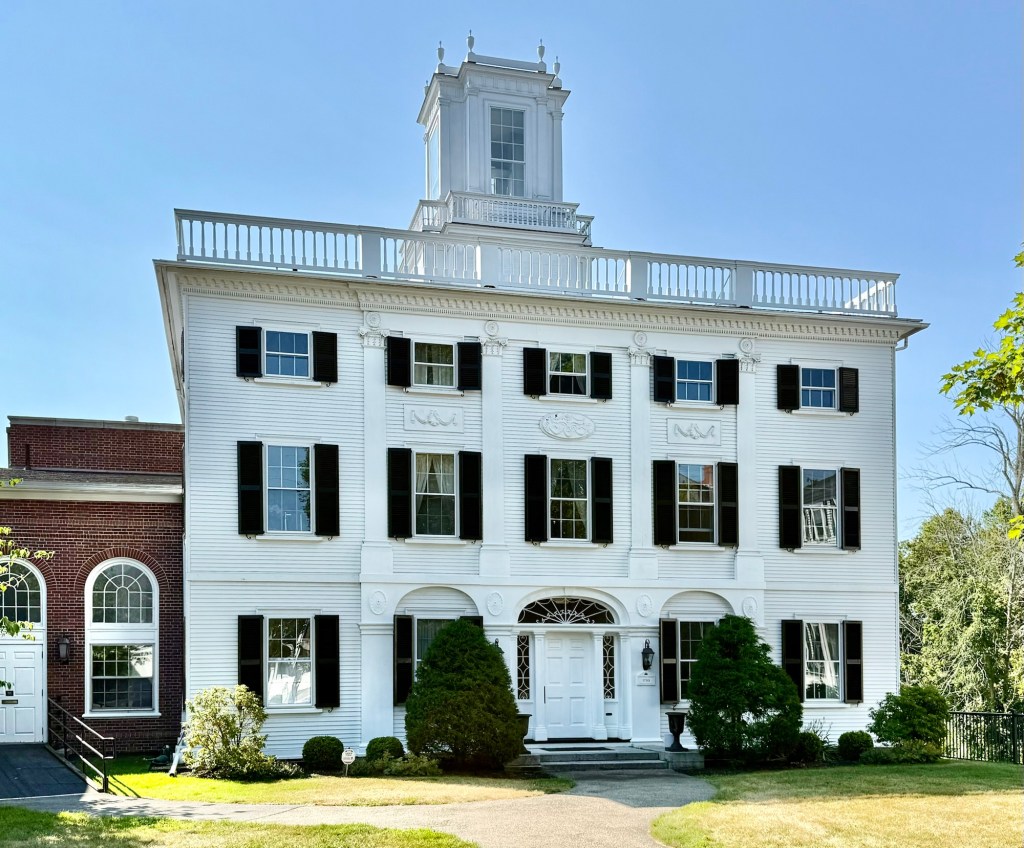
The Peirce Mansion on Court Street in Portsmouth, New Hampshire, is one of the finest, high-style Federal period homes in the United States. Built in 1799 for John Peirce (1746-1814), the residence is said to have been designed by Bradbury Johnson, a local carpenter and builder who was inspired by the designs of Charles Bulfinch. John Peirce began his career in the counting room of Daniel Rindge and worked in business and banking in Portsmouth. Peirce opposed the American rebellion against England but did not serve either side during the war. After the Revolution, in 1789, John Peirce was one of the leading citizens appointed to escort President George Washington around Portsmouth. The Peirce Mansion remained in the family over 150 years until it was sold by his descendants to the Middle Street Baptist Church in 1955, who extensively modified the residence to serve as a vestry and meeting space for church activities. The building was moved back from the road with the four tall chimneys were removed. Architecturally, the Peirce Mansion stands out for its massing, hip-roof with cupola adorned by a balustrade and urns, and the facade with elliptical arches, molded medallions, pilasters, and the Federal style entry treatment with fanlight transom and sidelights.

Long-Ladd House // 1812

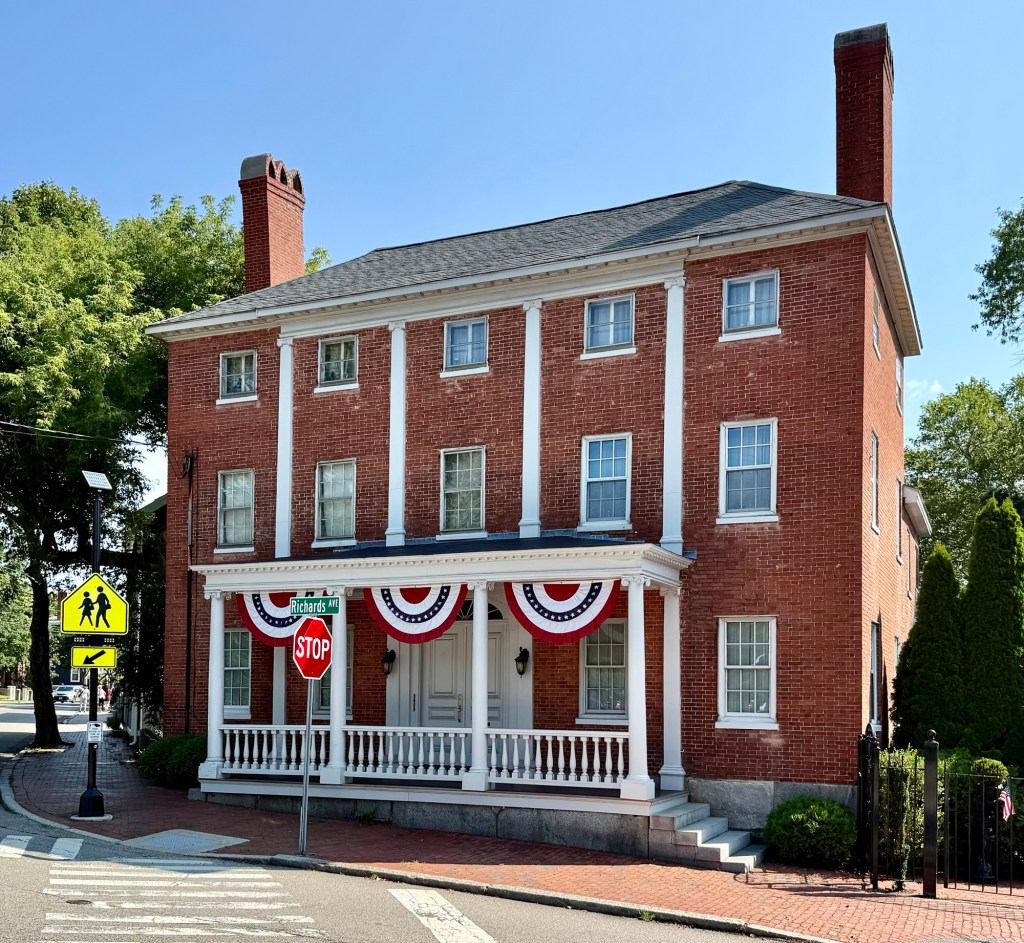
The Long-Ladd House at 3 Richards Avenue in Portsmouth, New Hampshire, showcases the versatility of the Federal style, an architectural style that dominated American architectural tastes from the 1780s through the 1830s. This house dates to 1812 and was built for George Long (1762-1849), a sea captain and trader until engaging in politics in his later years. He remained in the home until his death in 1449, leaving the property to his only heir, Marcy, and her husband, Henry Hurd Ladd. The Long-Ladd House is constructed of brick with the facade dominated by four, full-height pilasters breaking up the bays. A center portico shelters the main entrance which is adorned by a fanlight transom and classical surround. In a city full of Federal style homes, this one really stands out!

Samuel Larkin House // c.1804

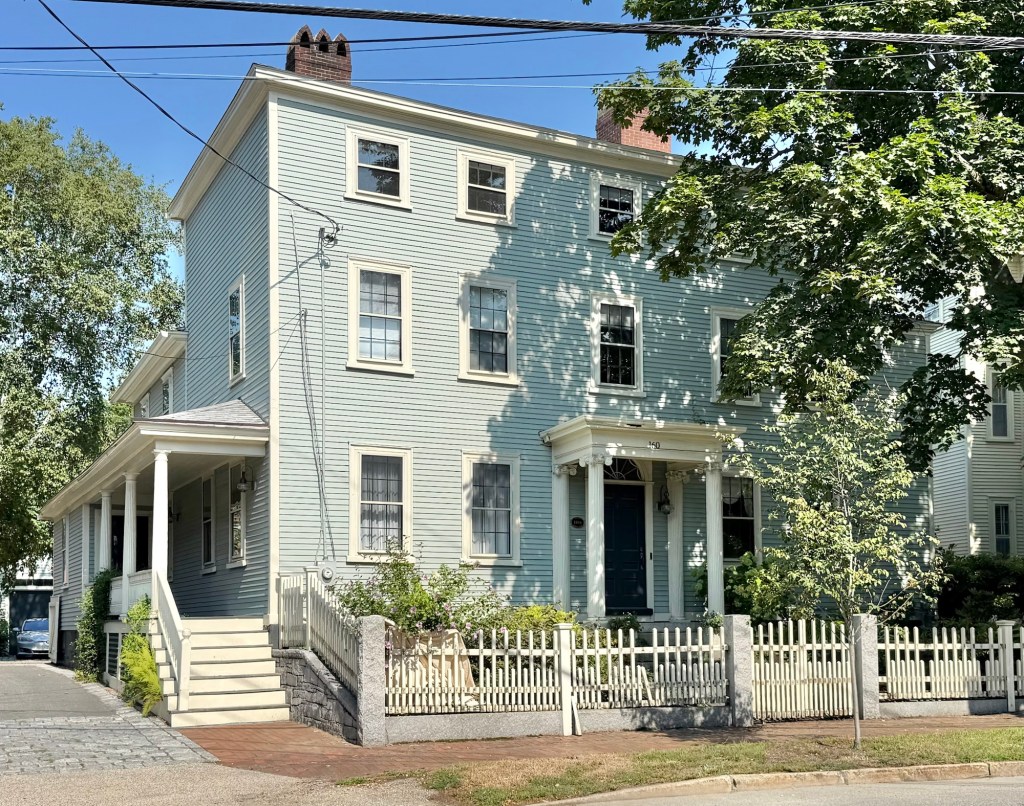
Before wealthy Portsmouth merchant and auctioneer, Samuel Larkin (1773-1849), built his brick Federal style mansion (last post), he lived in this more traditional Federal style house next door at 160 Middle Street. The three-story mansion was occupied by Samuel Larkin, his wife, Ann, and seven of their children who lived to adulthood, before the War of 1812, when he made his fortune auctioning goods stolen from British vessels by Portsmouth privateers. When he built his home next door, he retained ownership of this home, and rented it out to boarders until financial hardship in the late 1820s required that he sell his mansion and move back here to live out his retirement. The facade of the Samuel Larkin House is symmetrical with a central entrance door with fanlight and pilasters under a flat-roof portico supported by fluted columns with scrolled capitals.

Larkin-Ladd House // c.1813

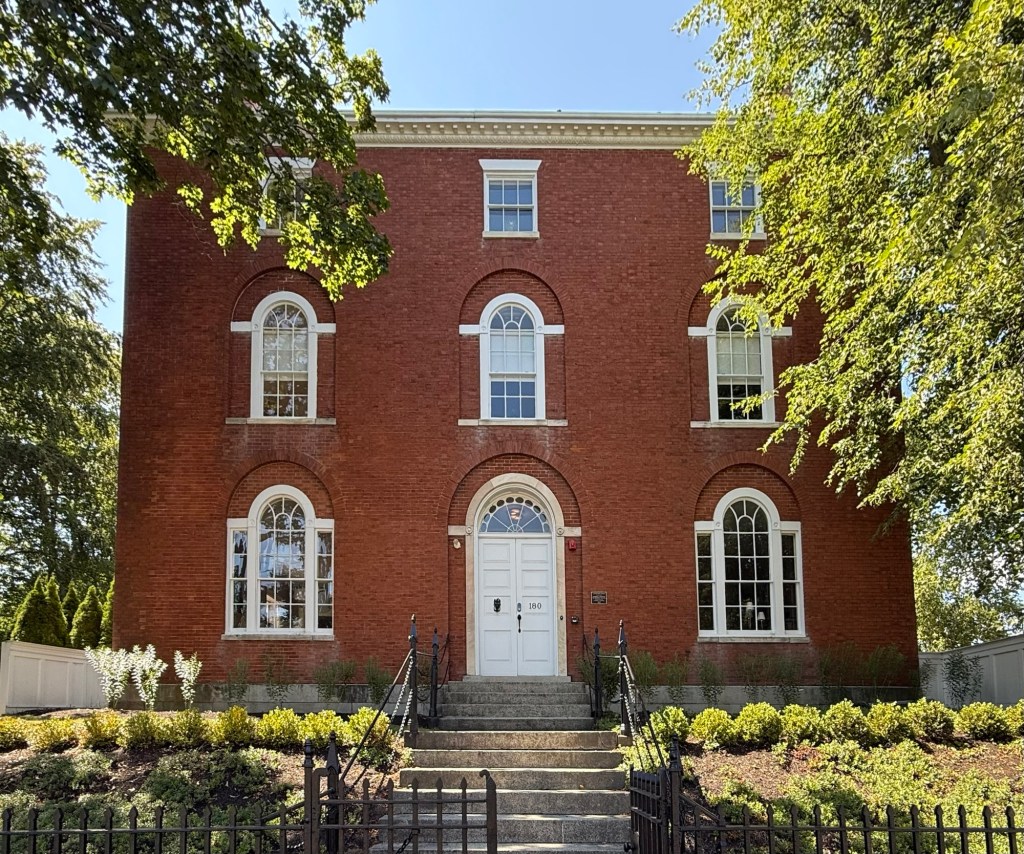
The Larkin-Ladd House at 180 Middle Street in Portsmouth, New Hampshire, is a three-story, masonry Federal-style residence with symmetrical facade, built for one of the city’s wealthiest merchants. Samuel Larkin (1773-1849) was born in Charlestown and moved to Portsmouth, marrying Ann Jaffrey Wentworth, a daughter of Col. Joshua Wentworth. During the War of 1812, Samuel Larkin made his fortune as an auctioneer, selling the contents of English ships captured by local privateers. It is believed that fourteen privateers and their crews worked out of Portsmouth Harbor and are said to have captured an estimated 419 British ships! With the profits from stolen goods from these British ships, Larkin purchased lots on Middle Street and began construction of this stately residence. He (and mostly his wife), had twenty-two children, although roughly half of them died before reaching adulthood. By the late 1820s, financial hardship fell on Larkin and he sold this property, moving into his house next door, which before this was his original residence and later rented to boarders. The Federal style mansion was later owned by Henry H. Ladd, a prosperous Portsmouth shipping merchant, who also served as President of New Hampshire Bank and Portsmouth Savings Bank. The Larkin-Ladd House is undoubtedly one of the finest Federal style residences in New England, and stands out for its entrance, flanked by Palladian windows and the slightly recessed elliptical surrounds at the first and second floor windows. Additionally, the historic stable, also from the 1810s, maintains much of its architectural integrity.

Jones-Sinclair House // 1865

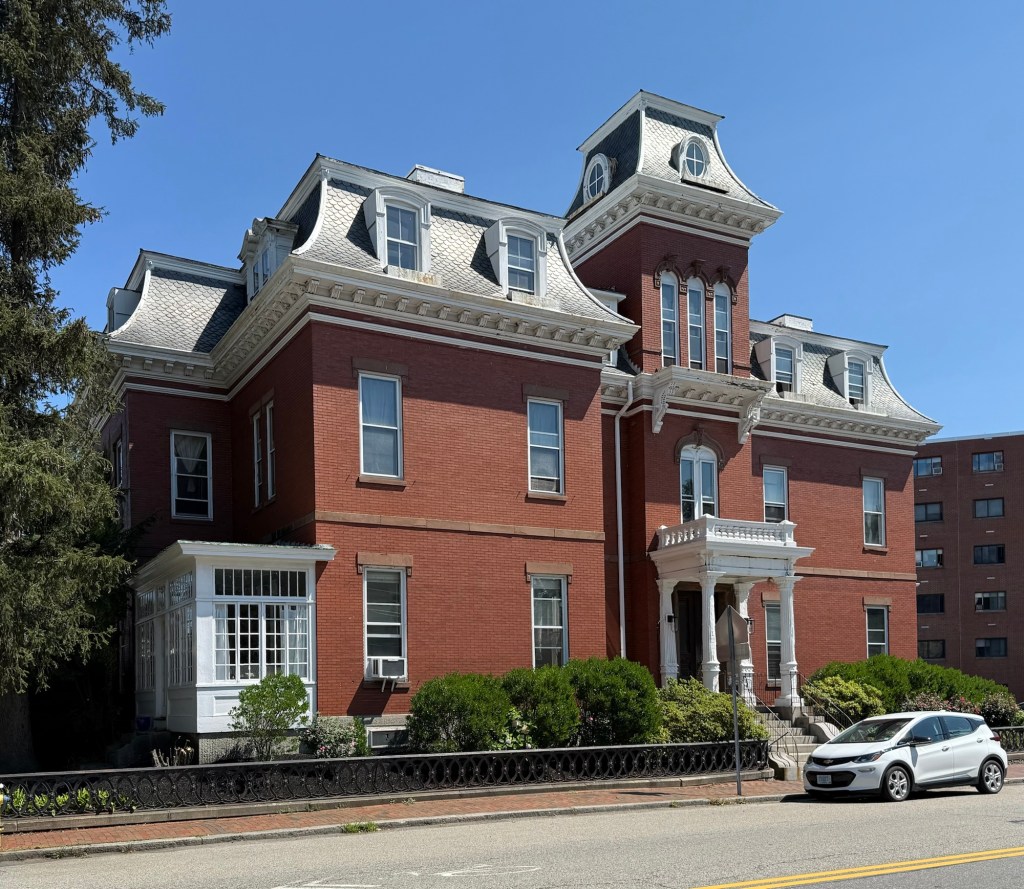
One of the finest Victorian-era residences in Portsmouth, the Jones-Sinclair House at 241 Middle Street, is a stately and oversized Second Empire style mansion built in the location of an even more significant home. Originally on this site, at the convergence of two busy streets, Thomas Haven, a wealthy merchant and half-brother to William Haven who lived across the street, built an impressive brick, Federal style mansion here in around 1818. Admiral George Washington Storer, Commander in Chief of the Brazil squadron of the U.S. Navy, later purchased the Federal style octagonal house. Mary Washington Storer, inherited the house after her father’s death in 1864, and she with her husband, Albert L. Jones, demolished the old octagonal-shaped house around 1865-1867, replacing it with this mansard-villa style mansion. By about 1890, Charles A. Sinclair and his wife, Emma, is said to have received the house as a gift from her uncle, the famous Portsmouth industrialist and politician, Frank Jones

William Haven House // c.1807

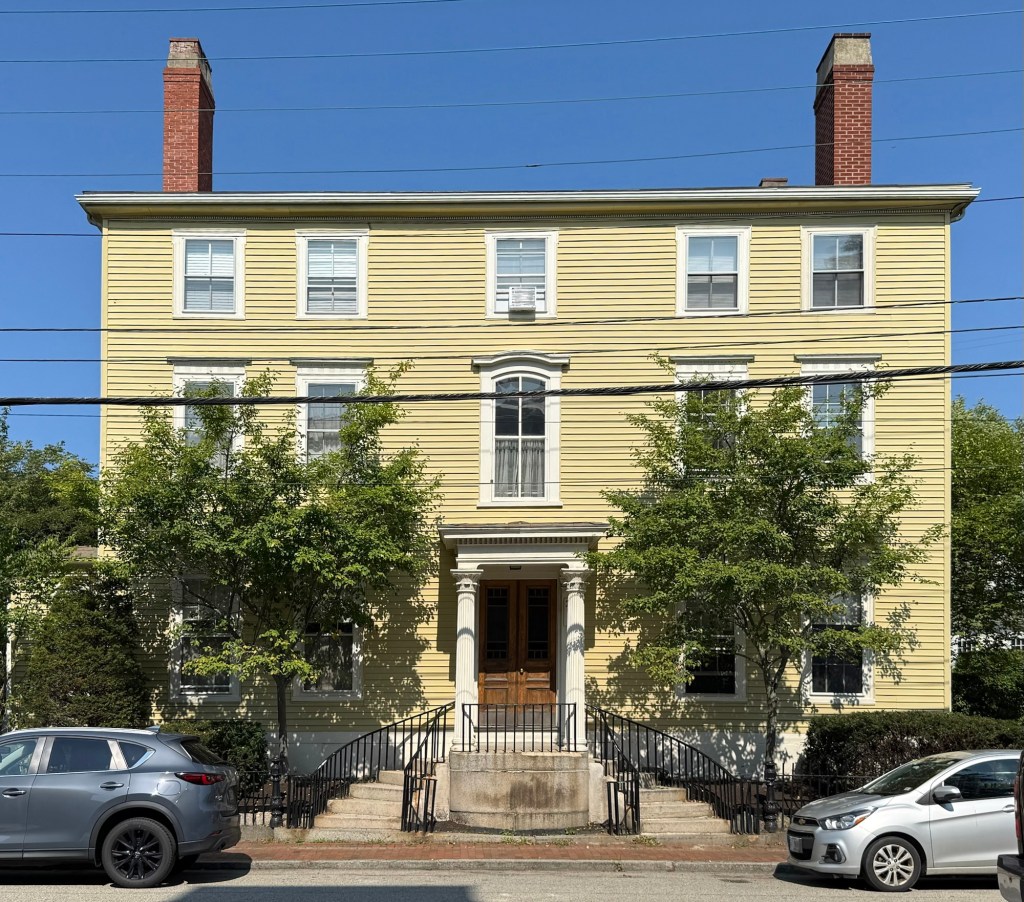
William Haven (1770-1856) was the youngest son of Reverend Samuel Haven (1727-1806), the Pastor of South Church, and Mehitable Appleton Haven, daughter of Rev. Nathaniel Appleton. William was a merchant that traveled extensively with his brothers, who employed him as their accountant, later working as a cashier of the New Hampshire Bank in Portsmouth, and later an accountant for the Portsmouth Savings Bank. William married Sophia Henderson in 1807, and soon-after, had this large residence on Middle Street built for his new family. By the 1870s, the residence was owned by William H. Hackett, who likely modernized the home with the Italianate style stair-hall window on the second floor, and portico and entry. 

Langley Boardman House // c.1804

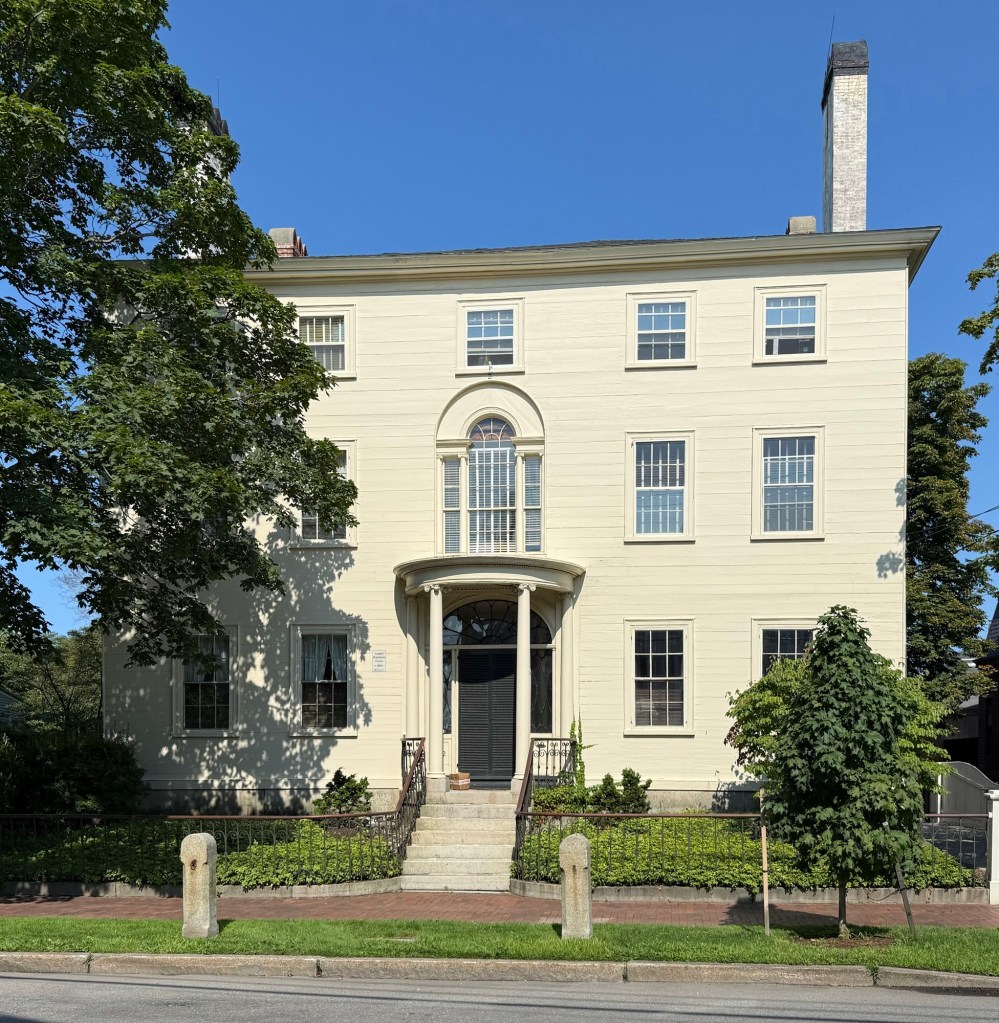
Langley Boardman (1774-1833) was an important builder and real estate developer who built his own home, this stately Federal style residence, at 152 Middle Street in Portsmouth, New Hampshire. Langley Boardman later served as a Constitutional Councilor and as a State Senator, living here until his death in 1833. His son, Dr. John Howe Boardman, owned the home until his own death in 1882. The Boardman House is a high-style Federal style residence with a three-story, five-by-three-bay, rectangular, form. The building has a hipped roof and four tall brick chimneys, with flushboard siding at the facade. The facade has a double wood-paneled entrance door with fanlight and rectangular sidelights under an elliptical flat-roof porch with overhanging eaves and denticulated cornice supported by columns with scrolled capitals. At the facade second story, directly above the entrance, is a Palladian window with columns with scrolled capitals slightly recessed in an elliptical surround.