Oliver J. Barr House // 1908

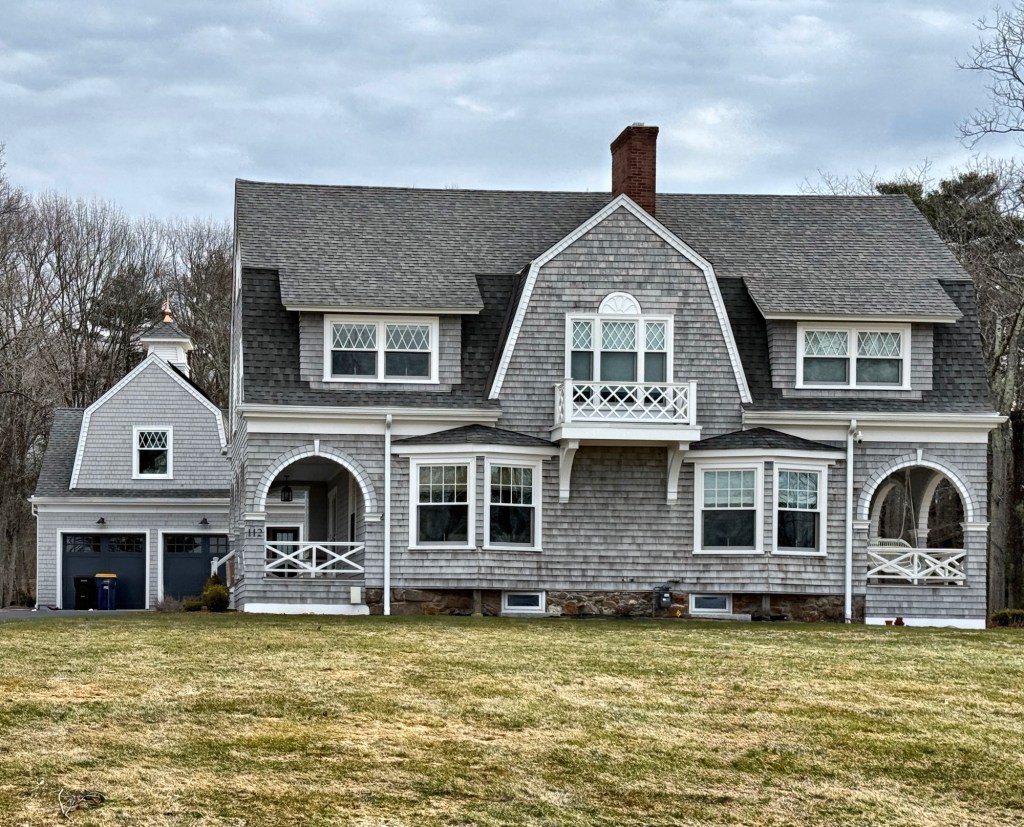
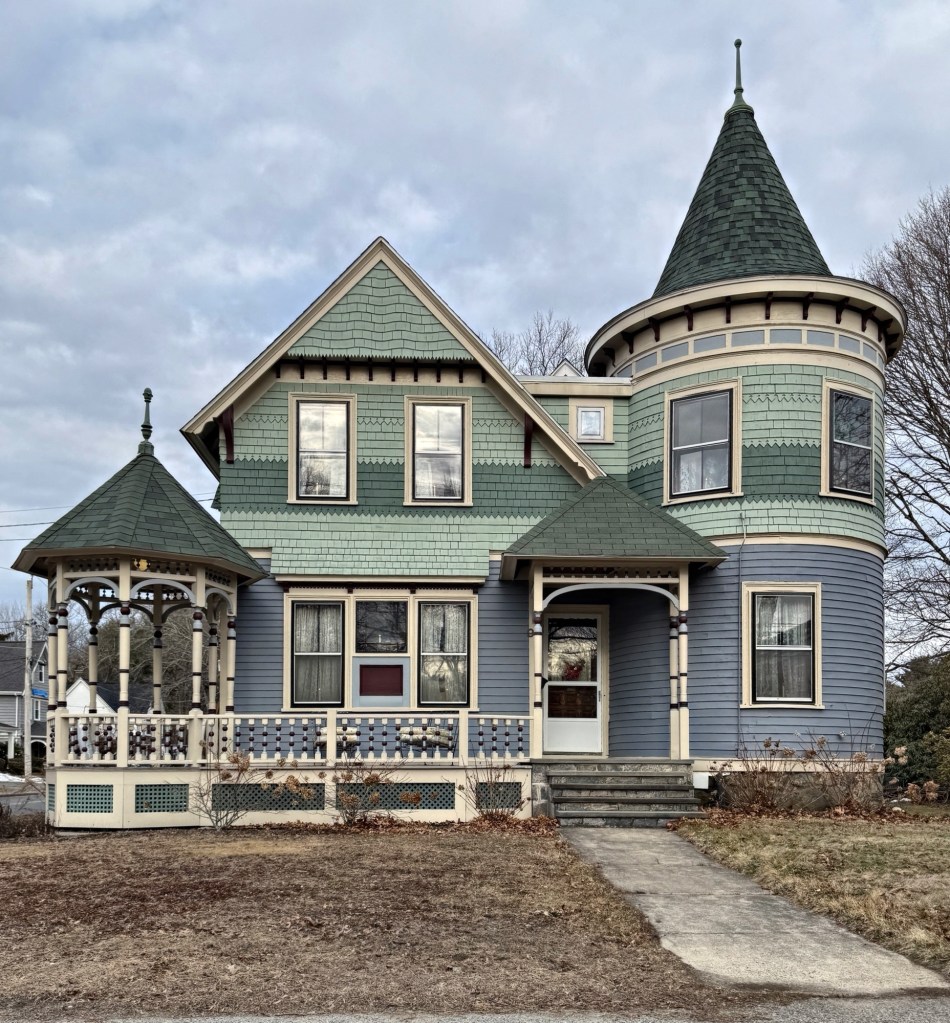
Built in 1908 as a late example of the Queen Anne and Shingle styles, the Oliver J. Barr House is one of the finest Victorian buildings in Norwood, Massachusetts. The residence was built for Oliver J. Barr (1863-1935), who served as the General Manager of the Norwood Press in town, following his company from Boston to Norwood. The house was designed by Eugene Clark a Boston-area architect who specialized in suburban houses in the late 19th and early 20th centuries. The dwelling is noteworthy for its distinctive form, intact and rough textured wood shingle siding, and complex roof configuration. Particularly noteworthy is the verandah which encircles its northeast corner and rounded conically capped tower.

Norwood Theatre // 1927

The Norwood Theatre was built in 1927 as a high-style showpiece for the re-invigorated downtown of Norwood, Massachusetts. Built at the same time as the Norwood Town Hall building, the building was constructed at a time of great development in the town, as local entrepreneur and philanthropist, George Willet and landscape architect Arthur A. Shurcliff, created a plan to evolve Norwood from a sleepy rural town to a commercial center. Architect William G. Upham is credited with designing the theatre and he enjoyed a prolific career which encompassed the design of masonic temples, commercial blocks, theatres, homes, and of course, the Norwood Town Hall. The Norwood Theatre was designed in a high-style Spanish Renaissance Revival style and was designed for motion pictures but also included a stage for possible vaudeville and theatrical productions. By the mid-20th century, a Modern sign covered much of the original facade, and lasted until the building came under its current ownership in 2010. A careful two-year restoration brought the theatre back to its former glory.

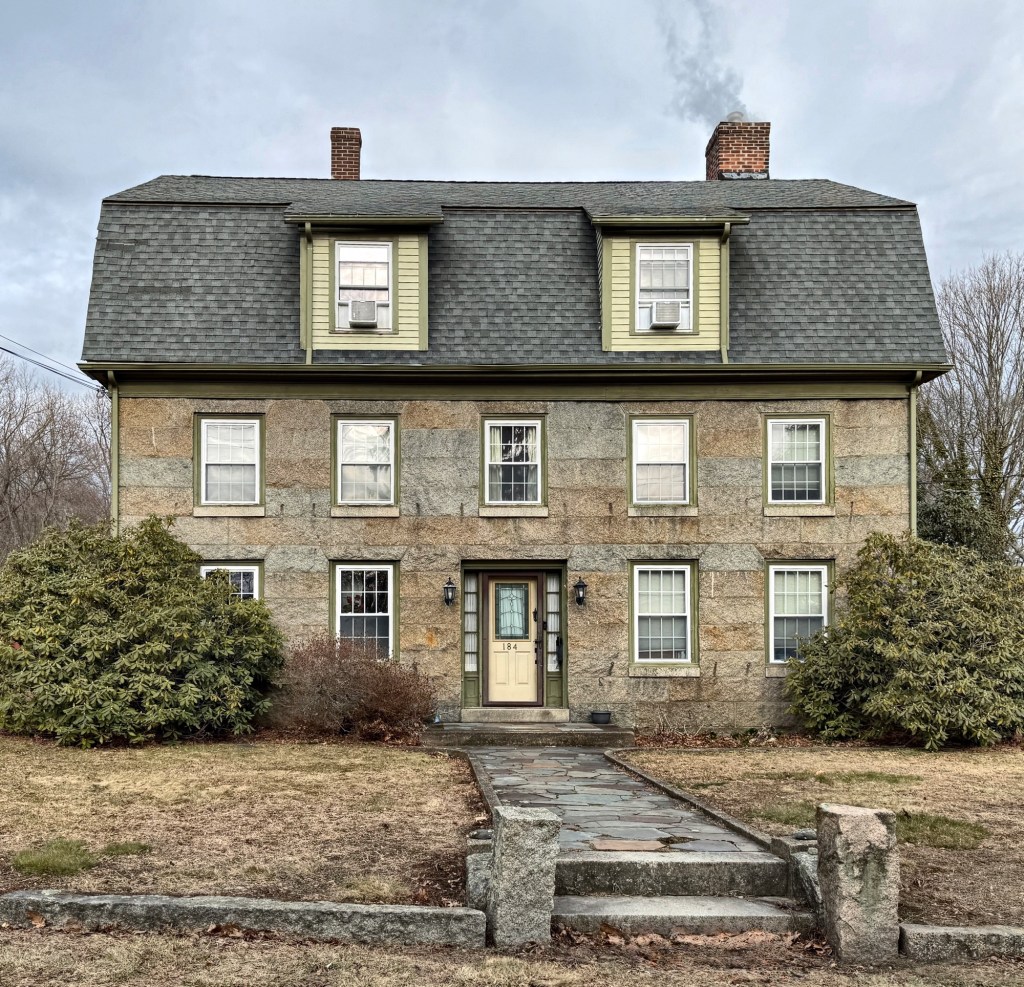
Chickering Farmhouse // c.1807

The Chickering House at 101 Walpole Street is significant as one of the oldest extant houses in Norwood, Massachusetts. Although local lore dates this house to 1781, it likely dates to 1807 (or was adapted from an earlier house) and was owned by Deacon Dean and Sally Guild Chickering, who farmed on the lot. Three generations of Chickerings farmed the land here until the early 20th century, when John D. Chickering, a local historian, sold much of the land for suburban development. The Federal style farmhouse remains as a vestige of the early, pre-suburbanization that Norwood is now known for.

Norwood Odd Fellows Building // 1912

In the early 20th century, Norwood, Massachusetts, shifted from sleepy rural town to a commercial and population center with a population tripling in size between 1900 and 1930. Located on Washington Street, the town’s main commercial street, the Odd Fellows Building stands as a reminder of the historical importance to charitable and social organizations. Designed by Boston architect Clarence Blackall, the three story building is characterized by a boxy rectangular form, yellow and tan masonry with limestone and granite trimmings, and its somewhat minimal detailing. Built in 1912, the building’s first floor was designed to contain two stores, the second floor housed the club rooms and meeting hall, and third-story containing restrooms and a kitchen. The Classical Revival style building is one of the larger and more significant commercial structures in the town center.

Norwood Town Hall // 1928

Norwood Town Hall represents the achievement of landscape architect Arthur A. Shurtleff and local financier, George Willet, to transform the village center of Norwood, Massachusetts from a sleepy rural village to a thriving commercial and cultural center of town. Plans for the municipal building began as early as 1919, with this building serving as both a town hall and memorial to the Norwood men who died in all previous wars. The building would not be completed until 1928. Designed by Norwood architect, William Upham, the building is a landmark example of the Neo-Gothic Revival style and its main feature, the 110-foot bell-tower which houses a 50-bell carillon, towers over the town common.

Lowney Chocolate Factory // 1903

The Lowney Chocolate Factory is a historic industrial complex in Mansfield, Massachusetts and was established there after town officials took advantage of rail access provided by the Boston and Providence Railroad and enticed businesses to establish themselves in Mansfield. The Walter M. Lowney Company was a chocolate and candy business founded in Boston in the early 1880s by Walter M. Lowney, who started his business by manufacturing chocolate bonbons. The company built offices and factories in Boston, Montreal and here in Mansfield, where they would ship out boxed sweets to stores all over the country. The Mansfield factory was designed by the architectural and engineering firm of Dean & Main in 1903. The firm was
comprised of partners Francis W. Dean and Charles T. Main, who had offices in Boston and specialized in mill design and engineering from 1893 to 1907, originally designing Lowney’s Boston factory in the North End. A later fieldstone addition was added in 1910 and housed the company’s office and shipping facilities. After Walter Lowney died in 1921, the Walter M. Lowney Company continued to operate under the ownership of Lowney’s wife. In the 1930s the factory property was wholly purchased by the Rexall Drug Company, who renamed the Lowney company, United Chocolate Refiners. The Mansfield factory was later owned by Nabisco to make chocolate for oreo cookies for a number of years until it again changed hands. The factory had been largely empty since 2010 until it was recently converted to mixed-income housing (the best kind of redevelopment)! Who doesn’t love a happy ending?