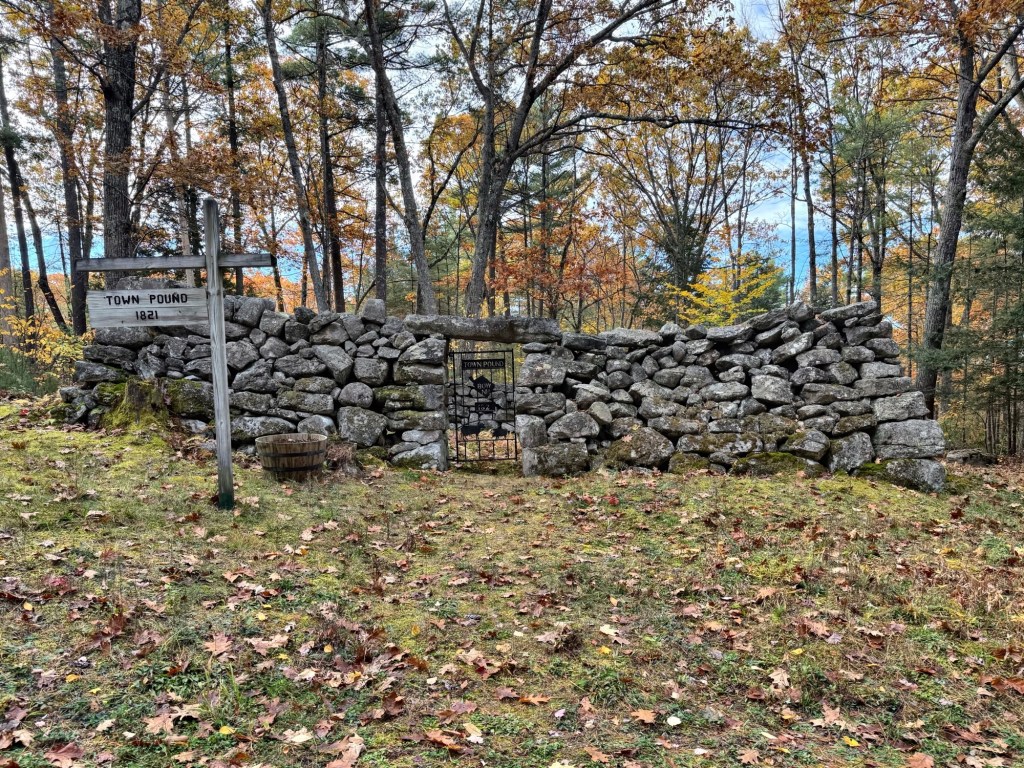
Bow Town Pound // 1821

In farming communities all across New England, disputes inevitably arose when one person’s livestock left their land and damaged another person’s crops. New England laws required farmers to fence their fields and keep farm animals from straying, but some inevitably got out. The solution was to build pounds where stray cattle, horses, sheep and swine were rounded up and kept by a town-appointed pound keeper who would round up the roaming animals and keep them there, charging by the day until an owner releases the animal and pays the fee of any damage done. The old town pound in Bow, New Hampshire, dates to 1821 and features tall stone walls, high enough to prevent taller livestock from jumping out. As towns like Bow shifted away from agrarian culture, these structures crumbled back into the earth. Luckily for us, some sommunities preserved their pounds and in Bow, the local community restored the town pound in 2011.
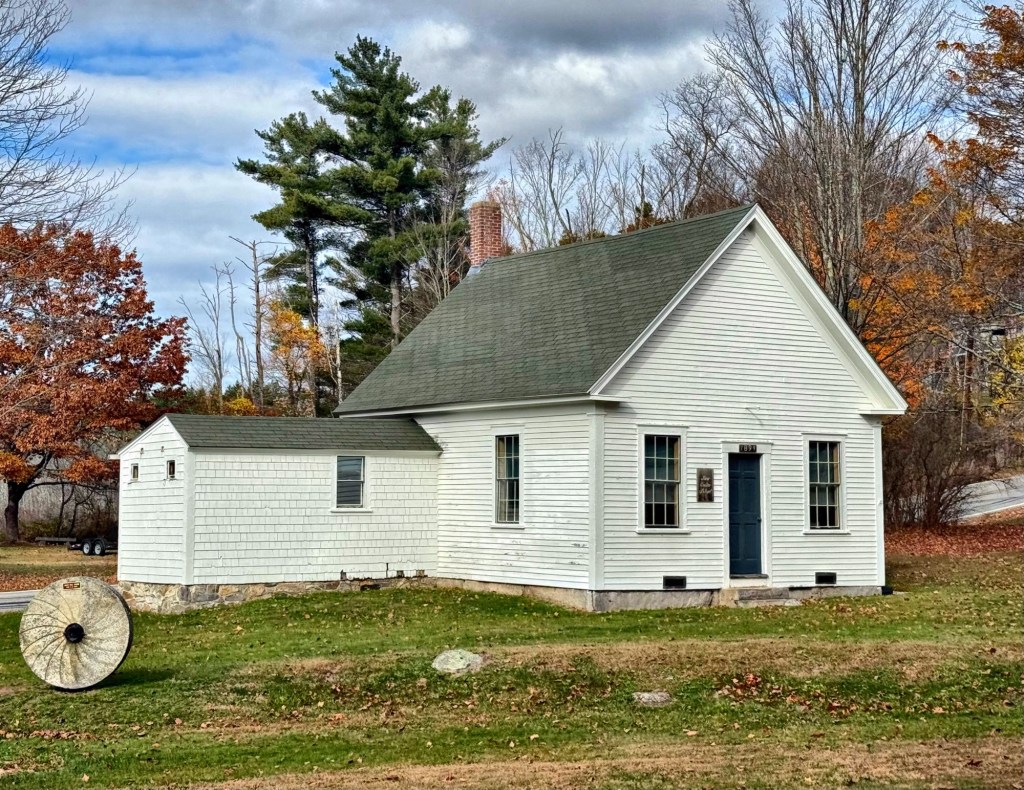
Bow Center Schoolhouse // 1894

One of the many one-room schoolhouses of rural New England, this late-19th century example can be found in the town center of Bow, New Hampshire. The vernacular schoolhouse served hundreds of pupils in the northern part of town, from its construction in 1894 until 1924 when it was moved to its present location near the old Town Hall, where it was in use until 1945. In 1948, the School District sold the school to the nearby Baptist Church for Sunday school classes. The Town bought the building from the Church in 1968 and restored it as an historic site. Today, the rebuilt Snow Roller used in the early 1900s to pack snow down for passage of horse-drawn sleighs and wagons, and a mill stone, sit nearby the old schoolhouse as sort of an open-air museum.

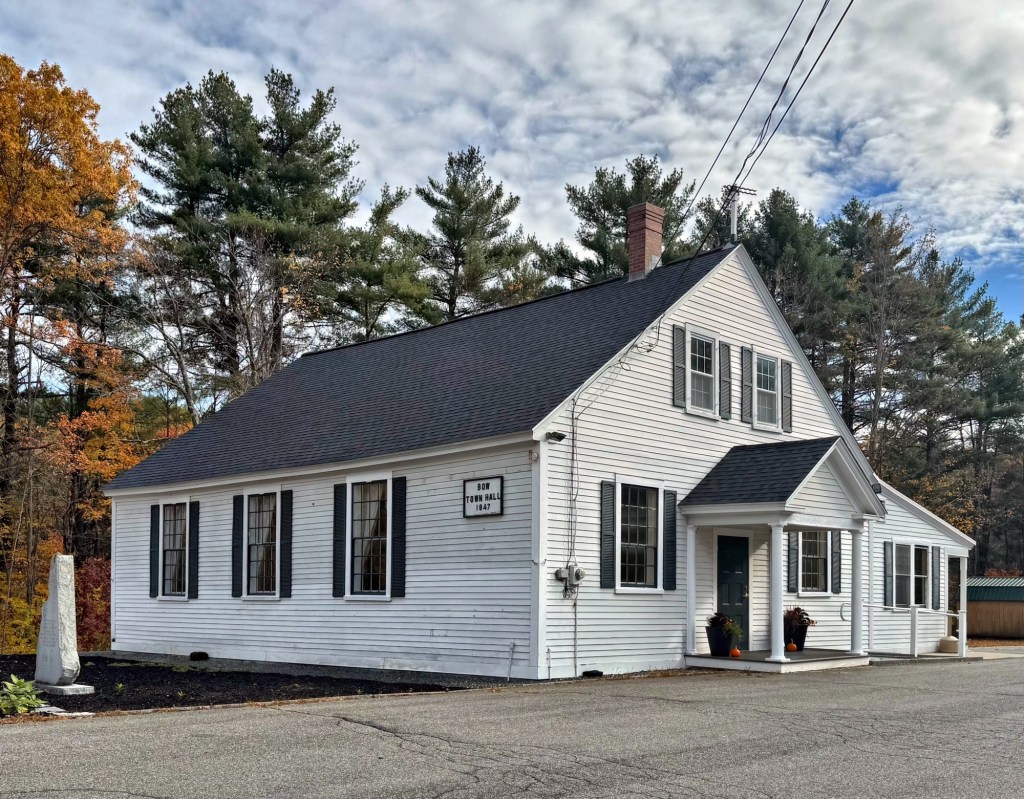
Bow Old Town Hall // 1847

The town of Bow, New Hampshire, was incorporated in 1727 and named after its location along a bend, or “bow” in the Merrimack River at its easternmost boundary. Early town meetings were held in the town meetinghouse of 1770, and the second meetinghouse of 1801, until the separation of church and state became official in New Hampshire in 1819, with the passage of the Toleration Act. Until 1819, residents in New Hampshire conducted town business and religious services in the same building, the town meetinghouse. However, as towns diversified and religious freedom prospered, citizens grew less comfortable supporting one particular religious denomination with taxpayer money. Bow eventually secured funding to erect its first purpose-built town hall in 1847, this vernacular, two-story building on Bow Center Road. The small building served as the town hall for over 100 years, when in 1957, a growing suburban population required a larger, more modern town hall. The old Town Hall of Bow now serves as a meeting place for Town organizations and is rented out to Town residents for events.

Leland Homestead // 1843

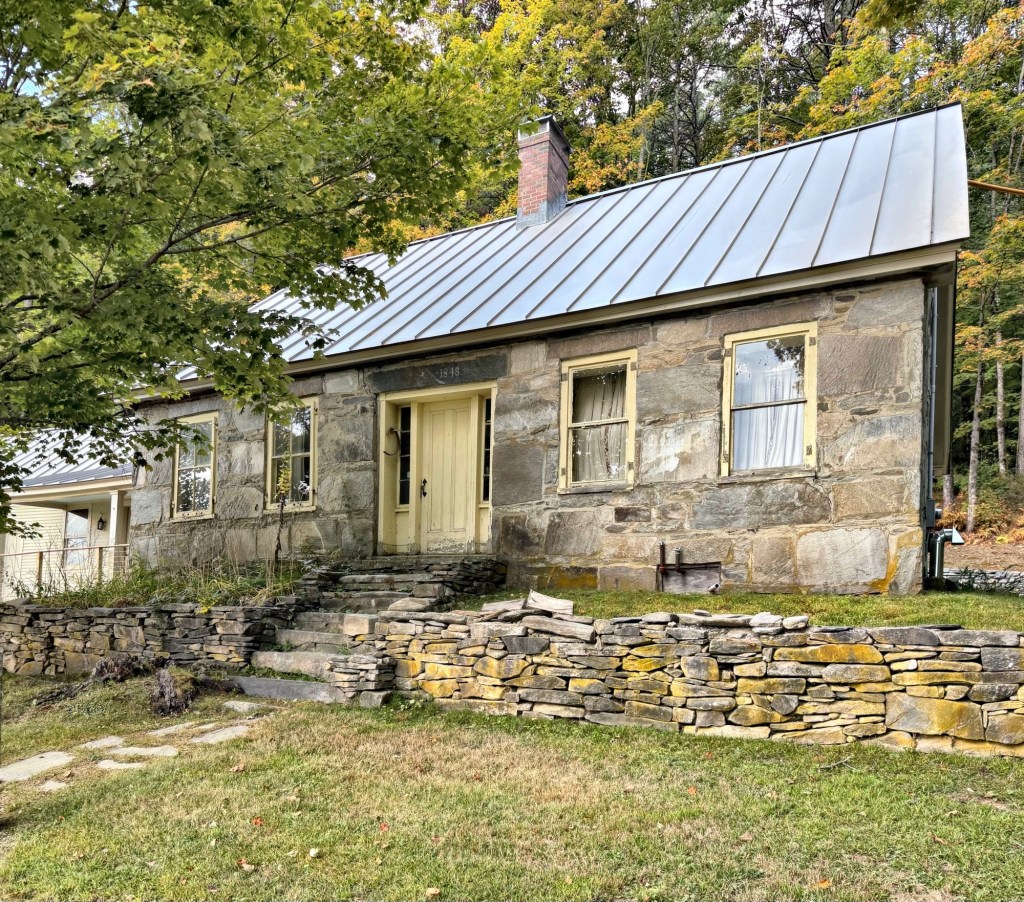
The small, rural Town of Baltimore, Vermont, was originally a part of Cavendish but due to the geography and a mountain separating the village from the main town, residents here voted in 1793 to set off as its own town. The nomenclature of the town name, Baltimore is not clear, as the city in Maryland was named for George Calvert, first Baron Baltimore, who was granted that colony in 1632, but there is no evident connection between the two communities. The word Baltimore itself is Celtic for “large town”; appropriate for Calvert’s colony, perhaps, but hardly for this Vermont town, which is one of the smallest in the state in terms of population or square miles. The town has always been a community without a distinctive village center and has long been primarily farmland, with properties bounded by stone walls and forests. This stone house on Harris Road in Baltimore was built in 1843 by Joshua Leland and his wife, Betsy Boynton. A history of the town speaks of the house, “It was one of the most attractive houses ever built in Baltimore, a well-built front hall and stairway, four fair-sized pleasant rooms downstairs, three well-arranged chambers and a convenient back stairway, all well-finished”. The home, with its date of construction over the front door, remains one of the most historic and well-preserved buildings in the town of just over 200 residents.

Corbett House // c.1789

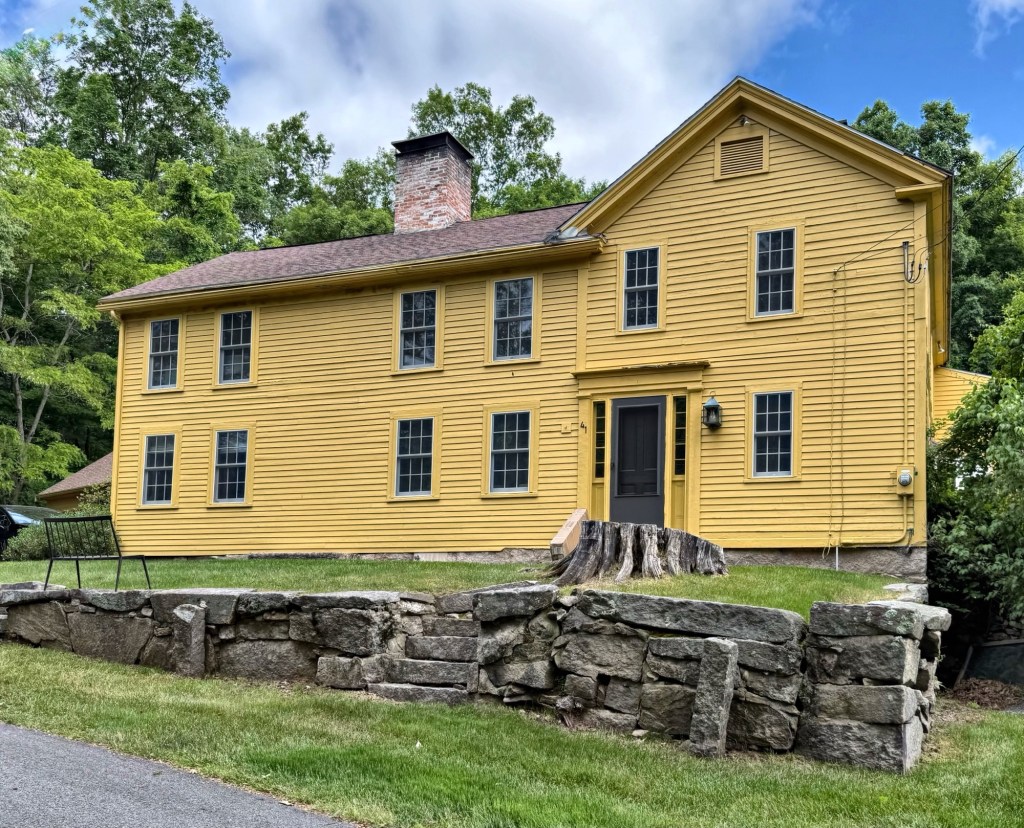
The Corbett House is a charming Federal-period house in Westborough, Massachusetts, and was the birthplace of Henry W. Corbett, an important figure who helped develop Portland, Oregon in the 19th century. This house was built around 1789, the year that Henry’s parents, Elijah and Malinda Corbett, married. The property was farmed for years until Elijah Corbett began an axe manufacturing company here, becoming the first edge-tool manufacturer in Westborough. The rear ell was likely added in 1815 for this purpose. Elijah retired and the family sold the property in 1831 to Lawson Harrington, who continued the business until around the time of the Civil War. The Corbett family settled in New York, where Henry would engage in business. By the mid-19th century, westward expansion and opportunity took hold, and the Oregon Territory became a U.S. territory, leading Henry to establish business there, followed by many of his siblings. Corbett set sail from New York on the long voyage through the Straits of Magellan around Cape Horn up the Pacific Coast to Portland with $25,000 worth of goods to establish business in this new territory. Henry would become City Treasurer of Portland, member of the city council and chairman of the Republican Oregon State central committee. In 1867, he was elected as a Republican to the United States Senate, serving until 1873. Who would have guessed that this house in Westborough would have connections to the growth of Portland, Oregon!?

Captain John Clark House // 1802

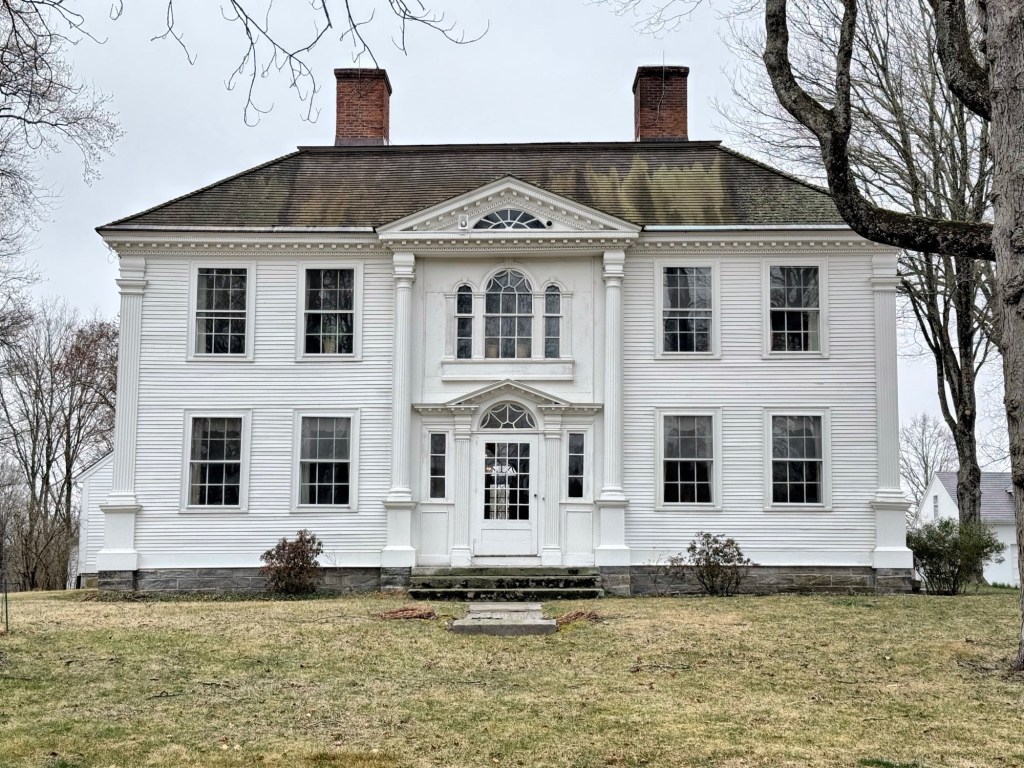
The Captain John Clark House in Canterbury, Connecticut, is one of the finest examples of the Federal style of architecture in New England, and has remained in a fine state of preservation since its construction in the early 19th century. The house was built by 1802 for John Clark (1731-1834), who purchased an earlier home on the site from and had it either taken down or enlarged to its present appearance. The mansion is symmetrical with five bays, central entry and twin chimneys projecting through the hipped roof. The central bay is a showstopper with its triangular pediment at the roofline containing a fanlight, Palladian window at the second floor, and main entrance with its own pediment, sidelights, fanlight transom, all framed by two-story columns. The house’s south facade is equally beautiful with its own Palladian window and entrance.

“The Pillars” // c.1780

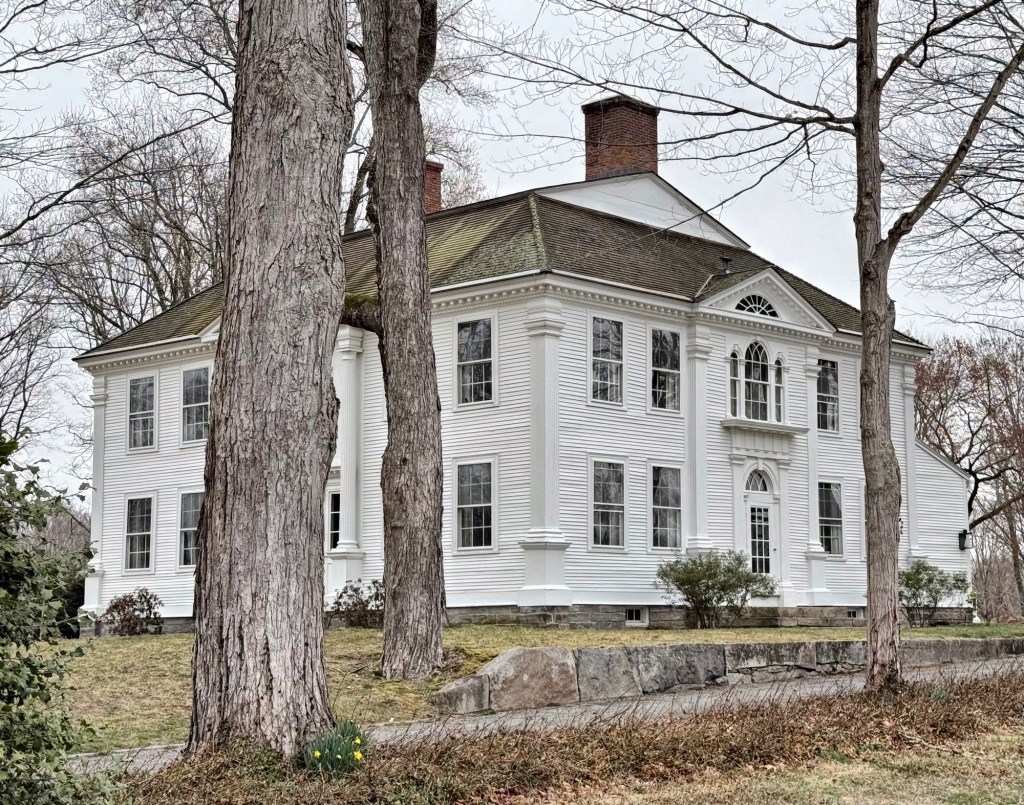
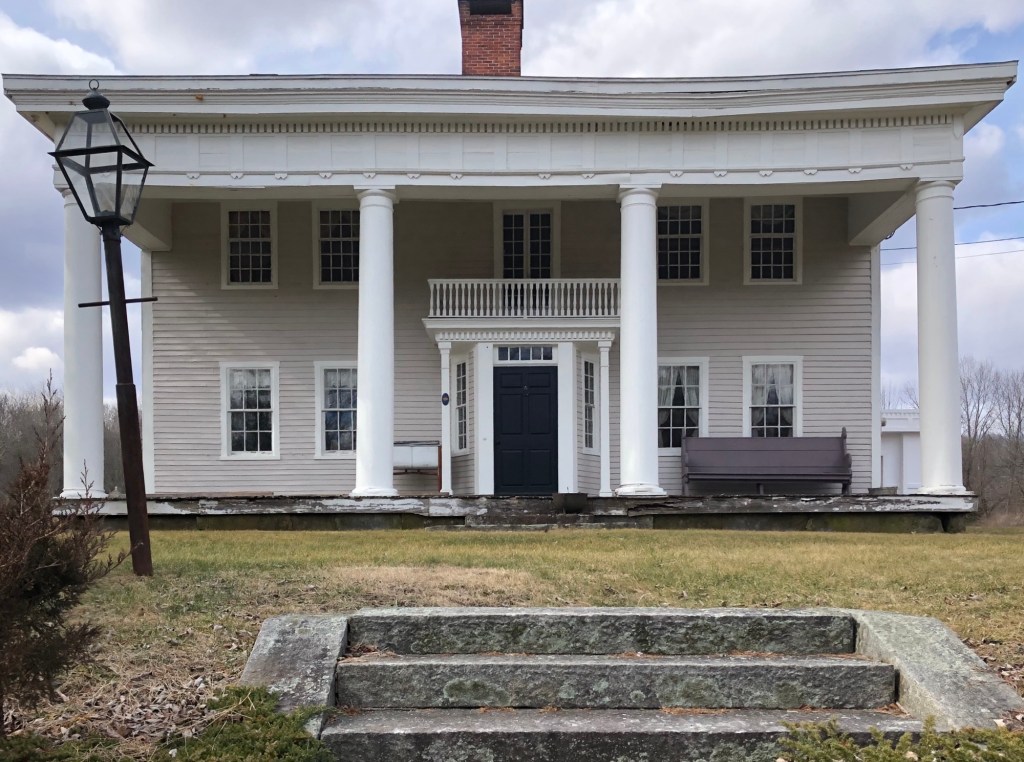
Renovated in the early 20th century from a Federal style farmhouse, “The Pillars” in Canterbury, Connecticut, is an extravagant example of a Colonial Revival style residence in this quiet part of the state. The Pillars was the creation of Frank Edwin Miller (1856-1947) and his wife, Hattie Jenks Miller. The Miller’s retired here in 1913 after Hattie inherited the family homestead, which dated to the late 18th century, and they had the home renovated, adding the massive two-story columned porch and projecting entry. The house is a visual representation of the difference between Colonial and Colonial Revival styles as this home, the latter example, is a free interpretation of its prototype with exaggerated architectural details in a scale not seen centuries earlier.

Scotland Universalist Church – Shetucket Grange Hall // 1843

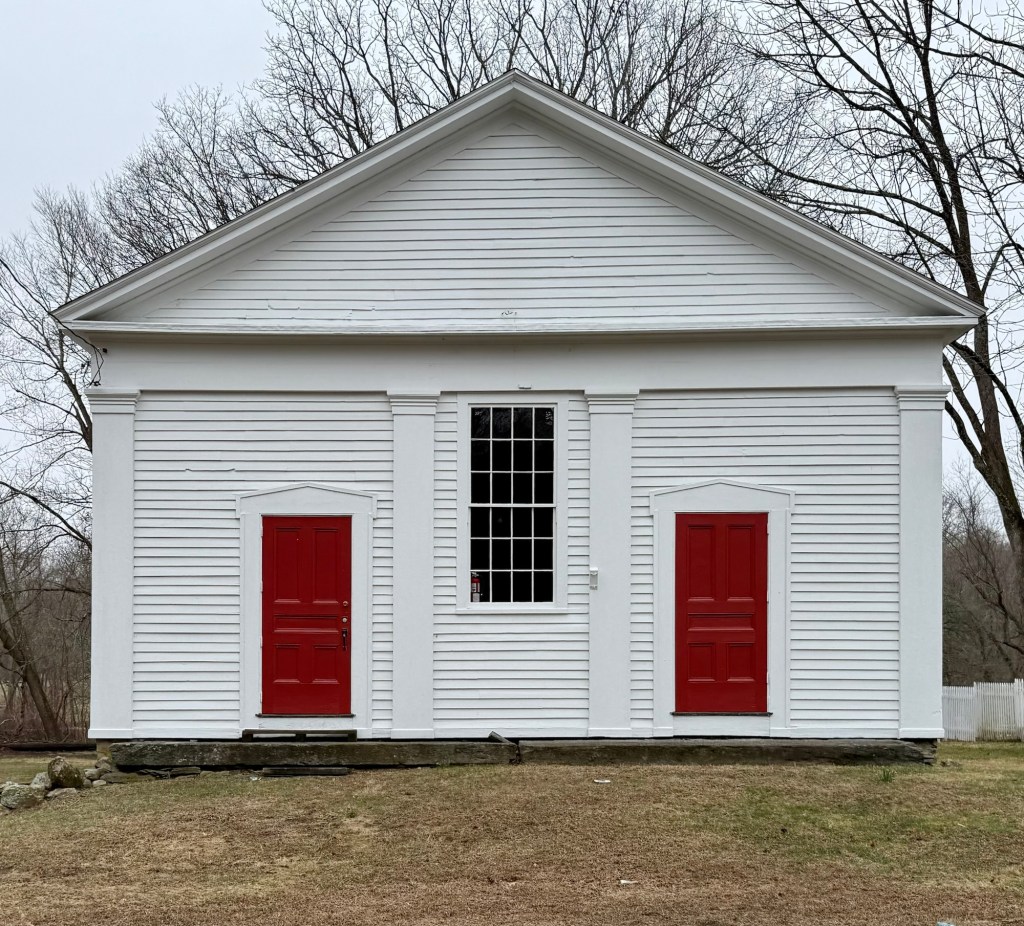
This charming, Greek Revival style building near the town green in Scotland, Connecticut, was built in 1843 as a Universalist Church for area residents who split off from more Congregationalist beliefs. By the end of the 19th century, populations shifted heavily to industrial centers where work was more plentiful, the church appears to have lost much of its membership and the building became a local grange hall. The Shetucket Grange was organized in June 1887, and was a meeting place for local farmers and their families to promote the economic and political well-being of the community and agricultural pursuits. Today, the building is owned by the town, but it’s use is unclear. Greek Revival in style, the building retains much of its original architecture, from its simple form, facade with two entrances flanking a central hung window, and pilasters framing the bays.

Edward Waldo House // c.1715

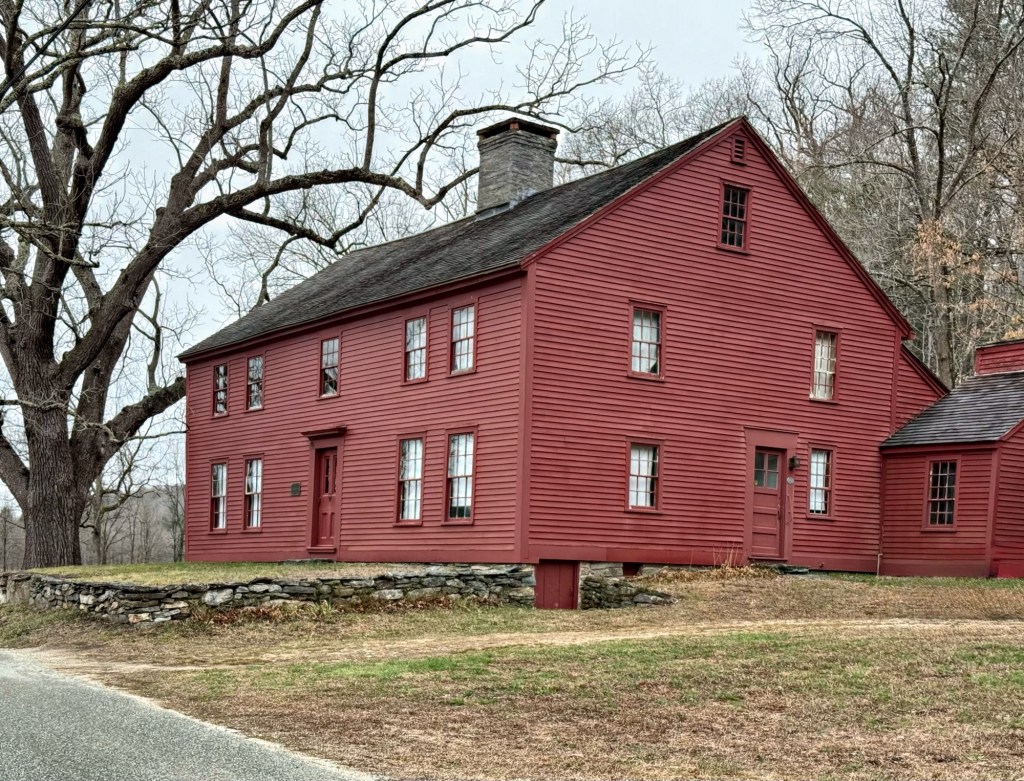
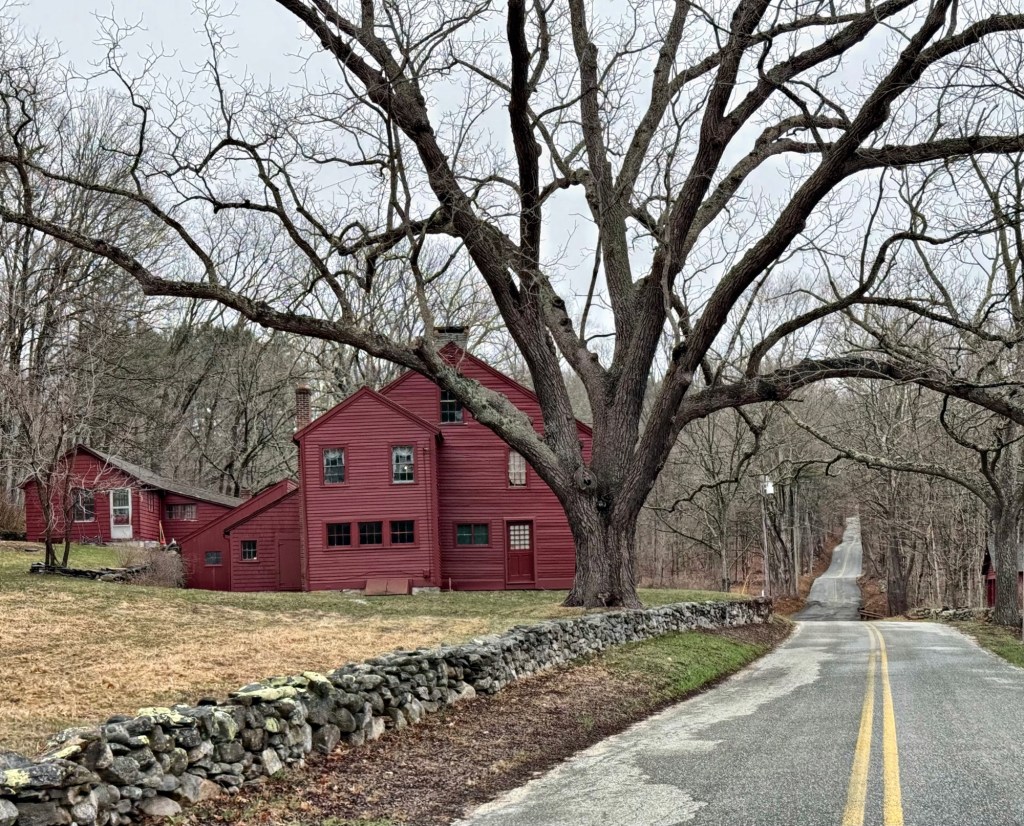
The Edward Waldo House in Scotland, Connecticut, is a vernacular Georgian house with saltbox roof and wings which from its erection about 1715 until 1971 was owned by members of the Waldo family. Edward Waldo (1684-1767) purchased land here along the Shetucket River in 1702 and by 1715, erected this house. The saltbox house which Edward Waldo built was one of the first houses in the town of Scotland and would remain in successive generations of the family for centuries. The house was the birthplace of Samuel Lovett Waldo (1783-1861), a portraitist who was a founder of the National Academy of Design as well as Daniel Waldo, chaplain of Congress, 1856-1858, and was one of seven Revolutionary War veterans who, having survived into the age of photography, were featured in the 1864 book The Last Men of the Revolution. The last Waldo owner, Miss Ruth Waldo died in1975. She insured the preservation of her family homestead by bequeathing the house, its contents, and about 15 acres of land to the Antiquarian & Landmarks Society of Connecticut Inc. and the surrounding acreage to the Connecticut Forest and Park Association, creating an enduring legacy for centuries to come. The house, set amongst a quiet country road, is evocative of early days in Scotland, Connecticut, and is one of the finest-preserved Colonial homes in this part of the state. 

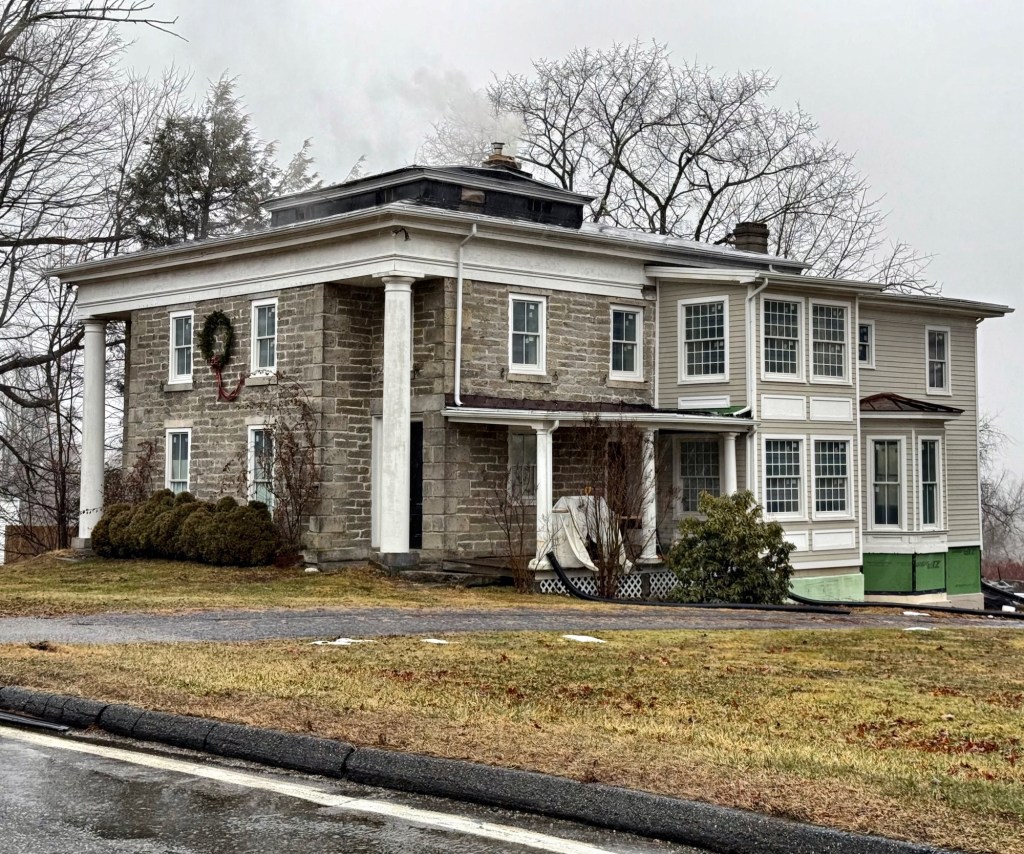
Myron Norton House // 1840

The Myron Norton House, built in 1840, is located in the central village in Goshen, Connecticut. Built of stone, the house is unique as the only example of a stone house in the village, and the only Greek Revival house that departs from the usual gable-roofed form, having a square plan and hipped roof with monitor. The home was built for Myron Norton (1788-1853) and his wife, Caroline (Marsh) Norton, who outlived her husband by 23 years, living here until her death in 1876. Myron Norton made his fortune patenting and selling pineapple cheese molds, where he pressed the curds from local cows in wooden pineapple-shaped molds to give them the desired shape. It is the house that cheese built!