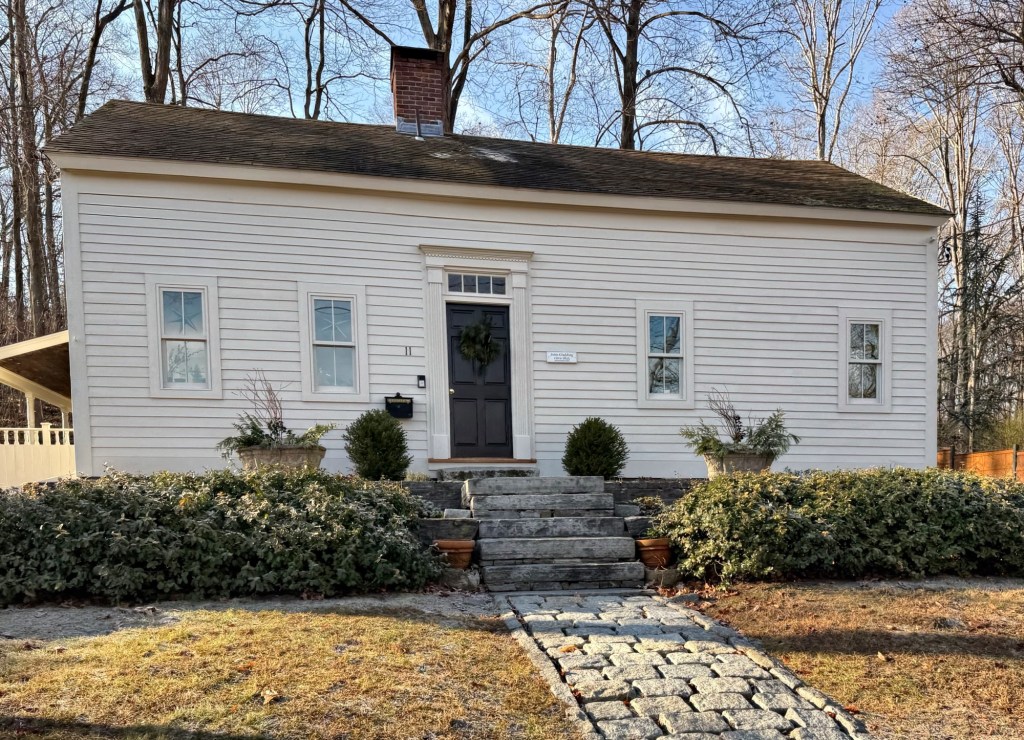
John Gladding House // c.1825

This vernacular, Federal period house on Union Street in Deep River, Connecticut, was built around 1825 for (and likely by) John Gladding. John worked in town as a joiner, a historic carpenter/woodworker, who either built houses or ships in the nearby Connecticut River. The Gladding House was likely originally built as a half cape, with a side hall entry and the two window bays to its left. As the family grew, the house was probably added onto to the right of the entry with the irregularly spaced bays. Houses like these that modestly grow and adapt to modernizations over time are what makes many New England villages great.

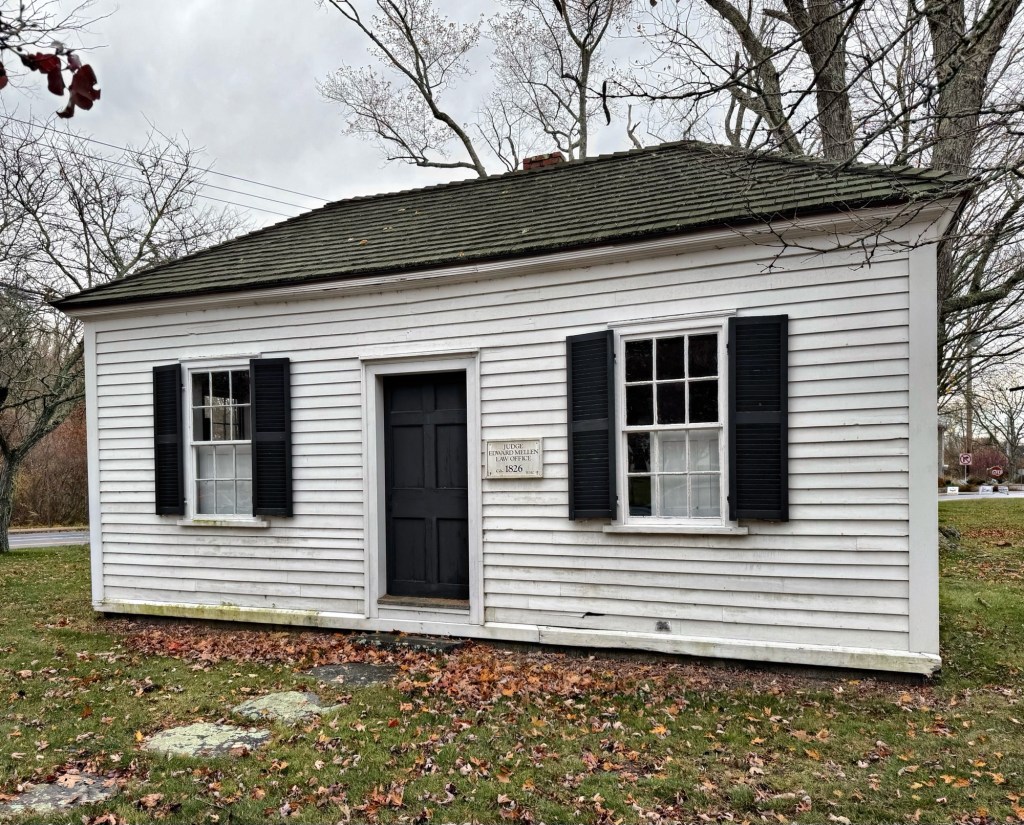
Mellen Law Office // c.1829

Samuel H. Mann (1801-1838), a lawyer, acquired the Dr. Ebenezer Ames House on Cochituate Road in 1829, only a month before his marriage to Isabella Ross. At about that time, Mann built this small law office across the road from his home, where he would practice law. It is not clear why, but within a year, Mann sold the house and this law office to Judge Edward Mellen (1802-1875), who was appointed Chief Justice of the Massachusetts Court of Common Pleas in 1855 and practiced law in Wayland until his death in 1875. After his death, the law office sat largely vacant until during World War II, when a newsletter to soldiers, The Village Bugle, was published here. After this, a couple of businesses used the former law office in the 1950s and 1960s until the owner donated the lot to the Town of Wayland in 1971. The diminutive building is a charming, and well-preserved example of a vernacular, Federal period professional office building that mimics the form and materials of the Ames House to which it was long affiliated with.

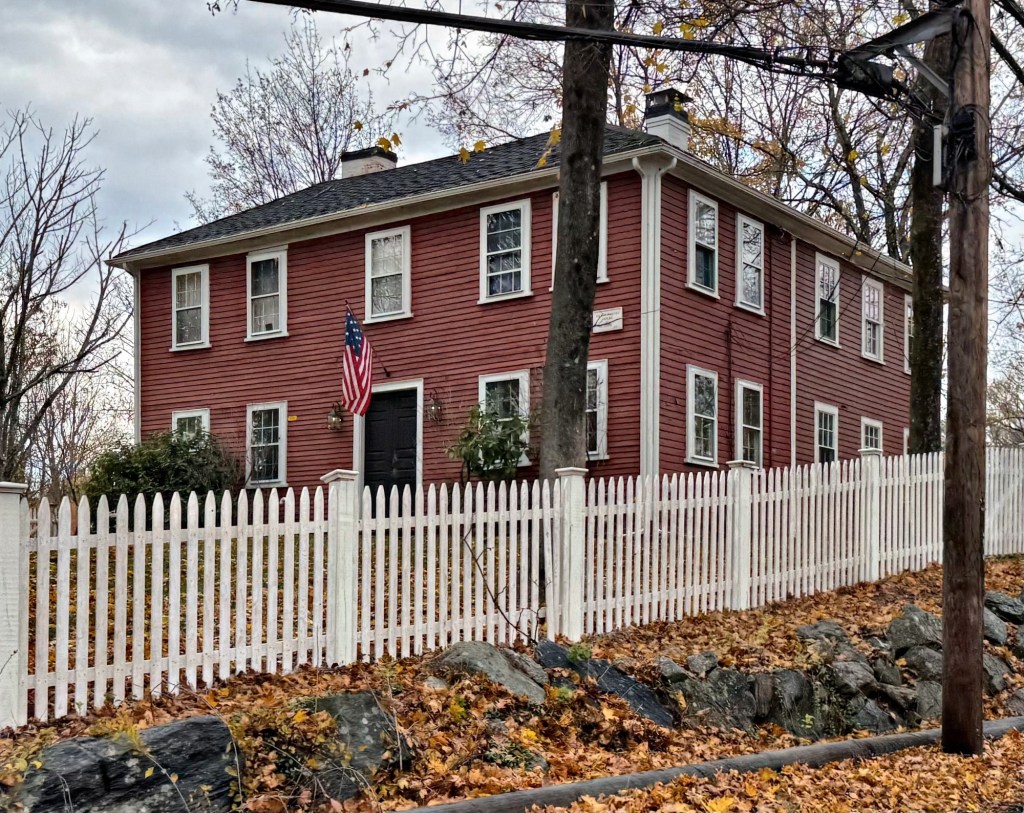
Reeves-Goodell House // c.1816

Built on a hill on Concord Road in Wayland, Massachusetts, the Reeves-Goodell House is a beautiful vernacular Federal period residence owned and occupied by a local builder and architect. The house was constructed by Henry Reeves (1789-1878), a local carpenter and descendant of Jacob Reeves (1720-1794) a tavern-keeper in town. In the 1920s, this property became the home of Edwin B. Goodell, Jr. (1893-1971), a prominent local architect who designed area houses before becoming a partner in the firm Andrews, Jones, Biscoe and Goodell of Boston. It was Goodell who added on the rear, three-bay addition to the residence, which blends in with the 1810s aesthetic. Interestingly, Edwin Goodell lived in this historic, vernacular house but designed some of the earliest International style modernist homes in New England.

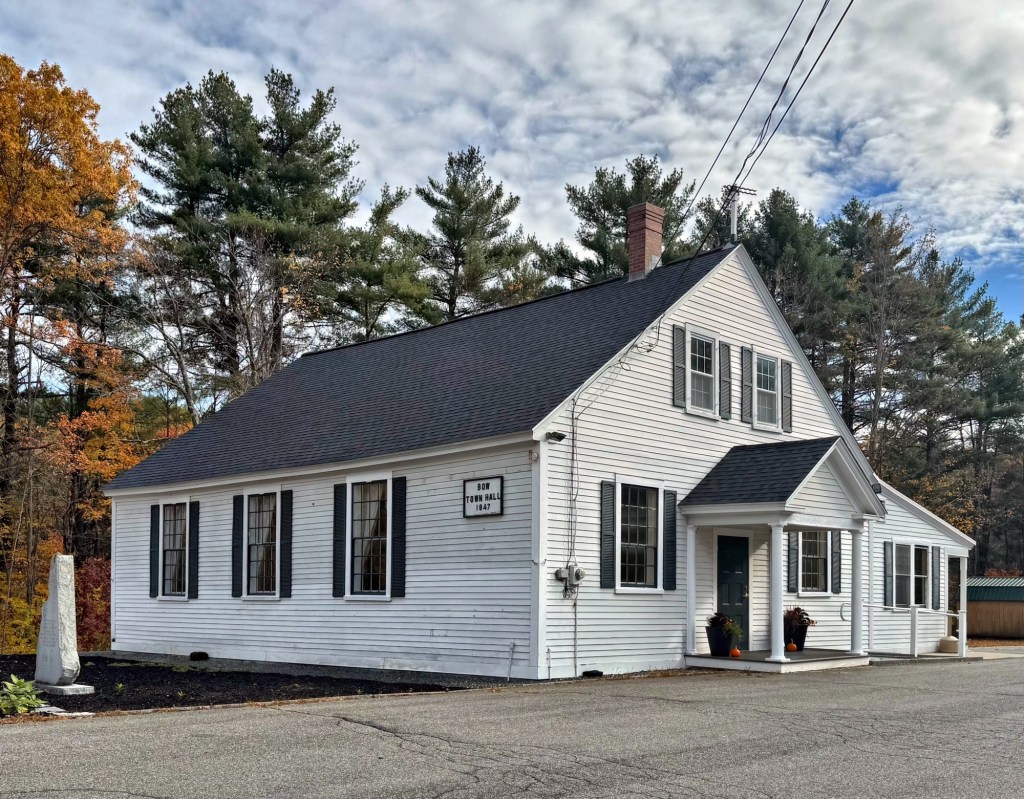
Bow Old Town Hall // 1847

The town of Bow, New Hampshire, was incorporated in 1727 and named after its location along a bend, or “bow” in the Merrimack River at its easternmost boundary. Early town meetings were held in the town meetinghouse of 1770, and the second meetinghouse of 1801, until the separation of church and state became official in New Hampshire in 1819, with the passage of the Toleration Act. Until 1819, residents in New Hampshire conducted town business and religious services in the same building, the town meetinghouse. However, as towns diversified and religious freedom prospered, citizens grew less comfortable supporting one particular religious denomination with taxpayer money. Bow eventually secured funding to erect its first purpose-built town hall in 1847, this vernacular, two-story building on Bow Center Road. The small building served as the town hall for over 100 years, when in 1957, a growing suburban population required a larger, more modern town hall. The old Town Hall of Bow now serves as a meeting place for Town organizations and is rented out to Town residents for events.

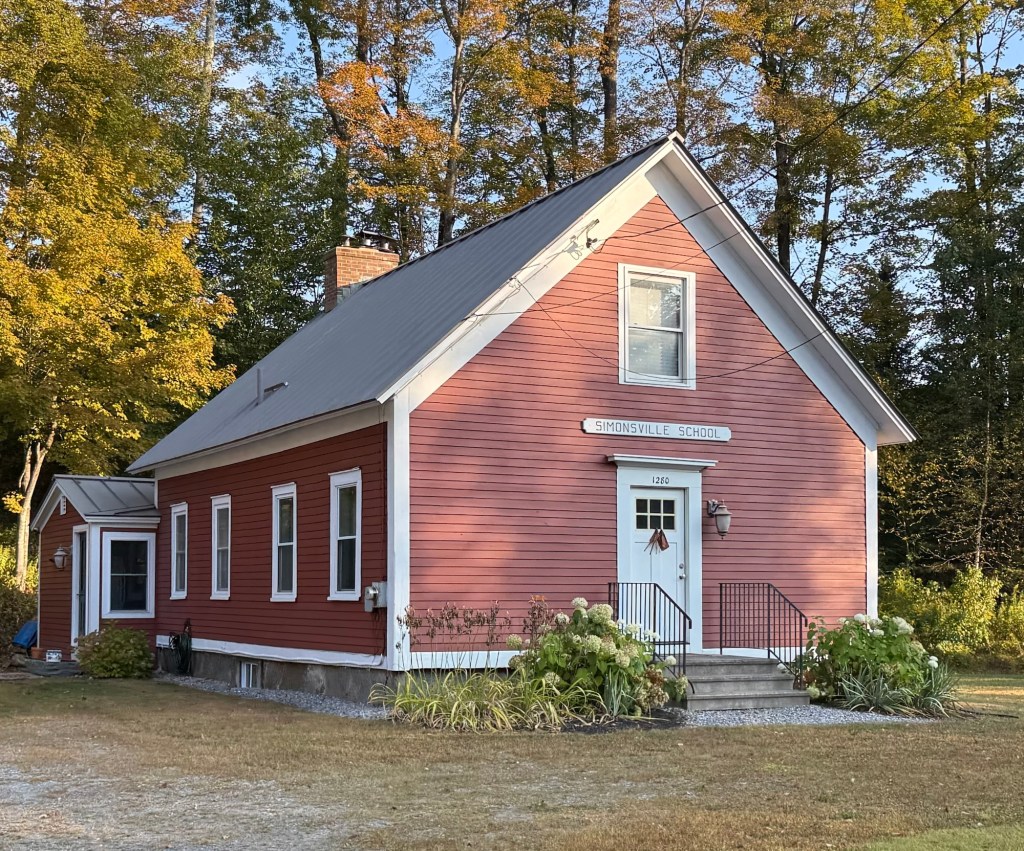
Simonsville Schoolhouse // 1856

One-room schoolhouses like this example in the Simonsville area of Andover, Vermont, have been commonplace throughout rural portions of New England where children of most ages would share the classroom and be taught everything from basic spelling to math. The Simonsville schoolhouse was built in 1856 and is a typical example of a vernacular one-room schoolhouse in rural New England, with no frills or ornament, just a house of learning. The Simonsville Schoolhouse was converted to a residence sometime in the latter half of the 20th century and has been renovated, keeping the basic form and interior floorboards from the 1850s. The school-turned-home is currently (2025) listed for sale.

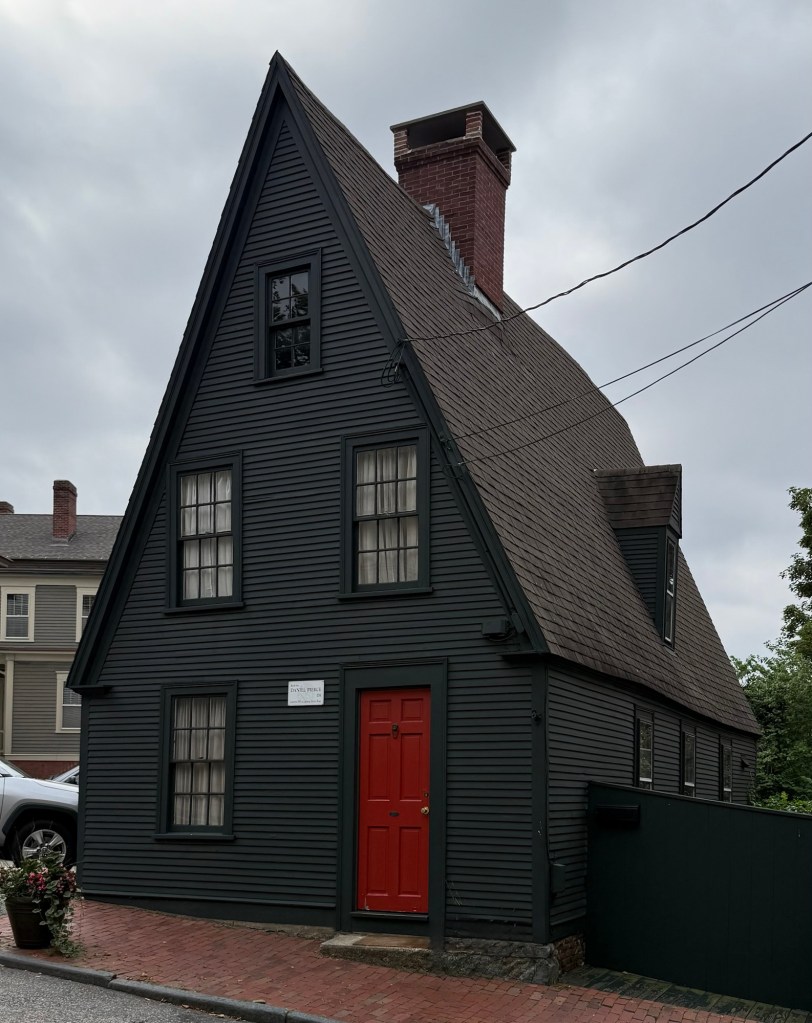
Pierce-Guild Lightning Splitter House // 1781

The Pierce-Guild House at 53 Transit Street in the Fox Point neighborhood of Providence, Rhode Island, is one of the most iconic and photographed residences in the state. Known as a “lightning splitter”, the unique name is taken from local folklore that the sharp angle of the gable roof will deflect or split lightning if struck. Whether or not this superstition is true, the unique house form numbers to less than a dozen in Rhode Island. This house, arguably the most well-known for its location off Benefit Street, was originally built in 1781 as a modest 1-1/2-story cottage with a gambrel roof for Daniel Pierce (Pearce), a tailor. In 1844, the property was sold to George Guild, a grocer, who modernized the house by creating the massive gable roof to provide a narrow third floor, which was illuminated by the end windows and a diminutive dormer at the roof. The house retains much of its character, after a restoration by owners in the mid-late 20th century.

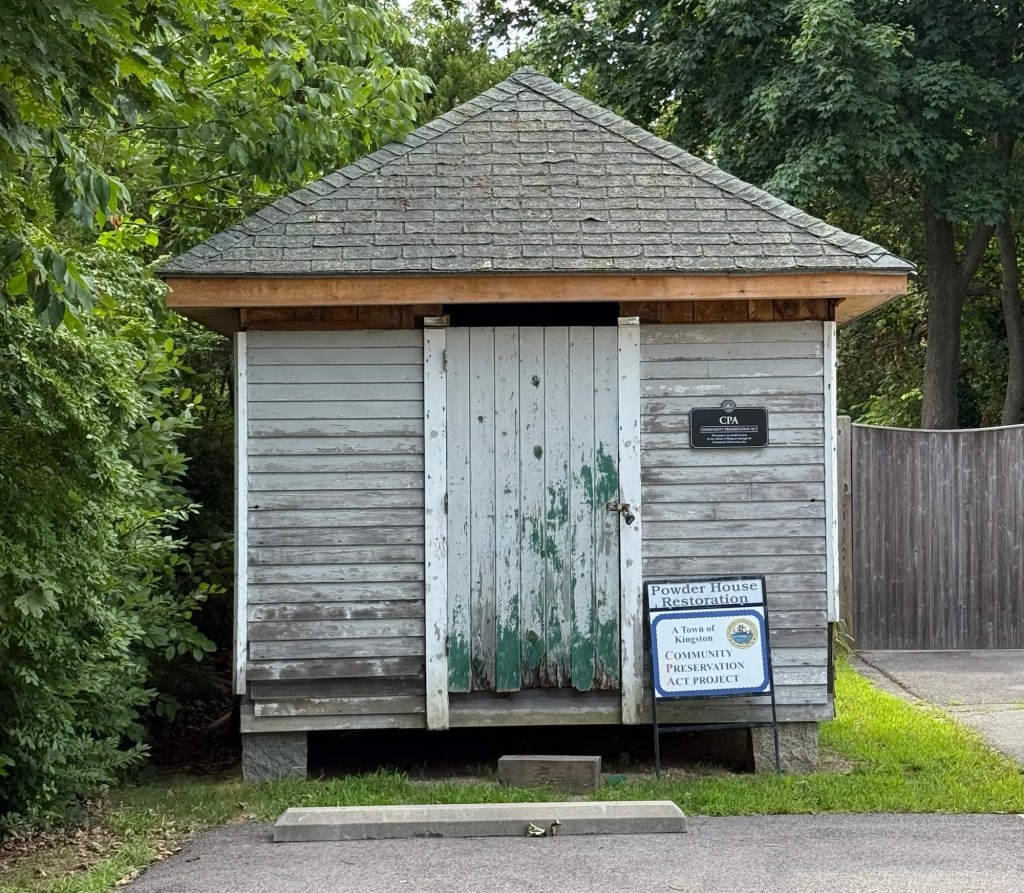
Kingston Powder House // 1806

The Kingston Powder House is located at 16 Green Street adjacent to the historic Faunce Schoolhouse in Kingston, Massachusetts. The astylistic, 10-foot-square wooden building may seem like a generic structure, but it is significant as a rare, intact example of wooden powder house, and one of only four extant in New England (there are more numerous examples of brick or stone powder houses). The Kingston Powder House was constructed in 1806 to store gunpowder and shot for the town militia. It was likely constructed on footings or directly on the ground, making it relatively easy to move, possibly to keep it away from the growing town in case of explosion. The Powder House has been moved several times in its lifetime and has been settled here in the town center and is awaiting a restoration using Community Preservation Act grants. I can’t wait to see this building preserved!

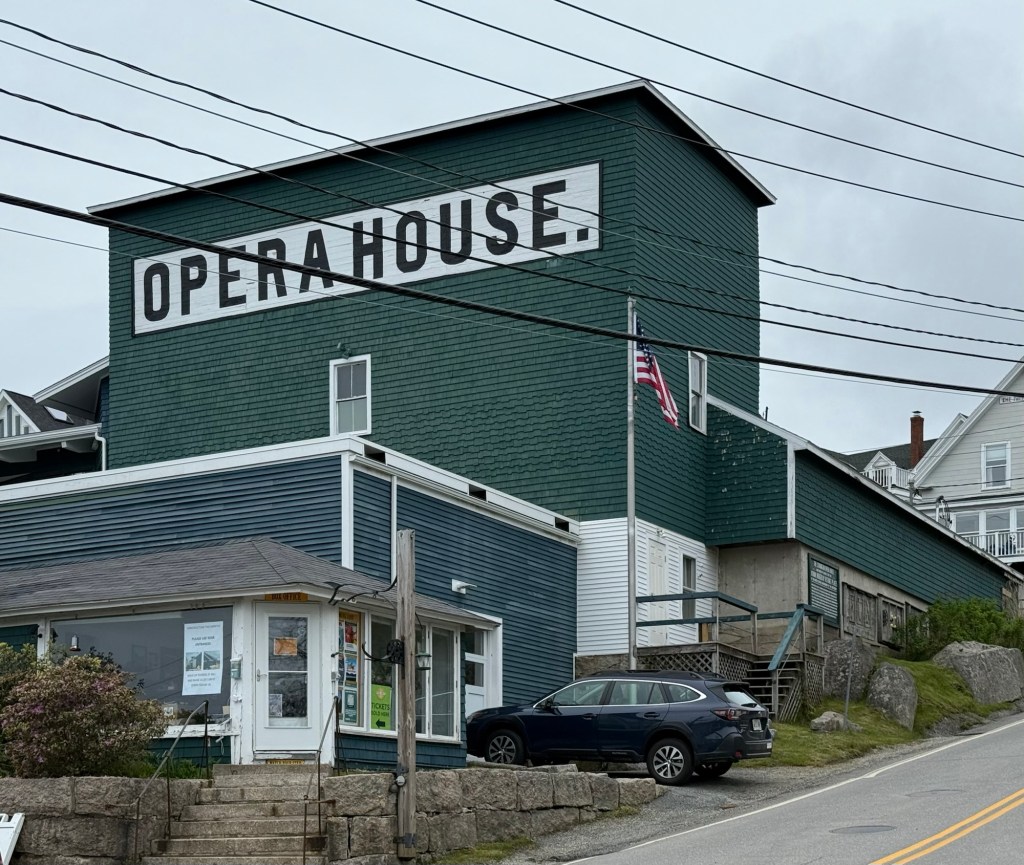
Stonington Opera House // 1912

The Stonington Opera House in Stonington, Maine, is a historic early 20th century community center and theater in a vernacular style. The theater was built in 1912, on the site of an earlier hall built in 1886, that seated more than 1,000 people and hosted national touring shows that arrive via steamboat from Rockland. The original theater was destroyed by fire in 1910 and was soon-after rebuilt. It continued the practice of the earlier facility, hosting theatrical productions, lectures, and community events. Its floor was covered with removable folding chairs, so that the space could be used for dances and other social events. It was fitted for screening films around 1918, which came to dominate its uses in the mid-20th century. Unlike other early theaters, which were generally incorporated into municipal buildings, this one was specifically built as a profit-making venture, and was designed to accommodate elaborate theatrical productions, and is probably the oldest of this type in the state. After being vacated for much of the later half of the 20th century, the Stonington Opera House was restored and reopened by Opera House Arts, a local nonprofit, in 2000, and is once again used primarily for film screenings and theatrical productions.

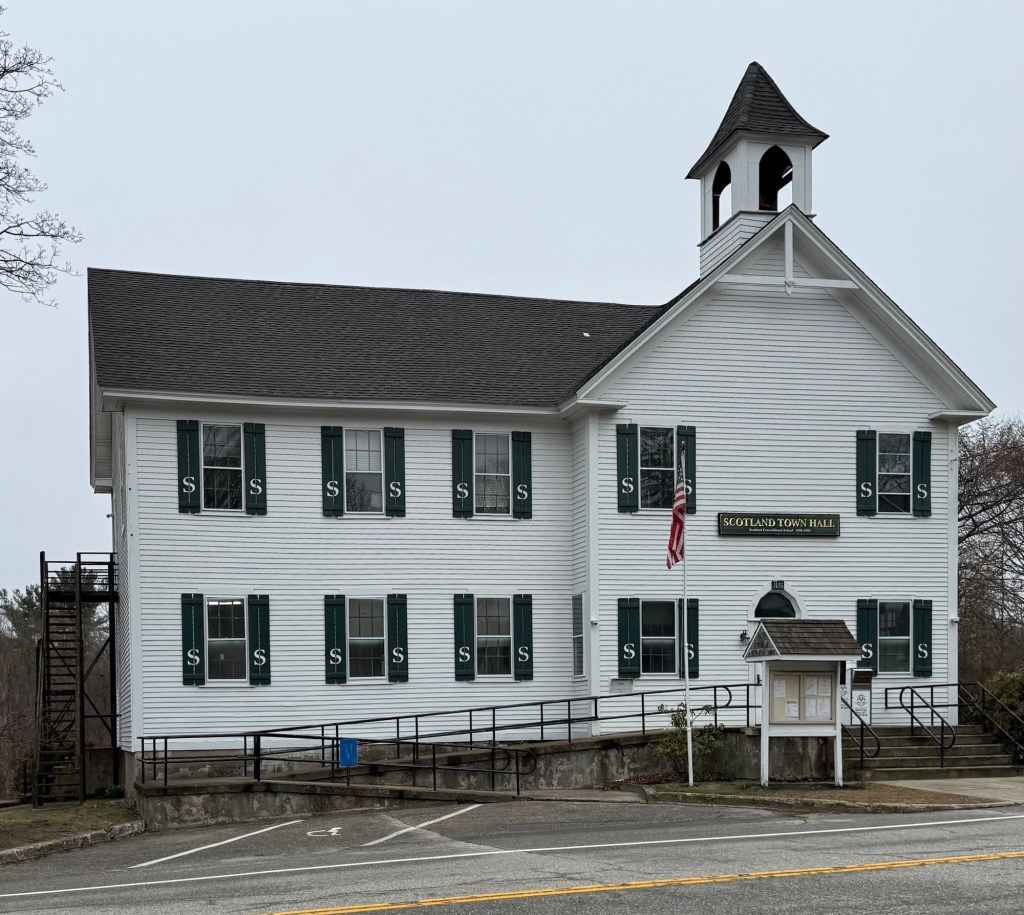
Scotland Town Hall // 1896

The town of Scotland, Connecticut, is a rural community centered around agriculture and is the smallest municipality in Windham County’s ‘Quiet Corner‘. European settlement began in earnest following the purchase of 1,950 acres of land from then Windham, by Isaac Magoon, a Scotsman, who named the new village after his ancestral home. The present-day town hall and offices of Scotland, was originally built in the 1840s as a one-room schoolhouse. In 1894, the town voted to consolidate all the school districts in a single building, and to expand the one-room village school to accommodate them. The present two-story structure was completed in 1896 and was added to the front of the old building. It is unclear if anything remains of the original schoolhouse. The vernacular, Stick style building served as the town’s consolidated school until a modern school building was constructed in the 1960s. This building became the town hall/offices and remains a significant visual anchor to the town’s common.

West Cornwall Old Toll House // c.1800

This modest, vernacular frame structure in West Cornwall, Connecticut, perhaps erected as early as 1800, has served a number of commercial purposes in its history, most significantly as a toll house. The structure was a toll booth for the two turnpikes which crossed near the site – the Sharon-Goshen Turnpike, and the Warren Turnpike, which ran along the Housatonic River. Before the days of EZ-Pass and transponders, travellers would pay their tolls to a worker in this building. Eventually the street became free to use, and the building was acquired for commercial use. It now serves as a showroom for a local cabinetmaker, but retains the original charm and historic sign above the door. How charming is that?