Providence County Courthouse // 1926

S. Main Street Elevation

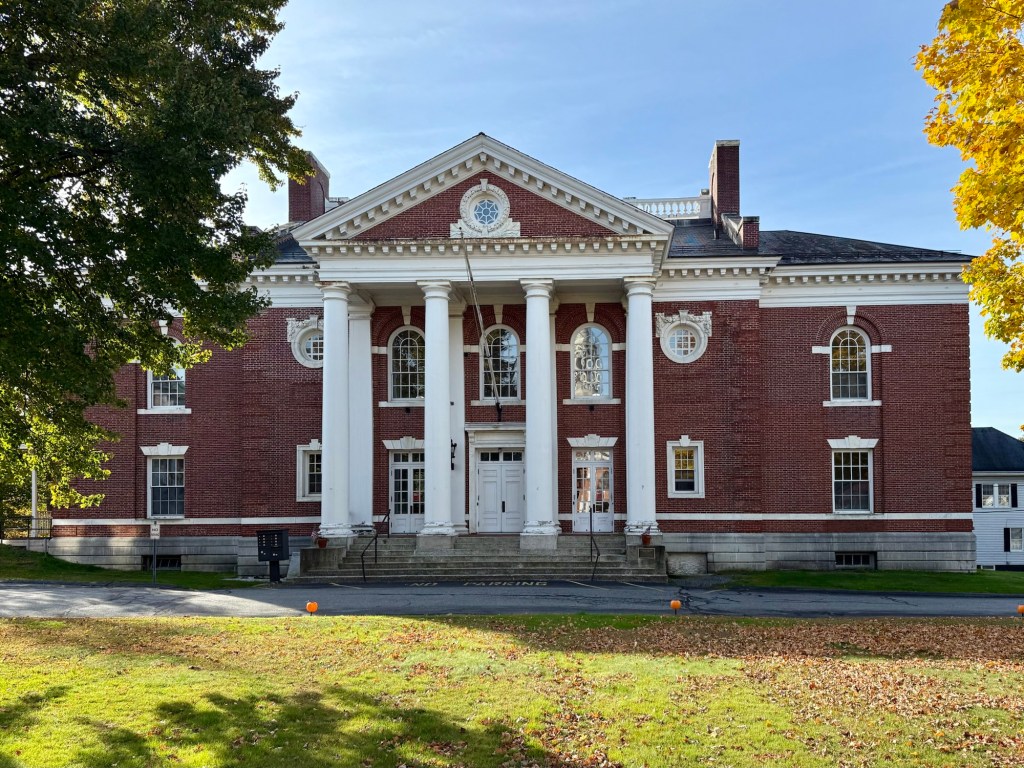
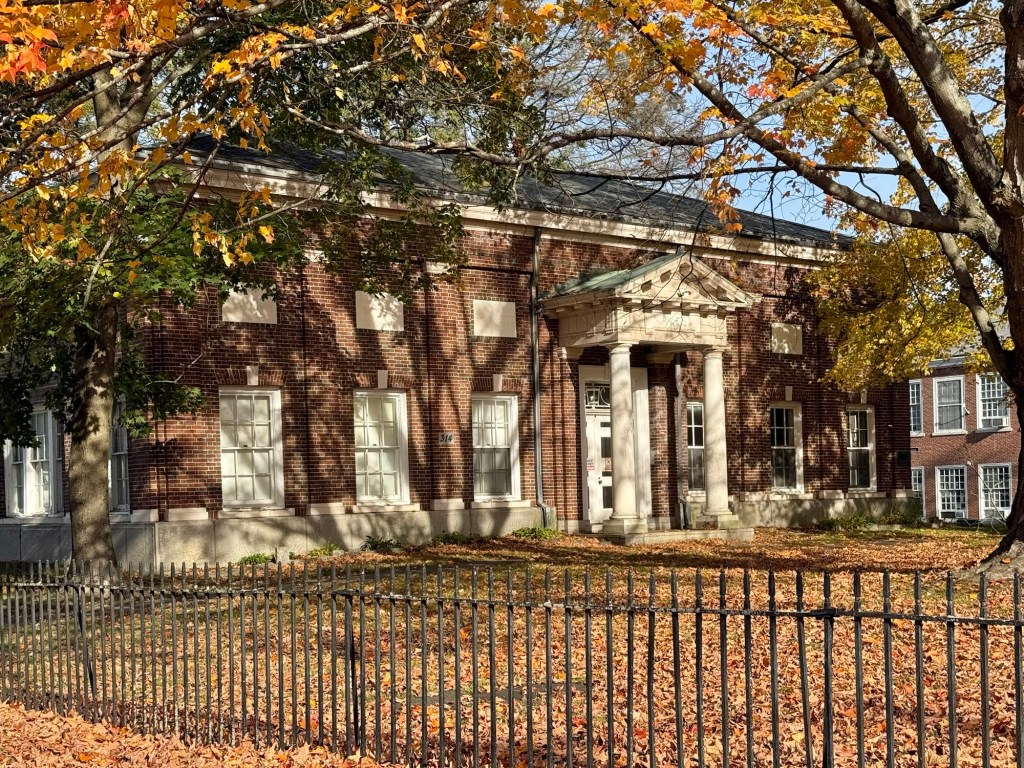
The Providence County Courthouse complex occupies an entire city block running between Benefit Street and South Main Street and while of immense scale, is broken up into more human-scaled wings and masses that make the building one of the finest and contextual designs in a city full of amazing architecture. The courthouse here replaced the first courthouse, a stunning palace of justice designed by Stone & Carpenter in the High Victorian Gothic style, that was completed in 1877. The old courthouse was soon outgrown and a larger building was planned following WWI. The present courthouse was built between 1926 and 1930 following a design by Jackson, Robertson & Adams in the Georgian Revival style, fitting of its context amongst some of the finest Colonial-era houses and buildings in New England. The building today contains the Rhode Island Supreme Court, Providence County Superior Court, and the local trial court. The South Main Street facade is my favorite with the Guastavino tile roof entry and stunning colonnade at the street level. A multi-stage clocktower emerges from the center of the building, at a height of 216-feet, making the courthouse the 11th tallest building in Providence.

Benefit Street Elevation

Walker House // c.1857

The Walker House at 171 Middle Street in Portsmouth is a wood-frame Italianate-style residence that was greatly modernized at the turn of the 20th century into the Colonial Revival style, showcasing how differing styles can actually blend together fairly harmoniously. The house was built around 1857 for Nathaniel Kennard Walker (1807-1880), a ship owner who operated a hat shop in town. After his death in 1880, Nathaniel’s youngest son, Arthur Willard Walker (1855-1906), inherited the home, and some time after his marriage in 1886, modernized the family home in the then fashionable Colonial Revival style, popular in many New England towns as a callback to historical designs. Original details of the Italianate style that remain include: the overhanging bracketed eaves, wide cornice, centered gable at the roof, and the window trim. Colonial Revival additions to the Walker House include: the entrance with leaded glass fanlight transom and sidelights, entry portico, two-story fluted pilasters at the facade, and Palladian window at the second floor stairhall.

Reed Community Center // 1926

Tucked away behind the 1898 Adams Library in Kingston, Massachusetts, this shingled building has important significance to the community and is about to celebrate its 100th birthday. The Reed Community House began in 1926, when Edgar Reed (1852-1930), donated funds to the town for the construction of a community house to be built adjacent to a public playground site behind the town’s library. Edgar was a descendant of Jesse Reed, a successful Kingston inventor and tack-maker. Jesse Reed had worked in Maiden prior to coming to Kingston where he invented a ship-steering device, a luggage winch, freeze-proof water pumps, and other improvements for looms and weaving methods. The Reed family was one of several Kingston families that had relocated to Worcester, but kept close ties to their hometown. The Reed Community House was designed by Sidney Lincoln Rhodes of Worcester in the Colonial Revival style. The best part of the building is the north elevation, facing the playgrounds as the two-story portico looks over the fields. During the 1930s, the community house was used for a nursery school holding between 48 to 60 preschoolers. The Red Cross also used the building during World War II for some of its programs including first aid classes. The building continues to be an important community facility to the present day and is the home to the Kingston Recreation Department

Frederic C. Adams Library // 1898

Built in 1898 in the heart of Kingston’s village center, the Frederic C. Adams Library was designed by renowned architect Joseph Everett Chandler and is one of the finest Colonial Revival style libraries in New England. Chandler, famed for his dedication to historic forms, created a one-and-a-half-story masonry gem, complete with a gabled roof, dentilled cornice, and a grand four-column Corinthian portico at the entry. The building’s story began with a bequest from Frederic  C. Adams, a Kingston native whose $5,000 gift in 1874 helped break ground on a dedicated library. Its elegant Colonial Revival look recessed panel windows, stone keystones, and symbolic half-round arches, echoes America’s early architectural traditions with a refined late‑19th‑century flourish. The library was eventually outgrown, and relocated across the street, to a contemporary building. After an award‑winning restoration, the building reopened in 2012 as the Adams Center, now housing Kingston’s Local History Collections in a climate‑controlled room and hosting community events upstairs. The Contemporary addition, paired with the restoration work all by Spencer Preservation Group, blends old with new in a pleasing way. 

Old Kingston Town House // 1841

Overlooking the town green in Kingston, Massachusetts, this stately Greek Revival home was once the original town house for the community, containing meeting hall, town offices and even a jail cell! Before we go into that further, it is helpful to learn about history first. Present-day Kingston was within the tribal homeland of the Wampanoag people, who in the decades prior to the arrival of the Mayflower, saw their populations decimated from a rapidly spreading pandemics due to earlier contacts with Europeans. Originally part of Plymouth, Kingston was first settled by Europeans shortly after the landing of the Pilgrims at Plymouth Rock in 1620. In 1717, residents in the northern part of Plymouth petitioned the General Court to be set off from Plymouth as a separate township or a precinct. They were allowed to become the north precinct of Plymouth on the condition that they maintain a suitable minister. The northern precinct was wealthier and led to present-day Kingston incorporating as its own town in 1726, following a tax dispute. Early town meetings were held in the parish church until the separation of church and state necessitated a new town hall. The town hall here was built in 1841. As the town grew the building was re-oriented southward and enlarged in 1871 from plans by architect Luther Briggs. Further alterations were made to the building in 1935 under the guidance of the architectural firm of J. Williams Beal & Sons. In the early 2000s, space, parking, and accessibility concerns led the Town of Kingston to sell the 1841 Town House, which was purchased by private owners and converted to a residence. Inside, remnants of the old town house include old signs, office doors for city departments, former vaults converted to closets, and even a jail cell in the basement. Talk about a unique adaptive reuse!

Hattie Furbush House // 1888

Located next to the Harrison Henry Atwood House on Alban Street in the Ashmont Hill neighborhood of Dorchester, this stately home with a broad, gambrel roof oriented to face the street was also built by the architect and neighbor, Harrison H. Atwood. Appointed City Architect of Boston in 1889, Atwood designed schools, firehouses, and other public buildings, and just before this, designed a number of homes, primarily in the Shingle and Queen Anne styles in Ashmont. While he specialized in Victorian styles, Atwood was well-versed in the Colonial Revival style, as evidenced here. Built in 1888, this stunning house was constructed for owner, Harriett “Hattie” Dinsmore Furbush (1862-1950), who was an active member in a local organization, the Ashmont Tourists Club, a women’s social club devoted to talking books, travel, and life. The club often met in the library of Ms. Furbush’s home, which likely migrated out to the gorgeous enclosed porch with its multi-light windows.

King-Murdock House // c.1894

Located on Ashmont Street in the Ashmont Hill neighborhood of Dorchester in Boston, this handsome Colonial Revival style residence was one of many large homes constructed here at the end of the 19th century. This house was built by 1894 for owner Franklin King and rented to tenants for supplemental income. Franklin King was part owner of the E & F King Company, a major paint and stain manufacturer in Boston. Franklin died in 1898 and the property was inherited by his son, Samuel Gelston King, who continued to rent the home. A notable renter of the house was Harold Murdock, a cashier and amateur historian and author who wrote various books of everything from the American Revolution to the Reconstruction of Europe. The architect is said to be Clarence Blackall of Cambridge, which makes sense as this house is clearly the work of a trained architect. Symmetrical in plan, the center-hall residence features a preserved entry portico, hipped roof, and detailed dormers.

Chansonetta Stanley Emmons House // 1893

Chansonetta Stanley Emmons (1858-1937) was born in Kingfield, Maine, and was one of the great women photographers in the 19th and early 20th century, often depicting domestic life and New England scenes. The young Chansonetta Stanley grew interested in photography after her brothers’ (Francis E. and Freelan O. Stanley) dry-plate printing invention, they also invented the steam-powered automobile known as the Stanley Steamer. She married James Nathaniel Whitman Emmons in 1887 and in 1894, James hired architect Henry McLean, to design a residence for him and Chansonetta, this lovely home on Harley Street on Ashmont Hill. The couple occupied the house until 1898, when James died of blood poisoning at the age of 41. Chansonetta sold the home and moved to Newton, where her two brothers lived and operated their business. The house blends Queen Anne and Colonial Revival styles and originally had a conical roof over the corner rounded bay. The roof was replaced with a flat roof at about the time of the large balcony and extended dormer.

M. A. Pickett Building // 1902

The M. A. Pickett Building on Washington Street in Marblehead is a spectacular example of a commercial building of the early 20th century designed in the Colonial Revival style. The building was designed in 1902 by the firm of Peare & Quiner, who worked mostly in the North Shore of Massachusetts and funded by members of the M.A. Pickett Association, a fraternal organization founded in the late 19th century and named after Moses A. Pickett (1780-1853), who left his entire will to: “comfort the widow and the fatherless, the aged, the sick, and the unhappy”, also donating his home to the use and funding for its preservation. In 1866, a hand-drawn fire engine named after M. A. Pickett, was used by a group of volunteer firefighters, who later would create the club named after Mr. Pickett. The building originally held a barber shop and a creamery on the ground floor with a meeting hall and billiards room above for members of the Pickett Association. Today, the building is lovingly maintained, including the three stunning Palladian windows at the third floor.

Westborough Town Hall // 1929

Welcome to Westborough (sometimes spelled Westboro), Massachusetts, a suburban town in Worcester County that has a lot of history! Westborough was first settled by colonists in 1675, when a few families had settled on land in the “west borough” of Marlborough, which was settled decades earlier. Before this, the land was occupied by the Nipmuc Indians, who hunted and fished near Cedar Swamp and Lake Hoccomocco. The town grew as an agricultural center with turnpikes crossing through connecting Boston to Worcester and other points. Later connections from rail and later the Mass Pike, had allowed for rapid growth and commercialization of the current population of over 22,000 residents. After WWI, the town’s outdated wood-frame meetinghouse was deemed inadequate for the growing population and higher demand for quality services. The meetinghouse was demolished and soon-after replaced with this handsome Town Hall in 1929. Designed by Boston architectural firm, Kilham, Hopkins & Greeley, who specialized in thoughtful infill developments and were among the best to design in the Colonial Revival style. The building was highlighted in architectural publications in 1930 with one stating, “An ultra-modernistic building on the elm shaded street of this Massachusetts town would have been an intrusion and would have been felt as such by the citizens, but the designers felt that it was entirely possible to combine the new ideas with the well-known red brick and white cupola of the native idiom, and the result is a modern building harmonizing perfectly within its environment.” I couldn’t agree more!

Mrs. Laura Haley House // 1894

This charming, gambrel-roofed house at the corner of Vinal and Pleasant avenues in Somerville, Massachusetts, was built in 1894 from local developer H. W. P. Colson, and sold upon completion to Mrs. Laura (French) Haley. An architect could not be located. Laura Haley was recently widowed and lived in the house with her daughter, with her son purchasing the house next door. The Haley House is notable for its gambrel roof with gambrelled center gable, pilastered dormers, stained glass windows, and full-length porch with columns and rubblestone base. The well-preserved house blends Queen Anne and Colonial Revival styles under one broad roof. It is magnificent!

Drouet Block // 1896

Built in 1896, this handsome, four-story flatiron building at the corner of Bow Street and Somerville Avenue in Union Square, Somerville, was the largest tenement building in the city when completed. The property was developed by Charles Drouet, from plans by local architect, Aaron Hibert Gould. The block originally housed 37 apartments above six retail spaces at the street-level. The series of projections and an interior courtyard provided light and air into the apartments, which made them highly functional and desirable for families in the area. The building is more Colonial Revival than the 1892 Queen Anne style Richmond Apartments, also designed by Aaron H. Gould for Mr. Drouet nearby. The Drouet Block is a well-preserved example of late 19th century tenements in Somerville.

Cities Service Station, Union Square // 1925

Union Square is the oldest and largest commercial district in Somerville, and its growth is tied to the residential and commercial growth of the City. The three main streets that form Union Square—Somerville Avenue, Bow Street, and Washington Street—were originally 17th- and 18th-century trade routes used by farmers in Somerville  to transport products, mostly dairy and produce, to larger markets in Charlestown and Boston. As the region grew, so did Union Square, with later hotels, civic buildings, churches and later, more car-centric uses like automobile garages and gas stations. By the 1920s, prosperity stagnated and one-story commercial blocks replaced larger, more ornate structures. This small building, the Cities Service Refining Co. Fuel Station at 69-71 Bow Street, was built in the mid-1920s and is an example of the wave of automobile-oriented development that occured here at the time. Before WWII, many service station companies created brand-identities by designing the appearance of their service stations like the Cities Service Stations and Beacon Oil Company, who regionally, developed distinctive Colonial Revival cottage prototypes for their chains to fit better within local context. This small service station, now 100 years old, is Colonial Revival in style with a hipped roof with cupola, symmetrical facade, and fanlight transom over the center entrance. When a developer proposed to demolish the station, the local preservation commission found the building preferrably preserved, initiating a delay on the demolition, forcing the developer to either wait out the delay or incorporate the structure into the new building. They chose the latter, and now we can visually see the layering of history on this site in Union Square, incorporating preservation with a 24-unit passive house development with the old station used as a mailroom. What do you think of this story? 

Dr. Thomas M. Durell House // 1897

Located next to the colorful Wadleigh-Friend House on Highland Avenue in Somerville, the Dr. Thomas M. Durell House stands as a more academic example of the Colonial Revival style, but leaning more towards Arts and Crafts style than Queen Anne like its neighbor. This residence was built in 1897 for Dr. Thomas M. Durell, a Harvard-educated doctor and surgeon who, at the formation of the Tufts Medical School, was appointed Lecturer on Legal Medicine, and in 1895, was made Professor of that subject. Architects (and brothers) Edwin King Blaikie and William Everett Blaikie designed the residence for Dr. Durell along with a stable at the rear. While the house exhibits Colonial Revival detailing from the Palladian window and proportions, there are some Arts and Crafts style influences including the shed dormers, shingled siding, inset porches, and broad overhanging eaves with exposed rafters. 

Wadleigh – Friend House // 1893

One of the most beloved houses in Somerville, Massachusetts is this beauty on Highland Avenue, known best for the unique assemblage of colorful found objects in the front yard, as a living museum. The residence was built in 1893 for William Y. Wadleigh, a wholesale grocer who operated markets all over the region. The house is an eclectic blending of Queen Anne and Colonial Revival styles with an asymmetrical plan and rounded corner tower taken from Victorian styles, along with a classical porch and swan’s neck pedimented dormers at the roof, clearly Colonial Revival in style. Today, the Wadleigh House is best-known for its owner, artist Martha Friend, who has preserved the house, and created an enchanting, ever-evolving installation outside and inside the residence. Sapphire City, an installation in the front yard, draws passersby in to see the assemblage of blue bottles and Dance Party, an assortment of animals at the porch roof, make the house a favorite in the neighborhood. It is houses and owners like this that make Somerville such a vibrant and great place to live and explore.