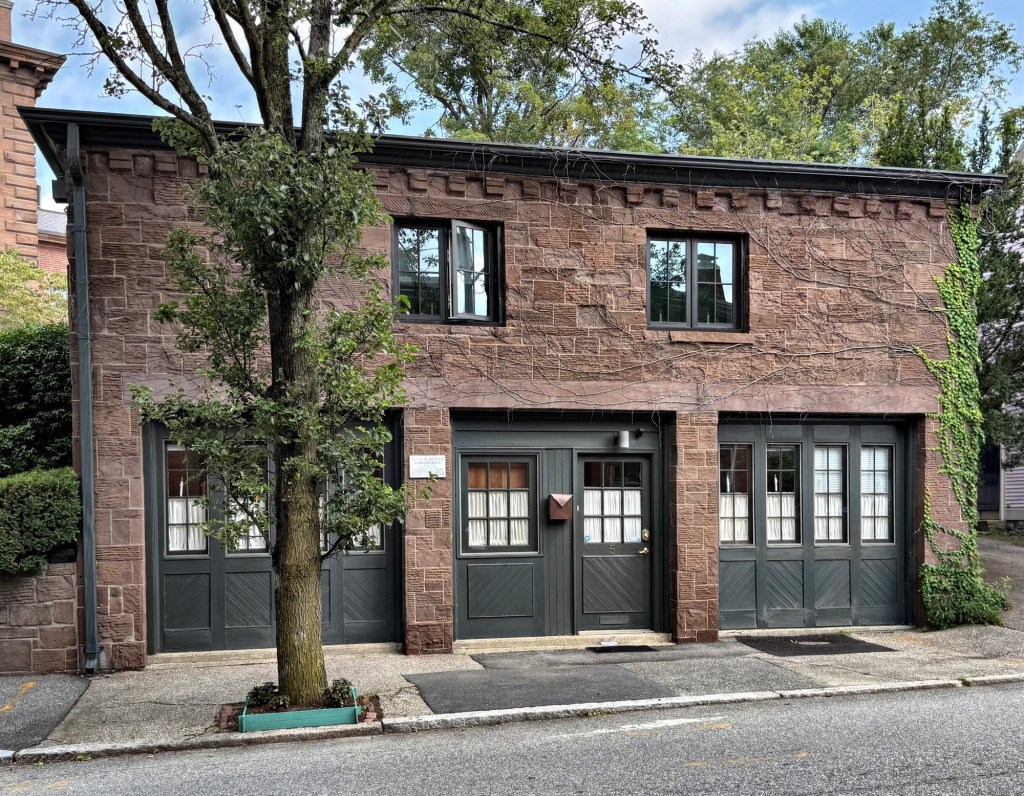
Old Salem Central Fire House // 1861

This mid-19th century brick structure on Church Street in Salem, Massachusetts, was built as the Central Fire House for the City. The Salem Fire Engine House was erected in 1861 from plans by an unidentified architect, in an eclectic style focused on function over frills. The façade is dominated by three engine bays with five windows on the second floor, surmounted by a decorative brick cornice. The hidden feature of the fire house is the three-story hose-drying tower capped by a slate mansard roof at the rear of the building. This building remained a fire house for 115 years until 1976, when due to larger fire engines and the tight constraints of the lot and surrounding streets, made use of the building a burden for fire-fighting. The City of Salem sold the building to private owners in 1976  for $24,000, and they underwent renovations to the building from designs by David Jaquith undertaken under the direction of the Salem Redevelopment Authority which sought to promote renovation of select historic buildings within the Downtown Salem Historic District. The recessed entrances through the old engine doors is a nice touch and retains the original fabric of the building. The old Salem Central Fire House is now occupied by Crazy Good Kitchen and the East Regiment Beer Company.

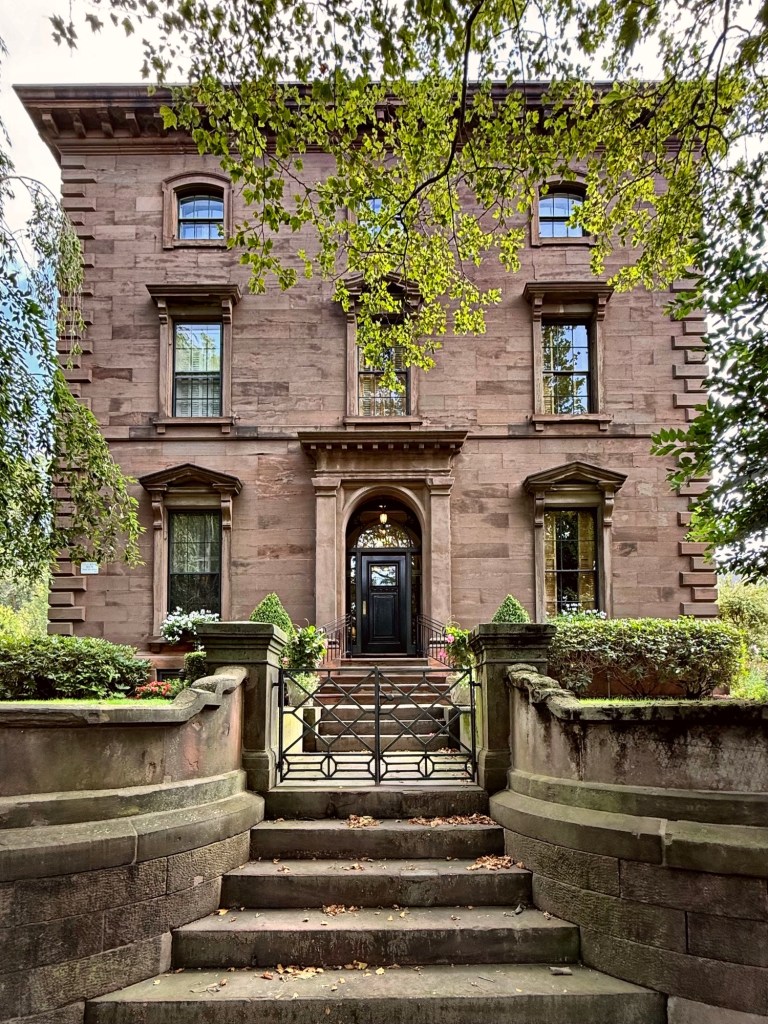
Norton Mansion – Steinbach Hall // 1849

John Pitkin Norton (1822-1852) was a successful educator, chemist, and author, who at just 27-years-old, built this stately mansion on Hillhouse Avenue in New Haven, Connecticut, for his young family. John P. Norton studied chemistry under Benjamin Silliman at Yale College, and was eventually appointed Professor of Agricultural Chemistry at Yale in 1846. He helped to found the Department of Philosophy and the Arts at Yale College and authored many scientific papers, dealing with the chemistry of crops. Coming from an established family and beginning a successful career himself, John hired New Haven-based architect, Henry Austin, to design this large, Italianate villa. The window surrounds, canopies, and flamboyant Moorish entryway are typical of Austin, with the general form and detailing taking cues from architect Alexander Jackson Davis‘ work. The Norton Mansion was purchased by Yale University in 1923 and was long the home to the Yale School of Management and is now occupied by the Jackson School of Global Affairs.

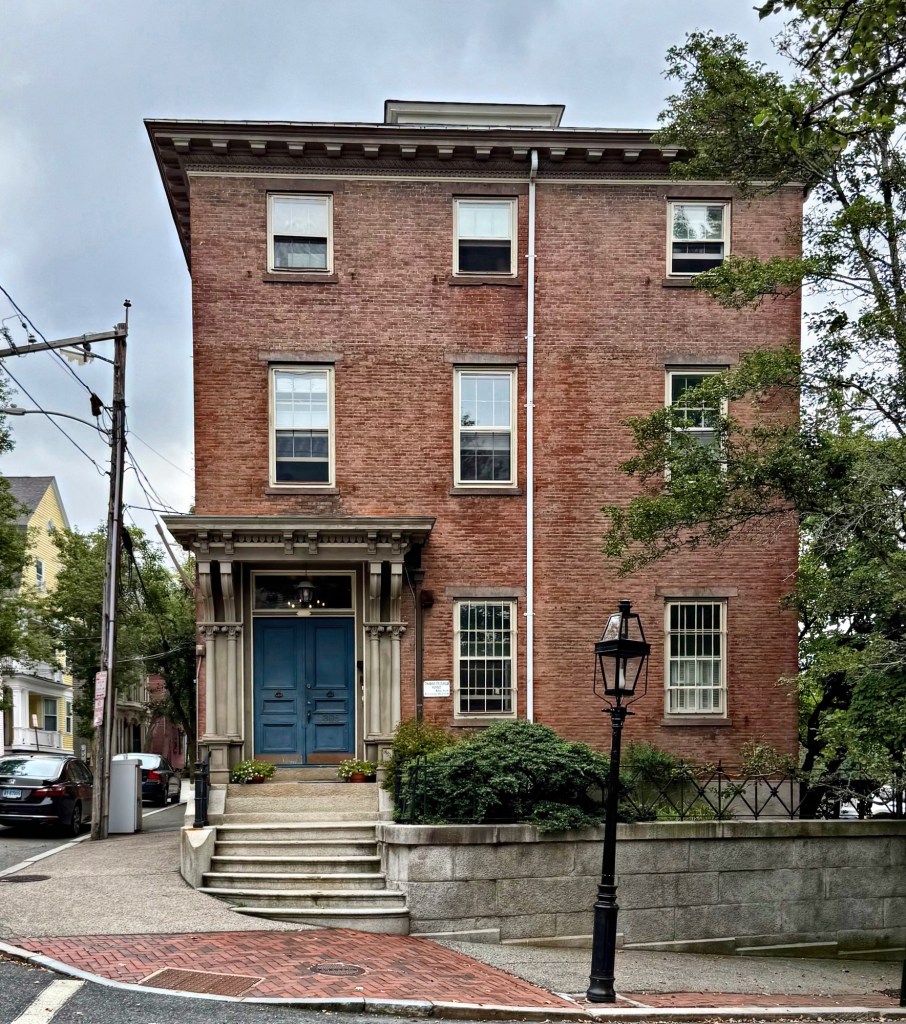
George P. Fisher House // 1864

The George P. Fisher House is located at the corner of Hillhouse Avenue and Trumbull Street in Central New Haven, Connecticut. Built in 1864, the residence is one of the finest examples of the Italianate style in the state with its square, three-story form with gabled pediment, bracketed eaves, window hoods, and brick construction with stucco scored to resemble ashlar masonry. George Park Fisher (1827-1909) completed his education in Theology at Brown and Yale and would become a professor at the latter institution for much of his life. Additionally, Rev. Fisher was a frequent contributor to The New Englander (now the Yale Review) the oldest literary journal in the United States. Due to failing health at the turn of the 20th century, George Fisher relocated to Litchfield County for fresh air and relaxation for his health. The property was sold to John Wolcott Bristol, a wealthy attorney who never married. As with nearly all of the buildings on Hillhouse Avenue, the property was acquired by Yale in 1935 and is now occupied by the University’s Economic Growth Center.

Perit House – Horchow Hall // 1859

This Italianate Villa style mansion on Hillhouse Avenue in New Haven, Connecticut, was built in 1859 for Pelatiah Webster Perit (1785-1864), a successful New York City shipping merchant and president of the New York Chamber of Commerce. Perit split his time between New York and New Haven and would hire architect, Sidney Mason Stone, to design this home on Hillhouse Avenue in New Haven. The brownstone residence is notable for its elaborate scroll brackets supporting the window pediments and front entry portico with arched doorway with rope moldings. The mansion was occupied by Perit for just four years until his death in 1864, and it was later owned by Henry Lucius Hotchkiss, a businessman. Like nearly all buildings on Hillhouse Avenue, the building was acquired by Yale University and is now known as Horchow Hall, and is part of the Yale School of Management.

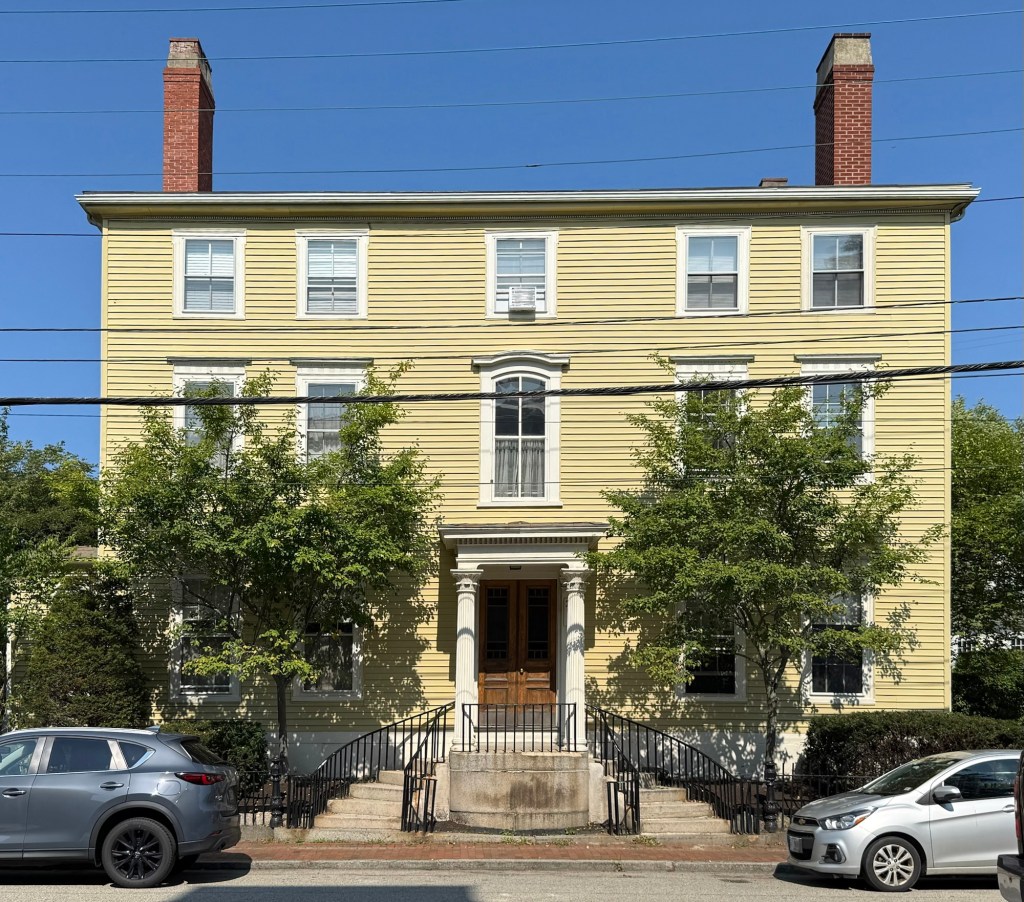
Graves-Dwight House // c.1862

Hillhouse Avenue in New Haven, Connecticut is lined with stunning 19th- and 20th- century mansions showcasing the evolution of styles and architectural taste for the wealthiest residents. This is the Graves-Dwight House, a high-style Italianate mansion built around 1862. The residence was built for John Samuel Graves (1807-1892), a local businessman and politician who was a founder of the New Haven Gas Light Company. The architect is not known, but the house is the work of a skilled designer with immense attention to detail. The highly ornamented exterior features a symmetrical facade, bracketed cornice and window hoods, a recessed third-floor balconette with segmental arch pediment above, and bold, period-appropriate paint scheme. The residence was later owned by James McLaren Breed Dwight, a lawyer, and his wife, Cora Tallmadge Dwight. Since the 20th century, the property has been owned and preserved by Yale University, and is now home to the Archaeology Department.

Old Boston Public Library // 1855-1898

Courtesy of BPL collections.

Established in 1848, the Boston Public Library was the first large, free municipal library in the United States. The Boston Public Library’s first building of its own was a converted former schoolhouse located on Mason Street that opened to the public in 1854. As soon as the library occupied the building, it was apparent that the amount of visitors and collections could not effectively be held in the cramped quarters. Planning began almost immediately for it’s first purpose-built library. Less than a year later, in December 1854, library commissioners were authorized to purchase a lot and fund the construction of the new library. A desirable building lot on Boylston Street, opposite the Boston Common, was purchased and a public invitation for proposals from architects was held. The requirements for the building included: a library hall with alcoves capable of containing on fixed shelves at least 200,000 volumes, a general reading room with ample accommodations at tables for at least 150 readers, a ladies reading room, an adjacent library room for the arrangement of 20,000 books “most constantly demanded for circulation,” and quarters for the Trustees and Librarian. The facade was to be of brick, with stone dressing”. The selected design by architect, Charles Kirk Kirby, was for this handsome Italianate style building which took nearly three years to build, opening in September 1858. Twenty years later, as the library outgrew that space, the Trustees asked the state legislature for a plot in the newly filled Back Bay, and planning began on the McKim Building, built in 1895 down Boylston Street. This building, the first purpose-built Boston Public Library building, was demolished in 1898, and replaced by the ten-story Colonial Theater Building. It stood just 40 years.

Ames Sword Company Offices // c.1865

Adjacent to the main Ames Manufacturing Company mills in Chicopee, Massachusetts, this handsome brick structure has ties to industry and the economic growth of the city in the 19th and early 20th centuries. Tucked away on Grape Street, at the edge of the Chicopee River, this building was built following the American Civil War as the offices of the Gaylord Manufacturing Company, a later subsidiary of the Ames Manufacturing Company. The company was run by Emerson Gaylord, a manufacturer, who produced leather belting and swords for the military just before and during the War. After the Civil War, the Gaylord company manufactured cabinet locks and society swords. In 1881, the adjacent Ames Manufacturing Company consolidated its own sword department with the Gaylord Manufacturing Company, forming the Ames Sword Company. The company would close in the 1930s, and today, this handsome brick building with corbelled cornice and segmental arches, sits vacant, awaiting preservation and a new life.

Ames Manufacturing Company Complex // 1847+

Until the early 19th century, Chicopee, Massachusetts, was little more than an agricultural district of Springfield (from which it separated in 1848). Several early mills began to harness the power of a 50-foot drop-off in the Chicopee River, but it was not until the introduction of outside capital from Boston-based industrialists, that Chicopee became an industrial powerhouse. The Dwight textile mills which quickly developed required a wide variety of related manufactures. Edmund Dwight, owner of the Dwight Mills procured brothers Nathan Peabody Ames and James Tyler Ames to relocate their edge tool business from Chelmsford to Chicopee, they did. In 1834, the Ames Manufacturing Company was incorporated with a capital of $30,000 and buildings were erected along the Chicopee River, just east of the Dwight Mills. By 1835, the company was creating works in brass and bronze, and in 1845, an iron foundry was added. The company used the foundries for casting statuary and producing cannons and cannonballs for the US Military. Additionally, the bronze doors of the East Wing of the United States CapitolDaniel Chester French‘s Minuteman statue at the Lexington-Concord bridge and the large equestrian statue of George Washington at the Boston Public Garden were cast at the Ames Factory. After a period of decay in the latter half of the 20th century, the largest buildings of the complex were restored and converted to housing, today known as Ames Privilege.

Dwight Manufacturing Company Complex // 1841+

The Dwight Manufacturing Company is named for Edmund Dwight (1780-1849) of Boston, an industrialist who envisioned an industrial town on the Chicopee River. Dwight, having a country home in Chicopee, had begun a venture with his brother, Jonathan, at Chicopee Falls creating the Chicopee Manufacturing Company, to produce cotton cloth. Due to the company’s immediate success, the Dwights along with other investors formed the Springfield Canal Company in 1831, with the goal to create the “new Lowell”, an industrial community in what is now Chicopee Center. In 1856, the Dwight Mills purchased some earlier mill complexes, creating the Dwight Manufacturing Company and consolidating all their cotton cloth manufacturing into one organization. In addition to the mills, the Company also built employee housing
along Depot and Dwight Streets, a stone’s throw from the mills. The creation of employee housing allowed the Company to attract new employees in particular women and children, nearly all immigrants, who could be housed together. My favorite part of the complex is the entrance gate, built in 1894, connecting the Office and Cloth Building. It is amazing to think of all of the people who passed through this portal, working long hours for a better life. Overtime as production methods changed and technology evolved, nearly all the original mills would be replaced or retrofitted. Despite the changes, the Company could not remain profitable and shut down production in 1927 and ultimately selling the land and equipment in 1930. Some smaller manufacturing has since occupied some of these buildings, but they remain largely (if not entirely) vacant, awaiting a new life.

John T. Andrew Carriage House – Cornwall Historical Society Building // c.1865

This ornate carriage house on Pine Street in Cornwall, Connecticut was built by John T. Andrew around 1865 adjacent to his late 18th century home in the village. Andrews was born in Bethany, Connecticut in 1811, graduated from Yale College in 1839, becoming a minister and later a teacher. For health reasons he left both professions and turned to farming and stonework. After Andrews’s death the property was purchased in 1890 by Charles Marsh, a local undertaker, and his wife Inez. In 1954 the barn was converted to a home by their daughter, the town librarian Emily Elizabeth Marsh, a charter member of the Cornwall Historical Society. In 1966, the Society raised funds to buy the building from her estate, but could do little to adapt it for their specific exhibit and storage needs. The Society restored the exterior to its original appearance, down to the brackets, round arched windows and cupola.