Former Brookline Savings Bank // 1898

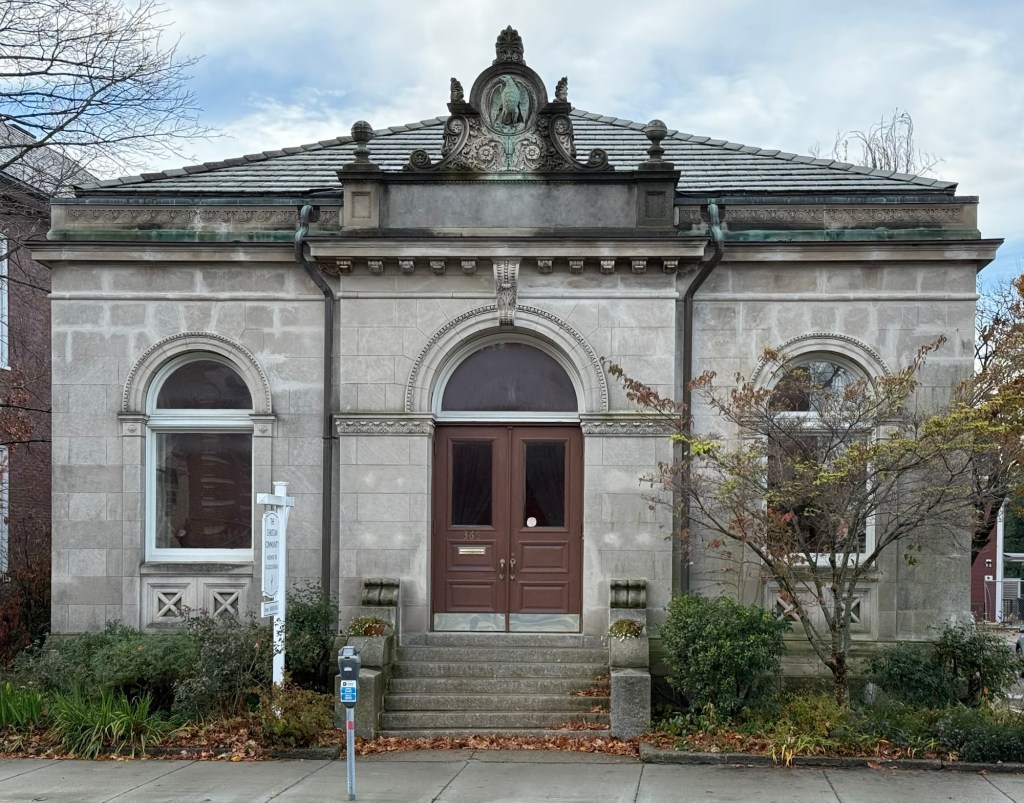
The diminutive former Brookline Savings Bank building on Washington Street in Brookline Village is in stark contrast in scale and design from the 1965 Brookline Town Hall down the street. The building committee hired Franz Joseph Untersee, a Swiss-born architect who settled in Brookline, to furnish designs for their new bank, which opened in November 1898. Covered in Indiana limestone, the Beaux Arts style bank building features a modest, three-bay facade that is adorned by large round arched windows surrounded by an egg-and-dart motif, and an elaborate pediment with acanthus leaf and a central eagle in copper. Like many local banks, the Brookline Savings Bank saw a series of acquisitions and mergers throughout the 20th century, and this small bank building was sold. Today, the former Brookline Savings Bank on Washington Street is occupied by a church.

Wayland Railroad Depot // 1881

The Wayland Railroad depot in Wayland, Massachusetts, was built in 1881 by the Massachusetts Central Railroad, which was later absorbed as part of the Boston and Maine Railroad. The line operated both passenger and freight service, with this structure serving as the passenger station and freight at the nearby structure, also built in 1881. Regular train service helped develop Wayland Center into a more prosperous Boston suburb, but industry and larger developments did not occur like in other communities. In its heyday, the Wayland station was manned by an agent with a small office in the building. The station agent was responsible for nearly all aspects of the operations from selling tickets; handling mail, baggage, and freight; keeping financial and operating records; and even maintaining the grounds. After WWII, car ownership and highway expansion harmed the rail industry and trains ceased to run in Wayland. To save the building from eventual demolition, the Town of Wayland purchased the old depots, which since the 1980s, has been leased to “The Wayland Depot“, a charitable women’s consignment craft shop with retail space in the station. The former rail line has largely been converted to a rail trail for pedestrians and bicyclists to traverse the old railroad right-of-way.

Old Houghton School // 1849

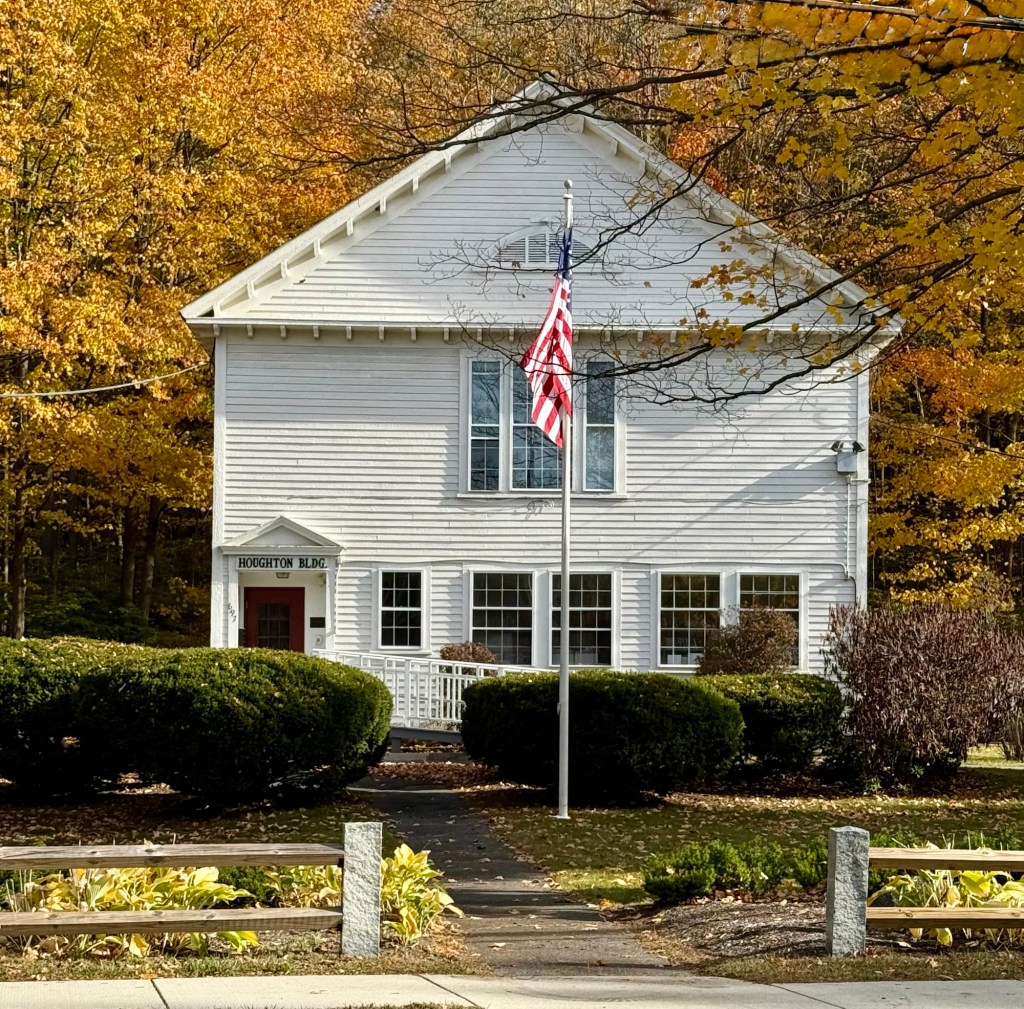
In 1849, the Town of Bolton, Massachusetts, built its first high school, the Houghton School at 697 Main Street in the town center. Blending Greek Revival and Italianate styles, similar to Bolton’s 1853 Town Hall, the Houghton School is a large, two-story, pedimented building of wood-frame construction. Interestingly, the school was largely funded privately by a local resident, Joseph Houghton (1772-1847), who in his will, bequeathed land and $12,000 for a public high school for the town. By the terms of the donation, nine men (all of whom had at one time served as a Bolton tax assessor) and their descendants, were barred from attending the school for a hundred years. Questions about the bequest were put before the Massachusetts Supreme Court, which disallowed this clause. An additional requirement, stipulated that no teacher could serve there longer than two years. That restriction was eventually put aside in the early 20th century. In 1917, the high school was discontinued. The fenestration was likely altered around this time. Bolton began sending its high-school students out of town to a school of their choice, and the Houghton School became the Bolton junior high school. In 1970-71, the building was converted to town offices, with the Town Clerk and Assessor on the first floor and the Police Department on the second. Since 2012, the building houses Bolton Access TV, as well as The Conservation Trust and Friends of the Bolton Library.


Chester Academy – Chester Historical Society // 1884

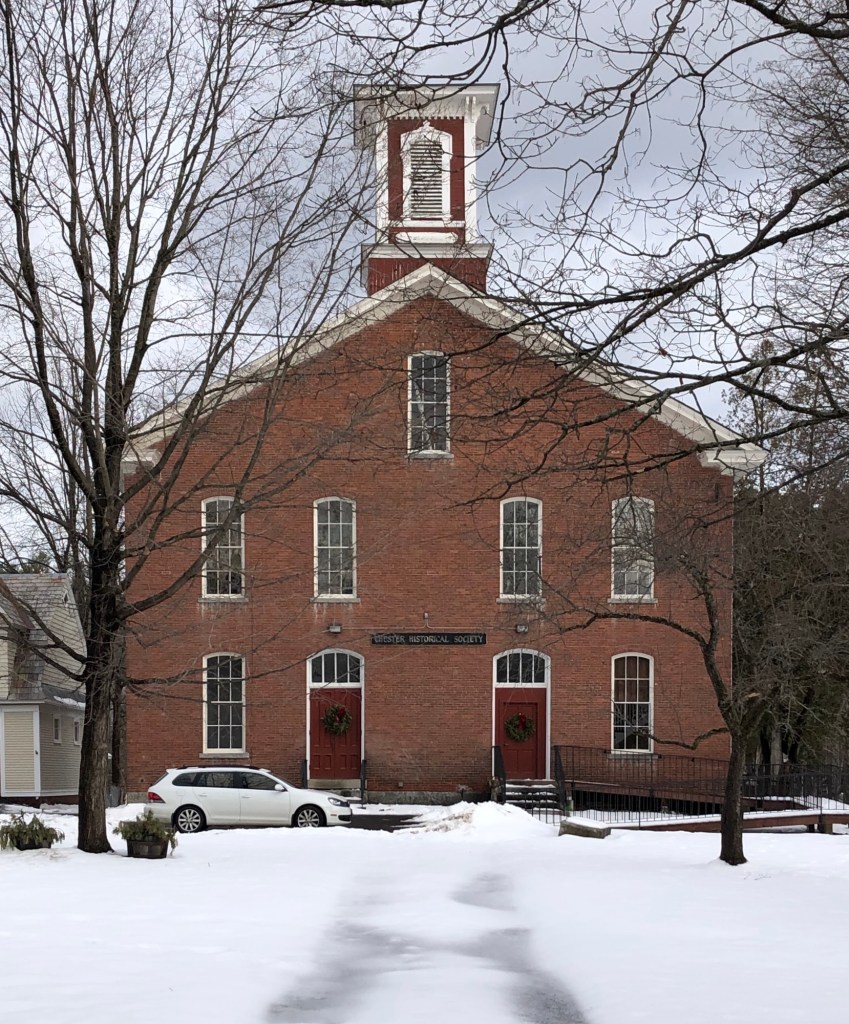
The town of Chester, Vermont, is one of the best small towns in the state for architecture lovers! Don’t believe me? I will prove it in this upcoming series. Located in Chester Village, the town’s center, this handsome brick building set off the main street, was built in 1884 as the town’s high school, replacing an 1814 private academy formerly on the site. The private academy closed in 1881, and the building was sold to the town, who by 1884, demolished the original structure and erected the current Italianate style building. The building served as the town high school until 1911, when a new high school was constructed nearby. The elementary and junior high school operated from here until the 1950s, when a modern school was constructed in town. Since 1950, the former academy building has been used by the Chester Art Guild, and currently is leased from the Town by the Chester Historical Society. The structure retains its architectural character down to the segmental arched windows and cupola.

Simonsville Schoolhouse // 1856

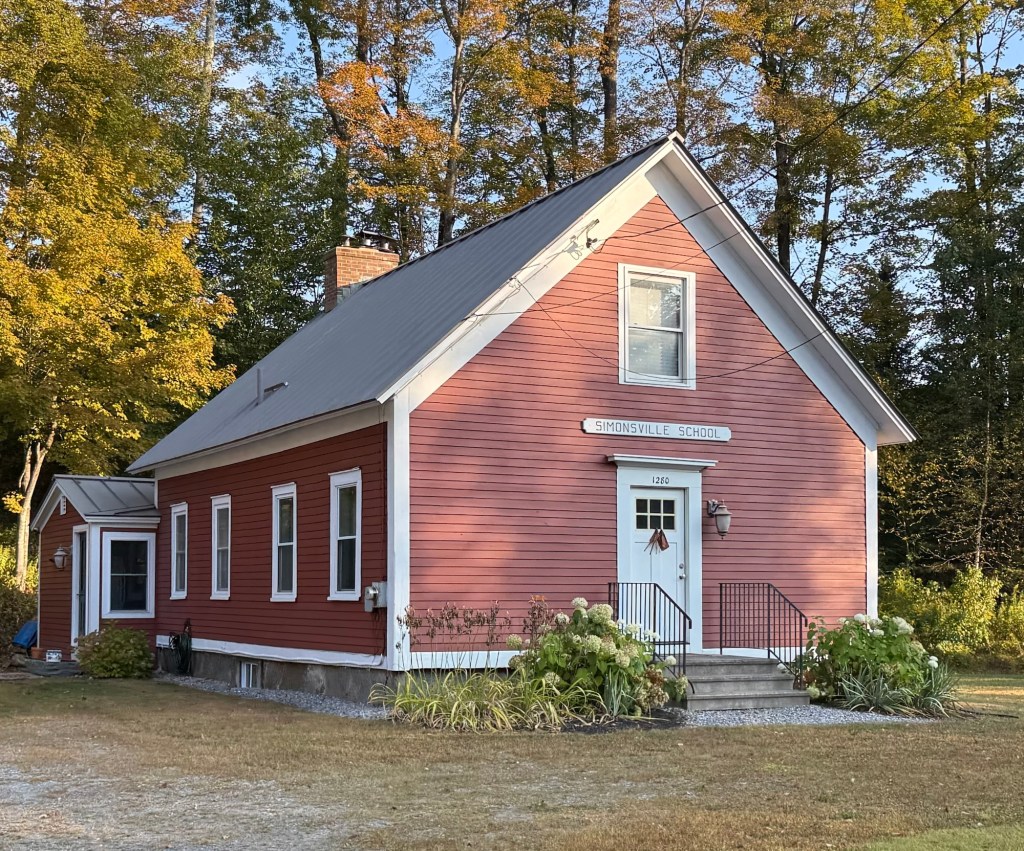
One-room schoolhouses like this example in the Simonsville area of Andover, Vermont, have been commonplace throughout rural portions of New England where children of most ages would share the classroom and be taught everything from basic spelling to math. The Simonsville schoolhouse was built in 1856 and is a typical example of a vernacular one-room schoolhouse in rural New England, with no frills or ornament, just a house of learning. The Simonsville Schoolhouse was converted to a residence sometime in the latter half of the 20th century and has been renovated, keeping the basic form and interior floorboards from the 1850s. The school-turned-home is currently (2025) listed for sale.

Simonsville Union Meetinghouse // 1848

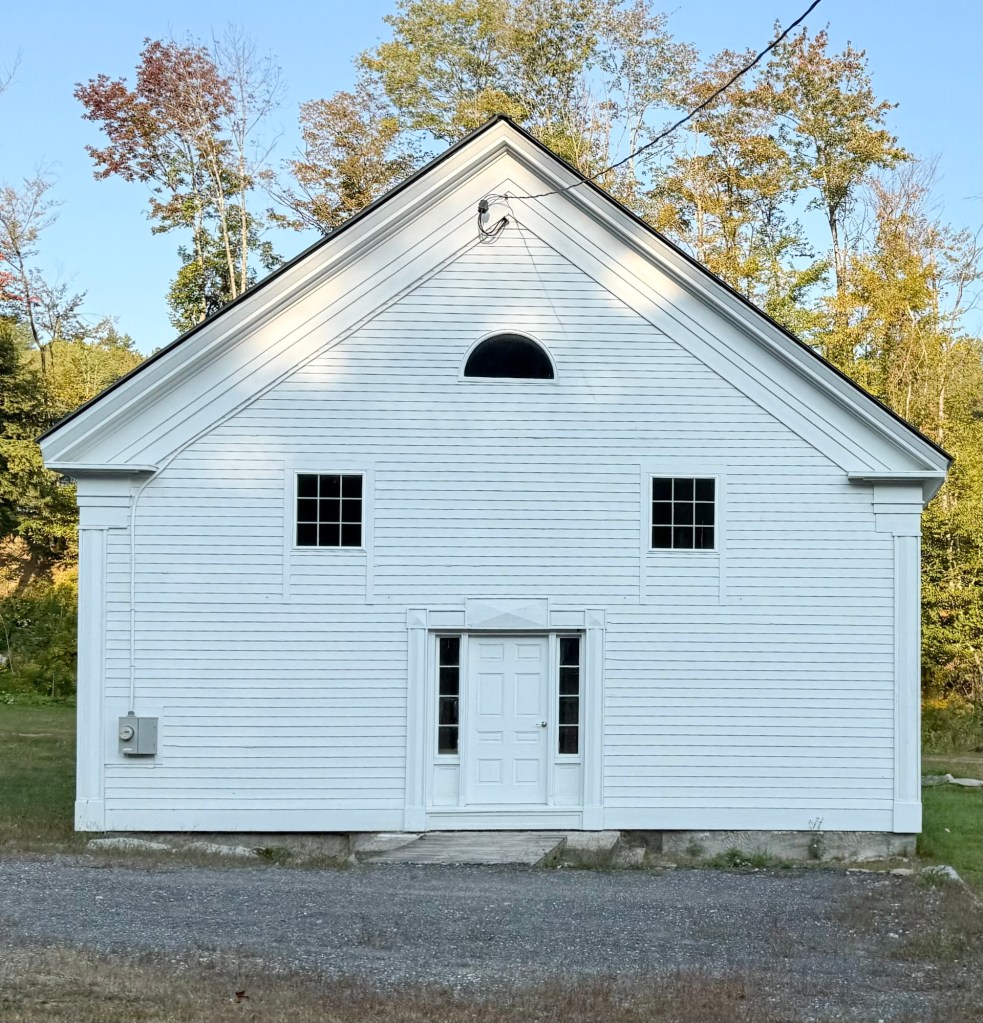
A once excellent example of a Gothicized, vernacular Greek Revival church in Vermont, the former Simonsville Meetinghouse in Andover, Vermont, has since been renovated into a private residence, removing almost all of the original fabric. Long ago in the Simonsville area of Andover, the residents desired to have a meeting house. There was a Baptist church in the village of Peaseville, but not all the Simonsville residents were Baptists, in fact, there were several religious denominations being followed. None of the religious groups had enough followers in Simonsville to be able to afford a minister and a church building, so they got together and combined their efforts and finances to erect a union meetinghouse that they would share. In April of 1847, the Simonsville Union Meetinghouse Society was formed and later that year, construction began, with the building completed in the spring of 1848. By the late 20th century, membership and use of the building dwindled, causing deferred maintenance and threatening the future of the church. The trustees of the church sold the building, and the church has since been renovated for private home. Sadly, the gothic belfry and historic window fenestration were altered in the renovation, but the entry and basic form remain.

Boston Free Hospital for Women, Nurse’s Residence // 1908

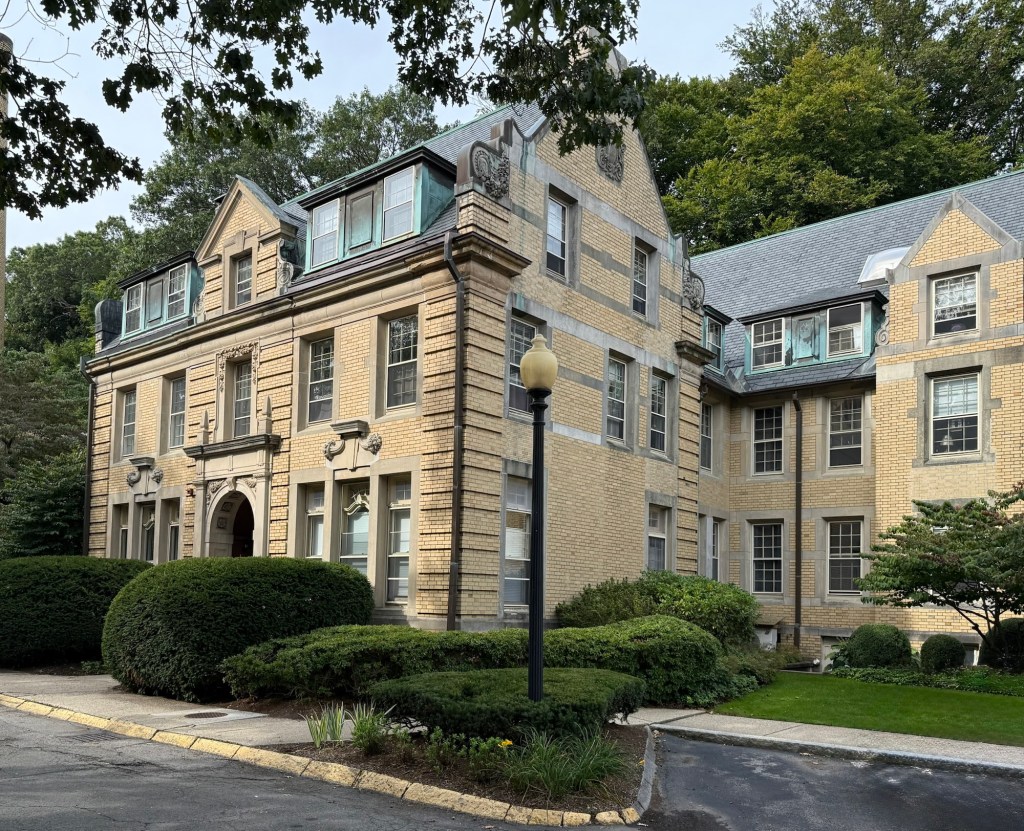
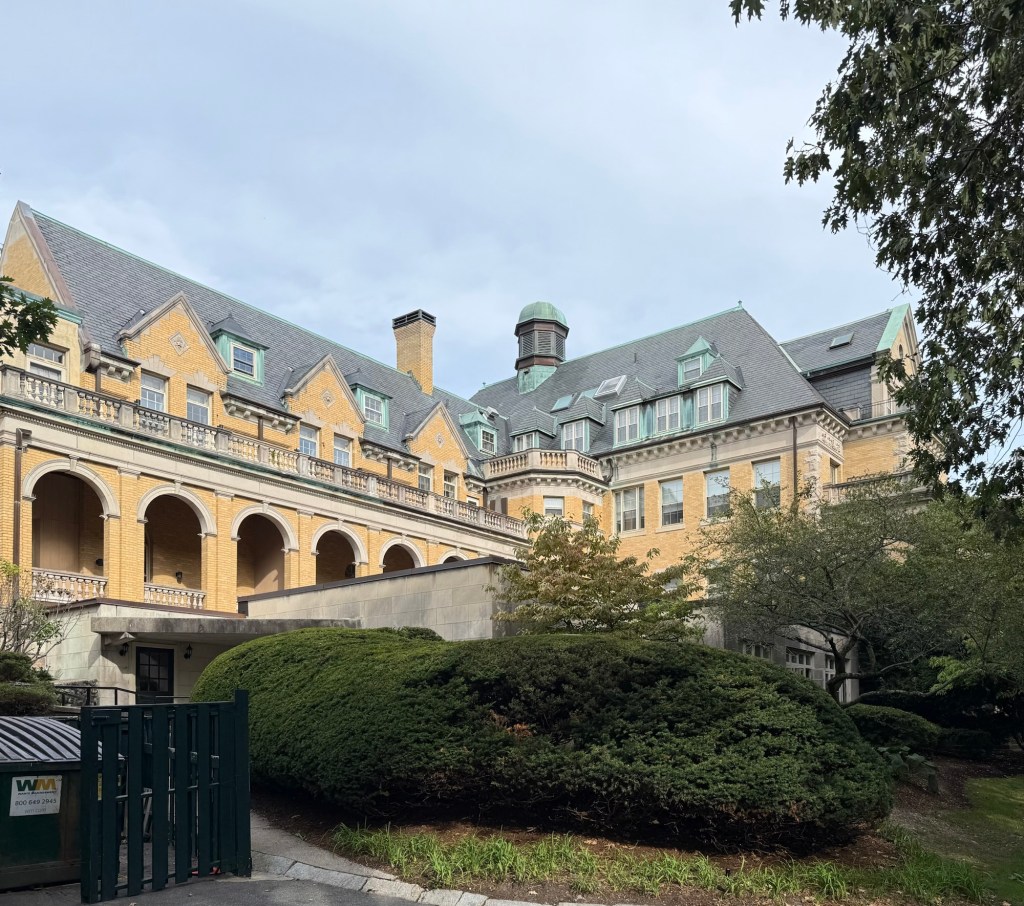
Located behind the former Boston Free Hospital for Women in Brookline, this charming yellow brick building employs materials and design elements of its neighbor, but was designed and built by different architects nearly a decade later. Built in 1908 as a nurse’s residence this handsome building was crucial to the expansion and growth of the women’s hospital here, providing much-needed living space for employees of the hospital who worked around the clock to provide some of the highest-quality medical care in the Boston area. Designed by the firm of Coolidge & Carlson, the nurse’s residence employs intricate limestone detail

Boston Free Hospital for Women // 1895

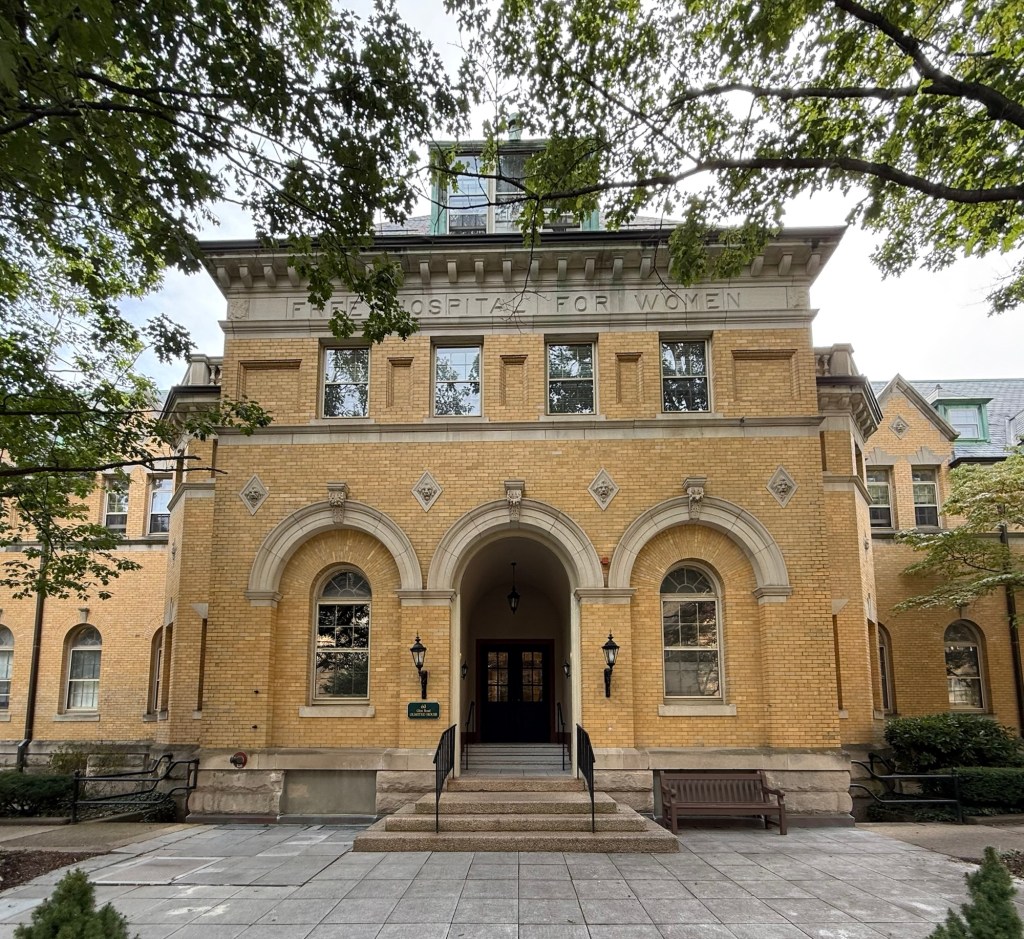
This handsome yellow brick building, designed by architects, Shaw and Hunnewell, was completed in 1895 as the Boston Free Hospital for Women. The hospital was organized in 1875 in a converted rowhouse in Boston’s South End, and after relocating once, it was decided that a purpose-built hospital was needed for the growing demands of the institution. A site in Brookline on the Muddy River, overlooking Frederick Law Olmsted’s Riverway and Olmsted Park, was purchased and the hospital was opened in 1895. The brick and limestone hospital building is somewhat Chateauesque in style and when opened, had no electricity and no telephone. The hospital is historically significant as the first teaching hospital for Harvard and as the first hospital in the country to apply radiation treatment for cancer, along with being a major research facility in fertility, especially the work of Dr. John Rock (who lived nearby) on the development of the birth control pill and research on in-vitro fertilization. The Free Hospital for Women merged with the Boston Lying In
Hospital (now part of Brigham & Women’s), which closed its Brookline Campus in the 1960s. In 1984, the firm of Childs, Bertman and Tseckares oversaw the conversion of the buildings to condominiums, called The Park, with sympathetic new construction.

Old St. Stephen’s Church – Barker Playhouse // 1840

The old St. Stephen’s Episcopal Church in Providence’s Fox Point neighborhood is an architecturally distinctive Greek Revival style church building located on charming Benefit Street. The church had its beginnings in 1839, when the newly established congregation called on 29-year-old Francis Vinton to serve as their first pastor. The congregation funded this small church which broke ground in 1840, and before it was completed, Rev. Vinton resigned as Rector. The building, built of stone and covered in stucco, once had a spire and belfry above the main entrance. The congregation grew over the next decade and it was soon realized that a larger and more central church should be built for members, many of whom were wealthy residents with mansions surrounding Brown College. In 1860, the parish purchased a lot on George Street, and hired architect, Richard Upjohn to design the new church in the Gothic style. For reasons of location, and possibly social class, twenty-two men and women remained here at the less fashionable church and formed a new parish, the Church of the Saviour. The smaller, mission church with its stucco walls, remained until the property was sold in 1932 to house the Barker Playhouse, reputed to be the oldest continuously operating little theatre in the United States.


Old Stone Bank // 1896

The Old Stone Bank was founded in 1819 as the first savings bank in Providence, Rhode Island, but originally under the name, Providence Institution for Savings. A constantly growing volume of business influenced the erection, in 1854, of a building for the exclusive purposes of the bank at 86 South Main Street, near College Hill. Designed by C.J. and R.J. Hall, the original stone bank stood one-story tall with a gable roof. Success and further expansion of the institution led to the erection, in 1896, of the present building, which served as the main office. Designed by the local architectural firm of Stone, Carpenter & Willson, the present domed banking structure is said to have incorporated parts of the 1854 building, and expanded the rest to the landmark we see today. The Beaux Arts/Neo-Classical banking structure is constructed of granite, with a Classical pedimented entry of monumental Corinthian columns atop the staircase, but the highlight of the building has to be the gold-leaf-and-copper domed roof which partially served as a skylight for the banking hall inside. Offices relocated to a new building in the late 1960s. The banking institution closed in the 1980s and following acquisitions and insolvency, the main bank was sold in 1995 to Brown University for $1.15 million to house the Haffenreffer Museum of Anthropology‘s collection of Native American artifacts. Years later, Brown decided it was unfeasible to house the collection in the building as the necessary alterations would have altered the historic character of the building, they then sold the building to an LLC in 2009. The Old Stone Bank is now a single-family home. Yes, you heard that right. The new owners have lovingly preserved this architectural marvel for all to enjoy as they stroll the city.