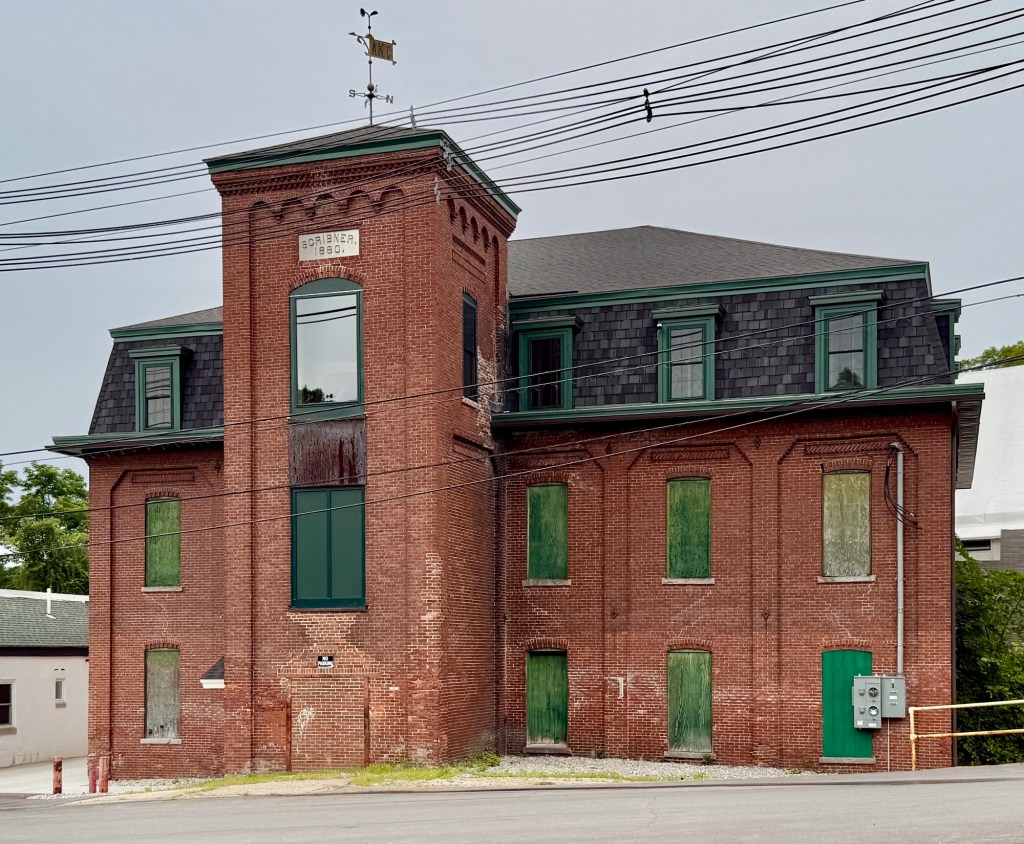
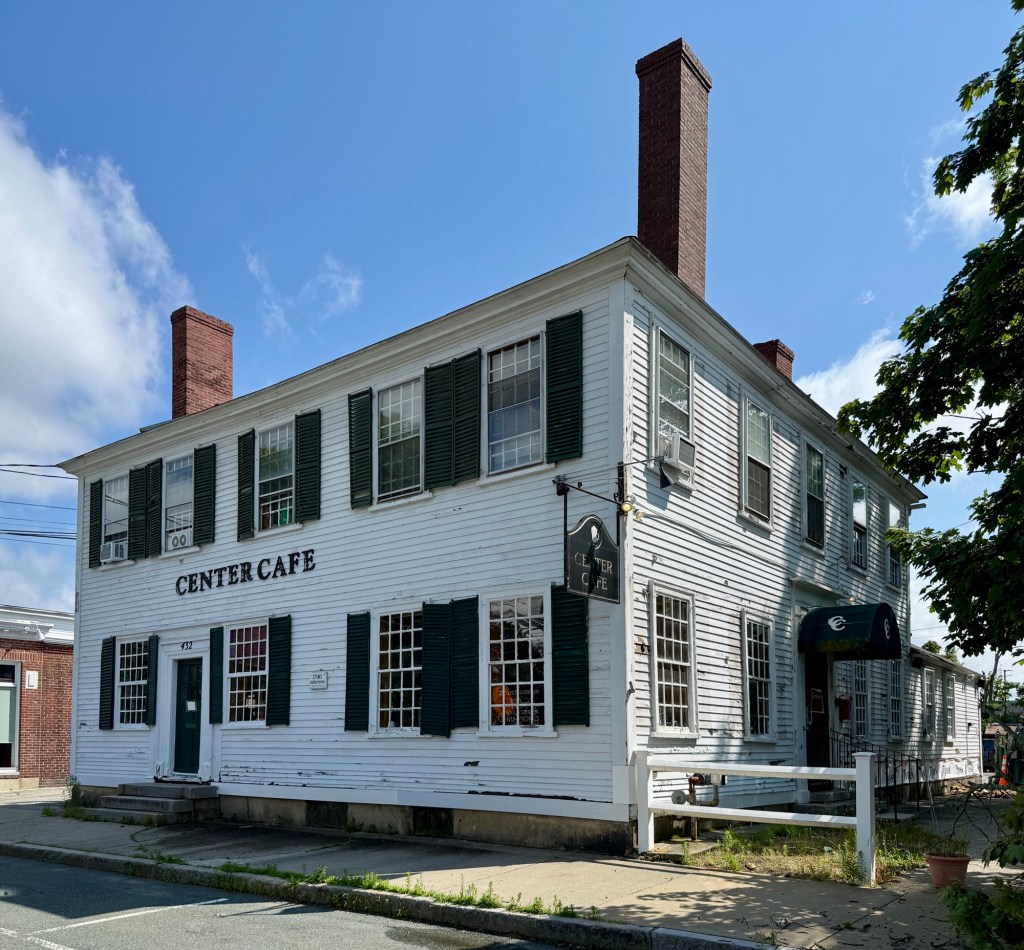
The Scribner Mill building in Ashland stands as an architecturally and historically significant industrial building that tells the story of the community as a manufacturing center of the lakes region of New Hampshire. Built in 1880 by owner Ambrose Scribner, the brick structure served as a hosiery factory and is a late example of a mill building in the Second Empire architecture style. Owners today have spruced up the building which had previously been left vacant, to rent as office and light manufacturing space by Minus33, a merino wool apparel brand, and the purchased helps to reclaiming the important textile heritage of New England. The building retains its iconic mansard roof, brick corbeled cornice and entry tower, though many window remain boarded up.
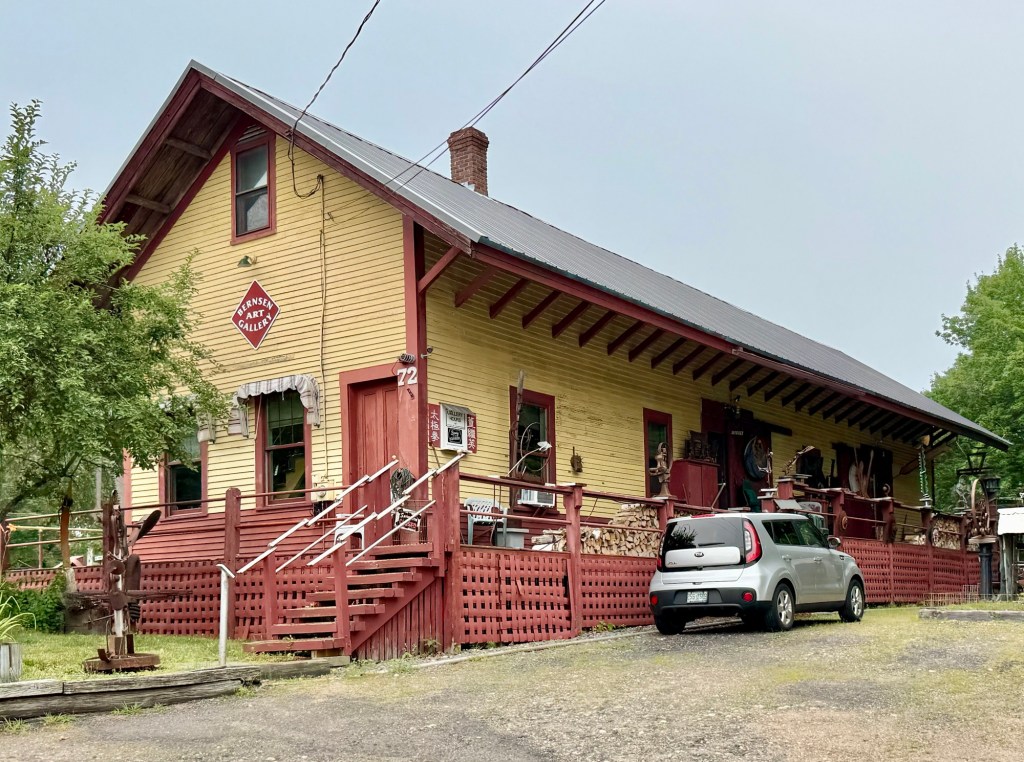
The railroad arrived to Ashland, New Hampshire (then a part of Holderness) in 1849, which connected the industrial village to Concord for both freight and passenger service. The first Ashland Station, this building, opened as a combined passenger and freight station of the Boston, Concord & Montreal Railroad, which was chartered by the State of New Hampshire in 1844. Construction of its initial 93-mile track through largely agricultural, rural, and mountainous territory began in 1846 and concluded in 1853, when the railroad reached its terminus in Wells River, Vermont. Over time, the railroad expanded and acquired branch railroads, connecting it to routes all over the northeast. As manufacturing flourished in Ashland, the town grew, which necessitated the demand for a larger passenger station for the railroad. Additionally, in 1869, this structure was remodeled to handle increased freight. As trucking overtook rail service for freight, this station closed after WWII, and sat vacant until it was purchased and converted to an artist studio and shop.
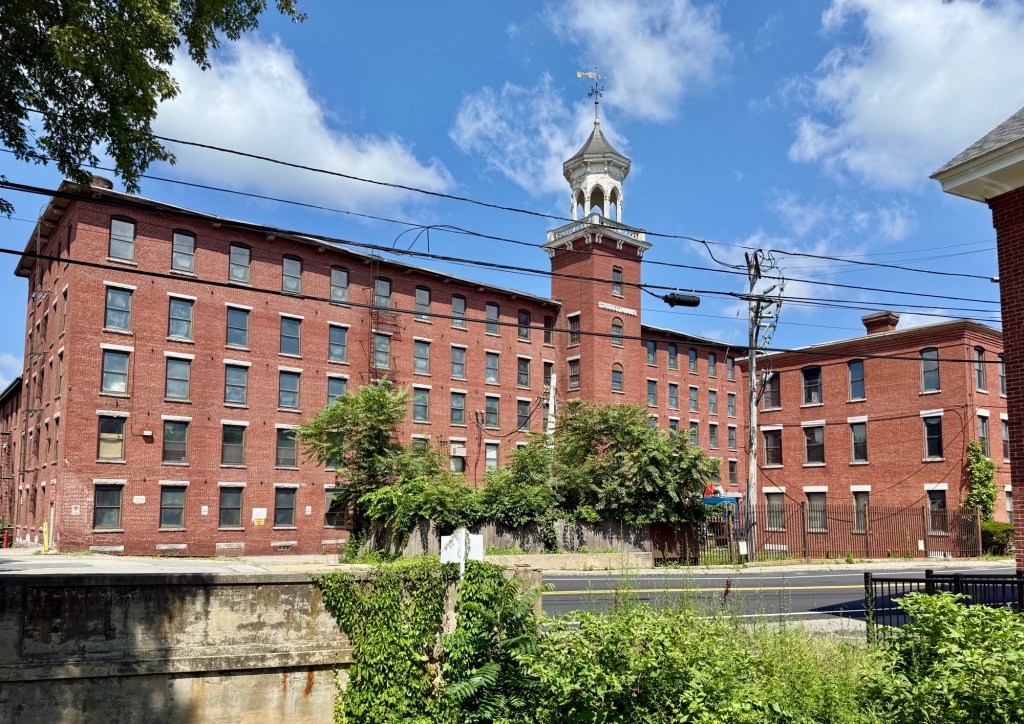
The Talbot Mills in North Billerica were built in 1857 by Charles and Thomas Talbot, who produced flannels, woolen goods, and later military and later, military drab. The brothers had connections in Lowell and eventually built a new manufacturing company in Billerica on the banks of the Concord River. Charles Talbot oversaw much of the day-to-day business, while Thomas Talbot began to pursue politics, serving first as state senator, lieutenant governor, and eventually Governor of Massachusetts in 1878. When built, the Talbot Mills were originally powered solely by water, but as the company’s manufacturing facilities doubled in 1880, a boiler-engine house was built. During the 1920s, at its peak, the mill employed 450 workers, many of whom lived in worker’s housing developed and rented by the corporation. During the 1960s, the company suspended operations and the building had been rented out to tenants ever since, now occupied by Pace Industries. The main (and earliest) building of the Talbot Mill complex was built in 1857 and rises five stories with a prominent entry tower with a balustrade, octagonal open arcaded belfry call capped by a weathervane. The wooden tower is a rare survivor and hopefully will remain another 150 years.
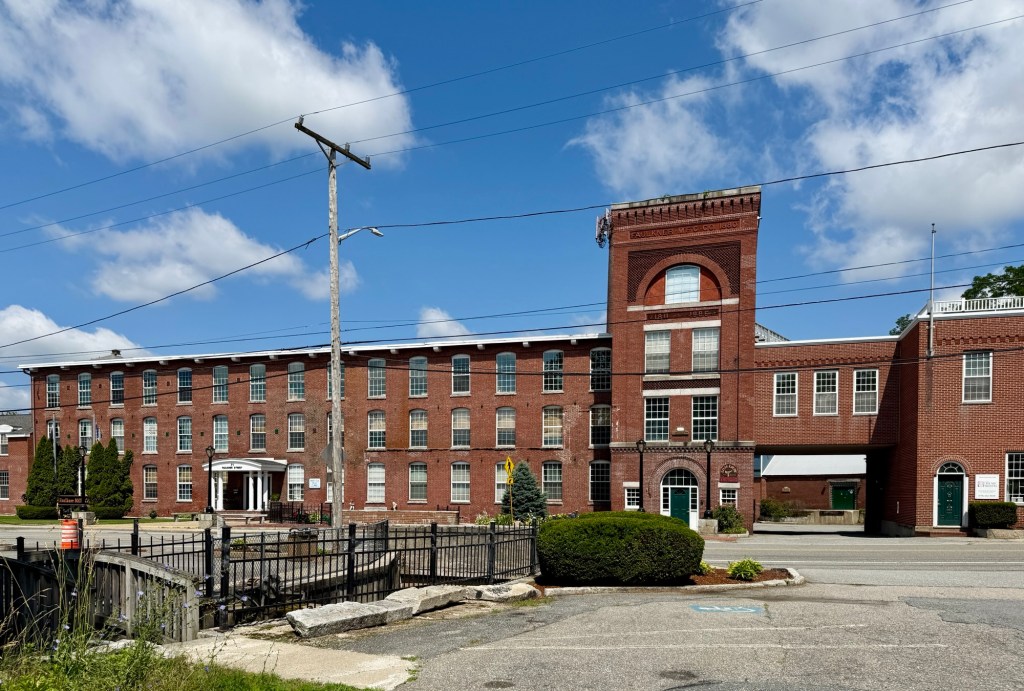
The manufacture of woolen goods was introduced in North Billerica by Francis Faulkner in 1811 on the bend of the Concord River. Francis Faulkner was the son of Colonel Francis Faulkner of Acton, one of the leading citizens of that town, who participated in the battles of Lexington and Concord and served throughout the Revolutionary War. When Francis Faulkner arrived in North Billerica, he began to manufacture woolen goods and expanded to coloring and dressing cloths. Mr. Faulkner would be joined by his sons, James and Luther, and was called the James R. Faulkner & Company. James Robbins Faulkner took over his father’s business, which expanded greatly after the Civil War. In 1880, the firm incorporated as the Faulkner Manufacturing Company, and they had the largest wing, this main block, added to the mill complex. The main building is an interpretation of the Romanesque Revival style and stands three stories tall and is notable for the four-story stair and water cistern tower with arched base. Sometime after 1914, the property was organized as the North Billerica Company and by 1935, a total of 135 employees were engaged in manufacturing wool blankets and cloth. Despite additions to the factory in the 1940s and again in the early 1960s, foreign competition forced the mill to close about 1987, leaving the buildings vacant with its future uncertain. Luckily, the Faulkner Mill is now home to a variety of small businesses and the Middlesex Canal Museum.
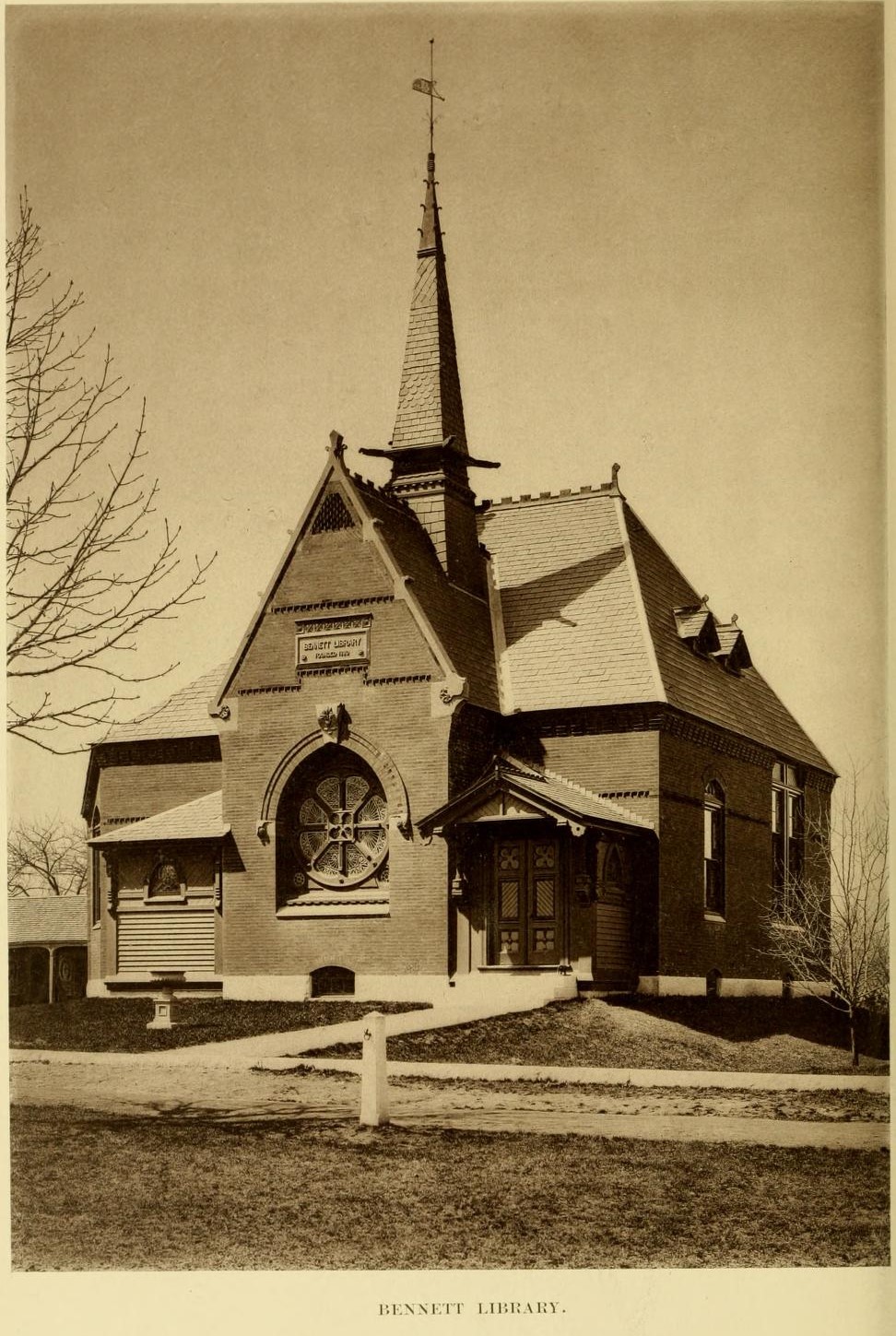
In the late 19th century, Eleanor Richardson Bennett (1794-1891), the widow of Joshua Bennett (1793-1865), bequeathed funds to erect the first purpose-built public library building in her hometown of Billerica, Massachusetts. A private members library known as the Social Library, was formed in Billerica in 1772, but Ms. Bennett wished to gift the town a public facility of learning in memory of her late husband, a prominent landowner in the West End of Boston and one of the richest men in Middlesex County. Eleanor Bennett hired the Boston firm of Rotch & Tilden, to design the new library building overlooking the Town Common. Completed in 1881, the Victorian Gothic library is built of brick with limestone trim, and features a large rose stained glass window, intricate terracotta and wooden detailing, and a slate hipped roof with a pointed spire. The library was eventually outgrown and the facility relocated to a new building, and again to the former Town Hall building in 2000. The former Bennett Library is still owned and maintained by the town as an event space available for rent. The building has been restored through Community Preservation Act funding.
The Abbott-Bowers House at on Boston Road in Billerica Center was built in 1796 and stands as a significant Federal period residence in town, though suffers from deferred maintenance. The building was constructed for James Abbott, a merchant who likely operated a store from the street-side entrance. The property was owned later by Jonathan Bowers, the first Postmaster in Billerica and his home served as the Post office for over 100 years. Many other organizations and committees have also been run out of the building. The residence is five-bays wide on all elevations and has a hipped roof with tall end chimneys and what appear to be the original windows. The building recently sold and is planned for a new commercial use, hopefully with a restoration of the exterior.
Located on the edge of the Town Common in Billerica, Massachusetts, this handsome civic building stands as one of the community’s best examples of the Colonial Revival style. The building was constructed in 1895 to replace the mid-19th century Town Hall that was destroyed by fire in 1893. The community hosted a design competition, where prominent firms from the Boston area submitted designs, and ultimately selected the plans from the firm of Warren & Bacon, led by Herbert Langford Warren and Lewis H. Bacon, who had a short-lived business partnership lasting just one year. The symmetrical, two-story brick building is trimmed with limestone and capped with a gray slate roof. The facade is embellished with a Palladianesque arched loggia sheltering the entrances with a centrally placed Palladian window above on the second floor. Additionally, the roof is adorned by a Christopher Wren inspired cupola with a gold leaf dome capped with a weathervane. The building functioned as the Town Hall with offices and a grand hall on the second floor for city meetings until the town hall relocated in 1979 to a former school building. Since 2000, the former Town Hall of Billerica has housed the Billerica Public Library, which was formerly located in a smaller historic building nearby.
Edgartown, the historic whaling harbor village, is Martha’s Vineyard’s first colonial settlement and has prospered as one of the best-preserved collections of 19th century architecture in the United States. The streets of Edgartown’s village are lined by historic residences, shops and churches built by and for prosperous whaling captains and preserved today as part of New England’s elite summer destinations. Presently occupied by the local government of Edgartown as its Town Hall, this handsome Federal style building on Main Street was originally used as the community’s first purpose-built Methodist Church. Methodism on Martha’s Vineyard began after 1787, when a vessel commanded by Capt. Thomas Luce arrived to the island containing two stowaways escaping enslavement in Virginia; John Saunders and Priscilla, his wife. They were slaves to a Virginia planter, and both were zealous christians, and Methodist speakers, who helped foster a larger community on island. A methodist church was established in Edgartown in a building shared with Baptists until this handsome building was constructed in 1828 by local architect and builder, Frederick Baylies Jr. Just fifteen years later, the town grew in population and wealth and the local Methodists felt it necessary to build a much larger church, now known as the Old Whaling Church in 1843. This building was acquired by the Town in the 1840s and converted to a town hall with space for a fire engine and police. More recently, the building served as the fictional town hall of “Amity” in the 1975 film, Jaws, where the infamous chalkboard scratch scene took place.
This iconic Boston building is threatened with demolition!
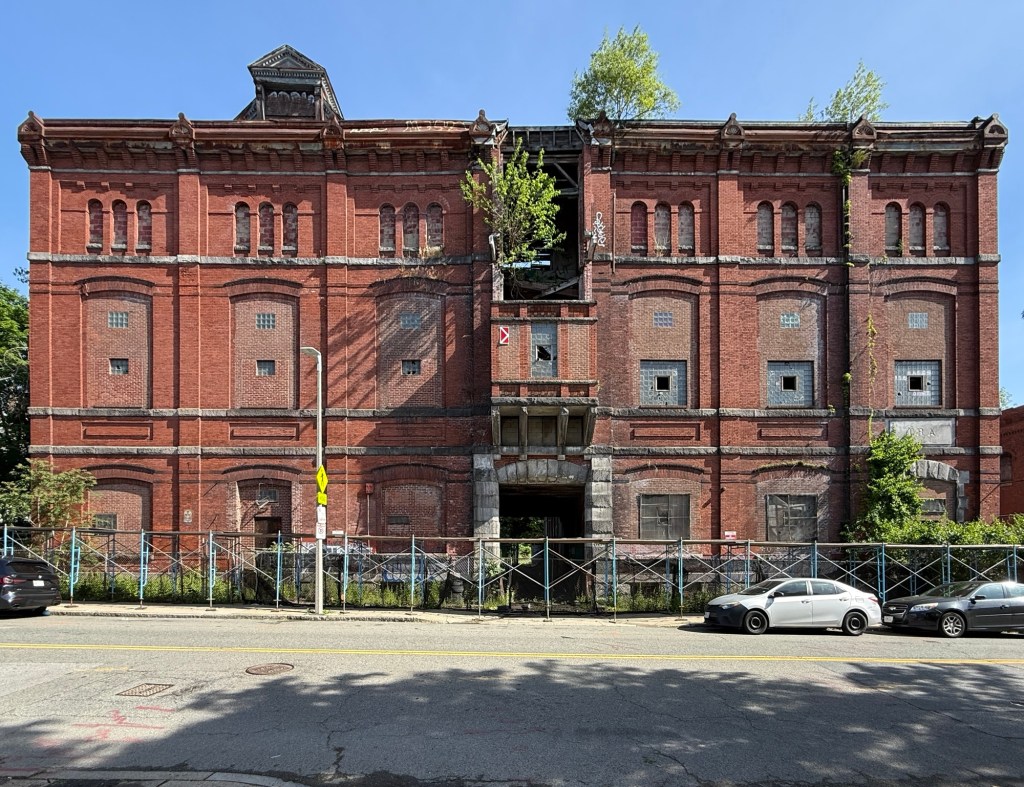
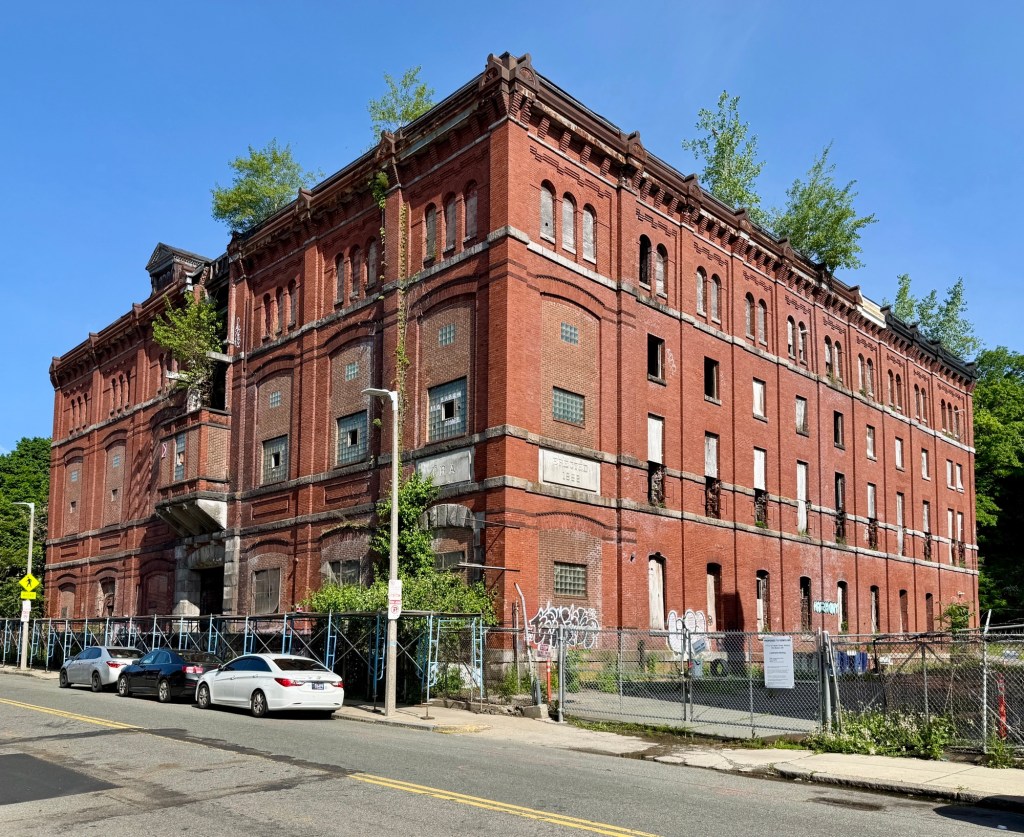
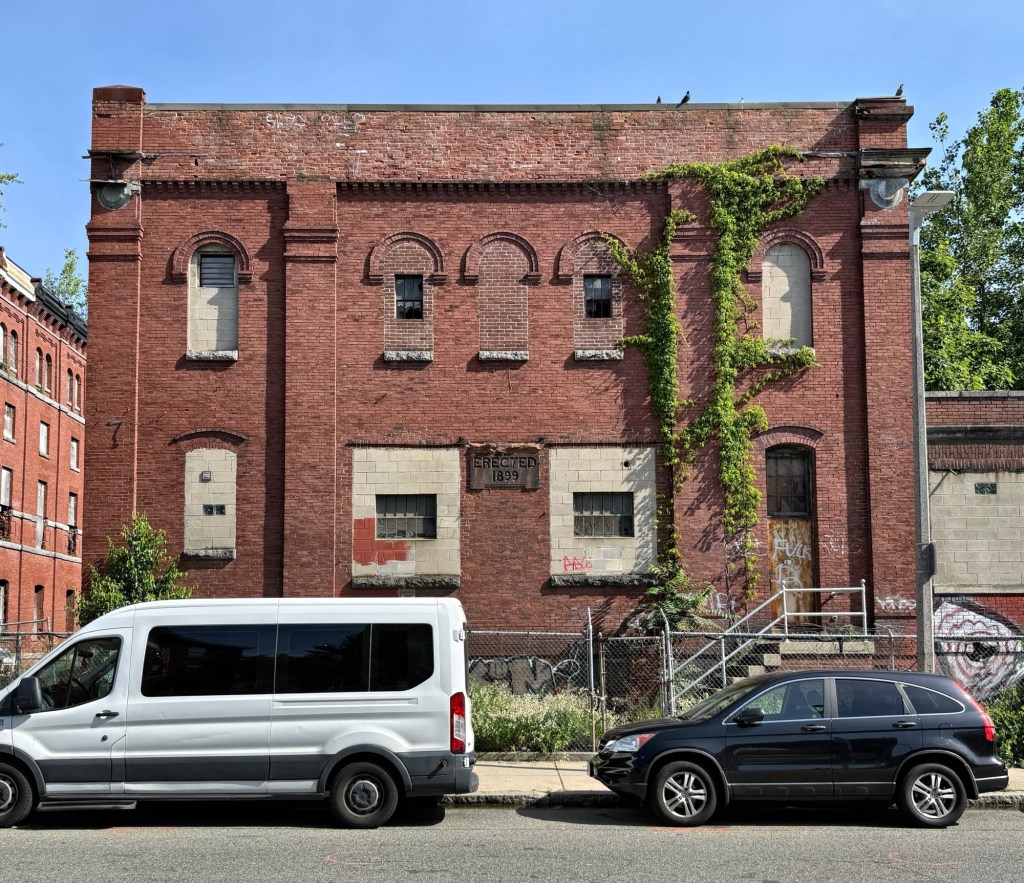
The clock is ticking for the Alley/Eblana Brewery, a historically and architecturally significant building in Boston’s Mission Hill neighborhood. Located on Heath Street, the historic Alley Brewery, also known as the Eblana Brewery, stands as a striking reminder of the city’s once-thriving brewing industry. Founded by Irish immigrant John R. Alley (1822-1888) in the mid-1880s, the brewery produced the popular Eblana Irish Ale, a name derived from the ancient term for Dublin, reflecting Alley’s heritage and the strong Irish influence in the area. John Alley previously co-owned the Highland Spring Brewery nearby, but founded a brewery in his own name in 1885. For his brewery, Alley hired Philadelphia architect Otto C. Wolf, who was the nation’s premier brewery architect and engineer in the late 19th and early 20th centuries. The four-story complex was built in 1886 and showcased some of the most advanced brewing technology of its era while displaying an impressive blend of brick and granite craftsmanship. Its distinctive façade features a dramatic central bay, granite-trimmed arches, rough-faced stone braces, wrought-iron gates, and carved stone plaques bearing Alley’s initials and the date of construction. After John’s death in 1888, the business continued under the ownership of his two sons, Frederick and George. The brothers in 1899, added the adjacent bottling and refrigeration building, which employs similar architectural features and materials to the main brewery. Brewing here ceased with Prohibition and the structure later served a variety of manufacturing uses, when during the 1960s, many windows were filled with brick. The Alley-Eblana Brewery remains one of Boston’s most architecturally significant surviving brewery buildings, embodying Boston’s rich industrial and ethnic heritage, but it is threatened. Developers have owned the building since 2013 and have done nothing to preserve or even maintain the structure, making it a case of demolition by neglect. They are requesting to demolish both structures, but the demolition has been delayed 90-days through the Boston Landmarks Commission Demolition Delay review process. If you want to see the building repurposed and saved, reach out to the Boston Landmarks Commission and advocate for its adaptive reuse, which would provide housing and maintain a significant architectural landmark for the community.
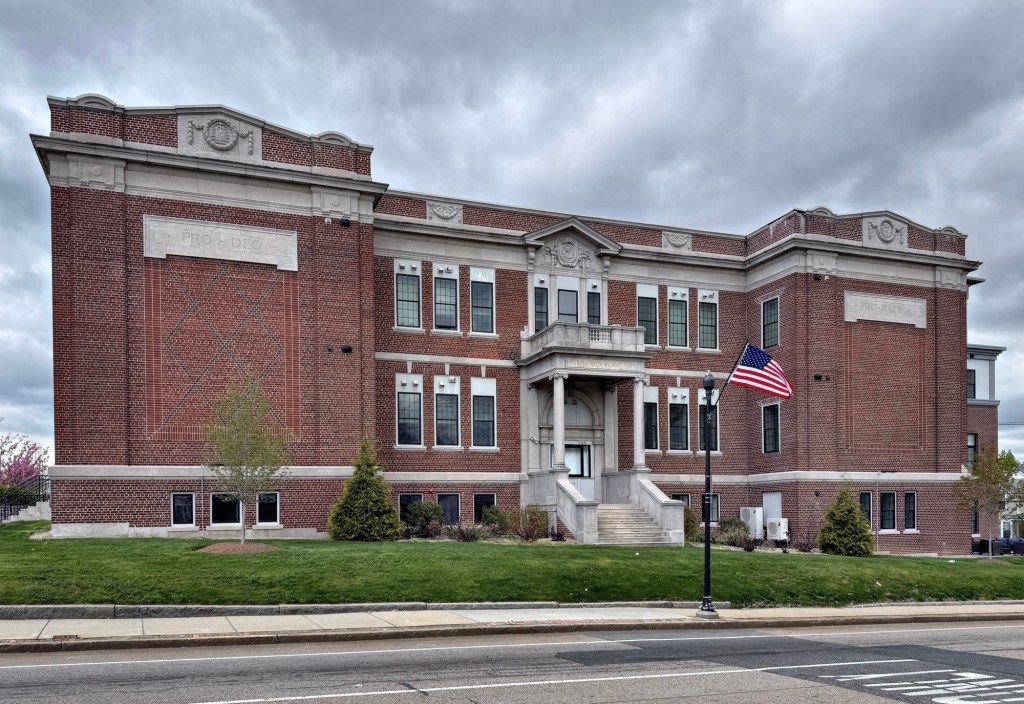
As the St. Mary of the Assumption Catholic Church of Milford expanded, the diocese determined that an academy building was warranted to educate the pupils affiliated with the growing congregation. In 1924, Massachusetts ecclesiastical architect, John W. Donohue was hired to furnish plans for a new parochial school building. The two-story Colonial/Classical Revival style edifice was constructed of brick with limestone trim and follows the form of many school buildings constructed in New England in the early decades of the 20th century. In 1954, the building became the St. Mary’s Catholic High School and it was expanded in 1962 with a Modern addition. When the two local Catholic churches merged schools in the 1970s, this building was sold to the Town of Milford, who converted it to use as a public middle school, a use that remained until a new middle school was built elsewhere in town. With its future uncertain, in 2018, the Town of Milford sold the school building to developers, who demolished the 1960s additions and constructed a new addition to the rear, converting the entire building into elderly housing named, Landmark Place Apartments. Adaptive reuse is a great way to build additional housing while retaining local history and meet sustainability goals!
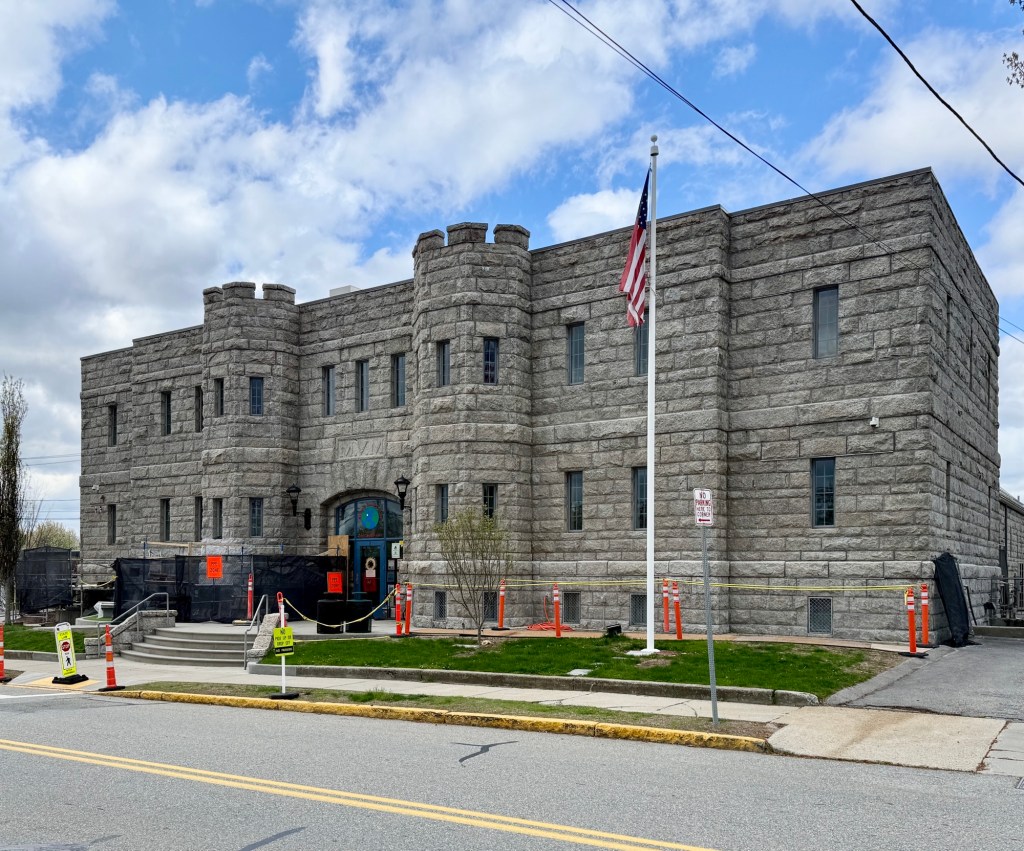
A source of local pride, the Milford Armory building on Pearl Street in Milford, Massachusetts, is an architectural landmark in the community and shows how adaptive reuse can give old buildings new life. The structure was completed in 1912 and constructed of locally quarried and cut Milford granite, a pinkish-grey granite that covers an area of approximately 39 square miles, centered around present-day Milford. Between the Civil War and WWII, the town of Milford became famous for its “pink” granite as a building material, with over 1,000 men laboring in dozens of quarries supplying the stone for some of America’s most iconic buildings including: the Boston Public Library, Worcester City Hall, as well as the original Penn Station and Natural History Museum in New York, among many others. Besides being built of local granite, the Armory was also designed by local architect, Wendell T. Phillips, who followed nationwide trends designing the building like a fortified Medieval castle with crenellated towers, with long and narrow windows recessed, emulating the slit windows used in similar medieval structures. Like in many communities all over the country, the need to store firearms and major National Guard trainings declined with some being demolished, others sitting vacant, and others like the Milford Armory, seeing new life. The Milford Armory was slated for closure in 2002 and was ultimately saved when the Town of Milford and the National Guard struck a deal to initially rent the building for a Youth Center and gymnasium and share the space with the Guard. The armory was home to the popular Youth Center, which needed gym space not available anywhere else. The building was ultimately purchased by the town and underwent a massive restoration, being rededicated as the Milford Youth Center in 2016.
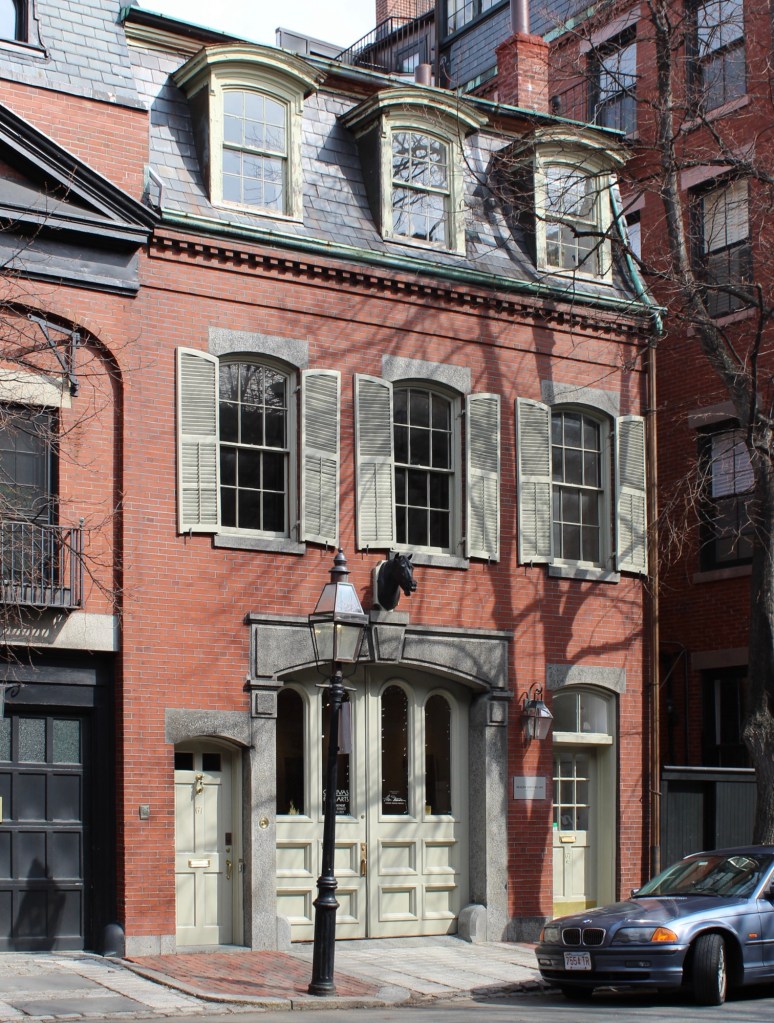
This charming stable building on Chestnut Street on the Flat of Beacon Hill, Boston, was probably built around 1865 for Elijah Williams (1804-1879), a shipping merchant who also served a term on the Boston Common Council. Elijah and his wife, Mary, lived on Louisburg Square and had this stable built to hold their stable, sleigh and horses. Additionally, the stable housed a small residence inside for the stable-keeper and coachman, who would chauffer the Williams’ around and take care of their horses. In the early 20th century, the stable was owned by George Nixon Black (1842-1928), an heir to a Boston real estate fortune that came to Boston to manage the office of his father’s lumber business. He eventually became one of Boston’s largest individual taxpayers and besides his home in Boston, spent time in other homes including the late Kragsyde in Manchester-by-the-Sea and Woodlawn in Ellsworth, Maine, now a house museum. The stunning Second Empire style stable building is built of brick with granite lintels, sills, and surrounding the carriage doorway, over which is a mounted statuary of a horse head as a nod to the building’s original use.
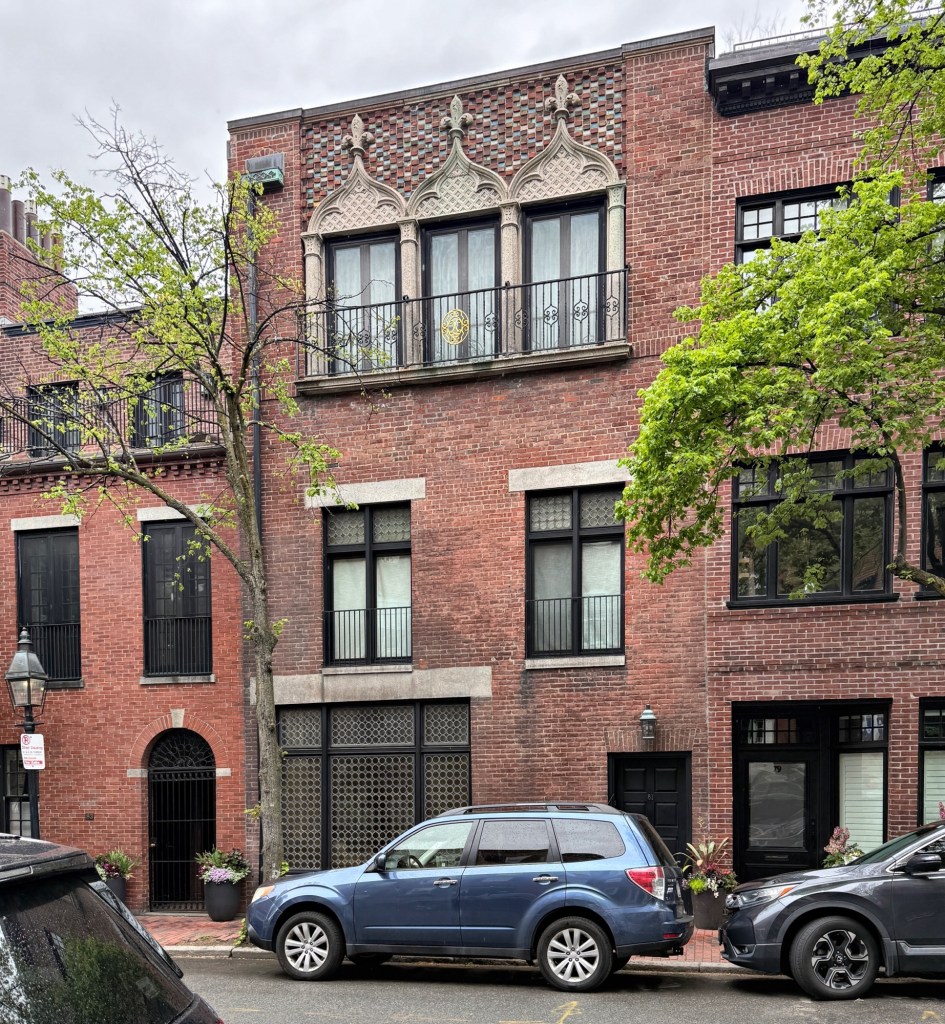
This handsome building at 81 Chestnut Street in Boston, began as a two-story brick stable and was later modernized with an additional floor and renovated for use as an artist’s studio, a perfect encapsulation of the history of the Flat of Beacon Hill from the “horsey end of town” to upper-class enclave and artist community. The stable was built around 1860 for Harleston Parker (1823-1888), the father of the more well-known, architect, J. Harleston Parker, and remained as a stable throughout the 19th century. In the early 20th century, the two-story building was converted to a auto repair shop but changed use in 1916 when owner, Edward H. Noyes hired architect, Harry Browning Russell, to convert the old stable to an artist studio. The second-story windows were enlarged and former carriage door were enclosed with small rounded art glass, likely for and by George Loftus Noyes, a painter who worked for a time at the New England Glass Company. Inside, a central landscaped courtyard flooded the spaces with natural light. In 1936, George Noyes moved to Vermont, divorcing his wife, Maybelle, but leaving her with the Boston studio. Maybelle remarried to George Lee, and soon-after hired architect, Frank Chouteau Brown, to add a third-story to the studio for conversion to a year-round residence. Brown added the unique Moorish arched windows and brickwork at the third floor.
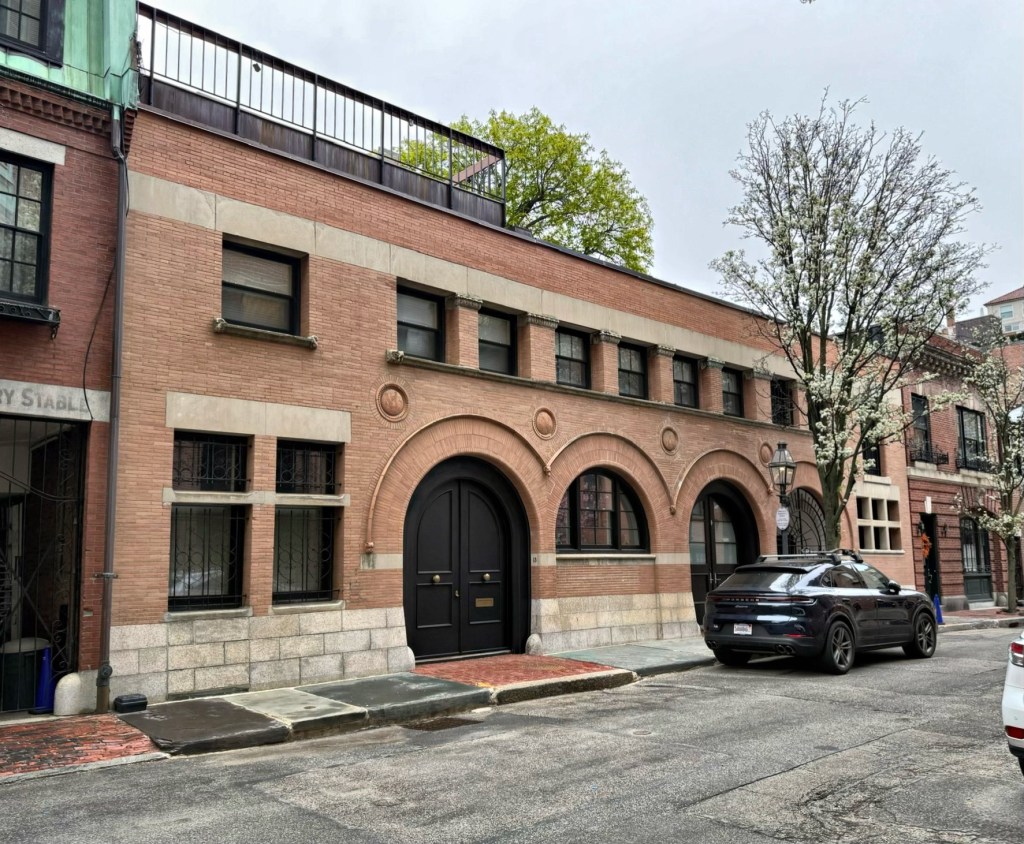
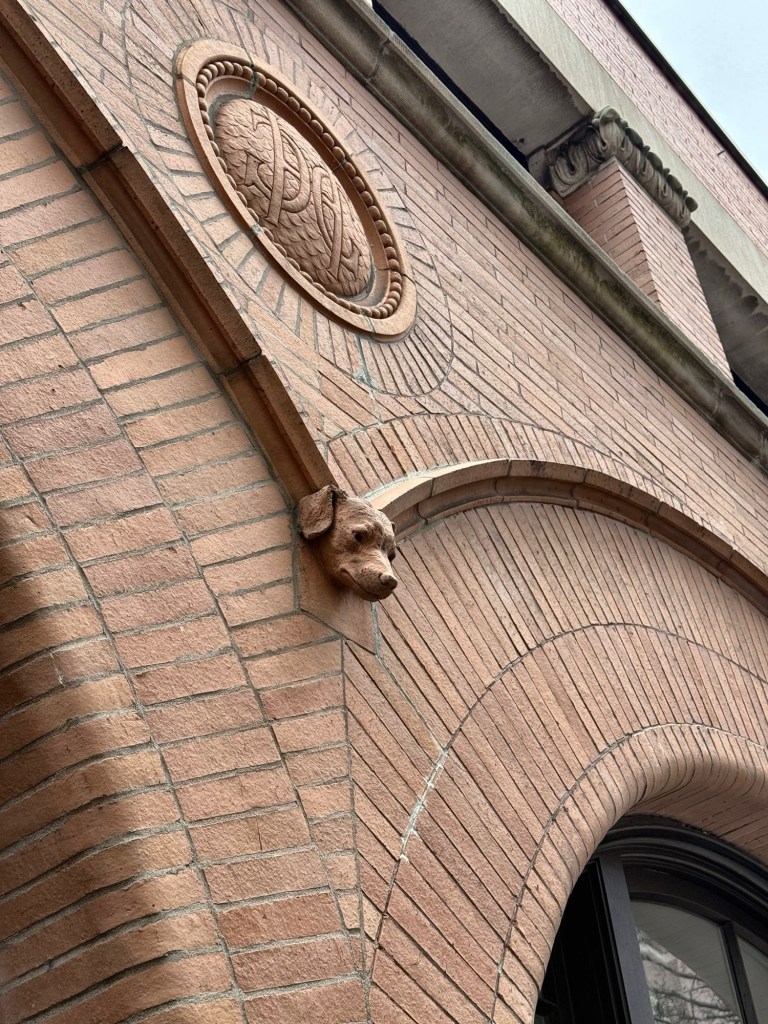
The George G. Hall Stables on Byron Street in Boston’s Beacon Hill neighborhood were built in 1895 for George G. Hall, a wealthy hotelier and developer, who razed three private stables occupying the site prior. For his private stables, George Hall hired Boston architect, William Whitney Lewis, to furnish the plans, which resulted in one of the finest buildings on the Flat of Beacon Hill. Designed in the Richardsonian Romanesque style, the building was described in architectural publications as being constructed of Milford pink granite and coral-colored bricks with two carriage doors and a door for the stable-keeper with an extant hayloft on the second floor. While from afar, the stables are stunning, it is when you inspect it up-close that you see the attention to detail that was taken by the architect. Round stone medallions on the facade read: “G.G.H.” after its owner; “No. 11, 12, & 13”, the addresses; and “1895”, the year of construction. Additionally, at the ends of the arched stable openings, carved dog heads can be found, keeping guard of the horses inside. The stable was later converted to three residences in the 1960s by the architectural firm of Goody & Clancy, Associates.
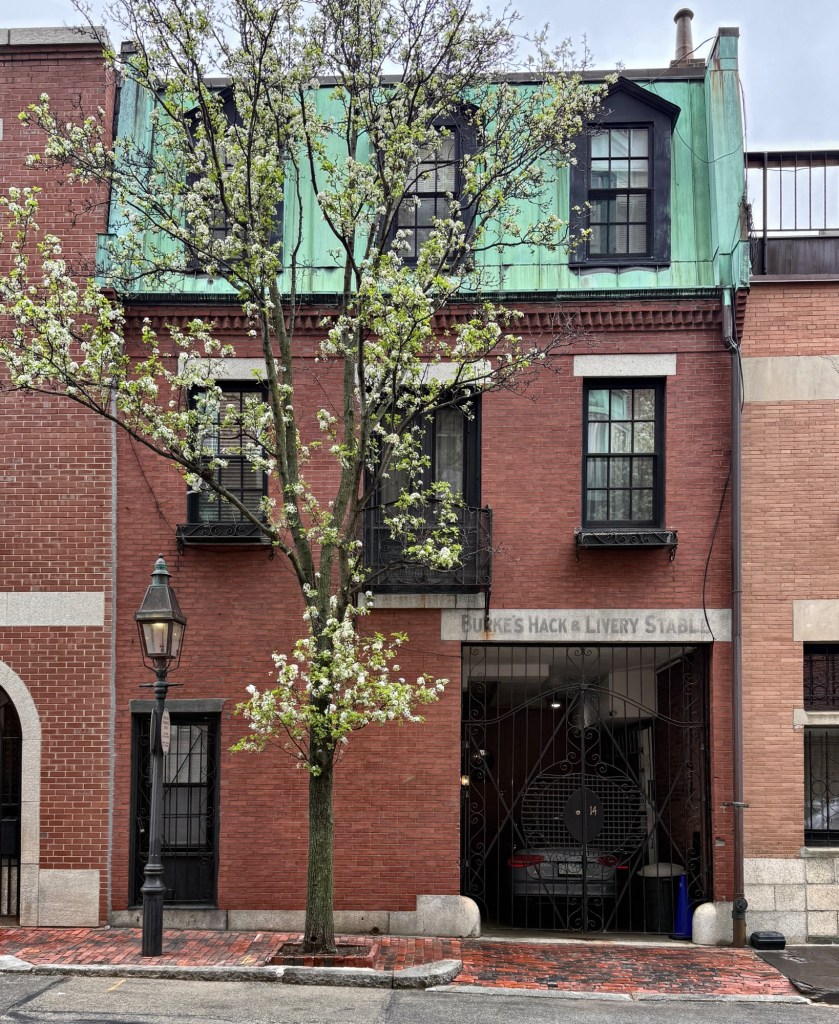
This handsome two-story brick stable on Byron Street in Boston’s Beacon Hill neighborhood was built around 1865 for the Sigourney family, and its front façade retains a distinctive appearance associated with that period. The brick façade sits on a granite base, and the first story contains two entrances characteristic of its stable use: a vehicle door providing access to ground floor and a domestic entrance connecting to stairs leading to upper levels including stableman’s quarters on the top floor. Around the time of WWI, the property was owned by James F. Burke, who added the painted sign over the carriage entry. The stable was converted to a residence in about 1964 for owner, Jay Schrochet by architect, Benjamin S. Fishstein and remains a single-family home today.