Warren Industrial Trust Company // 1906

This monumental Georgian Revival bank building on Main Street in Warren, Rhode Island, and is one of the finest buildings of the style in the entire state. The Warren Industrial Trust in 1906 hired Edmund R. Willson of the Providence architectural firm of Stone, Carpenter & Willson to design the bank for the town after it had absorbed the town’s multiple banks, under one roof. It would be one of his final commissions before his death. On the facade, four Corinthian columns support a dentilled pediment over the entrance with the red brick walls enlivened with arched windows, oversized keystones, and pilasters with contrasting capitals and bases. The building shows that Colonial Revival architecture, while often seen as a refined, classical style, can be festive and ornate.

Judge Alfred Bosworth House // c.1849

The only two-story temple-front Greek Revival style house in Warren, Rhode Island, the Judge Alfred Bosworth House on Federal Street, is believed to be the work of great architect Russell Warren. Alfred Bosworth (1812-1862) ran a law office in Warren and Providence and represented Warren in the General Assembly from 1839 until 1854 and then served as a justice on the Rhode Island Supreme Court. Bosworth was of counsel for Rhode Island in suits growing out of the boundary question between Rhode Island and Massachusetts, specifically around Fall River. Judge Bosworth died at home in 1862 and his widow, Anne, lived here afterwards. At the end of the century the Bosworth House was converted to an ice cream parlor, named Maxfield’s, which became a very popular attraction in town. The company, owned by Nathaniel and Julia Maxfield, attracted throngs of local residents every summer who would eat ice cream on the front yard of the house. Maxfield’s was even frequented by Providence writer, H. P. Lovecraft, when he was a young man. During the mid-1900s, the house served as a nursing home until 1988, when owners restored the house back to a residence and removed the asphalt siding that was added to the exterior around the time of the Great Depression.

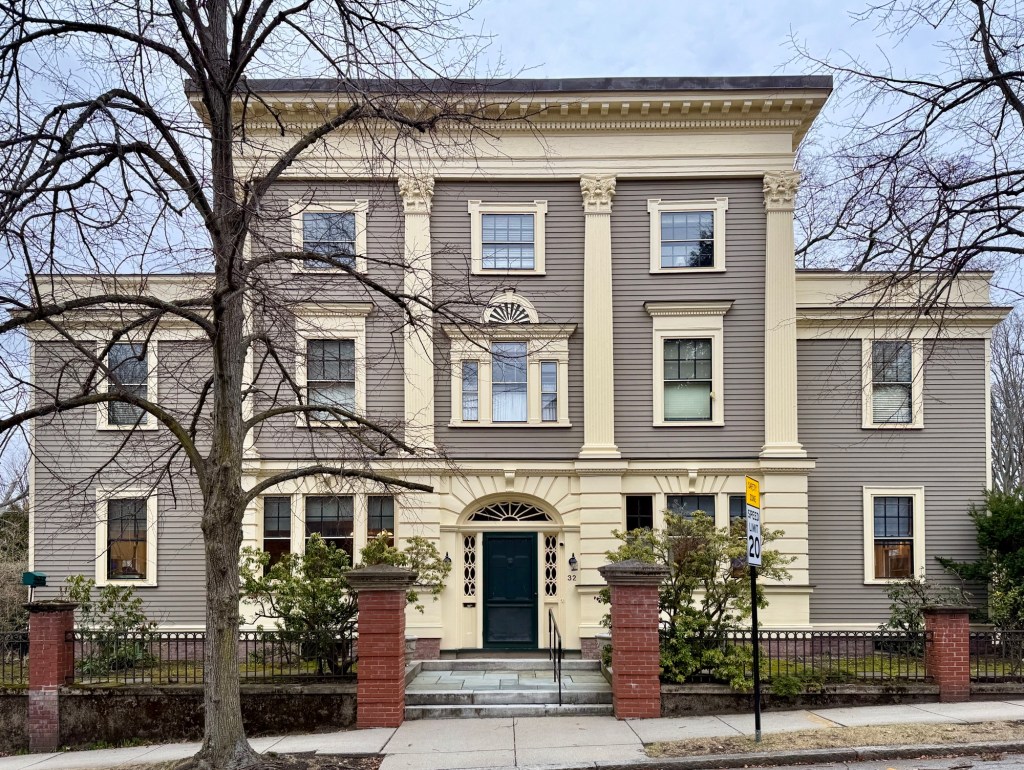
Old Cooper Shop // c.1800

This stunning Greek Revival house on Lyndon Street in Warren, Rhode Island, was according to historians, built around the turn of the 19th century as a cooper shop! A cooper as a professional, would make wooden barrels, tubs, and casks from wooden staves, which were all made in this building before it was converted and renovated around 1830 in the Greek Revival style for Deacon John J. Bickner, who was likely affiliated with the Episcopal Church across the street, which was designed by architect, Russell Warren. Due to the connection, it is possible that the renovation for Bickner was undertaken by Russell Warren as well. On its facade, the house has two-story applied pilasters which break up the bays and smooth flushboard siding which makes the house even more stately!

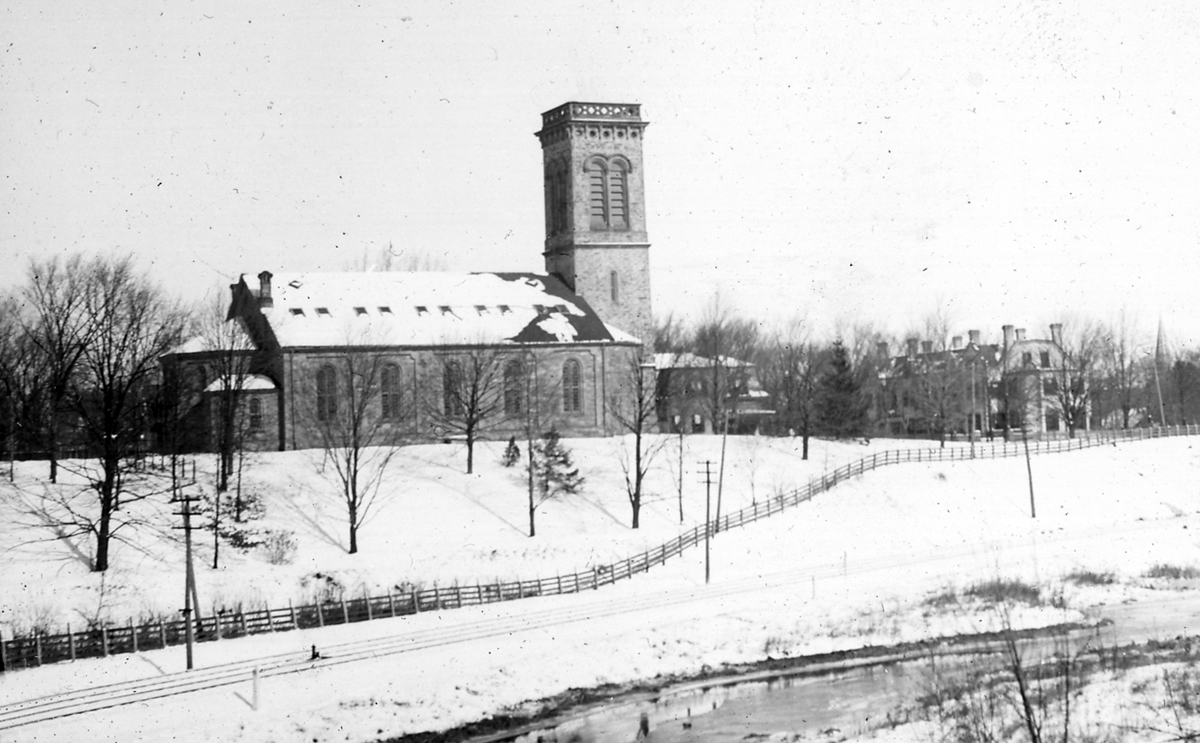
St. Mark’s Episcopal Church // 1829

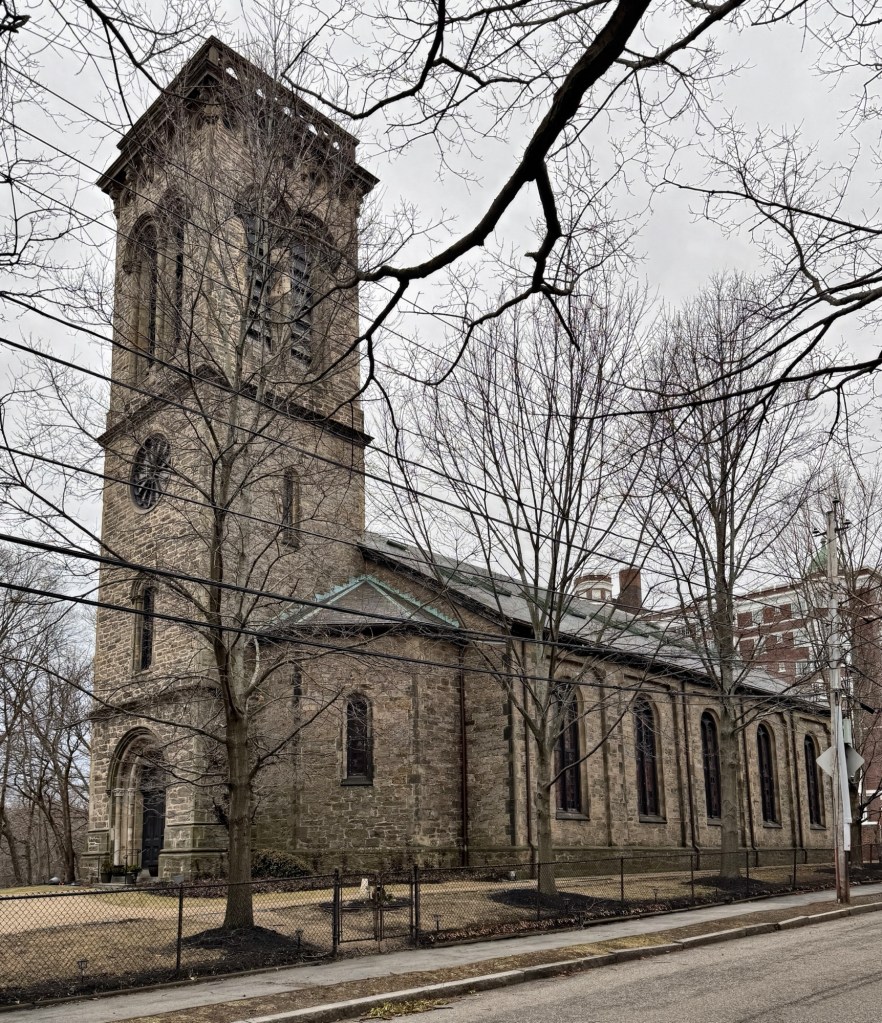
St. Mark’s Episcopal Church in Warren, Rhode Island, is a small, yet architecturally significant building that was one of the first examples of the Greek Revival style in the community. The episcopal church was formed in Warren in 1828, with members originally meeting in Cole’s Hotel while this site and construction completed on their new house of worship. The well-connected congregation hired architect, Russell Warren, who had just completed the Westminster Arcade, a landmark in the Greek Revival style, in Downtown Providence. Distinguished by its beautiful four columned Ionic portico and canted door frames, the church also originally had a square tower and parapet, which were removed following the 1938 hurricane, and replaced with a simple pediment. The parish closed in 2010 and the diocese sold the building in 2012 to private owners, who converted it about ten years ago into a residence, but retained the historic stained glass windows and character of the building. The entire site today (2026) is being renovated with what appears to be a modern addition on the side (not pictured). Hopefully the architecture of this landmark will be preserved.

Warren Armory // 1842

Although somewhat altered from its original appearance, the Warren Armory on Jefferson Street in Warren, Rhode Island, can easily be identified as a playful example of a Gothic Revival building, one of several Romantic styles that prevailed in the mid-19″ century. Here, the distinguishing features are its octagonal castellated towers, pointed arched central entry, and thin, long, slit-like, window openings set into the thick, stuccoed stone walls, important fire/blast-proof construction due to the storage of arms and gunpowder. Built in 1842 and formally opened in 1843, the building was used for social affairs by the local artillery company as well as citizens of the town for general entertainment for the public, including performances by Gen. Tom Thumb of P.T. Barnum’s travelling circus. In 1952, the property was conveyed to the Warren Post #11 of the American Legion.

Governor Josias Lyndon House // c.1767

One of the more significant old homes in Warren, Rhode Island, the Gov. Josias Lyndon House on the aptly named Lyndon Street, dates to 1767 or earlier, and has connections with a colonial governor. It is not clear who originally owned this property, but the residence is best-known for its most famous resident, Governor Josias Lyndon (1704-1778), who lived here during the final years of his life with his wife and enslaved Africans. Lyndon worked as Clerk of the Assembly for the colony and in 1768, he was appointed Rhode Island’s last Colonial Governor, serving until 1769. His election is believed to have been a compromise between Samuel Ward and Stephen Hopkins, both of whom had already served multiple terms as governor. After his one term, Lyndon declined reelection and served as chief clerk for the General Assembly of the Superior Court of the County of Newport. At the time of the British occupation of Aquidneck Island (Newport), Gov. Lyndon moved to this home in Warren, where he remained until his death from smallpox in 1778. An often undertold fact about Josias Lyndon is that he enslaved a man named Caesar Lyndon. Caesar was highly literate and was entrusted to carry out Lyndon’s business, acting as both a purchasing agent and secretary. Caesar also held his own small lending business with enslaved as well as free Blacks and whites borrowing money from him. Josias allowed Caesar to marry, which he did to Sarah Searing. It is not clear if/when Caesar was granted his freedom, or if he accompanied Josias to Warren or remained in Newport.

First Methodist Church of Warren // 1844

Located next door to the diminutive Easterbrooks Cottage on Church Street, the First Methodist Church of Warren, Rhode Island, stands as one of the community’s great 19th century buildings. Constructed in 1844 with its iconic steeple completed a year later, the Methodist Church is a great example of a vernacular, Greek Revival style with prominent, south-facing portico with four two-story Doric columns supporting the entablature and pediment above. Built by Perez Mason (1802-1881), a carpenter and later amateur architect, the church stands out for its iconic five-stage steeple, which has long served as a sort of landmark for sailors arriving into the harbor nearby.

Easterbrooks House // 1757

One of the pre-Revolutionary homes in the picturesque town of Warren, Rhode Island, the Easterbrooks House on Church Street is definitely one of the smallest, but oozes charm. This one-and-a-half-story gambrel roofed cottage stands across from the Town Common and adjacent to what may be the tallest building in town, the First Methodist Church of Warren. The home was built by 1757, likely by William Easterbrooks (1731-1772), and by the time of the Revolution, was occupied by Ms. Nellie Easterbrooks (1761-1853). Nellie and her mother rented a room in their home to Warren schoolmaster, John Holland, who earned the nickname “Traitor Holland”, after he had secretly been sharing news to General Pigot, the British General in charge of forces in Rhode Island. Long thought to have supported the local Patriots, it was learned that he was a loyalist, after the British and Hessian soldiers raided Warren and were leaving the town in 1778. It is said that troops stopped at this house and John Holland accompanied them, cheering alongside and leaving with them. He was never seen in Warren again. Soon after this, a young Nellie Easterbrooks, then in her teens, sought revenge against the British who pillaged and assaulted her friends and family. As the troops were leaving, she is said to have gathered a group of other angry Patriot ladies of town and captured a drunken drummer marching through town. Then they dragged their bewildered captive into a nearby hotel and locked him into a closet there. Nellie would later marry Nathaniel Hicks West (1751-1836), a Revolutionary War veteran, and received a widows pension until her death in 1853. The Easterbrooks House is a rare, intact surviving Georgian home that tells a rich history of Colonial New England and the stories during the American Revolution.

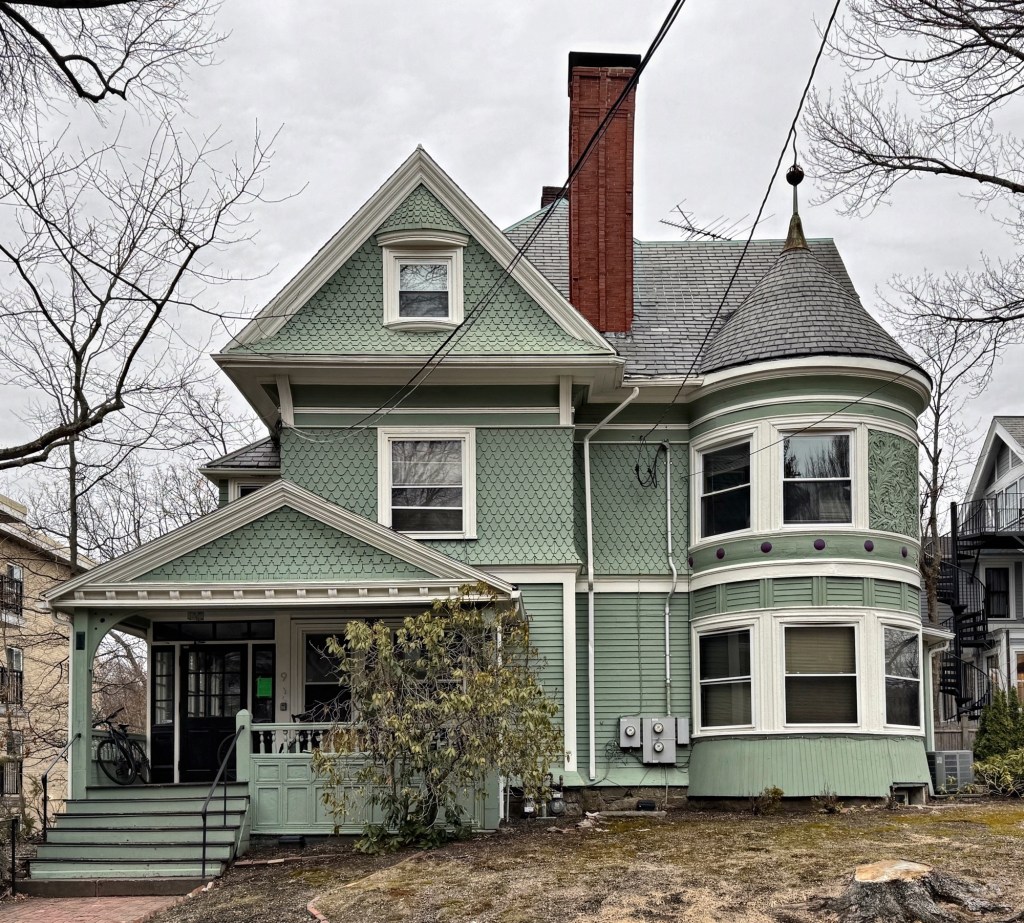
Capt. James W. Barton House // c.1842

One of four seafaring brothers who lived in Warren, Rhode Island, this charming cottage was built after Captain James Barton purchased a house lot at the northwest corner of Liberty and Union streets in 1841, likely building the home within a year. Captain James Barton (1790-1877) commanded a two-and-a-half year long whaling voyage to the Indian Ocean and undertook three subsequent trips to the Pacific. Upon retiring from the sea in 1867, Captain Barton established the Warren Gazette, where he worked as both owner and publisher. Before his time as a sea captain, James Barton had experience working in a printing office in Providence. Upon the Captain’s death in 1877, his wife Mary, continued to reside here with their daughter Nora B. Easterbrooks and her husband. Built as a modest Greek Revival style cottage for Barton’s wife while he was away at sea, the residence features a touch of the romantic Gothic Revival style in its window trim and the stable behind.

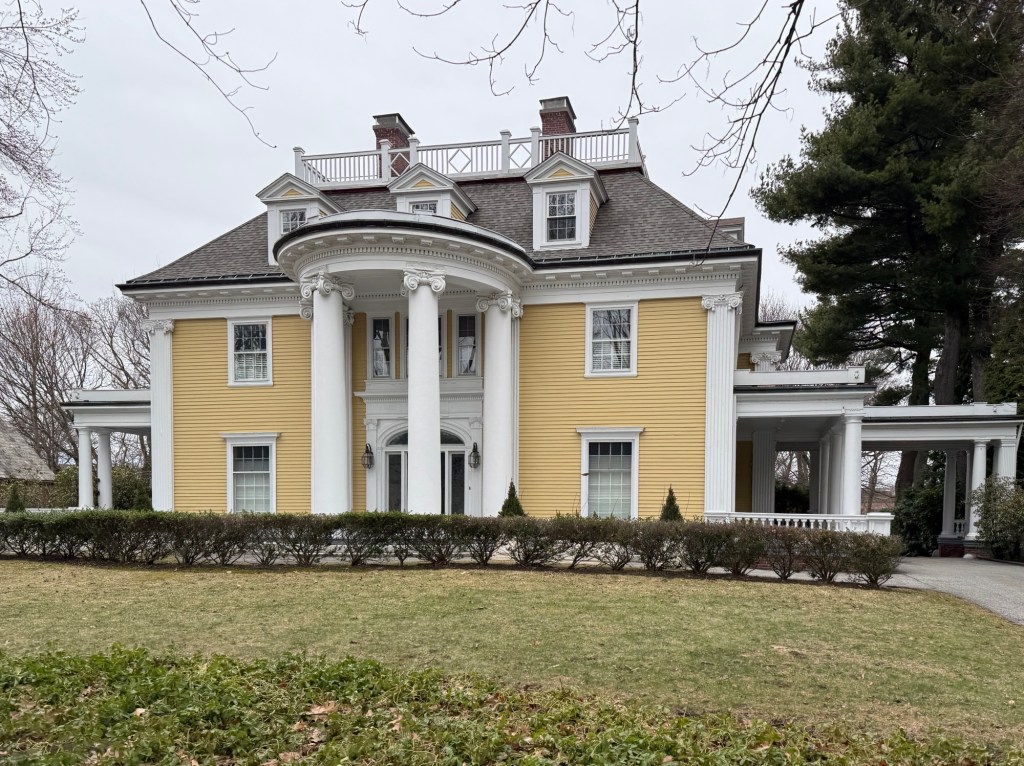
Nora M. Swift House // c.1902

One of the few high-style, early 20th century homes in Warren, Rhode Island’s Downtown/Waterfront neighborhood, can be found on Washington Streetjust steps from the community’s vibrant Main Street. The handsome residence was built around 1902 for Dora Martin Swift, a widow of Edward A. Swift (1812-1895) a sea captain and whaler in the mid-19th century. Dora’s home exhibits a blending of Victorian-era and Colonial Revival styles with the varied shingle and clapboard siding, asymmetrical porch, and flared shingles between floors showcasing Queen Anne style influence and the portico, swag and wreath motifs, and symmetrical center-hall plan showcasing the emerging Colonial Revival style influence. The property has been well preserved and appears to have been the work of a successful builder or architect.