Willard-Stedman Mansion // c.1760

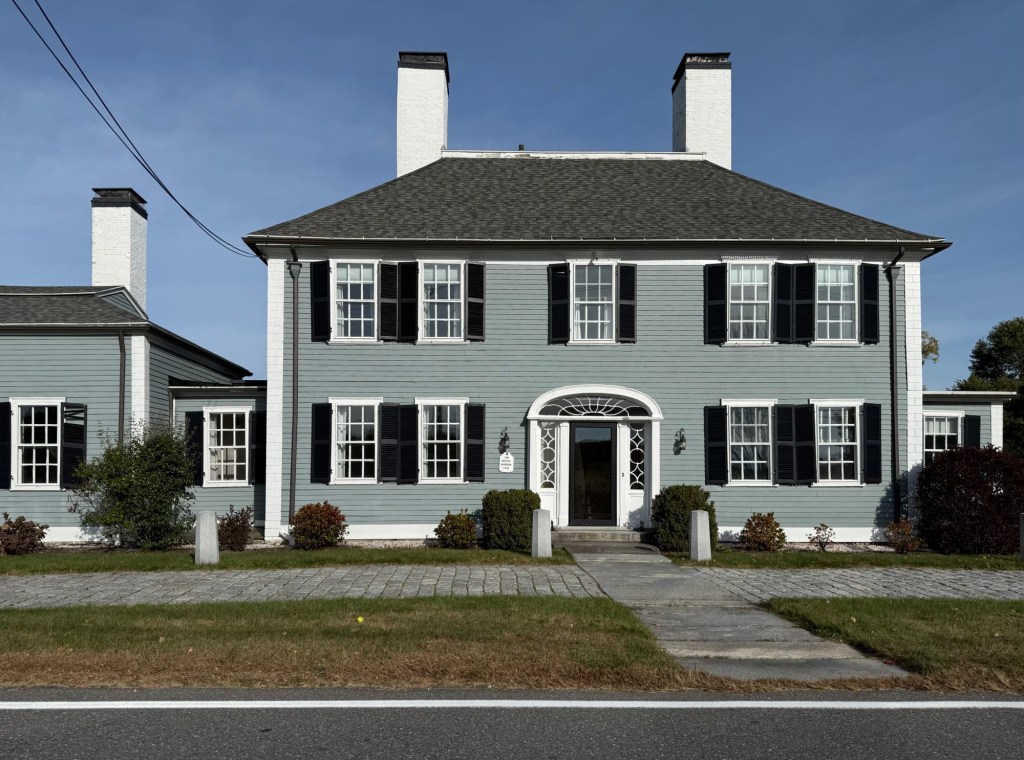
This stately Federal period mansion in Lancaster, Massachusetts, was originally constructed as a Georgian, two-story, five-bay house for Levi Willard (1727-1775), the son of a major landholder and descendant of one of the earliest settlers in the town. The residence is said to have been built by Levi’s cousin, Aaron Willard around 1760. Sometime after Levi’s death in 1775, the property was acquired by William Stedman (1765-1831), a notable attorney who served as town clerk of Lancaster 1795-1800, later becoming a member of the Massachusetts House of Representatives from 1802-1810. It was during Representative Stedman’s ownership that the house was remodelled into the fashionable Federal style appearance we see today, with the third floor added with shallow hip roof and classical entrance with pilasters and fanlight. In the mid-19th century, the house was operated as different boarding schools, though more information is needed. Today, the residence has been preserved and maintained as a single-family home, contributing to the charming Lancaster Center Village.

Joseph Andrews House // 1831

This stately temple-front Greek Revival style house in Lancaster, Massachusetts, faces southward and when originally built, had sweeping views of fields and the Nashua River which abuts the property. The residence was built in 1831 for Joseph Andrews (1806-1873), a renowned 19th century artist who engraved portraits and landscapes, and was also an elder in the local Swedenborgian Church when it still met at residences. The Andrews House was likely a wedding gift to his wife, Thomazine Minot of Brookline, when they married. Tragically, Thomazine died just years later in 1834 at the age of 22. Joseph Andrews remarried soon after and would later move to Waltham. The house, which is listed on the National Register of Historic Places, features a full-length projecting porch with pediment supported by four, two-story fluted Ionic columns and a flush-board facade.

Swedenborgian Church of Lancaster // 1881

Built in 1881, the Swedenborgian Church of the New Jerusalem in Lancaster, Massachusetts, is a handsome Victorian-era chapel that has been well-preserved for nearly 150 years. The Queen Anne/Shingle style church was designed by architect Francis Ward Chandler of the firm, Cabot & Chandler, for the local Swedenborgians in Lancaster, some of which likely spent summers in Lancaster from Boston. The membership of the church dwindled in the early 20th century, and the congregation sold the church to a local women’s social group, the Current Topics Club in 1923. The women’s club met in the old church and maintained the building for nearly a century until the building sold to private owners in about 2007, who converted it to a residence, preserving the unique architecture we still see today.

Bessie & Murray Potter House // 1909

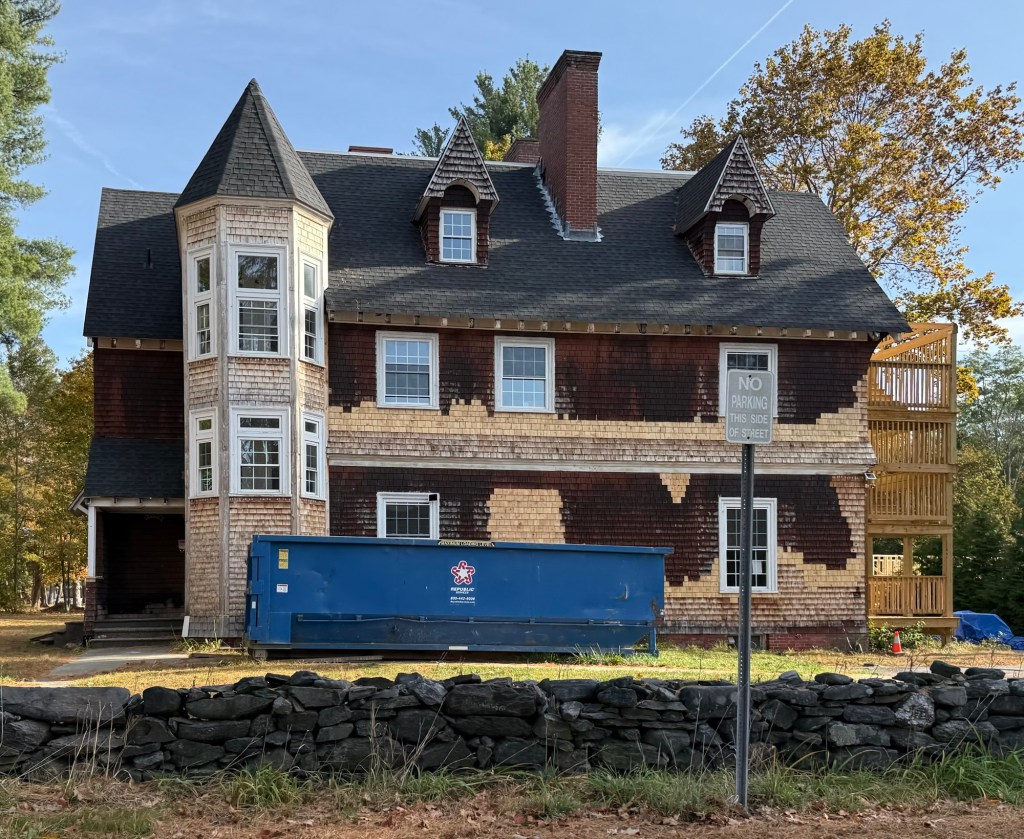
Murray A. Potter (1871-1915) and his wife, Bessie Lincoln Potter lived in Cambridge, Massachusetts, where Murray worked as a Professor of Romance Languages at Harvard College. The couple spent summers in Lancaster, Massachusetts, where they would purchase a house in 1909 that was built just a decade or so earlier. The couple were said to be big fans of history and decided to make their house resemble the 1782 Pierce-Nichols House in Salem, having the brown shingle Victorian house “modernized” in the current three-story near-symmetrical form.

Solon Wilder House // 1883

On Main Street in the central village of Lancaster, Massachusetts, the Solon Wilder House stands as one of the town’s finest Victorian-era residences. The house dates to 1883 and was built for Solon Wilder (1828-1889) and his wife, Olive. Mr. Wilder ran a store and served as town treasurer, doing well enough financially to build this handsome, and modern house and rear stable for the time. The Stick style house features a porch with cut woodwork, decorative trusses in gables, and wooden wall cladding interrupted by “stickwork” patterns raised from the wall surface that is meant to symbolize the structural skeleton of the home.

Lancaster Central School // 1904

Located across the Town Common from the iconic Bulfinch Church in Lancaster, Massachusetts, this handsome 1904 Colonial/Classical Revival style school building was designed in response to its neighbors and Colonial context of the town of Lancaster. At a Town Meeting in 1903, a local building committee determined that “Bulfinch Colonial” would be the best style for the architecture for a new high school that would be built in the town center, with Herbert Dudley Hale, selected as the architect for the planned two-story brick building. The Center School had been used continuously as a public school until 2001, when it outlived its utility as school facility in town, which was vacated for years until grant funding and a restoration of the building, now known as the Prescott Building, for Town Offices, including the Lancaster Historical Commission. The facade is dominated by its seven-bay symmetrical façade featuring brick
corner quoins, double-door entrance, and two-story white-painted brick pilasters framing the entrance and “supporting” the pediment that contains the town crest in high-relief.

Lawrence-Bartol House // 1861

This handsome Victorian residence on Main Street in Lancaster, Massachusetts, was built in 1861 for Rev. Amos E. Lawrence (1812-1897), pastor of the local Evangelical Congregational Church. Amos Lawrence lived in the house for just 4 years until he sold it to Rev. George Bartol, of the First Church of Christ, Unitarian in Lancaster. George Murillo Bartol (1820-1906) served as the pastor for the iconic Bulfinch church for over 50 years until his death in 1906. The residence was then inherited by Reverend Bartol’s son, John Washburn Bartol, a prominent Boston physician who would spend time away from the city at his family home. The unique form of this mansard/gambrel-roofed house stands out along with its Colonial Revival alterations, which likely occurred in the late 19th or early 20th century.

First Church of Lancaster // 1816

Built in 1816, the First Church of Lancaster is one of just two extant church buildings designed by famed American architect, Charles Bulfinch, and is said to be one of the finest churches in the Federal style in the United States. The fifth meetinghouse of the Unitarian First Church of Christ in Lancaster, this building was constructed of local brick, slate, and lumber from master-builder, Thomas Hearsey. Hearsey is said to have modified Bulfinch’s design, which had proposed one tall center arch flanked by two lower arches to reflect the unequal heights of the three vestibule doors behind them; instead going with three, identical arches. Other than this change, the church remains substantially as originally built, even without artificial lighting or central heat inside. Besides the iconic arched portico, the two- stage brick tower topped by a beautifully proportioned wood cupola surrounded by Roman Ionic columns, and fronted by a giant arcuated portico, is especially noteworthy. The congregation, which dates back to 1653 as a Puritan congregation was the first parish established in Central Massachusetts and remains active to this day.

Warren Homestead // 1727

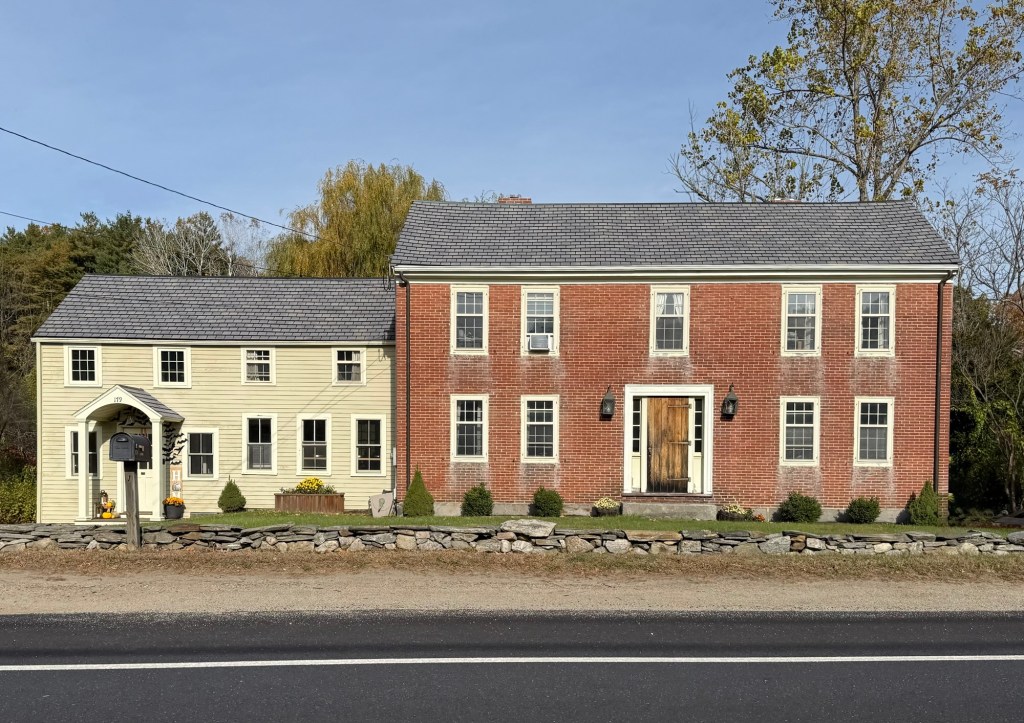
The old Jonah Warren Homestead of Westborough, Massachusetts, was built in 1727 on the Old Connecticut Path, a former Native American trail, and is among the earliest and best-preserved examples of 18th-century domestic architecture in Westborough. The Colonial-era house was built for Jonah Warren (1700-1780) and his wife Elizabeth Seaverns (1700-1775), who moved from Watertown to Westborough in 1720, the couple would have 13 children. The home remained in the family for generations. Jonah was a tanner by trade, but also sold wooden shingles, cut from nearby cedar swamps. In 1778, the couple’s son, Aaron, owned the house, as he returned home to take care of his aging father. The property was later owned by Aaron’s son, David Warren, and later passed to his only child, a daughter, Mary Waterman Warren (1799-1858), who married Josiah Fay (1797-1869) in 1838. The home was inherited by Hercules Warren Fay, a Harvard-educated reverend and author. The homestead remained in the family until the last of Hercules’ children died in 1957. The Warren Homestead remains as one of the finest and best-preserved Colonial-era residences in Central Massachusetts.

Fay House // c.1840

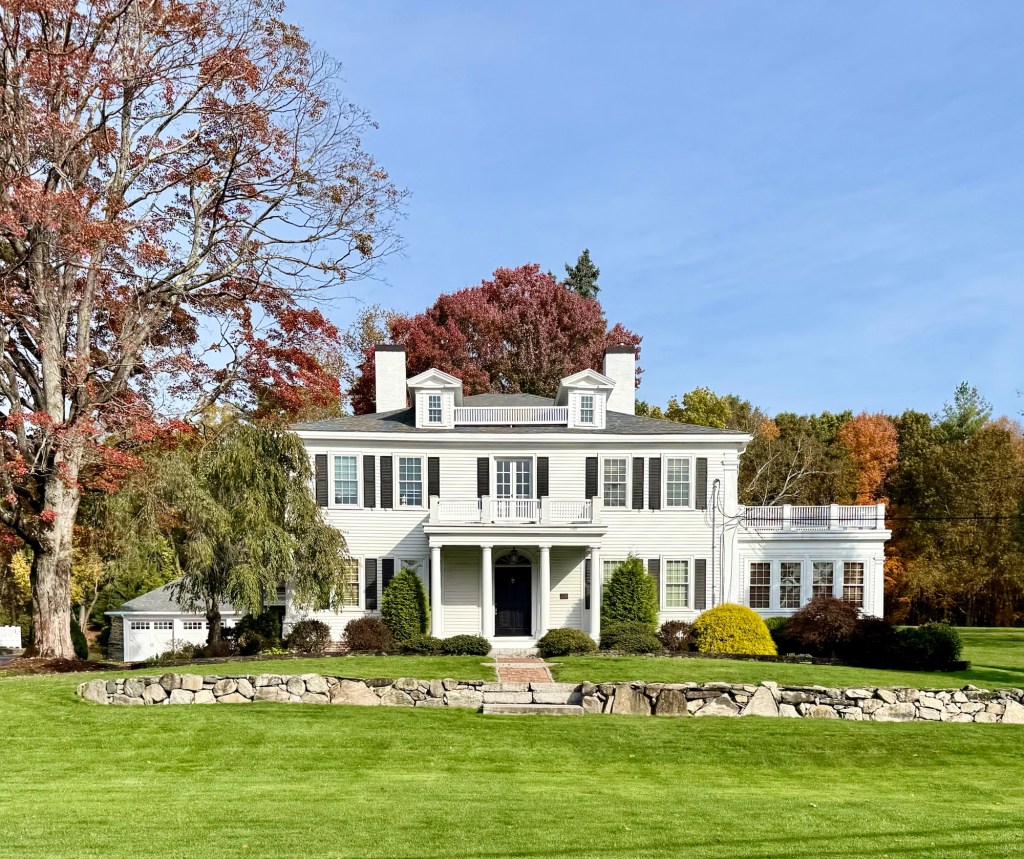
One of the most spectacular residences in Westborough, Massachusetts, can be found on Church Street, which is a unique blending of two distinct architectural styles. The house here was originally built around 1840 as a Greek Revival style residence, which would have had a gabled roof, and it retains the original corner pilasters and Ionic columned porch. Records state the the house was built for Cyrus Fay (1812-1884), possibly around the time of his marriage in 1837 to Caroline Pope. Caroline passed away in 1852 at the age of 36, and Cyrus remarried in 1855 to Nancy Avery White. It was likely after his second marriage, and after he became the first president of the Westborough Savings Bank in 1869, that the house was modernized with a Mansard roof with belvedere.

Parker-Maynard Homestead // 1777

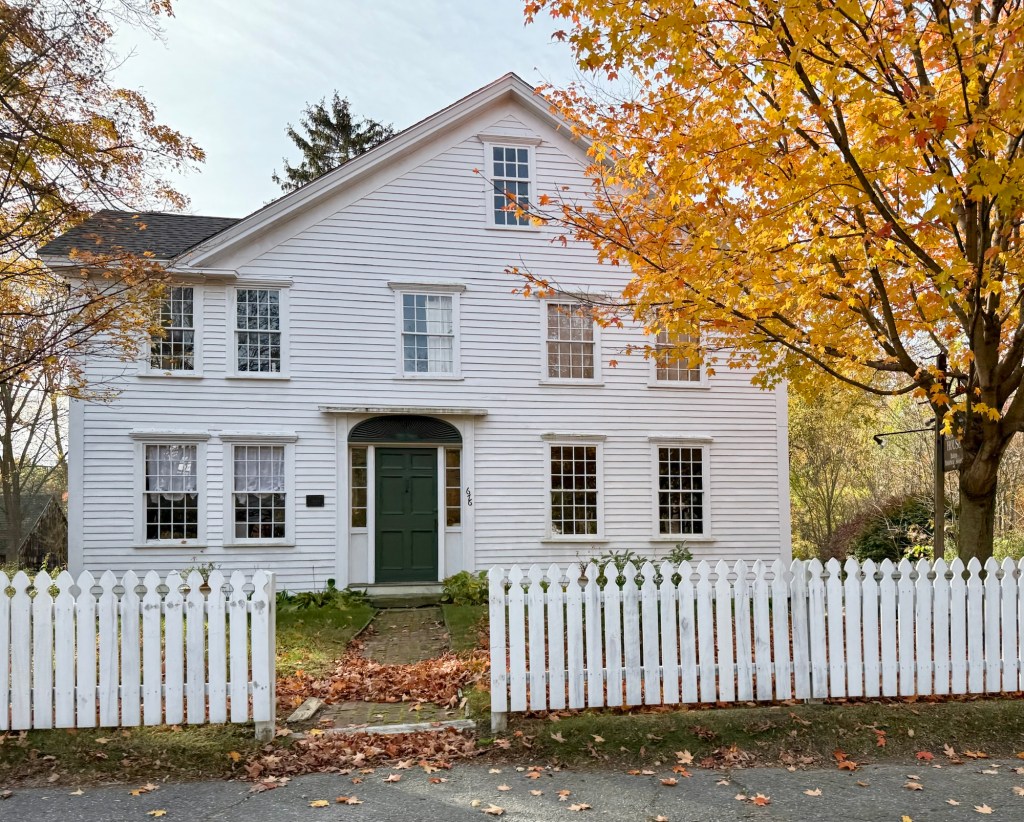
Hidden away on a quiet country road in Westborough, Massachusetts, the Parker-Maynard Homestead sits as one of the best-preserved and significant properties in town. Revolutionary War veteran Isaac Parker (1750-1798), after the war, acquired land in town and built a farmhouse here around 1777. Upon the time of his death in 1798, his property listed in his will included: a homestead farm, grist mill, saw mill, a small dwelling house, a horse stable, and a pew at the town meetinghouse. The property was acquired by brothers Ebenezer and Ephraim Maynard, who lived in the house together with their respective families. The Maynard brothers worked as wheelwrights and had their shop on the property for years. Ephraim Maynard’s eldest son, Horace Maynard (1814-1882) was born here and after graduating from Amherst College, moved to Tennessee to teach law at East Tennessee University before getting into politics. Horace served in Congress between 1858-1873 as a representative from Knoxville. He spent much of his first two terms in Congress fighting to preserve the Union, and during the Civil War, he consistently urged President Abraham Lincoln to send Union forces to free East Tennessee from its Confederate occupiers. After the war, he was appointed minister to Constantinople by President Grant in 1875. In 1880 he returned to the United States and was appointed Postmaster General by President Rutherford B. Hayes. Horace owned the family homestead following the death of his father and uncle, and often returned to Westborough to see family and get away from politics.

Pine Grove Cemetery Mausoleum & Chapel // c.1875 & 1904

Mausoleum

The mausoleum and the Jonas A. Stone Memorial Chapel are two historic structures located in the Pine Grove Cemetery of Westborough, Massachusetts. Land here was acquired in 1746 by the Reverend Ebenezer Parkman, and it comprised of a pine lot of sixteen acres on the road to Mendon (now South Street). Nearly 100 years later, in 1844, the lot was deeded to the town as a new cemetery, as the older cemeteries were quickly becoming crowded. It was named Pine Grove after the historic use of the grounds. Due to the rural cemetery movement, which sought to reimagine cemeteries as a beautiful park-like setting, not a simple burial ground, many Westborough families purchased plots here and some even moved their loved ones to the new family plot, in the “new” Pine Grove Cemetery.

Chapel

The Mausoleum was built sometime in the mid-19th century and is a modest, Greek Revival style structure of granite and brick construction. Four Doric columns support the portico and wooden roof which serves as a pediment above. The Jonas A. Stone Memorial Chapel was built in 1904 following a bequest to the town from the will of Jonas Adams Stone (1821-1900), and additional donation by his brother, Nymphas Stone. The Victorian Gothic chapel is built of brick and brownstone with a wooden gable and roof. The structure was damaged during the destructive 1938 New England Hurricane, but restored and is an important local landmark today.

Gilman Morse House // c.1850

As the town of Westborough emerged from rural agricultural community to commercial center, connections to Worcester and Boston via rail service opened the town to prosperity. As businessmen accumulated wealth, these merchants built stately homes to showcase their position in the community. Before the Civil War, the Greek Revival style was ever-popular in Westborough, even though the style was already waning in popularity in larger cities. This is the Gilman Morse House, built around 1850 for Mr. Gilman Wood Morse (1810-1899) on East Main Street. Morse was a merchant in town and clearly did well for himself, building this stately house for his family. The residence is Greek Revival in style with its facade bays broken up by pilasters capped with Corinthian capitals adorned by acanthus leaves. The house also features ornate window and door hoods, showcasing the emerging Italianate style influence.

Gilmore-Mason House // c.1850

As the town of Westborough emerged from rural agricultural community to commercial center, connections to Worcester and Boston via rail service opened the town to prosperity. As businessmen accumulated wealth, these merchants built stately homes to showcase their position in the community. Before the Civil War, the Greek Revival style was ever-popular in Westborough, even though the style was already waning in popularity in larger cities. The Gilmore-Mason House on Church Street, is an excellent example of the Greek Revival style in a temple form. The form is seen in this house at the facade, with a portico of four two-story Corinthian columns supporting the pediment above. The house was built for George A. Gilmore and later sold to Alonzo W. Porter, an inventor, who would later move to New York. By the early 20th century, the residence was the home to Joseph S. Mason, a manufacturer who operated a weaving mill in Westborough.

Henry Block // 1873

Mid-late 19th century commercial blocks provide human-scaled density, high quality design, and often contain intimate storefronts providing reasonable rent to local businesses. The Henry Block in Westborough, Massachusetts, is one great example of a historic commercial building that checks all of these boxes. The brick building was constructed in 1873 by its namesake, Samuel Gates Henry (1813-1877), a pharmacist and dentist who rented space in an earlier building on the site. When a fire destroyed the old structure, Samuel Henry had this block erected on the site and leased out spaces in the building to other businesses and tenants in the floors above. The block is Italianate/Italian Renaissance Revival in style with the typical round arched windows and bracketed cornice. The granite storefronts even retain some of the original cast-iron supports.